PROSPERITY WITH PURPOSE
Welcome to the Kingdom Economy
w/ Aaron DeHoog
Chuck Crismier: There is a single verse in the third book of John that has been often quoted and it goes like this: "Beloved, I wish above all things that you may prosper and be in health even as your soul prospers." Well, that has been used and was picked up through those who were preaching the prosperity gospel going all the way back into the 1960s and 1970s. "Beloved, I wish above all things that you may prosper and be in health even as your soul prospers." Does God have an interest in prosperity? Well, apparently from that verse you would say yes, although on the other hand you need to take a look, a really finer look at that verse and realize it's the statement that's being made from one person to another, basically saying Shalom.
I wish things are good. I hope things are going well for you. That's basically what that verse says. I hope things are going well for you as your soul is prospering, of course. So, it's not a promise. It's actually a statement of relationship, a relationship between prosperity and how we live in our souls, and it's not a promise. "Beloved, I wish above all things that you may prosper and be in health even as your soul prospers." Nobody would say, well, I don't want to be in health. I really don't want to be in health because I'd rather be sick and bless God through my sickness. Well, you might be able to bless God through your sickness, but it may not be all the thing that majority of people are going to desire or that even God would desire for you because he's called Jehovah-Rapha, the Lord that heals. He's also called Jehovah-Jireh, the Lord who provides, the God who is there.
So, how do we deal with this issue of prosperity? That's what we want to talk about here on Viewpoint today. "Beloved, I wish above all things that you may prosper and be in health even as your soul prospers." So, what does it mean to prosper? Well, I think the word prosper actually means this: it means that God wants you to have everything that you need to accomplish his purpose for your life and to have an abundance for every good work that he has for you to do. That's prosperity and it would include health, it would include everything that the word Shalom would include, which means a complete welfare in your life.
Now, that may sound a little strange, but that's exactly what prosperity means. So, if we want to market prosperity, then we're going to have to sell it to the flesh. If you're going to market something, as you well know, you've got to market it to the flesh and that means that of the flesh it's going to reap corruption. So, if we market prosperity to the flesh, it's going to reap corruption. So, then is there a righteous place for prosperity? How should we understand this word prosperity? Well, our guest today on Viewpoint is going to help us with that conversation. His name is Aaron de Hoog and he's written a book called Called to Prosperity. I'm not sure I would use that title, but that's the title he chose, Called to Prosperity.
It depends on what you mean by that, but here's the problem that we have, friends, as you know. It's like riding a tightwire. If you don't stay on the tightwire, you're going to fall off on the prosperity gospel side or you're going to fall off on the "God wants me poor" side, that poverty is what God is looking for. Is he looking for prosperity alone or is he looking for poverty? Or is there a righteous line where we're not seeking prosperity but we're seeking first the kingdom of God and his righteousness so that God adds to us everything else that he desires? That, I think, is where we're heading today with our special guest, Aaron de Hoog. Aaron, it's good to have you from South Florida.
Aaron de Hoog: Great to be on, Chuck. Thank you so much for making me a part of this conversation.
Chuck Crismier: Well, how's the world turning there in Florida? I understand you live in a famous place called Atlantis. Everybody's been looking for that place, Lost Atlantis, and you actually found out how to live there.
Aaron de Hoog: We found it. Yes, it's this nice little suburb in West Palm Beach, Florida. So, my town is called Atlantis and there's a golf community here called the Fountains. So, they kind of make fun of it themselves. But it's beautiful here. We love it. My wife and I have been here, well, my wife's been here her whole life. I've been here for over 20 years.
Chuck Crismier: All right, and how long you been married?
Aaron de Hoog: 23 years now. We have four beautiful, amazing children.
Chuck Crismier: I think you said they're from age 9 to 16. So, you have almost a quiver full, two more and you'd have a quiver full.
Aaron de Hoog: Yes, yes, but I think we'd also lose our minds. No, they've been an amazing blessing and we're right in the thick of it. 9 to 16 is just a fun age where they're so involved with sports, but you're also seeing them grow up in the church. That's been so great for us. We've been blessed because our oldest one is 16 and he's taken such a great leadership role within the church and the younger three see him model that and they pay attention. I'm very blessed.
Chuck Crismier: That's terrific. So, when did you yourself come to commit your life to Christ?
Aaron de Hoog: I grew up in the church and I made a profession of faith when I was around 13 years old. I'd say that's that moment where I really committed my life to Christ, but it's been through my whole life. It's something that was always there. Then when I went off to college, I became a Christian theology major and that was at Calvin College in Grand Rapids, Michigan. Then I moved to Florida to teach. So, I was actually a Bible teacher for a couple of years. Then I ventured into the business world and was pretty good at it and made a lot of money, but I was always very involved in our church. I'm on the board of our church now as well as the board of the same Christian school that I moved down to teach at 20 years ago.
Chuck Crismier: Wow. Well, you know, I always get nervous about the word board because to me it's spelled B-O-R-E-D and I served on quite a number of boards during my law practice years and I don't serve on any boards now other than the board related to Save America Ministries. But boards can be very boring and I wish you the best as you serve on these boards.
Aaron de Hoog: I joke with my wife because I always say I don't think I was meant for this. When I'm in a board, I am very keen on the agenda and understanding what's the point of this meeting. Let's go through it, get it done, and then we can all go on our ways. But I've been a part of boards at my previous church and they had the more of the mentality of this is going to be a three-hour meeting and we're going to take our time, eat cookies, and drink a lot of coffee and just a good time of open fellowship then. Yes, it's more of a fellowship hour than a board meeting, that's for sure.
Chuck Crismier: Well, we're going to have an open fellowship time here talking about the matter of prosperity. So, the question that I have for you, Aaron, is that with your background, why have you decided to write about prosperity since you say even in your own book this is not about the prosperity gospel?
Aaron de Hoog: I think the reason I wrote about it is because I think I'm the only person who can write about it from a very specific perspective. I think it's really hard for pastors to write about it.
Chuck Crismier: Well, I would agree with that and by the way, we're going into a break and I want to make sure we have adequate time for you to give that perspective. So, hang in there, friends. The hardbound book is a $30 book here for $27 on our website, saveus.org. You can call us at 1-800-SAVE-USA. We'll be right back.
Woe to them that try to get rich quick, says the Bible. This is not about getting rich quick, friends. This is about dealing with the issue of money from God's perspective. Our guest today, Aaron de Hoog, with his background, which he's going to share with us in just a couple of minutes here, but he says it's about giving and gaining and then growing. He draws from 2,300 plus Bible verses on money and his own journey from bankruptcy to abundance. Today, he's going to talk about some practical steps that we need to consider concerning our attitudes toward money from God's viewpoint. Aaron, give us a little bit of background now that you were about to share.
Aaron de Hoog: Yes, absolutely. I think I can speak about this topic very well because I have over 20 years experience in the financial world. I was the financial publisher at Newsmax Media. A lot of people know them as kind of a contender to Fox News. I was a financial publisher there, worked with Steve Forbes, for example, along with several other financial experts. Then I started my own company called Banyan Hill Publishing and we had over 10 years of incredible amount of success there. Helped over 500,000 Americans discover the right way to invest. Mike Huckabee was one of our subscribers as well as Sarah Palin. So, it was just a great time working with them.
And so just a lot of experience in helping really ordinary Americans figure out the right way to handle their money. I always wanted to speak about it more from a Christian perspective. However, the company I was CEO over, I was not the owner, I was the CEO of that company and they did not want to speak about this stuff from the Christian perspective. They said we're not a Christian company. Eventually, a couple years ago, there was this moment where I just decided it was time for me to step away. You mentioned that in 1992 you stepped away from your career as an attorney. It was that kind of calling for me. It was like, hey, maybe this is time for me to step away.
I was 45 years old. My wife and I had more than enough money to live comfortably. So, I stepped away. Really, the moment I stepped away, it was funny because it was right as we were leaving for this vacation. I stepped away, we're leaving on vacation, and on the plane ride I wrote down the very basic concepts of this book, Called to Prosperity, about how I wanted it to be. The very first thing I wrote down is that I didn't want to make any money from this book. I had to give 100% of the proceeds to the church because I was so fearful that there'd be some temptation to make money on a book about prosperity. I was like, I can't have that. So, whatever I write, I had to have that problem.
Chuck Crismier: I'm just finishing the editing on my 12th book right now, but I've never had to worry about making money because I've told the truth and truth doesn't sell very well these days.
Aaron de Hoog: It's tricky, right? Very tricky.
Chuck Crismier: It doesn't market well, unless you market to the flesh and then it reaps corruption.
Aaron de Hoog: It's a joke but it's so true, especially in the financial world. I am on social media, whether it's YouTube or Facebook or whatever it might be, but there's so many quick get rich quick schemes out there, even in the Christian environment. You talk about the prosperity gospel and it's all these trading programs and I'm here to tell you the way to wealth is not a trading program. Literally 97% of day traders lose money. Wow, 97%. So, why are you going to go that direction? Don't go that direction. There is a right way to make money. That's not the right way and it's right in the subtitle of the book, which you mentioned. The book is all about how to give, gain, and then grow your wealth for God's kingdom. But that key is to give first.
Chuck Crismier: Well, it's interesting because Jesus in Matthew 6:33 says, "But seek first the kingdom of God and his righteousness and then all the other things are going to be added to you." But the majority of people want to seek first the blessings without the burden. They don't want to carry the agenda that God has in mind because they want to get there quicker. And you're saying, no, that's not the way to do it. We've got to seek first the kingdom and his righteousness and then when we do things his way, he's going to bless us in the order in which he wants us to be particularly blessed to do his work for his purposes. Do I have that in a nutshell?
Aaron de Hoog: I should have had you review the book before I went to publishing because you nailed it. You really did. You said it better than I think I could have because why does the Bible say bring your firstfruits to God, not your lastfruits? Bring your firstfruits. For me, I think such a huge part of this is the act of unloving money. Paul says in 1 Timothy 6:10 that the love of money is a root of all kinds of evil. A lot of people misquote that. They say money is a root of all kinds of evil. That's not really the truth. The truth is the love, this desire, this greed for money is a root of all kinds of evil. If that's true, which it is, then the unloving of money is the root of all kinds of good. And so again, this circles back to me saying to give first, right? When we give our money first, when we give that first 10%, it's an act of unloving and it releases that control that money has, that greed has on our life.
Chuck Crismier: Well, you mentioned something when we give our money first. I'm going to take issue with that because it's all God's money. In reality, we're just trustees for the resources he puts in our hands. So, what he's wanting to do is keep us from trusting those resources. So, he says, okay, I want you to give the first 10% or tithe of that back so that it prevents you, it helps to keep you from trusting the money and hoarding it.
Aaron de Hoog: Exactly. The correct translation is bring your firstfruits, right? It's not give, because we can't give what's not ours. It's bring it. It's God's money.
Chuck Crismier: Okay. So, you've been doing this for a long time and how do you bring your firstfruits then?
Aaron de Hoog: Well, I do it through tithing. I've always tithed and that's been ingrained in me since I was a child. I tell this kind of funny story. But when I was a kid, I remember getting my first paycheck and it was working with my dad building hog barns, these massive barns that hold hogs. I got my first paycheck. It was $127. I had to pay some taxes on it. Then I remember my mom saying, you need to tithe on that as well. And I did the math in my head. I knew it was over $10, but all I had was a $10 bill, but I put that into the collection plate. That was the hardest tithe I ever did. That very first tithe was so hard.
Chuck Crismier: You know, they say that it's harder to give the little than it is when you have a lot and give that. If you don't start with the little, you're not going to learn to tithe when you've got a million dollars if you started out with a hundred and you couldn't give ten.
Aaron de Hoog: Exactly. And it's setting that discipline early on. And so when there was a million-dollar paycheck coming through, it wasn't even a second thought. It was just, yeah, not only is it do you give the 10%, the 100,000 to the church, it is a joy to bring it to the church and to see what God does with it. And so I think such a big part of my heart for this book is I want people just to trust God and to give that 10% and see what he does with that money. Not necessarily for you because that's the prosperity gospel, right? Give so you can get. That's not what God, that's not his design. So, give and just see what God does with it and how he multiplies it in ways that you can't even imagine.
Chuck Crismier: Well, we find some people in Christian history, even in American history, who have lived that way. I think of a guy that built heavy machinery, his name was R.G. LeTourneau and he was renowned for becoming quite wealthy and gave away something like 90% of everything that he received because he just didn't need the rest and he believed that God had intended for him to be a kingdom conduit rather than a kingdom reservoir. I think an awful lot of people have the idea that they want to be a kingdom reservoir and gain a lot and not release much out of that. But the problem with that, I don't know if you've ever lived near a reservoir, but they can stink. They're stagnant. They can stink because there's no outlet and God doesn't want that to happen in our life.
Aaron de Hoog: Absolutely. He calls us to be rivers, not reservoirs. And the way I phrase it is if God can get money through you, he'll get money to you and there's going to be more than enough for you. So, you just have to think of it that way. If God can get money through you, he's going to get it to you. Again, it's not so that you can be rich. I always get so scared to say that. But there's going to be plenty for you. I always think of the young boy in Matthew 5 who brings his fish and some bread to the disciples. I love that story because I just imagine being there and the disciples are like, how are we going to feed all these people?
And this kid shows up with, I believe it's two fish and five loaves of bread, right? Walks up and he says, well, you can use this. And I think of that kid and probably the disciples' interaction like, well, what good is this going to be? How is this going to feed 5,000 people? But in the hands of Jesus, not only did it feed 5,000 people, but when they were done, there was even more food left over. And I think that's a story that we need to really pay attention to because maybe when we give, maybe these people listening, maybe they feel like their $10 or $100 or whatever it is isn't significant. But in the hands of God, in the hands of Jesus, it can do so much. And again, don't be fearful of what you're losing out on because again, it's his to begin with. But God provides. God provided for the kid, he's going to provide for you.
Chuck Crismier: So, we labor not to be rich, but we labor. You have a kind of a humorous thing that I noted in your book. God's not going to bless your butt on the couch, but he does promise to bless the work of your hands. So, the Apostle Paul said, "Hey, stop being so lazy and get to work, use your hands because if he that will not work shall not eat." So, there's a kingdom economy that's involved here, isn't there?
Aaron de Hoog: Absolutely. And so many Christians think that work was a punishment for sin. But if you go back to Genesis and look closely at Genesis 1 and 2, God created Adam and put him to work in the garden. And that was before Eve was even created. That was before sin entered the world. That's why I like to work in the yard. Absolutely. Data shows that people who work in the yard, who work in gardens, live longer. It's just one of those crazy statistics and you can look at why, but I think it goes back to original purpose. There's something with us being connected with nature, but also just being productive, having a purpose. Work gives us purpose. And the data also shows, by the way, people who retire early die early because they lose purpose. So even if you retire, you have to find a purpose. Like you in a sense, right, you kind of quote-unquote retired in 1992, but you found even a higher calling, a higher purpose.
Chuck Crismier: And so because of that, I don't believe in retirement. The word re-tire means to put on new tires and get going again. You're re-tiring.
Aaron de Hoog: I call it re-firing. There you go, re-firing. You get to the point where it's like, okay, I don't have to work nonstop just to pay my bills or to save up or anything like that. But you get to that point where it's like now I have more time to serve on the board of my church, to serve on the board of my school, to be more involved with my church, to write a book, whatever it might be.
Chuck Crismier: And even beyond that, not just serving your church, the local fellowship, but the broader kingdom of God. The kingdom of God is not just your church. The kingdom of God is a much broader thing than that. Have you noticed, Aaron, that nobody goes to a poor man to help them out? They always go to somebody they perceive to have the resources that could help them out. So, in other words, we don't go to people that don't have anything. We go to people that have something in order that they can be a blessing. And so that's what you're really talking about. You're talking about allowing God to begin to build resources in your life for his kingdom so that you can be a kingdom conduit rather than a kingdom reservoir. And like he said to Abraham, be a blessing.
Aaron de Hoog: Absolutely. Margaret Thatcher said it well. Margaret Thatcher said no one would remember the Good Samaritan if he just had good intentions, but he had money as well.
Chuck Crismier: That's well spoken. Okay friends, the hardbound book is a $30 book, Called to Prosperity: Discover How to Give, Gain, and Grow Your Wealth for God's Kingdom. $27 on our website, saveus.org. You're going to be blessed.
Our special guest today on Viewpoint, Aaron de Hoog. We say regularly here on this program, Aaron, that viewpoint determines destiny. And our viewpoint concerning these issues that we're talking about here today determines destiny. If you see yourself in a world of poverty and lack, then that's the manner in which you view life. If you see an abundance and you see that God is providing everything and going to provide everything that you need, and your heart is set on his kingdom and his righteousness so that you can be used as his servant like Abraham, not only to be blessed but be a blessing, then all of a sudden your attitude changes and attitude is everything, isn't it?
Aaron de Hoog: Absolutely. I mean, you know, we started this whole conversation talking a little bit about our family and our kids and what a blessing it is. You talk to so many people who don't necessarily see the world that way. It's almost a burden. It goes back to work too, right? We're just talking about work and how many people see it as a burden. I grew up in an area of our country that was very poor and having the opportunity to work, I've always seen it as such a blessing. It's so much joy. I loved running a business for so many years because when I took over as the CEO of my company, we had 25 employees. By the time I left, we had over 100 employees and were making a profit in the millions of dollars. That was great to see and I think that's where God calls us to be producers. God himself is a creator, right? He's a worker. God worked for six days, rested on the seventh, right? We're called to do the same, to create. It's in part of our DNA.
Chuck Crismier: All right, so we rest in terms of giving 10% of that which God puts in our hands so that we're not trusting money. Then we also rest with regard to one-seventh of our time because God doesn't want us to trust our ability to just keep working, working, working. We want to trust him to provide everything that we need. So, God tests us both with our tithe and how we keep the Sabbath.
Aaron de Hoog: Absolutely. And I think so for some of us, honestly, I think it goes even beyond that basic tithe. When you read the Bible closely with the Jewish law, it was much more than even the 10%, right? It comes out somewhere around 23%. Some of the greatest Christian leaders today have taken on that challenge. I think of Rick Warren. He and his wife, ever since they were married, have always tried to increase their tithe every year. And they started at 10%, went to 11, 12, 13. Right now, at least the last I heard, is over 90%. He gives back to the church.
Chuck Crismier: Well, that's because he made $25 million on that book, or series of books.
Aaron de Hoog: And he has this great quote. He says, why do you think God basically called me to write that book? It's because he knew he could trust me with that. Like I had, he says, I had like 30, 40 years of giving to God and he knew that if millions of dollars came my way, I'd give it right back. His great quote is he says, you know, I've tried to outgive God and I fail every time. And you just think about it, Chuck. People look at him and say, well, of course he can give, he's worth millions. But no, he started giving early on. And that's where it comes back full circle, right? Give, gain, gain through purposeful work, and grow, grow through sound investments.
Chuck Crismier: And that's the motto, shall we say, that governs everything that you do. You have a website, don't you?
Aaron de Hoog: I do. Anyone can go to calledtoprosperity.com and learn about the whole model and everything that we do. abundantprosperity.org, they both go to the same place.
Chuck Crismier: All right. Now, you've got this book here and again, there might be some folk out there that say, yeah, you know, I think you're really talking about the prosperity gospel. What would you say in response?
Aaron de Hoog: I love that response and I was so nervous about that when I started writing, which is why again, all the money goes to my church. But I wanted to write it because I think I want to point out the prosperity gospel's wrong, but also there's this poverty gospel idea, this idea that money is a root of all evil, but that's never the case. All throughout the Bible, God blesses people with money, not for their own wealth to hoard their riches, but to rather be that conduit that you talked about, to be that river, not a reservoir.
Chuck Crismier: Well, Jesus was actually buried in the tomb of a very wealthy man by the name of Joseph of Arimathea. And if he had not had that wealth, that tomb would not have been immediately available to our Lord and of course history tells the story. So, there's all kinds of ways that we can look at this and it's not about trying to promote getting rich. That's not the point. The point isn't how can I become rich? The point is how can I be the best steward that I can be of my time, my understanding, my wisdom and so on for the purpose of the kingdom of God? I believe that's what your real message is in the book, how to give, gain, and grow your wealth for God's kingdom. So, tell us what somebody can find in this book.
Aaron de Hoog: Well, I think it's that exact system in place, give, gain, and grow wealth for God's kingdom. There's a lot of data inside the book talking about what the Bible states, but also how it's confirmed with modern research. So, what's amazing is Harvard, of all places, Harvard did this study and they found that those who follow the biblical blueprint for managing your money, that's give, gain, and grow structure, are three times wealthier than the average American. Three times wealthier. So, that's incredible when you stop and think about it. And even they, they go back in and say it all starts with giving.
And all these people, they didn't wait to give. That's what most people think. Oh well, of course they can give, they're worth millions of dollars. No, they gave very early on. And when you give, I think first of all, God commands it, that's why we give, but it's also part of our DNA. It restructures our mind. They've done studies on this to show that when we give, our minds have this weird mind thing that goes on where we think about the world differently. And not only that, but people perceive you differently. And now, we don't give to be showmen, we don't ever, like I was kind of ashamed when I wrote the book because I talk about some of the gifts that I've given in the past, but I've always been kind of quiet about it. But the reality is when you give, people see it and they react to you differently. And that might be a tip to a waiter or that might be some other gift that you give, but people look at you differently. Could you imagine going on a date with someone and they don't tip the waiter? You have a very negative viewpoint. But if they give a nice tip, maybe not abundantly, but if they give a nice tip, you're like, oh, this guy is a generous person. I want to be with that person. And that's true in the workplace, too. You want to be with people who give generously, maybe not just financially, but of their time as well.
Chuck Crismier: You see, that's another issue because if you're a kind of slave laborer just constantly having your shoulder to the plow, so to speak, to survive, there's no time left for generosity in terms of time. And generosity is at the very heart of this message, isn't it?
Aaron de Hoog: Yeah. I mean, that's the very core of it all is to give. The book is mainly about financially giving, but 100% correct whereas like where I look at your life, I mean, you've given in the last 30 years of your life. I'm two years into retirement at 47 years old, which really is a refirement, right, where I'm writing this book and I'm doing other things to give everything to God. I have that time because I managed my money very well early on. You mentioned earlier in my book as well, but I was such a determined young man in my 20s. I wanted to start my own business. I wanted to do it. My wife and I talked about it. Sure enough, I started my own business before I was 30 and it was right at the 2008 economic recession and we lost everything we had.
Chuck Crismier: Wait a minute, you lost everything you had and went bankrupt. Is that right?
Aaron de Hoog: That's correct. Wow. And that was in 2008. Correct. It was 2008, we had lost everything in that recession and it was tough for me, not so much for my wife, but it's just tough for me because I had made a promise to always be the provider and to guide us. And you know, but I was not knocked down. I wasn't knocked out. I got a lot of counseling, I'd say counseling within the church and guidance in this area and just built it all back up. God opened doors and my career thrived. And when we started making a lot of money, we just invested it in some very wise investments that have paid off, which is again why we're at.
Chuck Crismier: And your book actually helps people understand how to do that, right?
Aaron de Hoog: Exactly. The book walks you through it and using great examples of my life, but also you take Joseph, for example. Here's a guy who was taken into slavery, who every time it seems like he got a step ahead, he got knocked down. Accused of sexual assault and thrown in prison and forgotten about years upon years. Eventually, he of course rises to power, helps his brothers out. And he has the wisdom to say, you know, I know you intended to harm me, but God had bigger plans. And so I talk about that now because there's a lot of people listening right now and maybe you're going through one of these dark seasons and you're wondering why, why God? Why am I going through this? And God has a reason and maybe part of the question is how can I use it? How can I use this period that I'm in to get stronger, to advance, to build my skill set so I can impact God's kingdom? Because I went through it for almost a decade of just struggle and came through and so now it's in a great place. But it's also humbling. So no matter where I'm at, I'm always reliant on God. I realize it's all the money in my 401k, all the money in real estate, in my investments, it's all God's. I'm just a conduit.
Chuck Crismier: Well, see there it is. You've got to be a kingdom conduit and if you think you're the reservoir, the prosperity is likely to be shut up. So friends, Called to Prosperity, I think there's going to be much in this book that will be encouraging to you. $27 will put the $30 book in your hands on the website, saveus.org. Call us 1-800-SAVE-USA or write to us at Save America Ministries, PO Box 70879, Richmond, Virginia 23255.
God is not likely to put in your hands that which he cannot trust you with. I want you to think about that. God is not likely to put in your hands that which he cannot trust you with. You see, it's all about our hearts. The heart of the matter is always the heart. Out of the heart of the man, the mouth speaks. Out of our heart come the issues of life. So, we're supposed to guard our hearts for out of it come the issues of life. The same is true with regard to finances, with regard to money, with regard to relationships. It's all the same thing. We're a steward of our relationships and if God can trust us in our relationship, if he can't trust you in your marriage, how is he going to trust you to counsel other people?
You get the point. It all has to happen out of the abundance that is in your life that God has entrusted you with and you have proven through investment of time, for instance, in your relationship, in your family, in your marriage, and then you become usable, a person, a reservoir from which can be drawn influence in other people's lives for the benefit of the kingdom. That's what it's all about. And it's I call it God's kingdom economy. He has a kingdom economy. You know, I was just thinking, Aaron, you said that you're 47 years of age. When I was 48, that's when God spoke to my heart in my law office there in Southern California after 20 years saying, "Son, you've been pleading the cause of man long enough. I want you to plead my cause to be the voice to the church declaring vision for the nation." Okay, so how am I going to do that? Well, immediately, in fact, just before that, two years before, he put in our hands a particular investment that came in the most unusual way. I would call it miraculous. Somebody came to me and said, "You know, I heard about this thing, you might want to seriously consider it." And I did. And as a result of that, unbeknownst to us two years later, God says, "Okay, now leave everything you have, sell everything you have in Southern California, 30 years of business, ministry, and political investment." I ran twice for the state legislature there in California. "And go to the place I will tell you on the East Coast, the birthplace of the nation and I'll tell you what to do." So, here we are 33 years later, not relying upon any man's money to do what I do and make no money doing it. Now, how's that possible? It's possible because of exactly what you're talking about and there's a freedom in that. But let me tell you, there's a holy trust as well. We don't want to lose that, otherwise we'll love money, won't we?
Aaron de Hoog: Absolutely. And I want to go back to your story. You had this investment opportunity and you researched it. My guess is you took a little bit of a risk to boldly invest in it.
Chuck Crismier: That's exactly it. You have to. I mean, isn't that even Jesus talked about that? The man with 10 talents, the man with 5, and the man with 1 talent and he rebuked the guy with the 1 talent, said, "You are an unfaithful servant."
Aaron de Hoog: Do you recall? Because that's Matthew 25, the Parable of the Talents. And do you recall why one servant got ten, one got five, and one got one? It's because he says he gave each according to their ability. And so the front cover of my book pictures these three men to represent the Parable of the Talents. I see that. And so you ask like, what can people get from this book? It's really talking about that, how do you increase your ability to manage the money that God entrusts to you? Again, he gave in the parable, he gives one gets five, he turns it into ten, the other has two, he turns it into four, the other one gets one and buries it. And I always wondered like, well, that was kind of harsh, you know, the only guy, the guy only had one. Well, why did he only get one? Because it says right there, he gave to each according to their ability. And once again, the guy who turned five into ten was then able to, what does Jesus say, what does the master say in this parable? He says, "Well done, good and faithful servant. You've been, I've been entrusted you with a little and you've done great with a little. Now, I'll entrust you with a lot. Come and share in your master's happiness."
You know, the master is so excited. Now, the third servant who buried his talent comes back and says, you know, here's what I got for you, I just gave it back to you. And the master's so upset. He said, "You wicked and lazy servant." And the third servant says, "Well, I knew you were harsh." But that's not really who he was. The third servant was making excuses because you saw how joyful he was with the first two servants, right? But and again, the master was mad at the third servant not because he was too conservative, but he was just wicked and lazy. It's just part of me is just trying to tell everyone who reads this book, who's listening now, how can you increase your ability to manage the money that you have and just learn more about managing that money? Part of my book is about getting out of debt. Debt's not a sin, but it's not smart, right? That's the Bible's very clear on that. You're going to be a slave to the lender. Stay out of debt. But then beyond that, how can you take your money and invest it boldly, like you did back in 1990, 1992, so that you can be blessed and then be a blessing to others?
Chuck Crismier: Well, that's exactly it. Blessed to be a blessing. And here, let's talk about something very practical here. In the last three months, we have seen gold and silver grow to astronomical heights beyond anything that anybody would have ever believed. Then all of a sudden in two weeks, everything collapsed and now it's trying to creep up a little here, a little there, but nowhere near what happened before. So, you could have gotten in and ascended to great heights, so to speak, but if you stayed there, you would have lost almost everything. How do we deal with these kinds of issues? This is practical stuff. How do you deal with an issue like that?
Aaron de Hoog: Well, again, it's increasing your ability, reading a lot. But I might get some flack for this, but believe it or not, most money managers are actually good people who want you to grow, help you grow your assets. You might have to pay them a 1% fee. You shouldn't be paying more than 1% realistically. So, you can check with a money manager in your local town, whether it's someone you know, some within the church, someone who's a Christian preferably, for sure. Check with them and see how they can help you manage your money because if you're working full time, it's really hard to get that time to study the market. You talk about gold. I'm personally not a big fan of gold. I own some gold. I own a couple coins. But it's almost like that third servant, right? It's just what does gold do? You put your money in it, there's no economic value in gold. But if you look at an investment in a company, you know, we can look at the stock market if you want to, but you could also look at let's just say someone wants to start a company in your town and you invest in it. They're able to use that money to grow their business, to hire people, to expand, to grow. That's powerful. That's having a very powerful economic impact versus just burying the money in gold bars and putting it in your backyard.
Chuck Crismier: Well, I just wanted to bring it up because it's an area in which people have gone up and down and around about over the past three months and it's something right, and of course the stock market has gone up and then way down and then up. What do you say about that?
Aaron de Hoog: I love the stock market, but I would keep it very basic. Invest in an S&P 500 fund like SPY. That's just the S&P 500. And what I love about this is the S&P 500, most people don't get this, it's very boring, but on average for the last 60, 70 years, basically since it's been around, it's averaged 10% returns per year, which is an incredible return on your investment. Invest in it as long as you have a 5, 10-year horizon. If you're looking to make money next month or next year, it's a bad idea because you're going to panic, but you have to look at it 5, 10, 15 years out. And it grows and you don't have to think about it. Just pull the money in.
Chuck Crismier: All right. So, if you've got somebody that's 60 years old and doesn't have all of that time ahead of them, then what do you say?
Aaron de Hoog: I'm going to get in trouble for this one. I say you can be a little more aggressive than you might be thinking and I say this because if you're healthy, you can plan now to live to 80, 90 years old. I mean look at you, I'm guessing based on your previous comment that you're in mid-70s somewhere.
Chuck Crismier: Oh, I'm no, I'm almost 81.
Aaron de Hoog: Right. And look, you're still I'm guessing you're probably healthy. And if you're healthy and you're active and it sounds like you're involved with your family, you can expect to live well into your 90s, no problem. So, here's a crazy stat. I'll just put this out there and let people soak on it for a little bit. Warren Buffett made 99% of his wealth after his 65th birthday. Mind-blowing, right? But why is that? Well, it's because he had invested so much over his life by 65 he didn't need to withdraw the assets, he just, you know, he's Warren Buffett so he could live on a little bit of them, but they continued to grow because he had his money in the stock market. But what would have happened if at 65 he said, well, let me just take all of it and stick it in an annuity or in gold? He would never have gotten the wealth he's got. 99% of it, I mean he's 95 years old now. So, we're talking about 30 years. It came after his 65th birthday. So, I would say again, everyone's different and this is why it really is important to sit down with a financial advisor because they can know your risk appetite and stuff. But I think God calls us to be a little more bold than most of us are giving ourselves credit for. Think about again, I'm going right back to Matthew 25 and the Parable of the Talents and the three servants. The first two servants doubled their master's money. And I think about that. Like Jesus didn't have to tell the story that way. He could have said, well, the first servant turned five talents into six or maybe seven or eight. No, Jesus told the story where the first servant turned five talents into ten talents. To do that, he must have been doing something, I don't want to say aggressive, but he was probably investing his money or trading it. I don't like to use the word trading because I don't think we're supposed to be traders, but he must have been investing it wisely, right? And so maybe there's, you know, after tithing, when you start and you have your debts paid off and you start investing, maybe be a little more bold than you think you should be. Just maybe again, I don't want you to lose sleep. Be with an advisor to get practical advice in your situation. But I think you can have permission to be bold and I think God calls us to be a little more bold with our money, to trust him. It's his money, by the way. It's not yours, it's his. So, you invest in his money and pray about it and seek counsel about it, but I know for me it's definitely paid off handsomely and for you, it sounds like it's paid off handsomely to be not jumping in risky investments, research it, but boldly investing the money.
Chuck Crismier: Doesn't mean there aren't challenges even as late as yesterday. So, life is still life. Here is what God said in the book of Deuteronomy through Moses to the children of Israel before they entered the Promised Land. He said, "Take heed that when you have built goodly houses and dwelt therein, and when your silver and your gold is multiplied, and all that you have is multiplied, that you say in your heart, 'My power and the wealth of my hand has built me this wealth.' No, it is God who gives you the power to get wealth, that he may fulfill his covenant which he made unto your fathers." Now, I'm not making that up. That's what God said to the children of Israel before they entered the Promised Land. So, called to prosperity? Yes. But what is prosperity? It's trusting the Lord, doing his will faithfully, trusting him to prosper you as you do the things, not lazily, as you do the things that he would have you to do to fulfill the purpose he has for your life and an abundance for every good work that he has for you to do. Get a copy of the book Called to Prosperity, $27 on the website saveus.org. You can write to us at Save America Ministries and become a partner, friends. Send those gifts by faith to Save America Ministries. Do it today. Don't delay. God will bless you. Let him decide how to do it. You've been listening to Viewpoint with Chuck Crismier. Viewpoint is supported by the faithful gifts of our listeners. Let me urge you to become a partner with Chuck as a voice to the church declaring vision for the nation. Join us again next time on Viewpoint as we confront the issues of America's heart and home.
Featured Offer
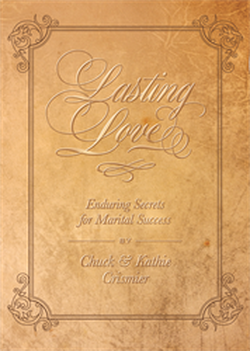
LASTING LOVE can be a dream come true. Yet love requires more than a dream or those loving feelings we so much desire.Lasting Love, Chuck and Kathie Crismier, celebrating their Golden Anniversary, unveil seven enduring secrets that will inspire and strengthen your marriage as it has theirs. COPY and PASTE this link to WATCH the TRAILER: https://www.facebook.com/Save-America-Ministries-204687919570536/videos
Past Episodes
Featured Offer
LASTING LOVE can be a dream come true. Yet love requires more than a dream or those loving feelings we so much desire.Lasting Love, Chuck and Kathie Crismier, celebrating their Golden Anniversary, unveil seven enduring secrets that will inspire and strengthen your marriage as it has theirs. COPY and PASTE this link to WATCH the TRAILER: https://www.facebook.com/Save-America-Ministries-204687919570536/videos
About Save America Ministries
About Chuck Crismier
Contact Save America Ministries with Chuck Crismier
crismier@saveus.org
http://www.saveus.org/
Save America Ministries
P.O. Box 70879