

JUDICIAL NOTICE GIVEN!!!


God has nations "in derision"
Guest (Male): This is Viewpoint with attorney and author Chuck Crismier. Viewpoint is a one-hour talk show confronting the issues of America's heart and home. And now, with today's edition of Viewpoint, here is Chuck Crismier.
Chuck Crismier: As the fall feasts, those that are remaining of the seven feasts of the Lord set forth in Leviticus chapter 23, are approaching us in the month of September, things are heating up in Israel. They're heating up in the promised land. They're heating up for the Temple Mount. And today on Viewpoint, we're going to take a look at what's developing there.
You probably will not hear much of it in the news because all you hear in the news is about Russia and Ukraine or Iran. On the other hand, what's happening in Israel actually is what sticks its finger in the apple of God's eye, as the scripture says, and therefore must be extremely important to us as followers of the Lord God as reflected in and through the life of Jesus.
So if you were to look at Psalm 2, it says, "Be wise, oh kings. Be instructed, you judges of the earth." Why? Because the Lord has a controversy with the nations. Several of the ancient prophets said that God has a controversy with the nations. Indeed he does.
The question came out of Psalm 2:1, "Why do the nations rage and the people imagine a vain and foolish thing?" Why are they setting their hearts against the Lord and against his anointed Israel, saying, "Let's tear their bands asunder"? Why are they doing this? Well, we need to answer that question.
They're doing it because they do not like Israel. They consider Israel to be, shall we say, a single country set out or a single people group set out against all the other nations of the earth and they're jealous. They're supremely jealous. Their envy is driving them crazy, just as happened in the Old Testament and the New Testament, even where Pontius Pilate, a very crusty secular Roman governor, pierced through the decisions and rationales and demands of the Jewish leaders, including the high priest and his associates, and said it was but for envy that they brought Jesus to the judgment seat.
But for envy. Envy is a very powerful thing, friends, and it is driving the world crazy. And it's going to drive the world even crazier as we approach the second coming of Yeshua, Jesus Christ, Yeshua HaMashiach, as it is said in Hebrew.
So today on Viewpoint, we're going to take a look at some things that are developing there because, friends, it's really pretty amazing, especially after we remember what happened just a few years ago on October 7th, the horrendous attack there against Israel, unprovoked, and began to change the trajectory of history. Indeed it did. It changed the trajectory of history.
There are many things that are changing the trajectory of history, even our own viewpoints. Did you know that? Did you know that your viewpoint determines destiny? So when we talk about viewpoint determining destiny here on this program, we're not talking about our program determining destiny, although it might for some. It's like someone said, you can't listen to Viewpoint long and not be changed. In other words, there has to be a change somewhere, a change of thought, a change of idea, a change of behavior that corresponds with the change of thought and heart and behavior.
Viewpoint determines destiny. Your viewpoint determines destiny. My viewpoint determines destiny. Whether they're small viewpoints or large viewpoints, they determine destiny. There are no neutral viewpoints. Our viewpoints concerning Israel actually also determine destiny. So we have to be very careful about how we approach issues with regard to Israel. If God called Israel the apple of his eye, then what is our business calling it something else?
On the other hand, does that mean we have to agree with everything that the Jewish people do? No, I don't think it means that at all. But it does mean our job is not to corral them. Our job is not to judge them because God says he's going to be the judge. He said, "Vengeance is mine, saith the Lord." So we have all of these political things going on in this country with people who many respect, others don't respect too much anymore, who are talking about Israel as being a malevolent force in the world and that it's controlling America and therefore America is acceding to all of the demands of Israel and therefore those who are doing that are betraying America and are virtually traitors then.
We hear this language going on. It's unfortunate. It's substituting man's viewpoint for God's viewpoint in simple terms. That's what it's doing. It's substituting man's viewpoint for God's viewpoint because it predicates itself on the fact that somehow humankind, yes, even Americans, are supposed to have ultimate judgment over Israel. No, we can't have ultimate judgment over Israel. We don't even have ultimate judgment over ourselves. God is the judge.
Aren't you glad? And he's a merciful judge. But he says, "I will give mercy to those that have mercy. I will give mercy to those who are following me with a whole heart." It's not because of their perfection, it's because they've set their hearts to follow me with a whole heart. Now what has happened with Israel? Has Israel set its heart to follow the Lord with a whole heart? No, not even close. So does that mean that we're supposed to substitute for Israel and judge them for what they didn't do? No, any more than you want Israel to judge you for what you didn't do.
You see, the problem is we want to be the judge. We really do. And most of the people that say "judge not that ye be not judged" are ultimately judges. They're wannabe judges for those who have viewpoints according to the word of God. So viewpoints according to the word of God are not necessarily judgmental. We are required to have understanding and discernment concerning right and wrong, concerning what is evil and what is not. Otherwise, how could the Bible say that the fear of the Lord is to hate evil? If we don't hate evil, then how are we supposed to do that if we don't have some sort of an opinion, understanding, judgment, determination, discernment concerning what evil is?
But God defines evil. Evil is everything that is contrary to God's word, will, and ways. Everything. Including your ideas, including my ideas, including anybody's ideas. Even Israel's ideas that are contrary to God's word are evil in God's viewpoint. That's why you can understand perhaps why there is only going to be a very small remnant of Jew and Gentile who are going to inherit eternal life. Only a very small remnant because very, very precious few people are willing to walk according to God's viewpoint. They're just not. They want to get the benefits without the burden. They want to follow Jesus but not too far. They certainly don't want to follow him to the cross even though Jesus said if you don't take up your cross daily and follow me you cannot be my disciple.
So we're tying a whole lot of things here together in the launching pad for today's program as we look at the three fall feasts coming up. First, the Feast of Trumpets or Yom Teruah coming up on September 12th and 13th, the blowing of trumpets, and then following that with the Day of Atonement, Yom Kippur, from September 21st and 22nd, and then that's followed ten days later by Sukkot, which actually begins on Sunday, September 25th, and goes through Friday, October 2nd. That's setting the stage now for what's happening in Israel. We'll be back.
Chuck Crismier: Once upon a time, children could pray and read their Bibles in school. Divorces were practically unknown, as was child abuse. In our once great America, virginity and chastity were popular virtues and homosexuality was an abomination. So what happened in just one generation? Hi, I'm Chuck Crismier, and I urge you to join me daily on Viewpoint where we discuss the most challenging issues touching our hearts and homes. Could America's moral slide relate to the fourth commandment? Listen to Viewpoint on this radio station or anytime at saveus.org.
Chuck Crismier: If we were to look at the book of Isaiah chapter 2, it says this: "Let us go up to the mountain of the Lord, to the house of the God of Jacob." The prophet Micah reiterated the same call, expanding it clearly to Gentile followers of the Lord who became grafted into Israel. He said, "Many nations shall come and say, 'Come and let us go up to the mountain of the Lord and to the house of the God of Jacob, for the law shall go forth out of Zion and the word of the Lord from Jerusalem.'" And he said this was going to happen in the last days.
Well friends, we're in the last days. They began on the day of Pentecost 1,970 years ago. That's right. So now we're in the latter part of the last days and we see some pretty dramatic things taking place. We see the inordinate and unprovoked attack on Israel just a few years ago that changed the stage of the world and intensifies things greatly, that brought up the whole Hamas issue, the battle against Gaza and that they're still trying to deal with at this point. Then that brought up the matter of Iran and everything is echoing now like dominoes down the prophetic prophecy of the future.
So all of this having been said, we introduce Benjamin Netanyahu's statement on Tuesday of this week. Here's what he said. He declared the West Bank our land. Now what's the West Bank? Well, the West Bank is a United Nations euphemism to describe that which otherwise the Bible calls Judea and Samaria. So whether you want to call it the West Bank or whether you want to call it Judea and Samaria is a matter of political opinion, not biblical opinion, not God's viewpoint, but man's viewpoint.
Why is it that the United Nations and all of the nations that are behind the United Nations, 192 some nations, why is it they want to call it the West Bank? Because they do not want to authenticate Israel using, occupying, claiming, annexing that area of land even though the Bible says it is theirs. It's the heartland of Israel, Judea and Samaria. The heartland of Israel. But Israel does not currently occupy that except for the fact that a number of, quite a few immigrants have been allowed, that is Jewish immigrants have been allowed, to set up housekeeping, so to speak, in those territories.
So the Israeli Prime Minister has vowed to annex more territory for Jewish immigrants. Now to annex means to claim legally. In other words, to take over and exercise sovereignty over that area, meaning it belongs to Israel, it doesn't belong to the UN, doesn't belong to the Arab nations, doesn't belong to Muslim nations, belongs to nobody other than Eretz Israel, the land of Israel.
So Israel would continue building supposedly illegal settlements in the West Bank in preparation for a major wave of Jewish immigration. Now this report is coming from the Russian Times. So when they call it illegal settlements, they're speaking from the viewpoint of the United Nations, of which Russia is a member and all of the nations that are confederate with Russia are members of the United Nations. And Russia is also confederate with the Arab world and the Muslim world because Vladimir Putin about 10 years ago claimed publicly that Russia was the defender of the Islamic nations, of the Islamic world, the defender of the Islamic world. Well, 20 percent of Russia is Islamic. Maybe that's the reason why he said it, a political statement.
So today we have a situation where Prime Minister Benjamin Netanyahu said that settlement expansion is going to continue to the point where Israel is going to annex the territories known as Judea and Samaria that the UN and all of its members claim is only the West Bank. The West Bank of Jordan. In other words, this side of Jordan.
The Jordan River runs north and south through Israel, north and south between the Sea of Galilee in the north—actually it begins up in Mount Hermon in the north, the highest point in Israel, and flows southward to the Sea of Galilee and then from there heads on down to the Dead Sea in the south. The Jordan River. That's the river that Joshua led the children of Israel over after they were making their way from 40 years in the wilderness to the promised land.
So we have that Negro spiritual called "Going Over Jordan." Going over Jordan. It's a symbolism, it's a metaphor for crossing over into the promised land. So Benjamin Netanyahu said this today: "Many of our brothers and sisters around the world understand this is our land and it will remain ours." Now he said that in Jerusalem on Tuesday. And when he said "our land," every Jewish man and every Jewish woman, the door is open. We're waiting for you to come. We're preparing the door for major Aliya, that is Jewish immigration to Israel.
Now Aliya, as you may know, means to go up. Everything from a Jewish perspective that heads toward Jerusalem, no matter where in the world, is to go up. Even if you're coming from the top of Mount Everest to go to Jerusalem, which is less than 2,000 feet elevation above sea level, it's still to go up. Wherever you are in Israel, north, south, east, or west, to go to Jerusalem means to go up. So in the Bible when you read "go up to Jerusalem," it has nothing to do with geographical locations where you are and starting from, it means Jerusalem is always up. So Aliya means to return or go up.
Now all of these settlements, right now the Benjamin Regional Council governs 47 Jewish settlements in the West Bank. All of these settlements, which are located outside Israel's 1967 borders, are considered illegal by the United Nations, and Israel's transfer of population to them has been deemed a breach of the Geneva Convention by the International Criminal Court. So now you see, you have the UN, which is not really a governing body, you have the International Criminal Court, which is supposed to be a criminal governing body on behalf of the United Nations, and then you have the Geneva Convention, which was supposedly a resolution dealing with what was going to happen with the land there, Judea, Samaria, and all of the land that Israel currently occupies.
Well the interesting thing is that that land was supposed to go to Israel, but it was divided up and part of the land went to Jordan. What was supposed to happen in Jordan never really happened. Jordan was to be the repository of all of the Arabs who didn't make it when they attacked Israel in 1948, 1949. When they attacked Israel when Israel became a nation, they thought they were going to drive Israel into the sea. The Arab nations promised them that that was going to happen and it didn't happen.
So did those Arab nations welcome those Arab people back into their own lands? No. They forced them to be taken into camps, immigration camps. And that's where about 700,000, 800,000 of them were camped for years and years and years, used by the Arab and Muslim nations as political fodder to try to affect the whole world against Israel. That's exactly what happened. They were supposed to have been assimilated into Jordan and other Arab nations, but they refused.
And so this situation has arisen. The UN didn't come against Jordan, didn't come against the other Arab nations for their lack of hospitality, for their lying and deception that kept those Arabs that were in Israel from joining with Israel. No, didn't do that. So they're the ones that were unfair. They're the ones that were inhospitable. They're the ones that broke their promises and agreement to the Arab people that were in Israel at the time Israel was formed as a nation.
Those who remained in Israel have been treated well. They've been treated as citizens of Israel. But those who did not follow that pattern ended up being used as political pawns by the rest of the world. So now all of these settlements now in the so-called West Bank are located outside of Israel's 1967 borders. They're considered illegal.
So what's going to happen? If the world considers them illegal, i.e., the United Nations, are they illegal? From whose viewpoint are they illegal? God has spoken in his word as to who they belong to. In fact, going all the way to Genesis chapter 12 and Genesis chapter 15, God explicitly set forth the meets and boundaries of the land that he promised to Abraham and his descendants. It included the West Bank. It included far more than the West Bank. In fact, it included all the way from the Mediterranean, all the way and down to the Gaza Strip and down into the Negev Desert and all the way up over to the Euphrates River in Syria.
Israel's never even come close since the reign of David and Solomon to occupying that territory. Yet Israel has been constricted now by the nations into this tiny little sliver of land that is currently called Eretz Israel, the land of Israel, but is nowhere near what God has promised them. So whose viewpoint are you going to accept? That's the challenge that we face, yes, even as Americans.
As American Christians. Because as Christians in America, we're not just subject to an American viewpoint, we're subject to a godly American viewpoint. And if God's viewpoint differs from an American viewpoint, we're in trouble. And that's the problem that our friend Carlson has. That's the problem with some of those others that are echoing all of these very anti-Israel pontifications. They're looking at it just from an American standpoint, not from the standpoint of a Christian, a biblical view in America. And we have to be careful. We have to understand these differences.
So Netanyahu says it's easy. It isn't easy. It's never been easy. The land of Israel is acquired through suffering. Now how have the Arab and Muslim states responded? Well, eight Arab and Muslim states, including Saudi Arabia, Pakistan, and Turkey—which are not well, Saudi Arabia is Arab, Pakistan is not, Turkey is not, Iran is not by the way. Iran is Persian, Turkey is Turks. So they have all categorically rejected the plan, calling it a dangerous escalation. Now when you see words like that, a dangerous escalation, you know that there's potential trouble ahead.
What does that look like? They say that settlement will undermine the prospect of the two-state solution by driving a wedge through the West Bank. Well, that presumes that there is such a thing as a two-state solution that's even viable. And hardly anybody believes that today. I don't think that even they believe it. It just isn't realistic, a two-state solution. Netanyahu suggested for years that he intends to annex the entire West Bank.
Now the Finance Minister there in Israel, Smotrich, is urging the Prime Minister—in fact he began to do this back in June—to apply sovereignty in Judea and Samaria, the whole West Bank, before the elections in October.
Now can you see what's happening? The dynamics of what is happening is setting up a tension in the world. Israel versus the world. Israel versus the world. Where do you stand? Where should you stand? Where should I stand? Where should professing Christians in America stand? That's a big question. We'll be back.
Voiceover: Learn so much more about Chuck Crismier and Save America Ministries on our website, saveus.org. For example, under the marriage section, God has marriage on his mind. Chuck has some great resources to strengthen your marriage. First off, a fact sheet on the state of the marital union, a fact sheet on the state of ministry, marriage, and morals. Saveus.org. Marriage, divorce, and remarriage. What does the Bible really teach about this? Find all of this at saveus.org. Also, a letter to pastors: The Hosea Project. Saveus.org. And many more resources to strengthen your marriage. It's all on Chuck's website, saveus.org. Again, you can listen to Chuck's Viewpoint broadcast live and archived, Save America Ministries' website at saveus.org.
Chuck Crismier: Who would you consider the ultimate judge in America? Would it be the President of the United States? Technically he's not a judge. Would it be the Supreme Court? Probably that's as close as you can come to it because we don't have any ultimate single person judge in America.
So who would be the ultimate judge, say, in Israel? Would it be their Supreme Court? Would it be the Prime Minister, Benjamin Netanyahu, who is charged with carrying out the best interests of operationally, the best interests of the state of Israel? Would it be the President of Israel who has almost no hands-on operational rule there in Israel? Who would it be?
How about with regard to the world as a whole? Would it be the Attorney General of the United Nations? Would it be one man who's standing on behalf of the United Nations making decrees? Who has the ultimate jurisdiction and authority in the world? Well let's put it this way, let's reason together now. If God created the world, then it would appear by definition then that he has ultimate jurisdiction in the world.
So it's a matter of judicial jurisdiction. This issue of jurisdiction is a very big thing for lawyers and judges because there are judges that will turn away cases. In fact, the Supreme Court turns away cases because they say we don't have jurisdiction in this matter. Just in the last couple of weeks, cases have been turned away in the courts of the United States because they said we don't have jurisdiction in this matter.
So this matter of jurisdiction is very, very critical and important. So who has ultimate jurisdiction over the nations of the earth? Well let me tell you what the Bible says about that in case you're interested. In case you're interested, the Bible says that God himself has ultimate jurisdiction. In fact, if you go to Psalm 2, you will find this question: "Why do the nations rage and the people imagine a vain and foolish thing?" The kings of the earth, the leaders, the rulers of the world, the great judges of the world are raging against the Lord and his anointed, saying, "Let's tear their bands asunder."
Okay. So how did God respond to that? Here's how God responded to that. He said, "Look, you may think you're tough stuff out there. I'm putting it in just terms that we understand today." In Psalm 2, it says, "He that sits in the heavens shall laugh at the nations and their kings and their rulers and their dogged efforts to destroy Israel while pretending to do righteousness." In other words, pretending that they're really governing the world for the best interests of the world by coming against Israel.
So in Psalm 2: "Then shall he, God, speak unto the nations and their rulers in his wrath and vex them in his sore displeasure." Now I don't know about you, but I don't want to get in the face of God when he's upset. He said, "I'm God and there is none other." You might want to get your mind around that. In fact, we Christians probably ought to get our minds and hearts around that, and that's what the fear of the Lord is about. He said, "I'm God."
Out of the '70s there was this song, "Don't mess with Bill." Well, don't mess with God, my friends. Don't mess with God. But we do. So the Lord of nations and God of Israel is not happy. In fact, he's sore displeased. So it's not wise to knowingly, intentionally, and egregiously displease the Lord like gouging your finger in his eye.
So God has set the record of history straight. No matter the arrogant conspiracy of the world's leaders to dispossess Israel and therefore rule from the Temple Mount, God has made his purpose plain. Here's what he said in Psalm 2: "Yet, no matter what you guys are doing, no matter all your pontifications, no matter all your rage, your threatenings and slaughterings against Israel, I have set my king on my holy hill of Zion." He said, "I've already done that. That's done."
Then he said, "I will declare the decree. You are my son, that is the Messiah, the anointed one. Ask of me and I will give you the heathen, that is the Gentile nations, for your inheritance and you shall dash them in pieces like a potter's vessel." So even George Frideric Handel in his Messiah quoted Psalm 2. One of the special arias is, "He shall dash them in pieces." Wow. You would never think about that normally if you were reading the scripture. You may not even have known it was in the Bible, but it is. God is expressing his viewpoint.
Now when God expresses his viewpoint, what he's actually saying is, "I am putting you on judicial notice." I want you to think about that. God is declaring to the world and the Gentile nations of the world, "I am giving you judicial notice. Don't you dare try to go through with what you're intending to do because it ain't going to be pretty for you."
Now in the prophet Joel, God said, "Proclaim this among the Gentiles. Prepare war. Assemble yourselves and come all ye heathen against against me." Now we hear prepare peace. Yes, that also is in there. But first of all, there's the preparation for war. God says he'll roar out of Zion and utter his face, his voice from Jerusalem, and the heavens and the earth are going to shake. But the Lord will be the hope of his people and the strength of the children of Israel.
Now it's fascinating there, going back to Psalm 2, God says to the Gentile nations, he says, "I'm going to make a strong suggestion to you: Kiss the son." That is Yeshua the Messiah, my anointed one, the king who's going to rule over all the world and judge the world in righteousness. "I suggest to you, strongly suggest to you in advance that you kiss the son lest he come and strike you with a curse."
In other words, God is saying, "Look, I'm trying to put this in the most simple language that you can understand. I'm God, you're not. I have chosen Israel, the apple of my eye. They have not done righteously. They have not done what I asked them to do, and they're going to suffer based upon my judgment. But if you mess with them and try to interfere with my judgment on Israel, then I'm going to mess with you." That's what God's saying. "Then I'm going to mess with you."
And he's going to judge the nations. Now I don't want my country, one of the chief financiers of the American Revolution, Haym Solomon, a Jewish man who gave up everything, his entire wealth and riches to assist in the formation of this country. I don't want his investment to go awry. He became poor that we might become rich, that we might have freedom.
So if you want to look, yes, there is a substantial effect of the Jewish people in America. But that's not the whole story. The real story is God decreed himself that Eretz Israel—that is the land that he promised to Abraham, Isaac, and Jacob, the meets and bounds which he legally set forth from Lebanon, up in Lebanon all the way down to the Negev Desert and the Gaza along the Mediterranean, all the way over to the Euphrates River in Syria—all of that land is God's land, which he gave as an eternal inheritance or leasehold to Israel.
Whose land is it? Well, technically from God's viewpoint, it's his land. He said so. He never gave up the right to it. So when the nations of the earth are seeking to have Israel give up any claim, what they're actually doing is bringing a contest against the God of creation, whom they don't much care for because he's the one that said, "I called Israel as the apple of my eye," and they don't like it. They have an eternal envy against Israel and the Jewish people.
Now you can say, well, they have good reason for that. That's another argument. But that's not my job. My job is to look at it from God's viewpoint. Isn't that what your job is? You see, we get so confused. So confused. So I'm going to let God do his business. Now he chose Nebuchadnezzar, the king of Babylon, who was the head of gold in Daniel's vision, chose him to be his servant to bring discipline to Israel. How did God do that? Babylon took them captive for 70 years because Israel refused to keep the Sabbaths. Refused to keep the seven-year Sabbaths, to give the land rest. So God says, okay, I'm going to give you ten of them. we'll see how that works out for you. Then Babylon destroyed the temple.
Now we go to the Temple Mount again, friends. We're going from Eretz Israel, the greater land, to the Temple Mount. And that's on the table again. We'll be right back after this. You might want to consider getting a copy of my book, *King of the Mountain*, the eternal epicenter in the end-time battle. It helps you to understand the bigger picture here. Fifteen dollars.
Chuck Crismier: Have you ever considered what the early church was like? Many people are developing a heart longing for a greater fulfillment in our practices as Christians. A recent study showed 53,000 people a week are leaving the back door of America's churches in frustration. What is going on? Why has there not been even a 1 percent gain among followers of Christ in the last 25 years? Could it be that God is seeking to restore first-century Christianity for the 21st century? Jesus said, "I'll build my church." Is Christ by his spirit stirring to prepare the church for the 21st century? The early church prayed together and broke bread from house to house. They were family, and it was said by all who observed, "Behold, how they love one another." Incredible. But the same can be found right now. Go to saveus.org and click Cell Church. We can revive first-century Christianity for the 21st century. It's about people, not programs. It's about a body, not a building. That's saveus.org. Click Cell Church.
Chuck Crismier: So good to have you join us here on Viewpoint today. I hope some of our conversation here is helpful to you today. I don't want you to be confused, but I'm trying to simplify this understanding so we don't get all tangled up with too much information that keeps us from truly understanding the issues that are involved and the choices that we have to make. You see, the information that we're presenting today requires choices. You and I have to make choices. How are we going to respond to these issues? How are we going to respond from a biblical viewpoint, God's viewpoint, to the issues of the land of Israel, to the issues of the so-called West Bank versus Judea and Samaria? How are we going to respond?
What is our attitude? You see, God's concerned about our attitudes on this issue, not just the information, the attitudes that we have. In fact, that may very well be the biggest issue he's concerned about. And he'll know what our attitudes are by listening to our mouths. He knows what the attitudes of some of these speakers are with their podcasts and so on that have millions and millions and millions of listeners and viewers that catch their attention by opening their big mouths and saying things seeming to be wise but actually become foolish because they speak words of man's wisdom rather than what God says.
Now I'm an American, I love America, I'm a patriot. I want to see my country prosper. But I want to see it prosper from God's viewpoint, not by making it prosper contrary to God's viewpoint. And if I become an encourager of those who set their minds and their mouths with loose tongues against Israel, I have decided then where my allegiance lies. My allegiance does not lie fundamentally with God, my allegiance lies with myself and my country.
We have a problem. Where's your allegiance? I don't have ultimate allegiance to Israel. I have allegiance to God. He's the one that has the allegiance to Israel, not me. My allegiance is to God and his viewpoint. And I want to humble myself and agree with his viewpoint. What he does with his viewpoint is his business. If he chooses to judge Israel, then he will judge Israel righteously. If he chooses to judge America, he will judge America righteously. And he may judge America for how we unrighteously deal with Israel, as he did with the other nations. He's done that with Russia. Maybe he's doing that with Iran as we speak. Maybe that's what this is all about. I cannot tell you for sure.
But now, a conference was held yesterday evening in Israel calling for the Temple Mount to be opened to Jews on Saturdays as well as the rest of the week. Well, that's like a declaration of war to the Arab or Muslim people. Why? Because from their viewpoint, they control the Temple Mount, which is an interesting thing. It's kind of like a dual control. Israel owns the Temple Mount but gave over administrative authority to the Waqf, which is an Arab-controlled group coming out of Jordan. It was the most foolish thing that Israel ever did under Moshe Dayan, who was the general that delivered Israel in the 1967 war. But he was a godless man. A godless man. And that's what happened.
So in order to try to make peace not with God but with the Arab nations, he gave over the administrative control of the Temple Mount to an Arab control group, the Waqf. So now, ever since, there have been tensions on the Temple Mount. You might have expected that. He should have understood that that was going to happen, but he was a godless man and didn't have a godly viewpoint.
So now what we have is a situation where the Temple Mount is—a demand is being made to open the Temple Mount on Saturdays, Shabbat, and calling on the relevant authorities to take action to change the current situation. This is a major change, friends. A major change. So this is the reality then that the Jews are confronted with, they're permitted and forbidden to do in the land of Israel. So they could find themselves facing closed gates on the Temple Mount on their holy days, Rosh Hashanah, Sukkot, the Saturdays of the month. So they're very concerned about that.
So they say we're demanding our historic right. It's not just a historic right, it's a biblical right. In fact, one of the members of the Knesset says it's inconceivable that Jews face restrictions on the hours they can be on the Temple Mount. This demand to open the mount on Saturdays or Shabbat is a demand that must be emphasized, should be self-evident, just like in our Declaration of Independence. It's self-evident that all men are created equal, so to speak.
Another argument was made that the blowing of the shofar is one of the central commandments of Rosh Hashanah—that's the Yom Teruah, the blowing of trumpets—and that preventing it from being performed on the Temple Mount impairs the public's ability to fulfill the commandment at the site. So he said that opening the mount on the first day of the holiday would allow a large number of people to come there for prayer. And it happens on a Saturday. So there should not be restricting access on that day preventing Jews from being able to pray there. In fact, it's nonsensical. It makes no sense.
So a letter has gone out. This is where it's heading. Now what is God's viewpoint concerning this matter? Does he have a viewpoint? Indeed he does. So again, he has put the world on judicial notice. In other words, thus saith the judge: you go this way and it ain't going to be pretty for you.
Now what did God say? In the prophet Joel, he said—in fact in Psalm 2 he said—I have already set my king upon my holy hill of Zion. In other words, from my viewpoint, my king, Yeshua HaMashiach, even though he has not come to earth yet, even though he has not been crucified and resurrected yet, he's already there from my viewpoint. That's my decree. The Temple Mount is called God's holy hill of Zion.
Then in Joel chapter 3 verse 17: "You shall know that I am the Lord your God dwelling in Zion, my holy mountain." Notice God didn't say it's the Jews' holy mountain. He said it's my holy mountain. But I give an eternal leasehold to the Jewish people to accomplish my purposes in the earth from that mountain.
In the prophet Zechariah, the Lord said, "I was jealous for Zion with great jealousy, with great fury. and I am returned to Zion and will dwell in the midst of Jerusalem, and Jerusalem shall be called a city of truth, and the mountain of the Lord of hosts, the holy mountain."
Now how will the eternal battle for the king of the holy mountain end? That's what my book *King of the Mountain: The Eternal Epicenter in the End-Time Battle* is all about. If you want to understand the bigger picture that's going on here—not just these little details, these are just parts of the greater skirmish where the world is confronting itself against the God of creation and many professing Christians are doing the same in their own ways—the question is: Where does God really, really rule from?
Well, he rules from his throne, we say. Yes. The Bible says that he set his throne on the Temple Mount. Okay. It also says that Jesus himself will rule from the throne on the Temple Mount. Okay. But is that ultimately the throne that God wants him to rule from? No. The throne that God ultimately expects to rule from is the Temple Mount of your heart, my friend. Does he sit on the throne of your heart? Is he ruling there? How would anybody know that? Are you walking in his spirit or are you walking in the flesh? Are you being controlled by the spirit of the world, the culture, your flesh, the devil and his deceptions? Now you understand why I wrote the book *The Power to Overcome*.
That's really what it's all about, friends. How to triumph in troubled times because the enemy of your soul, the enemies of your soul want to rule and reign on the Temple Mount of your heart and we're letting them do so. That's where the spiritual battle is. If you don't have the book *The Power to Overcome*, the new book, twenty-five dollars will put it in your hands. It's on the website, saveus.org. It's a life-changing book. If you don't have the book *King of the Mountain*, you need to get it because it's going to open your eyes to understand the greater picture of what's taking place so you're not going to be so confused by the news media and all that happens out there. It can be very confusing. We want to have God's viewpoint. *King of the Mountain*, fifteen dollars will put that book in your hands. It's on the website saveus.org. You can call us at 1-800-SAVE-USA or write to us at Save America Ministries, PO Box 70879, Richmond, Virginia, 23255, writing a check add $6 for postage and handling. Now if you get both of these books at the same time, *The Power to Overcome* and *King of the Mountain*, then you'll only have to add $8 postage and handling that includes both books, so $6 for the first book and $2 for the second one, so you save $4 again. I don't think you're going to be disappointed. I really don't. I've never heard of anybody ever being disappointed by these two books.
So back to Psalm 2: "Be wise therefore, oh kings. Be instructed, ye judges of the earth." God's judicial notice. Thanks for joining us. I hope this has been instructive, helpful, eye-opening, maybe heart-opening. And I hope that you'll become a partner with us. Day after day after day for 31 years we've been preparing the way of the Lord for history's final hour, including today. We weave an awful lot of information. The information is good, but alone it's not sufficient. It has to be framed for transformation.
The change that's necessary in our own minds and our hearts and our attitudes. That's what God's really looking at. He doesn't want us just to be obese with information. He wants us to understand so that then we'll be transformed by the renewing of our minds that we might prove what is that good and acceptable and perfect will of God. So become a partner. Go to the website saveus.org, make your gift that way. Write to us. Call us 1-800-SAVE-USA. And pray for the peace of Jerusalem. Pray for Benjamin Netanyahu and those that are working there. They may not be followers of Jesus Christ, but somehow they're the ones that are in rule right now, just like we have people in this country that people don't think are much followers of Christ. But are you? That's the real issue. Are you and I? Thanks for joining us. God bless.
Guest (Male): You've been listening to Viewpoint with Chuck Crismier. Viewpoint is supported by the faithful gifts of our listeners. Let me urge you to become a partner with Chuck as a voice to the church, declaring vision for the nation. Join us again next time on Viewpoint as we confront the issues of America's heart and home.
Featured Offer
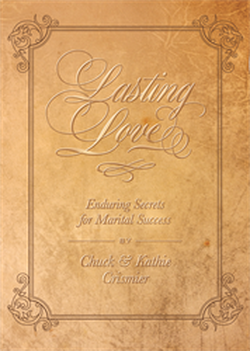
LASTING LOVE can be a dream come true. Yet love requires more than a dream or those loving feelings we so much desire.Lasting Love, Chuck and Kathie Crismier, celebrating their Golden Anniversary, unveil seven enduring secrets that will inspire and strengthen your marriage as it has theirs. COPY and PASTE this link to WATCH the TRAILER: https://www.facebook.com/Save-America-Ministries-204687919570536/videos
Past Episodes
This ministry does not have any series.
Featured Offer
LASTING LOVE can be a dream come true. Yet love requires more than a dream or those loving feelings we so much desire.Lasting Love, Chuck and Kathie Crismier, celebrating their Golden Anniversary, unveil seven enduring secrets that will inspire and strengthen your marriage as it has theirs. COPY and PASTE this link to WATCH the TRAILER: https://www.facebook.com/Save-America-Ministries-204687919570536/videos
About Save America Ministries
About Chuck Crismier
Contact Save America Ministries with Chuck Crismier
crismier@saveus.org
http://www.saveus.org/
Save America Ministries
P.O. Box 70879