
TRADITION vs. TRUTH


The battle that "crucifies" Jesus
Guest (Male): Host and author Chuck Crismier. Viewpoint is a one-hour talk show confronting the issues of America's heart and home. And now with today's edition of Viewpoint, here is Chuck Crismier.
Chuck Crismier: Has the resurrection taken effect in proving revival or renewal, spiritual revival renewal in the United States of America? Today on Viewpoint, we're going to take a look at that, and I'm glad that you've joined us here on Viewpoint as we confront the deepest issues of America's heart and home.
Resurrection. You see, resurrection was not only from the grave, but it was to something else. But what is the revival going to be? A revival from what and to what? We want to take a look at that here today on Viewpoint. And again, I'm so glad that you've joined us.
Jesus said, "I am the resurrection and the life. He that believeth in me, though he were dead, yet shall he live. And everyone that liveth and believeth in me shall never die. Do you believe this?" he asked.
Well, I do believe that. I believe that the resurrection was the dividing line of all human history. It's not just the birth of Christ. It wasn't just the death of Christ, but it was the resurrection of Christ. And without the resurrection, we have no hope.
So in the resurrection, we do have hope. But where do we put our hope? Where do we put our trust? We put our trust in tradition or truth. That's the issue here today on Viewpoint. Do we put our trust in tradition or truth? And we're going to find as we look at what's happening in the spiritual arena, some would call it the religious arena, but the spiritual arena in America today, we're going to see both what seems to be very positive movement, i.e., resurrection revival, or a resurrection to tradition and not necessarily truth.
So today on Viewpoint, we take a look at that. Remember Jesus said to the religious leaders of his day, "You, by your tradition, do make the word of God of none effect." So you see, tradition is good only if it undergirds and amplifies and leads us even further into the embracing of truth. But when tradition begins to replace truth, we're in trouble. In trouble.
So then you could say tradition, truth, or tribulation. Because tribulation then, which would be pressure and all kinds of chaos and upheaval, would follow in the agonizing, shall we say, division between the pursuit of tradition versus the pursuit of truth. In fact, that is exactly what caused Jesus to be crucified in Israel almost 2,000 years ago. It was the battle between tradition and truth.
Jesus said, "I am the truth and the life." But the religious leaders said, "No, but we've got to protect our traditions because if we don't protect our traditions, then what are the Romans going to do? And what's going to happen to our power, perks, and position as religious leaders? We've got to protect the tradition." And so they chose to protect tradition over truth.
Pontius Pilate got in the middle of it all, and he asked the question, "What is truth?" Well, that becomes the fulcrum question before us here on the program today. So again, I'm so glad that you've joined us. It may sound a little confusing as I've introduced these issues here today, but you'll find out why as we go into the depth of this subject, particularly focusing on the millennial and Generation Z population.
You see, the millennial and Generation Z population encompass the largest two generations in American history following the Baby Boomer generation. An article came out today or yesterday from Newsmax where a Roman Catholic priest by the name of Enrique Salvo, the rector of St. Patrick's Cathedral in New York City, made a statement.
He made the statement on Sunday that many were searching to fill that void that only God can fill. Now, who was he talking about? He said a surge in religious engagement among younger Americans reflects a broad spiritual revival. Now, he's speaking about this on the very day in which we were celebrating the resurrection. Sunday, Jesus arose from the grave early on Sunday morning, the first day of the week.
So the priest went on to point to renewed interest among Generation Z and millennials as evidence that faith is spreading in a way similar to the early church. Sounds like a resurrection, doesn't it? Let's remember, he said, first and foremost, that the resurrection, the biggest moment in history that will ever have been or ever will be, happening less than 2,000 years ago, he said.
The same way that the early church spread is still happening right now, said the priest. And it's the same way Jesus Christ is sending the Holy Spirit. Well, the Holy Spirit was already sent. The Holy Spirit was sent on the Day of Pentecost, you see. And if we would receive the Holy Spirit, Jesus said to the disciples, "Receive ye the Holy Spirit. Receive ye the Holy Spirit."
So the priest went on to say that young people are increasingly turning to faith as they look for deeper meaning and connection. What is faith? We've got to be very, very careful when we talk about faith because now we're talking about where does the word "faith" fit concerning the balance between tradition and truth?
You see, just because we use the word "faith" doesn't mean we're talking about the same thing. We could be talking about Hinduism or Buddhism or New Age-ism or any other kind of "ism." So what are we talking about? Are we talking about the Christian faith? So we have to be very careful when we use words that oftentimes are used now actually not to strengthen truth, but to obfuscate truth. That's oftentimes why the word "faith" is used today, so that you don't have to be beholden to anybody's particular definition.
So the priest said that young people are increasingly turning to faith as they look for deeper meaning and connection. Well, almost all human beings want some sort of meaning in life. In fact, one who came out of the Holocaust actually wrote a book concerning the need for meaning, the deep need for meaning in life. Another wrote, "He who has a why to live can withstand almost any how." Well, that's a form of faith because you have a why to live, you have a purpose, but it doesn't necessarily drive yourself into the arms of Jesus Christ.
A recent Barna Group survey supports the same trend that the priest talked about, showing engagement among Generation Z and millennials rose more than 40% over a six-month period last year, with younger Americans now attending church more frequently than older generations. Well, that indeed is very interesting. Many attribute that to the Charlie Kirk effect.
But Salvo, the priest, went on to say all of these young people are on fire. Their faith is real. What does that mean? They're on fire. Their faith is real. He said the added shift could become a long-term societal effect as young adults build families centered on faith. When they come to church, they want a beautiful, solemn Mass, he said. They want a real worship. Oh, now we're starting to get to the issue at hand: tradition versus truth. We'll be right back.
Guest (Male): Once upon a time, children could pray and read their Bibles in school. Divorces were practically unknown, as was child abuse. In our once-great America, virginity and chastity were popular virtues, and homosexuality was an abomination. So what happened in just one generation?
Hi, I'm Chuck Crismier, and I urge you to join me daily on Viewpoint where we discuss the most challenging issues touching our hearts and homes. Could America's moral slide relate to the Fourth Commandment? Listen to Viewpoint on this radio station or anytime at saveus.org.
Chuck Crismier: Tradition versus truth. The statement coming from Father Salvo, the priest in New York City, said that of the millennials and Gen Z, when they come to the church, they want a beautiful, solemn Mass. They want to really worship.
Well, what is a beautiful, solemn Mass? A beautiful, solemn Mass is actually another way of expressing Roman Catholic tradition. That's what it is. And for Roman Catholics, there are basically two traditions. One is the Latin Mass, and the other is the revised English version of the Mass that has been ridiculed by those who followed the Latin Mass. And now there are many who are searching for the Latin Mass that is now seeing somewhat of a revival. Why? Because it smells or smacks of tradition.
So where is the truth in all of it? Forget the word "Mass" for a moment because we're speaking both to Catholic and Protestant listeners here on this Viewpoint, on this program, by the way. And speaking of Catholic and Protestant, let me just mention to you something that we just discovered today. And that is in the Northeast, which is heavily Catholic, Massachusetts, Connecticut, and so on, where this program airs on three separate stations and has aired for 26 years. We have aired longer in Massachusetts and Connecticut than any other place in the nation, except for Richmond, Virginia.
So what's happened there? Well, we had tremendous listenership, in fact, to the point where at one point, we actually had one of our annual breakfasts at an organizational meeting place that was owned and operated by a Catholic organization. We had more people attending that particular breakfast than any other breakfast we have ever held. And then they kicked us out.
Why did they kick us out? Because we didn't fit with their tradition. That's why they kicked us out. It had nothing to do with truth; it had everything to do with tradition. So the net result now is that after 26, 27 years on the air in Massachusetts and Connecticut, which are heavily Roman Catholic, we still have Catholic listeners, some of who have actually said, "Chuck, you're the best Catholic I know, except for your stance on the Pope and on Mary."
Well, I'm not going to speak to whether or not that's true or not, but that's what has been said. Why? Because they like the focus on truth on this program. Not tradition, but truth. That's what they were really commenting about.
But here's the problem. What we've discovered now on three separate stations in Massachusetts and Connecticut, coming all the way from Central Massachusetts and Springfield and all of that area into Connecticut and then on to Boston, we have discovered that we are paying out $800 a month more to be on those stations than we're receiving in donations from our listeners. It's the only place in the country where that is true.
I want you to think about the implications of that. If you're looking for truth versus tradition, then just maybe it would have been the reverse of that. But maybe there is a very strong inclination to tradition versus truth. And here on this program, we're not talking about Catholics or Protestants. We're just talking about biblical truth. As I've said many times, there are many people who have been raised in the Catholic Church who are listening to this program and who attest to being very strong followers of Jesus Christ, trusting in him for their salvation without works. And so I'm not going to quibble with them.
Do I agree with all of the traditions and so on of the Roman Catholic Church? No, I don't. But neither do I agree with all of the things that are going on in the Protestant Church. I'm concerned about what Jesus taught. I'm concerned about what the apostles taught. I'm concerned about whether we line up with truth rather than anybody's tradition. Because tradition can lead us into tribulation when it comes in war with truth.
So all of that having been said, they want a beautiful, solemn Mass. They want to really worship. So I received or listened to a very interesting interview today and conversation on one of the major talk shows in the country. And the talk revolved around Generation Z and millennials and their religious orientation and how they were flooding back to church.
Well, the particular talk show host was very obviously a practicing Roman Catholic and made no bones about it, really. In fact, almost all of those on Fox News are promoting Roman Catholicism, if you hadn't noticed that. I said almost all, not all, but almost all. That's the prevailing focus. The same is true on Newsmax.
So we're not going to go into why that is; it just happens to be a fact. So when you listen to what is said, you have to listen through a filter of who is saying it and out of what window they're looking to make the statements that they do. So what we're looking at now today is why is it then that millennials and Generation Z seem to be trending strongly back to tradition, whether it's Roman Catholic tradition or whether it's tradition within the Protestant Church?
And we're going to explore, all right, where is the weight of the flow? Is the weight of the flow from Generation Z and millennials to Roman Catholicism, or is it to Protestantism, or is it an equal balance? Where is it, and why is that difference? That's what we're going to take a look at. Because it has everything to do with the ultimate end of the story.
We are resurrected not just from something, but to something. We're not just resurrected from dead works to serve the living God. We're not just resurrected from the grave to awake, but we're to awake to something.
So, by the way, if you have not had an opportunity and made an opportunity to see this amazing film by Sight & Sound that is out now called "The Great Awakening," you are missing out on something terrific. You need to make the opportunity to see it, and do it as soon as you possibly can, lest it should come off the screens. "The Great Awakening." It will just probably awaken your own spirit.
My wife and I sat in that theater, which was very sparsely occupied, and people did not want to get up from their seats after it because of the profound implications and weight of the program. "The Great Awakening." Make sure you see it. I'm not a movie guy, but I'm telling you, that film was worth seeing and maybe worth seeing again.
But what was the Great Awakening about? It was a great awakening from a death knell, a spiritual death knell that had come upon the American colonies. You see, first there was a great awakening, and then there was another awakening that came in the late 1700s. The first was in the early to mid-1700s. And then after the Revolutionary War, there seemed to be a kind of spiritual doldrums that fell upon the country. It was very serious and very palpable.
And it was at that time that George Whitefield came in and really began to stir. And as a result of that, the Constitutional Convention actually brought forth a Constitution through the words of an otherwise very secularized Benjamin Franklin. His heart was stirred, but he never became a true believer, not that we know. Not that we know.
So you can have your heart stirred, you can have what seems to be a kind of resurrection in your spirit, and still not become a true follower of Jesus Christ. That was the tension that always existed between George Whitefield and Benjamin Franklin. To his last days, George Whitefield, a good friend of Benjamin Franklin, pleaded with Benjamin Franklin to embrace Jesus Christ as Lord and Savior. But he resisted and resisted and then made an expression of some change, some resurrection of spirit in his address to the Constitutional Convention, which you will enjoy and much appreciate as you watch that movie.
All right, that having been said to contextualize the further conversation here, we go to a question that I asked our dear old friends called Google that always responds with AI. Millennials and Generation Z, what's happening with them? Are millennials and Generation Z turning Protestant or Catholic? That was the question that I asked.
So the response: Generation Z and millennials are not broadly turning toward Protestantism or Catholicism. Rather, they are primarily turning away from religion altogether, with 34 to 35% identifying as religiously unaffiliated. While some studies suggest a niche, fervent increase in young Catholics, about 48% of Gen Z are "nones," compared to only 36% who are Christian.
So only 36% claim to be Christian of the Generation Z-ers. 48% claim to be none of anything. In other words, they're called the least religious generation in US history, with 44% of 18 to 29-year-olds religiously unaffiliated anywhere. Now, does that mean they're not people of faith? No, it just means they're not identified with Protestant, Catholic, Orthodox, or any other kind of religious connection.
But usually it indicates that the faith that they're talking about is what is generally referred to as "I feel spiritual." Well, feeling spiritual should not shock anybody because we were made in the image of God as spiritual beings. So therefore, feeling spiritual means nothing. It's what you do with the feeling of being spiritual.
Then the article goes on to tell us some data, going back to 2023, indicated the Generation Z Catholics (21%) might outnumber Protestants at 19%. However, other studies from the Pew Research Group show Protestantism still holds a higher percentage among young adults (28% Protestant versus 14% Catholic). Well, those who are Catholic spokesmen, which are the primary groups in the media today, will tell you just the opposite. So it depends on what voice are you listening to, and why are they saying what they say, and where do they get their information?
Next, while the overall number of Catholics is not experiencing a massive surge, young Catholics who do stay are often more deeply engaged, engaging more frequently in Mass and parish activities than older generations. And that is what the priest, Mr. Salvo, there in New York was really observing.
Next, the percentage of Generation Z identifying as Protestant, though, has dropped significantly to roughly 22%. I wouldn't doubt that either. So there's a tension going on here. Is everybody turning, all the young turning to Roman Catholicism? Are they turning to Protestantism? Apparently, they're not turning to Protestantism nearly as much as they're turning to Catholicism. But why? The issue is always why. And we'll have to talk more about the why when we get back. It's huge. It has everything to do with tradition versus truth and whether or not we're seeing a true revival and or resurrection for the end times. We'll be back.
Guest (Male): There is so much more about Chuck Crismier and Save America Ministries on our website, saveus.org. For example, under the marriage section, God has marriage on his mind. Chuck has some great resources to strengthen your marriage. First off, a fact sheet on the state of the marital union, a fact sheet on the state of ministry, marriage, and morals at saveus.org.
Marriage, divorce, and remarriage: what does the Bible really teach about this? Find all of this at saveus.org. Also, a letter to pastors: The Hosea Project at saveus.org and many more resources to strengthen your marriage. It's all on Chuck's website, saveus.org. Again, you can listen to Chuck's Viewpoint broadcasts live and archived at Save America Ministries' website at saveus.org.
Chuck Crismier: Compare these statistics and see if you can make any sense out of them. In 2022, 16% of millennials were Catholic. It's 20% in 2023. Among Generation Z, 15% were Catholic compared to 21% in 2023, just three years ago. In other words, this was a great increase in both millennials and Generation Z who over a three-year period, or actually over a one-year period, were moving to embrace Roman Catholicism.
Another article says recently there has been talk of a Generation Z revival. It's not just Generation Z leaving Protestantism, but they're coming to Catholicism. Well, that is yet another viewpoint, and there are statistics that people could look at to embrace that as a truth. The next is Generation Z is the least religious generation in US history. Yet Generation Z is going to church more than any other generation today.
Well, isn't all this interesting? So what does this mean? I'm going to attempt to interpret this for you, and I hope that you will see that it's not a matter of bias toward Protestantism or Catholicism in and of itself. I believe that the issue is much deeper than that, much, much deeper than that, and goes to the title of the program: tradition versus truth.
Now, can professing Roman Catholics embrace truth? Absolutely. Can professing Protestants embrace truth? Absolutely. Can professing Roman Catholics not embrace truth? Yes. Can professing Protestants not embrace truth? Yes. So the problem, you see, is not about whether or not they'll embrace truth. It's what else are they embracing as opposed to truth? Because if Jesus Christ is the only way, the only truth, and the only life, and we embrace only what he says as truth, then it should unite us.
That's exactly what Jesus said in John 17, his high priestly prayer. He said to his disciples, sanctify or set them—he was praying to the Father and he said, sanctify or set them, the disciples, apart according to thy truth, thy word is truth. Then he said, now unite them together so that the world may know that you have sent me.
So the emphasis was not on unite them; it was on the truth. What was going to unite them? Not tradition, truth. That's what was going to unite them. So what is it that disunites us? Tradition, not truth. Tradition is what disunites us. It unites only certain groups and certain peoples, but it does not unite all in Christ because tradition is elevated over truth.
Therein lies so much of what ails us in the professing body of Christ. And if we don't understand that, if our pastors don't understand that, if our denominational heads don't understand that, we are missing the mark. The problem is in understanding that we don't really want to understand that, and the reason is because we have our groups to support. Our groups to support.
Now, what are those groups called? Well, in Protestantism, they're called denominations, right? So in America, we have 2,200 so-called Christian denominations. In the world, we have over 20,000 so-called Christian denominations. How can they all be united? They can't be.
So then you have things such as, "Well, we're going to be united about things that we deem essentials, and then as to other things that we choose not to deem essential because they always divide us, then we're going to be united about the things that are we deem to be essential and then we'll just leave the other things for people to do what they want to do." Is that what unites us? No. That can't be what unites us because if Jesus Christ is the way, the truth, and the life, and we're told not to add to the word of God or take from it or suffer a curse, then quite frankly, if we play games with what Jesus or the apostles have said and decide to twist so many things to our own purposes for our denominational or particular group adhesion or power, we have automatically divided the church. We're becoming artificial pseudo-Christs ourselves, right?
That's our problem. And so Generation Z and the millennials have experienced a situation going back to my generation. Well, actually, I came from the greatest generation, the last year of the greatest generation in 1945. So from 1946 on to whatever the year was, came the Baby Boomer generation, which at that time was the largest generation in American history, post-war.
And the Baby Boomer generation was the generation, you see, that brought about the sexual revolution in the 1960s, that brought about the great, not revival, but brought about the great rebellion against authority not only in America but all over the Western world. It was out of that generation that rock and roll came. It was out of that generation that the Beatles came. It was out of that generation that the Rolling Stones came and said, "I can't get no satisfaction, but I tried and I tried and I tried."
I couldn't get no satisfaction. So the Baby Boomer generation couldn't get no satisfaction. And then we moved into a whole season in the 1970s with the church growth movement where everything turned to love, love, love, came out of the free love movement that was translated into the church as God is love, God is love, God is love. And God is love, but that's not all he is. He's truth, he's justice, he's judgment, and judgment. He's all of the above, both sides of the same coin.
But that coin was rejected. And so those who grew up in the Baby Boomer and then the following the Generation X, the children of the Baby Boomers, grew up with a faith that was based upon feelings. Kind of like the song "I Got That Loving Feeling," right? Well, that same thing, that same spirit was translated into the music of the Baby Boomer and Generation X, the children of the Baby Boomers, in the 1970s and '80s.
Then with the seeker-sensitive movement that came through the Protestant Church in the 1990s, it got even worse. There was no anchor of truth. It was all about love, love, love, mercy, mercy, mercy, but there was no truth. The truth was given short shrift in order to grow more churches and bigger churches. That was the theory.
So you had Robert Schuller, head of the church growth movement in one respect, built the Protestant, the glass cathedral there in Anaheim, California, that's now inhabited and taken over by the Roman Catholics. He said it's abuse to tell people that they're sinners. They just need more self-esteem; in other words, they need to feel better about themselves. That was his gospel.
Well, here's the problem, friends. You may wonder where this is going, but I'm telling you that now, after two generations of this, Generation, the millennials and Generation Z, are having to come to grips with the fact there ain't no anchor for their soul. It's all been about feelings. And all the songs in Protestantism are about their feelings. They're lilting love songs about their feelings, but not about the truth. And the cross itself has fallen on very hard times. And people can't get no satisfaction.
Generation Z and millennials have no anchor for their soul. They can't even launch into life. Sociologists are saying there's a failure to launch: they can't get married, they can't do this, they can't do that. And now, guess what's happening? As they're beginning to come back to church in small numbers and particularly seek tradition, they're wanting to get married.
It's interesting. This is what's happening. But is this a resurrection of faith or is this a resurrection of the pursuit of tradition? Tradition is not evil in and of itself, but if it fences out truth in any way, tradition itself becomes an idol. And ultimately, it will not lead to fulfillment, it will not lead to righteousness, it will not lead to holiness, and it will not lead to genuine spiritual revival.
That's the problem that we're facing right now. So this last weekend, my wife and I were really struggling with some of this, and I thought, "You know, let's go to some particular well-known church in our area and experience their Resurrection Sunday." The worship, the teaching, and so on. And we did. We chose one that we thought would probably be stronger than the other one that we had thought to go to. And boy, were we disappointed. We were shocked. There was no resurrection message, not really. It was all about jumping and shouting and trying to conjure up some sort of emotional excitement. But in terms of speaking about the serious nature of the resurrection, the crucifixion, the resurrection, and hope in Christ and so on, it just wasn't there.
It was almost like a message of, shall we say, religious churchianity self-help. We were very disturbed. But then I want to share with you what happened when we began to explore the other church of a completely different ilk, all within Protestantism, and what we found. It helps us to understand the dynamic that we're dealing with Generation Z and millennials.
Guest (Male): Have you ever considered what the early church was like? Many people are developing a hard longing for a greater fulfillment in our practices as Christians. A recent study showed 53,000 people a week are leaving the back door of America's churches in frustration. What is going on? Why has there not been even a 1% gain among followers of Christ in the last 25 years? Could it be that God is seeking to restore first-century Christianity for the 21st century?
Jesus said, "I'll build my church." Is Christ, by his spirit, stirring to prepare the church for the 21st century? The early church prayed together and broke bread from house to house. They were family, and it was said by all who observed, "Behold how they love one another." Incredible. But the same can be found right now. Go to saveus.org and click "cell church." We can revive first-century Christianity for the 21st century. It's about people, not programs. It's about a body, not a building. That's saveus.org. Click "cell church."
Chuck Crismier: Replace cell church with house church, and you might be closer to the truth in the New Testament church. All that having been said, for those of you in the Connecticut and Massachusetts area, I would like to urge you to seriously consider becoming a partner with us. I know we have a lot of listeners up there, and every other year, we go there to hold a breakfast specifically for our listeners because we know that you're living in an environment that wars between truth and tradition.
It's a very difficult environment coupled with radical political liberalism. We know that. So why then are we not receiving more support from those of you who are struggling in that area and are looking for truth? If you value what we're doing here, then I urge you to become a partner. Don't wait for somebody else to do it.
And now we just received a notice that another station is coming on in Springfield that will give a full FM signal that will never go down during the wintertime. And we have a choice to embrace that station that will give us even greater coverage, more secure coverage for the entire area. Shall we embrace that or not? We have to have support, you see, of those in the Massachusetts-Connecticut area. You see, these things don't just happen. There are no deep pockets to dip into.
God relies upon his people to provide, and we rely upon God to provide. So when we call out to the Lord, then he has to speak to you. And we mention that here not to coerce, but to say, "Look, you need to consider. If you want the message to go out in your area, which is very difficult to find, we have people saying, 'Where can we find this?' If you want that, then you need to come behind it and support it." Yes, through prayer. Love your comments and so on. But without the finances, friends, it doesn't happen. It just doesn't happen.
The article CampusReform.org: "Generation Z flocks to Catholicism in search of truth and order, as young people reject leftism." Now, I thought this was an interesting title. Generation Z flocks to Catholicism in search of truth and order. Now, the order that they're referring to you might call tradition. In other words, they're wanting something that seems like an anchor for them because everything else seems chaotic.
So they're searching for truth and order. So what is it that they're actually gravitating to when they go to the Roman Catholic Church? The Mass, which they perceive as order. Tradition. That's what they're seeking. Tradition, order, something that makes them feel spiritual. And they're not getting that in so many of the Protestant churches.
Protestantism itself has been declining for years and years in this country, starting with the mainline churches. And there are good reasons for that. Because the traditional anchors in truth have been abandoned in many denominations. So this weekend, I did a little investigation trying to find a way to kind of explain this, what is really happening in the Protestant churches.
Now, there are very many different denominations, and within the so-called denominations, there are sub-denominations. One of those groups is called the Presbyterian Church. So we're going to use this by way of illustration. You could see this in other denominations like the United Methodist Church and so on, which is involved in schism, not only in this country but all over the world.
But let's take a look at the Presbyterian Church. The Presbyterian Church basically is divided into three separate denominations now. They're not just Presbyterians to be Presbyterians to be Presbyterians. Because the Presbyterian actually now devolves only in the area of leadership called the Presbytery. That's what makes you a Presbyterian.
But aside from that, that kind of governance or organization, what is the Presbyterian Church today? Well, there are three different aspects of the Presbyterian Church today. There is the Presbyterian Church of USA, PCUSA. That is the most liberal aspect of the Presbyterian Church. And all of these groups have broken away, you see, to form their own view of truth and tradition, the melding of truth and tradition.
So PCUSA is known as the LGBTQ-affirming, radically affirming group that will, shall we say, ordain women in the ministry, approve homosexual marriages, and approve the practice of LGBTQ in their groups, including ordination of practicing LGBTQ people.
Then you have the PC of America, which is the most conservative group of recent affirmation. They are the ones that hold to, shall we say, the faith once delivered to the saints from a Presbyterian viewpoint. So they reject all of the social movements toward LGBTQ and all of those things and abortion and so on. They reject that absolutely. But they maintain, shall we say, a usually a very formal kind of Protestant church service. So people that reject the LGBTQ and so on will gravitate to PC of America.
Then in between the two has developed another group: the Evangelical Presbyterian Church, EPC. It does not officially support or affirm LGBTQ relationships or same-sex marriage. It maintains a traditional, so-called conservative view of marriage as a covenant between one man and one woman. But within it, there are internal debates that are struggling to actually affirm LGBTQ relationships even though officially the EPC, Evangelical Presbyterian Church, defines marriage strictly as between a man and a woman and views other sexual unions as unbiblical.
So where's the problem? Well, here's the problem. We were going to had decided we were going to go and visit one church, a Presbyterian church, that was growing rapidly and had become a go-to place in the broader Metro Richmond region. So I got online and decided, "Okay, let me find out a little bit more about this church."
Here's what they said in their website. Listen carefully. "We are intentionally inclusive of people of all sexual orientations and gender identities. Within our congregational life, we make a conscious and deliberate decision to celebrate the creator's diversity as uniquely embodied in lesbian, gay, bisexual, and transgender people. We intentionally design church systems and structures that include every such person in the full life of the church, in other words, for baptism, for ministry, and so on. We encourage persons of all sexual orientations or gender identities to pattern their relationships after the model of Christ's love."
In other words, the concept of love supersedes Jesus saying that these patterns of behavior are an abomination. When I read this, I was blown away. How openly and notoriously this church group, led by a pastor who should know better, whose heritage goes deeply into evangelical tradition and truth in America, would lead a congregation for the purpose of church growth in order to reject the very tenets of the group that he purports to belong to, which is this in-between group of Evangelical Presbyterian Church, EPC, that supposedly rejects all of these things.
Now, what is this telling us? This is telling us that the people in the Protestant realm that are gravitating to churches like this are being drawn not because of tradition itself, but because they don't like truth. What they—they like only those truths that they want to agree with. But they don't want to agree with things that seem to divide in the culture. So they elevate culture over Christ when it comes to those issues.
What does that breed? Chaos. It's not an anchor. So then Generation Z and millennials that are looking for something to bridge this gap that they feel that there's no anchor for their soul, guess where they're going? To the Roman Catholic Mass. That's where they're going.
In other words, they're searching for tradition and not necessarily for truth. I didn't say they're not seeking for truth; I say they're seeking for tradition, which they believe is the manifestation of the anchor for truth that they are missing. The net result of it, friends, is we're not really getting revival in our country. We're actually intentionally preventing revival because we pursue things that are of tradition for our particular group that actually divides us and keeps us from being united in the truth.
The only way out of this conundrum is for a massive spiritual awakening that is focused solely on the truth and bridges the gaps so that there is no more focus on traditional bondages. The problem is not with tradition; the problem is that our traditions are keeping us from embracing the fullness of God's truth. And that's exactly what caused Jesus to be crucified.
Jesus spoke to the masses. He spoke to the people and they listened, they heard. But the religious leaders rejected it. Why did they reject it? They said why they rejected it: because it would affect their power, perks, and position. "This guy Jesus, he's going to take away our retirement programs," to put it in a modern way. "He's going to affect our relationship with the power brokers in America, with political powers and so on. We can't handle that. Away with him."
So in comes a guy like George Whitefield or Charles Finney or John Wesley, preaching truth that pierced through all of it. And guess who rose up against every one of them? The religious leaders of the day.
We have to decide. You might want to get a copy of my book, "Renewing the Soul of America," or also "The Seduction of the Saints: How to Stay Pure in a World of Deception." Friends, these are very, very troubling times. Tradition versus truth. I hope this has been helpful to help us to understand what really is taking place.
Guest (Male): You've been listening to Viewpoint with Chuck Crismier. Viewpoint is supported by the faithful gifts of our listeners. Let me urge you to become a partner with Chuck as a voice to the church, declaring vision for the nation. Join us again next time on Viewpoint as we confront the issues of America's heart and home.
Featured Offer
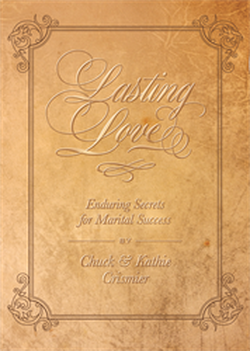
LASTING LOVE can be a dream come true. Yet love requires more than a dream or those loving feelings we so much desire.Lasting Love, Chuck and Kathie Crismier, celebrating their Golden Anniversary, unveil seven enduring secrets that will inspire and strengthen your marriage as it has theirs. COPY and PASTE this link to WATCH the TRAILER: https://www.facebook.com/Save-America-Ministries-204687919570536/videos
Past Episodes
This ministry does not have any series.
Featured Offer
LASTING LOVE can be a dream come true. Yet love requires more than a dream or those loving feelings we so much desire.Lasting Love, Chuck and Kathie Crismier, celebrating their Golden Anniversary, unveil seven enduring secrets that will inspire and strengthen your marriage as it has theirs. COPY and PASTE this link to WATCH the TRAILER: https://www.facebook.com/Save-America-Ministries-204687919570536/videos
About Save America Ministries
About Chuck Crismier
Contact Save America Ministries with Chuck Crismier
crismier@saveus.org
http://www.saveus.org/
Save America Ministries
P.O. Box 70879