

YOUR "WILDERNESS" MATTERS


Here's Hope for Dark Times
w/ Dustin Crowe
Announcer: This is Viewpoint with attorney and author Chuck Crismier. Viewpoint is a one-hour talk show confronting the issues of America's heart and home. And now, with today's edition of Viewpoint, here is Chuck Crismier.
Chuck Crismier: Have you ever experienced a time in life where it seemed like there was no light at the end of the tunnel? It seemed like you were lost. You didn't have direction. You didn't seem to have peace. It seemed like there was nothing but troubles ahead and you felt like you were wandering in a wilderness. Well, you're not alone, friends. You're not alone because yours truly has felt that. I was thinking about this before the program today and was identifying at least four times, if not five, when I was very seriously in a time of a wilderness experience.
So what happens when you're in the wilderness? Well, we find out a little bit about that when we go to the Scriptures and we find out that the word wilderness appears 294 times in the King James Bible. I bet you're surprised about that. The word wilderness appears 294 times. Apparently, it was something significant in the mind and heart of God, both in the Old and the New Testaments. And so today, we're going to take a look at what we do, how we respond in the midst of the wilderness.
Our guest today, Dustin Crow, says, "Your wilderness is not a waste. God has a purpose in suffering and struggles, and yes, indeed, in the wilderness." So Dustin, it's good to have you on the program, my friend. This is a great topic, and I'm so glad that we're going to be able to chat about it here today on Viewpoint.
Dustin Crow: Yeah, thanks for having me on.
Chuck Crismier: Well, you're a family man. You have some young kids. How long have you been married?
Dustin Crow: I've been married 13 years.
Chuck Crismier: Well, good for you. And then you have two kids, right?
Dustin Crow: Yeah, we have a nine-year-old and a five-year-old, a boy and a girl.
Chuck Crismier: Which means that anyone who has children knows that there are going to be times when they're going to be experiencing something like a wilderness experience. It could happen, they call them the terrible twos, the trying fours. And then you get into the teenage years and who knows what wonders you're going to face in the wilderness. And believe it or not, once a parent, always a parent, you don't know what kind of wilderness experiences you're going to experience after they become of age.
So welcome to the world. The world is full of wildernesses. So Dustin, that means that there's hope because if the word wilderness appears 294 times in the King James Bible, it tells us that there must be something that God has to do, a reason for being in the wilderness from time to time. What do you think?
Dustin Crow: Yeah, that's certainly true. I think one of the things you see across all of Scripture that is consistent is those wilderness places ultimately which feel like places that we feel disoriented or lost or confused, where we don't want to be. Typically, a wilderness is where you don't want to be. None of those are purposeless. God always has good reasons while we're led there. So I'm happy to talk about that today.
Chuck Crismier: Well, yeah, we know of one guy in particular who was prepared to usher in the Messiah, and he received all of his training in the wilderness. From a young man, John the Baptist was led into the wilderness and he ate locusts and honey and clothed in a leather girdle. We don't know exactly what that looked like, but we can imagine.
He was out there in the wild. It was not a cultivated area. It was not something where a lot of people were around. And it's amazing that God would use that as a means to prepare him for ushering in the Messiah. But that's exactly what happened, isn't it?
Dustin Crow: It is. And it seems like John the Baptist is an example of by being pulled out of society a little bit, by being in the wilderness, he learns that connection with God and dependence on God. You see that aspect of it where wilderness can be a place of solitude.
You see that in Jesus as well. The same Gospels that talk a lot about John the Baptist, talk about Jesus again and again. It talks about him going into the mountain and usually the mountains were in the wilderness. So they could be synonymous, but Jesus would go there and that's really where he spent time praying with the Father, getting away, having that solitude. So John the Baptist and Jesus both were examples of how the wilderness became a place to get alone with God, experience dependence on him, and create intimacy with him.
Chuck Crismier: Well, interesting you mentioned mountains. In the early years of our marriage, I spent a lot of time in the mountains, some of the highest mountains in the continental United States. I climbed a couple of 14,000-foot peaks and spent a lot of time rock climbing and out in the wilderness where there are very few people.
One of the things that I discovered out there was I was with just one guy, my buddy, a fellow Christian. But when you're out there, you just don't feel like the pressures of the world are pressing in upon you. You don't have a lot of things around the world and all of those trying experiences that are pressing upon you, but you're able to think, you're able to see things from a different perspective. And I think that's a lot of the wilderness experience, isn't it?
Dustin Crow: It is. If you use that metaphor of people today, part of why I love National Parks and State Parks and getting outside, part of that is there is a quietness. Most of life is full of distraction and it's not until you're out on a long enough hike or camping trip where you really have time to be quiet, mentally settle down, that you experience that.
I think that's what you see in Scripture. So when God takes people, whether it's Israel as a whole or specific individuals, part of why he often pulls them into a wilderness season is to get their attention or to have a space where they're no longer dependent on self or idols or going towards distractions. So they're actually alone with the Lord. And I think for us, such a part of what wilderness seasons are usually hard seasons, trials, and those feel like loud or noisy. But it's actually such a season of hardship that it gets our attention. Similarly, that's when we're able to listen to the Lord and hear from him better.
Chuck Crismier: Well, apparently there was a reason why no sooner had Jesus been baptized by the baptizer than he was led by the Holy Spirit into the wilderness. And it says he was led there to be tempted and tested. Now, we don't like to think that God leads us to be tested, but he does. Because without a test, we have no testimony, do we?
Dustin Crow: That's right. And I think that story is so good again. If you think about the wilderness either as a place of temptation or place of trial, because that was a trial, not eating for 40 days, that's a trial. We tend to think I've gotten here by accident, like either I'm lost or I took a wrong decision in life, I made a bad step.
And so I'm in a hard season because I've done something wrong and I'm being punished, or because I'm lost or God is not involved. Those tend to be our default assumptions, and so the wilderness is a waste or purposeless. It's so helpful to read that story and see no, it was the Spirit that led Jesus into this place of testing, temptation, and trial, and again, for good purposes. For him to prove his obedience, for him to become a sympathetic High Priest. So just being reminded that whatever season you're in, whatever wilderness you're in, it's not an accident. God has led you there for good and wise purposes. I think we need that reminder.
Chuck Crismier: Even though your own wrong behavior might have precipitated it, you're there still to learn, if you will. And therein lies the problem because it's a test and without a test, there's no testimony. So we want to win the test. James, the brother of Jesus, made it very clear. He said, "Count it all joy when you fall into these many trials and testing, for you know that the trying of your faith is working patience and endurance, and endurance hope." That's where we want to head today on Viewpoint. Welcome to the wilderness.
Once upon a time, children could pray and read their Bibles in school. Divorces were practically unknown, as was child abuse. In our once great America, virginity and chastity were popular virtues and homosexuality was an abomination. So what happened in just one generation? Hi, I'm Chuck Crismier and I urge you to join me daily on Viewpoint, where we discuss the most challenging issues touching our hearts and homes. Could America's moral slide relate to the fourth commandment? Listen to Viewpoint on this radio station or anytime at saveus.org.
A wilderness. Have you been in a wilderness experience? Either in the natural or maybe spiritual. And of course, emotional is related to the spiritual. Every single one of us most likely has been in some kind of a wilderness experience. Now, it can be a very serious, confrontive, even dangerous experience, or it can be a more moderated wilderness experience. I think they vary.
You can go into the very intense depths of nature where ne'er a human foot has trodden. That's a pretty deep wilderness experience. You can be on Mount Everest and have a thousand people climbing alongside you in a wilderness, a very dangerous situation. But it's a strange kind of a wilderness. You don't have control, and yet there are a lot of people around you similarly out of control. It can be a wild and uncultivated state.
You feel like nobody has ever been here before. Nobody's ever been in this situation before. It might be a moral wilderness of civilized life. It may be a place where you think you cannot hear from God. And yet it may be that it's just that very place that God intends for you to be able now to hear from him. Maybe that's the reason why the Scripture says, "Be still and know that I am God." Being still in this modern world is like being in a wilderness, isn't it, Dustin?
Dustin Crow: It is. We don't do that well. We like the noise.
Chuck Crismier: I mean with all the cell phones and digital everything, people can't even live without being digitized every moment of the day. So to be without that influence for a period of time, even for two days, would almost be like being in the wilderness, wouldn't it?
Dustin Crow: It would. And I think it shows up too when life is hard like the distractions. At night, we fill up our time with our phone, our computer, our TV, because we just don't like that aloneness, that quiet, that thinking through our experiences. And that's especially true when things are hard. We turn to something to take our mind off of it.
Chuck Crismier: Yeah. So give us an illustration of one time when you felt like you had been in a wilderness experience. For instance, how old are you right now?
Dustin Crow: I turned 42 tomorrow.
Chuck Crismier: All right. So you're just outside millennialism, aren't you?
Dustin Crow: I think so.
Chuck Crismier: Yeah, just barely outside. So you're in that realm for Generation X, Millennial, and that's why I ask you the question. So how would you describe one of the more important wilderness experiences that you've had?
Dustin Crow: I think I've been through several and I do like that metaphor because there are always really big ones that maybe we go through every few years. But then life in a broken world full of troubles, we have small wildernesses we're kind of in all the time. And so it's helpful to remember both of those are significant and both of those I need to turn to God and admit both are hard.
But a bigger one that's more recent, in the last four years, I ended up losing both my mother and my father to cancer. So my dad had his own battle and went through it for a year and he died three years ago. And so that was really hard and really struggled with that grief and disappointment. And then almost two years after that, my mom was diagnosed with stage four cancer. She was around for about a year and then I lost her last October.
Chuck Crismier: So you're the guy now. You're the guy. They're gone, you're the one. God's looking to you to be the leader now, isn't he?
Dustin Crow: Yeah, and that's been hard. I think I thought I'm a pastor, I'm a believer, I know where they're going and so it will be easier. And there certainly like I have lots of hope and reasons to rejoice, I'm thankful for their life. But there's still like grief and their loss.
I have two little kids I mentioned, so the loss of grandparents in their life. There are so many things in the last six months and then the last four years as a whole that have been really hard. And then for me, having to truly believe okay, God has good for me in this, this isn't a failed plan, this isn't waste, but he has a good plan for me, really trying to believe that and experience that. That's something I'm still kind of walking through. I'm only six months out from losing both of them and it's been hard and it's felt at times like this is disorienting and I don't want to be here. This does not feel like the good place. I want a different option in my life.
Chuck Crismier: Well, you mentioned a very important word: disorienting. A wilderness experience tends to be disorienting. I have been out in the wild in many different situations over the years, not so much anymore because of my age and so on. But my last experience like that was when I was 68 years of age and I took my three oldest grandsons on a mini expedition to climb a 14,000-foot glaciated peak in California.
And so here I am and I've loaded us up with our gear ready for glacier, ready with our ice axes, ready with our crampons and all of the necessary accouterments and our ropes, everything for safety and so on. And I get to 12,500 feet to camp ready to make the final assault to the summit. And I fell backwards with a 40-pound pack on my back and tore my ACL and my meniscus, which rendered me unable to walk, at least in normal senses.
So here I am out in the wilderness, hardly a soul out there but my three grandsons. Now what do you do? Now what do you do? Well, it's kind of in the wilderness experience, it's kind of a fish-or-cut-bait moment, isn't it? You're faced with a kind of responsibility that you never faced before. You weren't expecting it. You might try to prepare for it, but in reality, you never quite are prepared for the wilderness experience. From that experience, my grandsons learned something that they would never have been able to learn any other way.
Now, I had intended to teach them about endurance, about persevering, about patience because that's what it would take, but they learned that on steroids. Because now they had to take Papa's pack and divide it among themselves and I could barely limp even though I was strapped together with aluminum and so on to try to make my leg such that I could walk, make my way down. It was an intense situation, so much so that a doctor who showed up there said, "This is epic." Now, that was a wilderness experience and I hope that others have not had to experience it. But we learned tremendously through that. You cannot learn to persevere or endure unless you're faced with some kind of a test like that, can you?
Dustin Crow: No, and that's a hard story. But it's also I think a great summary of kind of how life is. And then you're going through something and we think it's going to turn out one way. So we have these expectations in our mind about what this experience will be and then often it doesn't go that way. That's kind of how life is. It's broken, doesn't always work.
But typically as a pastor I've experienced personally and leading sheep is in that moment, how you respond makes all the difference. And if you're primarily focused on disappointment, discouragement, this isn't going the way I wanted and then you kind of refuse to learn the lesson there, you're not going to grow. But if you say, okay, this isn't the way I wanted it to go, but God is still teaching your grandkids endurance in his own way. That's always what God is doing. He's teaching us, he's revealing himself to us, he's drawing near. But we have to in those seasons not be so caught up in the discouragement of what we wanted to happen that isn't, or the pain, and start looking for well, what is God doing?
Chuck Crismier: So God is always doing something. That's what we have to be confident. God is always doing something and he has a purpose for the things that happen notwithstanding the fact that we don't see it at the moment.
Dustin Crow: I preached one wilderness story, our church just going through Exodus, and I preached a couple of weeks ago on the story where they don't have water. And so God's led them to this place and it's very clear God knows the desert, he knows where the places are that have water and he knows where the places are that don't have water.
And he chose to lead them to a place without water and the whole story seems to be saying again that wasn't purposeless. God was trying to teach them hey, don't freak out, be dependent on me. I've already provided water in the past, I'm providing manna daily, I've proven that I am faithful. And so here's a test and I want you to respond by actually trusting me instead of grumbling, complaining, or running back to Egypt. Now, unfortunately they fail the test, they complain, they grumble, they say you failed us God, and it says they test God. But that story was such a good example about how God takes us into hard things so that we learn to trust him and so that we can live out of faith and put our hope in him.
Chuck Crismier: Did God take them into the hard thing or did they take themselves into the hard thing, putting themselves in a place where okay, God says, now I'm going to prove you whether you'll follow me or not?
Dustin Crow: It seems like both. Because they didn't have to go through the wilderness. Could they not have taken just a few days' journey and made it to the Promised Land? But they didn't want to do it God's way. There was a shortcut. The wilderness doesn't need to be a 40-year journey. But it says very clearly in Exodus 13 it says God took them on the long way. It says they weren't ready for the shortcut. And so then you have all these stories, the best stories from Exodus are in the wilderness because God had these hard but big things prepared to grow their faith and to prove himself. And so they needed it.
Chuck Crismier: Recently, I received a report from someone who had said, I'm returning to the Lord, I'm following the Lord, I'm seeking the Lord, I'm praying to the Lord and so on. And for several months, this person carried on that way and was rejoicing, seemed to have a change of heart. And then completely repudiated everything that the person said that they were doing in following the Lord. And here was the reason why: God didn't answer my prayer the way I wanted to. So in other words, the person did not respond in the wilderness and therefore didn't learn. That's a serious problem, isn't it?
Dustin Crow: It's serious and I think even if it's not quite that extreme, I see this all the time where we think okay, what I think happens is because I'm following God or seeking him, that means things are going to work out and be easy and he's going to bless me. And we interpret that as he will make the road easy. And we know from Scripture that's not what it means for God to bless you and take care of you.
But people get confused. They think oh, I've been redeemed from Egypt, now I have Promised Land. And they forget there's a wilderness between the Promised Land and Egypt. And often God takes people through that, but they're surprised. And that's that disorientation. And if people don't know this is God's common pattern in the Bible, then they throw up their hands and say either God isn't true or real or faithful because they're surprised by that pattern of the wilderness that precedes the promise.
Chuck Crismier: You spoke of that very, very clearly. And I think it's one of the problems of the last 50 years of teaching and preaching in our churches, particularly in the West. And that is we've kind of presented a false understanding of God, of his word, of his message, and how we're to live. And if we had presented things accurately, we would have quoted such things as Jesus saying, "If they persecuted me, they're going to persecute you. Why do you think you should be different than your Lord?"
We would quote things like Peter saying, "Why do you think it's strange concerning the fiery trial that is to come upon you? No, this is normal." So what's happened is we have actually seduced God's people into a line of thinking that is not prepared to endure the wildernesses of life, when in fact, if you look at the Scripture, you find out all of life is indeed a various kinds of wilderness experience so that we will be prepared to enter the Promised Land.
Dustin Crow: Yeah, that's good. I agree totally. And I think with some of that, it's redefining what does it mean for God to love his people? What does it mean for God to bless his people? And our interpretation of that is always that means God's going to give them the easiest life possible.
And as a parent as limited as my parenting experience is, I've already learned I have to take my kids through some hard things so they do learn the lessons in life and they learn to trust. And that's what it means to love them, is to be committed to their long-term good, not just to make their life easy because they're going to be happy with me.
Chuck Crismier: Yeah. Well, we used to sing a song, "My Lord knows the way through the wilderness, all I have to do is follow." The question is what does it mean to follow?
Dustin Crow: Yeah, I think part of following is trusting him. So again, so often like I said Exodus 17 where Israel got it wrong is they didn't trust God. Their questions and their grumblings were assuming, they said God must not be among us or God has failed us, he's against us. And it's just a lack of trust. And so we follow the Lord by trusting him.
Chuck Crismier: That's the key word: trust. Trust and obey for there's no other way. Friends, you really want to get a copy of this book, "Your Wilderness Is Not a Waste: God's Purpose in Suffering and Struggles." What an encouragement. A $16 book yours for $14 on our website saveus.org, call us 1-800-SAVE-USA, write to us Chuck Crismier, P.O. Box 70879, Richmond, Virginia, 23255. And we'll be right back. Your wilderness ahead.
There is so much more about Chuck Crismier and Save America Ministries on our website, saveus.org. For example, under the marriage section, God has marriage on his mind. Chuck has some great resources to strengthen your marriage. First off, a factsheet on the state of the marital union, a factsheet on the state of ministry, marriage and morals. Saveus.org: Marriage, Divorce and Remarriage. What does the Bible really teach about this? Find all of this at saveus.org. Also, a letter to pastors, the Hosea Project. Saveus.org and many more resources to strengthen your marriage. It's all on Chuck's website, saveus.org. Again, you can listen to Chuck's Viewpoint broadcast live and archived. Save America Ministries website at saveus.org.
Do you feel like you're in a wilderness experience, friends? Have you ever felt that way? Are you feeling that way rather right now, maybe even intensely so? Maybe it's in the area of your marriage. You feel like it's a wilderness. That could be one of the testing grounds to determine whether or not you're going to be able to be used of God or not, how you respond to the wilderness experience.
It could have to do with your job. It could have to do with whether or not you're going to yield to the temptation to unite with a non-believer for a business adventure when God says don't do that. It could be that you co-sign for one of your kids or somebody else when God says whatever you do, do not co-sign, do not become surety for someone else, because the likelihood is you're going to have a terrible wilderness experience and lose everything.
I'm just bringing up a few illustrations, friends, because the Bible is full of these kinds of situations that show us, warn us away from the edges of wilderness that God would never have us to go into, but we do anyway. Then there are other areas in which God knows that if we don't go through wilderness, very serious testing, we're not going to be prepared for what he really wants us to do. And that happened, for instance, with Moses.
Here Moses was raised up in the home of Pharaoh. And after 40 years, he realizes, you know what, this world is not my home. These are not my people. So the story ends up that he flees from Egypt and he ends out into the wilderness of Midian. And he gets stuck there for 40 years. 40 years! Wow.
So he's 40 years in Egypt, 40 years in the wilderness. And then God says, okay guy, I want to choose you to go and deliver my people. He says, who me? I can't do this. I can't even speak. God says, I'll be your mouth. Stop complaining. So he goes back in and God uses him to lead the children of Israel, his adopted son, out of Egypt into the wilderness for how long? 40 years.
So how many 40s do we have now? 40 years in Egypt, 40 years in the wilderness, and 40 years leading the children out of Egypt into the wilderness. It seems as if 40 may be one of the very numbers of testing because that's how many years i.e. days Jesus himself was tested in the wilderness. So how long have you been tested? 40 days, 40 years, 40 minutes. We have to be tested.
Dustin, when you look at the life of Moses, can you imagine what that guy went through?
Dustin Crow: No, that's a sharp drop-off going from being in the palace to the middle of nowhere Midian.
Chuck Crismier: Yeah, and then he cries out when he's taken the children of Israel out of Egypt, these people are screaming and hollering. They want to stone him right up front and he says, Lord God, what have you done to me? I mean he himself wasn't just leading the children of Israel out of Egypt into the Promised Land, but he himself was going through another testing, just leading them out through the wilderness, wasn't he?
Dustin Crow: He was. And that's what we talked about. You will have some very big trials in life, but we're always kind of in at least small wildernesses. And you see that in Moses where there's a clear this middle period of his life is 40 years in the wilderness. But that doesn't go away. He just has a new wilderness.
So I think part of what life is, we're always going through different challenges and struggles and some of that is training us for what's ahead and some of that is refining us and shaping us to get off what we're carrying from the past.
Chuck Crismier: All right, so you've written this book, "Your Wilderness Is Not a Waste." What you're saying is we're all going through wilderness experiences of various types, some intense, some less intense, but there's a purpose for each one. Is that right?
Dustin Crow: That's right. And my hope, as I started this as a pastor teaching my own church, and really the hope what I would want people even listeners today to get is what you see again and again in the Bible is all those wilderness stories show that God always had a good purpose. And usually it was both to prove himself, to make himself known so that their faith grows as they see wow, this is who our God is because of how he showed up in the wilderness, but also to grow their faith as they learn okay, what it actually means to follow God is I do have to live by faith and trust him. So it grows their faith. That's part of the purpose of everything in our life we go through, every trial. God wants to prove himself to you, but he also wants to grow your faith in him.
Chuck Crismier: Well, Egypt is a symbol of a wilderness experience. First of all, the children of Israel were in Egypt where a Pharaoh came out who knew not Joseph and there was no more favor left toward the children of Israel. So that became a wilderness experience for them for who knows how many years. They were there a total of about 400 years. So that was a terrifying wilderness experience. Then they come out and they go through another one on the way to the Promised Land. It's almost as if God will give us a deliverance, but you better be ready because you can't trust that you're not going to have another one shortly thereafter.
Dustin Crow: That's right. And you used the word I think this ties to that earlier, you talked about testing. And when I think of testing and how that ties to those wildernesses, I think of my kids in school. Like you have one test just to kind of say okay, did you learn the material? Are you ready to move on? And you kind of prove either I've learned the material or I haven't. And that's what tests do. Have we learned the things God has taught us or not? And it's a chance to show yes I have, ideally like I can trust the Lord in this. But then there's a next one, because as God then you pass that test, he's going to reveal more of himself to you. And he's going to reveal more of your need to trust in him or where you need to change. And so there are always these lessons of how God wants to grow our faith and prove himself. And we pass that test or we fail that test, but there's always going to be another one coming. And again, that's not to cause us to fail, it's meant to be a chance to cause us to succeed in the path.
Chuck Crismier: Well, we have learned in our own marriage, we've been married 60 years now. And what we have learned is that about every five to seven years, we face another test. And some of the tests are more severe than others. Some of them are economic, some of them are relational in different forms. But we face another test. And so you can't allow yourself to become too comfortable thinking that everything's wonderful, everything's cool, I never have to go through anything again. We have to be prepared to stand in the evil day and through all testing, don't we?
Dustin Crow: For sure. And I think that's part of what the Bible just talks about, trials, hardships over and over because one we do walk through them so often, but also I think if you are in a season, if somebody's blessed enough to be in a season that they feel like oh, it's actually pretty good, relatively easy, you do know there is more ahead and that is a great time to prepare yourself.
So that's a great time to be in Scripture, to really be convinced God is faithful and good and kind and he has good purposes in hard things. And I'm trying to see that so when I get there I'm ready, as opposed to being taken off guard and now I'm trying to go back to Scripture in the midst of the crisis. It's better to learn in advance.
Chuck Crismier: Well, was about a year, year and a half ago, I mentioned to my wife it seems like things are going along pretty well, fairly comfortable and easy. I said I wonder if we're getting ready to face another one of these trials or tests. Sure enough, we're in it. Sure enough, we're in it. And I'll tell you if we don't learn to expect that these things are going to come along, it can be devastating to people.
They will feel they've been promised that everything's going to be easy, everything's going to be wonderful, everything's going to be cool. The gospel has been marketed to them to their flesh and then all of a sudden their flesh is not able to respond with the spirit of the Lord in the time of trouble. And to me, it's very deceptive what's happened. Here we have all these young men supposedly in Generation Z that are looking for some sort of spiritual hope and so on, but they don't know what it is they're looking for. They haven't had the gospel totally preached to them truthfully. And so they aren't able to count the cost of discipleship, but they're looking. They're not prepared for difficult times and they're not being told that they're coming. And it's very troubling to me. We just haven't discipled people to be able to stand in times of testing and tribulation, have we?
Dustin Crow: We haven't. No. And that's again part of the heart behind writing the book, teaching these messages to my church. That is most of us. And even for me I would say for whatever reason as fallen sinful people, even though I know what is true biblically, when I go through a trial, I still my gut response is to think right away like oh, what is God doing? He's failing me or he's distant. Even though I know that's not biblical truth.
So there's both false teaching that has confused people and thinking like God is here as my genie to make life easy. Certainly not true. But even when we are biblically robust Christians, when we suffer, often our first assumption is like oh, I shouldn't be going through this. And again that's why I think we just need the more we are in Scripture, the more normal we see it is to be in a broken world and to see that that's not an accident. God is at work in those moments especially for your good. It's part of why I love the church. What I've learned as a younger now middle-aged man, when I talk to people, tell me how you grew as a believer the most, 90% of the time they share stories of suffering. So that's where they grew, that's how they knew the Lord and that's where they were blessed in their walk with God. But you're not taught that.
Chuck Crismier: Well, Dustin, let me encourage you. You're 41 or 42 years of age. It used to be when you hit 40 you were over the hill. But the reality is that the hill has moved. The hill is higher, the hill is moved, and it's now 60. So you're just a young Turk. You're pressing toward the mark and you got 20 more years, 18 more years to hit the top of the mountain. So keep pressing on, brother. Don't give up.
Dustin Crow: That's good news. Thank you. It's good to hear that.
Chuck Crismier: I love what you said in your book: what we need most in the wilderness isn't escape from our problems, but the experience of his presence. Which reminds me of what Moses said in the midst of the trials trying to lead the children of Israel. He said, "Lord, unless your presence goes with me, I can't do this." We'll be right back after this, friends. Your wilderness is not a waste. Get a copy of this wonderful book. $14 we'll put it in your hands on the website saveus.org, call us 1-800-SAVE-USA. You're not going to be disappointed.
Have you ever considered what the early church was like? Many people are developing a hard longing for a greater fulfillment in our practices as Christians. A recent study showed 53,000 people a week are leaving the backdoor of America's churches in frustration. What is going on? Why has there not been even a 1% gain among followers of Christ in the last 25 years? Could it be that God is seeking to restore first-century Christianity for the 21st century?
Jesus said, "I'll build my church." Is Christ by his spirit stirring to prepare the church for the 21st century? The early church prayed together and broke bread from house to house. They were family and it was said by all who observed, "Behold how they love one another." Incredible! But the same can be found right now. Go to saveus.org and click Sell Church. We can revive first-century Christianity for the 21st century. It's about people, not programs. It's about a body, not a building. That's saveus.org. Click Sell Church.
A chorus out of the 50s and 60s: "My Lord knows the way through the wilderness, all I have to do is follow. Strength for today is mine all the way and all that I need for tomorrow. My Lord knows the way through the wilderness, all I have to do is follow." Israel couldn't get that through their minds and their hearts. 600,000 men aged 20 and above came out of Egypt with God's mighty hand, but they did not survive the wilderness. Only two men out of 600,000 survived the wilderness from God's viewpoint. The rest of them did not follow.
They did not follow Moses and they didn't follow God. They hearkened for the leeks and onions of Egypt, the ways of Egypt, just like the majority of American Christians today are hearkening for the culture. That's right. Instead of setting their view on the Promised Land, they've got their view set on the culture. They're straddling the fence and they're about ready to have an unfortunate split done right down the inner part of their being. God can't handle that. He's not willing to handle that. So 599,998 men that God took out of Egypt were not allowed into the Promised Land. Only Joshua and Caleb successfully endured the wilderness.
Do you know that that's not just in the Old Testament? The Apostle Paul said in 1 Corinthians chapter 10, those things happened to them for our example. For your example, for mine. So, he said, they happened to them for our example unto whom the ends of the world are come. Therefore, don't think what happened to them is not going to happen to you. Now, it's one of the most serious warnings the Apostle Paul has given and it's almost never preached about. You know why? Because it doesn't market well.
But enduring the wilderness and being successful in following the Lord has nothing to do with the market. It has to do with the Master. So who is your Master? Dustin, that's a very powerful passage of Scripture. Why is it almost never taught?
Dustin Crow: Yeah, I think we don't know what to do when we come across things that feel like warnings, that feel harsh. Even though obviously, like you said, warnings are always out of love. Going back to the parent metaphor, like when I warn my kids, it's not because I'm mad at them, it's not because I'm harsh, it's loving. "Don't run into the street!" because I love him. I don't want him to get hurt. And those warnings in Scriptures are for our good because to protect us from errors, from idolatry, from all the things that are going to lead to corruption or pain or hurt in our lives. And God doesn't want that. So warnings are loving, people just don't often know that's what a warning is.
Chuck Crismier: Well, you know, it brings us to another area of application of wilderness life. And that is in families. How many Christian families are experiencing an unintended wilderness experience, the depth of which was never intended by God because they didn't parent God's way? They tried to become their child's friend instead of being their child's parent. So instead of trying to lead their children through the wilderness, they decided to be in the wilderness with their kids. And cannot understand then why the children turn out rebellious and entitled, and the depths of a wilderness experience with children now who are in their late teens or 20s or 30s with that entitlement mentality, never having been totally parented, is devastating, isn't it?
Dustin Crow: It is. And as a Christian parent, your number one job is to be a disciple-maker. Hopefully I'm a good dad, I try to be a good dad. I think my kids would say I'm fun and I'm loving and they trust me and I'm a friend and those are good. But it's in the context of ultimately I am discipling them to the Lord. And just like I would never disciple an adult Christian without teaching them about the role of trials and how God wants them to grow, that's what you do as a parent.
But I think so many parents never lean into how do I shape my kids through the hard things they're already going to go through? It's not like you have to invent hard things. They will go through so many different kinds of hard things in their life, but how do I leverage that not to sugarcoat it, not to be a just a buddy, but to point them back to the Lord in the midst of that? That's our role and I think parents don't think that is my role, to be their disciple-maker.
Chuck Crismier: And it involves correction. Correction and instruction in righteousness. That's how you protect them. You don't protect them by just breathing sweet nothings on them.
Dustin Crow: Yeah, and it's I feel like growing up in the church and we were a little bit more of like a legalistic church and so they probably talked a lot about correction. But correction in the context of mixed with love and so I think it is not a balance, but a both. And so you can't get rid of correction, but my children they have to know it's correction spoken in a way they can receive it, that they know is for their good. Sometimes as a dad, you know, I just respond harshly and I correct them because hey, you're making my life harder or hey, you're not learning the lesson I'm frustrated and I correct. In my best moments, it's correct.
Chuck Crismier: Even God as a Father responded that way to the children of Israel, remember? He told Moses, "Away with these people, I'm going to destroy them, I'm going to make of you a great nation."
Dustin Crow: Yeah. And then he showed his mercy and there's grace because he is patient with them. So as parents you have to have all of that mixed together.
Chuck Crismier: All right, now you talk in your book, you said, "Don't fall for the desert mirage." A mirage is a deceitful thing that occurs out there and leads you to believe something that isn't true. What do you mean by that?
Dustin Crow: Yeah, I think in any wilderness season, any trial, any temptation, there's always the offer of a quick fix. Let's take finances. I think you've mentioned there can be a wilderness season of like we're just struggling to provide or multiple things in our life are happening at once and we have all these bills. And the temptation is always not to trust in God alone to provide, but there will be something else. And that could be like I said, a shortcut, that can be turning to things that are probably not a good source of income. It can be, hey, I know God wants me to give generously, but I'm not going to do that because I have these bills.
And so in any trial, there will be these idols that say, hey, I can make this better, easier, faster, simpler, but you got to do it my way, not God's way. And probably all of us have tried that at times as believers and we've learned, hopefully, it never works out. It never pays off like it says, it always leads to more chaos, more confusion, more pain. But it's so tempting and alluring in the desert because it looks like that will be the answer, and it isn't.
Chuck Crismier: Very well spoken. Your book is so helpful, so practical. It leads to many questions and applications that are so needed right now because people are walking through these things and we see it every day. Every day. You know, it's kind of like the old song, "Nobody knows the trouble I've seen, nobody knows but Jesus." Well, it seems that way, but the reality is everybody's going through different kinds of troubles at different stages and it's a seemingly wilderness experience.
But you say in your book that the wilderness is a spiritual pressure cooker. I really liked that. It's true. The wilderness is a spiritual pressure cooker. And a pressure cooker is designed to cook something more quickly. But it has to come under pressure for that to happen.
Dustin Crow: Yeah, and I think again, what we want to say in seasons of wilderness is, oh, I responded that way, that's not really me. But what that pressure cooker does is the trial in life, it just brings out of us what's already there in an intensity. And so again, like if I respond to people at work or friends or my wife or my kids, and anger or frustration comes out, I can't blame the trial, I can't blame life's just had a lot going on. The anger was inside and the trial just gave kind of the heat and intensity to allow it to come out.
Chuck Crismier: Okay. All right, now you use the word pressure. And what a lot of people don't realize is that the Greek word for pressure is translated tribulation. So actually when the Bible talks about tribulation, Jesus said, "In the world you will have tribulation. Don't be afraid, I've overcome the world." He's talking about pressure. You're going to have pressure. And don't be surprised that you're going to have pressure. James said that, Peter said that, Paul said that. He went through terrible pressures. They were wilderness-like experiences. The pressure cooker.
But then Jesus said there's going to come a level of pressure in the world right before my return that is going to be so great that if it were possible, even the very small remnant elect would be deceived. He calls it the great tribulation. That is going to be a wilderness experience like nobody has ever experienced before. Jesus said so, didn't he?
Dustin Crow: Yeah, I think I love to trace themes throughout Scripture and it is helpful to remember where wilderness is going. Because like we've talked about, even when trials pass, like you can be going through a trial, God provides, God takes care of you, it passes. Part of the bad news is in this world, we will always have trials.
I love part of what there are all these verses in Isaiah that talk about I think the new heavens and new earth way down the road when sin is removed, evil is removed, and that's when we're told that's where wilderness is finally and forever gone. But sometimes we need to remember we're not there yet. So even if I get past this trial, I know another one's going to come. Even if I have blessing, there's always brokenness. And so we need to remind ourselves that is the norm in this life because this isn't the good life. The good life is still to come. And God will fulfill all of those promises fully. So even if my disease doesn't go away, this trial doesn't end, the promise is one day down the road, it will all be made right. So we need that narrative arc of the wilderness is temporary. One day it will end.
Chuck Crismier: Well, being in the wilderness and going through trials and temptations doesn't automatically grow your faith. It can diminish your faith unless you leverage that season in the wilderness to prioritize the presence of God and to learn to trust him and obey his voice. I think the leverage word through all of this is the word trust, isn't it?
Dustin Crow: It is. Yeah. We mentioned Israel how they don't do well. I think David is often a good counter-example. He's at his best when he is under pressure in the wilderness because his response typically there is trust in the Lord. Part of trust is waiting. He learns to wait on God, to turn to God and trust in God. So I think he is such a good example. He has failures in his life, but it's usually when life is good, that's when he's tempted. But in the wilderness, his default response is to run to God as his refuge, to wait on the Lord to step in. And so I just love that example of leveraging the trial to turn to the Lord.
Chuck Crismier: Well, David, we don't think of David as having gone through the wilderness. But he went through the worst wilderness of all in the Scriptures. The worst one other than children of Israel. For six years after he was ordained as the king, crowned as the king, he fled for his life before King Saul in the wilderness. Hiding in caves, running to and fro, hiding. And even when he had an opportunity to kill King Saul that was after him, he refused to do so saying, "I will not touch God's anointed." And because of his faith in the Lord for six years running for his life but trusting God to protect him, God lifted him up and realized this is a man I can trust. And ultimately, notwithstanding his flesh, God said, "I am going to place my ultimate Son upon the throne of David."
Testing in the wilderness, friends. Where is your test coming? Are you surviving the test and is it drawing you closer to the Lord and developing your strength for the future tests to come? Get a copy of this wonderful book, "Your Wilderness Is Not a Waste." $14 on the website saveus.org, give us a call 1-800-SAVE-USA, write to us Chuck Crismier, P.O. Box 70879, Richmond, Virginia, 23255. I don't think you're going to be disappointed.
We need all the encouragement we can get for times like these. God bless. Be come a partner, friends. Truly, become a partner. We're discipling for destiny. Yes, that's what we're doing right here today. Preparing the way of the Lord for history's final hour.
You've been listening to Viewpoint with Chuck Crismier. Viewpoint is supported by the faithful gifts of our listeners. Let me urge you to become a partner with Chuck as a voice to the church, declaring vision for the nation. Join us again next time on Viewpoint as we confront the issues of America's heart and home.
Featured Offer
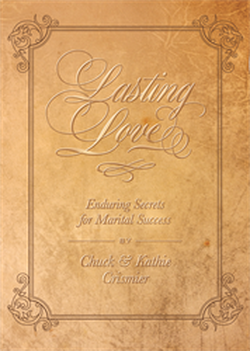
LASTING LOVE can be a dream come true. Yet love requires more than a dream or those loving feelings we so much desire.Lasting Love, Chuck and Kathie Crismier, celebrating their Golden Anniversary, unveil seven enduring secrets that will inspire and strengthen your marriage as it has theirs. COPY and PASTE this link to WATCH the TRAILER: https://www.facebook.com/Save-America-Ministries-204687919570536/videos
Past Episodes
This ministry does not have any series.
Featured Offer
LASTING LOVE can be a dream come true. Yet love requires more than a dream or those loving feelings we so much desire.Lasting Love, Chuck and Kathie Crismier, celebrating their Golden Anniversary, unveil seven enduring secrets that will inspire and strengthen your marriage as it has theirs. COPY and PASTE this link to WATCH the TRAILER: https://www.facebook.com/Save-America-Ministries-204687919570536/videos
About Save America Ministries
About Chuck Crismier
Contact Save America Ministries with Chuck Crismier
crismier@saveus.org
http://www.saveus.org/
Save America Ministries
P.O. Box 70879