
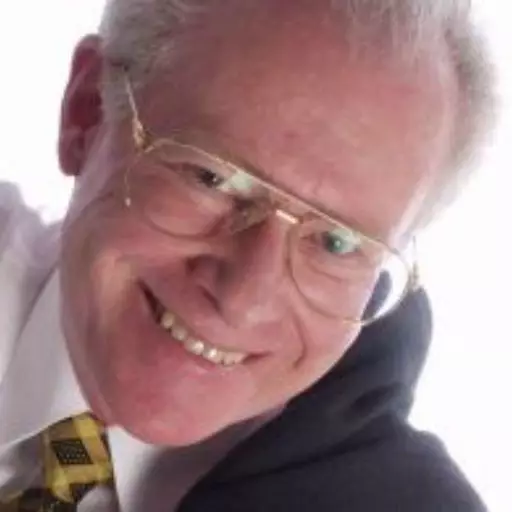
WILL YOU BE HEALED?


Is healing for today, or...?
w/ Kynan Bridges
Chuck Crismier: Does God still heal today? Is healing for today? Is it always God's will to heal now? Is it always God's will to heal at all? Today on Viewpoint, we want to talk about this matter of healing.
Of course, God wants us to be in health. In fact, John the Apostle said that we should always be aware that God wants us in health, even as our soul prospers. So maybe part of the healing thing has to do with whether our soul is prospering. If our soul is not prospering, then nothing else in our life is prospering either, even though it may seem to for a while. But today we want to focus on this matter of healing and health.
Periodically on this program over the years, we have had programs concerning our health. And indeed, God has created our bodies in such a way that they are to be healthy, they're to be strong, for the purpose of accomplishing the purposes that he has for us to bring glory to his name.
On the other hand, there are those who say healing is not for today. In fact, it's called cessationism. There's a whole belief system within many within the evangelical church that all of the things of the New Testament are passé, that they don't apply today. So why is salvation itself not passé? Does it not apply today either?
Today on Viewpoint, we try to answer some of those questions and I'm glad that you've joined us. It's conversation as always with ever-increasing conviction, talk that transforms. I remember years ago, in fact, I remember a number of things years ago, when my wife was suffering greatly from seasonal allergies. In fact, so great that her eyes were blistering over and it was just a horrific situation, absolutely horrific.
At that time, I had come across a passage of the scripture that said, "These signs shall follow them that believe: In my name, they shall lay hands on the sick and they shall recover." Well, I grew up in a situation, even in a pastor's home, where the idea of laying hands on people to pray for health wasn't exactly talked about much, even though everybody prayed for healing.
So I decided, I just felt impelled to lay hands on my wife, her name is Kathy, and to pray for her at that time. Well, here's what happened: her eyes were healed. And after that time, she never again had any more problem with blisters on her eyes from seasonal allergies. Just didn't have that.
I remember also shortly before that, our four-year-old daughter who had been seriously ill from very, very strong allergies. She was allergic to every milk product of every derivative, and I do mean every derivative—lecithin, whatever it was. And it had so affected her life that her eyes were sunken deep into her head. Everybody in our church, a traditional evangelical church, well knew of her situation. Many people had prayed for it and so on.
So here is Nicole, who happens to be my right-hand person for the last 30-some years on this program. At four years of age, she was suffering. We had had to usher her into, or rush her into the hospital many times in emergency at night to have adrenaline pumped into her heart, otherwise she would die. That's how serious it was.
Well, one day I came to the realization from the scriptures, something that had never really dawned on me before: "These signs shall follow them that believe. They shall lay hands on the sick and they shall recover." And that's really all I knew. I didn't know anything else about healing in the scriptures or anything like that. And so Kathy and I called our daughter, four years old, and said, "We're going to pray for you, sweetheart, and we're going to ask for God to touch your body because you are really, really ill."
So she said, "Okay." And so very simply, we were on the stairs there in our small home and I prayed for her and just very simply, the way the scripture says, they shall lay hands on the sick and they shall recover. I said, "Lord, we're just doing this out of obedience in thanksgiving that this is what you have said and we trust you to touch our daughter."
Well, right after I finished praying, my daughter turned to me and she said, "Can I have a chocolate cookie?" Well, she knew chocolate cookies had milk products in them, lecithin, and she had told many a person that she could not have such things. But she said, "Can I have a chocolate cookie?" And my wife said, "Well, sweetheart, don't you think we ought to go a little slower on this?"
So here's what Nicole did. In her four-year-old precocity, she stomped her little foot and she says, "You don't really believe I'm healed, do you?" Are you listening? She says, "You don't really believe I'm healed, do you?" Well, you talk about a conflict, you talk about an assault on our faith. And so we looked at one another and we gave her a chocolate cookie. No reaction.
We gave her several more things with milk products in them until Sunday evening. She had had no reaction whatsoever. And so after church that Sunday evening, we took her and some friends her age out for a meal after the evening service and she had her first bowl of ice cream and her first glass of milk. No reaction. And none to this day, and she is 54 years old.
Now, does God still heal today? I prayed for many other people over the years and they still were not healed. How can we explain this? We're going to talk about it here on Viewpoint today. Our special guest is joining us from Tampa, Florida. His name is Kenan Bridges. He wrote a book called, "They Shall Be Healed: Biblical Secrets to Divine Health and Wholeness." Kenan, it's good to have you on the program, my friend.
Kenan Bridges: Thank you so much. I really appreciate that. Thank you for having me.
Chuck Crismier: Well, I'll tell you, it's hard to deny the kind of thing that we saw and here I was an attorney. I was a lawyer, and lawyers demand evidence, don't they?
Kenan Bridges: They do.
Chuck Crismier: And so we had the evidence right in front of us and I'll tell you one thing, my wife and I desperately needed that experience because we were going to be need to be able to trust God in so many situations after that, that he knew we were going to need that direct and open answer to prayer. Two in a row. Now, that's pretty good, but we've had other situations where we have not seen that. Have you ever seen people pray and not get healed?
Kenan Bridges: Absolutely, several times.
Chuck Crismier: So why in the world would you write a book, "They Shall Be Healed?"
Kenan Bridges: That's a good question. I think it's important that we establish that the Bible, if we're believers, then the Bible is the final authority for believers. One of the things that can be problematic is when we make an argument from experience alone. Experience is important, but it's not the final authority. That's very important for people to understand.
Remember in Mark 16, which you quoted earlier, "And these signs shall follow them that believe." It talks about in my name they'll cast out demonic spirits, they will lay hands on the sick and they shall recover.
Chuck Crismier: It also says they shall take up serpents and nothing shall by any means harm them. So we've got aspects of the church, particularly in some of the southern mountains, that believe in snake handling, so to speak. Let's take up serpents and dare them to bite us. So we're talking today not about that, but we're talking about this matter of healing.
Kenan Bridges: Yes. And I believe that once we look at the scriptures with the correct hermeneutical lens, when we properly interpret scripture, if you read further down in Mark 16, it says, "And they went everywhere preaching the word, and it says the Lord working with them, confirming his word with signs and wonders." So the signs and wonders were a confirmation of the word. The wonders confirmed the word.
Chuck Crismier: That's so important to understand because the wonders, whether it was casting out demons, whether it was healing the sick, whatever it happened to be, were not the ultimate thing. They were bringing the word, the word of salvation, the word of deliverance, the word of the Messiah had come to bring ultimate salvation, but that word had to be confirmed as authoritative, and it was confirmed oftentimes by healing, wasn't it?
Kenan Bridges: It was, and it was the evidential proofs of what God said. These were the substantive manifestations of the word.
Chuck Crismier: Do we need any of that manifestation today?
Kenan Bridges: Absolutely. The gospel hasn't changed. Although there's a subsection of evangelicalism, which is basically cessationism, the belief that the gifts have ceased, but we don't have any biblical grounds for that.
Chuck Crismier: There's not one shred, not one verse in the whole Bible that supports that position, is there?
Kenan Bridges: Not one. Not one in any book of the Bible, ever.
Chuck Crismier: Then you have somebody like John MacArthur, a great teacher by the way, who loved the Lord, loved the law, loved the word of God and was one of the strongest exponents against faith healing. He just didn't believe any of that was for today. He didn't believe speaking in tongues was for today, he didn't believe that the baptism of the Holy Spirit with the evidence of anything was for today. He says it's all gone, it went away with the disciples.
So he died not long ago. He didn't die of natural causes. He died because he was sick and he never recovered. So he didn't believe in healing, and I don't believe the fact that he didn't believe in healing is the reason he died. He died because all of us are going to die, right?
Kenan Bridges: He did, but I think it's important to understand that what we believe matters. What we believe and what we teach matters. So the challenge is not just someone like a John MacArthur, who people respected and admired, it's the teaching. When you teach people that healing is no longer for today—the scripture says in Romans 10, faith comes by hearing and hearing by the word of God. That word "word" there doesn't just mean the Bible—it does mean the Bible—but it's talking about the spoken word, what is being heard in the ear gate.
So if I'm sitting in a congregation and they're saying that God is sovereign and whether you get sick or whether you're healed your faith has no part in that, although the scripture says otherwise, then that person can't have the confidence, they can't have the boldness or the assurance to even believe that that's possible. And so this is where the great conundrum we find ourselves in today is that many people don't know what the scripture says about healing because they're not being taught.
Chuck Crismier: Or even if they do know it, they're being taught otherwise, or they're listening to the voice of their experience or the experience of a dozen other people to corral their faith so internally that they can't believe.
Kenan Bridges: Absolutely. If you were to look at the example I was going to give earlier. Let's say there was another gentleman named Bob Crismier. He's like in an alternate universe.
Chuck Crismier: There actually was, by the way. And he didn't believe in Jesus and he didn't believe in healing and he died of melanoma cancer even though I sat there in his last days, his last hours, and begged him. He said, "Don't talk to me about it anymore. I can't receive."
Kenan Bridges: Wow. Well then there you go. I mean, that would be the antithesis that I would have referenced because based upon people's experience, and I believe that the gifts are not only for today, but I believe they're necessary for today.
Chuck Crismier: Why?
Kenan Bridges: Because Jesus is the same yesterday, today and forever. He said so, right? And not only that, but evil and sin are still in the world. We're still living in an age where there is evil and there is sin in the world. And as a consequence of evil and sin, we see the depravity in society, not just the moral depravity, but the spiritual depravity.
And also we see the consequences of sin on people's lives and their health. The reason why sickness came into the world to begin with is because of sin. So when people ask me, they say, "Hey, but why do people still get sick?" Well, because there's still sin in the world. Until sin is abolished from this age, then there will continue to be the prevalence of sickness.
Chuck Crismier: What's the purpose then of healing? It's not going to abolish sickness in the world, so what's the purpose of healing then?
Kenan Bridges: Healing confirms the finished work of Jesus on the cross. It points to the fact that Christ won the victory over sin and sickness 2,000 years ago. And so every time a person gets healed, it brings glory to the healer.
Now again, we know that people are going to physically die. Until Jesus comes back, people are going to physically die. But it doesn't mean we need to live a life riddled with sickness and disease. When you look at this calling that we have, the Bible says our bodies are the temple of the Holy Spirit in 1 Corinthians 6:19. I tell people like this: the devil's agenda is to riddle you with so much sickness and disease that you'll never fulfill the assignment God has for you so that your body dies before your spirit's assignment is complete.
Chuck Crismier: Or you'll be so impaired emotionally and in body and spirit that you won't have the wherewithal to proceed to accomplish his purposes.
Kenan Bridges: Absolutely. The devil wants to render us ineffective in this life. Sickness is one of the ways that he does it. When I was growing up, one of the things that bothered me, I grew up in a Pentecostal church, but I saw so many people sick and I said, "Lord, what is this? What is this? Why is this so prevalent all throughout the church?"
And it took me on a journey with the Lord and two things happened that changed my life. One, I read the Bible.
Chuck Crismier: Well, that was a good thing, Kenan.
Kenan Bridges: I know, it was a very good thing. And when I actually read the Bible, I saw the difference between what people believed about this issue and what the Bible actually says. And I saw that there was a dissonance between what the Bible testifies and what people believe.
And I thought, man, what the Bible says in Hosea 4:6 is true: people are destroyed for a lack of knowledge. So ignorance of the word of God is not bliss.
Chuck Crismier: In fact, it's dangerous. It's hazardous to your health.
Kenan Bridges: Couldn't be truer spoken.
Chuck Crismier: Interestingly, my wife and I both grew up in Christian circles. We were both believers from age five, believe it or not. Somebody just interviewed me concerning my latest book yesterday and somebody asked me, "Well, when did you have a dramatic salvation?" I said, "No, I didn't have a dramatic salvation. I came to Christ at the age of five because I knew I was a sinner and I needed salvation in a very simple way." My wife also. They couldn't believe it. They want drama. No, it is drama when God gives us a deliverance and protects us from having to go through all that nasty stuff that people create such drama for their salvation.
Kenan Bridges: Absolutely. I had a similar experience. I was saved at the age of nine watching Christian television and it has been quite the experience walking with the Lord. But I just believe that so many people are suffering unnecessarily because they don't realize the gifts. This is how I try to frame it. I'll just try to say this quickly: I used to work in the insurance business.
Chuck Crismier: Well, insurance doesn't save you from sickness or death. Why would you get that?
Kenan Bridges: It doesn't. But what I learned about insurance at that time, I was licensed in about 26 different states. And what I learned about it is in pretty much across the board, when a person enters into an insurance policy, it's a legal contract and it's in force.
But when there is an accident or some sort of issue that comes up—whether it's homeowners insurance, property and casualty, whatever the case may be, health insurance—there has to be a claim in order to receive the benefits of that policy.
Chuck Crismier: In other words, you have to make demand on the policy. You have to believe that the policy means what it says, says what it means, and act upon it in response.
Kenan Bridges: Absolutely. Because if you don't, it will sit there dormant. It's there, it's yours, it has all the benefits that it claims to have, but you won't experience those benefits until you place a demand upon them.
I believe that when Jesus died on the cross 2,000 years ago, that a New Testament was written in his blood. And this was God's last will and testament to humanity. And that will and testament had promises, blessings, and benefits including health that were written in blood. But if we don't place a demand on those promises, then we won't experience the full benefit of what the cross has provided for us.
Chuck Crismier: Are you suggesting we can demand healing from God?
Kenan Bridges: I believe we can place a demand by faith.
Chuck Crismier: In other words, we believe and we set our trust in him. We ask him according to his will and according to his word. "Here's what you said, Lord, and I'm going to put my confidence and my trust in you."
What's interesting is that we need to understand that from the very get-go, when God called the children of Israel out of Egypt, he testified to them, "I am Jehovah Rapha, the Lord that heals you." In fact, he gave them one of his names to identify his character: Jehovah Rapha, the Lord that heals you. So why would he do that if he didn't have a will to heal?
Kenan Bridges: Absolutely. Well we know further, we know that that terminology, Jehovah Rapha, was covenantal. When you read Exodus 15, he wasn't just disclosing his name, he was making a covenant with the Israelites saying, "Listen, this from now on, this is the statute and the covenant that I make with you. That from here on out, I am your primary care provider. I'm your great physician. I'm the one that heals all your diseases." And I don't believe he's changed.
Chuck Crismier: The Psalmist David said in Psalm 103, "Bless the Lord, O my soul, and all that is within me, bless his holy name. Bless the Lord, O my soul, who forgives all our sins and heals all our diseases." David said that and God called him a man after his own heart. What did David mean by that? He wasn't talking about sin, he already talked about sin: "he forgives our sins." Then it says, "he heals all our diseases."
So what's the problem? Is it that we don't have enough faith? Is it that God is sovereign and he picks and chooses who he wants to heal? We want to talk about the rest of that here today on the program. If God established his name and his character in the Old Testament to the people as they came out of Egypt, then what are the implications of that for us today?
The people then didn't believe God. They did not take him at his word. They came out of Egypt, but God couldn't get Egypt out of them. And he only allowed two men out of 600,000 men of 20 years of age and older that he took out of Egypt, he only allowed two of them into the promised land. Why? Because they had another spirit and they believed God. They actually took him at his word. They trusted him.
We have a problem today among Christians with the word "trust" because trust means casting everything upon the Lord and taking him at his word no matter what. No matter what my thinking is, no matter what my past is, no matter what my pastor says, no matter what the culture says, no matter what history says, I'm going to take God at his word. So how about you, my friend? Do you take God at his word? That's the issue.
Now here's the problem: if we take God at his word and trust him, we'll do what he says. It's called obedience. But guess what? The word "obey" is now considered the most hated word in the church. Why? We don't like that. We just don't, we want to be in control, especially in America. So therefore by definition, we really don't trust God much.
We got a trust problem, which means we have a faith problem. And faith, trust, and belief are the three words that are all linked together from the same Greek word. The same, they're facets of the same Greek word that form the Christian faith. You know what links those three words? Obey. Without obey, the stool of the Christian life collapses. Many of us are collapsing because we just don't truly trust God.
I want you to let that sink in: we just truly don't trust God much. Everything is warring against us. The culture's warring against us, our experience is warring against us, the devil's warring against us and our own flesh is warring against us. What say you, Kenan?
Kenan Bridges: I totally agree. And again, I believe it goes back to the teaching. One of the most misrepresented scriptures ever taught in the church is Matthew 28:19. Because oftentimes and especially in a modern translation, people say that we are to go into the world and make disciples. But actually in the original language, he actually says teaching all nations to obey what I command.
Chuck Crismier: Thank you very much. In other words, he doesn't say go evangelize them and get them to make a confession.
Kenan Bridges: Right. He says teach the nations to obey everything I've told you to do. So this is the problem that we're having is the teaching. If we don't teach—one of the words for teaching or a teacher is didaskalos. It means one who is a master teacher or a skillful teacher who is able to convey or unveil a mystery.
So when we talk about healing, for example, healing is one of God's promises. But unfortunately, without skill, without understanding, we cannot unlock those promises. Just like everything else. Without understanding we can't unlock the promises of God. So we'll say, "But God, you're sovereign and you're in control. Why am I dealing with this?" Well, because if he gives you the authority to do something—we see that in Luke 10:19, "I give you authority to tread on serpents, scorpions, over all the power of the enemy."
Chuck Crismier: In fact, there was a book that came out about 20 years ago called "I Give You Authority." And the guy who wrote it was an evangelical Christian. He was on this program, by the way. I give you authority, that was Charles Kraft, if I'm not mistaken. Yes, it was.
And you know what's interesting about that is that this idea of authority, even that concept, just doesn't compute today among Christians. They think the authority was delegated to their pastor or was delegated to brother so-and-so over here or evangelist so-and-so. But no, the authority was given to every believer. In fact, Jesus called twelve, he gave them authority. Then it says he called seventy others and gave them authority. And then he says, "All of you now, go out, I give you authority."
Kenan Bridges: That's exactly what he said.
Chuck Crismier: Exactly what he said. So why is it we don't believe we have authority? Because we just don't believe, right?
Kenan Bridges: It's a lack of belief. I tell people all the time, Romans 10, referencing the gospel, it says how can they believe on someone in whom they've not heard? Then it says and how can they hear without a preacher? Then it says how can he preach except he be sent? So you see that chain of events there, that sequence that the scripture lays out. That the people need to hear a message in order to believe it. And they need to hear a certain message, not just any message, but the whole counsel of God. Not just the part that says believe on the Lord Jesus Christ and you shall be saved in your house. No, the whole counsel of God.
Kenan Bridges: Absolutely. And it's interesting, I remember to give another example, years ago my wife had this very serious injury. And they diagnosed her with bursitis, inflammation in the bursa. My wife has given birth to six children.
Chuck Crismier: Whoa! That means you have a quiver full, brother.
Kenan Bridges: That's right. And so when I've seen her go through some of the most painful experiences through pregnancy, postpartum things, all of that, but I've never seen her in this much pain in my life, ever. And we've been married going on 20 years now. But in this particular instance, she was just in agonizing, excruciating pain.
So we go to the hospital. When we go to the hospital, they said, "Well listen, you're going to have to have surgery. You're going to have to go through two years of rehabilitation and then you'll have several years of therapy after that, and you have to take injections for years in order for this inflammation to go down and all this type of stuff." So that was the prognosis that we received from the doctor. But I messed around and got a higher opinion—a second opinion.
Chuck Crismier: You messed around. Okay.
Kenan Bridges: I messed around and got a higher opinion from a more skilled physician. His name is Jehovah Rapha.
Chuck Crismier: Oh, Jehovah Rapha. He's the brother to Jehovah Jireh, right? The one that provides everything. Okay.
Kenan Bridges: So when I went home and I took some oil and at about 1:00 AM in the morning, this faith just rose up inside of me. And I laid hands on my wife and I began to command her arm to be healed. It wasn't just saying, "You know what, Lord, please." I was past that and I said, "In Jesus' name, I command this arm to be healed." And I laid hands on her.
So the next day, the morning came of course, and about 1:00 PM in the afternoon, she felt some relief. By 5:00 PM, she felt a lot of relief. By the next morning, she was totally healed. No surgery, no injections.
Chuck Crismier: And how long ago was that?
Kenan Bridges: That was several years ago. No surgery, no reversal, there was never any complication since that day.
Chuck Crismier: Wow, isn't that... that's just like what happened when I laid hands on my wife concerning her eyes. When we laid hands on our daughter concerning this horrific allergy that was killing her.
Kenan Bridges: Yeah. And I've seen that time and time and time again. My son was born with an umbilical hernia. And literally one day, we're praying, they were talking about surgery and you had to do outpatient surgery to fix this hernia that he had. And we're not against that, we're not saying that that's wrong if you do that. But our conviction was, "Lord, we just believe that you can do something supernatural." And plus at the time, we couldn't afford all of that anyway.
And so we just began to pray. And literally right before my eyes, I saw the hernia begin to go down on my son's stomach. My son is now a teenager, he's going on 15 years old, and he's never had a hernia at any point. There was never a reversal, there was never any complication since that day.
Chuck Crismier: Well that's a beautiful testimony. Now here's the question that people have. "Yeah, people have prayed for me and I didn't get healed. Or I prayed for brother so-and-so and he didn't get healed. Or I prayed for my mother and she didn't get healed." How do you respond?
Kenan Bridges: My response is very simple: pray again. And this is why I say that—I know that seems like an oversimplification—but one of the things that I've realized is that in everything, just like being an attorney or being a doctor, you have to develop skill. I think it's true for every believer: we have to develop a skill set and sometimes that takes time.
Chuck Crismier: In other words, let's follow through, let's trust God, and let him do what he will, not what our experience tells us. Is it God's will to heal? That's the subject before us in this segment of the program today. Some say it was God's will to heal when Jesus was on the earth, but not today. That today we're only healed spiritually and we're only healed by dying and going to heaven. Is that true?
Then why is it that the Bible says in the New Testament that Jesus healed all that were sick, that it might be fulfilled which was spoken by Isaiah the prophet, "He took our infirmities and bare our sicknesses." They say, well it wasn't about sicknesses, it was about sin. Then why does it say sicknesses? You see, what we try to do is adjust what God's word says to what we've been told or led to believe about it.
Nobody wants to trust and then have their trust broken. Broken trust is a horrible thing. On the other hand, we're called to trust God. He's God, we're not. So when Jesus traveled the earth, walked the sod, it says he healed all that were sick. That's not quite true. He healed all that were sick that he healed, because there were many people he didn't heal. In fact, in Nazareth, it says he couldn't heal people there because of their unbelief. That was his hometown.
And we know that the apostles didn't heal everybody, but they did heal those that they felt were ready to be healed because of their faith, because of their trust. So Peter says, "Stand up on your feet in the name of Jesus." So the man at the Gate Beautiful stands up on his feet and goes leaping and praising God. How do you explain that? You can't. You can't explain it. So you can either say, "Well, I'm not convinced that that really happened" or "That was a figment of their imagination" or that "Well, that was just the apostles." You can say that, but then what you're doing is stripping away the word of God.
Now we live in two aspects of history. Kenan, I'd like you to respond to this. In that book "I Give You Authority," Charles Kraft talks about—and this was written many years ago—he talks about the Kingdom Now and the Kingdom Then. In other words, coming to pass. So we're still waiting for the fullness of the Kingdom. But we're also living in the earliest stages of the Kingdom, are we not?
Kenan Bridges: Yes.
Chuck Crismier: All right, so we should expect to see some of the signs of the Kingdom today in the here and now. Why don't we?
Kenan Bridges: Well, it is a faith issue. And I know we don't like to say this or admit it, but that's true. It's a faith problem. We have a faith problem in the church. We have an anorexic church. We have a church that's underdeveloped in their faith.
Chuck Crismier: We have a diabetic church that's been feasting on gospel sugar for 50, 60 years and the church is withering away internally.
Kenan Bridges: Absolutely. And since you referenced diabetes there, one of the things that's going to happen for the diabetic is that they're going to experience neuropathy, which is a circulatory issue where circulation or blood flow is being cut off from vital parts of the body.
So when we're being fed candy in church, then there is a flow to our faith that's being cut off, so our faith starts to wither away.
Chuck Crismier: So the gospel of good feelings that has become increasingly since the early 1970s with the church growth movement and then amplified by the seeker sensitive movement has actually brought about a diabetic condition in the church that is cutting off through a kind of spiritual neuropathy our ability to feel the full power of God.
Kenan Bridges: Absolutely. And so now when you need to walk by faith, right? You need to walk by faith and not by sight, your walking is weak because it doesn't have the power and it doesn't have the strength and the vitality that you need.
Chuck Crismier: In other words, we stumble by faith instead of walking by faith.
Kenan Bridges: Absolutely. But it all has to do with the weakness of the faith walk. And I think that one of the things that I said before the break is we talked about skill. Now this is a very important aspect when it comes to healing and when it comes to ministry. And this is why we need the Holy Spirit.
We don't approach every situation the same way. When you look at the life of Jesus, a third of his ministry was healing and deliverance, actually probably a little bit more than that. And there were some people that Jesus would speak the word and they would be healed. And this is a fulfillment of the word spoken in Psalm 107: "He sent his word and healed them and delivered them from their destruction."
But then there were other people he spat in their eyes or he laid hands upon their head. And so it means that even the Messiah himself didn't employ the same skill set or approach to every single situation. And sometimes we have to have the sensitivity to the Holy Spirit to know how to approach every situation. So there is a skill.
Chuck Crismier: A lot of people though will say—and time is so short, we want to cover so many things here—Kenan, a lot of people will say though, "Yeah, but are you saying that everybody that isn't healed just didn't have enough faith?"
Kenan Bridges: No, that's not what I'm saying. Because first of all, we all have enough faith to be healed. Just like we had enough faith to be saved. The Holy Spirit dealt to every man the measure of faith. Exactly Romans 12, right? Every man that or woman that's a believer has been dealt the measure of faith. That's how you got saved.
Ephesians 2:8-9: "For by grace are you saved through faith, and that not of yourselves, it is the gift of God, not of works lest any man should boast." So we have received faith from God to believe. So that's not the issue. The issue is that everyone has muscles. I'm talking about every healthy human being that has a healthy muscular system has muscles. We all have the same muscles and the same bones. But not every person can lift a 400-pound dumbbell. Why? Because that other person has developed their muscles and increased their muscles to the extent that they're able to lift something that is heavy or strong.
Chuck Crismier: In other words, they have to be exercised. Faith has to be exercised.
Kenan Bridges: Faith has to be exercised and it has to be developed. This is why Jesus—we know this is true based on scripture—because Jesus said that there were different types of faith. He said, "If you have faith as a grain of mustard seed." Then he told another person, "Oh you of little faith." Then he says a woman, "Great is your faith." Then he says to another, "You know what, I've never seen faith this great." Which means that even though all those people had faith, they didn't all have the same development of their faith.
Let's move on to another aspect of this. Years ago, I was asked to go and minister to a woman who was in a convalescent hospital with gangrene. And people knew that our daughter had been healed and my wife had been healed and they saw that and it was so graphic in front of them, they said, "Would you please go and minister to this sister, this woman in the convalescent hospital with gangrene?" So I said, "Okay."
And I went there, walked into the room and of course there was a very unpleasant scent, we would call it a stench, from rotting flesh through gangrene. And so I went in there, it was in her foot, and I looked at her and I began to chat with her, wanted to let her know why I was there, to pray for her and so on concerning her situation. And I noticed that her hands were incredibly gnarled up. I had never seen hands as gnarled up as this woman's hands.
And so I asked her, I said, "Is there anything in your life where you haven't forgiven someone?" Because I understood that doctors sometimes will say unforgiveness will bind a person up so badly that it causes an intense kind of arthritis that just completely boils up your joints. And she said, "Yes, I cannot and will not forgive my sister." So I said, "Well wait a minute, God says that if we don't forgive others, he can't forgive us and so on. Don't you think it would be wise to forgive your sister?" And she says, "No, I cannot and I will not forgive her."
I knew right then that she did not have faith to be healed. So I said goodbye and I left the room. There are things that impair our ability to come before God with clean hands and a pure heart. One of those is unforgiveness, right?
Kenan Bridges: Yes, absolutely.
Chuck Crismier: So sin in our lives can impair our ability to receive what we ask for. Absolutely. Do you know that that's true in the courts of men, too? It's called the Law of Unclean Hands. You cannot come before a court of equity and expect them to respond if you come with unclean hands.
Now the other thing that I want to bring up and we're coming toward the end here, and I think this is very crucial. There's a song that came out, I believe it was in the 1970s, called "Rise and Be Healed." "Has fear and doubt come against your soul, mind? Has your faith been sorely tried? Lift up your eyes, here cometh your help, for Jesus for you has died."
Years ago, I was asked to be a substitute pastor in a conservative Baptist church in California. And one Sunday they had a special guest, and he had had a very, very serious motorcycle accident and was testifying to what God had done. And I was sitting out there in the pews and the Holy Spirit spoke to my heart and said, "Son, I want you to go up to the platform and tell those that are in charge we have just heard the message for the morning."
So I did. And I walked up there, shared that and the pastor gave me the opportunity, that is the one who was in charge, the layman, gave me the opportunity to speak to the congregation. And I said, "I believe the Holy Spirit has said we have just received the message for the day." So I said, "I'm going to sing a song for you, and as I sing this song, if the Holy Spirit has spoken to your heart concerning your healing, something in your body, I want you to come forward."
So I sang the song: "Has fear and doubt come against your mind? By faith reach out and he'll meet every need, so rise and be healed in the name of Jesus. Let faith arise in your soul." I sang it completely through and not one thing happened. So I said, "I'm going to sing it again, and if there are those here who really are touched right now by the Holy Spirit, I want you to come forward."
The place erupted. There must have been a dozen people that came forward. They had never seen such a thing in that congregation because they believe in cessationism. Among those who came forward was a woman who said she had become almost deaf. A beautiful woman about 70 years old. So I laid hands on her and prayed just very simply, and she said, "This is strange, but I can hear now. I can hear." So I sent people outside the door to check to see what was going on, to verify that she could hear now, and she could hear.
It was amazing, people were excited and the next Sunday, one of the people who had been there in that church for years had gone to the district superintendent of that denomination, brought that guy in and here's what he said to the church: "If you ever see anything like this in this congregation again, we will take over your building and you'll have no more church."
This whole business of healing is a very, very big thing for God's people. I just thank you, Kenan, for joining us here today on the program. You're a blessing, my friend. Obviously you know the word of God, you've been there, you've done that, you're dealing with these issues. The book, "They Shall Be Healed," $17 will put it in your hands, it's on the website saveus.org. God bless, trust him, and may his word be done to bring healing to your life and soul.
Featured Offer
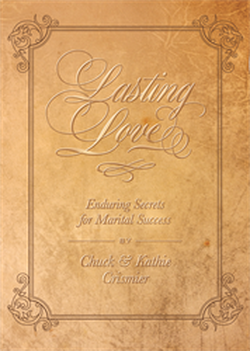
LASTING LOVE can be a dream come true. Yet love requires more than a dream or those loving feelings we so much desire.Lasting Love, Chuck and Kathie Crismier, celebrating their Golden Anniversary, unveil seven enduring secrets that will inspire and strengthen your marriage as it has theirs. COPY and PASTE this link to WATCH the TRAILER: https://www.facebook.com/Save-America-Ministries-204687919570536/videos
Past Episodes
This ministry does not have any series.
Featured Offer
LASTING LOVE can be a dream come true. Yet love requires more than a dream or those loving feelings we so much desire.Lasting Love, Chuck and Kathie Crismier, celebrating their Golden Anniversary, unveil seven enduring secrets that will inspire and strengthen your marriage as it has theirs. COPY and PASTE this link to WATCH the TRAILER: https://www.facebook.com/Save-America-Ministries-204687919570536/videos
About Save America Ministries
About Chuck Crismier
Contact Save America Ministries with Chuck Crismier
crismier@saveus.org
http://www.saveus.org/
Save America Ministries
P.O. Box 70879