
IS FREEDOM AT RISK?


Are the foundations destroyed?
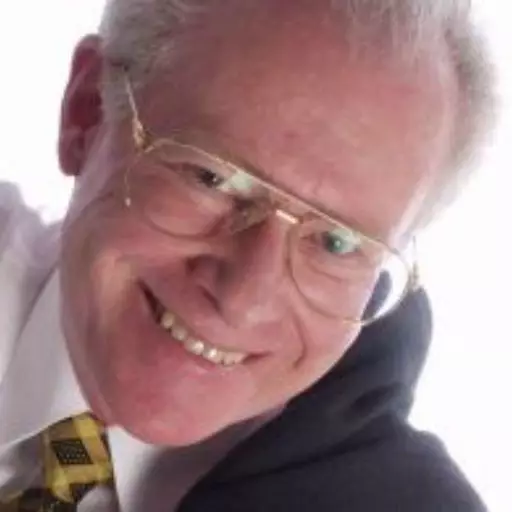
Guest (Male): This is Viewpoint with attorney and author Chuck Crismier. Viewpoint is a one-hour talk show confronting the issues of America's heart and home. And now with today's edition of Viewpoint, here is Chuck Crismier.
Chuck Crismier: It is said that freedom is not free. You've got to pay the price. You've got to sacrifice for your liberty. But what is freedom anyway? Is it freedom from or freedom to? What is freedom anyway? And if freedom has foundations, what if the foundations are eaten away and destroyed? The Bible says if the foundations be destroyed, what then can the righteous do?
So today on Viewpoint, we're going to take a look at this matter of freedom. What is it? What are its foundations? What can we do about it, and where do we stand today? Is freedom at risk? Is freedom at risk?
John Adams, the second president of the United States, wrote to his wife Abigail at the signing of the Declaration of Independence. Here is what he said. "This day will be the most memorable epoch in the history of America. I believe it should be celebrated by succeeding generations as the great anniversary festival. The day of deliverance by solemn acts of devotion to God Almighty. It ought to be solemnized with pomp and parade with shows, games, sports, guns, bells, bonfires, and illuminations from one end of the continent to the other from this time forward and forever."
Yet he said through all the gloom that we've gone through, the toil and blood and treasure that it will cost us to maintain this declaration, "I can see the rays of ravishing light and glory. I can see that the end is worth more than the means, that prosperity will triumph in the days' transaction even though we may regret it, which I trust in God we shall not."
Well, I trust in God that we shall not regret it, but in many, we are regretting it. In fact, the same John Adams wrote just one month before, "Statesmen, my dear sir, may plan and speculate for liberty, but it is religion and morality alone which can establish the principles upon which freedom can surely stand. The only foundation of a free constitution is pure virtue, and if this cannot be inspired into our people in a greater measure than they have it right now, they may change their rulers and their forms of government, they will not obtain a lasting liberty."
Powerful words from the second president of the United States, John Adams, and also the letter to his dear wife Abigail. So today on Viewpoint, I welcome you back to talk about the foundations of freedom, what we can do, how can we restore freedom's foundations.
In 1993, the Lord spoke to my heart to leave the practice of law at the height of my career to plead his cause in the land as a voice to the church, declaring vision for the nation in America's greatest crisis hour. We formed Save America Ministries at that time for the express purpose of rebuilding the foundations of faith and freedom. Rebuilding the foundations of faith and freedom.
Now, why did we use that title? Because the foundations were in deep trouble. How do we know the foundations were in deep trouble? Well, let me just give you a few illustrations from my book, Renewing the Soul of America. Here are some excerpts from America's major news magazines in 1992.
The very year the Lord spoke to my heart about leaving the practice of law and pleading his cause in the land, here's what America's national news magazines had to say about the foundations of freedom in America. Newsweek on March 2nd: How our American dream unraveled. Newsweek on January 13th: The glooming of America, a nation down in the dumps. Newsweek on March 2nd, 1992: We believed that prosperity would create the good society. We were wrong.
Time magazine, February 3rd, 1992: The fraying of America. The Associated Press on January 21st, 1992: If America doesn't watch out, it's going to be judged as finished by the world. Time magazine on April 27th, 1992: Voters are demanding in their leaders a personal virtues they decreasingly demand of themselves. Newsweek, March 2nd, 1992: We unwittingly adopted a view of human nature that assumes spiritual needs could ultimately be satisfied with material goods.
Then just one year later, April 5th, 1993, Time magazine had on its cover a cross. In the lower right-hand corner, it said "The generation that forgot God." The generation that forgot God. The one that already had forgotten God. Not the one that was going to forget God, the one that already had forgotten God by 1993.
But that's about the time when the Gulf War was taking place and Americans were becoming, shall we say, patriotic because of their fear. They were afraid of what was going to happen. And so they began to rush back to America's churches. Pastors were ecstatic. But Time magazine began to analyze what was happening. Pastors thought it was the great revival. Time magazine saw otherwise.
In interviewing various Christian religious leaders throughout the land, including some very strong evangelical leaders, they came up with this conclusion right there in the magazine called The Church Search in Time magazine, April 5th, 1993. They said Americans are flooding back to church, but church will never again be the same. Why? Because Americans are looking for a custom-made God, one made in their own image.
You say, well, what do all these things have to do with the foundations of freedom? What do they have to do with the restoration of the foundations of freedom? Well, these things reflect how the foundations of freedom itself had been so substantially eroded that within a generation, they might be destroyed absolutely. And since we know that freedom can only exist for one generation, and then, well, the next generation can pull it apart.
So where do we stand now? And if we stand in the same place or worse than we were in 1992, 1993, what can we do about it today? What can you and I do about it today? Well, one gentleman, a musician, has decided he wants to do something about it at least in terms of music.
His name is Jonathan Cain. You may know him. He gave a very strong song, a rock anthem, years ago called Don't Stop Believin'. Don't Stop Believin'. Well, now more than four decades after helping write Don't Stop Believin', one of the most recognizable rock songs in American history, Jonathan Cain still believes in the power of an anthem. And so he, as of yesterday, just released a new anthem in honor of the 250th anniversary celebration of our country. He calls it The Winds of Freedom.
For the 76-year-old Rock and Roll Hall of Fame inductee, the song represents a journey from one of the most prolific hitmakers of the century into an outspoken advocate for faith and patriotism. He said freedom is a choice. So let's see if we can pick up Jonathan Cain with just less than a minute of his new anthem.
Song: Jonathan Cain - Winds of Freedom: Oh, winds of freedom,
Still calling our name.
Fill our hearts now,
With a grateful flame.
May we always stand,
Never free,
Home of the brave.
With God’s grace,
We can carry on,
Carry on.
The winds of freedom,
Carry on.
Chuck Crismier: With God's grace, we can carry on. What is God's grace anyway? Is it his unreplenishing favor toward us? Well, no, but it is his unearned favor toward us that actually enables us to live out the things that he requires of us. But what does God require of us here in the United States of America? Was Jonathan Cain onto something? I believe that he was.
But what is it that he was onto? Where do we go from here? What is the hope for the future? That's what we want to take a look at as we continue on with our program here today on Viewpoint. There are some things that have attacked us here in this country over the past, actually the past 50 years, going all the way back to our bicentennial in 1976.
In 1976, that was our nation's bicentennial, and that year I ran for the state legislature in California for the express purpose of rebuilding the foundations of faith and freedom. I was not elected in that particular election and therefore ran again two years later. Was not elected then, but what happened was I was able to walk a thousand miles door to door for the purpose of speaking to the mind and heart and lives of all of the constituencies of the 42nd Assembly District in Southern California.
For what purpose? To rebuild the foundations of faith and freedom. As a result of that, it began to metastasize into something and spread its influence beyond that. In fact, that influence actually has continued on to this very day as I speak to you concerning the rebuilding of the foundations of faith and freedom. In 1993, when we formed Save America Ministries, shortly thereafter, the Valley Forge Freedom Foundation awarded yours truly the Valley Forge Freedom award, and what was that for? The rebuilding of the foundations of faith and freedom in the United States of America.
That's what we've been about for the past 50 years, and the one who has been my constant companion is with me right now. Her name is Kathleen Marie Crismier and she has a few things to say from her viewpoint concerning these last 50 years and then also taking us going way, way back into the 1600s, which is her heritage. Kathy, it's good to have you on the program.
Kathleen Marie Crismier: It's good to be here. Yes, I was really not aware that I had any history that was known. And in 1630, I discovered as I was trying to join the DAR once we moved here to Virginia, doing all my research, we went up to Connecticut and we sat on the green, which is like a park with all the homes of the early settlers built around it. And my grandfather of 12 generations back had a home there.
And when we were sitting there doing some family research, I looked up and there was this big plaque from the DAR telling us that those people sat there on that very lawn and listened to the impassioned speeches for getting away from England. My family. That was so moving to me that my family, my heritage was there at that time. My grandfather was Nathaniel Huntington and they were a big family and were very involved in the community and even had a church in their home for a while.
And they believed very strongly in building a country that loved the Lord. And they had a lot of sons, and one of the sons became a signer of the Declaration of Independence when he was speaker of the House. I'm not speaker of the House, President of the Continental Congress. So the family likes to say that he was actually the first president of the United States while they were waiting for Washington to be brought into that spot as first president of the United States.
Chuck Crismier: Well, in fact, he was the first president of the United States. In fact, there is an argument to this very day as to who really was the first president of the United States. Was it Samuel B. Huntington or George Washington? And indeed, if you were to look up Samuel B. Huntington and his history, you would find that the very first thing they say about him was that he was a very strong Christian man and led the Continental Congress as best he could under their limitations.
And that is the history of my dear wife sitting next to us here, sitting next to me, that is, who has now endured 50 years of God leading her husband to plea a greater cause in the land other than the cause of people in our courtrooms. Kathy, how have you responded to that? What has it meant for you?
Kathleen Marie Crismier: Well, when I was young, I did not like history at all. I thought it was boring. I had teachers that really didn't know how to teach it with passion. And so it wasn't until Chuck got involved in running for office that there was a little fire burnt in me that there was, I married a man that eventually was sounding the trumpet for the Lord and the way we're to live in California, the way it was, I mean in America.
And it was so far from our founding father's desire. There was, when in my research I found that there was a man in my generation's, or my generational line, that had written a letter decrying the destruction of the value systems that the founding fathers used and that was about 100 years later.
Chuck Crismier: So in other words, your husband's calling has had an impact on your life.
Kathleen Marie Crismier: It certainly has.
Chuck Crismier: And you had to be a very stalwart supporter and it wasn't easy, was it?
Kathleen Marie Crismier: No, it wasn't. And even what you're doing now is hard because there are so many people out there that just don't care. And I probably would have been one of them had I not really fully understood what the beginning of our nation was like and what it was meant to be. And we've just seen it crumble and nobody wants to talk about it. Nobody wants to hear it.
Chuck Crismier: So you actually found it important to spend a considerable amount of time researching your own heritage as it related to American heritage, and you found great meaning in that.
Kathleen Marie Crismier: I did. I fell in love with history and then moving to Virginia where so much happened has been a wonderful place to live. California's history was very different than Virginia. And then we go up to speak along the Eastern Seaboard and go up to the place where my ancestors landed and where they initially served the Lord and the country in positions of leadership. And so a lot of my relatives were not only involved in the community that way, but they certainly did fight in the war to separate us from England.
Chuck Crismier: All right, now it took a substantial amount of holy boldness for Kathy to join me here on the air because she doesn't feel comfortable with those kinds of things. But I encouraged her. I said, you know, without courage, we all have to have courage if we're going to rebuild the foundations of faith and freedom.
So I was asking myself, well, actually I was asking the Lord as I always do before broadcast time, how can we best understand and communicate the foundations of freedom? If we're going to rebuild the foundations, what are the foundations? And so here are the four things that I believe the Lord dropped in my mind to communicate to you, and then we'll spend the rest of the program here today building on these foundations.
The first one is faith. Now, you may say, well, yeah, I already knew that. I already knew that. Well, yes, you may say I already knew that, but what does it mean? What are the implications for the foundation of faith? Does it mean that you believe in the Bible? Does it mean you believe in God? Does it mean you believe in Jesus? What does it mean, the foundations of faith?
Well, let me give you an illustration going back to Samuel B. Huntington, Kathy's relative, going back. It says here he was a devout Christian and is considered by some historians to be the actual first president of the United States. He was raised in a strict Puritan home in Windham, Connecticut by his father Nathaniel and his mother Mehetable and frequently read the scriptures.
His faith informed his personal character, which was publicly characterized, publicly characterized by Christian virtues like quiet leadership, amiability, and deliberate fairness. As president of the Continental Congress, Huntington held the highest-ranking elected official position during the American Revolution. Think about that. It wasn't George Washington, it was Samuel B. Huntington.
When the Articles of Confederation were ratified on March 1st, 1781, his title was officially updated to President of the United States in Congress assembled. That was six years after the Revolutionary War began, after the Declaration of Independence, which he also signed, by the way.
So because of this, historians debate whether Huntington or George Washington is properly the first president of the United States. But notice the thing that was characterized of him initially: a devout Christian coming from the Puritan heritage where a godly attorney John Winthrop brought over four boatloads of Puritans to Massachusetts Bay in 1630. So that is the heritage here, and 120 years later, he becomes the first president of the United States and a godly man.
So we're talking about the foundation of faith. Then the second foundation or element of the foundations is fathers. You might think that's strange. Why would you say fathers? Well, there's very good reason for that because the Bible says if faith is the fundamental foundation, then everything else has to be built upon that. Fathers come next.
Well, guess what we talk about in the scriptures? We read about the fathers of the faith, the founding fathers of the faith, not the founding fathers of America, but the founding fathers of the faith like Abraham, Isaac, Jacob, Moses. Ah, those were the founding fathers. Yes. So what did the Jewish people do later, even into the days of Christ? They referred back to our fathers: Abraham, Isaac, and Jacob.
But Jesus said if you were of your father Abraham, then you would do the works of Abraham. So Jesus took issue with their fatherhood and their allegiance to fathers, saying it was completely inappropriate, inaccurate, and hypocritical because they did not live the faith according to their father's faith.
We have a song in America called "Our Father's God to Thee, Author of Liberty, To Thee we sing." Our father's God to thee, Author of liberty, To thee we sing. Our father's God to thee. What is that talking about? We kind of lost all significance to things like that. We don't even sing those hymns anymore. Why is that? Because we have no clear remembrance of the faith at the foundation or of the father's role in the country. After that comes the family, and after that comes the fortitude to sustain the first three: Faith, fathers, family, and fortitude.
Samuel Adams was right at the heart of the American Revolution. In fact, he was the one who really kind of bound it together. He was known as the father of the American Revolution and he was a cousin to John Adams and Samuel Adams. Here's what he had to say on being when the Declaration of Independence was signed in 1776. He said, "We have this day restored the sovereign to whom all men ought to be obedient. He reigns in heaven. From the rising to the setting of the sun, let his kingdom come."
Wow. Did you notice he wasn't talking about government? Did you notice he doesn't talking about Congress? He's not talking about socialism. He's not talking about communism. He's not talking about any ism. He's talking about the Christian faith. He's talking about the lordship of Jesus Christ, the sovereign to whom all men ought to be obedient. Isn't that interesting?
He went on to say a general dissolution or breaking apart of the principles and manners will surely overthrow the liberties of America then the whole force of the common enemy. Neither the wisest constitution nor the wisest laws will secure the liberty and happiness of a people whose manners are universally corrupt. He therefore is the truest friend to liberty of his country who tries to promote its virtue and who so far as his power and influence extends will not allow a man to be chosen into any office of the power and trust in the country who is not a wise and virtuous man. So the sum of all this is if we would truly enjoy the gift of heaven, let us become a virtuous people.
Now, isn't that interesting? Isn't that interesting? Where did the idea of virtue come from? It came straight from the Bible, friends. It came straight from 2 Peter chapter one. What did 2 Peter chapter one tell us? It said add to your faith virtue. Notice it began with faith then virtue. In other words, your life living out what you say you believe.
What kind of virtue was it talking about? It was talking about life according to God's viewpoint. It was talking about how we orient and order our lives according to God's viewpoint. Well, what is it that we know from the Bible, from the faith once delivered to the saints about God's order for government? Did you know that it has nothing to do with secular government? It has to do with the family. That's where it begins. And it begins with fathers.
Fathers. Did you hear that word, fathers? Is it any wonder then that fatherhood is at risk today? That men are demeaned and demised all across our country? Is it any wonder that men feel under the gun? Is it any wonder that women are taking over the government and rulership in so many areas which the Bible clearly says is a characteristic of the end times that women and children will rule over them? You see, we've repudiated the very foundation of freedom. Freedom begins with fathers who live out the faith once delivered to the saints. It begins with faith, then the fathers carry that out by teaching by principle and precept, and then they communicate that through precept and principle to their families.
So the family then becomes the third element of freedom, the foundations of freedom. Now the family is also under attack. The family's been under attack since certainly since the mid-1960s when Kathy and I were married. We were married in 1966. Right in the middle of the tremendous rebellion against truth. It was a great truth quake that took place in America and all over the Western world. It was also called the sexual revolution. That was the fruit or one of the consequences of the truth rebellion.
And so the very foundations of the family were shaken tremendously in the mid-1960s and have ever since. Guess what people group, what generation caused that? It wasn't Generation Z. It wasn't generation the millennials. It was the baby boomer generation. The ones that came out of World War II. After World War II starting in 1946. And we watched what's happened through the baby boomer generation, the tremendous rebellion, the hippie movement and all of that that was a rebellion against faith and family and also against fathers.
So it's taken a considerable amount of fortitude to resist these movements. What do you do? How do you stand in such a day when the very foundations of freedom are being corrupted with intentionality? What do you do? We want to talk about that in the balance of the program here today, and I'm glad that you've joined us. Again, it's conversation with ever-increasing conviction, talk that transforms.
I want to go back to the faith aspect because we need to re-emphasize this. It's not about the Congress, it's not about the presidency, it's about we the people. The first three words of the preamble to the Constitution are we the people. Not they the Congress, not they the president, but we the people. It's been said that we get the government we deserve. Why do we deserve the government that we get? Because we elected them. We elected people that shared the values that we then carried in our own minds and hearts.
But what values were carried in the minds and hearts of those that came right after the American Revolution and the first Great Awakening? Would you like to know? Well, here we have it. It is so clear. So God in his mercy or wisdom sent over a Frenchman, Alexis de Tocqueville. Historian, social philosopher, he came over in 1830 beginning in 1831. He toured the country of America for the purpose of observing the American people and their institutions.
His results were printed in two volumes published in 1835 and 1840 called Democracy in America. I want to share with you what he said in that, in those books. First of all, he said, "Upon my arrival in the United States, the religious aspect of the country was the first thing that struck my attention. Not parenthetical, the first thing. And the longer I stayed there, the more I perceived the great political consequences resulting from this new state of things." Notice the politics and consequences came out of the religious faith. They didn't come before, they came out of it.
"In France," he said, "I almost always had seen the spirit of religion and the spirit of freedom marching in opposite directions. But in America, I found they were intimately united and they reigned in common over the entire country." Think about that. This, my friends, was 40 years after the American Revolution. 40 years.
He said religion in America must be regarded as the foremost of the political institutions of that country. Today, they want to say they're parenthetical. In fact, they're not even mean they shouldn't even be considered. No, because we have a pluralistic society. Well, that's not how they saw it then. They had a completely different view of what America was intended to be, and we distorted it.
In fact, we've allowed many to come in and completely eat away the foundations and distort the foundations so terribly that the very institution itself is tipping precariously in history. De Tocqueville went on to say, "All the sects or divisions of the United States are comprised within the great unity of Christianity and Christian morality is everywhere the same."
In other words, the country was not divided. It was unified over faith. What is the greatest disunity causing problems in our country today? The breakdown of faith. The breakdown of faith even in our churches. What do you do when the great denominations of our country, the mainline churches, United Methodist Church or PCUSA or so on, these churches are openly and notoriously rejecting the foundations of faith as declared by Christ himself? They're purposely undoing the very foundations not only of faith and of our country, but of their own denomination. What do you think that does to the future of America?
De Tocqueville went on to say, "In the United States, the sovereign authority is religion." Notice he didn't say it was constitutional. He didn't say it was congressional. He didn't say it was the Supreme Court. He said, "There is no country in the world where the Christian religion retains a greater influence over the souls of men than in America, and there can be no greater proof of its utility and its conformity to human nature than that its influence is most powerfully felt over the most enlightened and free nation on earth."
He went on to say, "In the United States, the influence of religion is not confined to the manners but it extends to the very intelligence of the people. Christianity therefore reigns without obstacle by universal consent, and the consequence is as I have before observed that every principle of the moral world is fixed and determined."
In other words, it's not all upset, there's no chaos, they're united. What is it that united America? Faith. It wasn't freedom that united America, it was faith. Freedom issued out of faith lived according to the precepts of the scriptures.
So de Tocqueville said, "I sought for the key to the greatness and genius of America in her harbors, in her fertile fields and boundless forests, in her mines and vast world commerce, public school system, and her institutions of learning. I sought for her in her democratic Congress and in her matchless Constitution, but not until I went into the churches of America and heard her pulpits flame with righteousness did I understand the secret of her genius and power." Wow. Whatever happened to us? What about that so-called separation of church and state? What's that all about?
If we understand what was at the foundation of our country from its beginning and we understand where we are today, we are then instructed very clearly, and it doesn't take a Philadelphia lawyer or rocket scientist to figure it out. We have to go back to the beginning and rebuild the foundations. You can't tear down the foundations and start a new one because then you don't have the same country.
And that's what people are trying to do. The socialists are trying to do that. Rebuild a country a completely different standard. The communists are trying to do the same thing. Even the so-called libertarians are trying to do the same thing. They have no moral anchor. There are no absolutes. There is nothing to bind the nation together at this point. Very little.
And that's why we have so-called red states and blue states. The red states and blue states, while they are seen as political descriptions, they actually are spiritual descriptions. The blue states constitute the greatest congregation of people in our country that reject the authority of the Bible and the fear of the Lord. It's very simple. The red states are those that in general tend to preserve more than the blue states the elements of the fear of the Lord, the foundations of faith as the foundations of freedom.
And that's why the voting differences are so radically different. The voting differences are not primarily political, they're spiritual. Democrat votes primarily come out of a viewpoint that is contrary to the faith as expressed in the Bible by Jesus and his apostles. Now they may claim certain elements and like to quote certain scriptures, but in general, when you look at the great picture of the scriptures, they have abandoned biblical authority.
They've abandoned God as Father and so they worship Mother Earth. Mother Earth has gradually been replacing Father God. And mothers and women have been replacing fathers in the homes as a result. It's all an assault upon biblical viewpoint which was the foundation of this country.
As the United States was approaching its 250th anniversary, there was a movie that came out called The American Miracle. And it asked the question, what if the establishment of the United States of America against all odds was no accident? What if God's divine hand guided the steps of the founding fathers due to their faithfulness to him and belief in his providence? What if America is indeed a miracle?
It was inspired by New York Times bestselling author Michael Medved and his book by the same title, The American Miracle: Our Nation is No Accident. But then there was a Jewish man who was saying the same thing, realizing that the foundation of America was indeed very similar to the foundation of Israel itself. So many things that could not have happened but for miraculous intervention.
And then if you try to say, well, this boy might have happened this way and this might have happened if you take the whole of them together, you begin to see the pattern. A miraculous pattern of protection, preservation in order to take, shall we say, the promised land. That's why the original founders here saw this in a sense like a Gentile promised land. In other words, a land where the promise of God through his word would be filled out in living color so that the world could see what would happen if a people group actually lived out the scriptures according to the word, will, and ways of the Father.
That's what they thought. Read it in John Winthrop's Model of Christian Charity, which is in the appendix of my book, Renewing the Soul of America. You want to find a book that will help you to understand what you and I can do and what we must be if we have any hope of rebuilding the foundations of faith and freedom. It's that book. And that's why 38 national Christian leaders endorsed it. It is so practical today as it was the day it was written, maybe more so, because things have not improved, they've deteriorated. We have not dealt with the true fundamentals. We thought we could deal with the, shall we say, the symptoms of the problem rather than the problem itself.
You can't rebuild the foundations unless you first discover and admit what it is that's caused them to collapse, be eaten away. And those are the things that we have not been willing to deal with. The problem was not socialism in and of itself. The problem was not communism in and of itself. The problem was not homosexuality or bestiality or transgenderism in and of themselves.
The problem was our refusal to trust God and take him at his word. In other words, the foundations of faith. When fathers begin to reassume the responsibility in our homes, yes, in Christian homes. We can't expect those in the secular world to be able to do these things. It has to begin in God among God's warmest audience. That's you and me.
You say, well, what can I do about it? Get started in your own home. If you're not doing these things, if you're not being the man that God would have you to be, then become the man that God would have you to be. That's why I wrote the book, Hearts of the Fathers: Leaving a Legacy that Lasts. Men purchase those books. Two-thirds of them were purchased by women. Why? Because they recognized their men were not doing the will of God as leaders in their homes. That's why.
So men, you may think that you can scream and holler politically about restoring the country, but that's not where the problem is. The problem starts at home. In your house, in the pastor's homes. Just today I received a notice concerning a prominent pastor in one of the states of the Union, the Baptist pastor. Not that the Baptist had anything to do with it, but he resigned from his congregation. Why? Because his wife divorced him after 40 years. Why? Because she said it was intolerable to live in the pastor's home.
Now I don't know where the truth lies in all that, but that's what she said. I don't know what her real motivations are. I know the same thing happened with Dr. Charles Stanley. He said very prominent that if his wife ever divorced him that he would leave the ministry. Did he leave the ministry? No. In other words, he was a hypocrite. The great Charles Stanley was a hypocrite. You can justify it however you want, but he did not display genuine fatherly leadership. Yet the people wanted him to stay on because now he had such tender feelings. In other words, he was weakened with regard to carrying out the father's word and now he was going to carry out his own word more tenderly.
You get the problem? It's not about Charles Stanley. I talked to him before he divorced his wife. I talked to him personally because it was such great national and international concern, but he had determined to do what he was going to do. It has to start at home, friends. In our pulpits, in our pews, wherever we are, it has to start at home. Faith must be carried by the fathers. By the father's precept and by the father's example. Go to Deuteronomy chapter six and you'll find out.
Men, when fathers are taking that kind of responsibility, one household at a time, one congregation at a time, and so on, then it began begins to take effect across the land. Gradually, slowly. You can't rebuild foundations in a hurry. You can't snap your fingers and say abracadabra. And then finally the family, you see, once the fathers are taking their responsibility, then the family begins to coalesce around the father's carrying out the faith once delivered to the saints.
And if that's the foundation of our nation and of our culture, then you can see why the family has been under such immense attack for the past 50, 60 years. The only way to rebuild the family is to restore and rebuild the foundation of faith and then implicate carried out by fathers, then by mothers, women, and then ultimately, friends, the fourth item for restoring freedom's foundations is fortitude.
It takes a holy boldness to do these things because you're going against the current. As I've described so many times here on this program, it's like padding a canoe straight up Niagara Falls. But if you don't paddle the canoe, nobody will. You can't expect anybody else to paddle the canoe for you. You paddle your canoe. The canoe of your family with courage and with fortitude.
You see our flag gives us three colors: red, white, and blue. The blue stands for truth. That's the faith, friends. That's the faith aspect. The white stands for purity. In other words, carrying out in practical ways in the life of the people starting at the family virtue, purity, virtue. And the red stands for courage and fortitude. In other words, that willingness to sacrifice to do what is necessary.
Those 56 signers of the Declaration of Independence did not do it for themselves. They took huge risks. They sacrificed everything they had: our life, our liberty, everything they had and their honor. They acted as true fathers of their country.
How are you acting, my friend? Do you have that kind of holy fortitude and boldness and courage? Our country was not birthed in pusillanimous, wishy-washy, touchy-feely kinds of life. It was birthed in terrific courage and willingness to stand. In times like these, we need that kind of courage. Courage lost, all lost.
We can pontificate all we want about the red, white, and blue and I've got on a tremendous political shirt right now. Well, not political, actually it's a patriotic shirt. Do you know that the founders of this country said the greatest patriot is the one who leads the people to live lives of virtue and is willing to confront it whatever it takes? That's the greatest patriot. Not just the one that waves the flag, but the one who waves it with the force behind it to restore faith, fathers, family, and fortitude.
I hope this has been helpful to you here today on Viewpoint. Yes, we're trying to encourage, yes, we're trying to strengthen. As Alexis de Tocqueville once said, he said the safeguard of morality is religion, and morality is the best security of law as well as the surest pledge of freedom. Christianity, he said, is the companion of liberty in all its conflicts, the cradle of its infancy, and the divine source of its claims. And that came from a secular Frenchman.
So what do you say? Get a copy of the book, Renewing the Soul of America. It will so inspire you, friends. $15 will put it in your hands. If you don't have it, get it. If you do have it, read it again. Renewing the Soul of America. $15 will put it in your hands. It's on our website saveus.org, saveus.org. Call us 1-800-SAVE-USA. Write to us at Save America Ministries, PO Box 70879, Richmond, Virginia, 23255, writing a check at $6 for postage and handling.
What a privilege it is to stand before you here on the air today to encourage to rebuild the foundations of faith and freedom as a voice to the church, declaring vision for the nation here in America's greatest crisis hour on the near edge of the second coming. Become a partner, send your gifts by faith, friends. Do it today. Faith is the hope of America. Real faith.
Guest (Male): You've been listening to Viewpoint with Chuck Crismier. Viewpoint is supported by the faithful gifts of our listeners. Let me urge you to become a partner with Chuck as a voice to the church, declaring vision for the nation. Join us again next time on Viewpoint as we confront the issues of America's heart and home.
Featured Offer
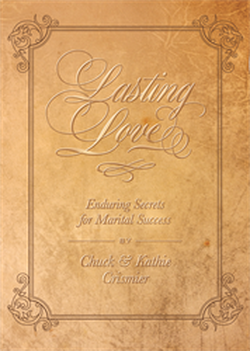
LASTING LOVE can be a dream come true. Yet love requires more than a dream or those loving feelings we so much desire.Lasting Love, Chuck and Kathie Crismier, celebrating their Golden Anniversary, unveil seven enduring secrets that will inspire and strengthen your marriage as it has theirs. COPY and PASTE this link to WATCH the TRAILER: https://www.facebook.com/Save-America-Ministries-204687919570536/videos
Past Episodes
This ministry does not have any series.
Featured Offer
LASTING LOVE can be a dream come true. Yet love requires more than a dream or those loving feelings we so much desire.Lasting Love, Chuck and Kathie Crismier, celebrating their Golden Anniversary, unveil seven enduring secrets that will inspire and strengthen your marriage as it has theirs. COPY and PASTE this link to WATCH the TRAILER: https://www.facebook.com/Save-America-Ministries-204687919570536/videos
About Save America Ministries
About Chuck Crismier
Contact Save America Ministries with Chuck Crismier
crismier@saveus.org
http://www.saveus.org/
Save America Ministries
P.O. Box 70879