
VATICAN SPY & INSIDER


The amazing life of Malachi Martin
w/ Robert Marro Jr
Chuck Crismier: Today was October 14, 1978. Malachi Martin said a new era began for the Roman Catholic Church and Western Catholicism and its nearly one billion adherents around the world. And with it, the curtains were raised on the first act of the global competition that would end in a thousand years of history as if a nuclear war had been fought.
A drama that would leave no regions or nations or individuals as they had been before. On that momentous day, the Cardinals of the Roman Catholic Church assembled in the Vatican from around the world and elected the 264th Pope of the Roman Catholic Church, Cardinal Karol Wojtyła of Kraków, Poland, who adopted the name John Paul II.
John Paul II spoke on that day as to how he viewed human history. The entire history of man is in fact persuaded by a tremendous struggle between and against the force of evil in the world. He announced that day his overarching new principle of religion for all Christians, yes, but for all mankind as well.
According to Malachi Martin in his book, *The Keys of This Blood*, this Pope commits himself to Mary. He commits the Roman Church to her as the token and principle of all the churches in the world in their universal unity. Malachi Martin said no Pope had ever spoken of such a universal unity of all churches, but where would it lead and what broader geopolitical context was it to be understood?
Today on Viewpoint, friends, you're about to hear a most fascinating conversation between a long-time friend of the Malachi Martin we have just talked about who was not only a theologian but a spy. That's right, essentially a spy within the Vatican, right inside the Vatican. And our guest today is also a spy. Well, he is formerly a CIA agent.
And here's an attorney trying to facilitate the conversation. So I welcome you to Viewpoint, I'm Chuck Crismier. It's conversation as always with ever-increasing conviction, talk that transforms. Everything must change. That was the opening salvo of one of the most profound history-revealing books of our time, perhaps of all time. It was called *The Keys of This Blood*. I have it in my hands, 714 pages.
Here is what it says under the title, "Pope John Paul II versus Russia and the West for Control of the New World Order". Malachi Martin, the author. Well, a Vatican insider and author of this provocative work made clear his piercing analysis in a single subtitle again, "Pope John Paul II versus Russia and the West for Control of the New World Order". Pope John Paul II, the longest reigning Pope in history as far as I know, and a friend of Malachi Martin joining us with his book, *Malachi Martin: In the Shadows of the Vatican*, Robert Marrow joining us here today on Viewpoint. Robert, it's good to have you on the program.
Robert Marrow: Good afternoon, and thank you very much for having me.
Chuck Crismier: Well, you and I are both on the East Coast here, and so we're up and down the East Coast. We have a lot of listeners on the East Coast, particularly up there in the Massachusetts and Connecticut area. And we've been on the air now in that area for over 25 years.
And we've actually had—this may sound strange—because you know that I'm coming to you as a long-time evangelical Christian whose father was a pastor in an evangelical church. You're coming as a dyed-in-the-wool Roman Catholic of the traditional order, supporting the ideas of Malachi Martin. And here we are with listeners to this program who have actually said of yours truly here, you're the best Catholic I know, except for your view on the Pope and Mary. Little fascinating, isn't it?
Robert Marrow: Yes. Well, that's why I call some of my evangelical Protestant friends because some of them put Roman Catholics I know to shame as far as their moral rectitude. So I just jokingly refer to them as, oh, you're just Catholic with low blood pressure.
Chuck Crismier: Okay. Well, you and I are going to have a great conversation here.
Robert Marrow: Looking forward to it.
Chuck Crismier: First of all, let's set the stage for your relationship with Malachi Martin just briefly here. We've just got a couple of minutes. What connects you with Malachi Martin?
Robert Marrow: Well, in early 1990, I was stationed by the CIA in New York City. And I became associated with—you've heard of Archbishop Fulton Sheen?
Chuck Crismier: Yes.
Robert Marrow: I started going to Bishop Sheen's old church, the Church of Saint Agnes on East 43rd Street, because it was one of the only churches at the time that was offering the old pre-Vatican II, what's called the Latin Mass. I began attending that church, and I became familiar and friendly with a couple of the priests who were stationed there.
And one of them was a very good friend of Malachi Martin. And it was funny you mentioned *Keys of This Blood* because we were out having what I called cheap Chinese food one night for dinner. And he—his name was Father John. And he said, "What are you reading these days, Rob?" And I said, "I've just picked up this fascinating book called *The Keys of This Blood* by Malachi Martin."
Chuck Crismier: You know, you could use that book for weightlifting. It's 714 pages, just as thick as a Bible.
Robert Marrow: Exactly. Exactly. And Father John kind of brightened up and he says, "Oh," he says, "I know Malachi Martin. Would you like to have dinner with him some night?"
Chuck Crismier: Wow.
Robert Marrow: You could have knocked me over with a feather.
Chuck Crismier: I bet. What caused you at that time, what was the name Malachi Martin meaning to you, quickly?
Robert Marrow: Well, it goes back about 12 years prior to that moment in my senior year of high school. And we were assigned by our religion teacher that we had to do a book report on any book as long as it was a faith-based book. And I was in a bookstore, and I saw an intriguing title by this author I'd never heard of before named Malachi Martin. And the title of the book was *Hostage to the Devil*.
Chuck Crismier: Whoa.
Robert Marrow: And the subtitle was *The Possession and Exorcism of Five Contemporary Americans*.
Chuck Crismier: Wow. Well, we're going to have to get into that, certainly. That introduces a whole new color to our conversation here today on Viewpoint. And I want to make your book available to our listeners here. This is a fascinating hardback book, friends. It's a $29 book, yours for $26 on our website, saveus.org.
You can go there, *Malachi Martin: In the Shadows of the Vatican*. And we're not here to preach at anyone. We're here to share a story and the implications of that story and the man of the story for our time, the nations of the world, and I think you're going to find it fascinating. It's on our website, *Malachi Martin: In the Shadows of the Vatican*, for $26.
You can write to us at Save America Ministries, PO Box 70879, Richmond, Virginia, 23255. If you're writing a check, add $6 for postage and handling. And I don't think you're going to be disappointed, especially since Malachi Martin has been related to, well, at least figuratively to Indiana Jones. Talk about spies here. CIA agents, spies in the Vatican. We'll be right back.
Chuck Crismier: Welcome back to Viewpoint, I'm Chuck Crismier. Our guest today, Robert Marrow, with his biography, a very unique kind of biography, a relational biography of a very famous Roman Catholic priest, also a quasi-Indiana Jones within the Vatican itself, Malachi Martin. And Robert, before we go further, we talked about how you met Malachi there in New York. He was no longer in the Vatican at that time.
Robert Marrow: Correct.
Chuck Crismier: So what was he doing in New York? Playing Indiana Jones, what?
Robert Marrow: No. That particular statement relates to activities earlier in his life, and we can touch on a couple of those if you'd like later. No, at the time, he was working primarily as an author. And he had a very unique apostolate in terms of media communications expounding the traditional doctrines of the traditional teachings of the Roman Catholic faith. In fact, at the time, he was one of the late great Art Bell's most popular...
Chuck Crismier: Hello?
Robert Marrow: Yes, hello?
Chuck Crismier: Yes, somehow I missed you. Go ahead.
Robert Marrow: No, I was saying that at the time, in the 1990s, Malachi Martin was also one of the most popular guests on the old Art Bell Coast to Coast radio show late at night.
Chuck Crismier: All right.
Robert Marrow: But he was also a prolific author.
Chuck Crismier: Okay, so you met him. What were your first impressions?
Robert Marrow: Well, I was fascinated by the man. He had a way with his personal charisma of putting a total stranger at ease, complete ease within five minutes of a conversation beginning. And there was just an easy, genial presence to the man, which I ascribe to both his personality as well as his being a servant of the Lord Jesus.
Chuck Crismier: Okay. Now you, here you were, you were a CIA agent, is that correct?
Robert Marrow: Well, I was what's called a CIA operations officer. Just for your audience's edification, a CIA agent—the CIA operates 99% of its activities outside the United States. A CIA agent is someone that the CIA recruits overseas to provide hidden or classified information to the United States government.
So, for example, if I'm stationed in, just as a wild example, North Korea, and I recruit a scientist within the North Korean Ministry of Heavy Missile Development, and he starts to feed me information, he is the CIA's agent within the North Korean government. I'm just the operations officer who basically is his handler for lack of a better term.
Chuck Crismier: All right. So you're the handler, you're the recruiter.
Robert Marrow: Correct.
Chuck Crismier: Aha. Okay. So how long did you operate like that within the CIA?
Robert Marrow: I actually did that specific work for over a decade.
Chuck Crismier: Okay, so you have some insider views as well. Now, apparently, Malachi Martin had some insider views in the Vatican. When did those views get established?
Robert Marrow: Well, I think in order to properly answer that question, you have to go back to Malachi Martin's formation and his life experiences prior to actually working in the Vatican in the late 1950s and early 1960s.
Chuck Crismier: Is there a possibility you can distill that fairly quickly?
Robert Marrow: Sure. Absolutely. Absolutely. He entered the Jesuits in the early 1940s in Ireland. As you know, Ireland was neutral in World War II.
Chuck Crismier: They're just not neutral with one another.
Robert Marrow: Right. Exactly. Exactly. Well, Malachi was a polyglot. He spoke and understood over 12 languages. And he received three doctorates. One of those doctorates was a degree in ancient Semitic handwriting, which is called paleography, which was specializing in the handwriting of the Hebrew people as it would have appeared around the time of the patriarch Moses. He was one of the first people to research and help decipher the Dead Sea Scrolls in the late 1940s.
Chuck Crismier: So he was one of the first ones, maybe the only one, to be able to read what God had handwritten on the stones, the Ten Commandments.
Robert Marrow: Could very clearly be. I know he had access to the Dead Sea Scrolls. And because of that, that was where in Egypt, specifically I believe it was Cairo in the 1950s, where he first brushed up against the topic of exorcism. Then he was ordained in 1954 as a priest. He went to work in the Vatican.
And it was then that—there's a little bit of a misnomer when people say that Malachi Martin was a spy in the Vatican. It's more correct to say that he was a spy for the Vatican in the 1950s behind the Iron Curtain.
Chuck Crismier: Ah, okay. But he also had a piercing understanding of the interior workings of the Vatican.
Robert Marrow: Yes, he did. Because he worked for a senior Jesuit cardinal in the late 1950s and early 1960s, Cardinal Augustin Bea. He was Cardinal Bea's right-hand man. And Cardinal Bea was very close at the time to Pope Pius XII, subsequently Pope John XXIII, and then Pope Paul VI. So three Popes.
Chuck Crismier: Correct. What did he observe? He observed a pattern that was going on in the Roman Catholic Church starting in the late '50s and then moving into the '60s and '70s. What was that pattern?
Robert Marrow: The pattern that he observed was that the church, in terms of praxis or the way it does things, approached theology in the early 1960s. And you're aware that the 1960s are seen as an era of generational and societal upheaval in general.
Chuck Crismier: I'd call it rebellion. Yeah.
Robert Marrow: Exactly. Revolution. Yeah. Well, a lot of people think that the same sort of thinking took hold within certain precincts of the Roman Catholic Church.
Chuck Crismier: It also took hold within the evangelical church in America.
Robert Marrow: Okay. Well, what happened was the Roman Catholic Church previously was, for lack of a better phrase, very doctrinaire. There is right, wrong, good, evil, sin, and grace. And when Pope John XXIII came in, he was known as the smiley roly-poly Pope. He says, we're not going to—well, he was. He was seen as a very genial, chubby, grandfatherly figure that people just perceived him that way. Whereas Pius XII, his predecessor, was very holy and very saintly, but he was perceived as having more of an aristocratically icy personality.
Well, what happened was John XXIII said, "From now on, we are not going to—when someone is a sinner, we are not going to apply the medicine of condemnation and penance. Instead, we're going to dialogue. We're going to talk." Which is where you get the current nonsense of we're going to meet the people where they are in their lived experience.
Chuck Crismier: All kinds of euphemisms. I remember—
Robert Marrow: Gobbledygook for what's called modernism. It's a heresy.
Chuck Crismier: Exactly. So you had modernism going on in the Roman Catholic Church. You had modernism going on in the Protestant church first in terms of the mainline churches and so on, and then it crept into the evangelical churches from coast to coast.
I've experienced all of that, having come to Christ when I was five. And so I've got 75 years of experience of watching this take place. And what took place in the Roman Catholic Church in their sphere took place in the evangelical church and in the broader Protestant church as a whole. And you pointed to the '60s, the great upheaval, the sexual revolution, but the sexual revolution was actually an expression of a deeper rebellion against authority, against anything that would say this is true, this is not true, this is right, this is not right, this is holy, and this is unholy. How do you see that?
Robert Marrow: You're correct. And what Malachi would say is that tracks back to the primordial rebellion. In Latin, the words are *non serviam* or "I will not serve", which was the cry of Lucifer against God at the dawn of time.
Chuck Crismier: Wow. Okay. Now, this is interesting because we're getting a viewpoint here. The program is called Viewpoint. We're getting a viewpoint here that helps people, including myself, understand and help you understand where we as—you can call us evangelical Christians or whatever. Even the word evangelical has been demeaned and means almost nothing these days, especially from the media standpoint. So we're talking about trying to find a place of truth. We're talking about trying to find a place of true spiritual authority. And—
Robert Marrow: Well, I would point you to what our Lord said in the Gospel of John, when Christ said, "I am the way, the truth, and the life."
Chuck Crismier: Right. And that is resisted now across the world, even among many Christians. I know it is. Just a number of years ago, I wrote in one of my books concerning a professor from Fuller Seminary, a tremendous evangelical seminary in Pasadena, California. And he went to the Vatican together with a number of other evangelical and charismatic leaders.
And they were there for a wonderful, "let's all get together and sing Kumbaya." And the expression was this: The thing that unified them was not truth. They said expressly, "That's not going to work anymore." The only thing that's going to work is experience. So they elevated experience or feelings over truth out of their own—
Robert Marrow: Modernism. Classic modernism. It springs from the philosophical school of what's called phenomenology.
Chuck Crismier: Okay. That sounds very phenomenal to a lot of people. Okay. So what we're doing here, we're massaging from a viewpoint of one who has been deep into the Roman Catholic Church, particularly pre-Vatican II. And a fellow by the name of Malachi Martin, who represented in one very substantial way the pre-Vatican II stance of the Roman Catholic Church and the effort to try to restore that for the Catholic Church Universal.
Robert Marrow: Correct.
Chuck Crismier: Okay. So why did you want to write this book? Is it just because you wanted to sidle up against Malachi Martin, a well-known guy? Or did you have some real reason to write this book?
Robert Marrow: My primary reason for writing the book is that I was—for me, Malachi Martin was three things rolled into one. He was a surrogate grandfather. My own died in the early 1970s. We had that kind of relationship. He was my spiritual director. And at the end of the day, he was my best friend as well.
Chuck Crismier: Well, those are wonderful things.
Robert Marrow: And I was his kind of Man Friday for the better part of a decade from 1990 until he passed away in 1999. And I also knew that—you remember there used to be a TV show on called *The Last Man Standing*?
Chuck Crismier: Oh yeah, uh-huh.
Robert Marrow: Well, I literally am in terms of someone who knew him on a day-to-day basis for a decade. I am the last man standing. There are other people who knew him but not to the degree that I did. I felt unless I wrote a memoir of my experiences with him, that I would not be doing our friendship justice.
Chuck Crismier: Well, that's a wonderful testimony. And I want to make the book available to our listeners, *Malachi Martin: In the Shadows of the Vatican*. The $29 hardback book, yours for $26 on the website, saveus.org. Give us a call, 1-800-SAVE-USA, write to us at Save America Ministries and add $6 for postage and handling. We're not promoting Roman Catholicism or evangelicalism, we're talking about this issue.
Chuck Crismier: Welcome back. We're talking about a very interesting fellow, Malachi Martin, *In the Shadows of the Vatican*, here today on Viewpoint, friends. And quoting from our guest's book: "During the Cold War, Malachi Martin confronted ruthless communist secret police in a real-life struggle against Marxist oppression. He worked as a covert operative for the Vatican behind the Iron Curtain, evading sometimes unsuccessfully communist secret police, smuggling intelligence to the Vatican while offering succor to persecuted Catholics. The stakes in these missions were no less grave than Spielberg's high-octane thrillers. Capture would mean imprisonment, torture, and death." That's got to get somebody's attention. This guy had amazing experiences.
Robert Marrow: Absolutely. Yes, absolutely. Many people don't realize that behind the Iron Curtain in the 1950s, when Nikita Khrushchev became the General Secretary of the Soviet Communist Party, the persecution against Christian believers actually accelerated to become far worse than it ever was under Joseph Stalin.
Chuck Crismier: In fact, it was Khrushchev who said on open television to the West, "We will bury you."
Robert Marrow: Correct.
Chuck Crismier: So that's what you were dealing with. That's what Malachi Martin was dealing with. That's what the Vatican was dealing with. So when Malachi Martin writes in his book, *The Keys of This Blood*, about the so-called grand design of Pope John Paul II, it was in the opening pages through a speech that was given by the Pope-to-be on a visit to America in 1976. I was running for the state legislature in California in 1976 as a lawyer.
Robert Marrow: Right.
Chuck Crismier: Martin described it as one of the most prophetic speeches ever given. Here's what the Pope said: "We are now standing in the face of the greatest historical confrontation humanity has gone through. A test of 2,000 years of culture and Christian civilization." But he chided his listeners: "Wide circles of American society and wide circles of the Christian community do not realize this fully." In other words, he said, they don't get it.
Robert Marrow: Exactly.
Chuck Crismier: What was Malachi talking about?
Robert Marrow: He was talking about the fact that it was the Pope himself, John Paul II—he was convinced, and I'm paraphrasing somewhat of what he said, was that mankind was standing on the threshold of the greatest confrontation that mankind would ever face.
Chuck Crismier: Which he was referring to as a New World Order.
Robert Marrow: Yes. And the way—and the way the Pope referred to it, he didn't think of it in precisely those—he didn't articulate it that way. But he said it was the church against the anti-church.
Chuck Crismier: Okay. He also said it was the church against Russia. He saw Russia as the chief antagonist to the Vatican.
Robert Marrow: That's correct because at the time, the Soviet Union was head of a global empire that was essentially the Marxist-Leninist party state.
Chuck Crismier: All right, so you had John Paul II aligning himself with Ronald Reagan and with the female head, I'm trying to remember her name there in Britain, the UK.
Robert Marrow: Oh, Prime Minister Thatcher.
Chuck Crismier: Thatcher, right, Thatcher. Tough woman. The Iron Lady.
Robert Marrow: Oh, yes, the Iron Lady.
Chuck Crismier: And so they seemed to be a triumvirate of political, religious power that was fighting against what was perceived as the Russian effort to rule the world.
Robert Marrow: Correct. What Reagan called the Evil Empire.
Chuck Crismier: The Evil Empire. So the Evil Empire continues now. Now it's metastasized into the Islamic world. Russia's in a kind of a no-man's-land to a certain extent there, even though Russia believes that it is the inheritor of what is called Third Rome theology.
The Western Roman Catholic Church was the First Rome. The Byzantine Constantinople church, the Eastern Church, was the Second Rome. And Moscow and Russia were the Third Rome and there would never be another. So that means there's a tremendous confrontation here between the current view of Russia and the current view of the Papacy in the Vatican, wouldn't you say?
Robert Marrow: Yes. I would say that the Russian Orthodox Church as defined by the patriarchate of Muscovy or Moscow, they are much more traditional in their theology, outlook, and devotion. The current Roman Catholic Church, as you are probably more than well aware, is beset by its own set of internal challenges and external challenges as well.
Chuck Crismier: And for that reason, the great schism of over a thousand years ago has been unhealable.
Robert Marrow: Correct. Correct. The great schism between East and West. John Paul II very much wanted to heal that schism because he compared it to the two sets of lungs that everyone has. He said in order for a person to be considered wholly or holistically healthy, they have to breathe with both of their lungs. And he considered Roman Catholicism and Eastern Orthodoxy the bilateral lungs, you could say, of Western civilization.
Chuck Crismier: Okay. So it seems to me as I read *The Keys of This Blood* and the words of Malachi Martin translating the views of John Paul II, he saw John Paul II as believing that the Vatican was going to head up a Western One World Empire. Does that make any sense?
Robert Marrow: It does, but we need to be careful with our terminology.
Chuck Crismier: Okay. How would you express it?
Robert Marrow: The empire of which you speak, all right, could best be described as an empire of belief in the primacy and the kingship, the societal kingship of the Lord Jesus.
Chuck Crismier: Okay. Well, that makes sense.
Robert Marrow: It was first enunciated in the 1930s by Pope Pius XI in an encyclical that was specifically called *On the Social Kingship of Christ*. And what John Paul II believed was that no matter what the system of government was in any country in the world, even the ones that are very evil, they find themselves having power and authority because it comes ultimately from Jesus Christ.
Remember what our Lord said to Pontius Pilate when Pilate said to him, "Don't you realize I have the power to crucify you or the power to release you?" And our Blessed Lord said to him, "You would have no power over me unless it were given to you from above."
Chuck Crismier: Right. And that's what John Paul II was talking about.
Robert Marrow: Okay. You mentioned the word king and kingdom. And so I want to throw something out to you here. And we've talked about this here on this program today. Our program is geared to the professing Christian community over this country and around the world. And Jesus was said to be king. Pontius Pilate asked him, "Are you a king?" He said, "You say that I am."
Robert Marrow: That thou has said it.
Chuck Crismier: Yeah, and then he writes it on this sign both in Hebrew and in Greek and in Latin, "Jesus King of the Jews." So Jesus is coming back as King of kings and Lord of lords. Here's my point: If Jesus is king, who are his subjects? Think really carefully when you answer that question.
Robert Marrow: All of humanity. All of humanity.
Chuck Crismier: How can you say all of humanity when all of humanity doesn't obey him? Doesn't a king have to have subjects who obey him?
Robert Marrow: Well, yes, in a literalist sense, you are correct. However, when we consider the fact that Jesus is not just what you would consider an earthly monarch, but he is the creator of heaven and earth, all of mankind is subject unto him.
Chuck Crismier: All right. Will be subject unto him, and all will bow their knee before him, according to Paul in Philippians. But Jesus said, "If you love me, you'll keep my commandments. If you don't, you won't. But if you do love me and keep my commandments, I and my Father will reveal ourselves to you."
So what Jesus was saying is, look, if you say that I'm a king, then you need to obey me. If you don't obey me, there has to be a question as to whether I really am your king. That's the point.
Robert Marrow: Correct. Now, there is a brief distinction that you should make between objective and subjective reality.
Chuck Crismier: Okay, explain what you mean by that.
Robert Marrow: Okay. You could best explain it this way: Love him or hate him, Donald Trump is the President of the United States.
Chuck Crismier: That's an objective reality.
Robert Marrow: Correct. That's objective reality. Now, there are many millions of people who walk around every day who are American citizens who very derisively say, "He's not my president." Well, guess what? He is anyway. Which goes to the phrase, "the worldwide brotherhood of man."
Chuck Crismier: Correct. Yeah. So you can say we're all created in God's image, but from God's viewpoint, if we're not following that image by choice, we're not really his brothers.
Robert Marrow: Correct. There has to be a cent of the will.
Chuck Crismier: Right. That's the point. Okay. So that brings me to the issue with regard to what's happened in the Roman Catholic Church since the 1960s as you were talking about. And that is the shift away to what you call modernism, the lordship of feelings as opposed to the faith once delivered to the saints. Let's talk about that right after the break.
Friends, we're talking with a very open conversation with Robert Marrow, long-time friend of Vatican insider Malachi Martin, *In the Shadows of the Vatican*. Fascinating book, relationship, and our conversation here today, I hope it's been helpful to you and we're not through yet. $26 will put the $29 book in your hands. It's on the website, saveus.org. Give us a call, 1-800-SAVE-USA, write to us at Save America Ministries and add $6 for postage and handling. We're not promoting Roman Catholicism or evangelicalism, we're talking about this issue.
Chuck Crismier: Welcome back to Viewpoint, friends. We have so much to talk about here on the program today with our guest Robert Marrow. He says call me Rob. I don't want him to—you to feel like he's robbing anybody, so we'll call him Robert anyway for that purpose.
Malachi Martin, Vatican insider, also was essentially a spy for the Vatican actually behind the Iron Curtain. But he was very prescient in looking at what was going on, the direction, the trajectory of what was happening inside the Vatican, the thinking of the papacy, the thinking of the priests, the direction that was going on. And he resisted that trajectory, which he came to—whether you want to call it modernism, whether you want to call it rebellion, whether you want to call it easy believism, what would you call it?
Robert Marrow: I think you put your finger on it with the first phrase you used, modernism. The whole let's-keep-an-open-mind-about-everything attitude.
Chuck Crismier: Well, if you have an open mind that much, it's not going to hold anything.
Robert Marrow: Exactly.
Chuck Crismier: Exactly. So that brings us to the effort to refocus on the Latin Mass. Now, I don't speak Latin, I didn't study Latin. I studied French, but I didn't study Latin. I know Latin is an important linking language for the West. Why does the Mass have to be in Latin?
Robert Marrow: Well, first off, it doesn't have to be in Latin. It was in Latin for many centuries since the early church, especially since the time of Constantine when Christianity was no longer persecuted.
Chuck Crismier: Became the religion of the realm. Okay.
Robert Marrow: Correct. But Malachi told me that there is actually among dedicated scholars of the Bible and languages, there is very good evidence that the Lord Jesus himself in Judea spoke Latin.
Chuck Crismier: Really? I thought it was Aramaic.
Robert Marrow: That was his common mother tongue. Hebrew was the liturgical language. But there is anecdotal evidence to suggest that the Lord Jesus spoke Latin because if you look down through history, whenever an army has invaded another country and conquered it, the people of the conquered country always learn to speak the occupier's language.
Chuck Crismier: So Rome occupied what was then called Palestine by the Romans and Jesus grew up in that realm. So you have the sense that Jesus may have or likely spoke Latin.
Robert Marrow: That's right because there's also the evidence given in the scriptures of when the Roman centurion walked up to Jesus and said, "Lord, my servant is sick unto death." And Jesus said, "Take me to your house to see the servant." And the Roman centurion said its very famous phrase that has become a prayer, "Lord, I'm not worthy that thou should come under my roof, but just say the word and I shall be healed."
For I am also a man under authority. Now, it's a very good chance that being often of nobility, Roman legionnaires, especially the higher level officers, would not have learned Aramaic. But they would have expected the common folk of the time to be able to communicate with them anyway. Naturally, they would have expected Jesus to answer them in their tongue, Latin.
Chuck Crismier: Okay. Well, that's an interesting viewpoint. That's what I would call it. It's not, shall we say, it's not persuasive, but it's some evidence. It's circumstantial evidence. Okay. And that's understandable. I appreciate your sharing that. I'd never heard that before. I take that.
So the Roman Catholic Church was involved in the trend toward modernism. Some many said, "Well, that's because they're rejecting the Latin Mass." But that wasn't the heart of it, was it? The real heart of it was it was shifting from biblical authority to the authority of people's feelings and the surrounding cultures to which it was morphing.
Robert Marrow: Correct. You're absolutely right because it was over a hundred years ago that Pope Saint Pius X actually waged his—during his pontificate in the early 1900s, he waged his own personal war against modernism at that point and he actually released several landmark encyclicals against modernism. It's been something the church has been fighting for over a century.
Chuck Crismier: Well, it's something that the Protestant church has been fighting as well. I have in my library, which is vast by the way—not full of Latin books, by the way, but it is vast—I have here a set of volumes called *The Fundamentals*. And going back in that same period of time were those who were seeking to protect and wrap their arms of protection theologically around the Protestant church and its beliefs.
And they were rejected. In fact, one of the great rejecters of it all was Billy Graham. Yes, it was Billy Graham. And that's when he started—he is the one that actually, shall we say, made popular or acceptable the term evangelical.
Robert Marrow: I never knew that.
Chuck Crismier: Yeah. Well, see, we're learning something here. And it's good to have a conversation like that. And he is the one through his buddies that formed Christianity Today. So it was about evangelism, but it was not about discipleship. So he joins *Larry King Live*, one of Larry's last broadcasts.
And I witnessed this myself, and Larry says, "Well, Billy, with all of your vast success and popularity, surely there isn't anything that you're disappointed with in your life?" And Billy said, "No, that's not true. What I'm disappointed with is that I didn't focus more on discipleship." Now what is discipleship? Teaching people to obey everything that God has commanded. That's the essence of the Great Commission. So you see, we've had this same history going on in the Protestant church and have it to this very day.
Robert Marrow: Exactly. The two phenomena have been running in parallel with each other.
Chuck Crismier: Exactly. So the question is: Is Jesus Christ Lord or isn't he? Now for our Catholic listeners, that's why they say, "You know, Chuck, you're one of the best Catholics I know." Because you're teaching the authority of God and His Word, and we're not playing around. Jesus, He either is King or He's not. He's either Lord, either is or He ain't.
So the only problem they have with me for the most part is I don't believe in the lordship of Mary. I don't believe she is the co-redemptrix with Christ. And I don't believe in the absolute authority of the Papacy. On the other hand, I believe in the absolute authority of scripture. So how would you respond to all of that?
Robert Marrow: Well, from the Roman Catholic perspective, first off, it must be said very, very clearly and underline this statement several times in black magic marker: Catholics do not worship the Virgin Mary. We honor her as the Mother of God.
And some people say—because I've had good Protestant friends say to me—"I don't need to pray to the Virgin Mary as an intercessor before Jesus because it says in the scriptures there is one mediator between God and man and that is Christ Jesus." And that statement is true. But let me ask you a question in the manner of a friendly challenge.
Have you ever known someone in your own family or a very dear friend who has been very sick or has found themselves in very, very challenging life circumstances? And have they ever just looked at you eye-to-eye and friend, Christian to Christian, and said, "Please pray for me. Please remember me in your prayers"? How many of us have then turned around and said, "No, there is one intercessor. You're asking me to intercede with Jesus"?
Chuck Crismier: But why would we go to Mary? What qualifies Mary to be the intermediary? That's the real issue.
Robert Marrow: Okay, then what a Roman Catholic would say is that everything Jesus did and said during his time walking the earth on Palestine that is recorded in the scriptures was meant to be of enduring value. And I think you would agree on that statement.
When he was dying on the cross on Golgotha, he said, "John, remember your mother." Roman Catholics believe that when Jesus said, "Son, behold thy mother. Mother, behold thy son," that Jesus in a way was entrusting the human race to the maternal love of his mother. In that she would always point to her son on the cross.
Chuck Crismier: All right, well I appreciate your sharing that viewpoint, and it's the first time I've heard it expressed that way, and I'm glad that you shared that viewpoint right here. And there's no argument between us here, what we're having is a brotherly conversation here through who obviously are seeking to do the Lord's will.
Now, one final thing: This fellow Malachi Martin got involved in some very interesting things, was asked even by the United States military to perform an exorcism by someone in the military. How in the world did that happen? You're going to have to make it quick, brother.
Robert Marrow: Okay. There was in the 1970s and '80s a US Army psychological warfare colonel named Colonel Michael Aquino. You can look him up on Google. And he was a professing member of the Church of Satan.
He was involved in psychological warfare. He was inducing demonic possession in certain US Army special forces officers and soldiers who had signed up for a specific mind warfare program. It was not the powers of the human mind, he was inducing the power of the enemy into these people's souls. And it took over a woman by the name of Carol, didn't it? That's correct.
Wow, what a story. He was actually brought down to the Pentagon in the early 1990s. I accompanied him as a private citizen friend, not as a representative of the CIA. I just went as a private citizen friend. And when he saw what this woman did and said, and then she left the room and the assembled Pentagon brass and civilians there said, "What do you think is going on with her?" And he said, "She is demonically possessed. She must be given the full Roman rite of exorcism, otherwise you're going to have a major problem on your hands."
Chuck Crismier: And he also ordered them to discontinue use of that material that was developed by that Satanist, didn't he?
Robert Marrow: That's correct.
Chuck Crismier: What a story. Robert, you've got a minute or so here. What last words would you want to deliver to our listeners today?
Robert Marrow: Well, I would say that if anyone is interested in hearing Father Malachi in his own words, he had a very wonderfully conversational manner of speaking, kind of like the way you and I are doing right now. So just look his name up on YouTube under Art Bell, Malachi Martin, Art Bell, and you can hear his radio appearances where he spoke with people and the host much the way you and I are speaking now.
Chuck Crismier: Interesting. All right. The book, *Malachi Martin: In the Shadows of the Vatican*. Fascinating conversation here. I didn't know exactly how this was going to come about, but I'm very glad that we did this, Robert.
Friends, get a copy of the book. $26 will put the $29 book in your hands. On the website, saveus.org. Call us, 1-800-SAVE-USA, write to us at $6 for postage and handling. Become a partner. We're confronting the deepest issues of America's heart and home from God's eternal perspective. In fact, we're really seeking to bring God's eternal perspective to the fore here. Let's follow Christ with all of our heart, soul, mind, and strength and do His will.
Featured Offer
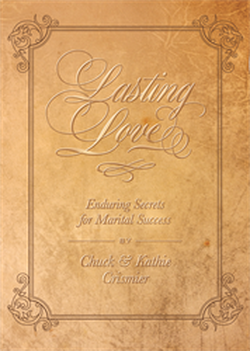
LASTING LOVE can be a dream come true. Yet love requires more than a dream or those loving feelings we so much desire.Lasting Love, Chuck and Kathie Crismier, celebrating their Golden Anniversary, unveil seven enduring secrets that will inspire and strengthen your marriage as it has theirs. COPY and PASTE this link to WATCH the TRAILER: https://www.facebook.com/Save-America-Ministries-204687919570536/videos
Past Episodes
This ministry does not have any series.
Featured Offer
LASTING LOVE can be a dream come true. Yet love requires more than a dream or those loving feelings we so much desire.Lasting Love, Chuck and Kathie Crismier, celebrating their Golden Anniversary, unveil seven enduring secrets that will inspire and strengthen your marriage as it has theirs. COPY and PASTE this link to WATCH the TRAILER: https://www.facebook.com/Save-America-Ministries-204687919570536/videos
About Save America Ministries
About Chuck Crismier
Contact Save America Ministries with Chuck Crismier
crismier@saveus.org
http://www.saveus.org/
Save America Ministries
P.O. Box 70879