
UNPREPARED!


How to Remedy the Problem
w/ Ron Hunter
Chuck Crismier: A backward fellowship caught my attention, and I'm going to let you describe that from your viewpoint. Here we go.
Voiceover: This is Viewpoint with attorney and author Chuck Crismier. Viewpoint is a one-hour talk show confronting the issues of America's heart and home. And now, with today's edition of Viewpoint, here is Chuck Crismier.
Chuck Crismier: As I said when we were going on the air, we're talking today about backward discipleship, and I'm going to let our guest, Ron Hunter, describe what that looks like. But before he comes on the air today, I want to share a couple of things with you to kind of set the stage.
As many of you know, I was a practicing attorney for 20 years as a trial lawyer in Southern California. But many years before that, in October on October 4th, 1957, I was in the eighth grade. On that day, October 4th, 1957, it was not the shot heard round the world, but it was the launching of the Cold War, or the Space War. It was the launching of Sputnik.
The space race began when the Soviet Union launched Sputnik on October 4th, 1957. It was a polished, 184-pound metal sphere with the first artificial satellite to orbit the Earth that sparked massive technological competition and deep geopolitical changes during the Cold War. You might say, well, what does this have to do with discipleship? Well, hang in there, friends. Remember, I'm an attorney, and I'm presenting this to a jury of my peers, and that's you, my friend.
The surprise launch of Sputnik completely caught the United States off guard. It triggered a phenomenon known as the Sputnik shock, the shock heard round the world. The American public and political leaders fell into a state of panic, realizing that if the Soviets could launch an artificial object into orbit, they possessed the intercontinental ballistic missile technology to launch nuclear weapons across the globe.
The realization that the Soviet Union was pulling ahead in science and technology forced the United States into a massive nationwide mobilization. The US overhauled its educational system to focus heavily on math and science, and I got caught up in the midst of it and had a group of four guys around me, including the only genius I've ever known, that graduated from Caltech, tested out of the first four or five math courses, and then became a seminary professor. Who would think of it?
Today, Sputnik is remembered as the catalyst that transitioned humanity from the atmosphere to the cosmos. Again, you say, what in the world could this possibly have to do with discipleship? Well, here it is, friend. A situation arose that caused the American people, including our leadership, to realize what a dire strait we were in. A dire strait we were in when our chief opponent in the world, the Soviet Union, began the launch of the space race and preempted us and put us to shame.
So, I have a question for you as we launch into the program today. Is there anything right now in America that is putting us to shame that would require us to respond with as much diligence as the US did in revising its education system to focus heavily on math and science in 1957? The answer is absolutely yes, and that's what we're going to talk about here today on Viewpoint.
So, I'm glad that you've joined us. It's conversation, as always, with ever-increasing conviction. Talk that transforms. And another little story before we launch into the program deeply today. How many of you have heard somebody tell you a story and go into this long story, and they're all excited about the story, and as you listen, you can't figure out where it's going? You just can't figure it out. I had that happen to me last night. I said, "Sweetheart, where is this going?" I had already been listening for five minutes, and I still didn't have a clue. She said, "Well, it's such a great story."
Well, you know what? God's story is a great story, too. The problem is we don't tell people the end before the beginning, and therefore, they don't get it. And that's the problem with discipleship today. One of the big problems with discipleship, so our guest Ron Hunter says, we need backward discipleship. What does that look like? Ron, it's good to have you on the program.
Ron Hunter: Chuck, it's good to be here. I love the story you just told. I now, in hindsight, wish I used it as one of the intros to the chapters because I tell various stories just like that. Let me just kind of piggyback on that.
Kennedy said we will put a man on the moon. He did not start with rockets. He started with the moon, the end goal. Once the destination was established, then every launch became one step towards that predetermined future that we wanted to achieve. Discipleship works the same way. If churches focus on programs or lessons or sermons, they will drift. What we've got to do is say it's not about the sermon, it's not about the lesson, it's not about the program. It's about making disciple-makers, and we start with the end in mind.
Chuck Crismier: Well, Ron, it's so good to have you on the program. You're in Nashville, Tennessee. There are a lot of people that are trying to launch the end from the beginning there in Nashville, but many of them are not successful in their music careers, are they?
Ron Hunter: That is correct. You can find some wonderful guitars in the pawn shops in Nashville if you're looking for a used guitar.
Chuck Crismier: Well, I won't visit you for that purpose there because I don't play the guitar. But in any event, I do play this instrument called the Bible. It's a stringed instrument. It has many strings, and it has a tune to it, and it all leads in one direction called the Kingdom of God. Jesus said, "Seek first the Kingdom of God and his righteousness, and then everything else will be added unto you." Our problem is we want to add everything else in advance and hope that somewhere it reaches the Kingdom of God. And it's backward, isn't it?
Ron Hunter: It is. We live in an instant gratification society to where we rarely think about the future and sacrifice now to get to the end result. Everything that we do, you nailed it with the whole idea of the deficit in America. We had to study math and science, thus even the STEM program that we have out there today.
I wish we would ask the question, and that's what we do with backward discipleship. We say backward planning, which is a military term. It's where I got the idea. I was an infantry officer in the United States Army, and we were taught from the mission back to where you are now. Every step preps for the mission, from the supply draw to the weapons to the planning to the strategy, the military intelligence. Everything you do preps. If you've got two weeks to plan, those are the two weeks you have. If you've got two months to plan, even greater.
You think, I don't understand that. I'm not in the military. Well, when you woke up this morning, or before you went to bed, depending on your personality, you probably glanced or thought about your calendar for today. You thought, okay, I have this meeting or that meeting. I need to lay this out to wear. And we planned what we wore prior to the events of our day. We plan when we need to leave in order to make sure we arrive on time. If we pour out a jigsaw puzzle, we look at the finished picture on the cover of the box as the end goal for every little piece we work on putting it together.
Chuck Crismier: Absolutely. We'll get back with that picture right after this break. We're talking with Ron Hunter. His book, "Backward Discipleship." Friends, this is so important, this conversation. It may change your life. I hope so. We'll be right back.
Voiceover: Once upon a time, children could pray and read their Bibles in school. Divorces were practically unknown, as was child abuse. In our once great America, virginity and chastity were popular virtues, and homosexuality was an abomination. So what happened in just one generation? Hi, I'm Chuck Crismier, and I urge you to join me daily on Viewpoint, where we discuss the most challenging issues touching our hearts and homes. Could America's moral slide relate to the Fourth Commandment? Listen to Viewpoint on this radio station or anytime at saveus.org.
Chuck Crismier: What a great illustration of the jigsaw puzzle as it goes to the matter of preparing for discipleship and its implications. My wife loves jigsaw puzzles. And what she does, Ron, is to take little trays and divide up the colors, the general colors and so on, surrounding her, and then she uses that in a pre-planning way to begin the process of putting together the picture that is before her.
Ron Hunter: What a brilliant analytical mind. It's amazing.
Chuck Crismier: We need to have that kind of picture in our own minds and hearts. But there are things that keep us from that. It's not just in the church that we have this problem of discipleship. It's in the country as a whole. For instance, I asked the question, why are Millennials and Gen Z so ignorant of American history?
Well, here's the response. AI, with all of its incredible wisdom, told me this: Millennials and Generation Z struggle with historical literacy largely due to a shift in modern educational curricula, which now prioritizes critical analysis of national failings over the memorization and preparation of dates and figures that lay the foundation for history. The fast-paced, algorithm-driven attention economy fosters an environment where reliable civic education competes with viral, unverified online content. So, the apparent lack of historical knowledge stems from a combination of modern teaching philosophies, media distractions, and changing social values. Those statements go directly and apply directly to our lack of discipleship in the church today, I think. What say you?
Ron Hunter: I totally agree. I'm going to go one step further. I'm going to argue that they also had teachers who focused on facts and figures rather than on the why behind the connectional points of history along the way. When our young people find the story of the connection points and the why certain things occurred, history comes alive, and it would make a big difference.
Chuck Crismier: In other words, teachers that have not been properly discipled in the why of history and its occurrences are not capable then of transmitting to the students the why, and therefore, it's a dull subject, disinterested.
Ron Hunter: That's correct. Because Satan knows more of the what about scripture than we do as Christians, but we understand the why, and that's why we're passionate about loving our Christ.
Chuck Crismier: You know what, Ron? Journalism requires these Ws: who, what, why, where, when, and why. Journalism consists mainly of who, what, when, and where, but not why. Do you know why we don't get into the whys? Because people feel it's too dangerous. They don't want to be held accountable for a viewpoint or an opinion, and therefore, we don't talk about the whys.
The same thing is true for pastors today. I've noticed this. I've had over 4,000 Christian leaders on this program over the past 31 years. It's very difficult to get them to focus in on the why. Even if they've written about it in their books, they don't want to talk about it on the air because they're afraid it might affect the sale of their book.
Ron Hunter: You know, part of the reason why people avoid the why is they're scared they're going to be asked and they can't defend it. Which, again, goes back to discipleship because if we are not a student of the Word, if we're not in the Word—I'm not saying you need to know it like a pastor or a seminary professor—but you can tell somebody who's in the Word on a routine basis versus somebody who's not, and when asked a question, we can defend our faith. We might not have a perfect answer, but at least we don't clam up.
Chuck Crismier: Okay. So, going back to the term backward discipleship, let's go back to Matthew chapter 28. Jesus is finishing up his ministry with his disciples. He's spent three and a half years with them, and he takes them and says, "Now, guys, I've been with you these three and a half years. I've told you what the master's plan is. I've told you what the end was for the beginning. I told you what was going to happen to me. You didn't believe it, but I told you what was going to happen to me, and then when you saw it, you understood. But now I'm telling you what you need to do."
He said, "Go and make disciples, teaching them to observe or obey everything I command you." Now, here's what's happened from my viewpoint, and I'm entertaining your response. From my viewpoint, we missed the whole ballgame. Jesus did not say, go and make babies. Don't go and make converts. Go and notch your belt with somebody who will say the famous words, yes, I believe Jesus is the son of God. No. He said, "Go and make disciples, teaching them to obey everything I've commanded."
Well, guess what? The word obey has become the most hated word in the church today. So, if that be true, we've completely missed Jesus' whole commandment concerning the Great Commission, haven't we?
Ron Hunter: Definitely. In fact, the second most quoted book from the Old Testament by Jesus was Deuteronomy. And that's what our organization is founded on. I'm the CEO of D6 Family Ministry, and that passage is often quoted by Jesus where it says, love your God, love his word, and let that passion of obedience and telling of stories to your kids, grandkids, and those who pass through your home be so contagious that we start cheering for God like we cheer for our favorite sports team.
Chuck Crismier: I am so glad that you mentioned the book of Deuteronomy. And I, by the way, I didn't realize that your ministry was based on Deuteronomy 6, but I see now D6, Deuteronomy chapter six, which was the simple description that God gave through Moses to the children of Israel. Here's the simplicity of what you need to do. You need to talk about the story. You need to talk about God in his creation and his deliverance from Egypt and what he did with us, and you want to talk of it when you lie down, when you go to bed, when you eat, when you're walking by the way, whatever you're doing, find a place, find a time to remember and talk about it. Why is it we are so resistant to remembering the mighty acts of God today? Is it because we don't know them?
Ron Hunter: I think that it's because we're in a world that's somewhat affluent, and we as parents want our kids to have a better experience than us. Therefore, we send them to a certain school, or we pay them to have the right teacher, coach, travel ball, whatever it is. We're really good at delegating, and it also includes delegating discipleship. Like, I send them to church, it's your job. They go to Sunday school or life group, that's your job.
Chuck Crismier: Wait a minute. I didn't hear Moses tell the children of Israel, "Now, wait a minute. I'm going to set up a bunch of elders, and I'm going to set up all these different people, groups of 10 and 50 and 100 and so on, to guide you. Now, I want you to go to them and have them teach your children." He didn't say that, did he?
Ron Hunter: No. In fact, all the way throughout scripture, he talks primarily to people and says, teach this to your kids. He did it Adam and Eve. He said, be fruitful and multiply. By the way, he wasn't talking about propagating the earth, otherwise in Genesis 4, 5, and 6, when the earth was very populated, he wouldn't have walked around disappointed and said, Noah, build me a boat. And when they came out of the boat, he repeated that command, be fruitful and multiply. What did he mean? Bear my image on your kids. Let them fall in love with me because you're in love with me.
Exactly. He did the same thing in Deuteronomy 6. He wasn't talking to church leaders. He was talking to the village, primarily parents and grandparents. He mentions five generations. And the church needs to remember that it is the theological boundaries. It is the launching pad, but it is not the end-all. We are to equip the saints to go out and do it when we're not on campus at the church.
Chuck Crismier: Okay. Now, that brings up another issue. In other words, we've got to set some foundational parameters here to the discussion. So, Jesus said to his disciples, "I'll build my church. You go make disciples." So, guess what we did? We decided to go build churches and failed to make disciples. So, where do we stand now? Are we a discipled people? Is the church a discipled people? No. If the church was a discipled people, then I'm going to give a real specific illustration.
Why then did six southern governors, 15 years ago, have to declare a marital emergency for their states in the Bible Belt of America, where the divorce rate was then 65%? Why did they have to do that in the Bible Belt of America? It's because the pastors never talked about it. Why? Because they were afraid that the people would get upset by telling them the truth about God's view of marriage and divorce and so on. So, when you look at stuff like that, you realize how profoundly undiscipled we really are, don't we?
Ron Hunter: Exactly. I want to be careful because I'm not here to disparage the church. In fact, quite the opposite. I agree with that, too. It really is. It is the launching pad. It is the boundary. But here's how I illustrate it when I'm speaking to audiences. I say, okay, we're about to take a break. I want you to hop out of here and go to the restroom or hop back there to the resource table. In fact, why don't you just pick one leg and hop when you go home tonight? And when you come back to this meeting a week from now, keep on hopping.
And you may think that's stupid. And you're like, no, but the longer you hop, the more you're going to get really good at this. You'll be able to jump into your car, hop upstairs, the whole bit. And after a while, it'll become contagious. Everybody will be hopping. And that's what happened along the way from the Old Testament moving into the New Testament moving into modern Christianity, specifically in the last four to five decades in America. It was church and home working together, and then suddenly we started delegating, and that church has become the strong foot. It has been the one we've been hopping on.
Chuck Crismier: So you're talking in essence about the megachurch movement.
Ron Hunter: Any church. We could trust the church of 50 to disciple our families or the megachurch. It really doesn't matter size. All right. But here's the problem. Whether it's the small church or the big church, when they look the parents and the grandparents and the mentors in that church in the eye and say, we're in partnership with this together. It's time for us to put down the leg we haven't used and start running on both legs. Well, first of all, nobody's ready to run. We've got to rehab that thing, and we've got to slowly work it back up. And most pastors don't want to do the work, and certainly most parents think, hey, I'm writing you the check, you do it.
Chuck Crismier: Exactly. And you know what that amounts to? Yesterday, we did a program about the cost of comfort. We've become so comfortable, not just in American prosperity, but so comfortable in the way we have come to do things that we don't take responsibility. We preach rights, but we don't preach responsibility. And discipleship requires parental responsibility, right?
Ron Hunter: That's correct. So, let's move from this sensationalism of everything's wrong towards solution. What do you think?
Chuck Crismier: That's exactly where we need to go. Where do we go from here? What does discipleship really mean? And then how do we turn this tide backwards to—we've already declared what has to be done. We've got to look at the end and declare the end clearly before we go in and try to prepare the people for that. Otherwise, they don't know where we're going. So, how do we go about doing that?
Ron Hunter: Sure. Let me give the audience one more sensational stat that we all are familiar with. We all know George Barna and similar studies that report the current status: 64% of the kids growing up in church, when they become middle school, high schoolers, and young adults, 64% will walk away from the church and their faith. That's two-thirds, Chuck.
So the question should not be, man, this is horrible, this is all—the question really, and this is what backward discipleship does, it turns it on its head and says, I don't care about the two-thirds at this point. What I want to know is what caused the one-third to stay. And so I looked at 43 different studies. There were 17 themes that rose to the top out of those 43 studies, and five characteristics describe the one-third who stayed, and I call them in the book the Faith-Forging Five.
Chuck Crismier: The Faith-Forging Five. All right. That's what we need to focus on, the Faith-Forging Five. Now, friends, I want you to get a copy of the book, "Backward Discipleship." Your gift of $20 will put this $22 book in your hands. It's on our website, saveus.org. You can give us a call at 1-800-SAVE-USA, or write to us at Save America Ministries, PO Box 70879, Richmond, Virginia, 23255. Writing a check and $6 for post and handling. We've got to begin with the end in mind. What are these five essential elements that will help us to be more effective and reverse this process so that we can be prepared and some Sputnik launch doesn't take us unawares?
Voiceover: There is so much more about Chuck Crismier and Save America Ministries on our website, saveus.org. For example, under the marriage section, God has marriage on his mind. Chuck has some great resources to strengthen your marriage. First off, a fact sheet on the state of the marital union, a fact sheet on the state of ministry, marriage, and morals. saveus.org. Marriage, divorce, and remarriage. What does the Bible really teach about this? Find all of this at saveus.org. Also, a letter to pastors, the Hosea Project, saveus.org, and many more resources to strengthen your marriage. It's all on Chuck's website, saveus.org. Again, you can listen to Chuck's Viewpoint broadcast live and archived at save America Ministries' website at saveus.org.
Chuck Crismier: If 64% of America's young people do not continue on following the Lord after their teenage years, what is the problem? What is the problem, and what's the solution? Our guest today, Ron Hunter, with his book, "Backward Discipleship," says there is a solution. But maybe we've ought to identify the solution by looking perhaps at the problem and then what's keeping those who do stay with the Lord intact. So, Ron, I'm looking right now at a statement in your book. The dropouts driving away from faith. And here it says, it's a pattern many of us have witnessed, whether as pastors, parents, or simply concerned believers. And here it is: The number one reason teens leave the church and their faith is a lack of intergenerational worship and relationship. Wow. That's just the opposite of the plan that has basically directed the church and all of its ministries for the past 50, 60 years. And that is breaking the church apart into various age groups because we said, well, you know, birds of a feather will flock together and they're not going to be happy worshipping together in the same situation and pastors are going to have to put up with these generational differences. So, it would just be more convenient for us to break the church apart. What say you?
Ron Hunter: I say if you're tired of two-thirds of your kids being dropouts and prodigals, then it's time for us to stop producing twice as many of those as we are disciples and focus in on asking those one-third what caused you to stay. And those five characteristics are pretty straightforward and they're not difficult, but you can't buy a program in a box for 150 bucks. You can't wave a magic wand. It's a change of rhythms and routines.
And here's what the five are. Number one: Bible engagement. We need to open up the Word of God when we're not at church and spend some time in it. And here's the thing. I know there's this whole big, "Hey, let me read and check the plan that I read the Bible through in a year or I read X amount." I don't care about checking boxes.
Chuck Crismier: Forget that, by the way. It'll put you to sleep.
Ron Hunter: That's right. So, let's not be about the box and the diploma, the certificate. Let's be about the Word of God itself. And here's an interesting number. Of those who have stuck with their faith, they engage the Word of God at least four times a week. If they did it five times, it did not make a marginal difference. Six times, not a marginal. Four times at least. It just means picking up the Word of God a little more intentionally. And here's what it's going to allow you to do. It's going to allow you to do the other four a little bit better.
Number two: Faith at home. Parents are absolutely the number one influencers of a child's value. We're not talking Christianity here; we're talking value as a whole inside of our culture. It shapes our view of authority from parents. We catch our view of grace from parents. We catch our view of everything from our parents, even down to our shopping habits and brands that we're loyal to. And we don't even know why we're loyal to them, but our parents were. So, the faith at home, that's that Deuteronomy 6 passage. If mom and dad love God, love his word, their kids are going to notice.
Chuck Crismier: How would the kids know if mom and dad loved his word if they don't spend quality time in his word every day?
Ron Hunter: And let me challenge the parents out there listening. I got convicted of this, Chuck. When our kids were young and still in the home, I realized that I was reading the Word of God in my quiet time and my kids never saw me interact with it. But it's less about them seeing it and more about you bringing it up, okay? But I did change. I wanted to make sure they bumped in. So when we sent our kids to bed, I'm a late-night person. I'm not an early morning person. So I'd pull out my Bible, turn off the TV, I'd be down in the living room and the kids would go upstairs.
Chuck Crismier: So you and Benjamin Franklin wouldn't have gotten along well.
Ron Hunter: No, no. Not at all. I had my pastor talk about all the great men of God who had morning quiet time. I thought, I'm never going to be a great man of God. My quiet time comes at night, okay? I think the difference between just before we go to sleep and when we wake up is seconds in my mind because when I close my eyes, it's seconds and the alarm clock goes off. So, I always saw our kids come back down to get a drink of water, put something in their backpack, and they saw me interacting. But more than that, when we were on car rides, when we're sitting around the table, you bring up God's word and you say, when kids are talking about their pain points of school or life, you say, "Hey, I was reading the other day, and here's what God was teaching me." And they need to see a mom or a dad or a mentor who's listening to the Word of God about their own lives, not just preaching to their kids about things they're doing wrong.
Chuck Crismier: All right. I want to bring something up then. God puts the responsibility on men to be the spiritual leaders of the home. However, in our generation, men are refusing to read. Now what?
Ron Hunter: I think more than just men are refusing to read. Here's the thing. If you're a man and you don't like to read, I can identify. I was there once early in my adult life. And I think part of it is we don't like to read because teachers assigned books we didn't care for. I think we can find things we like to read. But some of you are audible listeners. Pick up a Bible app and let it read to you rather than you read the Word of God. You might remember far more scripture having listened to it rather than reading the printed words. There's multiple ways to take in God's word. And so I just want to challenge you: find the one that works. And if it's daunting to read three or four chapters, pick three or four verses and read them, then re-read them, and then ask the question, "God, what are you saying to me? How can I use this?" And just let the Word of God come alive because you cannot share something out of your cup if your cup is not full. It's got to be an overflow.
Chuck Crismier: You know what I discovered, Ron, years ago? And I grew up in the church. My father was a pastor. And you know, we went through that read the Bible through in a year, three chapters a day and five on Sunday. And I discovered that after reading the first two, I was practically asleep. And on Sunday, when I was reading the five chapters, all it took was about two chapters before I was genuinely going into sleepville. And I discovered this doesn't work. This is not what God is looking for. He wants me to search his scriptures, to seek him through the scriptures. So, I made a plan that from that point on, I was going to spend time in the word every day, purpose every day without fail. And I've done that, by the way, for the past 50 years.
Ron Hunter: Quality over quantity matters all day long.
Chuck Crismier: And here's what I did. I said, okay, I need to get focused. So I got a thin-point yellow marker and a fine-point red pen. And I started asking the Lord as I was reading, okay, what is it specifically about this chapter or what I'm reading here that you have to say to me today? What do I need to know? How is this? And then I'd make connecting references with the red pen as to other places in the scripture that were saying a similar kind of thing. So I created my own Bible reference system, and it was amazing what happened. The words started sticking in my mind and in my heart. It was line upon line, precept upon precept, here a little and there a little. And that's how you do it. That's what God wants us to do, I think.
Ron Hunter: Agreed. And you know, there's different ways we can tackle scripture to make it come alive. I love reading with a pen in my hand, always have, whatever book I'm reading. But there's another way. Consider while you're marking, look for the verbs in a passage or look for the characters. And if you spot the characters, ask yourself, "Huh, let me re-read that from a different character's perspective." We always read Jonah and the whale from Jonah's perspective. Re-read it from the sailors' perspective who are faced with, "Do I throw this man over sea in a storm? What's the ethics of that?" Re-read it through the perspective of if I'm the whale and I've got a little bit of Jonah in me, what does that look like?
Chuck Crismier: Now you've got a wild imagination, man.
Ron Hunter: I do. I'm a creative soul. I'm not a musical soul, but I'm a creative soul.
Chuck Crismier: Yes, the whale was saying yum-yum. Okay. So we've got Bible engagement, faith at home. What's number three?
Ron Hunter: Not everybody has Christian parents. So there's a real important one with the third one. It's called mentors that matter. Not every child has a Christian parent, and not every child has an active Christian. They might have parents who come to church, but they're not leaning in reading the Word of God, they're not having any conversation. And so mentors are so vitally important.
Chuck Crismier: So you're suggesting that going to church is not satisfying God's command for discipling our kids.
Ron Hunter: No. No more than me parking a jalopy in my garage makes it a super hot rod of a vehicle inside my garage. No, there's nothing transformative about being in a certain place unless we're actually adopting and following. Again, that discipleship. You said it earlier, Chuck. It's not about making converts; it's about making disciples.
Chuck Crismier: And a disciple is not one who knows a lot of facts and figures about the Bible or knows the church catechism. A disciple is one who learns how to obey God, like Jesus did.
Ron Hunter: And is passionately following him and willing to die for him.
Chuck Crismier: Exactly. So that's where the end is, and we've got to set that up from the beginning. So people will say, you know what we're doing? We're bringing so-called Christians to embrace Jesus, but they don't even know the Jesus that they're embracing. They don't even know the cost of discipleship. So if they don't know what the cost of discipleship is, how in the world are you going to prepare them for that kind of discipleship and that kind of life? The end has to come first when we tell them, and that doesn't sell well.
Ron Hunter: Correct. So let me tell your listeners how they can be mentors because you're sitting there going, "Man, I don't want to sign up for that." No, no, there's no signing up. If you have kids in your home still growing up in your home, there's a good chance your kids have friends at school or church, and they invite them over your home. When those friends of your kids are in your home, you're their mentor.
Chuck Crismier: There you go. And your purpose is not to make yourself popular, but to be a true parent for the Lord. All right. We're going right into the next break here, friend. Our guest, Ron Hunter. Very powerful book, "Backward Discipleship." $20 will put it in your hands. It's on the website, saveus.org. Call us, 1-800-SAVE-USA. Write to us at PO Box 70879, Richmond, Virginia, 23255. This is most important. We'll be back.
Chuck Crismier: Discipleship. What does it really mean? Well, discipleship demands discipline. Did you know that the word discipline, discipleship are directly related? But we don't like the idea of discipline because it makes us uncomfortable. That's why yesterday's program concerning the cost of comfort—if we're addicted to comfort, we're not going to do what God asks us to do. If Jesus had been addicted to comfort, he never would have gone to the cross, nor would he have spent the time, three and a half years, with 12 renegade kinds of guys that didn't know their head from a hole in the wall, so to speak. And he led them and discipled them by precept and by example for three and a half years and then said, "Okay, I'm out of here. Now it's your turn." You see, he understood the end from the beginning. And so he began at the beginning. But you've got to start at the end so they know where we're going.
So, Ron, I was thinking about an alternative title for the program today. "UNPREPARED!" How to remedy the problem.
Ron Hunter: That's a good title. And as parents, we often feel unprepared, don't we?
Chuck Crismier: Oh yeah, and the people are unprepared. So what are we going to do about it?
Ron Hunter: Well, let me encourage parents listening. God's not calling you to perfection. He knows we're going to mess up. In fact, that's why he's there to redeem you. You talk to discipline versus discipleship. The purpose of discipline is not primarily punitive; it's restorative. It's redemptive. And as parents, we're not called to perfection. We're called to intentionality, to presence, to consistency, because kids are crying out for leadership, but it's called parenting.
Chuck Crismier: Parenting. That really is the foundation for discipleship. And parenting is not about trying to be popular and make yourself your child's best friend. Jesus didn't do that with his disciples. He didn't try to be their best friend.
Ron Hunter: No. He said the hard things in love. And that's where, when a child doesn't have a parent who's leaning in, those mentors really matter. And every listener out there, let's pause for a moment for the listeners. Go back in your life and think about from the time you were a child until you were an adult, who were the most significant voices that shaped you outside of your parents? You probably immediately had one or two come to mind. And before you're done, the average person has five significant voices. They might have been a teacher, they might have been a coach, might have been a drill sergeant, who knows? There might have been just somebody who stepped in the midst of trauma that you didn't have a long time with, but they were there to give you the right perspective. That's what God's calling us to do. Even if our kids are grown and you're going, "Man, I'm past the parenting stage. Why are you talking to me?" Because you still get a chance to influence others as mentors.
Chuck Crismier: Well, how about grandparents, Ron? Aren't you a grandfather?
Ron Hunter: I am. A grandfather of four, and it's so wonderful to start over and getting a chance to do some things a little better than you did the first time. But it's also challenging. Because the body doesn't move as fast as it once did.
Chuck Crismier: Okay. I can agree with that. Number four: Bible engagement, faith at home, mentors matter. What's number four?
Ron Hunter: Sharing one's faith. When we teach our children and teenagers how to share Christ, it tells them that they are in the word, they are listening in church, and that they want to help other people fall in love with that which they love.
Chuck Crismier: How can we ask our children to share their faith when the parents aren't?
Ron Hunter: Exactly. It's hard to do. So, we hope that a mentor leans in and makes it real. I mean, we cheer harder for our college football teams than we ever would for Christ. No wonder our kids catch everything but Christ.
You know, when people say sharing your faith, I think that's a bit deceptive. It doesn't mean you have to encounter somebody face to face and say, "Do you know Jesus?" You have to have some sort of connectivity with the person. Build some sort of a relationship over time. For instance, when I go into the post office, I have learned to know every person's name in this large post office. Every person's name that's on the front desk. Everyone. And I talk to them about their life, and they know I care for them. And guess what? They begin to know what I do and why I do it. And I'm able to share with them. I mean, why else would a woman say, when I'm talking to one other clerk there, and she says, "Hey, Chuck, can I see you outside in a couple minutes when you're through?" She wanted to tell me about her son that was in desperate need for prayer, and "Can we pray together right here?" So, there's so many ways that we can do that. It doesn't matter where we are. If we're in Costco, whatever place we are, there's always a place to connect.
Ron Hunter: The sphere in which we do business or school or any place that we just frequent is an opportunity. And I think one of the items—and I spend a lot of time on this topic in the book—is teaching our kids conversation. They don't know how to toss the tennis ball of asking questions. "Hey, how are you today? What's going on in your world?" And all we're looking for is that same lady you bumped into at the post office who says, "Chuck, I need to talk because there's something going on and I need your prayer," which then immediately gives you a chance to open that door the next time you're in there and go, "Hey, how's so-and-so?"
Chuck Crismier: Well, it's been said that people don't care how much you know until they know how much you care. They're not impressed with you because you know the Bible from cover to cover and the cover too. They want to see your living faith.
Ron Hunter: That's right. Now, there's a warning that comes with sharing our faith because when we share it even with our close friends, our close friends are going to ask some tough questions.
Chuck Crismier: Oh yeah, they might also see that you're not living according to what you say you believe.
Ron Hunter: Exactly. So that's—there's two things as a result to it, and you hit the second one. The first one is we're going to get some tough questions and we're not going to always know the answers to. Why does God allow bad things to happen to good people? I don't know; let me go ask my youth pastor or my parents. And what does it do? It drives us back to Bible engagement because we'll find the answers. Second, it puts us on notice that, hey, I claim to be a Christian in front of my friends; I need to have a decent testimony. Not perfect, but it does change how we interact.
Chuck Crismier: You know, having a decent testimony—let's talk about that for just a quick moment because in our world for the past 50, 60 years, we have developed a kind of, what should we call, celebrity-itis in the church. You have to have a celebrity to come in and give a testimony, otherwise they're not worthy to listen to. Also, you either have a celebrity or you have someone who's been through the worst kinds of drugs and all kinds of dire circumstances, and so the testimonies become sensationalistic. You don't have to have a sensationalistic testimony. The fact that you were not saved and you came to the realization, you came to the conviction, the deep conviction that you were a sinner and there were consequences to that, and you wanted to be in line with your Creator, you wanted to please him, and you realized you didn't, and so that's when you embraced Jesus Christ as your Lord and Savior, and over a period of time, you learn to love him more and more—you just share your life.
Ron Hunter: We do. We have to share because we're a different person apart from Christ, regardless of our history.
Chuck Crismier: Yeah, I mean, you were in the military. There are areas where you can connect with somebody in the military the way I cannot do because I was never in the military.
Ron Hunter: Correct. And so our backgrounds provide bridges. Exactly. So think about what your hobbies have been, your experiences, an early job that you had in college that will connect to somebody maybe of a different generation. Number five: Bible engagement, faith at home, mentors matter, sharing faith. What's number five? Volunteering at church comes right back around because we're not to be selfish. And this is part of teaching our kids. Not only do we teach them how to ask how somebody else is doing conversationally, we ask them to get involved serving someone else, and we do it by modeling.
Chuck Crismier: Okay. Applying your faith, then.
Ron Hunter: Yes. Figure out where God has gifted you and step back in and say, "Hey, can I volunteer in the student ministry? Can I volunteer in children's ministry? Can I do X?" And that immediately allows you to become a mentor, allows you more Bible engagement, and hopefully more faith at home and sharing one's faith. You can see how the fifth one rolls all four back together.
Chuck Crismier: All right. So you're activating your faith, like James, the brother of Jesus said, "But be you doers of the word and not hearers only, deceiving your own self."
Ron Hunter: That's right. Because when we volunteer, we belong to our church, we don't just attend church. That's the key.
Chuck Crismier: Well, if we are the church, if we're the body of Christ, then maybe it's about time we live like it, and it begins with discipling people to do just that.
Ron Hunter: Correct. Absolutely. And if you want to see how you measure, your entire church measures on these Faith-Forging Five, inside "Backward Discipleship," there's a free assessment where you can have everybody in your church, adults and teens with permission, answer some few questions about three minutes, and you can see how your church is doing and see how healthy, where there might need to be work. Because every church has some work to do. But if you will strengthen these, you will start turning around those two-thirds who are walking away and start focusing on producing a greater number than the one-third who stay.
Chuck Crismier: The Faith-Forging Five. Ron, thank you so much for joining us here on the program today. Appreciate your D6 Discipleship Six ministry model. Is there a website you'd like people to go to?
Ron Hunter: Sure. d6family.com will take you to everything that we do. Books, curriculum, conferences. We put everything through that lens of: how do we do church and home together? One mission, every generation.
Chuck Crismier: How long you been doing that?
Ron Hunter: I have been the CEO for nearly 25 years.
Chuck Crismier: All right. And you've been discipling before that for—
Ron Hunter: My entire adult life. I was very thankful to come to Christ when I was 12 and felt the call to ministry. I pastored for 11 years prior to being in the position that I'm in now.
Chuck Crismier: And discipleship doesn't mean preparing people to be a Baptist or a Presbyterian or any other particular denomination, Methodist. It's about preparing people to walk with Jesus, isn't it?
Ron Hunter: Correct. Correct. And being deeply rooted in his word.
Chuck Crismier: There you go. Friends, the Word of God is critical. "Thy word," David said, "thy word have I hid in my heart that I might not sin against you." It goes back to the Word. Go to Psalm 119. The longest Psalm in the Bible, the longest chapter in the Bible, 176 verses. Go there, read those sections there. It used to be the one I avoided when I was trying to read the Bible through, three chapters a day, five on Sunday. Now it's one of my favorites of all time. Why? Because it gives us another standing of why the Word is so important. David considered, he said, "I consider your Word more important than my necessary food." How about you, my friend? Would your kids know that you considered the Word that way? Just asking.
Ron Hunter, our special guest today, "Backward Discipleship." I don't know whether we'll use the term UNPREPARED! How to Remedy the Problem, but in any event, it's the same issue. We need to be Bible engaged, faith at home, mentors matter, sharing our faith, and become active in doing the Word of God, volunteering as he said. God bless, my friends. Be a blessing. Become a partner with us. Send your gifts by faith to Save America Ministries, PO Box 70879, Richmond, Virginia, 23255. Don't wait for the other guy to do it. One of the four pillars of this program always has been and still is: discipling for destiny. Let's begin by starting at the end. God bless and be a blessing.
Voiceover: You've been listening to Viewpoint with Chuck Crismier. Viewpoint is supported by the faithful gifts of our listeners. Let me urge you to become a partner with Chuck as a voice to the church, declaring vision for the nation. Join us again next time on Viewpoint as we confront the issues of America's heart and home.
Featured Offer
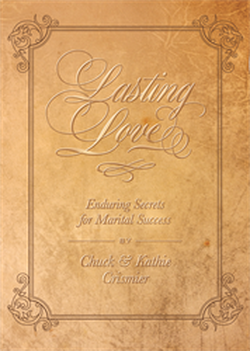
LASTING LOVE can be a dream come true. Yet love requires more than a dream or those loving feelings we so much desire.Lasting Love, Chuck and Kathie Crismier, celebrating their Golden Anniversary, unveil seven enduring secrets that will inspire and strengthen your marriage as it has theirs. COPY and PASTE this link to WATCH the TRAILER: https://www.facebook.com/Save-America-Ministries-204687919570536/videos
Past Episodes
This ministry does not have any series.
Featured Offer
LASTING LOVE can be a dream come true. Yet love requires more than a dream or those loving feelings we so much desire.Lasting Love, Chuck and Kathie Crismier, celebrating their Golden Anniversary, unveil seven enduring secrets that will inspire and strengthen your marriage as it has theirs. COPY and PASTE this link to WATCH the TRAILER: https://www.facebook.com/Save-America-Ministries-204687919570536/videos
About Save America Ministries
About Chuck Crismier
Contact Save America Ministries with Chuck Crismier
crismier@saveus.org
http://www.saveus.org/
Save America Ministries
P.O. Box 70879