
TRAITOR'S CIRCLE


Betrayed From the Inside
w/ Jonathan Freedland
Chuck Crismier: History has a bright side, and it has a dark side. In fact, where there’s a bright side, there usually is a dark side. Often times, the dark side is hidden, and the bright side comes to light, but often times, the bright side is hidden, and the dark side seems to predominate. Today on Viewpoint, we’re going to see both sides. We’re going to see both sides—the dark side and the light side—going all the way back to the rule of Adolf Hitler in Nazi Germany.
What happened there, many have written books about. There are many tales told. I remember back years ago when my father was a pastor, and he had a book in his shelf called *Dead Men Tell Tales*. Well, I never knew what the tales were that those dead men told or the dead men that he was talking about, but in any event, dead men do still tell tales. Today, we have a live man that is going to tell the tales of several dead men.
His name is Jonathan Freedland, and he is coming to us with a wonderful British accent all the way from the UK. He’s coming via telephone long distance here, and he’s written a book called *The Traitor’s Circle: A True Story of Secret Resistance Network in Nazi Germany and the Spy Who Betrayed Them*. Now, before we go further here and I introduce our guest, it is an astonishing true story of a group of heroic men and women that were drawn from the elite of the 1940s German high society.
That included several deeply committed Christians who were against—profoundly against—Adolf Hitler and the Nazis and the travesty that he was perpetrating, the tyranny upon the country. One day in September 1943, they came together for a secret tea party. What they did not know was that one person sitting around the table, someone they trusted as a kindred spirit, one of their own, was about to betray them and all the rest to the Gestapo.
The consequences would be fatal for at least two of those present. How serious would be the consequences? Well, beheading for one and hanging for the other. Sounds an awful lot like a tale—not actually a tale, but a true story—in the scriptures about a man by the name of Judas, you see, who hung around Jesus for three years and was with His disciples constantly. But when the appropriate time came, his heart was not with them, and he betrayed them for 30 pieces of silver.
What would it take for you to betray someone? I’m just asking a rhetorical question before we even launch into the details of the program because sometimes we get into a story and we miss the part that actually applies to us. As you know here on Viewpoint, it’s not just about information; it’s about transformation. It’s about how does this apply to me?
The interesting thing is as we launch into this program here today with our guest, whom I’ve never spoken to before, we have a situation that Jesus Himself talked about in the scriptures. He said that persecution was going to come dramatically in our time, in these end times. Not only that, he said a lot of it is going to be an inside job. In other words, it’s going to come from people that you trusted. It’s going to come within families; it’s going to come even within the so-called church.
You say, "Wow, I wasn’t aware of that." Well, perhaps you haven’t read the words of Jesus recently, but in fact, that is exactly what He said. It’s in my book, *Preparing for Persecution: Preparing Our Hearts for the Perilous Times that are Coming*. Well, today we have a real-life story. We have a real-life story of those that were perceived to be traitors to Nazi Germany but were actually supporters of the truth and against tyranny. Jonathan Freedland joining us from not-so-jolly old England. How are things over there in the UK, Jonathan?
Jonathan Freedland: Well, it’s good to be with you, Chuck, here in rainy London. The rain is falling, but we’re getting by.
Chuck Crismier: The rain is falling. That’s not unusual in England, is it?
Jonathan Freedland: It isn't so unusual, I have to admit. You’ve got me there. It’s true. The rain does come, but we’re just having a quite wet January, but we’ve had a pretty good winter so far, so we’re not complaining.
Chuck Crismier: Well, that’s probably better than what we’re about to experience in Richmond, Virginia and across the Southern US today and for the next week. We’re going to experience massive snow, the lowest temperatures ever, and ice storms everywhere. So, which would you choose? Your rain in England or what we’re about to take?
Jonathan Freedland: I think I would always choose the English weather because we moan about it, but it’s not too drastic, whereas I know you can get some pretty extreme weather where you are.
Chuck Crismier: Well, let me ask you a question. Is there any way that you could export to me a little bit of your British accent?
Jonathan Freedland: Well, that’s a prized commodity. You’re very kind. You and your fellow Americans are often very kind about our accent here. Somebody once said to me that as soon as they hear a British accent, Americans add about 15 extra IQ points to whoever they’re talking to. The trouble with that is it means that whatever you think, I’m actually 15 IQ points lower than what you actually think. That’s the trouble with having this accent.
Chuck Crismier: Is that right? Well, here I thought I would increase my listenership by probably 20 to 30 percent if I had a little bit of that accent.
Jonathan Freedland: You never know.
Chuck Crismier: All right, my friend. Now, you have written quite an incredible book here with very serious research going back. It’s full of photographs. I’m not sure where you got these from, but it’s obvious it’s a testimony to the tremendous work that you’ve done in researching this story. So, how is it that you happened to come upon this particular story feeling compelled to write about it?
Jonathan Freedland: Thank you so much for saying that because it truly has been three or four years of absolutely dogged, intense research to unearth this story. To me, it’s an astonishing jaw-dropper of a story, and incredibly, nobody has written a book about it before. There’s never, even in German, been a full book about this. Individual parts of the story have been told in academic papers and so on, but we’ve never seen the story set out in one book like this.
In answer to your question, the way I came across it was I was doing research for my previous book, which was called *The Escape Artist: The Man Who Broke Out of Auschwitz to Warn the World*. That story is an amazing story. I have to recommend it to your listeners because it’s about a true—it’s obviously the true story—of a 19-year-old man, one of only a handful of Jews ever to break out, to escape from Auschwitz.
He did it in the most extraordinary and ingenious way. He did it with a purpose, which was to let the world know what was happening in Auschwitz. Incredibly, he and the man he escaped with did get word out. They wrote a document with a report which found its way to Roosevelt in Washington, to Winston Churchill in London, to the Pope in Rome. I will urge people to go and find out what then happened. They need to go and read *The Escape Artist*.
But while I was researching that book, I came across a speech by Heinrich Himmler, who was then—I’m hearing a lot of music there, I don’t know.
Chuck Crismier: Well, yeah, you’ve got some music coming up telling us we’re going into a break. So, tell us about the speech from Heinrich Himmler when we get back in just a moment.
Jonathan Freedland: I’ll do that.
Chuck Crismier: Welcome back to Viewpoint, friends. I’m Chuck Crismier. This conversation is always with ever-increasing conviction—talk that transforms. I trust that even today, as we listen to the hair-raising story here—the heartbreaking and hair-raising story concerning these fine folks whose hearts were right before God and men, yet they were willing to put their own lives on the line because of what was happening to destroy the underpinnings, the spiritual and moral underpinnings, of their country.
*The Traitor’s Circle*, that’s the story. It’s a tremendous book from the bestselling author of *The Escape Artist*. And now we know also the guy that escaped from Auschwitz. It’s on our website, saveus.org. You can give us a call at 1-800-SAVE-USA or write to us at Save America Ministries, P.O. Box 70879, Richmond, Virginia 23255, for a check at $16 and $6 for postage and handling. Okay, now you were telling us about this speech by Herr Himmler. Tell us about it.
Jonathan Freedland: Heinrich Himmler, exactly. He was at that point the number two in the Third Reich, second only in power to Adolf Hitler himself. He was the head of the SS; he was the head of the Nazi security state. Now, imagine the scene in 1944. It’s the late summer; it’s August. Three things have happened. One is there’s been the D-Day landings, so the war is beginning to turn against Adolf Hitler.
Second, there’d been a plot, a very nearly successful plot, to assassinate Adolf Hitler, which came on July the 20th of 1944. If you’ve seen the movie *Valkyrie* with the slightly miscast Tom Cruise, you’ll know the story there of this German aristocrat who attempted to assassinate Adolf Hitler. That plot had failed, but it did have a lot of the senior German Nazis concerned that maybe they were losing their grip.
The third thing that had happened is there had been this escape from Auschwitz, the one involving Rudolf Vrba, who is the subject of my earlier book. So, there was this speech that Himmler gives to the top brass, the leading men of the SS, in which he essentially tries to persuade them. Look, things are not going out of control. We’ve got this; we’ve got it under control.
As an example, he mentions—he says, "For example, that reactionary cabal of prattling over tea," he says. "We’ve now got them in custody." And he mentions the widow Solf, the widow of an ambassador, and he mentions one or two other individuals. I looked at that and immediately thought, "What’s he referring to? What does he mean, this reactionary group who are now in custody?"
I began mining my way through the footnotes of the historical documents and I discovered that there was indeed a group—Himmler calls them reactionary cabal because they were anti-Nazi. They gathered in secret. They had met, as you mentioned in the top of the show, for this tea party, and sat around thinking they would be with fellow anti-Nazis, they were with kindred spirits, they believed.
You mentioned before the betrayal of Jesus by Judas. Picture this tea party. There weren’t 12 of them; there were 10 of them. But they were sitting around that table, and one among that group was bent on betraying all the rest. Now, I’m not going to say tonight or this afternoon who that one individual was, because I want people to read the book. I don’t want to give it away.
It’s like the story is told like a whodunnit. But there was a betrayal. When you read the book, you’ll be guessing, was it the ambassador’s widow? Was it the former diplomat? Was it the headmistress? Was it the former model? Was it the doctor? Was it the intelligence officer? Was it the former official in the Treasury? Eminent people sitting around a table, as you said before, several of them very much motivated by their Christian faith, and they were betrayed from within.
Chuck Crismier: Well, it’s a shocking thing. We don’t want to think that anyone would betray someone so close to them, someone that was so trusted. But we find that—I’m not sure what it’s like in the UK, but here, we have a divorce rate that since 1968, when Ronald Reagan gave a no-fault divorce act in California, we had a surge of divorces that just about destroyed 50 percent of the divorces.
There was an ultimate breach of trust if there was ever a trust to be broken. I mean, you made a vow before the people and before God, and yet you still broke it. So, we realize how easily it is for someone in a trusting position to actually defy that trust.
Jonathan Freedland: This was all about trust in a way. The fact that the betrayer was there at that group, at that tea party, was because he had—or she, I don’t want to give it away—the betrayer had made themselves trusted by everyone else. The only way these people who were against the Nazis—the only way they could meet with other people, because it was such a high risk to do that—because of course you made yourself immediately vulnerable to arrest, detention in one of the concentration camps that were used inside Germany for political prisoners, for dissenters, for dissidents. The risks were so great you had to know that you could trust the person in front of you, and they did all trust each other.
Chuck Crismier: Well, and that was 10 of them. They trusted each other. Over what period of time did that trust seem to exist? Because trust has to be tried. It takes a long time to build trust, but it can be lost in an instant. So, about how long did it take for that trust to be built?
Jonathan Freedland: Well, in a way, it’s a great question, Chuck, because on one level that trust was built over a matter of days. On another level, it was trust that had been built up over a lifetime. Partly because, and we know how this works, this person in part was trusted because of the family that they had come from. You know how it works, that sometimes if you know someone’s parents and you know the background they come from, you then give them the benefit of the doubt. You think, "Well okay, this person has been recommended to me by someone else."
Sometimes trust, we allow somebody to vouch for someone else, and that’s good enough. Because I trust you, Chuck, if you tell me that someone else is trustworthy, I’ll trust them.
Chuck Crismier: Well, that’s why we as writers oftentimes get endorsements on our books. I’m looking at the back of yours, *Praise for The Traitor’s Circle*, and those endorsements are a way of supposedly gaining a certain amount of trust by those who other people may know to take what we write at face value.
Jonathan Freedland: That’s right. You want someone else to vouch for somebody. In this case, that’s what this group—they relied on that. Several of the people around the table knew each other already, but others relied on the fact that there was somebody there who had vouched for this other person. Remember, they’d all come there from very, very different routes.
They were all engaged not in resistance together. They weren’t a resistance cell in the way we imagine. We have a romantic image of, say, the French Resistance putting bombs on trains or on bridges. It didn’t work like that. Each one of those people around that table did what they did individually or privately.
For example, a central figure in this story, Elisabeth von Thadden, who was the founder of the Evangelical Rural Home for Girls, a school, a Christian school that she was the founding headmistress of, the head teacher of. She at first, actually, she was not really a political person. She was a daughter of an aristocratic family. She was committed to education, particularly girls' education.
At first, she was quite open-minded to the idea of a new start for Germany in 1933 when Adolf Hitler became Chancellor. But then, as the reality of Nazi rule became clear, she became more and more clear that this was a group that were not just immoral as she saw it, but fundamentally un-Christian. She saw that Adolf Hitler, for example, wanted to put himself as the head of a newly configured German church. She thought to herself, "The head of the church cannot be Adolf Hitler because the head of the church is Jesus Christ."
With that belief—that was her very strong belief—so she joined a different group called the Dissenting Church that resisted the notion that the head of the church could be Adolf Hitler. Bit by bit, she began to stage her own little acts of rebellion. One of those was that she had this girl school, and other pupils of the school would notice that a new girl might appear out of the blue and would appear and be in a dormitory for maybe two or three weeks, and then one morning they would wake up and the girl was gone.
Why? Because that girl was the daughter of a Jewish family who were trying to—they were scrambling to get their papers to get out of the country. They needed somewhere to hide.
Chuck Crismier: So, she was like an Anne Frank?
Jonathan Freedland: Well, she wasn't the one; she was like the family who hid Anne Frank. She was harboring people in her school. She was using her school as a safe harbor for the persecuted, for those who were on the run.
Chuck Crismier: Well, that was dangerous.
Jonathan Freedland: Hugely dangerous. Of course, she would eventually—she was trying as hard as she could to conduct this below radar so that no one would know what she was up to. But she would eventually be exposed. It’s an extraordinary story how she came to be exposed, Chuck.
She was speaking at a ceremony of thanksgiving really at her school, where all schools were required to celebrate the German Nazi victory over the French in 1940. She, as part of the assembly for the school, delivered a prayer that drew on—she read a psalm as part of the ceremony—but she drew on a text, a verse from the Old Testament, not the New Testament.
Just that move alone cost her, because there was a 13-year-old pupil, a girl at the school, who listened to that and reported to her Nazi mother, "Hey Mom, the headmistress of our school read a text from the Jewish bit of the Bible, the Hebrew texts of the Bible." The mother then reported the head teacher to the local Nazi Gestapo to say, "This head teacher is reading out verses tainted that carry the taint of Hebrew scripture."
So, it was a Bible text that actually undid Elisabeth von Thadden. The Gestapo came in, they inspected her school, and they shut it down.
Chuck Crismier: Well, that was some early expression of cancel culture, wasn't it?
Jonathan Freedland: Yeah. In that world, the consequences were much more severe. Her school was shut down, but nevertheless, she tried in her own way to defy this regime which, as she saw it, was fundamentally un-German and un-Christian.
Chuck Crismier: So, she was motivated by legitimate motivations from the heart, spiritual motivations and also moral motivations concerning trying to stand up for what she thought her country was, not what it was becoming.
Jonathan Freedland: That’s exactly right. There are two influences going on with her, and we’ll talk about some of the other people in a bit. That’s right. She was a child of aristocracy. Her father was a landed gentleman who had this huge estate which she, very young in her life, had actually run after the death of her mother. She believed in an old Germany, the Germany of the nobility, the Germany of the nineteenth century, the aristocracy, the Protestant aristocracy, which she believed had tremendously good values about their treatment of the poorest, the most vulnerable, those that Jesus would have ministered to.
She believed that was built into that German class. She had seen her own family take in people in the First World War, children who had been orphaned and those who were in need. That was a big part of her makeup, and the other was just her pure Christian faith. She felt that Adolf Hitler and the Nazis was trampling on both of those things. That he was trampling on the Germany that she believed in, and absolutely on her faith.
Now, then there’s a different example would be Otto Kiep, who was also in this group, who was a diplomat. He’d been a huge rising star diplomat, given the plum job long before Hitler became Chancellor of Germany, the plum job of Consul General of Germany in New York City.
Chuck Crismier: Wow.
Jonathan Freedland: So, he for many, most of the late 20s, he was sitting in New York City. He had a wonderful life, a kind of Great Gatsby life of going to these parties on Long Island and so on with the American aristocracy, as it were. But then, when Hitler takes over in 1933, he suddenly has a huge moral choice to make.
Chuck Crismier: All right, we’ll talk about that when we get back from this break as the music comes up. So exciting to talk with you. Appreciate it. We’ll be right back, Jonathan.
Welcome back to Viewpoint, friends. I’m Chuck Crismier. We’re talking with Jonathan Freedland from the UK. Hopefully, you’ve been able to become somewhat enculturated into his great British accent there that gives a sort of a lends a note of authenticity to his writing here. It’s just a delight to have him on the program today.
Before we get back to that, I want to make the book available to you, friends. This is a significant book. *The Traitor’s Circle: A True Story of a Secret Resistance Network in Nazi Germany and the Spy Who Betrayed Them*. I think there’s a lot to be learned here from this book, and I tried to sow some of that up front before Jonathan ever came on to us here on the program. $16 will put the book in your hands. It’s on our website, saveus.org. Give us a call at 1-800-SAVE-USA, write to us at Save America Ministries, and $6 for postage and handling, we’ll get the book in your hands.
Now, you were mentioning diplomats, and you’re living among all kinds of diplomats there in the UK, and they’re not always dealing diplomatically. If you observe what goes on in the Parliament, it doesn't sound very diplomatic. It sounds like a worldwide war about to take over. How are you dealing there in the not-so-jolly old UK right now?
Jonathan Freedland: Yeah, well, these are bumpy times. It’s quite true that the Parliament can often be very robust, but people always use polite language. They talk about "the honorable member" and "the right honorable gentleman" and all of that, which does keep a lid on things in terms of the language. But no, politics here is pretty turbulent, as it is all over the world. But I just don’t want to leave people hanging with the story of the diplomat because I was mentioning him.
He was living this high old life in New York in the 1920s, as I say, invited to parties on these Long Island estates every weekend where there were swimming and horse riding. He was having a great old time. Then, January the 30th, 1933, he suddenly works for a new boss because Germany is now led by Adolf Hitler. The government has changed.
Within a week or two of that, an invitation lands on his desk which he realizes immediately puts him in a great dilemma. He is at a fork in the road; there’s a huge choice to make. Why? Because this invitation is to a dinner that will be held at the Waldorf Astoria Hotel in New York City to honor a man who at that point is certainly the most famous scientist in the world, one of the most famous Germans in the world, and definitely the most famous Jew in the world. The invitation is to honor Professor Albert Einstein.
Chuck Crismier: I bet I was just going to say that. I’ll bet that’s who it was. Wow.
Jonathan Freedland: You guessed it. You got it, Chuck. He is now asked as the senior German diplomat in New York to come and be present at this dinner to honor Albert Einstein. The trouble is, he knows if he says yes, he will anger his new masters in Berlin who are, of course, anti-Jewish. Hitler and the Nazis had arrived into office and he knows they hate Jews. He knows, on the other hand, if he says no to this invitation, then he thinks to himself, "I will be as bad as they are, the thugs who have taken over my country."
Chuck Crismier: Wow. In other words, he’ll betray his own beliefs, his own convictions. Now he has a huge choice to make: who is he going to obey? What order of morality or the absence thereof is he going to obey?
Jonathan Freedland: That’s right. He’s racked and torn about it. I think listeners can probably guess what choice he makes because the choice he makes sets him on the path in 1933 that will lead all the way to that fateful and fatal tea party in 1943. That decision actually puts him on the side—on a collision course with the Third Reich and with the regime. But he too is a Christian, and he comes to the view—and he writes this at one point, he comes to the conclusion or I think perhaps he tells his wife—that you can be a loyal and obedient servant of Adolf Hitler or you can be a loyal and obedient servant of Jesus Christ, but you can’t be both.
Wow, that’s the moment when he realizes that. Everything flows; everything falls into place.
Chuck Crismier: So, in other words, this really, in all reality, while this is a very dramatic and striking story that keeps you glued to the pages, it’s much more than that because internally what it does, it challenges the reader. It challenges each one of us. What is it that would draw me away? What would it take to draw me away from my fundamental convictions and beliefs, say in Jesus Christ, to obey another authority? Like, for instance, how about a New World Order?
Jonathan Freedland: Exactly right. That is what the Nazis were in a way promising. They were promising that—that was their phrase, a New World Order. I think you’ve put your finger on something really important here, because one of the things that earlier you asked me about, what was it that drew me to telling this story?
I think everybody who reads or watches movies or listens to stories about the Second World War always asks themselves, "What would I have done? What would I have done if I was in that situation? Would I have been—" You mentioned Anne Frank before. "Would I have been one of the people who would have hidden Anne Frank in my attic?" I think we ask ourselves that question. "Or would I have kept my head down and not taken the risk?"
One thing that flows from that is: okay, in order to know whether what I would have done, tell me—people are saying to me this now, now that I’ve written the book—what kind of people did resist and take a stand against Adolf Hitler? Here’s what I discovered: that the people in this group, the people who sat around that party, that table having tea and cake together in Berlin on the 10th of September 1943, those people, the thing they had in common was they believed that there was—they would ultimately be judged by an authority higher than Adolf Hitler. They believed there was a higher authority judging their actions.
Chuck Crismier: In other words, the fear of the Lord, the concept of the fear of the Lord was so deeply rooted in their hearts and consciousnesses that it is what prevailed in their making their decision. That’s what’s missing in our country. For the past 50 years, we’ve progressively abandoned what is known as the fear of the Lord in this country, and therefore we fear men more and more. I think you’ve got it going on in the UK as well.
Jonathan Freedland: What’s so interesting is fear of the Lord is absolutely the driver for at least two of these people. But for others, the higher authority is something other than fear of the Lord; it’s a belief in an old Germany. They believe that there is a higher authority—and in several of these cases, they’re from very important, noble families that had been in charge in Germany for centuries.
They believe almost that their ancestors will judge them. That their father or grandfather or great-grandfather would look badly on them if they were to fall in line behind this thug, Adolf Hitler.
Chuck Crismier: Well, what would the fathers of this country do? We know what the founding fathers of this country did. We know all the way back to those that came from not-so-jolly old England, the Puritans and the Pilgrims. What would they do? What would they say to Americans who are capitulating over and over and over again to the destruction of their own country from the inside out?
Jonathan Freedland: Well, I think you would be able to answer that question better than I could. But what I can tell you about this German case is the placing of one man above—in other words, the elevation of Adolf Hitler. Many, many people believed that he was now the supreme authority in their lives. That made them terrified of the knock on the door from the Gestapo or the SS. But it also meant they thought that their own morality was subordinate to loyalty to the Fuehrer. This handful of other people never believed that. They believed that when judgment day would come, they would have to look in the eye, not Adolf Hitler, but Jesus Christ.
It was that that made Elisabeth von Thadden or Otto Kiep or some of the other people in this story able to defy the SS man or the Gestapo agent on the doorstep because they believed, "Yes, you frighten me, but I’m more frightened of being held at account, held accountable and answering to my maker."
Chuck Crismier: Jonathan, you know what? What you’re doing is giving us a, shall we say, an on-the-ground illustration during that period of what the Bible foretells us is going to take place in the end of the age, which I believe we’re in that season now. In Revelation chapter 13 and 14, where it talks about this global government and the infamous so-called Mark of the Beast where allegiance will have to be pledged to this government as the highest authority. If you don’t, you’re risking everything: life and limb, and provision and everything else. So, if we don’t see it in a bigger context, then we’ll think, "Well, that was just them." But it’s not just them, it’s us too, isn't it?
Jonathan Freedland: Yeah, I think it’s so dangerous in any society when the government of men, a secular government, elevates itself to the status of supremacy in some form. That’s where danger comes. In this case, it is the most extreme, vivid case of that that we can see, which is that even the church itself was deemed subordinate to this thousand-year Reich, to this—even the title "The Fuehrer" had something of as a word that had something in its meaning of "savior," as if the savior with a capital S of Germany wasn't going to be Jesus or the Messiah but instead was going to be this mortal.
Once that happens, it means that many, many people do fall in line. It’s only those who are able to hold true to the notion that there is some higher authority, whether that is their values, whether that is the aristocracy or indeed their religious faith. I think it’s an enduring lesson from this story.
Chuck Crismier: Absolutely. So, the church itself capitulated. The church itself capitulated while claiming to be servant to the Lord Jesus Christ, actually reneged on that and lifted up Caesar instead. We’ll be right back after this break, friends. What a tremendous book, *The Traitor’s Circle*. We’ll be right back.
What a privilege and joy it is to come before you day after day confronting the deepest issues of America’s heart and home. In fact, all people’s hearts and homes, quite frankly, from God’s eternal perspective. As you know, we’ve been on the air now for over 30 years, an hour a day live, confronting the deepest issues of America’s heart and home.
I’m so glad that you all have joined us today to talk with Jonathan Freedland concerning his book *The Traitor’s Circle*. This reads like a novel, but it’s not. It’s absolutely true, isn't it, Jonathan?
Jonathan Freedland: It really is, and I’m so pleased you said it reads like a novel because the whole aim I had was to write this like a thrilling mystery story, a whodunnit where people would be turning the pages wanting to know who the betrayer is, wanting to know what happens to these characters that you develop strong attachment to. But every word in it is factually true. There are 50 pages of scholarly footnotes at the end that tell you where all the sources, the documents, the diaries, the court transcripts, the letters that I had to read to be able to tell this story. So, with this period, it’s too important, too serious I think to allow yourself to make things up. Nothing in this is made up. I even know what cake they had on the plates at that tea party because I believed it was vital to get everything absolutely right.
Chuck Crismier: Well, Publishers Weekly said, "This is an extraordinarily, almost cinematic—like a movie—a thrilling account of the struggle against Nazism at its most up-close and nerve-wracking." So, I ask you a question, a very personal question, Jonathan. When you write a book, unless it’s just writing some novel somewhere—but I’ve written 11 books; in fact, just last night I nearly finished up my 12th book. So, a large part of my life is invested in those books because they’re not phony; they’re about preparing Christians for the times that we live in. I’m invested in those and communicate that, but I want to find out to what extent did this affect your life as you wrote it?
Jonathan Freedland: It definitely did because you can’t help—you know what it’s like, Chuck—when you are writing, you just become so immersed in the story. You’re living and breathing it. I really learned a lot through these people about courage and about conviction and about that belief, to see the importance of not seeing government or ordinary mortals as supreme. Because it is a dangerous path to go down and instead to realize there is—even when the government of the day appears to be all-powerful and all-masterful, no, there are other values, higher values that matter more.
I think that’s been a real lesson. You know, there are lots of places around the world where—it’s not the same, of course it’s not the same as Nazi Germany. Nazi Germany was a kind of unique horror. But there are places around the world where you have dictators and autocrats, and we do wonder what does it take for people to step out of line.
Chuck Crismier: Well, in reality, Jonathan, in reality, aren’t you and your cohorts there in England and the UK facing some of these same kinds of things? The very threat to the existence of your country internally, welcoming political ideas that are coming in that are actually taking over and threatening the very existence and future of your country?
Jonathan Freedland: Well, I think it hasn’t reached that point, but I think there are dangers you’ve always got to be vigilant for—ideas around about intolerance and imagining some kind of purity which seeks to cast out people. There are those things which I think are alarming. But I think that as long as people are not in thrall to one particular person or would-be leader who elevates themselves and calls themselves a "savior," like the Germans had in the form of Adolf Hitler—I think as long as you’ve got those institutions and people holding people in check, no, I think a lot of what’s happening here in Britain sometimes does get exaggerated across the Atlantic. We’ve got battles to fight, but I think we’re okay, but you have to be vigilant all the time. I think that’s important.
Chuck Crismier: Do you have kids?
Jonathan Freedland: I do. I have two sons, blessed with two sons.
Chuck Crismier: How old are they?
Jonathan Freedland: One is 24 years old and one is 21 years old.
Chuck Crismier: Well, I’m looking at your picture here. It doesn't look like you’re much older than that yourself. You must have found the fountain of youth.
Jonathan Freedland: Either that or the picture needs updating. One of the two.
Chuck Crismier: Well, hey, the question that I have for you, Jonathan, is seeing that you have done this kind of research, you’ve written this kind of thing, it would seem that there would be some lessons, something that you would want to and perhaps have already imparted to those sons.
Jonathan Freedland: Yes. I’ve really worked hard raising them to, I hope, have very good values and for one thing, to think that they are—that they will be judged by standards other than just the obvious standards of money that they might earn or the approval of those, the authorities of the day. But to instead think there is a moral standard that they need to keep in their minds at all times and that those higher authorities do watch us and they judge us. To have that sensibility, at least in their minds, I think is important. For some, that will of course be God, and for others, it will be a notion of a kind of moral standard that stands outside what this or that government or this or that politician commands them to do.
Chuck Crismier: A couple of moments ago, you mentioned the word "courage." I want to build on that for a moment, going back to another German. His name was Goethe—G-O-E-T-H-E or something like that—a very famous philosopher. He said, "Wealth lost, something lost. Courage lost, all lost." Did you sense that in your writing here? Because many of these people were wealthy; they came from big-name people, but they put it all on the line, and that took tremendous courage.
Jonathan Freedland: It really did. This is one of the fascinating things about this story: that you have people who behave courageously. There are other stories of resistance; they’re often people who finally, Chuck, didn't have that much to lose. They were sometimes very young people, they didn't have a position particularly in society. What makes this group so fascinating is they had everything to lose. They were people with vast, sometimes great fortunes. They had country estates.
The world I describe in this book is the world of embassy balls and nights at the opera and white-tie dinners. This was the elite, you can imagine it. They were doing very well, and they had a lot to lose. Not only that, they really had nothing to gain in the sense that nobody was coming after them. They were in no danger at all. People in their class, people of their standing, no one was going to knock on their door in the middle of the night. The Gestapo weren't interested in them.
For them to do what they did—and we haven't even talked about, for example, Countess Maria von Maltzan. As the name suggests, an aristocrat, she grew up in a castle. I mean, she was in like a fairy-tale European landed estate where this house so vast, it had its own church, its own library, its own ballroom. She would have been fine, but nevertheless, she turned her home—we talked about harboring Anne Frank—she harbored upwards of 20 people. 20 Jews would be in hiding in her house, this house in Berlin. She hid them in secret in every—if even one of them had been found, it would have been fatal for her. But she took that risk day after day after day.
So much to lose, nothing to gain. It was courage in its very, very purest form. What I like is there’s a range of courageous expressions because on the one hand, you have somebody like her, and she’s like an action hero in this book. She’s kind of a Lara Croft figure. She hides people in her house, she runs escape channels through the sewers of Berlin. At one point, she swims across Lake Constance with a refugee alongside her, the two of them swimming for two hours so this Jewish woman who’s 60 can get to safety in Switzerland. She does all that.
But at the other end, there’s another countess. This story doesn't have just one countess, there’s two, who is much less physically courageous. She’s very anxious and nervous. What does she do? She makes it her habit when she goes around Berlin, she always carries two heavy bags of shopping. Why? Because she thinks if she runs into somebody who greets her with the famous Hitler salute, the raised right arm, the stiff salute, she will not be able to reciprocate because her hands will be full. Oh, isn't that interesting?
Isn't that amazing? She will have two heavy bags. What I love about that—I love your response to it, Chuck—what I love about that is it’s a tiny thing. It’s just a gesture. But she realizes the power of that gesture. If everybody had done what she had done—refusing to raise her right arm in salute to the Fuehrer—then in a way the gesture itself would have passed away, would have faded. It only became the national gesture because everyone went along with it. Well, she found a way around it, and that too is resistance; that too is great courage.
Chuck Crismier: Unbelievable. You know, I am so grateful that I chose to bring you on the program, Jonathan. At first, I thought, "This is a novel," and so on, and I don’t usually do novels here on this program. We have serious issues that we deal with. But as I looked at this, I thought, "You know what? This has important innards to it. It has a heart, it has a soul to it. It has something that needs to be understood by us today, not because we feel like we’re threatened with Der Fuehrer, but because there are other things coming down the track that Jesus Himself tells us about, and we need to be prepared for that."
Of course, I wrote about that in my book, *Preparing for When Persecution Comes: Preparing Hearts for Perilous Times*. And what happened with Hitler—I mean, these people were persecuted. In fact, they suffered the death penalty, some of them actually, because of that persecution.
So friends, this is a really, really important book. I’d really encourage you to read it: *The Traitor’s Circle: A True Story of a Secret Resistance Network in Nazi Germany and the Spy Who Betrayed Them*. There’s always somebody out there that can’t be trusted. That’s right. $16 will put the book in your hands. It’s on our website, saveus.org. Call us at 1-800-SAVE-USA. Write to us at Save America Ministries and add $6 for postage and handling.
By the way, Jonathan, for whatever it’s worth over there in the UK, this program will be up on our website, saveus.org, this evening, and it will be up there probably for about a year. Use it as you see fit if so desired. Thank you so very, very much for joining us. What time is it there at the UK right now?
Jonathan Freedland: It is coming up to 10:00 PM at night, three minutes away from 10:00 PM at night. But I too am really glad you overcame your first instinct. Just to stress, of course, this book is not a novel. Nothing in it is made up. It’s all non-fiction; it’s all true. But you are quite right, it looks like a novel, the jacket, and it is written, I hope, it’s written like a thrilling sort of crime story. But in fact, every word in it is true, and I think it has lessons for today about the importance of courage, of defiance, and how those people who believe in that higher authority, whether that is faith or some other higher authority, can have the courage to resist.
Chuck Crismier: Courage lost, all lost, friends. Again, get a copy of the book, *The Traitor’s Circle*. $16 will put this tremendous book in your hands. It’s worth much more than that. It’s on our website, saveus.org. Call us, 1-800-SAVE-USA. Write to us at Save America Ministries, add $6 for postage and handling. Take seriously the opportunity to become a partner with us. You know we don’t have any—we never have had any commercial support directly for this program. Why? Because we trust God to provide. We trust Him, and He trusts you. So, if you value what we do here on this program, I’m so glad that you’re going to be responding and providing that kind of support. God bless. Be a blessing, and remember: courage lost, all lost.
Featured Offer
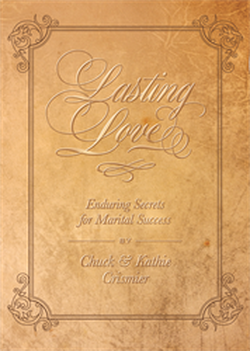
LASTING LOVE can be a dream come true. Yet love requires more than a dream or those loving feelings we so much desire.Lasting Love, Chuck and Kathie Crismier, celebrating their Golden Anniversary, unveil seven enduring secrets that will inspire and strengthen your marriage as it has theirs. COPY and PASTE this link to WATCH the TRAILER: https://www.facebook.com/Save-America-Ministries-204687919570536/videos
Past Episodes
This ministry does not have any series.
Featured Offer
LASTING LOVE can be a dream come true. Yet love requires more than a dream or those loving feelings we so much desire.Lasting Love, Chuck and Kathie Crismier, celebrating their Golden Anniversary, unveil seven enduring secrets that will inspire and strengthen your marriage as it has theirs. COPY and PASTE this link to WATCH the TRAILER: https://www.facebook.com/Save-America-Ministries-204687919570536/videos
About Save America Ministries
About Chuck Crismier
Contact Save America Ministries with Chuck Crismier
crismier@saveus.org
http://www.saveus.org/
Save America Ministries
P.O. Box 70879