
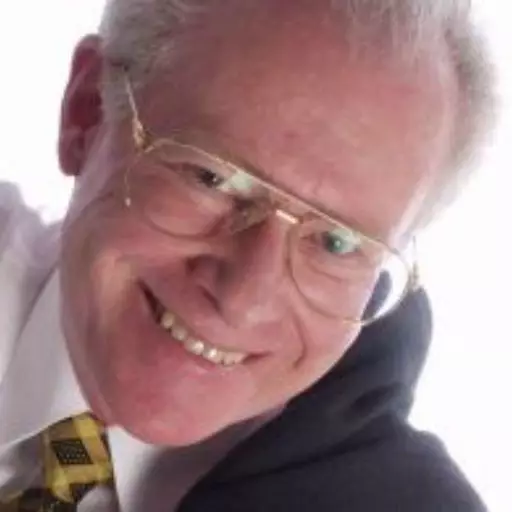
THE RESURRECTION


Beyond Chance - Confirmed in History
w/ Steve Osborne
Chuck Crismier: The tomb is empty. The tomb is empty, and we're going to be celebrating and remembering that wonderful life-changing, world-changing event next week. But today, we're going to examine the evidence. We're going to examine the evidence not only of the resurrection, but also of the creation and the very existence of all things because if there had not been a creation, there would not have been a resurrection. And if there had not been a creation, there would not have been a death and a crucifixion.
Everything is connected. Ultimately, everything is connected, and today we're going to connect the dots in a very interesting way because our guest today from Northern California says everything is beyond chance. There is nothing ultimately by chance because God created things to be as they are. He didn't create you to do sin as you do. He didn't create me to sin as I might. He actually created us to be holy, to worship him, and to bless his name, but we didn't do a very good job from the very beginning.
He handled all of that beyond chance and gave us an opportunity to have hope for the future and for eternity, which he also created beyond chance. So today on Viewpoint, a special guest joining us, Steve Osborne from Redding, California. He says he is a former atheist. Now, I didn't think there were any atheists in foxholes, so I'm assuming that Steve Osborne was never in a foxhole. But he says he was an atheist, so Steve, we're going to give you a chance to prove your bona fides here because I can't bring a guest on to purport to be an expert unless he has been proven to be an expert. So, were you in a foxhole?
Steve Osborne: I was. As a matter of fact, I'm what I call a binary person. I have two positions. I'm on and I'm off, and there's not anything in between. So for nearly 30 years, I was a godless pagan. I guess I would say that was off. And then it was on and I became a Bible-believing Christian.
Chuck Crismier: When you use the word binary, that's a dangerous word to use in this day and age because it has so many other implications. I see that you clarified that and that's good. Now, you also supposedly have been a scientist. What does it mean to be a scientist?
Steve Osborne: I have a PhD in experimental psychology. I spent time on the faculty of Arizona State. I've published eight peer-reviewed scientific articles. I've served as a grant reviewer for the National Science Foundation and the National Institute of Health.
I didn't spend a lot of time in the academic community. I left that community and did applied research, mostly in military aviation after that. But the core of being a scientist is searching for the truth. Now, we can search for the truth in science. For you and I, I think we try to find the truth when it comes to spiritual matters.
Chuck Crismier: Are you on a cell phone?
Steve Osborne: I am.
Chuck Crismier: Are you on a speakerphone?
Steve Osborne: I am not.
Chuck Crismier: Good, okay. Just wanted to make sure because when you're on a cell phone, there are some delays sometimes, and so I want to be aware of that and want you to be aware of that as well. So you're a scientist, but your field of endeavor was not in the practical sciences but in other venues.
Steve Osborne: When you take a look at psychology, it's divided much like medicine is into different disciplines. Experimental psychology is the science part of psychology. It's not about behavioral problems or counseling or helping people with behavioral problems. My degree is really in learning.
Chuck Crismier: So you were the B.F. Skinner of psychology.
Steve Osborne: I was indeed. In fact, I went to Arizona State. It used to be called Fort Skinner.
Chuck Crismier: Are you kidding me?
Steve Osborne: I'm not.
Chuck Crismier: Okay, well, what caused you to become so enraptured with the whole matter of creation, the universe, life, and so on?
Steve Osborne: First of all, let me share with you the impetus for the book. I spent nearly 30 years as a godless pagan. I've now spent almost 50 years as a Bible-believing Christian. I'm in the final stages of life. If you just do the math, I think that's pretty clear. I really wanted to do something to honor God before I left the planet.
So when I took a look at what I had to offer in the way of skills and talent, I'm not good with my hands, so I couldn't go build things for Habitat for Humanity. What I'm best at is reading enormous amounts of information and distilling it down to the basic ingredients. So as a starting point, I was a scientist, I love science, I'll always be a scientist. I was a scientist before I became a Christian.
I've always been bothered by how misled people are about science. Let me say this: nearly half of Christians today believe that the Bible and science are incompatible. A lot of people believe that science and Christianity are long enemies. None of that is true.
Chuck Crismier: In fact, many of the early scientists, their motivations were born out of the belief that there was a creator and that's why there was order and something to be discovered because there was order that had been created.
Steve Osborne: That's exactly correct. Modern science was born out of a Christian view of nature. In fact, early scientists, the people that brought modern science to the forefront, nearly all of them were Christians or at least deists who believed in God. They believed that by studying nature, they were literally reading the mind of God.
Chuck Crismier: Exactly. In fact, one of the most famous of all was not Einstein; it was Sir Isaac Newton. That's what motivated me for my senior year paper to write on the *Principia*, which was Sir Isaac Newton's chief paper. Here he was, a man who was considered to be perhaps the most brilliant scientist that ever lived, and yet he devoted more interest in biblical prophecy than he did in science.
Yet he came up with the calculus and who knows other things. So indeed, science is rooted deeply in the faith, deeply in the concept that God had to have been there to have created and today we go beyond that even to the empty tomb.
When did it all begin and why did it begin? You see, it's not just when did it begin, that is the earth or humankind, but why? And is there anything connected between the when and the why? Well, our guest today believes that there is. His book, *Beyond Chance*, takes us from the very beginning and then to the conclusion, an empty tomb. Why that is important and how that happened beyond chance.
Everybody, when they think about science, they're talking about evolution. Is that the ultimate issue of science, Steve?
Steve Osborne: No, the ultimate issue of science is to discover truth. What has happened is we have let the naturalists take over science and frankly, I think they've done a pretty good job of misleading the public. Let me define what I mean by naturalists. Naturalists believe that only natural laws can be used to explain the physical events, things like the beginning of the universe or first life. They say there is no supernatural event, there are no miracles, and there is no God.
For them, evolution—if you will, evolution of the species including humans—is the result of random genetic mutations that are filtered by natural selection and evolution without any help or assistance from God. I personally believe, and a lot of other people, especially a camp that I'll refer to as the intelligent design people, believe that that model of evolution, which we often call Darwinism, is a failed model.
Chuck Crismier: But the other problem is that a fellow by the name of Lewontin, a scientist from Harvard, said, "Yes, but we can't allow any discussion concerning theology, any discussion concerning a divine cause of things because that would make us not scientists anymore, and therefore we cannot allow a divine foot in the door." That's what he said. What say you?
Steve Osborne: Let me respond to that. By the way, I don't think we can convince anybody by saying you just need to have faith that God created the heavens and the earth. By the way, I don't believe that on the basis of faith. What people will discover, and I don't mean to plug my book, but what they'll find in my book is that there is abundant and clear scientific evidence that clearly demonstrates the existence and majesty of God.
Chuck Crismier: Well, that seems to be clear also in the scriptures. David himself said, "When I consider thy heavens, the work of thy fingers, the moon and the stars which thou hast ordained, what is man that thou art mindful of him?" He focused specifically on the heavens and said look at this, this is amazing when I consider this, what is even man that thou art mindful of him? So the scriptures clearly focus on the entire overarching creation of God from the very beginning.
Steve Osborne: Absolutely correct. What I want to tell you is that there's abundant scientific evidence that supports everything that scripture says. Let me see if I can give you an example, and I'll try to make this reasonably brief. I think everybody could agree that the greatest event that ever happened was the birth of the cosmos. Without that, there would be nothing else to talk about.
That's correct. Here's something that you won't hear maybe anywhere else. You certainly won't read it in any textbook. I'd like your listeners to listen carefully. Science cannot explain the beginning of the universe. They cannot, and let me tell you why. The laws of nature didn't exist at the moment the universe came into being.
Chuck Crismier: Therefore they cannot discover the laws of nature preceding that because there were no such laws of nature.
Steve Osborne: Exactly correct. Good. Let's agree that that was the greatest event in the history of time. The second greatest event in the history of time, I would argue, was the first life on earth. I'm going to tell you again, and I know people will probably discount when they first hear it, but I would say I'd bet my life on the truth of this statement: science cannot explain the origin of life on earth without intelligent assistance. I agree with that wholeheartedly.
By the way, I don't want anybody to take my word for this. Assume that I'm lying, look at the evidence. A recurring theme in my book is follow the evidence wherever it leads. I will stand before you and all the evolutionary biologists in the world and say you cannot explain first life on earth through natural process alone; it is mathematically and statistically impossible.
So the two greatest events that have ever happened in the history of the universe cannot be explained by science alone. You cannot explain them without reference to some sort of intelligent force. Now, you can stop there and just say, well, that's an intelligent force, maybe it's aliens, could be anything. For me, I believe that intelligent force is God. I believe that not just because the Bible says so, but when I look at the Bible at the descriptions of who God is, it matches the criteria to be able to accomplish both of those events.
Chuck Crismier: All right, so the alternative, and here's where a lot of people fall into a problem, they substitute theory for evidence. Evidence is something that is pretty conclusive. In fact, as a trial lawyer, I would demand in so far as possible physical evidence to prove a particular fact.
Beyond that you're left to conjecture, you're left to theory. Science is largely built on theories and then you try to prove the theory and if you can't prove the theory then you've got to forget that theory and move on to the next one. But what you're saying is you cannot prove with physical evidence how the universe came into being or how life came into being. I absolutely agree.
Steve Osborne: That's correct and once again I don't want anybody to take my word for it. In fact while you were talking I wanted to look something up because we talked about how modern science grew out of a Christian worldview. I wanted to go back and quote something because I actually think it's quite relevant here.
In 1660, the Royal Society of London for Improving Natural Knowledge adopted a motto. In Latin it says, and I'll probably mispronounce this, but it's something in the order of *Nullius in Verba*, which means take nobody's word for it. This is the birth of modern science and what is the motto? It says take nobody's word for it.
What that means is science is not determined by a show of hands, it's not speculation, it's not just theory, it's cold, hard, objective evidence. So I'll repeat something I said before. I don't want people to take my word for anything. I could be a habitual liar, I could be wrong, my speculations could be false.
But I would encourage people, especially skeptics and Christians, to go look at the evidence. When you look at the evidence you will find out that it clearly shows that some form of intelligent force was required to bring the universe into being and to account for first life on earth. It goes beyond that, but those are the two biggies in the world. Those are the two most significant things that have happened in the history of the universe and they remain unsolved scientific puzzles.
Chuck Crismier: True. Now that having been established, the question then is why was the universe created and why did man appear on the earth, apparently created? If it's beyond chance then there has to be a design and there has to be a purpose from beginning to end, from the creation of the universe to the creation of humankind and so on. So that leads us inexorably to the birth of Jesus Christ, does it not?
Steve Osborne: It does. In fact, I would say the universe came into being primarily to display the honor and glory of God.
Chuck Crismier: Well, the Bible would seem to teach that. That's the purpose of humankind is to give honor and glory to God, and if we don't do that we're in deep trouble. So God in his great mercy made it possible for us to do that even though while we were yet sinners, Christ died for us. And so that leads us to the entrance of the God-man into the universe and into time, which is the third greatest event that ever happened.
Steve Osborne: Yes.
Chuck Crismier: All right, that being the case then, he lived, he obeyed God. He was the only human who ever truly obeyed God, the only Israelite who ever truly obeyed God, and therefore because of that, God gave him a name that was above every name, that at the name of Yeshua, Jesus, every knee should bow both in heaven and earth. He gave himself, his perfect body, a sacrifice for our sin, which was the fourth great event of human history.
Steve Osborne: Yes, agreed.
Chuck Crismier: All right, and would you say that history and evidence beyond a reasonable doubt establishes the existence of all four of those items?
Steve Osborne: I do and once again, not to keep referring to the book, but the last two chapters of the book have to do with the empty tomb. One chapter lays out all of the evidence that has to be accounted for, and the next chapter brings on all the alternative explanations for the resurrection of Christ.
The second chapter works its way through all of the alternative explanations, none of which can account for all of the evidence that we go through in the previous chapter. So the bottom line, the resurrection of Christ comes as close to becoming an historical fact as you can come. Now, we can't say the resurrection is a historical fact. That would mean if it was an absolute fact and I don't think we can do that because the Bible tells us that we have to have faith to please God. So it sneaks right up and lays down beside a historical fact.
Chuck Crismier: In other words, it's as close as you can get. That's once again not my opinion. I agree with it, but it's not my opinion and it's not speculation. If you work through the evidence and you work through all the alternative explanations, quite frankly, the most obvious, reasonable, logical conclusion is that in fact Christ rose from the dead.
And that's why we're focusing on this today. I told my producer that when I got a hold of your book, set this immediately because I want to talk about that aspect here in the balance of the program today. That's why we're on because the entire truth of Christianity rests on the resurrection. It doesn't rest on the creation; it doesn't rest on anything else. It rests on the resurrection, and we're going to give you an opportunity to say why that actually exists.
Welcome back to Viewpoint. I'm Chuck Crismier. The Muslims say that Jesus was not crucified and therefore could not have risen from the dead and they believe it's blasphemy, worthy of death, to say that Jesus, whom they call Isa, was crucified. So does that mean he was not crucified? No, it's just what they claim.
There were others who said, even religious leaders of Jesus' day, who said he couldn't possibly have risen from the dead. "We saw him crucified, but he couldn't possibly have risen from the dead because his grave was completely locked up and sealed, therefore his disciples had to steal him away." Now talk about suborning perjury, friends. That's exactly what they did and they got the Roman soldiers to go along with it who were under a death penalty if they had not somehow through the religious leaders of Jesus' day convinced the Roman authorities well, there must have been another alternative that they couldn't have done anything about.
Well, man is full of his rationalizations, man is full of all of his theories, all of his ideas, whether encouraged in good faith or bad faith, everybody has a reason. Beyond that, what are the essential resurrection events? You see, if the resurrection was accurate, was true, was reality, historical reality, which it appears that it was since there's nothing to absolutely refute the resurrection, nothing.
So then we have to look at, okay, why then should we come to the conclusion as nearly as possible that indeed there was a resurrection? If there was a resurrection as our guest today says, everything changes. Everything changes. So Steve, what are the essential resurrection events? What do we need to look at as absolutely essential from your viewpoint?
Steve Osborne: There are five pieces of evidence for the resurrection of Christ. The first is Jesus' crucifixion, death, and burial. The second is the empty tomb. The third is the disciples truly believed they witnessed a resurrected Christ. And by the way, I want to emphasize the evidence is they truly believed, not that they did, but they truly believed. The fourth evidence is the conversion and ministry of Paul and the fifth is the conversion and ministry of Jesus' half-brother James.
Chuck Crismier: But you say historical events usually can't be proved with mathematical certainty. So historians have to weigh the evidence to gauge the level of certainty. That's what we have to do in the courts. That's what a jury is supposed to do, to weigh all the evidence.
Steve Osborne: Exactly correct. All right, so we're the jury. So if we look at Jesus' crucifixion and death, by the way, that is acknowledged as a historical fact both by Christian and atheist scholars. So the greatest skeptic, the biggest atheist in the world agree that Christ was crucified and died on the cross. So mark that off, that's historical fact.
Then let's look at the empty tomb. At least 75 percent of all scholars will accept that as historical fact. So then let's take a look at the disciples. My PR people sent me a bunch of questions some time ago to kind of answer and one of the questions they asked was what I thought was the most solid evidence for the resurrection when we looked at all of these.
I think it was kind of a toss-up between the conversion of Paul and the change in the lives of the disciples. So I ended up, I believe that the change in the behavior of disciples is the most incredible supporting evidence and if you will, let me kind of walk you through that if that's okay with you.
Chuck Crismier: That's why you're on the air here today, focusing on the resurrection beyond chance confirmed in history.
Steve Osborne: Okay, so let's look at the disciples. If people are familiar with the gospels, they'll know that courage was not the strong suit for the disciples. In fact, they were really a pretty fearful lot. When you consider the fact that they all fled at Gethsemane except Peter, who followed afar off and then denied Christ three times at the high priest's house, you're absolutely right.
So here's what we know. They abandoned Jesus when he was arrested. As you just said, Peter follows along and denied Christ three times. If you read the narrative, he didn't just deny Christ. He said, "Hey, stop bugging me, I don't know that guy."
Only one of the disciples attended the crucifixion. In the morning that the women discovered the empty tomb and came back and tried to tell the disciples that the tomb was empty and that an angel had told them that Christ was risen, they basically said that's nonsense. That same day in the evening, 10 of the 11 were assembled together, Christ appeared before them. When they told Thomas who was missing at the time, Thomas said, "Unless I can put my fingers in his wounds, I won't believe you." I think that's where the term doubting Thomas came from.
Subsequently, Christ appeared to even Thomas who finally acknowledged the risen Christ and declared my Lord and my God and fell on his face. So let's look at the disciples. We know what the disciples looked like before them. They were basically scared rabbits, they were afraid the authorities were going to come and punish them. They knew that the authorities knew that he was Christ's disciples, so we know that.
But what happened after they believed that they had seen the resurrected Christ? They underwent this remarkable transformation. They became courageous witnesses who endured threats, beatings, imprisonment, and if we believe early tradition, martyrdom. Ten of the 11 were martyred for their faith except for John. Whether they were crucified, stoned, stabbed, dragged, skinned, or burned, these men continued to proclaim the resurrection of Jesus until their dying breath.
In other words, they were so absolutely convinced by what they had seen and heard, witnessed themselves, that they were beyond fear now and could only testify by a kind of courageous faith that we have hardly any real understanding of in the Western world today.
Yes, and one of the alternative explanations is well, the disciples just made up the story of the resurrection. So if you're tempted to believe that, let me ask you these questions. Who dies for a lie? Who suffers torture for a lie? Who encourages their friends and their relatives to die for a lie?
In fact, let me create a scenario for your listeners. Imagine that you are tied to a stake and at your feet are piles of dry brush. There's a man standing before you with a torch and he says, "You either say that the resurrection is true or it's false. If you say it's true, I'm going to light these and you're going to die a very unpleasant death. Or you can say no and I'll let you down." So let me ask your listeners, if you were in that situation, what would you say?
Wouldn't we all like to believe that we would say, "No, we're for the resurrection, we're not going to deny Christ." Okay, but now let me change the scenario. What if you knew it was a lie? Would you still be burned at the stake for a lie? Not me, not anybody. So by the way, I find the behavior of the disciples after they believed they had seen the resurrected Christ to be the most astounding piece of evidence anybody could bring to the party.
Chuck Crismier: Okay, so you've got the 12 disciples. One of them betrayed Jesus with a kiss and then later repented because he knew that he was wrong and he killed himself. John we don't have any evidence that he was martyred but we do know that he was exiled to the Isle of Patmos. So then we have one more who did not walk with Jesus but actually did everything he could to bring the followers of Jesus to trial and even death and that was a fellow by the name of Saul of Tarsus. Why do you consider him so significant?
Steve Osborne: Saul of Tarsus was a zealous Pharisee. He viewed Christ as a false messiah and he hunted down Christians who he saw as lawbreakers or blasphemers. Acts tells us that he ravaged the church, dragging men and women off to prison and he approved the stoning of Stephen, the first Christian martyr. In Saul's own words, he violently persecuted the church.
Then something really extraordinary happened one day. Saul was on his way to Damascus to round up some wayward Christians who were breaking the law and all of a sudden there was this blinding light. Saul fell to his knees and he heard this thunderous voice from the sky saying, "Saul, why are you persecuting me?" And he says, "Hey, who are you?" And the voice said, "I'm Jesus whom you've been persecuting."
Paul was blinded, he was led off to the city, and after three days, God sent his servant, a man named Ananias, to restore Saul's eyesight. If we read between the lines, we believe that Saul then accepted Christ as Lord and Savior. He was baptized, and upon his baptizing, he began proclaiming the gospel of Christ.
Now, this is interesting because it only happened a couple of years after the resurrection. So once again, we see the change in life. We see the Paul the persecutor before he experienced the resurrected Christ and then we have his behavior afterwards.
Chuck Crismier: The resurrection beyond chance confirmed in history. As we talk with Steve in this final segment of the program, we want to get deep into his heart on this matter as to why he wrote the book, the conclusions that he drew from writing this book that might be helpful to you. It might be helpful to you as you discuss these issues with your children, your grandchildren, with others in your spheres of influence because quite frankly, there are a lot of skeptics out there.
There are a lot of doubters out there. There are a lot of doubting Thomases out there that have never had the opportunity to put their finger in the wounds of Jesus. In fact, they've been wounded by a lot of followers of Jesus and so we want to do the best that we can not just to be intellectual about it because the intellectualism has to end with some kind of heart commitment.
You have to resolve some sort of belief. It cannot sit out there idle. It has to take root, and that's called faith. Ultimately, it has to take root in faith. So we were talking about the Apostle Paul. He was a deadly fellow going after Christians with vigor and God knocked him off his high horse by a bright light and the sound of his voice saying, "Saul, Saul, why are you persecuting me? Why are you kicking against me?" It was so traumatic and so dramatic that you either had to make the story up as some sort of a theistic novel or it was real. How would we know it was real then, Steve, other than just a novel?
Steve Osborne: Well, let's just pick up the story. So now Saul of Tarsus is known as Paul and he has transitioned from being a persecutor to a preacher. Paul spent the rest of his life spreading a gospel that he had previously tried to destroy. He endured beatings, imprisonment, stonings, shipwrecks, betrayal, and constant danger.
He spent his remaining years as a prisoner consistently proclaiming the gospel with peace and joy, counting it a privilege to serve Christ. He eventually died in Rome, we believe he was beheaded for his faith, yet he never wavered. He counted trials and sacrifice as joy and a privilege to serve Christ and has created a model for all of us who call ourselves Christians to follow.
Sadly, few of us measure up to that calling, but nonetheless it is a wonderful model for us all. So Paul was Christianity's sworn enemy until he met Jesus, then he became its greatest champion and in the process wrote at least 12 books of the New Testament. I want to make an important point here. I think Paul's changed life is a powerful testament for the existence of Christ and the power of the gospel to change lives is remarkable. I can say that from personal experience.
I was a third-year graduate student at Arizona State. I was a scientist. I wasn't necessarily opposed to Christianity, but I didn't need any. I thought it was like a nice fable, Winnie the Pooh and whatever. I thought it was a good belief system for people that were too weak to face life without a crutch. I was happy, I didn't need God, I didn't want him, I wasn't interested, until my wife went back to the church of her youth and got saved and became a Christian.
Seeing my life become a Christian, I thought that was great. I thought my wife was weak and she needed it, not me. I was tough. I faced everything that life could throw at me and I was sticking my tongue out at life. By the way, my young adult and early life was a pretty rough sled. You asked me earlier if I'd been in the military. Yes, I was in an infantry unit. I was wounded, spent six months in the hospital, and lost the sight of an eye.
I was brought up with a psychologically and emotionally abusive stepfather. I left home Thanksgiving night of my senior year in high school. I was 17 years old and after a fight to the near death, left home and never returned. So anyway, if I could live through that and live through a war and still be standing, I didn't need God. Wasn't interested, didn't need him.
But my wife opened the door for me to be exposed and one of the things that happened was I was challenged by a Bible study leader, a man named Jerry Collins who's a fantastic guy. He asked me where I stood with God and I said, "Hey, I'm a man of science, not of faith." He says, "Great, come have breakfast with me." At breakfast, he gave me this book called *Evidence That Demands a Verdict* by Josh McDowell.
He said, "Hey, would you do me a favor? Would you read this and give me your professional opinion?" So I started reading this book and I was shocked to death. Everything that I thought I knew about Christianity was wrong. Now, here was the humbling thing. I prided myself as a scientist. I taught classes and I told people, "Know what you believe, know what it's built on, know the evidence."
And here I was, I had dismissed Christianity without bothering, without spending 10 seconds looking into it. And when I looked into it, I discovered that everything I believed was false. For somebody who defined themselves as a scientist, that was psychologically crippling for me. It really was.
So once again, I'll cut to the chase. I started getting involved. I was invited to Christian potlucks and people invited me to Bible studies and I mostly went to be nice or to do a favor for people. Pretty soon I was really enmeshed in Christianity. So I went from being perfectly happy to being mostly miserable.
If you don't believe there's a spiritual world, come and talk to me because I went through a spiritual battle which was one of the worst things I think I've ever had to endure. It wasn't simple. I would say one day, "This Christianity doesn't look so bad," and then the next day I would say, "This is absolute nonsense." As I say in my written testimony, I was angry, I cussed a lot.
Finally, after a torturous back and forth, I decided that I was going to disprove Christianity. I was a smart guy, I was a scientist, I was going to read the Bible and I was going to show it was false. And I couldn't do it. I couldn't do it. It was too obvious, it was too real. Coming to a saving grace in Christ is not through evidence or knowledge; it has to be a decision of the heart.
But I will say the heart won't go where the mind won't. I had to convince myself that Christianity was real, that it would hold up under evidence, that it was logical. And then one morning I'd been to a men's breakfast and a friend of mine, we were sitting in his truck and he said, "Hey, I need to practice these four spiritual laws. Would you be a guinea pig?" And I said sure. And when he got done, he said would you like to become a Christian? I said yes. I thought my friend Damian was going to have a heart attack and it was like everything just changed. I was a completely new person. I accepted Christ.
Chuck Crismier: It's called a conversion, brother. You're converted from unbelief and disbelief and skepticism to belief and from there on you're a new man and that is the purpose of the resurrection. The purpose of the resurrection is not to exclaim did you know that somebody was resurrected? That's not the purpose. The purpose of it is that God had a reason for it all to begin, whether it was with the Big Bang in creation or however creation occurred, it was for a reason. And part of that reason was for a guy, a rebel by the name of Steve Osborne, to ultimately receive Jesus Christ as Lord and Savior and inherit eternal life. And that is where it all leads, isn't it?
Steve Osborne: It is. You know, I talked earlier about one of the things that motivated me to write the book. There are so many people out there that are unbelievers, they're skeptics. And I want to say don't make the same mistake I made. Don't live your life and die an unbeliever without looking at the evidence. If you go look at the evidence and you say, "Yeah, I see all of this and I still don't believe," okay, I respect that. There are people that have done that.
But for heaven's sake, don't give your life away. Don't risk spending eternity in hell without looking at the evidence. My book provides lots of objective evidence for the existence and majesty of God.
Chuck Crismier: The resurrection of Jesus Christ is not the end of the story, it's the beginning of the new one. A promise that life, meaning, and love are stronger than death. This is the reason, Steve, why I insisted that you do this interview with me before we celebrate the resurrection. And here we are a few days away from that time that we call Resurrection Sunday.
This is an appropriate time for us to get our hearts and our minds directed in this direction. You have learned, you said, that true faith is not the absence of evidence but the courage to follow it to its ultimate conclusion. And when we do, we discover that reason and revelation are not enemies but companions, pointing to the same truth that we are the work of an intelligent and loving creator and he has a purpose for each one of us.
I really appreciate your joining us here on the program today. It's a wonder that somebody can still be out there in Northern California and not be a skeptic, brother. But thank you for joining us. You have not been infected by the virus out there that is seeming to infect the entire state and sending people running all over the country from that virus of disbelief and unbelief. But you're one of those. Beyond chance, friends. Beyond chance. Thanks for joining us. God bless and be a blessing.
Featured Offer
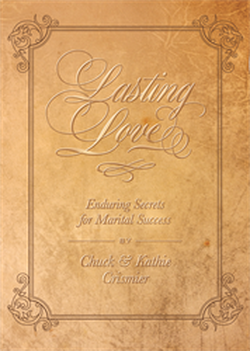
LASTING LOVE can be a dream come true. Yet love requires more than a dream or those loving feelings we so much desire.Lasting Love, Chuck and Kathie Crismier, celebrating their Golden Anniversary, unveil seven enduring secrets that will inspire and strengthen your marriage as it has theirs. COPY and PASTE this link to WATCH the TRAILER: https://www.facebook.com/Save-America-Ministries-204687919570536/videos
Past Episodes
This ministry does not have any series.
Featured Offer
LASTING LOVE can be a dream come true. Yet love requires more than a dream or those loving feelings we so much desire.Lasting Love, Chuck and Kathie Crismier, celebrating their Golden Anniversary, unveil seven enduring secrets that will inspire and strengthen your marriage as it has theirs. COPY and PASTE this link to WATCH the TRAILER: https://www.facebook.com/Save-America-Ministries-204687919570536/videos
About Save America Ministries
About Chuck Crismier
Contact Save America Ministries with Chuck Crismier
crismier@saveus.org
http://www.saveus.org/
Save America Ministries
P.O. Box 70879