
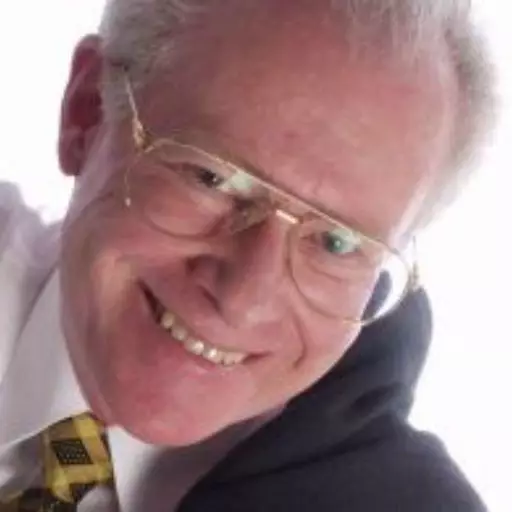
THE MYSTERY OF PRE-AMERICA


Tracing "Indigenous" People
w/ Nathaniel Jeanson
Guest (Male): This is Viewpoint with attorney and author Chuck Crismier. Viewpoint is a one-hour talk show confronting the issues of America's heart and home. And now with today's edition of Viewpoint, here is Chuck Crismier.
Chuck Crismier: The year was 1776, and a fellow by the name of Sam Adams, who was deemed to be the voice of the American Revolution, said this: "We have this day restored the Sovereign to whom all men ought to be obedient. He reigns in heaven, and from the rising to the setting of sun, let his kingdom come."
Well, is that when America began? It began in 1776. Well, what America was that? We know that 1776 was the signing of the Declaration of Independence, and we're now prepared to celebrate the 250th anniversary of America since that time.
But my wife tells me that America didn't begin there, that America began in 1630. What happened in 1630? Well, that's when all her forebears came over here with John Winthrop, a godly attorney, who brought over four boatloads of Puritans and signed what some have said is the clearest expression of the American vision ever penned, called A Model of Christian Charity.
But then there was a group that came over in 1620, and they were called the Pilgrims. And William Bradford and his ilk brought over over 100 of them. Most of them, half of them, didn't survive. But we call that the time of the Great Thanksgiving. Well, at that time, there were some fellows that came across to help them survive. And they were called Indians, Native Americans.
What would you call them? What did William Bradford call them? But they came over and were already here before the Pilgrims arrived. But how long had they been here? And did they have a history? Did they have any generational history that they could look to? Why is it we don't have any really significant record of who they are or who they were?
We just call them by today's modern nomenclature, Native Americans. Well, today on Viewpoint, we're going to find out a little bit more about how native they really were and whether the Native Americans actually were the forebears that long existed before those Native Americans ever showed foot on the planet or on American soil, North American soil.
So today we're going to take a look, we're going to take a little journey through history. We'll call it the Mystery of Pre-America. The Mystery of Pre-America, and all of those who were involved in the mystery of pre-America had names. Our special guest today says they had names. Now, I don't know that he knows what their names were, but he said they did have names, and he traced the history of the North American indigenous people through DNA.
That solved a lot of the mysterious understanding, or lack thereof, concerning the so-called Native Americans. And so today on Viewpoint, we bring before you a scientist, Nathaniel Jeanson. He's a PhD, that means he's a philosopher of science, Nathaniel Jeanson, who works with Ken Ham there at the Ark. You know, it all began with the Ark. Remember that? Noah, the Great Flood, and there were only eight that survived the Great Flood: Noah, his wife, three sons, Shem, Ham, and Japheth. Those were the survivors. And by them was the earth filled.
Well, how in the world did we ever get Native Americans then? Our guest today is about to tell us and solve the mystery. Nathaniel, it's good to have you on the program.
Nathaniel Jeanson: Thanks so much for having me on, Chuck. It's something that certainly drives me. I think I grew up liking mysteries, detective work. I don't know that I ever dreamed of becoming a detective, but that's really what science research is, a detective story trying to find the way things really operate, and that's tremendous fun.
DNA is the substance of heredity. It's passed on from parents to offspring, fathers to sons, mothers to daughters, and the vast majority of it encodes all of our physical features. Why do we have two hands, 10 fingers, 10 toes, brown hair, black hair, curly hair, straight hair? All those sorts of features, that can be found in DNA. It's basically the instruction manual for life, and for humans, human DNA is the instruction manual for all of our features that define us.
Chuck Crismier: Interestingly, the fellow Collins, who headed up the National Institute of Health, said that when the DNA was discovered, actually, it was like the signature of God. What would you say?
Nathaniel Jeanson: I appreciate that language. It is, for sure, it has a level of complexity that is mind-boggling, that is inspirational for computer scientists and can be spoken of in information technology or information science terms because of how the information is packaged, encoded, and so forth.
Collins himself, unfortunately, ended up on the side of evolution, would say that God used evolution to bring all this to pass, and so it makes you really scratch your head. It's sad, but that seems to be the way so many people go just because there's so much public pressure to go that direction and so few people at the professional academic level who would hold to something different.
Chuck Crismier: I know also when I was practicing law early on in Pasadena, California, was a fellow that I had contact relationship with who began an approach that was very much like Collins and began as a Christian to say, "Well, you know, maybe, maybe we didn't have just a young earth. Maybe we had an ancient, ancient, ancient earth, almost God's age." And he was seen as a great prophetic spokesperson for the Christian community, but it always troubled me. A Christian as Collins was, and here promoting an idea that God didn't really create the way He said He did.
Nathaniel Jeanson: Yes, very troubling. So many contradictions that you run into in Scripture, theologically, textually. It necessarily puts all sorts of death before Adam and Eve's first sin. You have to reverse the relationship between death and sin. The organization he founded, sadly, which is called BioLogos, has taken it to its logical conclusion. You can find articles on their website where they basically say rethinking the atonement, which, of course, that's naturally where it leads. The key concepts of the Gospel are founded there in Genesis. When you start taking it metaphorically, mythologically, you do great damage to the entire theological framework of Scripture, to the Gospel itself.
Chuck Crismier: Interestingly, the fellow that I was referring to had a bunch of PhD stuff behind his name as well as an astrophysicist, an astro-scientist, and came up with all these ideas. And then you had Collins, all of them claiming to be Christians. Why is it we seem to have no confidence or very little confidence in what the Bible has to say about creation?
Nathaniel Jeanson: I think there's two reasons. One is there's peer pressure. Surveys show that 99 percent of the PhD community holds to evolution, rejects the ideas and the narrative laid out in Genesis. And so there's great embarrassment if you were to disagree with the consensus science. There's loss of funds, loss of position, there's all that.
Secondly, if there's a professing Christian who's getting their education, I've got statistics showing that 99 percent of undergraduate students will hear only evolution their entire career. So there's a bit of exclusivity of "Well, I haven't heard anything else." That could be an explanation.
Chuck Crismier: Well, they're going to hear it today. So friends, hang in there. Nathaniel Jeanson is going to help us to understand that America maybe has existed in one sense three or four times in the past. Where are we today? The Mystery of Pre-America.
Guest (Male): Once upon a time, children could pray and read their Bibles in school. Divorces were practically unknown, as was child abuse. In our once great America, virginity and chastity were popular virtues, and homosexuality was an abomination. So what happened in just one generation? Hi, I'm Chuck Crismier, and I urge you to join me daily on Viewpoint, where we discuss the most challenging issues touching our hearts and home. Could America's moral slide relate to the fourth commandment? Listen to Viewpoint on this radio station or anytime at saveus.org.
Chuck Crismier: Welcome back to Viewpoint. I'm Chuck Crismier. Today, we're going back in history. We're going to go back before the chariots of Rome. Rome was a great power. Before that were many other great powers: you had the Persians, Alexander the Great, you had Pharaoh in Egypt. But that's about as far back as most of us go in our world history. We have very little understanding with regard to what happened in this area called North America.
All kinds of theories, but our guest today says, "You know what? I've done the homework, and I have something to say to help us all to unravel this mystery." And everybody loves a mystery, don't they, Nathaniel?
Nathaniel Jeanson: It's something that certainly drives me. I think I grew up liking mysteries, detective work. I don't know that I ever dreamed of becoming a detective, but that's really what science research is, a detective story trying to find the way things really operate, and that's tremendous fun.
Chuck Crismier: So here is the book, friends, They Had Names: Tracing the History of the North American Indigenous People. It's a $22 book, yours for $20 on our website. It's a hardbound book. I don't know how they even sell it for this because given the price of books these days, but it's there. It's available to you. It's on our website saveus.org. Give us a call, 1-800-SAVE-USA, 1-800-SAVE-USA. Or write to us at Save America Ministries, P.O. Box 70879, Richmond, Virginia 23255, writing a check and $6 for postage and handling.
All right. Now we're going to dig deep into unraveling this mystery. First of all, give us a context. It seems to me after reviewing your book, Nathaniel, that America has had, what we might say, two or three epical civilizations before ours.
Nathaniel Jeanson: Yes, and we can think of it, I guess, in several terms. In terms of DNA, there was, and I'll give you maybe two versions of this answer because there was an answer when the book came out in May of 2024, and then I made discoveries that summer that added to the narrative with DNA.
So in the book, I focused primarily on the male-inherited DNA, the Y-chromosome. It's about one percent of a man's total DNA, so it's just a small fraction, but it's a very useful tool for going back deep in time. And if you look at the Y-chromosome, so male-inherited DNA of indigenous Americans, you can see that they connect back to Asia at two different points. There's a connection back in the 900s AD, so about 1,000-1,100 years ago, and then there's a connection about 1,500-1,700 years ago, about the 300s AD.
And these represent migrations from Asia into the Americas. There's nothing older in terms of Y-chromosome than those, and so it implies then whoever came over wiped out the males who were here earlier. And there's been major resets then in the history of the Americas. Very different from what evolution says. They say one migration 15,000 years ago, then nothing happens basically for 14,500 years until Columbus arrives, and then things change. So dramatic rewrite of what's commonly accepted mainstream science.
Chuck Crismier: Well, maybe they believe that the Great Ice Age that came across wiped them all out. Also, I'm interested because if you look at Israel and the ability to determine who is Jewish, who is not, they don't look at the Y-chromosome. They look at the female.
Nathaniel Jeanson: Yes, and I've got a colleague who is Jewish and wants to get Israeli citizenship, but his Jewishness is through his father's side, and so they won't let it, which apparently has been a practice for about 1,500 years or so. I was surprised by it in one sense, another sense not, because I mean you just look at the biblical history of Israel, they've been conquered so many times. At some point, I just wonder how many males of Jewish descent were left, and so the rabbis just decided, "You know what? We're going to go by females," and that's been the way it's been for quite some time. And so that's decreased the amount of Abrahamic Y-chromosomes among people who call themselves Jewish today.
Chuck Crismier: Well, to a certain extent, you'd have to say that Israel, i.e., the Jewish people to use the term sort of more broadly than it should be used, have the same problem as the so-called Native Americans, because when the Assyrians came through and conquered the ten northern tribes and dispersed them throughout the earth, they lost their identities.
Nathaniel Jeanson: Yes, tremendous amount of intermixing in the biblical data. I think it's what Second Kings 17 or so, explicit statements of other people brought in to enter mixed religions, cultures, peoples. There are some exceptions when it comes to Native Americans. In general, if you think of the United States, the easternmost tribes or those who were on the East Coast at the time of European arrival like Cherokees and others, their DNA is highly intermixed, highly influenced by European DNA. But some of the westernmost tribes, like the Navajo, still preserve very high levels of indigenous DNA. So public studies show that it's about upwards of 90 percent of Navajo men still have this indigenous heritage. Whereas Cherokees, I mean Elizabeth Warren, of course, being one of the most infamous examples of intermixing and being highly diluted. But there's a big gamut of results both within the United States and then across the Americas up and down north to south where Colombia, there's high intermixing, but Guatemala, let's say, you have Mayans there still 80 percent high levels of indigenous Y-chromosomes. So yes, there's definitely parallels between indigenous American history and the Jewish history.
Chuck Crismier: All right. So I'm going to ask you a question. It's not intended to be combative. It really is an honest question. From my wife's perspective, America began in 1630. The people that came over. In fact, the very first president of the United States of America under the Continental Congress was her great-great-great uncle, Nathaniel B. Huntington. So I mean for her, that's when America began. So why should we care about, and I'm not trying to be insolent about it, but why should we care about anything before 1630?
Nathaniel Jeanson: That's a good question. Several answers come to mind. One for me, there's always been this natural curiosity. I was born here, Wisconsin 1980, and I grew up in school learning about the history of other places in the globe, history of Western civilization, ancient civilizations, ancient cultures.
And I think what also gave me some context and perspective and provoked the curiosity was the fact that my mother's German. We'd go over to Germany about every year, visit her side of the family and travel. And anywhere you go in Europe or at least in Germany, it seems you can hardly turn around without bumping into something that's Middle Ages era or something long before 1776.
And so there's this constant contrast, subconscious, conscious for me growing up where I go to Europe, there's a long history here, there's ruins everywhere, there's a story that's being told that you can't avoid. And then you come back to the United States, and well, where are the ruins? What happened before 1776, before 1630, before 1620? Never taught it growing up, or there's this glaring, gnawing, "I wonder what happened here" that's provoked my curiosity.
So that's one element, I think, just sheer curiosity, but there's a strong apologetic element here. This is a question that I learned in retrospect, I didn't learn much answer to because mainstream science doesn't have answers. And now with a biblical framework, creation science taking the lead, there's a real opportunity for evangelism. I would say this type of research, this book is making Genesis relevant to unbelievers. I've had them contact me saying, "I don't like that Genesis stuff, but I think you're onto something." So it's making them sit up and pay attention in a way they haven't had to do before. So this is cutting edge, it's a new era for creation science, a new era for Christians, and a new thing to wrestle with for unbelievers.
Chuck Crismier: All right. Now the general attitude of the American left, that is basically non-believers in the Scriptures, non-believers in the authority of the Scriptures, non-believers in Genesis 1 through 11, they look at the so-called Native Americans as kind of like a sacred sect. And in this sacred sect view, we should be honoring and bowing and restoring and recovering all that they believed, all that they stood for, because they were the real America. How do you respond to that?
Nathaniel Jeanson: There's a couple answers that come to mind on that specific question. First is, having seen the leftist view up close and from a distance for quite some time, my first response is it's extremely hypocritical. They try to maintain this postmodern view of "All truths are true and their truth is their truth and let's all get along," even though they know full well that what evolution teaches is a gigantic contradiction to what the Native Americans themselves say.
So they try to play this game in a sense of "Ah, we're going to affirm them," but you don't publish anything. You don't actually believe it's true. You say that in public, but when there's a PR stunt, I guess. And maybe they do really try to embrace that, but no one's actually a postmodernist. No one believes there's no such thing as truth. Everyone, when you press them, it's not like if my truth is I can murder you, they're going to be okay with that. They're going to resent that, they're going to resist that. So there's an inherent hypocrisy to that position.
Secondly, and this is one of the wild outcomes of this research, it's actually the biblically-based research that is returning dignity and value to the indigenous people. So where mainstream science is generally dismissive, so again in public when there's cameras, "Oh, yes, we affirm all this," but in the academic sense, they dismiss and kind of disparage what the Native Americans say about where they came from and their own accounts of migration.
It turns out if you have the biblical time frame and you have the Bible as your starting point, then you do your genetic research, it affirms many of the details of the indigenous migration accounts. And I've had, so this is just an example again of unbelievers, Genesis being made relevant to unbelievers, in 2023 in December, I was invited to come speak at the Lakota Treaty Council conference. So you think of, I grew up playing cowboys and Indians, the Lakota Sioux, one of the famous Wild West tribes, they're still extremely traditional, anti-Christian, anti-colonial. Normally, we'd have nothing to do with each other. But because one of their executive directors saw one of the videos we were doing and saw that this research was confirming indigenous history, he said, "Well, why don't you come speak? Talk about DNA, indigenous histories," because they see a potential that mainstream science doesn't offer. So the tables again in this case have been completely reversed where it's of all things now it's the conservative biblically-based model that's affirming dignity, value, worth for indigenous people, and it's the leftist views that is rather condescending. And I think the indigenous people recognize this and they've been rejecting it.
Chuck Crismier: Isn't that fascinating? In 1996, I was, and for four years, I was the chairman of the National Day of Prayer Task Force for the Commonwealth of Virginia. And one of the events that we brought forth and I invited was one of the most recognized representatives of the Mattaponi tribe right along the James River. And she came and spoke. She was a dear Christian lady. And the thing that she spoke about was "Stop talking about how the North Americans, the Europeans, came in and destroyed us and messed with our national language and our religion and so on." She says, "No, I see it as a blessing because without that, I would never have known about Jesus Christ. I would never have had an opportunity to be saved." That was her message. How do you respond?
Nathaniel Jeanson: I would completely agree with that in the grand scheme of things looking at eternal perspective. And I would add to it, this is something that's very politically incorrect, but has been growing on me as I've seen the data. You've probably experienced the same thing. For a long time, it's been almost taboo to talk about colonialism. It's a bad word. It has negative effects all around the globe.
There's an academic movement that is beginning to go back and say, "Wait a minute." You look at Africa, you look at places where you can do basically controlled experiments of colonialism versus non-colonialism, and objectively, they're saying there's a benefit to colonialism. Again, this is so radical and goes against the prevailing zeitgeist and thought of how we should be thinking. It's really a religion is what's pervading our culture.
But there are benefits, and that's not to minimize any of the atrocities as much as when you say, "Okay, economically, religiously, all these sorts of things, was there a benefit?" Yes. And I think the big mistake is to paint with what the leftists do, paint with very broad brushstrokes: "White man bad, indigenous person good." No, they're all people, and you can't demean them by trying to put them in--
Chuck Crismier: And we're all sinners.
Nathaniel Jeanson: Exactly. Exactly.
Chuck Crismier: Well, it's interesting you should say that, because another good friend of mine, Dr. John Perkins, who has been one of the premier voices for Black America as a Christian dealing with the inner cities and so on, he was the first, one of the first advisors here for Save America Ministries. He also joined us for the National Day of Prayer Task Force, and he said, "You know what? I'm glad that we were brought over here as slaves. Not because I like slavery," because he suffered in the South. He had actually was arrested, had a knife, excuse me, a fork bent, shoved up his nose, and was severely injured. And yet he travels the country and, until now, he's in his very elderly years, but he said, "I'm glad that we were brought over here as slaves because without that, I'd never have known Jesus."
Nathaniel Jeanson: Amen. Amen.
Chuck Crismier: So we can look at the bad, we can look at the ugly, because wherever humankind is and has been, there's going to be the bad and the ugly. But Jesus came to make it better, to save us all from our sin. So that leads us now to go back now, if we can, for the next 30 minutes, and take a look at: how about this mysterious history? Where does it lead us? How is it we got here? We'll be right back, friends. Stay tuned. You're listening to Viewpoint.
Guest (Male): There is so much more about Chuck Crismier and Save America Ministries on our website saveus.org. For example, under the marriage section, God has marriage on His mind. Chuck has some great resources to strengthen your marriage. First off, a fact sheet on the state of the marital union, a fact sheet on the state of ministry, marriage, and morals. saveus.org, Marriage, Divorce, and Remarriage: What does the Bible really teach about this? Find all of this at saveus.org. Also, A Letter to Pastors: The Hosea Project. saveus.org, and many more resources to strengthen your marriage. It's all on Chuck's website saveus.org. Again, you can listen to Chuck's Viewpoint broadcasts live and archived, Save America Ministries' website at saveus.org.
Chuck Crismier: Our guest today, Nathaniel Jeanson, with his book They Had Names: Tracing the History of the North American Indigenous People. In other words, by saying they had names, they were real people and worthy to be considered. So today we're trying to resolve, at least to a certain extent, the Mystery of Pre-America. How did all this happen? And it happened before 1492 when Columbus sailed the ocean blue. It happened before that. So what did happen? How far back does it go?
Well, Nathaniel, you talk about a period from 1000 BC to AD 300. That's a period of 1,300 years. That's a long time. Give us a distillation of that period from your understanding.
Nathaniel Jeanson: I'll give you two answers. One is what the book lays out and then how it changes in light of new discoveries. This is ongoing research is really what it comes down to. So archaeologically, we can see sites like Poverty Point, Louisiana, where you've got mounds and pretty much most of the ruins in North America are all earthworks. They're not stone pyramids like you see in Central America or Mexico or Guatemala. They're earthworks.
Correct. Well, they do have flat-top mounds later in history right before Europeans arrived, and that's a really interesting story. The earliest ones, the one that you can find in northeastern Louisiana today, they have a somewhat flat-top mound. They've got a set of mounds in semicircles. They're along a river. And this culture flourished about a thousand years before Christ, disappeared around the 700s. And the series of mounds that follows across the United States is the Adena mounds. So I had some even my hometown growing up, Racine, Wisconsin, 80,000 people, Mound Cemetery, they've got mounds from that era that were excavated. People sitting up facing east, apparently for reasons unknown.
And then what was really interesting now that I'm in Northern Kentucky, just south of Ohio, the Hopewell culture. So Adena mounds is centuries before Christ, maybe a little bit after. Hopewell is straddling the time of Christ until about 400 AD. These are the geometric mounds, and the epicenter really is northern Ohio. And what really got my attention was, again, the astronomical correlation. So just east of Columbus, Ohio, in Newark, you have a lot of these have been bulldozed under, but some are still preserved. These are now UNESCO sites, they just became such as significant world heritage sites about 2,000 years old. There's a site that has a earthwork mound in the shape of a circle connected by a causeway to an octagon. And this was built with such precision that it marks the 18.6-year cycles of the moon. I'm a biologist. I didn't know there 18.6-year cycles of the moon. These guys did. Reminds of the ancient Maya really, and they moved all sorts of earth to do this.
So what made that so interesting was I had no genetic connection to these people. I'd been using male-inherited DNA, and those people seemed to have disappeared. They happened to have disappeared right when these migrations genetically were recorded because then people come over right about the time Hopewell disappears.
All right, well it turns out if you look at female-inherited DNA, you can find two more migrations. So there was one in the 100s AD and 100s BC, a hundred years before Christ and then a thousand BC, a thousand years before Christ. So we're beginning to fill in even more of this era. In the book, it's mysterious, we have these archaeological mounds, we don't have genetic links, they disappeared, but now we've got some new clues to understand why they built what they did. Do they have connections to Central America? Where do they come from? All these sorts of things. So the story is still growing.
Chuck Crismier: All right, so the mystery is unfolding. So let's put this in the context of Western history going all the way back, for instance, to the Roman Empire. If we go back to the Roman Empire, we find Jesus being born about 4 BC, and He was crucified around 30 BC, rose again, and by 323, I believe it was, Constantine, the Roman Empire, actually basically decreed Christianity to be the religion of the realm. Well, that's about the time that you say this initial period of first Americans concluded their existence, about 300 AD. So then after that came a period from 300 to 600, which would put us up just about the time when Muhammad showed up on the scene. Tell us a bit about that period, about 300 years.
Nathaniel Jeanson: I like that analogy. And one thing I've kept coming back to in my own head in terms of placing American history, pre-Columbian American history, in the context of world history, everything seems to be a bit delayed in terms of scheduling in the Americas. So if you look at, we just take, let's say, secular dates at face value and we go back even to the time Moses, before then to the time of ancient Sumer and so forth, archaeologists will talk about cradles of civilization. So they'll talk about ancient Sumer as the cradle of Middle Eastern civilization. Crete is the cradle of European civilization. And those they put about 3000 BC. I'd adjust those dates, but just to have a comparison then.
The Olmecs would be the cradle of civilization builders, the giant heads in Central America in Mexico. Those are about 1600. So there's this delay, they start later. We talk about the Roman era as sort of the classic European age, the empire in Europe. The classic era in the Americas, you kind of have to go south to Mexico and Guatemala for the Mayans. They don't start their classic era until about 250 AD. So right as the Romans are nearing the end of their era, the classic era in the Americas begins and then ends about the 900s AD.
For North America, so if Americas as a whole are a bit delayed or things happen a little bit later than they happen in the Old World, and you have to ask yourself the question, why would that be? Was this part of God's eternal plan? And if so, why? Well, we don't have the answers to that, do we?
What's interesting to me is even if you just use the secular dates sort of as a relative measure, you see almost, so just to get the dates again, 3000 BC they say for Middle East, they'd say cradle of civilization in India about maybe 2700, and then in the Far East in China maybe 2200, Olmecs then 1600. Distance from Babel seems to explain this. As if it had something to do with moving away, so Genesis 11, after the flood, the dispersion from Babel. Interesting answer.
Yes, America being the most distant, if you're going to cross going eastward through China into Siberia across the Bering Strait then over, that's pretty much as far as you have to go or Australia would be another example of very far distance from Babel. And the relative timing seems to fit that. And environmental concerns play another role. So it's easier to grow crops in Central America than let's say in Minnesota because you got winter and all that and too many mosquitoes too.
Exactly. In North America, it seems to be delayed behind Central America. So you don't even see villages until I think about 1000 AD, 900 AD or later in North America. So in terms of what happened up here, it's even slower again because Americas as a whole is delayed, but then go to where it's warm and you can plant crops year-round, let's say. There's rainy and dry seasons, but still, a lot easier than dealing with heavy snowfalls in Canada and Northern Minnesota. That seems to explain what's going on and has helped me sort of place this in the larger context of what's going on in the rest of the world.
Chuck Crismier: All right, so then that brings us up to say around 900 AD, and that would be 500 years before Columbus sailed the ocean blue. Just to kind of put it in the context of Western history as we understand it. What happened then?
Nathaniel Jeanson: Yes, so at the same time when the Viking era in Europe begins to go down, they've some that came over and did actually make landfall here in North America, didn't stay permanently it seems, went back. Leif Erikson and those boys. Exactly. Around that time, there's two things to keep in mind when it comes to the indigenous Americans. There's a migration from Asia across the Bering Strait into the Americas. This gives rise to, and the reason I know this is we can connect the genetics to the indigenous histories to the language and all that, this brings to the Americas the ancestors of people like the Delaware.
And we talked about the First Thanksgiving. Those were Wampanoags, Massachusetts, Narragansett, those were of this same language family. Their ancestors, their history can be traced back to 900 AD, a migration then and then, of course, down the West Coast of Canada across the Great Plains, United States, so forth, eventually get to the East Coast. That happens in the north.
In the south, and I mean south as in south of the Rio Grande in Mexico, there's a group that migrates into what's now St. Louis. This is the Natchez people. Their own accounts, they say we came from Mexico, here's where we first landed, here's where we spread out. And archaeologically, the culture that they built is called the Mississippian culture. Mainstream science is very hesitant. All right, so that's where Natchez, Mississippi gets its name.
Yes, and these left the biggest ruins. They have mounds built of earth, but they're flat-top, just like the mounds that you see in Central America. And the first European explorers who saw them, so again, born in Wisconsin, there is a site called Aztalan between Milwaukee and Madison, just off it's in the middle of nowhere, just off the highway, but you can visit it and it's a small site, flat-top mounds, called Aztalan by the Europeans because they thought this looks like Central America, I wonder if this is the Aztec homelands. Probably not, but it's built by the Natchez, and they say we came from Mexico, and I think so there's a very clear explanation to why they look the way they do: because they came from there and they're copying the designs that they see.
Chuck Crismier: All right, now we're still way behind the Native American culture and existence as we understand it as portrayed in cowboy movies and so on. You had something called Bull Run, well, Sitting Bull and so on. We have those names that we're familiar with because they've been popularized by American movies. How do we move from the end of the 900s to that period of time?
Nathaniel Jeanson: The key concept to keep in mind, and one thing that really made me stop and think a lot, and I'm a visual person, I think in terms of maps. So one of the maps I remember seeing before I discovered all this was in the Fort Worth Stockyards. I was in Dallas, Texas for six years and family came, we visited there. And in the gift shop, there was a map of North America at the time of European contact. Lots of little domains, kingdoms like the Lakota Sioux and Sitting Bull and others, the Delaware and the Massachusetts, the Narragansett, the Mohicans and others.
And what struck me was, first of all, I had never seen anything like this before. I'm already in my 20s, 30s, an adult. And the second thought was: this reminds me of Middle Ages Europe, lots of tiny little petty kingdoms. And what got me excited was I learned history from Middle Ages Europe. I know there's people, there's places, there's kingdoms, there's chronologies. That must also be true here, which in retrospect you say, "Well, of course," but to be able to see it depicted that way, I thought, "Ah, okay, this is how it is."
Chuck Crismier: All right, well that makes a lot of sense. We're heading into another break. Your mind is just completely loaded, you've done so much research on this, and in the remaining 12 and a half minutes, we're going to try to translate this all up to now. Okay, how should we look back on this and move forward? We'll be right back, friends. The Mystery of Pre-America.
Guest (Male): Have you ever considered what the early church was like? Many people are developing a heart longing for a greater fulfillment in our practices as Christians. A recent study showed 53,000 people a week are leaving the backdoor of America's churches in frustration. What is going on? Why has there not been even a one percent gain among followers of Christ in the last 25 years? Could it be that God is seeking to restore first-century Christianity for the 21st century? Jesus said, "I'll build my church." Is Christ by His Spirit stirring to prepare the church for the 21st century? The early church prayed together and broke bread from house to house. They were family, and it was said by all who observed, "Behold how they love one another." Incredible. But the same can be found right now. Go to saveus.org and click "Sell Church." We can revive first-century Christianity for the 21st century. It's about people, not programs. It's about a body, not a building. That's saveus.org, click "Sell Church."
Chuck Crismier: Our guest today, Nathaniel Jeanson, with his book They Had Names: Tracing the History of the North American Indigenous People. In other words, by saying they had names, they were real people and worthy to be considered. So today we're trying to resolve, at least to a certain extent, the Mystery of Pre-America. How did all this happen? And it happened before 1492 when Columbus sailed the ocean blue. It happened before that. So what did happen? How far back does it go?
Well, Nathaniel, you talk about a period at the end of the 1200s AD, and we come to a period that you call The Contact. And I assume that means then the contact with the Europeans.
Nathaniel Jeanson: Yes, there's contact with Europeans, but three centuries later, there's contacts also between groups. If I can pick up this idea, this is fresh in my head about my own mental transformations, really big lightbulb moments for me to think about the big picture of European-Americas connected to the modern times.
The picture in the Fort Worth gift shop of the time at European contact, this is how the map looked, this is where the tribes were. That was one "Oh, wow, this is now history." The second big thing was to realize that is one tiny snapshot in time, and you go back 300 years and it looks totally different. That was what's so wild to me and which, I mean, that fits European history. If you had sort of a camera on Europe and you could kind of play the tape in fast forward and see century by century or every year by year in rapid succession how the map changes, yes, that's kind of what we learned in school.
Same thing holds true in North America. We've got the Natchez coming up about the 900s. They build this big empire from St. Louis down to the Gulf Coast, over to the Atlantic, covering much of the Southeast. That empire falls because the ancestors in the late 1200s, early 1300s, the ancestors of the Delaware, the Wampanoag, Mohicans, Shawnee, others, they confront the Natchez at the Mississippi and together with allies from the north, which would be the ancestors of the Lakota, they defeat the Natchez. They strike a critical blow. We know the names of the conquerors because the Delaware have a document that tells us this play-by-play history. And so that's part of the title of the book.
Chuck Crismier: All right, so that wasn't the last of the Mohicans. That was the last of the Natchez.
Nathaniel Jeanson: Exactly. And so at contact, they're just this tiny little group because they lost their political power. They were defeated by this advancing alliance, and so by the time of European contact, the people in this language family that includes Delaware and Mohicans and others are one of the most widespread groups in the entire North American continent. A real tremendous success. That battle early 1300s, the biggest battle in all of North American history, leads to the collapse of this empire.
And a thought experiment I've had kind of looking backwards is: what if that empire didn't get defeated? What if they had held strong and then when the Europeans arrived, they encountered this pre-European empire still strong? How would history have played out differently? And I do wonder if it was more unified on the Native American side if things would have played out dramatically differently rather than being all these petty little different groups that are constantly changing alliances to try to gain the upper hand.
Chuck Crismier: Well, the other way to look at this is that the left may idolize the concept of Native American, but the reality is the Native Americans treated one another the same way the Europeans treated themselves. In other words, there were wars and rumors of wars the same way Russia is treating Ukraine right now, exactly the same way. So human nature has always been human nature, whether they're calling Native Americans or whether they're calling native Germans or native Russians or whatever. It's always been the same: wars and rumors of wars.
Nathaniel Jeanson: Exactly. And I feel like even though it's not necessarily pleasant history to uncover what's actually going on, it is in a sense humanizing. This is not some group where the Americas is the exception to everything else we learn in the globe. No, they're humans just like the rest of us and they did things just like the rest of us. And so they're not less than us, more than us, they're fellow humans and equal to us, and I think that's a valuable lesson as well.
Chuck Crismier: So the next question then comes, well, the Europeans come in regardless of where they came from. The first ones came to South America, the Caribbean, and Mexico and so on, and then eventually up to these shores. And the left always looks at this as "Well, look how terrible those Europeans were. And Columbus, we ought to tear down all of his statues because he is a totally unrighteous person." Well, what do you say of the heritage of the leftists who have done and their heritage of doing exactly the same thing everywhere they went? It's just unbelievable, the myoptic view that people can have when they do not have a God view of history.
Nathaniel Jeanson: I remember reading one of the secular books about the time of European arrival, and the author kept wanting to phrase it as when the Native Americans discovered the Europeans. Which I feel like maybe I've been influenced too much by secular thinking and the cultural pressure to adopt that, but the more I've been able to re-educate my own thinking on, no, no, you don't throw away what the Europeans did because of some of the atrocities. There's atrocities all around the globe, it's not to equate or minimize any of them, but these guys were incredible explorers, and they came to the Americas because they had the technology.
Or put it in terms of a book I read by, I think he was Catholic, Rodney Stark. His book is called How the West Won. There's a reason that it was the Europeans in ships crossing the Atlantic and not vice versa. And this wasn't a book necessarily about Native Americans versus Europeans as much as Europe versus China, Europe versus India, Europe versus elsewhere. And his point was it was the Christian worldview that allowed the flourishing of so much technology and advancement.
So he said, "Yes, the leftists will say China found gunpowder first." Fine, we'll acknowledge that. But it was the West where there were openness, I guess, just the democratic values, Christian worldview-influenced values where instead of the Emperor saying, "Ah, we got to suppress this," they exploited this discovery for their own ends and took advantage of it. Talked about maybe mixing up my books, but you look at some of the Muslim cultures and the king taking everything for himself, ruling with an iron fist, everything is accumulated to himself rather than distributed to other people. Anyway, it was story after story of this is really interesting. It's the Christian worldview in the West that explains how it ends up dominating the world, and we can't dismiss that because "White man bad." Yes, white man does bad things.
Chuck Crismier: So the point of the matter is from God's viewpoint, all humankind were sinners and all needed to be saved, whether American Indian, Native American, Chinese, German, Scandinavian, whatever, we all need a Savior. That brings us to, and we're right at the end of the program here, so much to talk about. You have an afterword called Kill the Indian, Save the Man. What in the world are you talking about?
Nathaniel Jeanson: This is something I learned from some of the Native American contacts I had, it's a sore spot for them. Apparently, that was a philosophy back then, going back 100-200 years, of "We're going to take the Indian out of the guy." And the point I wanted to show was: what is the biblical answer to this? What do you tell someone?
I'm trying to put myself in, and it was really interesting being at the Lakota meeting because I could now see firsthand as one of the few Caucasians who was there listening to the elders talk, listening to them talk about how they're concerned about the youth up-and-coming, they're desperately trying to preserve their culture, yet we're in a Western hotel eating Western food, speaking English. Some of the meeting was in Lakota, which is a bit hypocritical in and of itself, but go ahead.
I'm getting a firsthand up-close glimpse of what is it like to be a very small minority people seeing the culture dying. What hope does the Bible offer? And I came back to a verse in Revelation where it says looking ahead to the New Jerusalem, new heavens, new earth, "The glory and honor of the nations will be brought into it."
Does that mean, of course, if you think about the Roman Empire, does that mean heaven's going to have slavery? No. But there is a glory and honor in the Roman Empire. There's a glory and honor in the Greek Empire, in ancient Sumer, ancient Assyria. There's a glory and honor in Lakota culture. There's sin in all cultures. And it's the kings who are saved, but I thought what an interesting and wonderful promise, let's say if I was a Lakota and I'm like, "What can I do? I'm 0.1 percent of the population," whatever the numbers, it's very tiny. There's little hope of Lakota language being preserved, Lakota culture.
To realize it's not up to me. God notices the cultures, the glory and honor of the nations is brought in. God saves the Indian and the man. Must be born again, that's absolutely true, and cultures that aren't born again have a very different outlook. But if you are born again, God notices your soul and the person.
Chuck Crismier: Yeah, but the left says no, you preserve the culture and that's how you endure to the end. The Scripture says no, you embrace Jesus Christ as Lord and Savior and endure to the end.
Nathaniel Jeanson: Exactly. Exactly. And so the culture may leave, but it seems to be Scripture promises that God concerns Himself with it. It's not up to me to try to preserve European culture. My job is soul-winning, loving my neighbor as myself, loving God with all my heart, soul, and mind and strength. God sees to all that, not to discourage the preservation of culture, but there's a hope even for those who've been conquered. Because that's really the position, I think, of Native Americans today. They've been conquered. There's been all sorts of ways to try to rewrite that, but that's the basic reality. It's been happening all throughout human history. What do you do? And the Bible offers hope. It offers hope for the saved.
Chuck Crismier: And we're still facing exactly the same issues today: one people group wanting to conquer another. China wants to conquer the world; they've declared it. By 2050, the whole world will be Chinese, will be conquered by the Chinese. Russia wants to conquer the world, Russia wants to build its own empire. Islam wants to conquer the world. Everybody wants to conquer the world and they all have their reasons. But Jesus said, "I'm coming and I'm coming quickly, and I'm going to judge the quick and the dead."
And it doesn't matter what your culture was, it doesn't matter, because without Me you can do nothing. "I am the way, the truth, and the life. No man, Native American, German, Scandinavian, Russian, Chinese, will come to the Father but by Me." We've got to get it straight, I think, Nathaniel. And I think you've done a masterful job of trying to sort through this to help us understand the greater history. There's nothing wrong with recognizing that history, but we don't want to glorify it either, do we?
Nathaniel Jeanson: Yes, keep a biblical perspective. You must be born again, that's the bottom line. And there's hope for those who've been conquered, I think Scripture holds it out. It's been a refreshing study of that and it's been fun to try to recover the history, too, as part of the detective story within a very strongly biblical framework.
Chuck Crismier: Exactly. Well, we've been trying to do that, unravel the mystery of pre-America, and friends, at least you get some insight into it and hopefully it's been helpful. They Had Names is the title of the book: Tracing the History of the North American Indigenous People. There were indigenous people everywhere around the world. In fact, if you look at Ukraine, Ukraine preceded Russia. Believe it or not, Ukraine preceded Russia. It was almost as if the Ukrainians were the indigenous people. Without understanding that, you can't understand what's going on between Russia and Ukraine.
So just to give a bigger and broader picture on things, get a copy of this wonderful book. Twenty dollars will put this twenty-two dollar book in your hands. It's on our website saveus.org, saveus.org. Give us a call, 1-800-SAVE-USA, 1-800-SAVE-USA. Write to us at Save America Ministries, P.O. Box 70879, Richmond, Virginia 23255, writing a check and $6 for postage and handling.
Now if you have a friend, a relative, you have a business colleague or someone whose heritage is Native American, how they know that, that's up to them, but if you know that, you might want to tell them about the book. You might want to get a copy of the book for them. It might be helpful. It might be encouraging. In fact, it might even give you an opportunity to minister to that person or encourage them.
Become a partner, friends. Send your gifts by faith to Save America Ministries. Remember, this is America. We're the 250th anniversary celebration of the political birth of the nation. The spiritual birth of the nation was in 1620, 1630, and then the heritage goes all the way back a thousand years before that or more. Thanks for joining us. Again, become a partner, send those gifts by faith to Save America Ministries. Do it today. Don't delay because you know, if we're going to continue, we've got to have the resources to do so. God bless, be a blessing, and pray for those who are, well, whose cultures have been upset and destroyed, that they might come to embrace Yeshua as Lord and Savior.
Guest (Male): You've been listening to Viewpoint with Chuck Crismier. Viewpoint is supported by the faithful gifts of our listeners. Let me urge you to become a partner with Chuck as a voice to the church, declaring vision for the nation. Join us again next time on Viewpoint as we confront the issues of America's heart and home.
Featured Offer
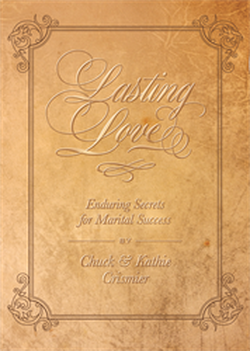
LASTING LOVE can be a dream come true. Yet love requires more than a dream or those loving feelings we so much desire.Lasting Love, Chuck and Kathie Crismier, celebrating their Golden Anniversary, unveil seven enduring secrets that will inspire and strengthen your marriage as it has theirs. COPY and PASTE this link to WATCH the TRAILER: https://www.facebook.com/Save-America-Ministries-204687919570536/videos
Past Episodes
This ministry does not have any series.
Featured Offer
LASTING LOVE can be a dream come true. Yet love requires more than a dream or those loving feelings we so much desire.Lasting Love, Chuck and Kathie Crismier, celebrating their Golden Anniversary, unveil seven enduring secrets that will inspire and strengthen your marriage as it has theirs. COPY and PASTE this link to WATCH the TRAILER: https://www.facebook.com/Save-America-Ministries-204687919570536/videos
About Save America Ministries
About Chuck Crismier
Contact Save America Ministries with Chuck Crismier
crismier@saveus.org
http://www.saveus.org/
Save America Ministries
P.O. Box 70879