
THE FAUSTIAN BARGAIN


What will I trade for truth?
Guest (Male): This is Viewpoint with attorney and author Chuck Crismier. Viewpoint is a one-hour talk show confronting the issues of America's heart and home. And now, with today's edition of Viewpoint, here is Chuck Crismier.
Chuck Crismier: Johann George Faust was a real guy, a real guy back there in history, born in 1480 and lived until 1540. And apparently, there was a lot about his life that resembles our lives today. So we're going to talk about this fellow for a while, his name, Johann George Faust.
This high and mighty Faust, Dr. Faust, was highly successful, but he was very dissatisfied with his life because he didn't have everything he wanted. And that led him to make a deal with the devil, a deal with the devil exchanging his soul for unlimited knowledge and pursuit of worldly pleasures and power perks and position.
Now, Dr. Faust now resembles many in America and around the world. In fact, his life actually looks an awful lot like life without Christ, or life that purports to be in Christ but embraces the world. Dr. Faust, his life has been reinterpreted through the ages now. His name took on an adjective called Faustian.
Faustian implies sacrificing spiritual values for power, knowledge, or material gain. The story was popularized by a German legend concerning the man, the historical man, Johann George Faust. The story was popularized in England by Christopher Marlowe, who gave it a classic treatment in his play, *The Tragicall History of the Life and Death of Doctor Faustus*, that came out in 1592.
Today, we talk about the tragic history of Dr. Faustus and how it echoes into our lives today. Yes, right here in America. So, I welcome you back to Viewpoint. I'm Chuck Crismier. It's a conversation always with ever-increasing conviction that transforms. In fact, so powerful has this story been that it has been reiterated in a number of different ways over hundreds of years. In fact, the famous philosopher Goethe actually wrote his own version, a changed but his own version of the story of Dr. Faust.
Today, we take a look at the history of Dr. Faust. Well, not so much the history of Dr. Faust, but the implications of the history of Dr. Faust in our lives right here. For instance, is there any particular individual in modern American history right now that you might think might resemble Dr. Faust? Anyone come to mind? Whether in the Christian world, in the secular world, in the governmental world, in the medical world, anywhere in the world, is there anybody that would come to mind?
Well, I'll tell you, for many, the name Dr. Fauci sounds awfully familiar, awfully familiar to what happened with Dr. Faust. They have a familiar ring, don't they? A very familiar ring. And so, I asked the infinite wisdom of Google AI whether or not Dr. Anthony Fauci was Faustian, that is the term used to describe the philosophy of life of Dr. Faust, alluding to a tragic figure who compromises their moral core or trades their integrity for power, influence, or institutional preservation.
So, in traditional compromising language, in order to protect the guilty and the innocent, Google came out with this answer. It's a profound philosophical question rather than a settled one as to whether Dr. Anthony Fauci is Faustian. Public perception of the longtime health official is deeply polarized, dividing him either as a dedicated public servant or a bureaucratic technocrat overstepping democratic bounds.
Critics who view Dr. Fauci through a Faustian or cautionary lens argue that his decades-long tenure at the apex of public health bureaucracy required an unhealthy accommodation with political power. Detractors point to intense political clashes, allegations regarding the origin of COVID-19, and all of the requirements that he imposed upon the American populace, in fact, the world.
Public scrutiny intensified during high-profile congressional oversight, such as his appearance before the Senate Homeland Security and Governmental Affairs Committee where he invoked his Fifth Amendment right against self-incrimination 111 times under legal advice. Critics also view the preemptive federal pardon granted to him by President Joe Biden back in January of 2025 as a symbol of an elite political class shielding an unelected official from accountability, feeding the narrative of hidden compromises. In other words, the Faustian bargain that had been made.
So, whether the hearing that just happened proved what the American people already knew, that Fauci is a fraud, is another issue altogether because he claimed the Fifth Amendment 111 times, failing to answer any questions. As a lawyer, as a trial lawyer, I would have to say that his lawyers gave him the correct legal response to the situation so as to protect him from unexpected legal liability and consequences.
But it didn't cover the underlying situation that gave rise to the hearing in the first first place, and that is some very unnerving and unpleasant information that has been uncovered concerning what Dr. Fauci knew concerning the matter of COVID, what he mandated for the American people and the world in order to deal with it that caused such incredible harm everywhere and many believe hundreds of thousands if not millions of unnecessary deaths.
So, our purpose today is not to spend an hour dealing with the life and times of Dr. Fauci, but rather to take a look at the Faustian bargain that may have been made in order to secure power, perks, and position. That indeed seems to be the case when Dr. Fauci himself went about somewhat braggingly, especially in his diary, indicating how popular he had become in the world.
That he was actually as popular as Donald J. Trump, that everywhere he went, he could be recognized, that his name was recognized everywhere. Instead of focusing in his diary upon the seriousness of COVID-19 and the issues that he was dealing with, he was focused on power, perks, and position. Did he make a bargain with the devil? I cannot tell you that. But Faustian means trading your core values, morals, or long-term soul for a short-term power, success, or knowledge. And it comes from the classic story of Dr. Faust, a man who made a deal with the devil. So, here's my question for you. Have you ever made a deal with the devil? Don't answer too quickly. Think about it. Have you ever made a deal with the devil? Are you living in such a deal right now? We'll be back.
Guest (Male): Once upon a time, children could pray and read their Bibles in school. Divorces were practically unknown, as was child abuse. In our once great America, virginity and chastity were popular virtues and homosexuality was an abomination. So what happened in just one generation? Hi, I'm Chuck Crismier and I urge you to join me daily on Viewpoint, where we discuss the most challenging issues touching our hearts and homes. Could America's moral slide relate to the fourth commandment? Listen to Viewpoint on this radio station or anytime at saveus.org.
Have you ever done anything or chose to do anything primarily for present gain without regard for the future cost or consequence? Have you ever committed or compromised your beliefs or morals in order to achieve some kind of success? It's called Faustian. That's the very definition or meaning of Faustian. A Faustian deal or pact brings immediate wealth, fame, or answers, or seeming prosperity, or achieving something, but in exchange, you lose your inner goodness, your integrity. You might face a heavy future penalty that ruins your original gain.
So a Faustian bargain is a risky choice where winning today means losing everything that matters tomorrow. That's what happened in the book of Genesis. In the book of Genesis with a fellow by the name of Esau. He was the firstborn of his father. He had a brother named Jacob. Esau was the favorite of his father and also the firstborn. He was a man of the field. He was a hunter, a man of the field.
Jacob, however, was not. And one day, Jacob was cooking some soup or stew, red stew. And as the story goes, Esau came in after a day, famished from hunting, and felt like he was so hungry that if he didn't eat quickly, he would die. And so he asked his brother for some of his stew, his red porridge or whatever it was.
And as a result, as the story goes, Jacob said, "I will give some of this to you, brother, but in exchange, I want you to give me your birthright." Now, the birthright was very precious. In fact, only the firstborn had this birthright because it gave virtually everything that the father had to the son, particularly the firstborn.
And so Esau thought to himself, "What use will this birthright be to me if I die?" So he said, "Okay, I give up my birthright." And so Jacob gave him some of his red stew, and the result was history. But from God's viewpoint, what Esau did was so despicable, he had literally made a bargain with the devil. So God said, "Jacob have I loved, but Esau have I hated. Jacob have I loved, but Esau have I hated."
In other words, long before Dr. Faust ever made the deal with the devil, we have that recorded right there in the book of Genesis. The very same spirit. You may say, well, he didn't make a deal with the devil, he just made a deal. Okay, but what motivated him to do that from God's viewpoint was he made a deal with the devil. And for that, for that he lost the favor of God. Jacob have I loved, but Esau have I hated.
So the question that echoes down to us today concerning this is whether I, you, we, or any of us have made a deal with the devil. You say, "Well, I would never make a direct deal with the devil." Well, I'm quite sure that Esau didn't think about it that way either. He didn't think he was going to completely lose God's favor in his life by choosing to receive his brother's porridge, red porridge instead of forfeiting the birthright.
I don't think he thought through it that way. He wanted what he wanted, and he wanted it now. In other words, he wasn't willing to wait and he wasn't willing to be patient. He wasn't willing for God to provide. He wasn't willing to endure. He wasn't willing to overcome the initial temptation to get what he wanted when he wanted, however he wanted it, and was willing to compromise to get it.
Now, Faustian means in a sense a being willing to abandon one's principles or values in order to pursue knowledge that you don't feel like you have or can get, wealth, or power or perks or position, anything that you don't feel like you have and want. So I have some questions for you. We're going to go beyond you and me right now, and we're going to take a look at some broader issues in our country historically.
For instance, here are some headlines that we're going to take a look at. Here is a question that came today from Tony Perkins, head of the Family Research Council. He asked the question, "Is America too far gone to turn around? Is America too far gone to turn around?" The next question is, whatever happened to the Evangelical Lutheran Church in America? The next question is, have churches shrunk the Gospel? And the final question is, is reclaiming America's Mainline churches a lost cause?
Now, these are not the only questions that we could ask, but they're all questions that have come to this broadcaster this very day in preparation for this program. In fact, they're part of the reason why we're doing this program today coupled with what happened just recently with Dr. Fauci being interrogated for his misdeeds, gradually being uncovered, the motivations for them that has caused anger to rise up within the Congress.
And then to have all of their efforts to obtain the information foreclosed by his claim 111 times of the Fifth Amendment. So, here we go. We're going to take a look at these as we move through the program here today, and then we're going to come back and take a look at our own lives. Because you see, this program is not about them, it's about you and it's about me.
In fact, the very first book that I wrote that was spread not only throughout our listenership, but also was served on every single member of Congress and the President of the United States, *Renewing the Soul of America*. The byline of that book was or the subtitle was, "One person at a time, beginning with you."
That's why 38 national Christian leaders endorsed it because it was so unusual. It was not a book about them. It was not a book about Slick Willie in the White House or Barack Obama. It wasn't about any of that. It wasn't about liberals per se. It wasn't about homosexuals or transgenders. It was a book about us, all of us. *Renewing the Soul of America*. Notice it didn't say renewing the politics of America. It said renewing the soul of America, the mind, will, and emotions of America, one person at a time, beginning with you.
If you want to get a copy of the book, $15 right there on the website, saveus.org. It might change your life. It just might change your life. It really, I mean that. It might change your life. That's why 38 national leaders endorsed it. All right. Now we go to these questions to see what your answer would be, how you would answer it, what your thoughts would be, and why it is we have the thoughts that we do concerning these questions.
For instance, here's the question: have churches shrunk the Gospel? Jon Street and Michael Craven wrote a piece for the Christian Post today, actually, it was last week, and said churches have shrunk the Gospel. Let me share with you a little bit about what they said. In many churches, Christianity has been reduced not necessarily to something false or heretical, but to something much smaller than it is.
Even our understanding of the church's mission to exalt Christ, edify believers, and evangelize the lost is understood in ways that confine Christianity, in other words, that misconstrue it. Worship only happens on Sunday mornings. Discipleship is the acquisition of biblical knowledge or the process of becoming more moral. Evangelism is about securing decisions for Christ.
When faith is separated from work, worship is disconnected from vocation, discipleship becomes unrelated to culture, and salvation is irrelevant to the wider world, so Christianity then becomes privatized. This would have puzzled the earliest Christians, they said. Paul urged believers not to be conformed to this world, but to be transformed by the renewing of our minds.
It teaches us to see the world through the lens of God's kingdom and to see God's kingdom as the reality about the world we live in. After all, we're all being discipled by something, aren't we? Something is forming our lives, our loves, our habits, our assumptions. And if these things are not being shaped by the Holy Spirit through the scripture, it's being shaped by the surrounding culture.
The church's task is to cultivate believers whose entire lives bear witness to the reality that Jesus Christ is Lord. In the same way, evangelism is not a single transaction. Jesus did not command the followers to make converts. He commanded them to make disciples, teaching them to obey everything that he had commanded.
So the Great Commission is not about getting people to heaven. It's about bringing every area of life under the reign of Christ. Christians are called to propose, not impose. The goal is not dominance; the goal is faithfulness. Our task is not to control but to witness. We don't pursue cultural power, but obedience to Christ.
So what the church needs is not a new strategy of engagement; it needs a recovered vision of the kingdom of God. Because the church needs more than informed believers, it needs transformed believers, men and women who are prepared to follow Christ faithfully wherever he has called and placed them.
Interesting comments here distilled from this article today. What really caught my attention here, the root of it is as we were told by the Apostle Paul that we're not to be conformed to this world, but to be transformed by the renewing of our minds. Now, why is it we need our minds renewed? Because our minds are prone not to follow the word, will, and ways of the Lord.
Our minds are prone to follow the ways of the culture, the ways of the world, and to win the world by doing things the world's way in the name of Christ. Isn't that an interesting thing? But that's exactly what's happened in the church. And it's happened in our own lives. Why? Because we wanted to gain favor with the world. We wanted to gain favor with the culture in order to accomplish something that we think is important.
Well, what was it that we thought was important? Well, we spiritualize it. We called it becoming Christians, to Christianize the world. How do you Christianize the world? We become more like the world in order to Christianize the world. Isn't that a novel idea? That, my friends, is a Faustian bargain. We're doing God's work through the devil's means.
In other words, we made a bargain with the devil in order to accomplish something that we thought was valuable and do it, well, short-circuit it a bit because it just seemed too hard to do it by doing it God's way. After all, we're being discipled by something. Something is forming our loves, our habits, our assumptions. And if these things are not being shaped by the Holy Spirit through scripture, they're being shaped by the surrounding culture.
And that's exactly what has happened. For yours truly, having lived during this entire period from the end of World War II, the very end of World War II to this present day, I have watched internally from coast to coast, from north to south. I have lived in all those areas, been in churches in all those areas, have grown up in a pastor's home, have watched how things were dealt with and back and forth and up and down and around and saw how the fundamentals of the faith were gradually bargained away. Yes, even by Billy Graham, bargained away in order to gain in order to gain what? People making confessions but not obeying God. That has been our problem, friends. A bargain.
There is so much more about Chuck Crismier and Save America Ministries on our website, saveus.org. For example, under the marriage section, God has marriage on His mind. Chuck has some great resources to strengthen your marriage. First off, a fact sheet on the state of the marital union, a fact sheet on the state of ministry, marriage, and morals. Saveus.org, marriage, divorce, and remarriage. What does the Bible really teach about this? Find all of this at saveus.org. Also, a letter to pastors, the Hosea Project, saveus.org, and many more resources to strengthen your marriage. It's all on Chuck's website, saveus.org. Again, you can listen to Chuck's Viewpoint broadcast live and archived, Save America Ministries website at saveus.org.
Have you made a bargain with the devil? Have you dealt in a Faustian way characteristic of that ancient doctor in Germany for which the tale has been written about? A man who lusted so much for power, for perks, for position, for happiness, for worldly pleasures, for satisfaction, that he was willing to make a bargain with the devil.
If we go back in history, we find reports that Hillary Clinton actually purposely made a bargain with the devil. Why? For power. Now, that's the storyline that has come around over the years. Whether or not she did that openly, notoriously, whatever, but that is the storyline, that she made a bargain with the devil.
What kind of a bargain have you been willing to make in order to achieve something more quickly and justify it even though it required compromising something that was otherwise extremely important, like your integrity, like truth, like honesty, like even your faith itself?
Did you know that the Evangelical movement as we know it today began in a sense, I want to be very careful here, in a sense it began by making a kind of a bargain with the devil. Here's how it happened. For a number of years in the early 1900s, there was a battle going on between so-called fundamentalists of the faith and an increasingly liberal movement coming out of Germany.
And the churches were increasingly becoming more liberal. In response to that, a group came together that became known as the fundamentalists. What they were interested in doing is preserving the truth, the whole truth of the word of God, in other words, the fundamentals of the faith without compromise and let the truth do what it would do, let God do what He would do with His truth.
We wouldn't manipulate it, we wouldn't compromise it, we wouldn't try to liberalize it to go along with what was happening in pop culture and so on. In response to that came Billy Graham. Now, I'm not here to defame the name of Billy Graham, but I'm just going to tell you the truth of what happened. Billy Graham, as an evangelist, wanted to gain, shall we say, the following of the largest group of people to embrace Christ as Savior.
Now, I'm not saying that he wanted to engage the following to himself, but to Christ. And from his perspective, that meant getting people to make confessions for Christ. That was his goal, to get people to make confessions for Christ. So when he would stand in the pulpit or out in an arena somewhere and he would say, and he'd hold up his Bible and said, "The Bible says," and that was great, by the way, "the Bible says." So he was giving the authority to the scripture. But what did he say? "The Bible says you must be born again. You're a sinner and you must be born again."
Well, that was absolutely true. What he didn't do, and has admitted he didn't do, he didn't disciple people. In other words, he did not tell them the cost of discipleship. He did not tell them what it was going to mean to be a true follower of Jesus Christ. When you make that confession, what it really meant. And so the truth was compromised severely as a result. That became known as the Evangelical movement.
It began in the late 1940s, four, five years after I was born. It started in Southern California, just like the church growth movement started in the 1970s in Southern California, just like the seeker-sensitive movement did later. These movements were all ways of making, so to speak, a bargain with the devil, so to speak.
In other words, how can we accomplish God's work our ways? How can we accomplish God's work without requiring people, without presenting people with the whole truth of what Jesus required? And so it was an end run, an effort to make an end run around the fundamentals of the faith because those wouldn't sell, those would not market to the culture.
So the culture became the primary mandate for how we would do church, how we would do evangelism, how we would do virtually everything that we do in the name of Christ. That became the new church culture called the Evangelical movement. Now, I'm not here to mock those who claim to be evangelicals. Broadly speaking, I would be called an evangelical based upon how it's used today.
On the other hand, we have to look at the motivations of what took place because there were consequences that were that have echoed into our time today that have caused the moral and spiritual breakdown not only of the nation but of the church itself. The whole divorce culture came about as a result of failing to teach what Jesus said.
Of failing to prepare people that when they made a commitment to Christ, they were also making a commitment to what Jesus said and to obey it. But that wouldn't sell well, and so we had to market the Gospel. So the Christ, rather than becoming the Master, became a virtual mascot to the faith so that we could win the culture.
Are you making any sense here? So indeed, the reality is churches have shrunk the Gospel. We've shrunk the Gospel seriously. And maybe if we have any hope of recovery, we need to get back to the message that was once delivered to the saints. Maybe we have to reassess. Maybe we have to realize and admit we made a kind of Faustian bargain, and it hasn't gone well.
There have been terrifying consequences that have followed that Faustian bargain. And when you take the original Evangelical movement that compromised the fundamentals, yes, they compromised the fundamentals because they didn't think they sold well to the public, to the culture, then gradually by the 1970s, 30 years later, it took the form of the church growth movement that compromised the fundamentals even the more so in order to grow churches.
And then that was not deemed to be enough, so we compromised even the more so our principles, the truth, and so on, in order to, shall we say, pander to seekers, the seeker-sensitive movement. So what we did was actually reduce the Gospel, the word of God, to a semblance or a mere caricature of the real thing. Did we in doing that make a Faustian bargain? Would the devil have been happy to see us do that?
Hmm, maybe that's another way of looking at it. Would the devil have been happy to see us take that trajectory away from the fundamentals of the faith? Some people then would say the fundamental of the faith is that we're all sinners and we need Christ as a Savior, and He's the Savior. Well, I agree that is a fundamental, but it's not the only fundamental.
See, when we pick and choose what we want to market, we have already made a bargain that we don't like the rest of the story because it's not going to accomplish what we want in the quickest way possible. Therefore, we're not going to teach it that way; we're going to do it this other way. Why? Because we're not satisfied with trusting God to truly use the fullness of His word to bring people to Him.
So on the one hand, we say that no man can come to Christ but the Holy Spirit draw him. On the other hand, we defy the very thing that we say we believe by saying, "But if anyone's going to come to Christ, we're going to have to compromise what we tell them about what it means to come to Christ, otherwise they won't come." Do you see the foolishness of our thinking? It's pretty amazing to me.
Now, the next question is, is reclaiming America's Mainline churches a lost cause? We're going to go into that in the next segment, as well as is America too far gone to turn around. But before we do that, I want to reintroduce you to my latest book, *The Power to Overcome*.
People now are beginning to see how important this book is. Today, another big package of 10 books went out to one of our listeners who said, "Yes, I want to be part of distributing this message. I want to be part of God's messengers to distribute this message to those in my sphere of influence." Your gift of $250 to Save America Ministries will enable us to send to you 10 copies of this book, which you then will be able, as you trust in the Holy Spirit to guide you, to put the book in the hands of those that you feel that you believe that God is directing you to give. Could include a pastor, could include a youth pastor, a friend, a relative, a spouse. Maybe you could read it together.
Interestingly, it's a very powerful book to be able to sit down and read together. Questions at the end of every chapter. I hope you'll do that. Go to the website, friends, where under donation, and come on side with us to get this book out.
Guest (Male): Have you ever considered what the early church was like? Many people are developing a heart longing for a greater fulfillment in our practices as Christians. A recent study showed 53,000 people a week are leaving the back door of America's churches in frustration. What is going on? Why has there not been even a 1% gain among followers of Christ in the last 25 years? Could it be that God is seeking to restore first-century Christianity for the 21st century? Jesus said, "I'll build my church." Is Christ by His spirit stirring to prepare the church for the 21st century? The early church prayed together and broke bread from house to house. They were family, and it was said by all who observed, "Behold how they love one another." Incredible. But the same can be found right now. Go to saveus.org and click Sell Church. We can revive first-century Christianity for the 21st century. It's about people, not programs. It's about a body, not a building. That's saveus.org. Click Sell Church.
Chuck Crismier: Welcome back to Viewpoint. Again, *The Power to Overcome: How to Triumph in Troubled Times*. And maybe you're not interested in getting 10 copies of the book. And by the way, when you give that $250, that's a tax-deductible donation, whereas if you buy a book, that's a purchase of a book. It's a different story.
So the one is tax-deductible, the other is not, if that makes a difference to you. But I think the motivation should be: I want to be part of getting a message out to prepare people for the times that we live in because, friends, in the book of Revelation, the first three chapters of the book of Revelation tell us what the heart of that book was about, what Jesus' message was really about.
And seven times He says: to him that overcometh, to him that overcometh, to him that overcometh, to him that overcometh. Then He says: he that hath an ear to hear, let him hear. Let him hear what? What the spirit says to the churches, not to the pagans, to the churches. Then He ends the book in Revelation 21 with the same words: to him that overcometh will inherit all things, but and then the very negative response right there in Revelation 21.
The whole book of Revelation is a sandwich. The outside bread, the meat, the outside of that whole book of Revelation is the message to overcome, to be an overcomer. Everything else inside is interesting information. I'm not saying it's irrelevant. It is relevant. It's interesting information, but they're things that you can't do anything about.
They're things that are going to happen, that are happening, that are going to happen, and you can't do a thing about them. But what you can do, you should do, and by the grace of God, I hope you will do, and that is be an overcomer. And that's what this book is about. *The Power to Overcome*. $25 at the website saveus.org, or call us, 1-800-SAVE-USA, 1-800-SAVE-USA, or write to us at Save America Ministries, P.O. Box 70879, Richmond, Virginia 23255. Writing a check at $6 for postage and handling. By the way, when you decide to become part of the overcomer project, we cover the cost of the shipping. So you don't have to worry about paying an extra putting out an extra amount for shipping.
All right. I hope you find this to be helpful. In fact, what's happening now as the man that we have worked with for 25 years concerning publicity for our books has sent out the information to perhaps a hundred radio and television stations out now and the returns are coming back. We've already had one in Florida. Two more were scheduled today, interviews by these people because they see that this book is absolutely essential for this time. Absolutely essential.
How to triumph in troubled times. Interesting, I was looking at during the break, I was flicking open the book, chapter 10 is called "The Creative Enemy." And here are the words that are penned there: Consider if you were Satan, what would you do? Well, the answer is simple. Lead the people to render God's own warnings to the sheep inapplicable to them while claiming biblical authority for their belief.
Aha, and that's exactly what we do. That's how we end up making a Faustian bargain because Satan is very subtle and he will get us encourage us, instill a mind and a heart set in us to, shall we say, try to do God's work his way, that is Satan's way. In other words, embrace what we think to be as spiritual purpose or truth, but not to do it God's way. To embrace the culture and its ways.
So Satan is very subtle. That essential and overarching nature of our spiritual antagonist was clearly proclaimed as a warning to all who would follow Adam and Eve in the soon-to-be climax of the human drama here on this planet. So why is it then that our forebears throughout history, and we now on the near edge of Christ's second coming, seem so cavalierly ignorant of his schemes and devices? We have therefore to tune our minds and our spiritual ears to discern his amazingly seductive ways.
You can imagine what's in that chapter then. And friends, the whole book is a book of encouragement, of helping us to understand the dilemma that we're in, that it's not a game that we're playing. It's for keeps. It's for keeps. To him that overcometh. I hope you'll get a copy of the book, *The Power to Overcome*.
All right. Is reclaiming America's Mainline churches a lost cause? That was the next question. Richard Land of the Southern Baptist Convention, post-executive editor of the Christian Post, wrote this piece. He said in 1960, approximately 45% of all Americans were members of the Mainline Protestant denominations: Episcopal, Methodist, Northern Baptist, United Church of Christ, Congregational, Presbyterian, Non-Missouri Synod Lutheran. And the collective membership of these denominations was made up of the Protestant so-called establishment.
Now, American society moved through the '60s and the '70s. The Mainline Protestant establishment churches began to increasingly resemble the American Civil Liberties Union. The years progressed, the Mainline churches continued to lose membership and increase as evangelicals and Roman Catholics grew. Today, Mainline Protestant denominational membership contains about 13% of Americans, down 32% from 1960.
That's a huge, huge difference. Now, there's a young Christian conservative, his name is Alex Ebbs. He wants to reclaim their denomination and their churches for the Gospel. So the question is: can they do it? Well, with God, we know all things are possible. But the truth is that the liberal former Mainline denominations have structures that make it very difficult, almost impossible, for conservative ministers to be ordained and approved by the denomination, or for conservative congregations to call them as pastors.
Such as, for instance, just as last year, the United Methodist removed Asbury Theological Seminary, which was the only conservative source of Methodist ministers, from the list of approved seminaries from which Methodist ministers could be chosen.
The Wall Street Journal had a letter titled "The Liberal Hijacking of Mainline Churches." Liberals who control the Mainline institutions will simply block the large-scale ordination of orthodox pastors, as they must if they want to keep control of their institutions and property. So you see, the Mainline churches have made a Faustian bargain.
You say, "What do you mean, a Faustian bargain?" Well, they decided that they wanted to be more like the culture than Christ. So they have adopted the culture's viewpoint and in the process have diminished the authority of the word of God, the mandate for holiness and for righteousness without which no man shall see the Lord. And now they want to be seen as, shall we say, culturally cool.
So they made a Faustian bargain, as if it were a bargain with the devil. We want to be culturally cool, and so we're going to abandon those things which keep us from being culturally cool. And we're going to become more like the culture and embrace the culture's mandate, moral mandates, or immoral mandates, whatever, and we'll all feel good about it.
That's a Faustian bargain, friends, and you can see the results of it. In our culture, in the country, and yes, even in the so-called Mainline churches that are increasingly abandoning any authority of God and His word whatsoever. It's happened in many different denominations, many different denominations. It's not just the United Methodists; it's the Congregational, it's Evangelical Lutheran, it's Presbyterian USA. It's everywhere.
So then the question comes. Tony Perkins writes this question today: "Is America too far gone to turn around?" Speaking to the rise of socialist candidates within the Democrat Party, House Speaker Mike Johnson warned that the barbarians are inside the gate, he said. Then he went on to say we're fighting right now in Congress over whether we're going to maintain our status as a constitutional republic or go down this dark road of death to communism.
The speaker isn't crying wolf; the threat is real. But the battle to preserve the republic is not going to ultimately be won in Congress. If the barbarians are already inside the gate, we need to ask: how did they get in, and how do we get them out? Friends, this is profound stuff that Tony Perkins is writing here.
He says Congress reflects culture more than it creates it. A constitutional republic depends on citizens with the moral character to govern themselves and families that instill virtue in the next generation. Culture is ultimately shaped by what people believe about God, about His truth and morality. He's right.
Therefore, the barbarians are in the gate because as a people, we have progressively welcomed the barbarians in in a Faustian bargain to enable us all to feel like we're more accepting, more loving. But we didn't love from God's viewpoint; we changed our version of love to the culture's viewpoint.
So feelings overcame faith, and now we're living under the lordship of feelings and exactly what Satan has seduced us to do. We've made a bargain with the devil and he's in control. How do you reverse that? How do you reverse that? One person at a time, beginning with you. One person at a time, beginning with you, beginning with your family, beginning with your congregation, my pastor friend.
It's not going to happen through the Congress. The Congress is a reflection of we the people. The presidency is a reflection of we the people. We vote them in, right? As it has been said, we get the leadership we deserve. So Judge Robert Bork, we talked with his son just a week or two ago, approached the same crisis from a different direction. He wrote a book called *Slouching Towards Gomorrah*, and he argued that America's moral and cultural foundations were being eroded by radical individualism and radical egalitarianism. He was right.
He was rejected for the Supreme Court in 1987 because he took a stand that he would not compromise. He would not make the Faustian bargain. He said the culture is too far gone for the country to turn around. Are you listening? This was a judge said the culture is too far gone for the country to turn around, and that was in 1987.
Then he added, "There's one thing that could save the country: a genuine renewal of religion in America." But unfortunately, he said, "The church has been and continues to be in decline." What is he really saying in real terms? The church has made a Faustian bargain with the devil, and the culture has taken over. A godless culture has taken over. The barbarians are inside the gate, and there's very little that we can do now except except confess what we've done individually, help us to see what we've done to make these Faustian bargains in little ways and big ways.
And friends, that is part of what will help you through *The Power to Overcome: How to Triumph in Troubled Times* because these are massively troubled times. And I didn't even use this Faustian illustration in the book, but it applies perfectly. We've got something to overcome. Do you have any idea what it is and how to do it? That's what the book is about. $25 will put it in your hands on the website saveus.org or call us, 1-800-SAVE-USA.
Guest (Male): You've been listening to Viewpoint with Chuck Crismier. Viewpoint is supported by the faithful gifts of our listeners. Let me urge you to become a partner with Chuck as a voice to the church, declaring vision for the nation. Join us again next time on Viewpoint as we confront the issues of America's heart and home.
Featured Offer
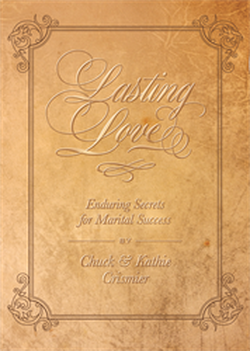
LASTING LOVE can be a dream come true. Yet love requires more than a dream or those loving feelings we so much desire.Lasting Love, Chuck and Kathie Crismier, celebrating their Golden Anniversary, unveil seven enduring secrets that will inspire and strengthen your marriage as it has theirs. COPY and PASTE this link to WATCH the TRAILER: https://www.facebook.com/Save-America-Ministries-204687919570536/videos
Past Episodes
This ministry does not have any series.
Featured Offer
LASTING LOVE can be a dream come true. Yet love requires more than a dream or those loving feelings we so much desire.Lasting Love, Chuck and Kathie Crismier, celebrating their Golden Anniversary, unveil seven enduring secrets that will inspire and strengthen your marriage as it has theirs. COPY and PASTE this link to WATCH the TRAILER: https://www.facebook.com/Save-America-Ministries-204687919570536/videos
About Save America Ministries
About Chuck Crismier
Contact Save America Ministries with Chuck Crismier
crismier@saveus.org
http://www.saveus.org/
Save America Ministries
P.O. Box 70879