
STRATEGIC RESOURCE "WARFARE"


Greenland, Venezuela and China
w/ Christian Briggs
Narrator: This is Viewpoint with attorney and author Chuck Crismier. Viewpoint is a one-hour talk show confronting the issues of America's heart and home. And now, with today's edition of Viewpoint, here is Chuck Crismier.
Chuck Crismier: China is deeply shaken by Maduro's capture. Sanctioned oil tankers bolt into dark mode. And the President of the United States declares he's going to have dominion over Greenland no matter what, whatever it takes.
What's going on in our world, friends? What is it about these various nations? What is it about these areas that is causing such amazing focus right now? There's an intensity as you can see. I have a report here that says it's strategic resource warfare. Strategic resource warfare. And it's to determine the direction of the world and its control for the next 50 years. Does that sound like it might be important for us to talk about here on Viewpoint today? Indeed it might be.
It's not that silver and gold and all of these rare minerals and earth are the essence of life, but on the other hand, they are foundational to things that are going on in almost everything that's going on in our world in the physical sense. Where does the spiritual sense connect with all of this? Well, it's a matter of the heart. The heart determines it all, friends. And the heart of man is deceitful and desperately wicked. As Jeremiah said, "Who can know it?"
So, in order to understand and discuss this subject here today on Viewpoint, we need to keep in mind that our hearts are what God is looking at ultimately, not our bank accounts, but our hearts. What is our heart dictating to us and directing us to do, to think, and respond to the things that we're going to talk about here today on Viewpoint, which by the way, you might want to anchor your seatbelt because it's going to really grip your mind as you hear the dynamics of what are taking place here from our special guest today, Christian Briggs.
Joining us again, he is the CEO of Hard Asset Management. He is joining us again. In fact, he called me and he said, "Chuck, we need to do this program. We need to do it right away because of what's happening not only in Venezuela, but in Greenland. Things are happening and people don't understand the depths of what is taking place and what its ultimate connection is going to be for them, for our country, and for the world." So Christian Briggs, joining us again here on Viewpoint today, it's good to have you on board, friend.
Christian Briggs: Well, my brother, thank you so much for having me. I think some of the people listening are going to be enlightened today quite a bit on why Venezuela, Greenland, and all these other areas are so important right now to the administration.
Chuck Crismier: Well, indeed. It's been understood, well understood for a very long period of time, that Venezuela has one of the largest reserves of oil and gas in the world, perhaps the largest. And so we have come to believe that that is the ultimate reason why Donald Trump, our president, went in there with this amazing military effort to capture Maduro.
But also the issue of narcotics. Fentanyl and all these narcotics that have been flooded into this country through the agency of Maduro and his control there in Venezuela. Then we also hear that after that, well, somebody asked, "Are you going to go into Colombia, too?" Colombia is also part of that network of illegal drugs coming into here, also all of them connected with China. So what are we to understand from your viewpoint? Those aren't necessarily the real driving interests that caused Donald Trump to go in there as he did.
Christian Briggs: It goes back to really one thing. They are trying to literally vaporize the dollar. China has had a mission since 1850 when the occupation of Hong Kong by the British starved the Chinese people in submission. They vowed that day that they would never submit to anybody who's trying to colonize them or trying to take a position of such superiority that it would literally kill them.
China has been on this quest. If you have ever noticed, China has not entered any war. They have not been in any major conflict other than in the late '30s when the Japanese invaded a small portion of the southern region of China. And only then it was a defense mechanism, not a proactive war. And they ultimately won because the US, as we know, World War II pretty much took care of everybody.
Now you have to fast-forward to today. What is so important about Venezuela? Well, it's a whole bigger picture than that. Venezuela is a small piece on the board. It's a pawn, but it's an important pawn on the chess game that Donald Trump is playing. It goes back to the original understanding as decoupling the dollar from everyday transactions, from trying to make it where it was in the '70s, 85% of the daily transactions where the demand supported the strong dollar. It supported the strong economy, the manufacturing as well as the export that we offered so strongly in that early '70s, late '60s. It was the peak era.
China knew once Nixon took us off the gold standard, which was the backstopping of the value of the currency, that they now could enter the playing field. They knew at that point that the vulnerability of the United States had been secured. It doesn't mean that we were going to fall immediately, but they knew that the vulnerability was now clear and present.
Chuck Crismier: Okay, so why should we care? The dollar is what a dollar is, and it's been diminishing in its value now for quite some period of time. How does that affect the average person?
Christian Briggs: Well, I'll tell your listeners to write this down. When you look at August 15th of '71, Nixon took us off the gold standard, which was the standard that Roosevelt put us on to support the version of the dollar that we knew back then of what was value.
You could go anywhere in the world that dollar represented the strongest basis for transactioning something that everybody understood had great value because it was backed by gold. Gold was and is to this day the only thing outside some water or air that as a child, if there's a gold bar on the ground, you inherently know that's wealth. Anybody who sees gold knows. A five-year-old child knows it's gold. It's God's gift to his people.
So what happened was when you say the dollar is what it is, but it's not. It's not what it was. Once we went off the gold standard, the dollar dropped over 30% in that first remaining balance of that 1971 year in buying power. Why? It allowed Nixon to increase the printing, to increase the expansion of credit. He knew a recession was coming. He was trying to get re-elected for '72. Ask Gordon Liddy about how that went for him.
In order to minimize the damage of an incoming recession, we can overprint. We can stimulate the economy, and we'll worry about it in '72, '73. Well, that's what they did because they could not increase the amount of availability of cash into the economy because they couldn't do it without having to buy more and more gold and they were limited to one-for-one ratio. Got it?
Chuck Crismier: All right, so now we have the foundation of gold. That's been eliminated, and now rare earths and gold and silver are back in the picture, big time, maybe triple time. We'll pick up on that after the break. What does it go with Venezuela? What is the relationship with Greenland and China? Where is it all going? We'll be right back.
Narrator: Once upon a time, children could pray and read their Bibles in school. Divorces were practically unknown as was child abuse. In our once great America, virginity and chastity were popular virtues and homosexuality was an abomination. So what happened in just one generation?
Chuck Crismier: Hi, I'm Chuck Crismier, and I urge you to join me daily on Viewpoint where we discuss the most challenging issues touching our hearts and homes. Could America's moral slide relate to the Fourth Commandment? Listen to Viewpoint on this radio station or anytime at saveus.org.
Chuck Crismier: Welcome back to Viewpoint. I'm Chuck Crismier. The headline from the World Tribune today: China deeply shaken by Maduro's capture. Why would that be? Why is China so deeply shaken? Well, maybe it's because China has invested itself so deeply and so heavily in Venezuela for a very long time that Venezuela had basically become a colony of China. But what were the implications of that? Is it oil or is it something bigger?
Our guest today, Christian Briggs, who is heading up the Hard Asset Management company, a 35-year veteran precious metals and rare coin industry, is joining us. Christian, let's establish a little bit more of why you're particularly significant in this context. You've been contacted by a variety of folks in our nation's capital now quite often over the past several weeks and months, haven't you?
Christian Briggs: Yes, there's been some people in DC that are asking for some clarity. When you're getting into politics, especially when you're getting into this arena with China, whose ultimate goal is to destroy the US financial system by utilizing their own currency, the BRICS members' currency, people get nervous. There have been foundations and nonprofits and institutions in DC as well as people in both the House and the Senate that I talk to.
What's interesting about it is they're all looking for true clarity because as Trump continues to move forward, and he's actually doing a fabulous job, he's doing it the right way. Most people are getting a little anxious saying, "Okay, we've got to do this and this." No, it's a chess game. It's a piece at a time. You cannot move three pieces simultaneously; that's impossible. So you have to be calculated on each and every individual piece that you play because remember, for every action, there's a reaction.
International politics, whether it's in the conventional war business like Ukraine and Russia or whether it's in the financial war arena like China, Russia, North Korea, the other BRICS members and partners, it's a financial war, but the same principles apply. The principles are clear that the present danger, while it may not be conventional war or nuclear war, there are a lot of people talking about that, but that's not going to happen. What is present is a financial war.
Unfortunately, Nixon opened that door up and what's the price we pay? Well, I'll tell you what the price we pay is. Think about this for a second. I can prove to you within one very key paragraph: when was the last time you've gone to the grocery store? How's your car insurance, home insurance, business insurance, health insurance costs? The way of which that we now produce and manufacture things is in what they call an overstimulated inflationary environment because the government printed too much money because they could. It had no backstop, it had no borders, it was not in a position to be contained. It had the free will to print as much as it wanted.
Chuck Crismier: So there was no hardcore reality to it. It was only the trust that the American people would devolve upon it.
Christian Briggs: The trust that you and I or anybody else would put in the faith of that piece of paper that we transact with. And China exploited that. They were very clever. They took what we had, the most stable financial system and the very best currency. It was gold, literally gold, because we used to have gold-backed notes and we also had silver notes. Remember silver certificates and gold certificates? It was gold. You could turn it in for gold. People did that back in the day, 100 years ago.
What happened was once we removed the real value of money—gold and silver is money in the entire 5,000 or 6,000 years. When the Egyptians actually looked at gold and the kind of way we still look today, nothing's changed, except for the price keeps going up. And the price reflects the value of paper currencies devaluing. Gold's not really going up. It's just that the dollars, the euros, the pounds, the rupees, the rubles, all the currencies that are out there that have any meaningful value are going down, and gold and silver are telling you we're hedging an automatic downturn in the value of your currency. That's all it's doing. So it proves the point.
Chuck Crismier: All right, so how does this connect then? I opened the program with the title, actually, from a story. Venezuela isn't about drugs; it's about silver. Strategic resource warfare. How does that connect when everything we hear is about oil and drugs?
Christian Briggs: I'm sure glad you asked that question, Chuck. Thank you very much. Drugs is a small component. Now, it doesn't mean it's not important. We've got fentanyl flowing in here as if it was free turkeys the day before Thanksgiving. It's terrible. And fentanyl is the leading killer of individuals, about a thousand people a day, give or take.
Now, with Trump coming in after the dementia patient that was in the administration prior, Biden, you basically had about 1,000 to 1,200 people a day die, all different ages, of fentanyl, the leading killer of people every day. Now, it's been dramatically decreasing since then when Trump took over because he said, "We are going to stop the flow of drugs by closing the borders and going after the people that supply that deadly thing," which is working.
However, there's also past sins that have to be paid for. Maduro was definitely making billions of dollars a year for himself in the narcotics business by allowing it to flow through Venezuela into various places within the United States. But that's not the biggest reason. That's one reason, and in itself, as any parent who may have lost a child to fentanyl, they'll say that's enough of a reason.
Chuck Crismier: It's a significant reason not to be dismissed, right?
Christian Briggs: Exactly. And I will never diminish that. I will never diminish that. But we're looking at the bigger picture now. So that's one piece of the puzzle. The next piece was oil, but it was the petrodollar. See, we had a 50-year agreement that Nixon cut with the Middle East OPEC and other members and non-members. And it was an agreement that they would only buy and sell oil in dollars to keep the strength and the demand up. Nixon thought if that petrodollar were to stay in place for a minimum of 50 years—it was a 50-year agreement—then the dollar would be supported.
He was wrong because we as a government overprinted too much money. We got into the printing business because it was easy. It was easy. And I'll give you something that's how it's going to dovetail right back to your original question. We used to print debt for every dollar in debt we did. It could resonate into the economy by three or four dollars in economic prosperity or economic upturn in expansion of GDP. Today, it takes $12 of debt to increase $1 of value proposition into the economy, and it lasts for just 12 months. Then it becomes sour. In other words, it's almost like putting nitrous oxide in your engine as a kid; you get that big boost and your car goes super fast, but it's very fleeting. It's like maybe a minute or two. So here's now the problem.
Chuck Crismier: Or it's like taking a drug and you become addicted and you have to have more every time you take it.
Christian Briggs: Yes, and it's exponentially more. It's multiplying. Again, China saw this coming. They remembered two things. They remembered where they were in 1850, and they remembered as soon as Nixon took them off the gold standard, what happens to a currency. They've seen it for years, for decades, for centuries around the world. It happened in Rome three times. The Roman Empire was raised, fell, raised, fell, raised again three times because they took silver and gold out of their currency.
So now you have China has for the last 30, 35 years, once they entered the World Trade Organization, was able to model trade deals that were so significantly one-sided to their interest by increasing funding for infrastructure, whether it was roads, bridges, schools, hospitals. They were able to secure massive corporation agreements and trade agreements that limit the ability of a country, a nation to do business with anybody else.
Chuck Crismier: Christopher, I have to interrupt for just a moment because you're becoming quite blurred. Let's make sure we keep the phone instrument right there in front of you, okay?
Christian Briggs: Oh yeah, I'm here. Can you hear me okay?
Chuck Crismier: Yeah, are you on speakerphone or directly?
Christian Briggs: No, I'm on a regular landline.
Chuck Crismier: Okay, good. I'm sorry to interrupt, but go ahead.
Christian Briggs: That's okay. So as they entered into these huge trade agreements, whether it was a small group of countries to some of the largest African and South American nations, what they did was they secured for themselves commodities that were not just critical for their infrastructure build-out over 30, 40, 50 years, but it took away from everybody else, but specifically the United States' interest. If you know that you're in a race in the NASCAR and you know everybody on that track is going to need fuel, and you secure the fuel before the race, they're limited to what's in their tank when the race starts. There's nothing left after that. And that's where we are.
Chuck Crismier: Well, what's interesting is the connection going back to Richard Nixon, because it was Nixon through Kissinger that actually virtually forced us to accept China into the World Trade Organization. He thought it was going to cause great wealth to the United States of America, but now look what's happened. He took us off the gold standard and then brought China in as a superpower.
Christian Briggs: Yeah, that was about as dumb as a stump could ever get right there, my brother. Let me tell you why. He thought by allowing them to come into the WTO, and Kissinger agreed—and I thought Kissinger when you look at some of his past policies, some good, some not so good, this was one of those not so good—they thought they could change the culture of the Communist Party and the way their ideology was by allowing them to see how capitalism worked.
China said, "That capitalism works really well because we're going to use it against you. We're going to use your greed in the way of which you just secured a devaluating currency, which is your true sovereign—it's the greatest national security policy is your wealth. It's your dollar, it's your currency, because if it goes south, the whole economy goes south." And then you have to overprint; that creates inflation. Does that sound familiar?
Chuck Crismier: Well, certainly it does. So where does this connect us now with Venezuela?
Christian Briggs: The natural resources and the petrodollar. So all the money that was being spent on the oil that came from Venezuela—it was only about a million barrels a day, it used to be about three million, but still significant enough—it was done in non-dollar denominations. It was done in either Chinese yuan or in other foreign currencies, mostly the yuan. So China was getting exactly what they wanted. They were getting the oil at a subpar price, below market price, about a quarter to a third of their oil needs.
Two, they were spending billions of dollars in non-dollar transactions, weakening the dollar's overall value, which absolutely happened last year. The dollar lost about 10% to 15% of its value buying power against major foreign currencies, some more, some less. But what's really significant, it increased inflation here last year in certain areas. We're still printing money to offset deficit spending. Why? The dollar keeps weakening.
Venezuela was about a three-pronged deal. One, get a guy out of there that's a communist that kills about a million people a year to starvation. So that first and foremost and the drugs, get him out. That's number one. Number two, start buying and selling the oil in dollars. Well, what happened today? Trump announced we're buying 50 million barrels with dollars, so the demand for dollars is back up. The third thing, natural resources: lithium, gold, silver, and other rare earth minerals are now under the security of the United States. Those were taken away from China. Now China's protesting, obviously they would be very upset, and rightly so because they did invest a lot of money, but that's just the way it works.
The bigger stick is going to win the battle. And what we did was we now took a portion of what they had already counted on in their long-term plan, and we repositioned it over to our long-term plan, which they've been trying to destroy our financial system through all this. And this is the first of many countries. There's many more that will fall under Trump in the same manner.
Chuck Crismier: Okay. And it's not a matter of declaration of war. Let's talk about Greenland for a moment. Today and yesterday, we have heard all kinds of declarations with regard to Greenland. Is Trump going to go in there and wage war and bomb Greenland, or are we going to buy Greenland from the 57,000 people who inhabit Greenland? Where does Denmark fit in all of this, and why this intense interest in Greenland? Is it the same thing as with Venezuela or somehow different?
Christian Briggs: Well, first, it's not really waging war like in conventional terms. So what it is is you're counterbalancing what President Trump is doing. He's having to rewrite the way of which we play the game to the rules that China set by violating every known regulation, rule, understanding in the WTO. When they entered the World Trade Organization, they made promises to adhere to specific understandings to keep fair trade a policy of every trade deal. They took that playbook and threw that out the window the second they got in there. They said, "That playbook doesn't work for us. We like our playbook," which is we will do whatever it takes to win even if it makes you die or you suffer or outright just go away. They don't care. They have no morals when it comes to how the rules are to be played in a fair trade deal.
President Trump is not waging war. He's saying, "Okay, if that's how you're going to play the game for the last 30 years, which we can clearly see how you're doing, we're going to play the game the way you play it, and let's see who wins this war." All right, we'll be back after this, friends. We're going to find out why Christian Briggs is in such demand as a consultant now, even in our nation's capital with senators, with congressmen and others. Why? Why is he being called to these places? We'll be right back.
Narrator: There is so much more about Chuck Crismier and Save America Ministries on our website, saveus.org. For example, under the marriage section, God has marriage on His mind. Chuck has some great resources to strengthen your marriage. First off, a fact sheet on the state of the marital union, a fact sheet on the state of ministry, marriage, and morals, saveus.org. Marriage, divorce, and remarriage—what does the Bible really teach about this? Find all of this at saveus.org. Also, a letter to pastors, the Hosea Project, saveus.org, and many more resources to strengthen your marriage. It's all on Chuck's website, saveus.org. Again, you can listen to Chuck's Viewpoint broadcast live and archived at Save America Ministries website at saveus.org.
Chuck Crismier: Our guest today, Christian Briggs, is the CEO of BMC. And that means that he's involved in rare coins, he's involved in precious metals, and he's been doing this for about 35 years. That being the case, there are a lot of people out there, Christian, who are involved in precious metals and silver and gold and coins and things like that. So why is it that you seem to be under such demand as a consultant now, even in our nation's capital with senators, with congressmen and others? Why would that be?
Christian Briggs: Well, I think it's just common sense. What you do is you use practicality when you're assessing stuff rather than emotion. There's a lot of emotion flowing right now between parties. It seems like you can't even have a conversation without decibels going up because some people are far left, far right. And so I look at it this way: the ideology of the left or the right doesn't matter when it comes to international trade because if we all look at this from one country, one people, one agenda—make America fabulous and keep it fabulous—then people like me come into the mix and say, "Look, I'm not here because I'm not running for office. I don't hold high office. I'm not appointed into an office. So I'll give it to you how America wins." Now, either you all are on board or you're not, but if you are, let's all have a conversation and here's how you do it without emotion. And the only way to do it is using practical methods that allow America to win as a whole and not a party winning.
Trump's not trying to do this for the Republican Party. He's doing this for the American people, and the last I checked, about half of America votes Democrat and about half vote Republican. Yeah, so he is not coming at this as the traditional politician. He's looking at this as a businessman that has to cut through it all and say, "Look, let's get real about the situation. Forget about all this bickering back and forth about these ideologies. I've got to take a look at the hard issues, just like you take a look at hard assets," right?
Correct. And I look at it in this way. My perspective is one direction regardless of party affiliation who calls me. I get calls from both sides. It's amazing. I don't tell both sides this, but I'll tell you I do. And they are saying, "Well, how would you do this?" Because everybody wants to look good in front of the camera. I'm the guy that's behind the camera trying to write the script. If you look at the richest guy in Hollywood, it's Steven Spielberg and George Lucas, and the last I checked, they're behind the camera, they're not in front of the camera.
The idea is I will give information based on what I know to be quantitative. It's absolute; no theories, just conclusions. And they're not always accepted, but 99% of the time, I'm right. In the one time I'm not is only because I'm not proven right till later on down the road. But when you're looking at the conflict, and this is a conflict, China declared financial war on us the second that August 15th, 1971 happened. Once that happened, they had a foot in the door to start the process for taking the dollar and decoupling it from every possible transaction that was ever known.
They knew within 50 years they were going to be successful because the biggest problem was the petrodollar. That was a 50-year agreement. It expired some time ago, about a year and a half, two years ago now it expired. And that has weakened the dollar considerably, which in some cases, some people might think, "Oh, that's not a bad thing." It is and it isn't. It is for now because we are desperately trying to compete on a level where we're now hovering around the 50% down from the 85-90% 60 years ago in daily transactions. We're not the reserve asset anymore number one. We're actually down below gold and the euro, and silver actually probably will be number three here pretty soon. So we have fallen and we've fallen significantly enough because has anybody checked the debt lately? Have you seen the deficit spending?
Chuck Crismier: You mean 34 trillion?
Christian Briggs: Oh, try like almost 39. We'll be at 39 within about the next 60-90 days. $39 trillion. When you look at what President Trump is doing, he's having to push a rock the size of a house uphill with a string, trying to push it with a string uphill. It's almost an impossible task. But, however, I said almost impossible. But with the right methods of this madness of what we've allowed China to do and the rest of the countries that have joined in this coalition and unity of this thing called the BRICS, he's actually making progress. Inflation has come down, oil prices have come down, we're increasing manufacturing capacity. Our GDP was 4.3 last quarter, which I said months and months, six months ago when he took office, I said we're going to have a strong 2026 and we are.
He's actually doing it, but he's doing it in a method that isn't detrimental to the country, both short-term or long-term. He's creating a 10-year legacy or a 10-term legacy, which really is a 30-40 year plan to secure the United States that it's not only going to be fabulous, it's going to maintain the consistency of what he's doing. And to first do that, you've got to get China out of these countries, whether it's South America, whether it's Africa, Southeast Asia.
So let's go to Greenland for a second since you brought it up earlier. I'll tell you why Greenland's so critical. Greenland, as is Puerto Rico or Hawaii or any other areas, are strategic geographical locations that support a couple of different things. One, from a military perspective, it's a killer location. You don't want ever China building a military base there. You don't ever want them to secure that in any way, shape, or form.
Chuck Crismier: Or Russia.
Christian Briggs: Or Russia, sure. Well, Denmark's a friendly country. They may not be friendly right this second when they have to realize they're going to have to give up Greenland some way, somehow, or co-own it or co- I call it cohabitate. What we're going to need strategically, look how close it is to us. You can't have—remember the Russian Missile Crisis of Cuba? Oh yeah, I do remember. I was living in Florida at that time.
Yeah, and for about a week or two weeks there, everybody in America was like, "Is this the last two weeks of our life or the last week?" and to some degree, we got down to hours and minutes where that decision was finally made where Khrushchev said, "Okay, uncle," and Kennedy goes, "Good answer, good answer there, Khrushchev." Okay, so now we've got Greenland. Greenland is not the Cuban Missile Crisis yet, but it could be. And Trump has recognized Greenland as a strategic geographical location that you cannot have a foreign country with the level of understanding from a military and a financial perspective like China and the BRICS. So it's not going to happen.
The second part to that is the rare earth minerals that are there. There's a lot of zinc there; zinc is a critical metal that we need. And there's some other areas, but what China wanted was called the polar trail, I call it, where they could then use their belt and road for trade because it geographically would cut all of the times out from other long-distance travel or distances for commodity trading. So it was strategic from that military and trade.
Chuck Crismier: All right, so it was like a new Panama Canal, except in the north. Yeah, and they could extract a lot of different minerals. They could also leverage a military presence there, which would then put us into some kind of a weird situation we may have to be somewhat standing down because the presence there could have been strong enough to where we don't want to take the risk of conflict.
All right, here's what the information from Greenland—the strategic metals are in Greenland. I have it right in front of me here. Greenland holds significant deposits of strategic metals crucial for green energy and technology, including rare earth elements. Now, that's neodymium, dysprosium, and all kinds of other strange things used for EVs, turbines, and magnets, along with lithium, nickel, zinc, copper, iron ore, gold, graphite, titanium, vanadium, uranium, molybdenum, and platinum group metals. Vital for reducing reliance on current dominant suppliers, especially China, making Greenland a key area in the global race for critical minerals. Now, that's a lot of stuff there in Greenland, isn't it?
Christian Briggs: It's a ton. It's a ton. And that's what I'm saying. You can't have that fall into anybody's hands outside the United States. We're the only ones that can utilize the value of Greenland and ensure that the materials and the things of which they have and the location can be secure enough to where we have to control that. You have no other choice because China gets her hands on that, they would exploit those minerals, they would exploit the location, and they would use that as a positioning of power. And that's just not going to happen. Donald J. Trump will not let that happen.
Chuck Crismier: All right, well, that's exactly what had already been happening in Venezuela, though. Venezuela isn't about drugs. I've got this binance.com report here, breaking: Venezuela isn't about drugs; it's about silver and strategic metals. Venezuela sits atop the Arco Minero del Orinoco, a vast mineral-rich region estimated to contain over $1 trillion in untapped natural resources. This zone is believed to hold massive reserves of silver, gold, rare and strategic metals critical for US military systems, renewable energy infrastructure, advanced electronics, and defense supply chains. And control of these resources could secure decades of strategic metal supply for the United States. Why does this really matter? Well, the world is facing a growing shortage of physical precious metals. Strategic metals are becoming as important as oil once was. Resource control equals long-term geopolitical leverage. This isn't a short-term operation; it's a resource positioning for the next 50 years. Now, that's a very distinct synopsis of the situation, but China had dominion there in Venezuela, and now no wonder they're upset because instantly in one day, their control has been dramatically upset.
Christian Briggs: Now you know why. Silver, let me share this with you. This is my understanding. When you look at gold, gold is not a national security metal. In other words, if we have gold, it's great because it does add an asset to the balance sheet. No question. And it should be considered the one true value of wealth and money, synonymous with each other.
Silver, platinum, palladium, rhodium, and iridium are absolutely critical for national security and should be labeled as such, that they are national security assets. Because when you start to look at space, space exploration, when you look at the components into any AI data center, there's massive amounts of silver. If you look at electric vehicles, you look at solar, data centers that are going to be put into space, energy and reactors all need silver, platinum, palladium, rhodium, and iridium. We'll talk more about this when we come back from the commercial break.
Chuck Crismier: Yeah, and the question hovering over us now is why are you heading to the major financial enterprises of London and Paris in Europe? What in the world are you doing, man? We'll be right back.
Narrator: Have you ever considered what the early church was like? Many people are developing a heart longing for a greater fulfillment in our practices as Christians. A recent study showed 53,000 people a week are leaving the back door of America's churches in frustration. What is going on? Why has there not been even a 1% gain among followers of Christ in the last 25 years? Could it be that God is seeking to restore first-century Christianity for the 21st century? Jesus said, "I will build my church." Is Christ by His Spirit stirring to prepare the church for the 21st century? The early church prayed together and broke bread from house to house. They were family, and it was said by all who observed, "Behold how they love one another." Incredible, but the same can be found right now. Go to saveus.org and click Cell Church. We can revive first-century Christianity for the 21st century. It's about people, not programs. It's about a body, not a building. That's saveus.org. Click Cell Church.
Chuck Crismier: Our guest today, Christian Briggs, is the CEO of Hard Asset Management. And as you can see, he has a real handle, an understanding of the matter of economic factors and other practical effects out there in our world. And he's joining us here on Viewpoint today. Christian, are you still there?
Christian Briggs: I'm here 150%. All right, I was just getting some other noise in the background. Okay. You're on your way shortly to London and Paris. These are the two cities that were named by Charles Dickens in his famous book, The Tale of Two Cities, back at the time of the French Revolution. Why are you going there? I've been invited to an economic summit just to talk to a lot of people about same things we're talking about here, just economic policy on how things are going to affect the business community and business world going both short-term, long-term. Because if the dollar continues its downward trend against the euro, how does that affect American manufacturing or American business interest and vice versa from Europe trying to do business here?
So it's really about what people can expect for the next 12 to 18, 24 months. Venezuela, obviously, is a big part of the action and the reaction that's going to happen. About Greenland, you know, we're talking now about Trump's made it clear that Iran, who's the largest state sponsor of terrorist and terrorism around the world—I mean, Hezbollah and Hamas and Qatar has obviously been involved in some of that, and I think they've kind of taken a backseat now hopefully to stop doing anything nefarious as Trump has made clear that they need to stop doing that. So it's really about a summit for about five days to go over what is the landscape like with a stronger dollar, a weaker dollar? What are the principles that should be applied for businesses there and here when addressing current administration policy?
And then what's China's reaction going to be now that they're starting to see the light? And like I said earlier before this, and I'll make it very clear: when one party enters into an agreement and takes that agreement and basically negates any and all of the principles and the understandings or the spirit of the agreement, the other party has to look at it in a different light from that point forward. That's what President Trump is doing. China has—it's like—the US government broke every treaty with every Indian tribe and Indian nation they ever did. We know this to be true.
Chuck Crismier: Horrifically so.
Christian Briggs: And horrifically so. And it caused widespread deaths and anguish, and only in the last 20 years has the Indian nations recovered through a lot of different business opportunities. But with that said, I say the same thing, that China has promised to be a good player, and they knew they would never adhere to any principle or spirit of any agreement. So President Trump had to come in here and pick these pieces up. And believe me when I tell you, this guy picked up a bag of rocks and he's trying to make something out of it. I give it the Michelangelo touch. He basically saw broken pieces of granite and he's been asked to make the David with broken pieces of granite. And he's like, "Okay, I can do this, but I can't do it overnight." And he's now slowly building the David. If you haven't seen that in Florence, it's magical. And he's getting there.
But he had to take 40, 50 years of some of the poorest trade deals like NAFTA. Bill Clinton, I hope he got a lot of money for that when he got out of the presidency because he basically sold out America's manufacturing and six million jobs were destroyed. So I hope he really benefited financially and the money was worth selling out his own people because that's what he did.
Chuck Crismier: Well, he also did that via his campaign, bringing in and selling the Lincoln Bedroom in the White House to Chinese. In fact, I actually had Johnny Chung on this program years ago when that happened, and he spoke very profoundly about what Bill Clinton did in compromising the United States of America by selling out America's interests to the Chinese.
Christian Briggs: Sure he did. And he got paid for it. He got paid really well. You look at it from this standpoint: you can't buy the man, Trump. You can't buy Donald J. Trump. You can't. What you can do is play fair with the guy and get a fair deal, and he'll live by and work with you on his word. He will do that. He will never break his word. Sometimes he has to zig and zag and pivot like any good businessman because he's actually avoiding pitfalls and landmines that have been put there purposely by the past administration or past administrations. As we know, Obama, who was a nefarious bad actor who hated this country, hated the whole philosophy of what it stood for. And Biden was the walking brain donor. I don't think he even knew what flavor ice cream he was eating when he was eating the ice cream. So his handlers with the auto-pen were the procrastinators to get good policy in and they were the accelerators of bad policy.
If Trump did win, and there was always that fear he'd win, they wanted at least to give him landmines and try to make it so it was impossible for him to fully execute, but he's doing it. So when you look at China, he's having to play a whole different version of chess. It's not 3D chess. This is like tenth man to the tenth power chess, and he's having to do it working around trade deals that have been secured for 30 years where 80-85% of some of the most profitable or at least the most richest countries in the world have already had infrastructure money given to them by China. They're deeply embedded within the Chinese financial system, and so you can't just rip it out overnight. You have to be selective, sniper not shotgun. You've got to be careful, tactical, and you've got to be willing to give to get more. And that's what he did with Venezuela. He's going to give the people of Venezuela the biggest word they haven't heard of in 26 years. You know what that's called? Freedom. Freedom. And that first and foremost is why he's getting them out of there.
Chuck Crismier: Yeah, they might actually be able to have toilet paper again and not eat the animals in the zoo. Now they can go to the zoo and actually see the zebras instead of seeing them on their dinner plate. About four or five years ago, they were starving to death. All right, I want to shift for just a moment here as we're approaching the end of the program because we're covering an awful lot of ground here. Your first name is Christian. So I want to ask you a very direct question: are you truly a follower of Jesus Christ?
Christian Briggs: I am.
Chuck Crismier: When did you come into a position of accepting or receiving Jesus Christ as your Lord and Savior?
Christian Briggs: I was 11 years ago.
Chuck Crismier: Okay. All right. I just wanted to qualify you there. So I have another question, a follow-up question. Why should you be interested and concerned about addressing followers of Jesus Christ, of whom 99% of the listeners to this audience are? Why would you want to address them concerning these matters—economics, trade, gold, silver, all of these issues? Why is that important?
Christian Briggs: Well, I think people have a right to know what their government's doing in their best interest. I think that's just first and a fundamental. We elect these people. Back in the old days, in the early years of this country, the people that ran for office did it to serve the people. And I'll give you an example how it now switched. Look at Nancy Pelosi. Do you think she served her district in San Francisco and made them rich? It's one of the worst—she made herself rich. She served herself. That's the point. And too many people in Congress serve themselves or they try to protect themselves with self-preservation in the wrong way. My calling isn't just about informing the American people what's going on, but trying to give where I can alternative understandings and ideas and possibly outcomes based on real-world non-biased.
Okay? And that's where your Hard Asset Management comes in, right? Yeah, think about this. Did you buy silver from me? I did, although I am not putting my confidence or my trust in that. You're not supposed to, but you had the knowing that something told you to buy the silver when I told you, "Buy that silver." Every single person has the right to make their own free will decision, but God gives you assets to do what? To be good stewards of those assets and to increase the value of them, this way one, you're going to be a lot more in a position to where you can weather storms. That's what God does; he gives us the basic needs and sometimes overgives and also increasing your tithing potential and that money goes back into Jesus's community.
Chuck Crismier: Well, it actually came at a critical moment which you had no idea of, and which I don't intend to discuss in detail, but it came at a very critical moment. And we had to make some kind of a decision, and it was at the unusual moment of that decision that the opportunity came before us. So that's enough there. I'm not going to try to market my own decisions in that regard. Now, if people wanted to get in touch with you, how would they best do that?
Christian Briggs: They can just go to our website, which is bmcham.com, bmcham.com. Our toll-free number there is 844, it's right there on the homepage. They can clearly call us anytime. Customer service is happy and we're able to make great recommendations if they need them on precious metals and ones that we personally like. We love silver, platinum, palladium. We love gold. I think the silver, platinum, palladium now has a little bit more room to run further higher than gold. Not that gold's going down; it's going to continue—we are very strongly and passionate about gold, but I do like the more strategic metals at this point. Silver, obviously, and then platinum, palladium for nuclear energy and other various things. So we're very passionate about that, but you can just go to bmcham and follow us @bmc_ham on X.
Chuck Crismier: Okay. Now, I have in my hands an article that just came out about the world's silver reserves by country in one visual picture, and I have the chart all in front of me here. And we're not going to go over all of that chart, but here's what I want to focus on out of that article: by 2030, China is projected to control over 60% of the world's refined critical mineral supply. Now, that is a major announcement. Nickel is the only mineral which another country, Indonesia, is expected to have a larger market share than China. The data shows that one country will dominate future refining shares, and that's China. By 2030—and that date should ring soundly in the mind and heart of many people who have been listening to this program—China will play a dominant role in lithium, rare earth elements, cobalt, and graphite, controlling nearly 60% of all critical mining refining. It heightens the geopolitical risk for downstream buyers. This is a pretty big deal. And when you think about that in 2030, that's four years, four and a half years from now. That means that what Donald Trump is doing, what he sees, is something of very, very urgent and significant moment, isn't it?
Christian Briggs: It's not only critical. Let me just end something for people to realize. That 60% is underestimating what we know to be fact. Remember, China lies as much as Biden would forget, which is a ton. Chuck, there's two things that Biden would say all the time as he got older. Biden would say, "You lose your hair and something else, but I can't remember." And that was the conclusion we knew he was losing his mind. So let me just say this with your listeners. China lied about their last decade of gold acquisition. Goldman Sachs knew what I knew years in advance, that they underreported their gold holdings and purchases by at least tenfold. Ten times. Not 50%, ten times. That 60% is the reason why we have Venezuela now. That 60 is probably closer to 80%. And that 2030, it's not like one morning they wake up and go from zero to 80. It's exponentially expanding. Venezuela just slowed them down; it didn't take a ton away, but it took some away.
Chuck Crismier: All right. Well, then we have this headline as we wrap up: Why the world is turning to Greenland's rare earth metals. Not just Donald Trump, but the world. A country with a vast supply and ideal climate to mine these commodities. Wow. So friends, there you have the bigger picture. The picture that you're not necessarily going to hear in the media, but that's the bigger picture. I hope it's been helpful to you. Again, if you need to contact our guest Christian Briggs with Hard Asset Management, he's willing to chat with you. bmcham.com is the website, and he's very ready to chat with you. God bless him, be a blessing. Let's pray for wisdom by our president at this moment.
Narrator: You've been listening to Viewpoint with Chuck Crismier. Viewpoint is supported by the faithful gifts of our listeners. Let me urge you to become a partner with Chuck as a voice to the churches, declaring vision for the nation. Join us again next time on Viewpoint as we confront the issues of America's heart and home.
Featured Offer
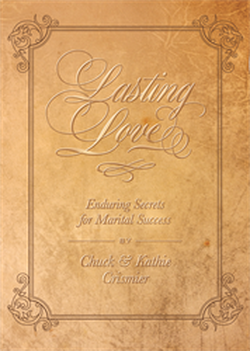
LASTING LOVE can be a dream come true. Yet love requires more than a dream or those loving feelings we so much desire.Lasting Love, Chuck and Kathie Crismier, celebrating their Golden Anniversary, unveil seven enduring secrets that will inspire and strengthen your marriage as it has theirs. COPY and PASTE this link to WATCH the TRAILER: https://www.facebook.com/Save-America-Ministries-204687919570536/videos
Past Episodes
This ministry does not have any series.
Featured Offer
LASTING LOVE can be a dream come true. Yet love requires more than a dream or those loving feelings we so much desire.Lasting Love, Chuck and Kathie Crismier, celebrating their Golden Anniversary, unveil seven enduring secrets that will inspire and strengthen your marriage as it has theirs. COPY and PASTE this link to WATCH the TRAILER: https://www.facebook.com/Save-America-Ministries-204687919570536/videos
About Save America Ministries
About Chuck Crismier
Contact Save America Ministries with Chuck Crismier
crismier@saveus.org
http://www.saveus.org/
Save America Ministries
P.O. Box 70879