

RESTORING "CHURCH" as FAMILY


w/ Rich Griffith
Voiceover: This is Viewpoint with attorney and author Chuck Crismier. Viewpoint is a one-hour talk show confronting the issues of America's heart and home. And now, with today's edition of Viewpoint, here is Chuck Crismier.
Chuck Crismier: On the near edge of the 250th anniversary of the political foundation of our country, the family, which is the foundation we say is the foundation of civilization, the foundation of society, is in deep, deep trouble. It didn't just start being in deep trouble. It’s been in deep trouble for at least six decades now, ever since the sexual revolution of the 1960s.
My wife and I, having been married in 1966, have observed the disintegration of the family from coast to coast, first from California, where we spent 30 years, and then increasingly also on the East Coast. In fact, everywhere you go, the family is in a condition of disintegration. So I ask you a question fundamentally as we launch into today's program.
If America's future depends upon the future of the family, what is America's future? I want you to let that sink in for a moment. If the future of America is dependent on the future of the family, what is America's future? So I welcome you to Viewpoint. I'm Chuck Crismier. It’s conversation as always with ever-increasing conviction, talk that transforms.
I take you back to the year in which we launched this radio program on May 7, 1995. 31 years ago, an article came out declaring family change is worldwide. So it wasn't just in America; it’s worldwide. Around the world, in rich and poor countries alike, the structure of family is undergoing profound changes.
The report, Families in Focus, analyzed a variety of existing demographic and household studies from dozens of countries worldwide. Among the major findings were worldwide marriages are dissolving with increasing frequency, and unwed motherhood is increasingly common almost everywhere. Most of the changes in the family that we think are homegrown are occurring everywhere, said a sociology professor at the University of Pennsylvania.
The mainspring of the worldwide change probably has to do, he said, with the economic status of women and children in gender-based division of labor. Well, maybe he just focused on the wrong foundation. Today we want to go to the foundation of the family. The foundation of the family goes back to Genesis Chapter 2.
Believe it or not, Genesis Chapter 2 and the family began its disintegration in Genesis Chapter 3. So this is a long-standing pattern, friends. The family of the first family, Adam and Eve, began to degenerate when envy developed between Adam and Eve's sons, Cain and Abel, resulting in the first murder.
Well, that was the beginning of the degeneracy of the family. God had to provide a substitute for that son. His name was Seth, which actually began the pattern of developing a different family, a different kind of family, one that ultimately resulted in Jesus Christ, born not of man but of woman and of the Son of God.
A different family, not the traditional family as we think of it, but perhaps we might call it the family of God or the church family. But in the meantime, we go back a few years following 1995. For instance, we go to 2003. The census showing new parental trends. Unmarried men and women who live together are nearly as likely as married couples to be raising kids, according to the census at that time.
Then in 2004, traditional family a myth, says a historian. Families aren't what they used to be. Well, we don't have to go into the details to know that that is true. Then my friend Dr. James Dobson, who just passed away a few months ago, spoke to the National Religious Broadcasters convention in 2002, February.
He said, among other things, for the first time in history, the nuclear family has declined below 25% in America. He said this wonderful institution that God designed, the family, is disappearing. The future of Western civilization, he said, rests in the balance. The family is God's primary design for transmitting the faith, and as the family is destroyed, so is the transmission of our faith.
So if the transmission of our faith is being destroyed by the breakdown of the family, what is the future of America if our faith lies at the very foundation of America? That's what we want to focus on here today on Viewpoint, and I'm so glad that you've joined us again. It’s conversation as always with ever-increasing conviction, talk that transforms.
On the program today is a gentleman who has joined us in the past talking about Christian discipleship. But today, he's talking about the church as family. The church as family. Now, this is an interesting idea, and perhaps it isn't his idea. Maybe it’s actually God's idea. The title of the book is called Reimagining Church as Family, but I got to thinking maybe it’s restoring church as family.
Maybe that's what we ought to be doing, restoring church as family. But in order to do that, we might have to reimagine it because we've long since lost the concept of church as family. So Rich Griffith joining us here from Georgia talking about this very important subject. Rich, it’s good to have you on the program.
Rich Griffith: Chuck, thank you again for having me. Everything you said is spot on.
Chuck Crismier: Well, it’s interesting. We could have spent a half an hour, we could have spent an hour going through all the statistics, but there's a sense in which we really know what's happening. We do know what's happening. We know that the divorce rate in America is the highest of all countries in the world. We know that more people, more kids live in unmarried households in America than in any other nation of the world. How could such a thing be in a nation that says in God we trust?
Rich Griffith: Yeah, for sure. I think that goes back to the concept of a lack of discipleship. If our churches were discipling people to be full-on followers of Christ rather than following their own agendas, I think we'd be a lot further along. Now, I got to admit from a confession here, I'm actually a single dad of three adopted sons, so I don't meet that nuclear family model.
But I think that's exactly why, if the families that my children came from were following God and not dysfunctional, I wouldn't have three sons right now.
Chuck Crismier: Well, that's right. So you've adopted three sons, is that right?
Rich Griffith: Yes, sir. I fought that call for four years because I'm a single guy adopting three sons and I get all kind of weird looks. But I think that's the premise of this book. I want to be very clear with our listeners: we celebrate the nuclear family, and we do think it is God's intended model.
The problem is, as nuclear families came out to be in American Western culture, really it’s a post-World War II construct. If you think about it, the family before that was extended family with aunts, uncles, grandparents, everybody living together. So there was much more support. What has happened is as our culture has changed, especially during the sexual revolution, the smaller our families have gotten, the less support systems there are.
So I learned as a single adoptive dad that I needed my church to be family. I needed godly women in the lives of my sons and to model that for them because I couldn't do that. I can't pass femininity on.
Chuck Crismier: And women can't pass masculinity on to kids either. Right. Okay, well, this is a real discussion that we're going to have. Where does the church, the body of Christ, fit in the midst of family today? That's what we want to talk about. Where's the hope? We'll be right back. Stay tuned.
Chuck Crismier: Welcome back to Viewpoint. I'm Chuck Crismier. Today we discuss our viewpoint concerning the matter of our families, and this is incredibly important here on the near edge of the 250th anniversary of the political rebirth of our country. But if you go back 150, 170 years before that to 1620, 1630, the spiritual birth of the country, you find that the family was incredibly important there.
One of the things that people like to do is ancestral research. One of the things that my wife has always loved to do because she has folk in her heritage going way back into the 1600s. Yes, way back into the 1600s. Her great-great-great-great-uncle was the first president of the United States, Samuel B. Huntington, under the Continental Congress.
So she loves to go back and find her roots. We've driven there to Connecticut where many of those roots were, been in the old house of some of those early founders there in our country. So family has always been a very important thing. But the problem is we can go to the heritage of our families, but if we don't live at the heritage in the present, what's the future?
That's our problem here today, and our special guest Rich Griffith says we need to be reimagining the church as family. Before we get into it, I want to be sure you get a copy of the book because it’s going to be encouraging to you. It’s an $18 book, yours for $16 on our website, saveus.org. You can call us at 1-800-SAVE-USA, or write to us at Save America Ministries, PO Box 70879, Richmond, Virginia, 23255.
Write a check, add $6 for postage and handling. All right, Rich. You are richly endowed with three sons that you're raising as a single man, single father, never been married, right?
Rich Griffith: That's correct. It’s interesting. One of the chapters, I was the co-editor and contributor to the book, and one of the chapters in there is on foster care and adoption. One of the things I started out by saying: we certainly celebrate the nuclear family and we should. But we also, and I would call that God's model.
Chuck Crismier: Is it the nuclear family or the nuclear family? Because one is very explosive and the other is bonding us together.
Rich Griffith: Well, I guess that depends on your family functions and the pronunciation, right? Exactly. But I think what we've also discovered is nuclear family is the ideal, but the fact of the matter is we live in a broken world. I mean, look at how Isaac and Ishmael came about, right? So you've got leaders in the Bible that were just flawed. So unfortunately, that leaves this pattern of God constantly having to redeem things, right?
Chuck Crismier: And the brokenness in that family, going back to Isaac and Ishmael, actually has caused trauma to the rest of the world for 4,000 years.
Rich Griffith: Absolutely, and still going on today. Exactly. So this is the importance of family support. So as someone who's adopted three children, I fought that call for four years. I was convinced God had the wrong person. But then I did the research in talking about the world and how by the time a child hits eight years old, which is second grade, they have a 90% chance of aging out of the system.
Of that 90%, 50% of those will wind up homeless, dead, sex-trafficked, or incarcerated.
Chuck Crismier: They also have a 50% less chance of ever embracing Jesus Christ as Savior.
Rich Griffith: Oh, for sure, because trauma is a significant part of that and how it plays on their psyche. So what I applaud is I applaud churches that are saying, hey, we need to be engaged in orphan care and widow care and adoption. I agree with that. The problem is that most churches function out of the empathy of the leader.
So for instance, if you have a pastor who's never adopted or foster cared, then more than likely that ministry to foster and adoptive families is going to be a little less than robust because the church really doesn't know what goes into it. So when you get into your child and everything's great for the first six months, they throw a big welcome party and they're all excited about the child coming to the home.
But then six months later when the trauma starts triggering and things start acting out in school and at church, it’s a little less warm fuzzy, and most churches are not really equipped to know how to handle that or deal with that. So the danger is the child feels rejected again.
Chuck Crismier: Well, I thought we were supposed to be a family of faith, not a family of warm fuzzies.
Rich Griffith: That's exactly right. But what that means also is we also need to be a family, I'm convinced that more and more churches are going to have to become trauma-informed because of the results of everything that is going on with the breakdown and attack on the family.
Chuck Crismier: Well, it’s interesting you should mention that because my oldest grandson at 33 was just celebrated as finishing his fourth year of residency as a trauma surgeon and heading to Nashville, Vanderbilt University for his fellowship. But we need trauma surgeons in the church, don't we? Spiritual trauma surgeons.
Rich Griffith: That's exactly right. Especially trauma of the soul. That's exactly right. So that's what I write about. And not just me, the contributing authors and co-editors. There's a lot of dysfunction in our society. One of the chapters, a good friend Larry Fowler of the Legacy Coalition, I don't know if you've heard of him, but he has a ministry for grandparents. And we have more grandparents now raising their grandchildren as if they had to raise them as their children.
Chuck Crismier: Well, I'm so glad that you mentioned that because I believe that grandparents have a profound ministry and calling in our society today. It’s not about chasing a little white ball around a huge grass area; it’s about chasing little ones and others around and discipling them for destiny.
Rich Griffith: Yeah, that's exactly right. And so that's one of the reasons we have written this book because we want to surround each other as family and support each other. So what's happening with our grandparents? Well, first of all, let me go back a little bit. The birth of this book really came out of the fact that if you had 10 family ministry practitioners in a room and you asked them to define family ministry, you'd probably get at least eight different definitions, if not more.
So what happened, and the reason being is because as a church we are so far away from discipleship. And what happens is we take on the models of secular society.
Chuck Crismier: In fact, the whole church has been broken down in the models of secular society. We call them affinity groups. That's a term that describes they have to be age-coordinated, you have to be lined up because birds of a feather flock together. So we actually cater to the world's idea, theory, and systems, and that has perpetuated even through our seminaries and other training institutions in the church, hasn't it?
Rich Griffith: Sure, and that's one of the reasons when you look at youth ministry, the heyday of youth ministry, it all started really in the late 1800s with parachurch ministries like Billy Graham's ministry, which was great. But then churches said, hey, we could do this too, and then they started developing affinity youth ministries and stuff.
It had its purpose, but the problem is then it became the church became the most segregated institution on Sunday morning than anywhere else in the world. And I don't just mean by denomination and socioeconomics, I mean within the church. Sunday morning you go into typical church, children go one place, youth go another, adults go another, seniors go another. And never the twain shall meet.
Except rarely, like we have the obligatory once-a-year youth worship service where the youth come in and do stuff. And honestly, I'm going to get myself in trouble here, but if we're not doing that with more consistency, it’s just a dog and pony show that makes us feel good about the young people we have in our church.
Chuck Crismier: Exactly, but it also makes us feel good that we don't have to be responsible for them to care for them in our common worship times because that's not necessarily an easy thing.
Rich Griffith: Right, for sure. And so this is why in our culture we have a growing segment, what's called ephebophobia and gerontophobia. It’s a fear of the young and a fear of the old. Ephebophobia is the fear of the young and gerontophobia is fear of the old, and we know so look at it a different way. We could call it ageism, right? That's definitely a thing in our culture. And unfortunately, that's bred into the church too.
What I mean by this too is we only fear what we don't know. So young people are going to fear older people. Why? Because they don't know them. Older people are going to fear younger people. Why? Because they don't know them. And who's been the culprit and the catalyst for projecting that not knowing each other? Well, many institutions, public education, but even the church because we're so segregated.
The funny thing that drives me crazy is you hear churches that will say stuff like, well, the youth are the future of the church. Okay, like those youth are going to magically turn 18 and all of a sudden start taking serving and leading opportunities when we've done nothing to help them learn to serve and teach regularly.
Chuck Crismier: And yet what we find is that they're leaving the church in droves because they have not been assimilated as real people part of the body of Christ.
Rich Griffith: Right, they have not had ownership of the mission and ministry of the church and they're relegated to the side to have their cute little youth group. Don't get me wrong, again, I'm all for affinity ministries in the right occasion. I just feel like we need to, well, I don't just feel, research shows that we lose 75% of our young people who grew up in the church. Again, why? Because we're too segregated and we don't have ownership of relationships with each other. And that's the point.
Chuck Crismier: You know, my wife and I grew up in the church. My father was a pastor for 50 years in a variety of different denominations and from coast to coast, from north to south. I've been there, done that. Been in larger churches, smaller churches, and so on. When my father was pastoring, people were always expressing concern about taking the kids out, just like the disciples were concerned about taking the kids out of Jesus' presence because they were going to upset the apple cart with what Jesus was doing.
He said, no, don't take the kids out, for such is the kingdom of heaven. My father would say the same thing. Please don't take the kids out; they're part of what we're doing. Well, this all came to roost for my wife and I. We were involved in one of the fastest-growing churches in Southern California, just about 20 miles away from Fuller Seminary where you and your co-author Kevin went to school.
And so in any event, we were involved in this congregation and I was a lawyer at that time, but I was also teaching as a volunteer pastor in that church. We had a group of about 100 to 150 people called Faith Builders. Well, it was so phenomenal, this group of people, both younger and older and so on. But my kids were urged, my daughters who were then teenagers, were urged to go into the youth group.
Be part of the youth group. So they did. They went there and within a few weeks they begged us to bring us back into the greater group of all the ages. They said you don't want us to be in that youth group; there's nothing reality happening there. We don't really belong there. Please allow us to come back in. Where they were assimilated, became part of the ongoing experience and it was a very beautiful thing.
The people enjoyed that, they became like pseudo-grandparents to the kids, and it was a beautiful thing. We've experienced this, Rich. This is a big deal, I think.
Rich Griffith: Yeah, for sure. And I think that's what we're talking about is we also need to stop professionalizing ministry, leaving it to the pros, and further we need to stop the hierarchy of church. And what I mean by that is like if you look at the scripture in this whole theology of children of God and being adopted in this family and church as family, course that scripture says who are my mother, brother, and sister? Jesus said well it’s those who do the will of God.
At that context, it’s not about age or things like that. It’s about an eight-year-old is a spiritual sibling with an 80-year-old. And they can learn and grow from each other. The church I part-time pastor, we have had four and five-year-olds take up the offering with an adult. So I'm a firm believer that anything an adult can do, if they're willing to just spend some time and get beyond the ageism and biases, if they're just willing time to spend time with each other, those young people will take on ownership of church.
And here's the beauty of it: when you get older, older folks are asking question about generativity versus stagnation. Did my life matter? Does it count? Well, what more would count than passing on your wisdom and experience to the younger generation?
Chuck Crismier: Well, it’s going to take a radical reimagining, I would say a restoration of the church as God, as Jesus Himself foresaw it, because we have been conformed to the spirit of this world even in God's house. Ain't doing us as well, and we'll be right back to talk more about this reimagining church as family friends. $16 will put this $18 book in your hands. It’s on the website saveus.org. I hope you'll get it.
Chuck Crismier: Charles Fuller was the founder of Fuller Seminary in Pasadena, California. It has been revered as one of the foremost Christian evangelistic, evangelical seminaries in the country. But things have been drifting there as well. Everywhere the church is in drift. That seminary was just about two miles from my law office there on Lake Avenue in Southern California in Pasadena.
I was involved with so many people there from Fuller Seminary that attended the Large Lake Avenue Congregational Church directly across the street from my law office. Well, the interesting thing is if you go back to the 1970s, you find that the seminary began to drift and it began to form a psychological department.
Formerly it was just about theological, but then it became psychological and I actually had some of the leaders of that department on this program here years ago. But as that happened, gradually the seminary continued to drift more and more liberally. And Rich, you and your co-author JJ Jones got your doctorate degrees there. What did you sense happening there at Fuller Seminary?
Rich Griffith: Well, I mean, I think it was still on track at that point. But I got to say I might push a little against maybe some things you said. For instance, with my kids coming from trauma and stuff like that background, there's very good Christian practitioners in the realm of Christian psychology and Christian counseling. Dr. James Dobson of course was one of those.
Chuck Crismier: He didn't go to Fuller, but yeah, I agree.
Rich Griffith: No, no, no, but I just want to be clear that God can use psychology. Recently because of my kids coming out of trauma, I've been it comes out of actually Texas Christian University, which may or may not be Christian, that's not the point, but I know the person who started this, Dr. Karen Purvis was a Christian and she started a thing called TBRI, Trust-Based Relational Intervention, and it does teach us how to engage with children who've come from traumatic and difficult backgrounds.
Chuck Crismier: Well, I'm not opposed to that. I'm looking at the drift though. That's the main focus, the drift. And I think you experienced that drift and began to see that the old gray mare wasn't what she used to be.
Rich Griffith: Yeah, I think after I got out of Fuller, and I think some of that started with and again I don't want to disparage people, but I can see people that came out of Fuller and I see some of their things that they do and they're just not biblical. Again, I don't want to get into individual names because then it becomes too contentious.
Chuck Crismier: Let’s get back to the family here. Reimagining church as family. When married children make up about 18% of households in America, single parent households account for 7 plus %, childless married households 29%, single person households 29%. We're and the birth rates are down tremendously, barely to replacement level 2.1 children.
So what we're seeing is a vast, vast change in the so-called family and the purpose of the family from a biblical perspective. Let’s turn back to purpose. What is the purpose of the family anyway from God's perspective?
Rich Griffith: Well, for me, I think the purpose of family is first of all, let’s go back again since you brought it up, the garden. When God said to Adam and Eve, be fruitful and multiply, I think we read over that sometimes because people take that as all being one, like multiplying.
But when God says be fruitful and multiply, what he's saying is sort of like the fruits of the Spirit and how we live a fruitful life. He's basically telling us live a fruitful life and then multiply because, again, I have children that came from parents who were not living fruitful lives. They were multiplying and look at the damage it did to their lives.
And so I think that's the point of marriage. And so to feed onto that, the point of a fruitful life is also discipling our children in the wisdom and the knowledge of God. And so we are to model that. I think that's the point. Because we have so many broken families and broken institutions in our culture, I honestly think that the church is the best institution that could step up and become the family that so many people are desiring and lacking.
Chuck Crismier: All right, I agree with that, but I want to try to define the term church. When you use the word church and when most people use the word church, an image comes up about the building that I go to and the people in that building. That's only a small representation of the church, isn't it?
Rich Griffith: Absolutely, absolutely. And so for instance, I want my children to see the church much bigger than that. The church is the body of Christ. So recently, I just returned, I returned with my 17-year-old to an international mission trip where we worked with Child Evangelism Fellowship in Albania.
Yeah, it was pretty, and it was hot. So the cool part was not only did we get to work with Child Evangelism Fellowship in Albania, we both did that in different cities in the morning. He went to one city, I was at another, and in the evening I was blessed by God to teach leadership to the only evangelical Christian college in all of Albania.
So we did three hours of classes every night from six to nine. Now, I don't say this to pat myself on the back; what I am saying is my son got to see the church universal in a different country in a different place and got to serve alongside him. And listen, this is a kid who's used to being in the country; he loved it. He loved being in these cities.
And I don't know if you know this about Albania, but they were the only communist country that actually declared their state religion to be atheism. Really? Yeah. So when the curtain fell, there was an influx of hunger, spiritual hunger in Albania. Right now, Albania is 52% Muslim, but a growing contingency of Christians.
Now, that all goes back to your point of I want my children to see the body of Christ around the world as family, no matter if they worship different or whatever it is, but if they proclaim Jesus Christ as Savior and live by those precepts, then he has a much broader, larger family. Now, that can be boiled down to your local church, and it should be. I think that's the starting point.
Chuck Crismier: Well, that's the birthplace. A baby's born in a hospital usually, which is the beginning of the nuclear family. And that's where faith begins at home. That's the birthplace, and then from there you have being fruitful and multiply physically, but then you have being fruitful and multiply in discipleship spiritually.
And that's why you wrote the book on discipleship, and that's such an incredibly important thing that has almost been forsaken in the United States of America, I think.
Rich Griffith: Yeah, for sure. I mean, here's the thing: they call us evangelicals for a reason, not disciple-gelicals, right? And the problem with that is we've brought so many people to the altar, but I call them spiritual orphans. We've left a lot of spiritual orphans at the altar because we haven't taken them deeper. Even Billy Graham admitted that on Larry King Live.
I don't know if you ever saw that, but I saw it personally where Larry King was asking Billy Graham, well, surely after being so successful in your ministry, there isn't anything that you regret. And Billy Graham said no, that's not true. I regret that I did not get involved more in discipleship.
So anyway, that's where we need to be. And it begins at home. You have these three young men that you're discipling as a man, and you need the women in the fellowship to provide a certain amount of femininity to the concept of the broader body of Christ. How do you do that?
Rich Griffith: Yeah, I wrote about this in the first book, Voices Helping Our Children Youth Listen to Wise Counsel. My youngest son, he sort of has an adopted grandmother, I won't say her age, but she's older and she's retired and my son will go over to her house and he sanded and painted her deck, which I can't get him to clean his room sometimes, right? But he can serve somebody else.
That's exactly right. And that's good. Listen, what my kids do outside of the home really shows more of their faith than what they sometimes do inside the home. But the beauty of it is it’s a reciprocal relationship because Miss Harriet is a little more fun-loving, sillier than I am. She will put music on and dance with Jamie, and then she will teach him how to bake brownies.
So of course, when he comes home, guess what he wants to do? Exactly, let me bake some brownies for you. Real quick story on this too. So Miss Harriet, and again this is the church's family concept, right? She becomes like adopted God grandmother to him. So his school was having a sock hop. I know it’s crazy they still do those.
So my mother's all the way down in Florida, so she can't do these kind of things. And so he said to Miss Harriet, Miss Harriet, would you go to the sock hop with me? And she says of course I will. Well, the school is 45 minutes away. But here's the beauty of it: she goes out because she loves this boy like her own grandson.
And she goes out, she makes a complete poodle skirt, the whole bobby socks, the neckerchief, the shoes, everything. She was the only person that showed up dressed like that, and they had a ball. She was the belle of the ball. She got her picture in the yearbook with him and stuff. But this is the point: that is not even about a program. It’s about relationship, and we spend so much time on programs instead of an 80-year-old sitting with an 8-year-old and saying tell me about your life and vice-versa. That ministry, that's discipleship.
Chuck Crismier: You know, discipleship begins we see how God set that out in Deuteronomy Chapter 6. It begins with parents. You cannot delegate the responsibility of parents to the formal institutions of the church, whether it’s a pastor, whether it’s an elder, whether it’s a youth leader. That's a non-delegable duty, isn't it?
Rich Griffith: Right, that's exactly right. Now, we can partner with them, and that's the point. Deuteronomy 6 talks about the things about being in the home, when you lie down, when you get up, that kind of thing. But then it also talks about community, painting on your doorposts and your fenceposts, right? Why? Because as we walk along, that's the thing Deuteronomy 6 is as you go you're supposed to do these things.
Chuck Crismier: All right, we're reimagining the church as family or restoring the church as family, friends. Get a copy of the wonderful book, $16 on our website, saveus.org. Call us at 1-800-SAVE-USA. We'll be right back.
Chuck Crismier: Again today on Viewpoint, we're talking with Rich Griffith concerning the book Reimagining Church as Family. And the issue is the family, but it’s also what it means to be the church. The church is not something I do; it’s something I am. I am part of the body of Christ, and if that is true, then I am a member of a family.
That family is a new spiritual family called the body of Christ where those within that family are brothers and sisters. So if you go back into the early days of America, you find that they referred to one another as brother and sister. That doesn't happen very much anymore because of what Alexis de Tocqueville told us in Democracy in America in 1830.
He was a secular Frenchman that came over here to study what it was that made America great. And among other things that he wrote in his book Democracy in America, he noted something he called, in fact, he was the one that coined the term individualism. It didn't start in the 1960s; it started with him in 1830.
Individualism. And here's what he noted: he noted that there was something about the character of Americans that would ultimately break up the family, that would ultimately break up the society, and he called it individualism. He said if America does not find a way to deal with individualism, which he saw to become hyper-individualism, it will be a very dangerous thing for the future of America.
Well, guess what? That hyper-individualism has pervaded the church triple-time. It’s in the church almost as much as it is in the world. So what does it do for us as the family of God? What say you, Rich?
Rich Griffith: Yeah, I think those are spot on and the whole individual, you know it’s funny because we even say this in churches. We say, oh, parents' role is to raise healthy, independent children. That's not right. Codependency's not healthy; independency's not healthy. We need to be teaching about interdependence. Interdependence. Thank you very much.
Our the decisions we make impact each other and, you know, we have to teach our children that it’s not this is one of the things getting our current culture in trouble is that everybody's demanding their own individual rights. But even if you look at the Declaration of Independence, which came before the Constitution, right, the Declaration of Independence was the vision of the country, the Constitution was the mission of the country, how you're going to do it, right?
But the vision that came first said, you know, the pursuit of life, liberty, and happiness, but it wasn't for the individual, it was for the nation, it was for the collective group of people. And why? Because it was inalienable rights given to us by who? Not the government, but by God Himself. Right.
Chuck Crismier: So when you look at that, you see that the spirit of individualism became, shall we say, we became over-indulgent in the spirit of individualism and turned it into a gospel by itself. And it took over our responsibility to one another. So now we preach rights rather than responsibility. Have you seen that?
Rich Griffith: Oh, absolutely. And again, just the very makeup of church on Sunday morning when everybody's so segregated, what do you think that's going to breed? It’s going to breed individualism, right? So by the time a kid gets out of youth group and they've had this wonderful experience that was for them and again, don't get me wrong, we still need to have some of those experiences, we need to find a balance is what I'm saying.
But they get out of youth group and because they haven't been involved in life in the church, what they do is they go into adult worship and they go, oh, this isn't for me. Why? Because we've catered to them and their immaturity rather than pushing forward to something toward maturity.
Chuck Crismier: We've entertained them. Yeah. Okay. Now, right now about 70% of kids live with two parents, about 22% of kids live with their mother only, 5% with their father only, and 4% with no parent. About 80% of single-parent households are maintained by mothers. Now, this is totally contrary to the spirit of the word of God.
And how then do we in the body of Christ deal with this situation? Do we decide we're going to have mother discipleship groups? Do we decide we're going to have divorce preparation groups, divorce recovery groups? These are all again separate kinds of things, not to unify but to separate, aren't they?
Rich Griffith: Well, in some ways yes, in some ways no. So our author who contributed to the chapter on single parenting, Shelley Amelia, I think let me go to this: I think we got to be careful because what happens is people can go look at people like a single dad or a single mom and make assumptions, right?
But Shelley, her story is a little different. She lost her husband in a car accident. She found herself raising daughters by herself. So as a single mom, that's a hard place to be. A hugely hard place to be. Oh, exactly. And so, I mean, I never had more empathy for a single mother until I became a single dad.
And I think and and that's my point, it’s like we lack empathy because we make judgments and instead this goes across the board whether it’s grandparents raising kids or whether it’s single parent, single moms, whatever it might be, whatever the demographic. I think what we need to do is we got to ask our question and say well wait a minute, why am I not reaching out to this person and saying let me grab a cup of coffee with you and let me just hear your story of what's going on, how can I help, how can I assist.
Chuck Crismier: You know what I hear you saying? I hear you saying it’s not about empathy, it’s about compassion and they're not the same thing. Jesus didn't take upon Himself empathy for people; He took compassion. In other words, He did something. He didn't just have a feeling; He did something.
Rich Griffith: Absolutely. And I think that's the thing I look at and say look if you if you can't empathize then try and at least sympathize because that's a whole lot better than apathy, right, to do nothing. And so I think that's what we got to get in our our church culture to say let’s actually be family, let’s stop calling each other brother and sister if we don't mean it.
Let’s actually get get in the muck of each other's life and let’s stop putting on face faces and false pretenses. So look, I'm a pastor. I don't know if you ever had this happen to you, Chuck. You ever ever go to church, wind up on your church and and fight with your family on the way to church?
I've watched pastors do that. Yeah, well, and here's my point: that's family, right? And so I want to be honest and I want to stop the lack of transparency in our church. That's happened to me as a dad with kids with trauma and I'll walk into the church and I will tell my congregation, look, I'm going to give you the best I've got.
I've written my sermon, the Lord's laid on my heart, but things are going to be a little bit off because we had a fight on the way to church. How many of y'all can relate to that? And 90% of the hands go up in church. Yeah, right. The other 10% are either single or lying. Or blind in one eye and refuse to see out of the other.
Exactly, exactly. And so I think what this push this book is looking for is to say how do we become church as family and again how Jesus defined it, who are my mother, brother, and sister? Those who do the will of God, doing the will of God. Again, Shelley, myself, other people in this book did not find themselves living in the constant ideal; they found themselves in the real.
And what we got to do as a church is stop being so judgmental against people who really are trying to live as God has called them to be and say let’s grab coffee, let’s get to know each other, what's your warts and all and how can I still love you, how can I hold you accountable, that's the point of the epistles, and then how can we serve each other to grow more in conform into the image of Christ.
Chuck Crismier: All right, here's my question for you then. The goal of American churchianity has been to build great churches. Jesus said I'll build my church, you make disciples. We decided to build churches and not make disciples. So now we have a situation where we have these massive churches we call them megachurches. How in the world do you live this out that you're talking about as a family in a megachurch?
Rich Griffith: Yeah, I'll be honest with it is a little easier in the smaller churches like the ones I I pastor because. You mean a little easier or actually more realistic? A little of both, I think. I think for the megachurches, they can so JJ Jones, he is actually a family's pastor at a megachurch that has a couple of different campuses.
Now, again, they they stopped at megachurch and went to a multi-campus, if you know what I mean. And so I think the point they the reason they're doing that intentionally is because when an institution gets so big, it no longer can connect everybody. And I think the way megachurches have to do this is say hey how can we, yes, again, have affinity small groups, I get that, but let’s move toward more intentional intergenerational small groups.
And here's the beauty of it, Chuck, they don't have to do that all the time in stone; they can say hey we're going to try this for a season. And I'll give you a perfect example of how a church can do this. Instead of saying, all right, our men are going to do their retreat, our ladies going to do their retreat, kids are going to go on their retreat, mission trip, whatever, what if our churches actually said, you know what, this year we're going to do a church as family camp and all generations, all walks of family systems come together and they love on each other and they share the gospel and they are discipled in a weekend retreat where the kids are taken care of, everybody's nurtured, and you get to have the conversations between the 80 and the 8-year-old.
Chuck Crismier: Well, there used to be in days gone past in my ever-disappearing past, there used to be what they called revival camps or camp meetings and the family would come together, they had cabins, they had this, that or the other. That was the way it was done, not so much anymore.
Rich Griffith: Yeah, and the beauty of it is we can just, like you said, we can get back to that. That those things make such a huge difference. And listen, we probably think oh our kids wouldn't join, our kids, we do some camp meetings here where I'm at and the kids love it, they absolutely love it.
Chuck Crismier: Well, grandparents. We're going to wrap up here. You know, I'm a grandparent. I have 10 grandchildren and three great-grandchildren and as far as I'm concerned, the responsibility as a grandparent is one of the most important things that I do, every bit as important as being on the air, every bit as important as writing the 12 books that I've written, one just coming out here in a few weeks.
This matter of being a grandparent is a calling, it’s a responsibility. It’s not a right; it’s a responsibility, isn't it?
Rich Griffith: Oh, absolutely. Larry Fowler of the Legacy Coalition, I don't know if you're familiar with him, but Larry contributed the chapter on grandparents and he has some incredibly wonderful things to share on how churches can surround grandparents and help discipleship that way.
You know, of course, you look at Timothy and Paul references the faith of his mother and his grandmother, right? And how and Paul again and Paul just come along and nurtures that further. But yeah, the number of young people that come to Christ because the model of their grandparent. I was just sharing with a kid who claimed to be a man of science in out Albania, but I intentionally used his grandmother who was a believer, came out of the Muslim world, became a Christian and I helped he would interpret English and I intentionally sat him and I had a conversation with a grandmother so that he can interpret in English so that her faith was passed on to him even though he claimed to be an atheist.
But Chuck, by the end of it, what is amazing by the end of it I said so now do you think that God is possible and he went absolutely.
Chuck Crismier: Wow. You know, we're living in a very tough world and according to our Lord, it ain't going to get easier. It’s going to get more challenging and we need to be up for the challenge, don't we?
Rich Griffith: Amen, and that's why we need to function as family. We got to have each other's back.
Chuck Crismier: Rich, I really appreciate your joining us here on the program today. Reimagining Church as Family, I gave the the other title Restoring Church as Family because I think ultimately that's what God wanted us to do from the get-go. But given how far we've strayed from it, it’s like reimagining church as family, I get that.
So get a copy of the book friends, $16 will put this $18 book in your hands. It’s on our website saveus.org. Give us a call at 1-800-SAVE-USA, that's 1-800-SAVE-USA, or write to us at Save America Ministries, PO Box 70879, Richmond, Virginia, 23255. Write a check, add $6 for postage and handling and become a partner.
Friends, as you know, we depend 100% on donations. You see, God called us to do this and we have to depend on Him, but He depends on you because we're family. We're part of the family of God. That's how it works. That's how it’s intended to work. So it’s not a commercial venture; it’s a family venture.
I hope you see it that way. Reimagining church as family, ministry as family, that's what we're into and God'll bless it and He'll bless you as you become part of that family. God bless, be a blessing, friend, and pray for the body of Christ to be truly become a family.
Voiceover: You've been listening to Viewpoint with Chuck Crismier. Viewpoint is supported by the faithful gifts of our listeners. Let me urge you to become a partner with Chuck as a voice to the church declaring vision for the nation. Join us again next time on Viewpoint as we confront the issues of America's heart and home.
Featured Offer
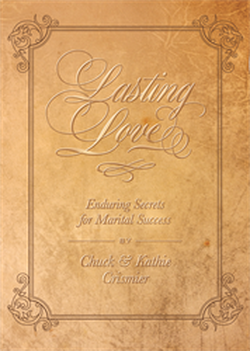
LASTING LOVE can be a dream come true. Yet love requires more than a dream or those loving feelings we so much desire.Lasting Love, Chuck and Kathie Crismier, celebrating their Golden Anniversary, unveil seven enduring secrets that will inspire and strengthen your marriage as it has theirs. COPY and PASTE this link to WATCH the TRAILER: https://www.facebook.com/Save-America-Ministries-204687919570536/videos
Past Episodes
This ministry does not have any series.
Featured Offer
LASTING LOVE can be a dream come true. Yet love requires more than a dream or those loving feelings we so much desire.Lasting Love, Chuck and Kathie Crismier, celebrating their Golden Anniversary, unveil seven enduring secrets that will inspire and strengthen your marriage as it has theirs. COPY and PASTE this link to WATCH the TRAILER: https://www.facebook.com/Save-America-Ministries-204687919570536/videos
About Save America Ministries
About Chuck Crismier
Contact Save America Ministries with Chuck Crismier
crismier@saveus.org
http://www.saveus.org/
Save America Ministries
P.O. Box 70879