Oneplace.com

OFFENSE OF THE CROSS

April 3, 2026
00:00

The cancer destroying America

Chuck Crismier: This is Viewpoint with attorney and author Chuck Crismier. Viewpoint is a one-hour talk show confronting the issues of America's heart and home. And now with today's edition of Viewpoint, here is Chuck Crismier.

It was 3:00 on Wednesday afternoon when the Lord of glory declared, "It is finished." He began his journey four days earlier from Mount of Olives and Gethsemane where he was arrested by the soldiers of the High Priest and taken to the High Priest's home in the middle of the night. In the middle of the night, after the sun was down on Wednesday, Jesus was crucified.

The day before, in the middle of the night, he had been arrested by the soldiers of the High Priest at the betrayal of Judas with a kiss. And he was taken to the home of the High Priest where he was tried during the night by the 71 man Sanhedrin, the leaders of Israel, and found guilty of blasphemy requiring death.

And so they took him immediately early in the morning on Wednesday to Pontius Pilate. You say, "On Wednesday?" Well, yes, on Wednesday, because the journey had become had begun on Sunday after the Sabbath. They could not journey on the Sabbath. And so they began the journey to the Mount of Olives, and then down the Mount of Olives, to the Kidron Valley, across the Kidron Valley, up to the Mount, the Temple Mount, where Jesus overturned the temples of the money changers and said, "It is written, 'My house shall be a house of prayer, but you have made it a den of thieves.'"

For the next several days, Jesus began to further testify of his calling, of his purpose. He had been interrogated by lawyers to determine what the truth was, what was the greatest commandment. So many teachings, so many prophecies, so many parables. And then, the moment of truth came. The moment of truth, Jesus gathered his disciples in preparation for the Passover in an upper room. And there he offered what we call the Last Supper.

He prepared his disciples saying, "Take, take now, this is my blood, this is my body which is shed for you. And I will not drink again of the fruit of the vine until I come again, and until Israel says, 'Baruch Haba B'shem Adonai,' 'Bless is he who comes in the name of the Lord.'" And so after four days, from Sunday, Monday, Tuesday, and Wednesday, Israel, that was preparing and observing their own lambs for Passover to determine if they were without blemish.

Jesus himself was declared to be without blemish by none other than the crusty Roman governor, Pontius Pilate, declaring, "I find no fault in him." And so the judgment was rendered. The judgment was rendered on Wednesday morning. By noon, Jesus had been crucified, and by 3:00 he was dead.

Then it became urgent that his body be taken down from the cross, because the Passover, also known as a Sabbath Day, drew near. And they could not have him on the tree, because that was a curse to the Jewish people, because it's written, "Cursed is everyone that hangs on a tree." And so he had to be removed by sundown on Wednesday night. Four days, Sunday, Monday, Tuesday, and Wednesday, he was observed until as the Lamb of God, who would take away the sins of the world, and offer himself as the Father's mercy, declared, "It is finished."

He was buried then before sundown on Wednesday evening, before the turning of the Hebrew calendar day. And so he remained in the grave, Joseph of Arimathea's tomb, Thursday, Friday, and Saturday. Then Saturday being the Sabbath Day, they could do no work. And so Jesus rested in the grave finally on the Sabbath Day, the third of three days. And then early in the morning of the first day of the week, somewhere between 6:00 p.m. Saturday evening, or sundown, until 6:00 a.m. Sunday morning before the sun came up, Jesus was resurrected and was then seen by Mary, disciples, and so on.

That's the only story and the only record that bears truth with the whole of the Bible. Unfortunately, we've been worshipping a tradition. A tradition that had no root in the Bible if we really understood it. And so you might want to consider what I've just shared with you, because it will reorient your mind and your thinking to when God says something, he really means it. When Jesus said, "As the son of as Jonah was three days and three nights in the belly of the whale, so will the Son of Man be three days and three nights in the belly of the Earth." And so he was.

And it was a cross. The cross we say made the difference. It was the great divide of human history. It was a death sentence that was pronounced on all human beings, because the wages of sin is death. And all have sinned and come short of the glory of God. But Jesus, through the mercy of the Father, sacrificed himself without resistance on the tree. For it is written, "Cursed is everyone that hangs on a tree." So he became, as it were, cursed of God for the mercy that would be extended to you and me if, if we would receive it.

Mercy without measure. It was the mercy of God that was accomplished at the cross. The grace of God or the favor and enabling power will enable us to accept and receive the mercy and to walk in the power of God, or as it would be said, the power of the cross. We used to sing about the cross, "Alas and did my Savior bleed," or "At the cross, at the cross, where I first saw the light," or "I will glory in the cross," or "In the cross of Christ, I glory," or "When I survey the wondrous cross." We used to sing all those songs, but not much anymore. Because the cross has fallen on very hard times. And so I welcome you to Viewpoint.

I'm Chuck Crismier, it's Conversation with Ever Increasing Conviction, talk that transforms. And today we look at, well, America at the crossroads. Is it possible we don't have much of a love anymore for the cross? William Penn, the founder of Pennsylvania, made a direct statement. He said, "No cross, no crown." No cross, no crown. Maybe as a country, we're losing our crown because we're abandoning the cross. Today on Viewpoint, we're going to take a look at this bigger picture. I hope you'll stay tuned, friends, because America is at the crossroads. It all began on a hill far away.

Music: On an old rugged cross. Bill Gaither had his group together with Dr. Billy Graham. And together they sang that song, perhaps it will jar our memories just a bit.

Music: On a hill far away stood an old rugged cross. The emblem of suffering and shame. And I love that old cross, where the dearest and best for a world of lost sinners was slain. So I'll cherish the old rugged cross, till my trophies at last I lay down. I will cling to the old rugged cross, and exchange it someday for a crown.

Chuck Crismier: Will we? Oh, listen to these words. Will they come?

Music: To the old rugged cross. I will ever be true. Its shame and reproach gladly bear. Will we? Till he calls me someday to my home far away, where his glory forever I'll share. So I'll cherish the old rugged cross, till my trophies at last I lay down. I will cling to the old rugged cross, and exchange it someday for a crown.

Chuck Crismier: Is it just a song, or is it a reality? Whether it's a reality depends upon your life and my life at every step of the way, every day. We sing and used to sing, "I will cling to the old rugged cross." But really, in America, we don't much love the old rugged cross anymore. Most of the crosses we see these days are gold, hanging from people's necks, not the old rugged cross that cost Jesus, and would cost us if we understood it. Believe it or not, the cross has suffered greatly in American history. We could actually call it the Enigma of the Cross.

The profound Christian paradox where the ultimate defeat that is crucifixion represents the ultimate victory or redemption for those who will receive the offer of mercy presented at the cross. How God uses shame and death and suffering to bring about life and glory, appearing as foolishness to the world but representing divine power. Some call it the mystery of the gospel, the enigma of the cross. The cross, the ultimate symbol of death, yet in Christian faith it is the source of eternal life if we receive it. It is the meeting point of human sin and divine mercy and grace.

Why is it then that the cross has fallen on such hard times? It has. In fact, the offense of the cross has become ever increasing in America. Someone wrote a piece called "A Crossless Christianity." Anyone who does not take up his cross and follow me is not worthy of me, said Jesus. Bonhoeffer reminded us, "When Christ calls a man he bids him come and die." But that's not popular teaching these days. Instead, we've settled for a therapeutic Christianity where everyone's goal is to feel better about themselves.

Sacrifice seems to be the last word to describe the Christian today. The cross connotes a sacrificial leaving behind of the way things were, and ushering in of the ways of God. But it's so unpopular, that is, the cross. Why? Because it involves death. It symbolizes foolishness. It pushes against selfishness. It sheds holy light on sin. So we conveniently do away with sin when we lessen it to a misdemeanor, or dismiss it altogether. By patting sin on the head, as it were, a creepy but harmless uncle, we completely eliminate the need for Christ to die.

Jesus would become the greatest fool known to man, dying for something so superfluous. The truth, the cross is where Jesus bore the weight of every insidious sin, mine, yours, theirs. Sin is a big deal. In fact, it is from God's viewpoint the deal. It separated us from a holy God, and because of sin, Jesus lost his life. It was a decision he made to set us free from sin's grip if we would walk in that truth. Sin necessarily means a cross. And a cross means a necessary death. So as the Apostle Paul put it, he said, "I die daily."

"I die daily." What did he mean by that? He meant, "I take up my cross daily." We've forgotten that Jesus is both grace and truth in one person. He's love and judgment, the solution to our sin problem, and the one qualified to judge our our sin problem. Yes, his love compelled him to the cross, but our sin problem made it necessary. So the writer of this piece, Mary DeMuth, says, "I fear we've lost the complete picture of God by emphasizing his love more than his holiness." "I fear we've tried to make Christianity palatable."

"It's time we repent from crossless Christianity we've invented for our convenience because a crossless Christianity isn't Christianity at all." So we can sing about the old rugged cross, and every one of those 100 voices that were singing there at that Billy Graham rally, led by Bill Gaither, was smiling or was deeply moved emotionally as they sang it. But the question is, how real is it? What does the cross mean to you? Why is the world offended by the cross? People say, "Well, the world is offended by the cross." I say, the church is offended by the cross today.

How do we know that? Because beginning in the early 1970s, where the church growth movement began in Pasadena, California, where I was practicing law. The church growth movement virtually demanded the eradication of the cross. We had to replace the cross with feelings. Everything had to be emotive rather than commitive to the cross. And in order to grow churches, it was believed by pastors and parachurch leaders and so on, we have to diminish the focus on the cross. And we have to elevate our feelings.

Therefore, grace became interpreted as God's winking at sin, no necessary, no necessity for the cross anymore. So what happened? The cross began to be removed from America's churches. Yes, evangelical churches primarily. And the crosses that remained in Catholic churches and orthodox churches and so on were golden crosses, not the old rugged cross. So somehow we reconfigured, reconsidered the cross and have missed its point. And so the great divide of history that took place 2,000 years ago, almost 2,000 years ago, in 30 AD, is now being tested whether or not we will endure until 2030 AD, 2,000 years later.

Two days later, what will happen? What will happen in America? What will happen to America? We want to take a look at that for the balance of the program here on Viewpoint today, and I'm glad that you've joined us. Again, it's always Conversation with Conviction, talk that transforms. And interestingly, as we approach the 250th anniversary of the political birth of the nation, we are going to go back to the 400th anniversary of the spiritual birth of the nation to give us a context of where we are today. In the spring of 2007, we issued a newsletter, the 400th anniversary edition for Save America Ministries. It was called, "America at the Crossroads."

Rediscovering the secret of her genius and power. I'd like to share with you the opening words of that newsletter, and then we'll take it from there. I hope you'll listen very carefully, friends, because you're about to hear something that you're not likely to hear in very many other places. Just to give you a little preview, Michael Card, the fairly well-known musician years ago, wrote a little book called, "A Violent Grace." What it really was was a violent cross, a dangerous cross, he called it. So he joined me on this program a number of years ago for an an interview concerning his book.

In the middle of the interview, he stopped and he said, "Chuck, I think your listeners need to know something." He said, "I took this book and its manuscript to six well-known Christian publishers." He said, "They all turned me down." He said, "I think you should be interested in knowing why they turned me down." They specifically told me these words, "The cross doesn't sell well anymore." I want you to consider that. As we move into the balance of the program here today, over the seething rapids of the James River and into the silent forest echoed a great shout, followed by a prayer.

One-armed Captain Christopher Newport had led a band of English explorers upriver from Jamestown, following their epic man landing 10 days before, and had planted a wooden cross at the falls near today's downtown Richmond, where this program airs from. It was May 24, 1607. The placing of the cross bearing the legend, Jacobus Rex, 1607, signified that the men from beyond the sea were laying claim to the region in the name of King James, not King Jesus. And with those words, Virginia's Dabney began his epic story, an official history of Richmond, Virginia.

But with those same words, he began the epic story of America. A story whose final chapter may well now be in the writing with you, me, and our countrymen as co-authors. And it all began at Jamestown, but where are we going today? Contrasting America's first permanent English settlements may well reveal the choice we face, and it has everything to do with the cross. Destiny rides on the balance at the crossroads of Plymouth and Jamestown. So prepare yourself for the stark realities revealed in the American heart, through our history.

We truly are at a destiny determining crossroads. Now I'd like to make available to you a book that might help us all gain some greater perspective both on our history and our future as a country. And it all relates, of course, to the cross, even though the word cross only appears toward the end of the book, in the last third of the book. It's called, "Renewing the Soul of America." 38 national Christian leaders endorsed that book because they saw in it something radically different. A real hope for the future of the country if, as Pat Robertson said, we had the courage to follow it.

$15 will put "Renewing the Soul of America" in your hands. It's on our website, saveus.org. Call us, 1-800-SAVE-USA, write to us, Save America Ministries at $6 for postage and handling. We'll be right back.

Guest (Male): There is so much more about Chuck Crismier and Save America Ministries on our website, saveus.org. For example, under the Marriage section, God has marriage on his mind. Chuck has some great resources to strengthen your marriage. First off, a fact sheet on the state of the marital union. A fact sheet on the state of ministry marriage and morals, saveus.org. Marriage, divorce, and remarriage. What does the Bible really teach about this? Find all of this at saveus.org. Also, a letter to pastors, the Hosea project, saveus.org. And many more resources to strengthen your marriage. It's all on Chuck's website, saveus.org. Again, you can listen to Chuck's Viewpoint broadcast live and archive. Save America Ministries website at saveus.org.

Music: It all began on a hill far away.

Chuck Crismier: Was America a creation from hell or heaven? Peter Marshall in his book, "The Light and the Glory," tremendous book, by the way, asked, "Did God have a plan for America?" He said, "Due to the extreme gravity of America's present spiritual and moral condition, it is imperative that we Americans rediscover our spiritual moorings. If we're to be honest, we must look deeply into our divided hearts and hopes from the very beginning. Jamestown was the first, in 1607, followed by Plymouth in 1620. Jamestown, writes one historian in a new book, "The Jamestown Project," is the creation story from hell. Conflict, disease, horrific killings, and starvation, including a man dining on his pregnant wife, are all part of the story of Jamestown, founded as a business venture. The Washington Post says, "Jamestown is pulp nonfiction compared to the family-friendly tale of pious pilgrims dining with gentle Indians."

According to the author of "Mayflower," a story of courage, community, and war, "Not only was Jamestown founded first, but in many ways was more quintessentially American, since it was all about making money." The pilgrims at Plymouth, having been blown off course, landed outside the jurisdiction of the Virginia company, giving them freedom to establish their own charter. Their Mayflower Compact acknowledged at the first document of representative government in America, began, "In the name of God, amen." The pilgrims committed themselves to a different priority, the Kingdom of God, declaring, "Having undertaken for the glory of God, and advancement of the Christian faith, a voyage to plant the first colony in the northern parts of Virginia, do solemnly and mutually in the presence of God and one another covenant and combine ourselves."

As William Bradford, their first governor penned, "They fell on their knees and blessed the God of Heaven." Well, what truly motivated those early settlers? What was the driving force of their hearts and homes? Historians now see, looking back 400 years, that the American heart and home today reflects exactly the same divided heart that characterized the dramatic difference between Jamestown and Plymouth. Most importantly, we look back at Plymouth colonists and see an idealized sepia-tinted, or sepia-tinted version of ourselves, hard-working earnest seeking for religious liberty, wrote David Price, author of, "Love and Hate in Jamestown."

He said, "We look back on the Jamestown colony and see an an earthier, less appealing, but equally truthful version of ourselves, beset by jealousy and politics, motivated by dreams of gold and money." It was gold versus God. That's it. It always has been. Very similar to what William Jennings Bryan wrote or gave in his famous speech, "Crucified on a cross of gold." The fulcrum of American faith and life has always been gold versus God. In adversity, love of God waxed strong. But as God granted prosperity, love of God waned and gold loomed ever larger.

And in a very real sense, only massive spiritual awakenings graciously granted by God kept us anchored with our pilgrim forebears. Carnal Jamestown drives us despite our inner knowing that we would prefer to be known as Christian pilgrims. After all, the pilgrims are the ones we look on more fondly, wrote the historian Price. But we draw just as much of our national spirit from the Jamestown colonists. So, we're at the crossroads, at the crossroads. In that newsletter, from which I'm quoting, the newsletter that we penned for the 400th anniversary of our country, there was a picture of the cross at Jamestown.

It's a big cross. A very big cross. Obviously, the cross was celebrated, but not followed. What's the heritage of that? Well, here it is. Preachers don't want to preach about it. Musicians don't want to sing about it. Publishers don't want to print about it. It just doesn't market well anymore. We used to sing, "The cross made the difference for me." Now, we trust the counselor and the Congress to change our lives. We used to sing, "To the old rugged cross, I will ever be true." And now we proclaim, "To myself, I will always be true."

We used to take up our cross, but now we take up our rights. To be crucified with Christ used to be the Christian way, but now we sing, "I'll do it my way." Crucifying Christ afresh, and putting him to an open shame. Indeed, the cross has fallen on very, very hard times, and I think you would agree. Maybe that's the reason why D. James Kennedy gave this endorsement to the book, "Renewing the Soul of America." It clearly enunciates the choices facing Americans in this dangerous period of our God-blessed, but God-warned country.

The former Adrian Rogers said, "It would be glorious if every spiritual leader in America would read this book." And Peter Marshall, the son of the former Chaplain of the United States Senate, whom said, "We will either have Christ or chaos," said of "Renewing the Soul of America," "It needs to be read by every American who's concerned about the future of our great nation." Maybe you should read it. "Renewing the Soul of America." $15 will put it in your hands. It's on our website, saveus.org. You can call us at 1-800-SAVE-USA, or write to us at Save America Ministries, P.O. Box 70879, Richmond, Virginia 23255. Write a check at $6 for postage and handling. So let's go back to the newsletter.

"At the Crossroads." As true pragmatists here in America, we in the end, inevitably opt for gold rather than God, as with Jamestown. God has become our lackey in pursuit of gold, and the cross of Christ has become our mascot to give an aura of religious cover. Such thinking would have been abhorrent to the settlers at Plymouth. And in principle, we agree. Yet while choosing to embrace the memory of the pilgrims, we choose to live the life of Jamestown. Indeed, Jamestown had its church, but Plymouth had a people in covenant with God and with one another.

At Jamestown, we crucify Christ afresh. At Plymouth, we are crucified with Christ. At Jamestown, we experience eternal bickering and squabbling, as recorded by Virginia's Dabney. At Plymouth, they never gave in to despair, to murmuring, or to petty jealousies. In contrast to Jamestown, as their ranks thinned, they drew ever closer together and trusted God all the more, instead of eating one another. Truly, we see ourselves today in the mirror of Jamestown, while longing for the image of Plymouth. As destruction increasingly ravages our hearts and homes, from within, through unfettered selfishness, personal ambition, rebellion, broken families, and broken faith, we stand at what well may be a final crossroad before even greater destruction rains upon us from without, as well-deserved judgment from the God whose cross we have actually spurned in favor of Jamestown's golden calf.

We have a choice to make. And our only true hope is to recover the secret. So what was the secret? Well, "The cross made the difference." That's the title of a formerly popular gospel song. But the cross is no longer popular in America. In fact, it's not popular anywhere in the world. China, they're removing the crosses and replacing them with a massive image of Xi Jinping in all the churches. And wherever they refuse to put up the image of Xi Jinping, they arrest the pastors, tear down the the steeples. This is the persecution that is coming because of the cross.

The Bible calls it the Offense of the Cross. It appears that the offense of the cross has become very offensive, not just around the world, but yes, in America as well. In fact, one could be virtually honest in saying that virtually the entire Democrat Party in this country is radically offended by the cross. So much so that they want to cross it out. Barack Obama wanted to cover over the image of Jesus during his campaign. They wanted to declare him the Messiah. Over 20 times they declared Barack Obama the Messiah. Did you know that? We're living in very, very tumultuous and difficult times. And we've become so inured to it that we don't understand how deeply we are enmeshed in the offense of the cross.

We used to sing, "At the cross, at the cross, where I first saw the light, where the burden of my heart was taken away. It was there by faith, I received my sight, and now I'm happy all the day." Not so much anymore. We've given up that trust. Pastors no longer place confidence in the cross for life change as reflected by its absence in their messages. Christian publishers and music distributors say the cross doesn't market well, rendering it almost impossible to bring a printed or musical message of true salvation to a dying nation. In headlong pursuit to please seekers, we have refused to please God, having created as Time magazine published so aptly a custom-made God, one made in our own image.

So what's the secret? Well, the Psalmist, David, said, "The secret of the Lord is with them that fear him." So first we have to recover the fear of the Lord, as embraced and lived by the pilgrims at Plymouth, and also by the Puritans, by the way. Secondly, we must recover righteousness. For we're told, "Righteousness exalts a nation, but sin is a reproach to any people." The ways and spirit of Jamestown are a reproach to the hope of America, and as at Jamestown, can only lead to horror. Finally, it was the secular Frenchman, Alexis de Tocqueville, not known to be a Christian, who in 1835, perhaps gave us the clearest insight, both historically and perspectively, when he wrote in the classic, "Democracy in America," these words, "Not until I went into the churches of America and heard her pulpits aflame with righteousness, did I understand the secret of her genius and power."

Well, that's it. We have to recover the secret. The secret is the fear of the Lord, revealed in the preaching of the cross of Christ, calling for Americans of every color and stripe to repent, to return from pursuit of gold to pursuit of God, and to live righteously so that God might again gain exalt us as a nation. So here's our question, "Will you reside in Plymouth or Jamestown?" The choice is yours and mine and ours. And that choice may determine how long this colony called America survives. We'll be right back after this, friends, to continue to talk about the cross. Why is the cross so offensive? And what about this matter of mercy? Why is it we don't talk about mercy anymore and we only talk about grace? Might have something to do with our understanding of the cross.

Guest (Male): Have you ever considered what the early church was like? Many people are developing a hard longing for a greater fulfillment in our practices as Christians. A recent study showed 53,000 people a week are leaving the back door of America's churches in frustration. What is going on? Why has there not been even a 1% gain among followers of Christ in the last 25 years? Could it be that God is seeking to restore first century Christianity for the 21st century? Jesus said, "I'll build my church." Is Christ by his spirit stirring to prepare the church for the 21st century? The early church prayed together and broke bread from house to house. They were family and it was said by all who observed, "Behold how they love one another." Incredible, but the same can be found right now. Go to saveus.org and click Cell Church. We can revive first century Christianity for the 21st century. It's about people, not programs. It's about a body, not a building. That's saveus.org. Click Cell Church.

Music: The cross has fallen on very, very hard times. We're at the crossroads in our own individual lives, but also in America. We really are. And if America represents a nation under God, then it would you would think that the cross would be at the very center. But no. Everything but the cross is at the center. Maybe it's a bull or a bear, the bull market, you know? Maybe it's some other symbol. Maybe it's golden crosses that we hang from our necks while refusing and forgetting the cross upon which Jesus died. Jesus said that we would be persecuted if we would follow him. Follow him in what? He said, "If you're not willing to take up your cross, you can't be my disciple." In fact, he went further than that. He said, "Unless and until you're willing to take up your cross daily and follow me, you cannot be my disciple." He didn't say, "You might not be." He didn't say, "But if you make a confession that you believe in me and believe in in in the Father," uh, "that you're you'll be okay." He didn't say that.

How is it that we miss those words of Jesus? How is it that we miss the same similar words from the Apostle Paul, from which we get so much of our Christian doctrine? How have our pastors missed it? Why? Because we intentionally missed it. It didn't market well. It didn't seem to sell well. It didn't seem like we could grow churches that way. So we got rid of the cross and replaced it with the doctrine of good feelings. Like Robert Schuller said in writing his book on self-esteem. Remember Dr. Robert Schuller at the very heart of the church growth movement back there in the early 1970s, the Crystal Cathedral and all that, which is now owned and operated by the Roman Catholic Church. He said, "It's abuse to tell people they're sinners." In other words, he did not like the message of the cross. Why? Because it didn't help you to grow churches from his viewpoint. And so he mentored untold thousands and thousands of pastors for years, including pastors of two of the largest movements in the evangelical Christian community both in America and around the world.

They were his spiritual sons, and he mentored that in that same philosophy. All they need is more self-esteem. In other words, all they need to do is feel better about themselves. Well, that will market very well. Tell people what they want to hear. So instead of embracing the words of Jesus and the words of Paul and Peter, we embraced the words of Burger King, "Got to give the people what they want. Have it your way." And it began to grow churches, what we call mega churches. That's how it all began, friends. If you're young, you don't understand that. But I've observed it from coast to coast and lived through it all, and watched it from the inside out. It's interesting. We talked about Peter Marshall, Peter Marshall Jr., who wrote "The Light and the Glory," great guy. He was a revivalist, uh, the son of the, uh, late, uh, Peter Marshall, the, uh, pastor, Chaplain of the United States Senate. And, uh, he's an historian and as I said, author. And, uh, he was asked to become the keynote speaker at the gubernatorial inauguration of one of our governors here a number of years ago in Richmond, Virginia, the capital of the Commonwealth.

So he called me up and he says, "Chuck, can we get together? I'm coming down there to Richmond, and, uh, it would really be great if we could get together." And so we had developed a kingdom friendship together. And I said, "Sure." So he came down, we had dinner together, and then I drove him downtown to his hotel. And I asked him this question, "I'll never forget it." I said, "Peter, you're an historian, you know about what's gone on on the colonies of the East Coast, all the way from Virginia up to Massachusetts and so on. So I have this question for you. How would you characterize Richmond, Virginia? The birth city of America, at least the birth city of the of the, uh, uh, the South, the birth city of the South, and also the city just outside where the Declaration of Independence was, uh, talked about, where Patrick Henry voiced there in Richmond, Virginia, uh, so strongly words about freedom."

"How would you characterize Richmond, Virginia?" And here was his answer. He didn't even hesitate. He said, "Stubbornness, pride, and rebellion." I said, "Wow." Those are the three words that characterize America. Stubbornness, pride, and rebellion. No wonder industry looks at Richmond, Virginia as the premier testing ground for America, saying, "Brother, if it'll work in Richmond, it'll work anywhere." And this is probably the reason why God called us to leave Pasadena, California, where the church growth movement started at the height of my legal career, and to go to Richmond, Virginia, the place where it all began, right outside of Jamestown, where the cross of the covenant was first planted in 1607, where industry says, "If it'll work there, it'll work anywhere." And guess what? This state, this Commonwealth of Virginia, just elected the most God-despising, rejecting administration that ever occupied the leadership of this state. It's so awesomely anti-God that it rejects every single standard that God has ever put in his word concerning how we should live. And then seeking to strip away the ability even as we speak, the populace from being able to even resist it.

That's how spirit, how how bad the situation has become. And that represents the spirit of America. So why why is the cross fallen on such hard times? I think maybe part of it is, we don't understand mercy. We don't really even understand the cross. It's become more of a symbol than anything else. It's lost its substance in our mental, moral, and spiritual imagination. So what does the cross really represent? It represents the ultimate act of mercy because of the ultimate judgment that was pronounced upon humanity. We were all under a death penalty. You, me, every one of us, because sin had invaded the Earth through Adam, the first Adam. So Jesus was born and brought into the Earth as the last Adam, to replace the first Adam so that a righteous life could be lived, and therefore through that righteous life, he could be take on the sacrifice or the substitutionary death that was pronounced upon all of us through the incredible expression of God's mercy to offer up his only begotten Son, just as Abraham had been willing to do on Mount Moriah.

God said to Abraham, "Because you were willing to offer up your son of promise, now I am going to do the same to redeem humankind." It was the ultimate act of mercy. When you call it grace, it's greasy. Especially the way grace is now used. There's nothing wrong with the word grace, it's just that it's been perverted, distorted. Grace is not greasy. Grace is God's favor that enables us to obey his voice. It's his enabling power that facilitates us even to receive his mercy. It's mercy, friends, that we needed. As the song used to say, "Mercy drops round us are falling, but for the showers, we plead." Do you realize how precious mercy is? The longer I live, and my wife will tell you this, I share it with her regularly, the more I value mercy. The mercy of God. We all hold this treasure in earthen vessels, friends, every one of us. Not one of us is perfect. But God calls us to be perfect. To live holy and righteous lives. Why? Because that's what Jesus did, and if we're going to walk with him and talk with him, we have to agree with him. "Can two walk together unless they be agreed?" No.

So the message of the cross is, we've got to take up that cross ourselves. We can't save ourselves, but we have to live according to the spirit of that cross. And we call others to walk in righteousness and in holiness, without which no man will see the Lord. That's a message of mercy, my friends. The message of calling people to repentance, of calling a nation to repentance, is the message of mercy. It's the message of the cross. As William Penn said, "No cross, no crown." America at the crossroad. We are at a crossroad. Maybe you can think about this with regard to the congregation or groups that you're involved with. To what extent really is the cross seen as the message of mercy? Or is it looked upon just kind of brushed aside? It's one thing to agree with the to to say you believe in the cross and that Jesus was crucified on the cross. But Jesus said, "Take up your cross and follow me." And that really ultimately is the final message. It's the crossroads of human history, not just for America, but for the whole world. And the world, not just America, but the world is at the crossroads.

We just really are. That's why you do this program. For almost 31 years now, Mark May 7th of this year, we'll have completed 31 years on the air. It's a long obedience in the same direction, preparing the way of the Lord for history's final hour. I hope you understand it that way. That it's a message of mercy, of exhortation, of encouragement, of wooing, of warning, of winning. It is the kind of message that God expected his pastors to give. But decided to present the church growth movement instead. Jesus said, "I'll build my church. You make disciples." We decided to build churches and have not made disciples. So the cross has fallen on very, very hard times. We're at the crossroads. As I indicated to you, I think you'll be encouraged by the book, "Renewing the Soul of America," one person at a time beginning with you. Uh, as 38 national Christian leaders endorsed it, you may find yourself endorsing it as well. It'll help you to understand our history, some things about where we've gone wrong. But in the last third of the book, I tell you, it's going to grip your heart and establish a new vision and understanding for what God was really looking for for the purpose of this country.

Thanks for joining us. Get a copy of the book, $15, it'll put it in your hands. It's on our website, saveus.org, "Renewing the Soul of America." Call us 1-800-SAVE-USA, write to us, Save America Ministries. You're writing a check at $6 for postage and handling. And really, seriously, friends, would you seriously consider becoming a a serious partner with us? I I mean that, a serious partner. You value what we're doing here. Is it a message that you know not only you need to hear, but you believe that a vast number of others need to hear in this crucial moment of time? Then become a partner. A prayer card partner? Yes. Encouraging notes? Yes. But without the finances, we can't stay on the air. We need to get it more broadly out there. God bless, and be a blessing.

Guest (Male): You've been listening to Viewpoint with Chuck Crismier. Viewpoint is supported by the faithful gifts of our listeners. Let me urge you to become a partner with Chuck as a voice to the church, declaring vision for the nation. Join us again next time on Viewpoint as we confront the issues of America's heart and home.

This transcript is provided as a written companion to the original message and may contain inaccuracies or transcription errors. For complete context and clarity, please refer to the original audio recording. Time-sensitive references or promotional details may be outdated. This material is intended for personal use and informational purposes only.

Featured Offer

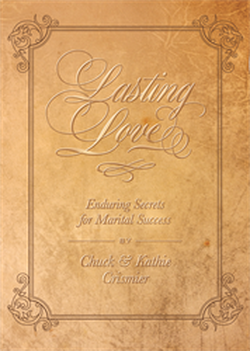
Lasting Love

LASTING LOVE can be a dream come true. Yet love requires more than a dream or those loving feelings we so much desire.Lasting Love, Chuck and Kathie Crismier, celebrating their Golden Anniversary, unveil seven enduring secrets that will inspire and strengthen your marriage as it has theirs. COPY and PASTE this link to WATCH the TRAILER: https://www.facebook.com/Save-America-Ministries-204687919570536/videos

About Save America Ministries

A New Breed of Christian Talk Show moving "from information to transformation," Chuck Crismier, veteran attorney, author, and pastor, has an amazing ability to probe below the surface and deal with issues that few dare to touch. It's dialogue that demands decision. It's 'Viewpoint' from Save America Ministries!

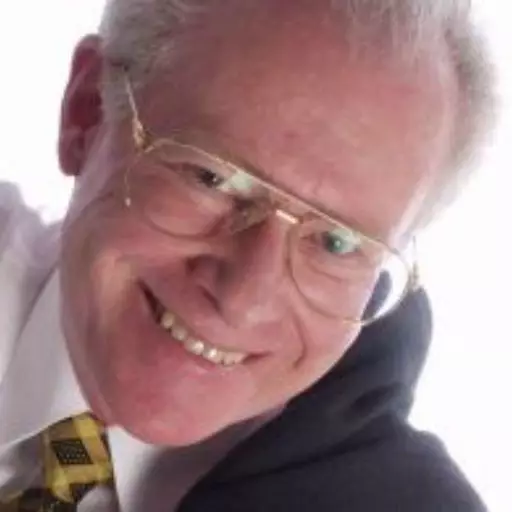
About Chuck Crismier

Pastor Chuck Crismier began his career as a public school teacher from 1967 to 1975. He then served as a Civil Private Practice attorney from 1975 to 1994 while at the same time pastoring a church from 1987 to the present. Chuck has authored several books most recently including “Out of Egypt” (2006), “The Power of Hospitality” (2005) and “Renewing the Soul of America” (2002). He founded Save American Ministries in 1993 earning him the Valley Forge Freedom Foundation Award for significant contribution to the cause of Faith and Freedom.

Contact Save America Ministries with Chuck Crismier

Mailing Address
Save America Ministries
P.O. Box 70879
Richmond, VA 23255
Telephone Number
804-754-1822