
RARE EARTH - RARE METALS


The Battleground With China
w/ Christian Briggs
Announcer: This is Viewpoint with attorney and author Chuck Crismier. Viewpoint is a one-hour talk show confronting the issues of America's heart and home. And now, with today's edition of Viewpoint, here is Chuck Crismier.
Chuck Crismier: Believe it or not, the Bible actually says that money answers all things. Well, I don't think that's exactly what it meant. I think what it means is that we all have needs upon the earth because we're planted here on the earth by God, and all the things that we need on the earth, the material things and so on, are related to money. So money answers or provides all things in that sense.
On the other hand, we know that money doesn't provide everything that we need. We know that money actually can deceive us into thinking more highly of it than we ought to think. But that doesn't mean we shouldn't think anything about it. And so we do periodically here on this program with our friend, Christian Briggs.
Today we're going to take things a little bit differently. We're going to take a little different shift and we're going to talk about China. We're going to focus our program here on China. In fact, if you would go back about 25, 30 years, you would find increasingly in our national news magazines and other financial magazines that, in fact, the focus was on China over and over and over again.
The military focus was on China. The economic focus was on China. The entire focus was on China. And it kind of all began in many significant ways back in about 1972 with Richard Nixon as our president, when he took us all off the gold standard, but then also introduced us to—well, introduced China to the World Trade Organization and therefore gave China a leg up to be able to bring the United States to its knees, addicted to Chinese products.
So where has all that led us? Where does it lead us today? Well, we're going to talk about that here on the program, and I'm glad that you joined us. This conversation is always with ever-increasing conviction, talk that transforms. I remember a statement made by Xi Jinping concerning the future of China. What I had in my mind was that he had pronounced that China would rule the world by 2050.
So without looking up documentation itself, I went to the famous or infamous AI source called Google. And I asked the question, "Will China rule the world by 2050?" The answer was it's a complex question with no single answer, involving economic forecasts, political ambitions, and geopolitical analysis. While China is projected to become the world's largest economy and a major global power, many analysts suggest its focus is on creating a multinodal world order and achieving national rejuvenation, not necessarily global domination in the traditional way.
On the other hand, it's projected to become the largest economy by 2050. Even Goldman Sachs has indicated that. The largest economy by GDP ahead of the United States and India. It's a long-term trend pointing to a significant shift of economic power towards Asia and also India. National strategy: The Communist Party of China has a long-term plan, often referred to as the "Chinese Dream," to become a great modern socialistic country by the 100th anniversary of the People's Republic of China. And when is that? 2049. No wonder Xi Jinping said China will rule the world by 2050.
Well, will that be? Where are they going today? How is it affecting us? How is it affecting the United States? How is it affecting the world and our decision in it? We want to focus on that here on the program today with our special guest again, Christian Briggs. He has a company called Hard Asset Management dealing in rare coins and precious metals.
He interestingly is conceived to be, deemed to be, a worldwide expert concerning matters of geopolitical significance and money. And that's why he just returned not only from the White House, but also from the State House in California, the largest economy in the country and the sixth largest economy of the world, California. So Christian Briggs joining us here again on Viewpoint. It's good to have you, brother.
Christian Briggs: Thank you so much, Chuck. I appreciate the kind introduction. So we're talking China today, aren't we?
Chuck Crismier: Well, we're talking China today, and Xi Jinping is taking dominion in ways that are really catching the world over there because he is actually deposing some of his key generals and they just disappear. He is actually playing a dictatorial role increasingly within his own military because he's scared to death that his military is going to react against him. What say you?
Christian Briggs: You've got a fine line, and you're not wrong. China's built on two things: the premise that its supremacy both in military and financial applications will be achieved on or before 2050. Now if you go to the hardliners there that have been around long enough, especially the ones in their 70s and 80s who have actually gone from that hardcore Communist to kind of a quasi-capitalist Communist economic environment, now they're kind of going back to that hardcore. They would rather have Xi Jinping out the door and use more hardline ways to conduct this. It's a military operation, mind you—make no mistake about it. What China is doing to the United States or around the world in all the ways that they've achieved such success is a military operation. It's not a financial one.
Xi Jinping now has been tasked with two parts. One part was to achieve a currency almost like a gold medal where the Yuan, which is their primary currency outside Hong Kong because there's the Hong Kong dollar…
Chuck Crismier: It's their dollar, in other words.
Christian Briggs: Exactly, that's exactly what it is. The mainland China has what they call the RMB and then you have the Hong Kong dollar which is in Hong Kong itself. What they're trying to achieve is through a lot of different ways with trade. If you go back and you look at the prior premiers and presidents of China, they all took a pretty aggressive stance when it came to the world and how they did their trade. Xi Jinping brought a little more diplomacy, a little bit more of a democratic style negotiation. It wasn't "invade the country," it was "invest in the country, then we could invade." And here's how it worked.
China believes that they are the supreme leaders of the world. Their 5,000 years of history gives them the right to be able to continue their imperialism, and imperialism is how they're getting so much real estate. If you want, we'll call it that for now and circle back to how it ties in. They went out instead of sanctioning countries who didn't use the Yuan, they actually invested in countries and gave them the kind of money that would otherwise never have the opportunity. Where the United States sanctions people, they invest in people.
Chuck Crismier: In other words, they would addict the countries to the largesse of China. Okay. We'll be right back after this break, friends. Christian Briggs, our special guest here today. Much on the agenda. I hope you'll stay tuned, friends.
Before we launch into the deep with Christian Briggs and the balance of the program here today, to dig deeply into this matter of China, what its impact is on the United States, on the world, and also where it stands perhaps in biblical prophecy—all that here in the program today. But before we get into that, you may recall the last time Christian joined us here on this program, we were engaged and witnessing one of the most dramatic increases in silver and gold ever heard of. In fact, probably the greatest. Things went forward rapidly, and then all of a sudden, everything dropped precipitously. What happened there, Christian? How can we understand this?
Christian Briggs: You're going to see silver going in five years from relatively low, high teens, low 20s per ounce. Gold was trading at around $1,400 per ounce about five and a half years ago now. So gold's increased about 400%, silver's increased about 500%. So it was not unusual for a lot of people that may have been able to ride that wave of accelerated pricing points and then be able to take profits. Now silver has not come back down to the 20 level. So you're going to have to give a little bit up to make a little bit more.
Chuck Crismier: It's at about 77, 78 today, and gold came down to about 48 and then bounced back up to about 5,000 today. So what's all this volatility about?
Christian Briggs: The volatility is just normal course of business. You need volatility to create new entry points. People don't realize that even if it was to go up every single day, which is not possible, but let's say it did, you would not have or certainly wouldn't garner the amount of money that was going to otherwise be inserted or invested in that asset. In this case, it's silver.
Silver goes up 500%, actually went up 600% to its peak about 120 an ounce, and then a lot of people sold and then it got down to as low as 68. Now we're back up to about 78. So it's an entry point. It gives people a way to say, "Okay, I see it was at 120. We know fundamentally there's a shortfall in silver compared to demand. We know that mathematically when that happens, it'll continue its capital appreciation or price appreciation." So it allows them to justify entering the market if they never entered the market or, what a lot of sound people do, is buy the dips. When I say sound, because that's sound financial business, that's good business. When you buy the dips knowing that the underlying asset has fundamentally strong potential and high probability of continuation in growth, and in this case, silver has all of that because it is one of the leading elements, or rare earth minerals—it's a precious metal, you can label it as you want—but the bottom line is silver is going to be needed in such amounts moving forward in next-generation technology, whether it's on Earth or in space. The fundamentals are screaming how much substantially higher silver will be in the next three to five years.
Chuck Crismier: All right. How about gold?
Christian Briggs: Gold is an interesting precious metal. Unlike silver, it's not an industrial metal to the same level. Silver has small use in jewelry, but gold has massive use in jewelry. Silver has strong use in both military technology as well as even petrochemical applications. Gold has strong use again in jewelry, but it has technology uses.
I'll give you an example. NVIDIA, which is one of the leading manufacturers of computer chips—it's GPUs, CPUs…
Chuck Crismier: The first trillion-dollar evaluated company.
Christian Briggs: It was, and guess how much gold—and you and I talked about this before—the amount of gold that NVIDIA bought in 2025 for their chips, global distribution, global sales—not just for the United States, but globally—was 40 tons of gold for chipmakers. That's one chipmaker. Now that's the leading chipmaker based on volume and market cap, so that is significant. But think about that, Chuck, 40 tons.
Chuck Crismier: Well, it's taking a great hit on the world's availability, isn't it?
Christian Briggs: It really is. And what's really interesting about the way gold and silver are starting to behave is extremely bullish. If you go back to the two previous big bull markets in silver and gold, that was 1980 and 2008, 2009, and 2010. And then there was a brief period around 2020 when silver did some pretty phenomenal numbers. They always gave back the gains, not completely but a lot of it. In this case, silver only gave back about 12 to 15% of about a 600% runup in a five-year period. That's strength. That shows you that silver is fundamentally being acquired at astronomical amounts and against a backdrop of a shortening supply. In other words, the supply continues to shorten the amounts each month, each quarter, because we're literally running out of silver even in the ground.
Chuck Crismier: Supply and demand.
Christian Briggs: Yes sir, exactly right.
Chuck Crismier: All right. Now we've talked about silver and gold. There are some other precious metals that are significant—palladium and—I was going to say potassium, but that's not a precious metal. It might be precious to our systems, but it's not a precious metal. Platinum. And so on. Where do those fit?
Christian Briggs: I'm glad you brought that up. I wasn't sure if we were going to talk about that today, but I'm so glad you did.
Chuck Crismier: Well, I wasn't sure we were either, but let's get that out of the way before we get back to China.
Christian Briggs: Nuclear energy is the only viable energy source that offers the capacity, the consistency, in delivering the energy we need. And the third part is the environmental way of which we would love to have. So you're going to have to have nuclear energy as a big part, a huge part going forward of the world's revolutionary systems that are being predicated on the ability to go from, I call it the analog to the digital to the photon world. In other words, we're going at light speed on light rails. Photons now is how we're transferring and will transfer information. In order to have those things be a possibility, you're going to need nuclear energy in order to be able to deliver on those. There's no way around it.
Chuck Crismier: So what's that got to do with palladium or platinum?
Christian Briggs: Platinum group metals—and there's five of them. Not all five are systematically required in nuclear fission to fusion, which fusion is the way of the future. But the platinum and palladium and even rhodium applications are certainly there in three areas.
So you're going to have them in catalytic converters. The electric vehicle market has started to crater—that's not the right word—but certainly it's starting to suffer some of its potential market share that people had envisioned 10, five, even three years ago. So catalytic converter demand is back on the rise dramatically. Catalytic converters have platinum and palladium as a byproduct in catalytic converters to be able to take the CO2 and basically make as close to pure oxygen out that tailpipe as you can. And there's a lot of platinum and palladium in every catalytic converter, and there's hundreds of millions of cars built every year.
Two, you have it in applications for military. So it's in laser guidance systems, missiles—both intercontinental or domestic or in even the simplest of applications within military complex—some is classified that I'm not even aware of. I've heard things, but I know that platinum and palladium itself and rhodium are used in various ways in military.
Third thing: nuclear energy. And this is what's interesting. A lot of the applications that gold and silver—in other words, places of which gold and silver are used—is recoverable. In fact, the vast majority of places until recently was very recoverable. There was an old saying years ago that 90% of the world's gold ever mined is still known to exist somewhere, somehow.
Chuck Crismier: In other words, you can take your ring into some place, they'll send it to the smelter and melt it down.
Christian Briggs: Exactly. And you would have been able to have all that gold or that silver. Silver now, and gold now in a lot of ways, because it's being utilized in new generation or new forms of technology delivery systems and platforms like chips and servers and wires and cars and moon stuff—all the various spacecrafts are going to need all these different byproducts, these precious metals and others—the recoverable amounts are now a lot less. In other words, what comes to market both in recycled form as well as new form that's from direct mining operations is about what you can count on. What you can't count on anymore is an estimated recyclable amount.
Chuck Crismier: It means that what is available is diminishing dramatically and can't be recovered, and so the price is going to go up because there are severe limitations on what can be obtained.
Christian Briggs: Correct. That's exactly right. You can't count on what's going to be recycled anymore.
Chuck Crismier: All right. Well, at least we have covered some of these things so that people who have listened before kind of understand where things are going, why they're going that direction, and make their own decisions as to what to do. Certainly we don't want to put all of our trust and confidence in gold or silver or palladium or potassium or any other thing because our trust needs to be in God and in God alone. He alone is fit to take the universal throne.
But China wants to take the universal throne. In fact, that's their goal. Their goal is to rule and reign over the rest of the world. And you have just recently prepared a paper, 116 pages—I just printed it out about 20 minutes before the program here today—"China's Strategic Assault on Dollar Hegemony through Banking Infrastructure, Critical Mineral Dominance, and the Architecture of De-dollarization." Now we're going to kind of reduce that as simply as possible for our listeners here, but first of all, why did you write this paper? I mean, this is pretty significant work which you actually took to Washington, DC.
Christian Briggs: We sent that actually up. One of the members of the California legislature got that to Don Jr., who was going to forward it up there for us because time was very essence of time this past Monday as I got to California. I wrote the paper to give to members of Congress, which they did get to, and other members of different legislative bodies as well as scholars, including a couple physicists that I was working with.
Because China's role in the world is much more significant. Their control of rare earth minerals and elements that are critical to sustain life and to maintain our way of life, especially from a strategic, military, or national security policy. And I don't think people realize just how significant these are and how significant China has a hold on really everyday things. Like, for example, they have as of right now, they control 70% of the above-ground known silver. They control 80% in other areas of precious metals and or semi-precious metals. They control up to 93% indirectly or directly, whether it's through trade agreements or the way they do predatory lending as we call it, because they'll loan a country money, the country can't pay it back, they secure that loan…
Chuck Crismier: Particularly African countries.
Christian Briggs: Absolutely. Africa is a disaster for the locals, and China has played that card perfectly well.
Chuck Crismier: They turned it into another kind of colonialism, haven't they?
Christian Briggs: 100%. Yes. China's footprint is increasing on a scale over the last 30 years—not like in the last three months, mind you—but over the last 30 years that far exceeded. See, here's what happened. We went from being the nation of transaction currency, the nation of commodities leadership, manufacturing, to a dollar now.
President Trump is doing the very best he can because he got handed a bag of rocks. Biden was a disaster in everything domestic and foreign policy. But what he was really bad at was trying to keep a lid on his corruption with his son, Hunter. Because of that, China knew that corruption, exploited that corruption, made him do the things of which under various auspicious ways and means—I'll leave it at that.
Because of that, China was able to get a gain, a bigger and stronger and deeper foothold in areas that they knew, they knew that one day when technology caught up to the demand—because we always have demand for greater technology, sometimes we just can't get the technology to meet the demand at the time we want it—but China knew that that day would come and things like zinc, lithium, cobalt, copper, gold, silver, platinum, palladium, etc., etc., etc., would have to be utilized that day. We need it right now. So Trump came into this, brought some very smart people around him, and tried to do as many things as he could to reverse China's incredibly hostile—and it is hostile—methods of which to control these things. Because predatory lending is a bad thing. They did it. Predatory selling, of selling under cost. They did it. Bypassing tariffs, bypassing sanctions. They did it.
Chuck Crismier: All right. So that having been said as a foundational picture here, the question is in my mind, okay, why do the folk there, the Congress and so on there in Washington, DC, have a lust for you to come there and speak to them? We'll be right back.
Welcome back to Viewpoint, friends. Today we're talking again with Christian Briggs. It's been several weeks since we did that, a lot has happened in the meantime. And when I say a lot has happened, not only has it happened in the gold and silver market, but he has been to London, spent time there with a number of the leaders in Europe, and then back here to the United States, just was with senators and so on and the governor of California, and then to the White House and so on. What's going on? Why do they want you there, Christian? What's up?
Christian Briggs: I think it's really about bringing a different perspective and not a political one, but rather more of an economical, fiscal, sound policy perspective. One of the things that I do is I look at the very nature of the situation and then I try to use just simple logic how to approach it. I don't have any horse in the race when it comes to politics. And so I'm non-biased.
Chuck Crismier: And you're not a horse whisperer to control politics at the White House, are you?
Christian Briggs: Sometimes. I call this a policy of the horse whisperer. I like it. I'm going to use that one tomorrow. But it's true because I'm a resident of Puerto Rico. I spend a lot of time in Puerto Rico, that's where I reside, in near San Juan. And in Puerto Rico, even though it's the United States territory, it doesn't have the right to vote in the general election. So I have no horse in that race.
I do have, fundamentally, sided with policymakers who tend to lean more toward—and not aggressively, because there's got to be moderation in everything—but they certainly do lean more toward the conservative side of policy, which means that they adhere and address the Constitution and the Bill of Rights as the first and foremost ways of which they make their decisions. President Trump has always stood on the Bill of Rights and the Constitution for every decision he makes, even sometimes when it goes against his own policy of his Republican colleagues and the people that he works with, because not all of them are always on board with that same understanding. But he is. And that's the thing. You can't buy Donald Trump, the man. You can't.
And so what I try to do is—and I may not be personally at the White House—but my papers reach there. They reach people that then bring it to people within the administration or in Congress or wherever. And I was in California this week and we did get one over to the Governor and I did see him briefly, though it was very brief, and then met with a lot of the colleagues and the people of which that make policy in California. None of them will disagree that sometimes decisions are made not always at the easiest times. It's rare that you can make 10 people in the room, even if they have the same ideology, all happy about a single policy. You can't. It's very challenging.
So I take it from a different perspective. When I do these papers, or I do the fundamental basis and I have some editors on staff that help edit it, it comes from a place that resides for the people and I'm by the people to enrich the people. In other words, it is not here to help a political party. It's here to enrich and to bring forth information and ideas that helps the country as a whole. And some people don't like that because they're so ingrained either with the black or the white, the yin and the yang. Party affiliation means more to them than the Constitution. So if the party says this, the party says that. Party's not a religion. I got bad news for some of the people in the Democrats.
Chuck Crismier: Well, you would wonder. You think it would be given the way people behave.
Christian Briggs: I know, that's what I'm saying. It's hard sometimes for any one of us, you, me, or anyone else that may have difference of opinions that run against the understanding of Democrats—and there's other people, there's socialist Democrats, there's communist Democrats—I'm not sure what the difference is anymore. They kind of merged.
Chuck Crismier: They kind of merged is exactly right.
Christian Briggs: And so what I try to do is to bring the common sense element. Look, if you pull this lever, this is the outcome. If you pull that lever, this is the outcome. That lever doesn't get pulled by any one person. It can be pulled by anybody. It can be pulled by a Republican, a libertarian, an independent for that matter. So the papers I publish that I send to very astute people are there to help them and guide them with information to make the best decisions possible for the benefit that behooves all of us to do for the country's own long-term viability.
Chuck Crismier: All right. How does that connect then with this company that you head up called Hard Asset Management?
Christian Briggs: Does it connect directly with or indirectly? Or both?
Chuck Crismier: You're founder and head of a company called Hard Asset Management, rare coins and precious metals. So you're doing all these other things, you're speaking in various places, your spreading papers here and there, flying all over the world. So how does all of this connect with Hard Asset Management?
Christian Briggs: Well, the precious metals went up so much, I wondered why. It wasn't always like this for the last 50 years. Chuck, you've been around. You ever seen precious metals go up 500% in five years?
Chuck Crismier: I haven't seen them go up very much percent, quite frankly. They kind of edge up.
Christian Briggs: Right. Well, I had to figure out why it was doing that. I had to figure out why. Well, there was China. China was out there between putting that damn virus all over this country, which we all know was an intentional thing to derail the second term of President Trump in the 20 election. We know this to be a fact. To the precious metals running up at unprecedented rates and I had to figure out why, so I figured out it was China. Third thing: banking business around the world. I'd heard a lot of things that China was starting to integrate themselves deep into the banking system to derail and de-dollarization was their main effort. So I got into that, and then I started figuring all this out. All led me because of the one thing: why are precious metals going up so much so fast? And it always led back to China. All the roads led back to Beijing. They went right there to Xi Jinping's desk. Right there.
Chuck Crismier: All right. So all roads didn't lead to Rome, they led to China.
Christian Briggs: All the way to Kung Pao Chicken as we would say right there to the restaurant. There you go. I kind of like that stuff.
Chuck Crismier: Hard Asset Management. So if people were to connect with you, why would they connect with you when you're focusing so much on what's going on in the world?
Christian Briggs: Well, they don't. Or they can, if they want to know. Because like we've shifted from the gold and silver, we've shifted over to platinum, palladium, some rhodium, and we think that's a dynamically smart shift. So we try to give them information that would then lead them to make quality decisions, or at least informed decisions. We're not financial planners, and we're just—I'm a precious metals dealer. That's all I am. Like anybody else, you can go to the corner guy, he can sell you whatever you want. The difference is we try to give information that would dynamically make a difference. And dynamically mean in real time.
So if somebody has bought silver—and like right now we think silver is great, but we don't think it's got quite the bang for the buck anymore. I think we've seen a top—a little bit of top right now, not a big top, but long term. But there is some dynamic shifts, so we try to give information that would give them the reason to continue the relationship and the growth of the capital that they probably put forth, the money that they spent on whatever it was they wanted to buy.
Chuck Crismier: All right. It's kind of providing the best possible wisdom from somebody who's got their fingers all over the world in seeing behind the scenes, getting information from those in policy roles and so on, to understand the greater dynamics.
Christian Briggs: Correct. Well said.
Chuck Crismier: Yeah, okay. So if somebody wanted to get a hold of you to discuss any of those things, how would they do that?
Christian Briggs: They can call toll-free at 844-426-4653. They can call us directly and just ask for me. If I'm not available, somebody in the company will certainly help them. 844-426-4653. Website is bmcham.com.
Chuck Crismier: Okay. Very good. So let's talk about the—we've talked about the rare earth issue with regard to China. How about this de-dollarization? What is it that China's trying to do to destroy the US dollar? Can you make it as simple as possible for us?
Christian Briggs: Yeah, let me try to—okay, here we go. I'm going to say it like this. When you look at the architecture of what's going on today, it parallels the architecture—I'm going to make this really clear—that emerged from the 1974 Washington Energy Conference. Now remember 1974, Nixon's there. Nixon's about to go toodles, as we know, from all the nonsense. And where you have the Washington Energy Conference because we took ourselves off a gold standard. Standard meant that every dollar printed had a dollar's worth of gold to back it. We got off that August of '71. We saw the dollar start to decline significantly in that three-year period.
So Kissinger came up with the idea that we would go ahead, meet with Saudi Arabia, meet with the largest oil producers, oil ministers, get them to sign a 50-year agreement that all dollars would be utilized in all petro sales. In other words, no combination of any other currency. It's strictly all dollars, thus creating a demand for dollars and a demand for our debt.
So when you look at what's happening today, just a week and a half ago, when our Vice President JD Vance and our Secretary of State Marco Rubio, they gave a February of 2026 minerals ministerial that hosted 50-plus nations at the State Department, revealed that the US for the first time has taken a very decisive action to create a new minerals NATO block. In saying I'm going to use it of sorts, and here's what they were trying to do. This is so important. It's very similar to how it parallels the petro dollar, to strongly encouraging nations to sign on to block or face severe consequence. Now what do they want to do? They want to block China's role, because I'm going to just read you some statistics here that you need to be aware of why it's so concerning.
China's control over strategic minerals necessary for ensuring US national security is currently as follows. I want to make sure everyone listens. China controls over 90% of global rare earth processing. That means if you've got rare earth minerals and they're in ore form or whatever form it is before they're processed, you bring it to China. 90% are processed in China. 94% of permanent magnets, the ingredients to make permanent magnets, and they have 100% monopoly over separation of dysprosium and terbium.
Chuck Crismier: Okay. So the gist there is, as time is short, they have control either by having it in hand because it's there on the ground or by bringing it there for processing. They control virtually 90% of all these necessary assets. We'll be right back.
It used to be a common phrase "they have us over a barrel." Well, that had to do with oil. But it's not oil now. Well, it's not that it's not oil, it's that it's something additional now. Something even more acute and limited. It has to do with rare earth, precious metals, and so on. Now they have us over a rare earth barrel, precious metals barrel. They have found a way through China to control that which the world needs for its military, for its communications, and through that, believe they can ultimately rule the world. Do I have that pretty well summarized there, Christian?
Christian Briggs: Yeah, you summarized perfectly, unfortunately.
Chuck Crismier: That having been said, you have mentioned something to me that is—I have to admit—it's pretty much of a mystery. Quantum computing. Quantum computing. Now that sounds like I should be one of the high-level engineers or mathematicians at one of the great engineering firms like Caltech in California or something where my brother once went. But quantum computing—this is out in the world, esoteric science like I can't comprehend. Why is it that this should be important for us to understand with regard to China?
Christian Briggs: Well, first let's take a step back. Computing power in itself is all run by high capacity and consistent energy. Lots of energy. China has been building energy as one of their most important national security initiatives over the last 30 years. You need energy to power anything these days, and you need a boatload of energy—and I mean a ton, Titanic mammoth type—to be able to power quantum computing.
Chuck Crismier: Okay, but what is quantum computing?
Christian Briggs: It's almost like "quantum" is a wrong term because it can't be quantified. It's so huge.
Chuck Crismier: Help me out here.
Christian Briggs: If you look at how fast—and it's rapid—the evolving technology that leverage quantum mechanics, which again I'm going to try to be in really layman terms, specifically it's called superposition as well as entanglement. And I was with one of the world's foremost physicists yesterday and the day before, who him and I were agreeing on some of the entanglement systems or entanglement process between photons. But basically what it is is you're looking at the speed to make calculations on a quantum computer in quadrillions of an instant, which means—let me say it this way—a quantum computer can do the calculations in let's just say a second. I'm going to make it really simple, a second.
Chuck Crismier: So this is faster than the snap of a finger.
Christian Briggs: Yes. And we're talking about a quadrillion calculations. The next best computer that's currently available today—the very fastest computer that we know of, either Google or Microsoft will argue, China will tell you they've got it, but whoever—it's not quantum, but it's fast. The same calculations on a quantum computer in that blink of an eye, it would take 16 billion years in the computers we have today.
Chuck Crismier: In other words, this is necessary to carry out the expectations, fulfillment of Revelation 13 and 14, the Mark of the Beast.
Christian Briggs: Yes. Yes. And that's the key. Because once you achieve quantum, which is the speed of a calculated system, the AI software, which is the intelligence, would be put into there. So now it would be impossible to ever shut the system down because it can change passwords by the trillions of them per second. You would never be able to achieve anything that would allow yourself to be back in control. And if you are able to maintain control over a quantum AI system, you would run the world.
So the question what my paper brings to the forefront is—and I've got another one coming out here late next week on the actual China's positioning and their advancement in quantum compared to the United States—is the fact that if you can control quantum, you can control the ability to turn on and off things, sanction out—we're talking about sanctions of the dollar, you can sanction out any country from ever even being involved in economics or military operations, or even any military exercises, because you can control the systems of which that run everything, and you can negate that completely.
Chuck Crismier: All right. Well, let's make this very personal. If you can control it with nations, you can control it with individuals, which means that if the government that has this intact, operational, it becomes quasi-Godlike. Hence 666, the closest to 777 representing God that you can get. And therefore it functions outside the realm of human control and purports to be, as it were, God over the world.
Christian Briggs: Exactly.
Chuck Crismier: That's pretty serious. This is big-time stuff and who would have ever believed this? I would never believe this in 1957, when I was an eighth grader, when Sputnik was first launched, the first satellite. Everybody thought this was unbelievable, a satellite being launched out there in 1957. What we're talking about here makes that look like tiddlywinks or some little child's play game.
Christian Briggs: It's like a yo-yo. It has as much power as a yo-yo to go up and down in a vertical state of physics. That's it. Quantum can literally take over the world in an instantaneous millisecond and be at the control, not of a single individual hopefully, but certainly at a class of people that control the masses in such a state that there's no way to possibly reverse it. It's impossible to reverse certain things right now in society. Digital is coming, there's no way around it. Somebody has to be able to fulfill Revelation and the understanding that a number is the only way you're going to be able to transact. Well, we're doing that, so we're getting closer to that point. The question is now, who will control quantum? If China achieves quantum before the United States applies artificial intelligence of the highest learning technology and capability to continue to relearn, which it does and it will, then China will win. They will win. But it's going to be one or the other, but it won't be both.
Chuck Crismier: This is the reason why our President then has made it such a high-level concern to deal with the issue of Venezuela, to deal with the issue of Greenland. These are integral parts of the greater quantum puzzle, the greater rare earth puzzle, the greater AI puzzle—all of them now are merging into one great push, aren't they?
Christian Briggs: Yes, yes they are. They're now moving in such a way that the only way we can win this parallel universe, I call it, of China and us running side-by-side. The exit is right there, it's quantum. It is for everybody to get on board, support the President in his initiatives, including the state of California. Support the President, open up those rare earth mineral opportunities, start turning on that oil and gas, get those nuclear power plants going. Because if you think you've got it under control for capacity of energy, you don't. Because the amount of energy this country is going to need, the amount of rare earth minerals to be able to stay a United States of America—it's an "everybody's got to pull the wagon." This isn't about ideology, it's not about party. It is about we're going to win or they're going to win. And if you want them to win, we're going to all have gray suits, little hats with red stars on them, and we're all going to be looking at a red flag and it won't be red, white, and blue, it'll just be red.
Chuck Crismier: So is this promising to compete so that the US would create a world government under the United States, or that China would create a world government under China, or that there would be another gathering of countries that would say, "All right, neither one of you are accomplishing this the way it needs to be done. We need to all come together and do this together, a one-world government." What do you think?
Christian Briggs: I think what we all need to do is all come together, because China is trying to create a one-world government that's going to be run from Beijing. There will be no other players, there will be no other members. They may have members now under the BRICS, a unified coalition, but that's not going to remain forever. It's just not. Because China will never succumb to having partners outside China, and they certainly aren't going to succumb to being number two. So what's got to be understood is that we need to push aggressively and have everything we need right here at our fingertips. And we have it all. It's right here. President Trump is having to do deals with Russia and Ukraine to secure the things of which we need to create and maintain national security and military supremacy, and financial for that matter. But we've got states that have all this, governors and legislators who keep pushing back because of this green revolution of this ideology where the US pollutes less than 1% of the world. It's not even polluting CO2. You got a volcano? Have you seen a volcano lately? If it erupts, you've got CO2 in it over Russia—just another big volcano. Exactly. And so what I'm saying is that you're not going to stop the CO2 because you shut down all the oil and gas and nuclear facilities in America. What you're going to do is allow China to overtake the United States and we're all going to live in a communist state, and not just a communist state of mind, but a physical communist state.
India has a larger population now than China. It doesn't have the military strength, but it does have gold, and it does have a new relationship with Russia. And it appears that Russia, China, and India now are somehow becoming a combative trio against the Western world. What say you?
Christian Briggs: It's true. India is an interesting country and they have an interesting leader. On the left hand, he wants to do business with China, maintain relationship in the BRICS members. On the right hand, he wants to cut deals with the United States. It's almost like he's giving $100,000 to the Republican Party and $100,000 to the Democratic Party.
Chuck Crismier: Playing both ends against the middle.
Christian Briggs: He's hedging his bets because he's not sure who's going to win. He's not sure. Because he joined the BRICS in solidarity with other countries, starting with China and South Africa and of course Russia, Brazil, and so forth, and there's other members. And he joined them. Now if you joined them, it's because you think there's some relevancy, some potential, and possibly momentum from the organization and the countries of which you're members. And my point is, he wouldn't have done that if he didn't see some decline or, you know how it is with the changing of the guard. We re-elect a new president, one's here today, gone tomorrow. So he's hedging his bets. That's exactly what he's doing. He'll appease us and he'll give some trade deals and the tariffs were being reduced and there's some buying of some assets and investment in the country from India. But at the end of the day, it doesn't represent 100% confidence in where he is with the United States. It represents enough level of confidence to do those deals and let's wait and see three years from now.
Chuck Crismier: All right. Well, here we've done a—we've analyzed the facts, thoughts, opinions of things happening on the ground. There is also the spiritual aspect that we can only allude to with regard to what God has said in His Word, and particularly with regard to the movement toward a one-world order, a one-world government. And we see that spoken of primarily in Revelation 13 and 14. So friend, if you're not familiar with those chapters, I urge you to go back and read them and then read them and then read them again, because there are consequences that are going to flow. We are moving inevitably toward a God order, man trying to replace God. I'm putting it as simply as possible. The question is, will you and I fall into that, into that mindset, into that heart set, or will we seek first the kingdom of God and His righteousness and live accordingly? Consider that. Now before we leave, again if you want to get in touch with Christian Briggs and his Hard Asset Management, you can give him a call at 844-426-4653 or his website, bmcham.com. bmcham.com. He can discuss these things with you, what you feel like you need to do in response. God bless. Be a blessing.
Announcer: You've been listening to Viewpoint with Chuck Crismier. Viewpoint is supported by the faithful gifts of our listeners. Let me urge you to become a partner with Chuck as a voice to the church, declaring vision for the nation. Join us again next time on Viewpoint as we confront the issues of America's heart and home.
Featured Offer
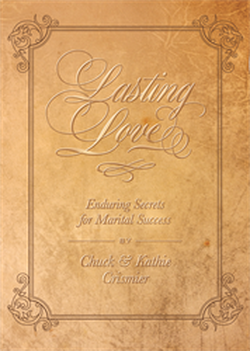
LASTING LOVE can be a dream come true. Yet love requires more than a dream or those loving feelings we so much desire.Lasting Love, Chuck and Kathie Crismier, celebrating their Golden Anniversary, unveil seven enduring secrets that will inspire and strengthen your marriage as it has theirs. COPY and PASTE this link to WATCH the TRAILER: https://www.facebook.com/Save-America-Ministries-204687919570536/videos
Past Episodes
This ministry does not have any series.
Featured Offer
LASTING LOVE can be a dream come true. Yet love requires more than a dream or those loving feelings we so much desire.Lasting Love, Chuck and Kathie Crismier, celebrating their Golden Anniversary, unveil seven enduring secrets that will inspire and strengthen your marriage as it has theirs. COPY and PASTE this link to WATCH the TRAILER: https://www.facebook.com/Save-America-Ministries-204687919570536/videos
About Save America Ministries
About Chuck Crismier
Contact Save America Ministries with Chuck Crismier
crismier@saveus.org
http://www.saveus.org/
Save America Ministries
P.O. Box 70879