
RAGE AND THE REPUBLIC


Is revolution repeating itself?
w/ Jonathan Turley
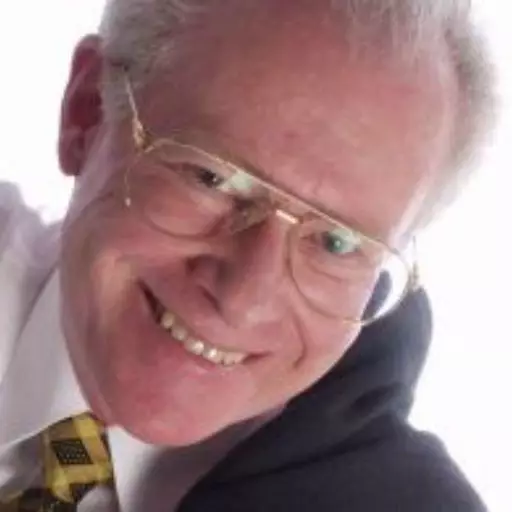
Chuck Crismier: It was the best of times, it was the worst of times, declared the famous Charles Dickens in his book, "A Tale of Two Cities." I remember reading that book when I was sixteen years of age and have never forgotten it since. I've also reread it and found that what happened in the French Revolution is very much characteristic of, well, maybe even our times.
Some will take a look at the French Revolution that occurred after ours and say, well, the French Revolution is the one that was the worst of times, and the American Revolution was the best of times. Could the best of times become the worst of times? In other words, can we trust revolutions? Because they all seem to come from some sort of pent-up rage.
Well, today on Viewpoint, we're going to be talking about this in a very unique way with Jonathan Turley. Jonathan Turley is, as many of you may know, a very well-known attorney, a constitutional law professor, and he has also appeared so many times on television as an analyst and a litigator. He just has been around the world of legalism or the legalities of life like perhaps very few others, except his counterpart, maybe Mr. Dershowitz.
So, here today on Viewpoint, Jonathan Turley is joining us with his tremendous book, "Rage and the Republic." The moment I saw the cover of this book, I knew we had to do this conversation. And so I placed it squarely in the face of my producer and I said, this is a must-set. It took us several months in order to accomplish this, but Jonathan Turley is joining us here live on Viewpoint today to talk about this amazing book, "Rage and the Republic," that quite frankly blends history and, yes, indeed, not only the times of the revolution but our times together. And that's why we talk about it here today on Viewpoint, because that rage is boiling again.
That rage is boiling again. Just take a look at what's been happening over the past decade or more here in the good old United States of America. When I was ten years old, I was a consummate patriot. I loved the flag. I knew every single patriotic song of the country and still remember them. We talk about them. And as a result of that, I wrote the book, "Renewing the Soul of America," back in 2002.
But how do you do that? Whatever happened to the soul of America? Did the soul of America have anything to do with the rage that birthed the French Revolution and the American Revolution? And when one person said it's all about giving glory to God, and another, Thomas Paine, says, well, he's just kind of a consummate atheist and said it's all about rage and it's all about accomplishing some measure of freedom, well, what is a revolution about? What happened with the American Revolution and where are we going today? Jonathan Turley joining us here live on the program today. Jonathan, it's so good to have you.
Jonathan Turley: Thank you, Chuck. It's terrific to be with you.
Chuck Crismier: Well, as I said just before you came on with us, I have greatly appreciated your commentary over the years. I believe that you have brought a measure of consummate reason to otherwise what seems often times to be the rage that lurks underneath the surface of our discussions. When we think about the matter of law, most people, I think, think, well, the law is the law is the law. And therefore, what's the big problem? If the law is the law, why is everybody arguing? What's this whole business about Con Law or Constitutional Law? Why don't we just have the law is the law is the law?
Well, what people don't realize is we have been living through, since the early 1800s, a whole new realm of legal instruction called case law, which I think was sort of the evolutionary aftermath of Darwinism that brought about a whole new way of looking at the law, that it was developing, that it was constantly changing, and that rather the Constitution being the Constitution, we were going to have courts and men tell us what the law really was. And it continues to be said to this very day, so that even a Supreme Court can turn over its own law, i.e., the Roe v. Wade, and declare its own constitutional finding unconstitutional. How can we understand this kind of constitutional law?
Jonathan Turley: Well, the Constitution itself has to be interpreted, and the Supreme Court changes, and those interpretations can change with them. I don't believe that the Constitution itself changes. In regard to Roe v. Wade, the Supreme Court had divided since Roe v. Wade sharply, often five to four, on the lingering precedent from Roe v. Wade. In fact, Roe itself effectively died with a case called Casey and was reframed. But once again, the Court remained highly divided. And with the emergence of a conservative majority with the Trump appointees, they finally, in Dobbs, said that no, we were wrong, we don't find this right in the Constitution.
But what's really driving a lot of the rage today is many people who feel that they're not getting what they should get from the Court or from the system. And so you have Democratic leaders, including Harris and Buttigieg, who are saying we should pack the Court. You have the DSA, or Democratic Socialists of America, saying that we should get rid of the Court. These are all familiar voices.
Chuck Crismier: Well, Barack Obama didn't think that the Constitution should stand as it was. He said it was just the opposite of the way it should be. We should give all the rights to the government and just reserve a few to the people.
Jonathan Turley: Well, I think that is certainly a popular view. And many law professors today, there are very few conservative or libertarian law professors left, but many of them believe in this concept of a living constitution, that it is what we say it is. And that creates a very dangerous fluidity.
Chuck Crismier: So in other words, the law is what the judge says it is, no matter what the Constitution might say.
Jonathan Turley: Well, it can boil down to that. And the question that many of us raise in response is, what happens then to the core principles? As I say in "Rage and the Republic," the United States Revolution was the world's first Enlightenment Revolution. And it was based first and foremost on this belief that our rights come not from the government but from God. It was based on writers like John Locke, who believed that even in the state of nature, people have rights, rights that made them fully human. And so that revolutionary concept became the basis of the American Revolution.
And that's what's in danger if you allow the Constitution to become so fluid. And really, what "Rage and the Republic" is about is revolutions, how they begin and more importantly, how they end. Most revolutions end badly. And the Framers were aware of that. They were trying to beat the hand of history. They had seen how democracies had devoured themselves. They didn't want an Athenian democracy, which was a failure ultimately. It lasted relatively for a short time, but it ended up in tyranny.
Chuck Crismier: All right, so the Framers then saw democracy as, yes, kind of like the best of governments but the absolute worst. The tyranny of the people could result from that, and we need to pick up from there after this break. We'll be right with you. Thanks so much, Jonathan Turley, for joining us. We'll be right back.
Once upon a time, children could pray and read their Bibles in school. Divorces were practically unknown as was child abuse. In our once great America, virginity and chastity were popular virtues, and homosexuality was an abomination. So what happened in just one generation? Hi, I'm Chuck Crismier, and I urge you to join me daily on Viewpoint where we discuss the most challenging issues touching our hearts and homes. Could America's moral slide relate to the Fourth Commandment? Listen to Viewpoint on this radio station or anytime at saveus.org.
Our democracy, our democracy, our democracy. We hear that from politicians on both the right and the left. What are they talking about? Do we have a democracy? And if so, are we using that so-called democracy to actually foster and foment a new rage that would bring about a new revolution? All of that today here on Viewpoint with our special guest, Jonathan Turley. I consider it a special treat to have Jonathan here, a consummate lawyer respected on all sides of the legal profession, I think. His book, "Rage and the Republic," which is going to be yours, friends. It's a hardbound book, well, well worth your getting a copy of this book. It's a thirty-one dollar book, yours for a gift of twenty-four dollars to Save America Ministries. It's on our website saveus.org, saveus.org. You can give us a call at 1-800-SAVE-USA, that's 1-800-SAVE-USA, or write to us at Save America Ministries, P.O. Box 70879, Richmond, Virginia 23255. Writing a check and six dollars for postage and handling.
All right, Jonathan, this cry of democracy, democracy, democracy. Help us to understand what the viewpoint of the political Framers of the country were at the time of the Revolution.
Jonathan Turley: Chuck, the Framers, particularly James Madison, were great students of history. And they saw a pattern emerging where democracies became what Benjamin Rush referred to as mobocracy. That is, if you allow just government by popular will, it can become a tyranny of the majority. And so they wanted to avoid that by creating a special Republic that could handle the pressures of a democracy, to essentially channel those pressures into a legislative process, to be an engine for change but while protecting the system itself.
Chuck Crismier: And that's where checks and balances came in, didn't they?
Jonathan Turley: Yes, they did. And so what's fascinating, what I talk about in the book, is the first half of the book compares the French and American Revolutions. And the French rejected all of that. They were arguing for many of the things people are arguing for today. In fact, I talk about the rise of socialism in the book and how these are the same voices. That is, they argued, for example, that they wanted unicameralism, or a single-house Congress. They wanted to make courts dependent to the will of the people. They wanted wealth taxes. They wanted many of the things that are part of the agenda today, particularly with the DSA. And so France embraced that, and so while our Revolution became the world's most stable democracy and longest democracy in history, France became known as the Terror, and tens of thousands died as a result and ultimately, and the Framers were proven correct, ended up in tyranny. It ended up with Napoleon.
So what I ask in the book is what can we learn from that? As we essentially found that secret sauce, we found that perfect balance in a Republic. And so it's really breathtaking that on our 250th anniversary, you have many establishment figures today calling for the removal or radical changing of our institutions. You have professors and deans calling for us to trash the Constitution. The Dean of Berkeley Law School saying that no constitution lasts forever and that radical change is needed. Those are the same voices that I'm talking about, those are the new Jacobins.
Chuck Crismier: Yeah, I was just going to say we've got the Jacobins among us, straight out of revolutionary France. And I see the French Revolution, I've talked about this for many years on this program. We've been on the air now thirty-one years, Jonathan, confronting the deepest issues of America's heart and home from God's eternal perspective. That's our viewpoint here. And until we regain a mixture of the perspective of the spiritual founders of the country that ultimately echoed down 150 some years later to the political founders of the country, I think we're doomed to head straight into the arms of revolutionary France.
Jonathan Turley: Chuck, you're very right about that because that is in fact the pattern of history. That is why when I talk about in the book how fascinated Europe was with our Revolution, there was a French writer I quote who wrote a book, he had spent time here during the Revolution, and he wrote a very popular book in France and one question stood out for me. And that was, he asked, "What then is this American?" And they wanted to know, they couldn't understand how people that had nothing in common with each other, no connection to the land, no calcified institutions, no class structure, could come together at one point on the globe and create the world's first Enlightenment Revolution. They felt that we were like a new species.
Chuck Crismier: Well, it was kind of that way because it was rooted originally much deeper back in 1620, 1630. I mean, it was a godly lawyer like you and I, John Winthrop, who before he unloaded four boatloads of Puritans penned a constitution for the Massachusetts Bay Colony called "A Model of Christian Charity." And so profound was that statement as a substitute constitution because they were outside the Virginia contract, that some historians have said it was the most profound and clearest statement of the American vision ever penned. So that echoed on down to the time of the American Revolution. And I think perhaps we could say it helped to temper the otherwise revolutionary spirit that came out of France to keep us on board with a more godly version and restrained version of revolution.
Jonathan Turley: Well, Chuck, I am actually in the minority, sometimes I feel like I'm a minority of one in the teaching academy because I believe strongly in natural rights. And I believe that this country was created on the foundation of natural rights, on Lockean principles. And that's something that a lot of law professors currently reject. Even senators, I wrote a column not long ago that was highly critical of Senator Kaine from Virginia, who attacked a witness because the witness said he believed in natural rights came from God. And he told his witness, you're basically like an Iranian mullah, you're a religious extremist. And I wrote a column saying, what on earth are you talking about? This is the Senator from Virginia. And I said, what you just attacked this witness for is the very foundation of the American democracy. The Framers were deeply religious, and they believed in this core principle that these rights came from God. And that's one of the reasons when you look at this sort of fluidity that law professors have today for the Constitution, is that they subject rights that didn't come from the government to constant manipulation by the government. That's not what the Framers thought. The Framers felt that we were fully formed in the state of nature, and part of that were rights given to us by God.
Chuck Crismier: But that whole concept, the problem is not the rights concept, the problem is the word "God." That's what's infected the current legal voices out there and the political voices out there, because they're like the Thomas Paines of the Revolution. They are godless people, and they despise the idea of God having authority because they want to be an authority. So the foundation of the revolutionary spirit today is the same as it was in the French Revolution: down with God.
Jonathan Turley: Yeah, I think there is, it's very interesting that I talk about in "Rage and the Republic," the first group that the Jacobins attacked were of course the aristocrats. The second group was the clergy. And the Jacobins hated the clergy, hated organized religion or religion of any kind, and they attacked the clerics of the time. There were very brave religious figures who stood up to them and were executed. But there's a reason for it, because the French Revolution was based on the writings of Rousseau. And Rousseau believed in what he called the general will. He believed that you didn't have to worry about all this nonsense the Americans have in their Constitution, he didn't say that but the Jacobins did, but he basically said you don't need any protections because people are naturally good and if you just let them have their general will, then government will be good. It was just an incredibly naive view.
Chuck Crismier: Well, not only was it a naive view, it was at total contrary to everything expressed in the Scriptures, the Bible, which was the foundation of the American Republic before its political foundation. And so when you look at that, you see we are in a radically revolutionary spirit at this very moment, aren't we?
Jonathan Turley: Yes, and in fact, I talk about in "Rage and the Republic," one of the figures that you're very familiar with, which is Mayhew, who before the Revolution, this minister, basically destroyed the argument of the Crown. Because the argument of the Crown was that the Bible required you, a citizen, to give your fealty to the King absolutely. And it was Mayhew who gave a famous sermon and said that's wrong because God gave us rights. They came from him, so if the King takes those rights away, he cannot be an instrument of God.
Chuck Crismier: Well, it was foundational, that was foundational upon the words of the Apostle Paul in Romans chapter thirteen dealing with the role of a Christian in government. But there, the Apostle Paul said that the government was to be a servant or a minister to us for good and to punish evil. But the question then arises, what if the government is there not to be a minister of good but a minister of evil? Then what are the people to do? And I think that's the great conundrum that we all face even this very day and that they faced at the time of the Revolution.
Jonathan Turley: Indeed, in fact, Reverend Mayhew focused on Romans 13 because that was most commonly invoked by loyalists to say you're not just a traitor, you're violating the will of God. But it comes back to that, this idea of natural rights, that our government is there to protect natural rights. And people, it's funny because law professors often downplay the Declaration, they prefer the Constitution. And I'm a Madisonian scholar, so I should be talking up the Constitution. But in the book, I say that's mistaken, that it was the Declaration of Independence that defined us as a people. It was the Constitution where Madison created a system to achieve what had been promised in the Declaration. And so Madison believed entirely in what the Declaration meant about natural rights. He wanted to create a system where they can be protected from the tyranny of the majority. And so when you see, one of the things I ask in the second half of the book is whether this unique Republic can survive in the 21st century. Can it survive us? And it comes down ultimately, not just to answering the people today calling for the destruction of our institutions, it comes down to whether we can answer that Frenchman's question: "What then is this American?" Who were we then, and who are we now?
Chuck Crismier: Exactly. That is a very, very profound question. And one of the things that I find myself doing, now your work is primarily within the realm of the law as people conceive a lawyer. I feel that God called me to leave the practice of law at the height of my career to plead his cause in the land as a voice to the church primarily and declaring vision for the nation, America's greatest crisis hour. So we're dealing with two aspects, two sides of the very same coin. And I feel like I'm pleading the cause of a lifetime to a jury of my peers. And I really do, and it's like paddling a canoe straight up Niagara Falls, because the church itself in our country, whether you talk Protestant, Catholic, liberal, evangelical, fundamentalist, Word Faith, all of these actually are having within themselves the same spirit of the revolution that we're talking about. It's not just political, it's spiritual, it's deep in the roots of human beings that are not being governed by God but want to be governed by man.
Jonathan Turley: Well, there is indeed an overlap. In the book, I refer to this as a crisis of faith. And it is a crisis of faith. We've lost a faith in who we are and what we represent. We're going to be facing some of the greatest challenges in our history in the 21st century. I talk in the book about the effect of AI and robotics and how we are facing very significant job loss. We have to keep in mind is that we have a system that was designed for these periods. We have a system that can thrive in this century as long as we protect it from change.
Chuck Crismier: If the minds and hearts of the people are such that they are in favor of those principles that were foundational. But when they have abandoned those principles and are seeking to be gods in their own right, then we're in deep trouble. And I sense that's why we're in such deep trouble today. We'll be right back after this break with our special guest, Jonathan Turley. Friends, you've got to get a copy of this book, "Rage and the Republic." There's never been a book like it. It is a classic for our time. Twenty-four dollars will put this hardbound book in your hands. It's on our website saveus.org, call us 1-800-SAVE-USA.
There is so much more about Chuck Crismier and Save America Ministries on our website saveus.org. For example, under the Marriage section, God has marriage on his mind. Chuck has some great resources to strengthen your marriage. First off, a fact sheet on the state of the marital union, a fact sheet on the state of ministry, marriage, and morals. saveus.org. Marriage, divorce, and remarriage: what does the Bible really teach about this? Find all of this at saveus.org. Also, a letter to pastors, the Hosea Project, saveus.org, and many more resources to strengthen your marriage. It's all on Chuck's website saveus.org. Again, you can listen to Chuck's Viewpoint broadcasts live and archived. Save America Ministries website at saveus.org.
Welcome back to Viewpoint, I'm Chuck Crismier. Sam Adams, relative to John Adams and John Quincy Adams, was deemed to be the father of the American Revolution. And Thomas Paine was deemed to be the voice of the American Revolution in one sense. They were on opposite sides of the very same coin. Thomas Paine was not a godly man. He was, shall we say, a revolutionary at heart. He came from France and decided he was going to impose a lot of what he saw there as a good thing upon America, and he stirred up a lot of people with his book, "Common Sense." Well, whether it was common sense or not, it made sense to a lot of people. But Sam Adams said the right to freedom being the gift of God Almighty, the rights of the colonists as Christians may be best understood by reading and carefully studying the institution of the Great Lawgiver and head of the Christian Church, which are to be found clearly written and promulgated in the New Testament. He went on to say at the signing of the Declaration of Independence, "We have this day restored the Sovereign to whom all men ought to be obedient. He reigns in heaven and from the rising to the setting of the sun, let his kingdom come." But the opposite view of that is that the people are sovereign, not God. When the people replace God, what happens, Jonathan?
Jonathan Turley: Well, it's a very interesting dichotomy. I actually in "Rage and the Republic" draw a dichotomy between Paine and Madison in the same way. I spend a lot of time talking about Paine because he's endlessly interesting. His religious views are very difficult to figure out as I mention in the book. But Paine was the voice of righteous rage. And the interesting thing that I talk about Paine is that Paine had failed at everything in his life. He had been fired from every job he ever had, every business he created ended in bankruptcy, his two marriages were terrible tragedies. And he ended up in front of a man in London, just a pile of smoking human wreckage. Nobody liked him, nobody thought he would amount to much except this one man, and that was Benjamin Franklin. And Franklin paid for him to go to the United States. That was two years before the Declaration of Independence. Within two years, he would be known as the penman of the American Revolution.
But we needed both Paine and Madison. Madison was the voice of pious logic to his righteous rage. Paine knew what it would take to move a people to revolution. It was Madison that knew what it would take to move a revolution to a Republic. And we needed them both. We needed all these voices. That's where we were so blessed to have this collection of minds at this time at that place. That's something that the French didn't have. They ended up in the National Assembly, they didn't have that time to sit in Philadelphia and explore different permutations of a Republic. And Paine came to understand that Madison was right. It came darn near to killing him. Paine had the Jacobins at hello. I mean, he wanted direct democracy, he wanted the people's will, but he quickly realized that this was a mobocracy.
Chuck Crismier: Well, it took down another lawyer who was the head of the whole movement there in France, Robespierre, whom they declared Messiah and the next day they cut off his head.
Jonathan Turley: Yeah, and the thing is, what I say in the book about the new Jacobins is that I've had debates with law professors who don't like the fact that I call them new Jacobins, as you might imagine. And but I said, you know what, if you read Robespierre's writings at the beginning of the Jacobin movement, you'd think he was a Yale lawyer. Exactly. He talked about due process and all of these issues. Within a couple of years, he would be declaring terror is virtue. So it can have this corrosive impact when you untether yourself from these core beliefs in natural rights.
Chuck Crismier: All right, so that brings us to a situation where we really need to articulate as much as possible how we resemble the times that brought forth the rage of the French Revolution and the American Revolution. We've been talking about why they were different, the foundations were different, the viewpoints were different. And of course we say here on this program, because we're called Viewpoint, that viewpoint always determines destiny. There are no neutral viewpoints ever in the world. Every viewpoint determines destiny in some way. So when you have a fellow by the name of Kaine, a United States Senator from Virginia, voicing the kind of things that he has done, you find that that kind of viewpoint is creating destiny.
And indeed, I happen to have moved from Southern California thirty-two years ago to Richmond, Virginia, the former capital of the Confederacy. And when we moved here, Jonathan, the spirit of this state and this city was radically different. We have become, we have watched the spirit of the French Revolution move in rapidly into this commonwealth. It's terrifying to see.
Jonathan Turley: Well indeed, what we're seeing in the rise of this radical movement is a lack of faith in every one of our institutions and values, this idea that we need to just impose the will of the people. Those are the voices of the Jacobins. That's what the Framers rejected. That's the voice you hear in Senator Kaine and others. And it is a real question whether we can answer that Frenchman's question today. Who is an American? What does it mean to be an American? What is a democratic republic? When half of the country now, the blue states, reject the whole idea of a republic and claim it's just a democracy.
That's right. And the thing is, look, these are revolutionary times. But we remain a revolutionary people. We have something to offer the world as we did then, this idea that we get our rights not from the government but from God, that we get our rights from being human beings. That remains an incredibly revolutionary concept. But what we have is a system that protects those rights and zealously protects them in a way that I think enrages many on the left. I was speaking about this book in Prague and I had an EU member say, the book was just coming out, and said, we hear that your book "Rage and the Republic" says that the United States could do well in the 21st century. I'm a little uncertain whether you think the EU can do well. And I said, I'm shocked by that because I thought I was clear. I don't feel the EU will survive.
And the reason is that if the first half of the book is accurate, then of course the EU will collapse because it has burned every one of the institutions and the values that led to the success of the American Republic. And I told that member, quite frankly, I'm pretty agnostic as to whether you survive or not. But what worries me is that you have no idea what will follow you. Exactly. And history shows that when giant governments like yours collapse, what follows is tyranny. And that could threaten my country, that could threaten the world.
Chuck Crismier: That brings up a whole other issue which I think you speak to somewhat in your book, and that is the spirit of the French Revolution actually had a vision of what should we say, a completely new world order. And it would be a world governed exclusively by the un-fettered power of democracy and the rule of the people. Well, that could only happen when all authority collapses, when all authority is rejected, especially when God's authority is rejected. So now you have nothing less. The only thing left is for men to become god. And when men become god, they're not angels. And if men were angels, we wouldn't need any laws, would we? So they're not angels, and so you have nothing but violence, you have nothing but massive revolution. And if Europe were to collapse in that way and its infective power were to take down say the entire Western world, which it is, that is New Zealand, Australia, all of the UK, and now Canada and the United States, imagine what that conflagration would do to the spirit of the world. The men would cry out for another French Revolution and a dictator, wouldn't they?
Jonathan Turley: Yes, and that's part of the reason that people like Senator Kaine are so mistaken in that there is obviously a growing movement against faith in terms of religion and also faith in the constitutional system. But they don't understand is that the United States Constitution is designed to protect people's faith generally. So it doesn't impose faith, it protects faith. Exactly. And if you destroy that system, if you take it apart, it exposes everyone's faith to the retaliation and abuse of the government. We've seen that around the world. And at this very time, with the world in such risk, we can't afford to lose the United States. I was in Berlin talking at a world forum about free speech, and when I walked into that forum, there was this huge banner in Berlin near the Brandenburg Gate saying, "A New World Order based on European values." And I stood there and I just trembled at the thought of it.
Chuck Crismier: That's the spirit of it, Jonathan.
Jonathan Turley: Right. And God protect us from that fate because the Europeans have really demolished all of the institutions, the principles that were the basis of our own Republic. And what they are creating is a world government based on this all-knowing bureaucracy in Brussels.
Chuck Crismier: Yeah, well, to give a classic illustration that goes to our unique role as lawyers, I know you're familiar with the case of the Member of Parliament, the Finnish Member of Parliament, a woman who's been there for a very long time and has been a loyal and faithful and recognized servant there in Finland. And yet she has been brought to task by the Finnish government and charged three different times with crimes just because she put, as I recall, on a Facebook point and then also in a little private memorandum her opposition to homosexuality as contrary to God, contrary to the Bible. And so the Finnish government came down upon her and she lost their case twice, and then they came after even a third time and finally it went to the Supreme Court and they found, well, we can't get you on this one, but because you failed to mention the word "God" in this one thing you wrote, you can't claim religious exemption, therefore we're going to convict you. That's the spirit of Europe today. We'll be right back.
Have you ever considered what the early church was like? Many people are developing a heart longing for a greater fulfillment in our practices as Christians. A recent study showed 53,000 people a week are leaving the back door of America's churches in frustration. What is going on? Why has there not been even a one percent gain among followers of Christ in the last 25 years? Could it be that God is seeking to restore first century Christianity for the 21st century? Jesus said, "I'll build my church." Is Christ by his spirit stirring to prepare the church for the 21st century? The early church prayed together and broke bread from house to house. They were family, and it was said by all who observed, "Behold how they love one another." Incredible, but the same can be found right now. Go to saveus.org and click Cell Church. We can revive first century Christianity for the 21st century. It's about people, not programs. It's about a body, not a building. That's saveus.org, click Cell Church.
Welcome back to Viewpoint, I'm Chuck Crismier. Sam Adams, relative to John Adams and John Quincy Adams, was deemed to be the father of the American Revolution. And Thomas Paine was deemed to be the voice of the American Revolution in one sense. They were on opposite sides of the very same coin. Jonathan Paine was not a godly man. He was, shall we say, a revolutionary at heart. He came from France and decided he was going to impose a lot of what he saw there as a good thing upon America, and he stirred up a lot of people with his book, "Common Sense." Well, whether it was common sense or not, it made sense to a lot of people. But Sam Adams said the right to freedom being the gift of God Almighty, the rights of the colonists as Christians may be best understood by reading and carefully studying the institution of the Great Lawgiver and head of the Christian Church, which are to be found clearly written and promulgated in the New Testament. He went on to say at the signing of the Declaration of Independence, "We have this day restored the Sovereign to whom all men ought to be obedient. He reigns in heaven and from the rising to the setting of the sun, let his kingdom come." But the opposite view of that is that the people are sovereign, not God. When the people replace God, what happens, Jonathan?
Jonathan Turley: Well, it's a very interesting dichotomy. I actually in "Rage and the Republic" draw a dichotomy between Paine and Madison in the same way. I spend a lot of time talking about Paine because he's endlessly interesting. His religious views are very difficult to figure out as I mention in the book. But Paine was the voice of righteous rage. And the interesting thing that I talk about Paine is that Paine had failed at everything in his life. He had been fired from every job he ever had, every business he created ended in bankruptcy, his two marriages were terrible tragedies. And he ended up in front of a man in London, just a pile of smoking human wreckage. Nobody liked him, nobody thought he would amount to much except this one man, and that was Benjamin Franklin. And Franklin paid for him to go to the United States. That was two years before the Declaration of Independence. Within two years, he would be known as the penman of the American Revolution.
But we needed both Paine and Madison. Madison was the voice of pious logic to his righteous rage. Paine knew what it would take to move a people to revolution. It was Madison that knew what it would take to move a revolution to a Republic. And we needed them both. We needed all these voices. That's where we were so blessed to have this collection of minds at this time at that place. That's something that the French didn't have. They ended up in the National Assembly, they didn't have that time to sit in Philadelphia and explore different permutations of a Republic. And Paine came to understand that Madison was right. It came darn near to killing him. Paine had the Jacobins at hello. I mean, he wanted direct democracy, he wanted the people's will, but he quickly realized that this was a mobocracy.
Chuck Crismier: Well, it took down another lawyer who was the head of the whole movement there in France, Robespierre, whom they declared Messiah and the next day they cut off his head.
Jonathan Turley: Yeah, and the thing is, what I say in the book about the new Jacobins is that I've had debates with law professors who don't like the fact that I call them new Jacobins, as you might imagine. And but I said, you know what, if you read Robespierre's writings at the beginning of the Jacobin movement, you'd think he was a Yale lawyer. Exactly. He talked about due process and all of these issues. Within a couple of years, he would be declaring terror is virtue. So it can have this corrosive impact when you untether yourself from these core beliefs in natural rights.
Chuck Crismier: All right, so that brings us to a situation where we really need to articulate as much as possible how we resemble the times that brought forth the rage of the French Revolution and the American Revolution. We've been talking about why they were different, the foundations were different, the viewpoints were different. And of course we say here on this program, because we're called Viewpoint, that viewpoint always determines destiny. There are no neutral viewpoints ever in the world. Every viewpoint determines destiny in some way. So when you have a fellow by the name of Kaine, a United States Senator from Virginia, voicing the kind of things that he has done, you find that that kind of viewpoint is creating destiny. And indeed, I happen to have moved from Southern California thirty-two years ago to Richmond, Virginia, the former capital of the Confederacy. And when we moved here, Jonathan, the spirit of this state and this city was radically different. We have become, we have watched the spirit of the French Revolution move in rapidly into this commonwealth. It's terrifying to see.
Jonathan Turley: Well indeed, what we're seeing in the rise of this radical movement is a lack of faith in every one of our institutions and values, this idea that we need to just impose the will of the people. Those are the voices of the Jacobins. That's what the Framers rejected. That's the voice you hear in Senator Kaine and others. And it is a real question whether we can answer that Frenchman's question today. Who is an American? What does it mean to be an American? What is a democratic republic? When half of the country now, the blue states, reject the whole idea of a republic and claim it's just a democracy.
Chuck Crismier: That's right. And the thing is, look, these are revolutionary times. But we remain a revolutionary people. We have something to offer the world as we did then, this idea that we get our rights not from the government but from God, that we get our rights from being human beings. That remains an incredibly revolutionary concept. But what we have is a system that protects those rights and zealously protects them in a way that I think enrages many on the left. I was speaking about this book in Prague and I had an EU member say, the book was just coming out, and said, we hear that your book "Rage and the Republic" says that the United States could do well in the 21st century. I'm a little uncertain whether you think the EU can do well. And I said, I'm shocked by that because I thought I was clear. I don't feel the EU will survive.
And the reason is that if the first half of the book is accurate, then of course the EU will collapse because it has burned every one of the institutions and the values that led to the success of the American Republic. And I told that member, quite frankly, I'm pretty agnostic as to whether you survive or not. But what worries me is that you have no idea what will follow you. Exactly. And history shows that when giant governments like yours collapse, what follows is tyranny. And that could threaten my country, that could threaten the world.
Chuck Crismier: That brings up a whole other issue which I think you speak to somewhat in your book, and that is the spirit of the French Revolution actually had a vision of what should we say, a completely new world order. And it would be a world governed exclusively by the un-fettered power of democracy and the rule of the people. Well, that could only happen when all authority collapses, when all authority is rejected, especially when God's authority is rejected. So now you have nothing less. The only thing left is for men to become god. And when men become god, they're not angels. And if men were angels, we wouldn't need any laws, would we? So they're not angels, and so you have nothing but violence, you have nothing but massive revolution. And if Europe were to collapse in that way and its infective power were to take down say the entire Western world, which it is, that is New Zealand, Australia, all of the UK, and now Canada and the United States, imagine what that conflagration would do to the spirit of the world. The men would cry out for another French Revolution and a dictator, wouldn't they?
Jonathan Turley: Yes, and that's part of the reason that people like Senator Kaine are so mistaken in that there is obviously a growing movement against faith in terms of religion and also faith in the constitutional system. But they don't understand is that the United States Constitution is designed to protect people's faith generally. So it doesn't impose faith, it protects faith. Exactly. And if you destroy that system, if you take it apart, it exposes everyone's faith to the retaliation and abuse of the government. We've seen that around the world. And at this very time, with the world in such risk, we can't afford to lose the United States. I was in Berlin talking at a world forum about free speech, and when I walked into that forum, there was this huge banner in Berlin near the Brandenburg Gate saying, "A New World Order based on European values." And I stood there and I just trembled at the thought of it.
Chuck Crismier: That's the spirit of it, Jonathan.
Jonathan Turley: Right. And God protect us from that fate because the Europeans have really demolished all of the institutions, the principles that were the basis of our own Republic. And what they are creating is a world government based on this all-knowing bureaucracy in Brussels.
Chuck Crismier: Yeah, well, to give a classic illustration that goes to our unique role as lawyers, I know you're familiar with the case of the Member of Parliament, the Finnish Member of Parliament, a woman who's been there for a very long time and has been a loyal and faithful and recognized servant there in Finland. And yet she has been brought to task by the Finnish government and charged three different times with crimes just because she put, as I recall, on a Facebook point and then also in a little private memorandum her opposition to homosexuality as contrary to God, contrary to the Bible. And so the Finnish government came down upon her and she lost their case twice, and then they came after even a third time and finally it went to the Supreme Court and they found, well, we can't get you on this one, but because you failed to mention the word "God" in this one thing you wrote, you can't claim religious exemption, therefore we're going to convict you. That's the spirit of Europe today. We'll be right back.
The cry in the name of the Republic today is Democratic Socialism, that is the answer. Democratic Socialism, this our cry. And it's coming now increasingly within the Democrat Party. And the voices of that revolution are becoming persuasive. What say you, Jonathan?
Jonathan Turley: Well, we are seeing a radical change in American politics. The DSA now appeals to a majority of Democratic voters, over 50 percent say that they are prepared to vote for a DSA candidate. More Democratic voters now say they have a favorable view of socialism than they do capitalism. And that is a dangerous trend. Because as I say in "Rage and the Republic," capitalism is very much part of the success of this Republic. That is, this is the 250th anniversary not simply of the Declaration of Independence but also the publication of Adam Smith's "Wealth of Nations." And that book was not a huge hit in Great Britain, it was a huge hit here. Because the Framers recognized his economic theory as the perfect companion to their political theory. They believed that you could not be truly free unless you were economically free from the government. And so the rise of socialism and the attacks on capitalism are part of this overall attack upon our core principles and foundations. We are the most prosperous nation on earth, and people come to this country precisely for that reason. Thomas Paine came here to reinvent himself. They come to our country to seek their own individual manifest destiny. And what these people are resisting now is this idea of capitalism to create wealth so that you're not dependent upon the government. But what's notable, Chuck, is that as you probably know, the polls indicate that the voters for these candidates are largely college-educated young people, not the working class. Isn't that fascinating. The working class doesn't hate Elon Musk, they want to be Elon Musk.
Chuck Crismier: So they have been inculcated by the Jacobins in the universities and colleges of America for the past fifty years.
Jonathan Turley: Yes, and the fact is, I talk a lot about higher education in this book and my prior book because we need to get higher education back. There's been a virtual purging of departments. Most departments no longer have a single Republican or Libertarian or Conservative. Most law schools like mine only have a handful. And that's not going to change unless donors and others stop giving money to these universities and.
Chuck Crismier: Why should parents send their kids to these indoctrinating institutions when they know full well what they're going to get? Their children are turning against them.
Jonathan Turley: Well, it is an indoctrination in my view, and it becomes this echo chamber. All they hear about, these people working for Mondami are applying, you know, their Marxism 101 course from Smith College, and they think that Marxism works because that's what they heard from their faculty. And these are people who have no memory of the collapse of socialist systems in the 1970s and '80s. And that's part of the shtick of socialism. They wait for a new generation that doesn't have the memory of the failures of the prior generation, and then they promise free stuff. They promise what Mondami said was the warmth of collectivism, free buses and and state-run stores.
Chuck Crismier: Well, it all sounds so warm and cuddly because this latest two generations actually have never had to bear any responsibility. The last two generations an entitlement generation, so they do believe that they are entitled to get what their parents and their grandparents had to wait years and years and years of hard sweat and labor to get. They think they're entitled to it today, and if I don't get it, somebody's going to pay. And so they take it out politically.
Jonathan Turley: Well, yeah, you have these people that go to boat and they get a degree in resistance literature or social justice and they get out of college and find out nobody really wants that skill set, right? As their employers are not saying, "Oh good, a resistance literature grad. That's going to help us sell plumbing parts." Right. I can hardly wait, they're going to take down my own business. Yeah, so they're shocked that they can't afford lattes and they can't go to Pilates and they're having trouble. So in walks Mondami saying it shouldn't be like this, the government should be here for you. And of course that's a seductive message. It's been seductive throughout history, but it's a grift.
Chuck Crismier: It is very, very seductive. And you know, when I go back to those who were at the very root of the American Revolution, I'm not talking about the Thomas Paines of the world. I'm talking about guys like John Adams, Sam Adams, and so on. I'm looking again at some quotes from Sam Adams. He said, "The general dissolution of principles and manners will more surely overthrow the liberties of America than the whole force of the common enemy. When the people are virtuous, they cannot be subdued, but when they lose their virtue, they will be ready to surrender their liberties to the first external or internal invader. If virtue can be diffused among the people, they will never be enslaved, but this will be their great security. Neither the wisest Constitution nor the wisest laws will secure the liberty and happiness of a people whose manners are universally corrupt." That's what we've become: corrupt. And it's not just corruption in business, it's not just corruption in government, it's corruption in the mind and heart of we the people. And that's why John Adams said our government was made for a moral and religious or Christian people and is wholly inadequate to the government of any other. In other words, the government has to come from within, not from without. And the people today don't understand that.
Jonathan Turley: Well, I think that what you are seeing is a sort of lost generation. One of the things I've been saying in public speeches is that these young people need to look at France and England. What Mondami is saying, what a lot of these DSA candidates are saying, is ripped right out of the campaigns of Mitterrand in France. He destroyed their economy. He had to reverse his measures because the French economy plummeted. In England, a socialist government actually required the IMF to come in and rescue Great Britain like a banana republic because it didn't work. And what's frightening is the new Prime Minister of Great Britain said, "I want to go back to those policies before Thatcher." That's what he was talking about. Those were the socialist policies that destroyed the English economy.
Chuck Crismier: It's amazing. And yet, Jonathan, it has been said and we've quoted it so many times, the only thing we learn from history is that we don't learn from history. And those who don't learn from history are doomed to repeat it. So we're not learning from history, therefore we're doomed to repeat it because we're not actually even teaching true history to our young people for the past fifty years.
Jonathan Turley: No, I think that's right. Someone asked me at a recent speech about the book, what can I do with my kids? They came out of an Ivy League school and they've declared that they're socialist. I said, tell them to go live in New York, because that will be the greatest lesson of their life. They're about to see what socialism means. Eight million people under the dominion of socialism as the marquee of America.
Chuck Crismier: It's unbelievable. Well, let's look at one of the marquees of the Revolution. You have in your book toward the end talking about Thomas Paine, who would go to his grave at seventy-two years of age with a very few remaining friends, and even the kids upon his death wrote a mocking song about him: "Poor Tom Paine, there he lies. Nobody laughs and nobody cries. Where he has gone or how he fares, nobody knows and nobody cares." Why? Because he did not have the true and legitimate spirit of the American Revolution or what it was really about. He tried to import the spirit of the French Revolution into America. Yeah, he stirred up a lot of people, but fortunately there were others on the other side who not only tempered what he said but actually brought about something quite contrary. That's my viewpoint. What's yours?
Jonathan Turley: Well, Paine is incredibly complex, and he ultimately did recognize the failures of the French Revolution towards the end of his life. He was someone who had been unpopular his whole life. He was not popular with the Framers. People like John Adams did not like him. I'm sure they didn't. But what's interesting, but it's sort of interesting that when he came out with "Common Sense," which was done anonymously, people didn't know who wrote it. And Abigail Adams wrote her husband and said, "People think you wrote it." And Adams wrote back to her with a really interesting letter, and he said, "I couldn't have written that book, but I think I know who did." He said, "I met a man named Thomas Paine, and he had genius in his eyes." There was a genius to Thomas Paine, but he was in some ways he was the most revolutionary of the Revolution. He might have been.
Chuck Crismier: So was Satan. He was the most revolutionary of all creation.
Jonathan Turley: Well, I think that Thomas Paine in some ways, you have to I developed a certain affection for him. I quoted him because a historian asked me, "Why did you spend so much time on Thomas Paine?" And all I can remember is I'm a film noir nut, I love to watch film noir movies, and my favorite line of a film noir movie really fits how I feel about Paine. It's when Robert Ryan turns to the ultimate femme fatale Joan Fontaine after she's betrayed him in every man in her life, and he stops at the door and turns around and says, "You know I love you so much, I only wish I liked you." And with Thomas Paine, I sort of feel the same way.
Chuck Crismier: Oh boy. Well, you know what, I like you, Jonathan. I really have. If fellow lawyers can have an affection for a brother lawyer, I have an affection for you as a lawyer. And I really appreciate your spirit. You try to reason in a way that one would expect a lawyer to reason. My focus is obviously you can detect is a bit different, but we're still reasoning together with the people. As the Scripture says, "Come now and let us reason together." And that's what we're trying to do. You wrote the book "Rage and the Republic," the unfinished story of the American Revolution, and you say it's unfinished because the rage is reappearing, right?
Jonathan Turley: It's unfinished because we are in an age of rage, but also perhaps our story will never be finished. Every generation has to write the next chapter. That's why Benjamin Franklin said, "It's your Republic to keep."
Chuck Crismier: If you can keep it. That's the biggest little word in the Bible too, did you know that, Jonathan? If, if, if. Well, listen, you've been around a long time. You've been a professor, you've been representing so many people, you're out in the public. But you have a certain kind of holy boldness and willingness to speak truth into our society. How would you address our listeners today as directly as you felt you possibly could to exhort them in a way that might make a difference?
Jonathan Turley: What I would say is that on this 250th anniversary, we will each have to fulfill Benjamin Franklin's challenge. This is our Republic to keep. And we have to talk to the other side. Rage is a strange thing. It allows you to do things and say things you would not ordinarily say or do. And it's addictive. Especially with the Internet and blogs. That's right. But eventually it burns off. We've had other ages of rage, and they have burned off and we realize, we look in the mirrors of people to realize we've become grotesque. That moment's going to come and we will talk to each other as Americans and perhaps we can answer that question of "What then is this American?" And if we don't, we'll have a one-world order under a revised French Revolution.
Jonathan Turley, thank you so much for joining us here on the program. You're a real friend and blessing, I appreciate it. Friends, the book, it's a thirty-one dollar hardbound book that you don't want to miss. Twenty-four dollars and it's on our website saveus.org, give us a call 1-800-SAVE-USA, write to us at Save America Ministries, P.O. Box 70879, Richmond, Virginia 23255. Add six dollars for postage and handling. Become a partner, friends. You know we don't do commercial advertising on this program because we don't want to be submitted to their power. We rely upon your donations. I hope you understand that. Thanks so much for joining us, become a partner, send those gifts by faith to Save America Ministries. If you believe in the Republic, well, let's do something about it. God bless, be a blessing.
Featured Offer
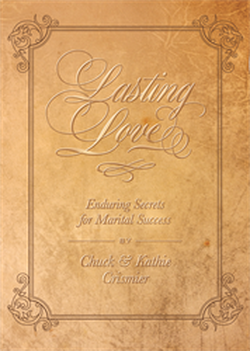
LASTING LOVE can be a dream come true. Yet love requires more than a dream or those loving feelings we so much desire.Lasting Love, Chuck and Kathie Crismier, celebrating their Golden Anniversary, unveil seven enduring secrets that will inspire and strengthen your marriage as it has theirs. COPY and PASTE this link to WATCH the TRAILER: https://www.facebook.com/Save-America-Ministries-204687919570536/videos
Past Episodes
This ministry does not have any series.
Featured Offer
LASTING LOVE can be a dream come true. Yet love requires more than a dream or those loving feelings we so much desire.Lasting Love, Chuck and Kathie Crismier, celebrating their Golden Anniversary, unveil seven enduring secrets that will inspire and strengthen your marriage as it has theirs. COPY and PASTE this link to WATCH the TRAILER: https://www.facebook.com/Save-America-Ministries-204687919570536/videos
About Save America Ministries
About Chuck Crismier
Contact Save America Ministries with Chuck Crismier
crismier@saveus.org
http://www.saveus.org/
Save America Ministries
P.O. Box 70879