
QUANTUM COMPUTING


The Race is ON!!!
w/ Christian Briggs
Chuck Crismier: Who and what will determine who leads the world over the next 50 years? Well, Xi Jinping of China said that by 2050, China will rule the world. That's right, he actually said that. And we'll see what happens. But in the meantime, our special guest today says that the next Cold War is already underway but is being fought on battlefields that most people cannot see or don't recognize as battlefields.
It's being fought in the race to control the technologies that will define the next century. And among those technologies, he says, is quantum computing. Quantum computing has reached a critical transistor moment, says one source. The technology is transitioning from theoretical proof of concept to scaling hardware and solving foundational engineering and error correction challenges that can replace classical supercomputers.
Quantum computing and information is incredibly fragile. Seems like there are a lot of things that are very fragile in our world, including truth. But the demand for quantum engineers and scientists is soaring as universities and research hubs are rushing to train a specialized workforce. Experts agree that quantum will augment, not replace, classical computers.
But it involves such things as cybersecurity because large-scale quantum computers will be able to break many currently used cryptographic algorithms. The push to standardize post-quantum cryptography has become a top priority for government and financial sectors. And it also involves a mix of highly specialized precious metals.
Superconductors, rare earth elements, and the most precious metals include gold and silver for electrical pathways, also many others like niobium or niobium, tantalum. Believe it or not, it sounds like another language, doesn't it? But in fact, these are the things that are being depended upon: ytterbium, erbium, thulium. I don't even have a clue what these things are.
But indeed, these are the things that scientists and engineers are looking at in order to be able to create quantum computing that really works. And it's a war. It's a war that is determining the future of the world. You can call it a hot war, a cold war, or whatever other kind of war you want to call it, but it is a war. And indeed, it is setting the course of the future right now in front of us.
So joining us today on Viewpoint is our special guest, Christian Briggs. He's joined us many times here on the program over the past six months. And it's been a few weeks since he's joined us, but today he's joining us to talk a little bit more in detail concerning this matter of quantum and AI and how they merge, and how it affects actually the moon, or how the moon affects us. Could the future battle for the world actually depend upon the moon? Are we going to be moonstruck? Well, let's find out what Christian Briggs has to say about all this. Good to have you on the program, brother.
Christian Briggs: You too, Chuck. Thanks for having me.
Chuck Crismier: Well, this is amazing stuff. And you start talking about all these precious metals and rare earths and so on. They involve such rare words that our vocabularies are incapable of keeping up with it. How do you keep up with it?
Christian Briggs: I use a dictionary these days to try to pronounce half these words because some of these words are not something we would ever hear in any realm of conversation. This stuff goes far beyond the majority of most understanding because these words are elements that are used in ways that are going to speed up the development of what the Chinese would call the Great Reset or the New World Order in their own minds. But they're definitely critical, very critical.
Chuck Crismier: Well, it involves not just quantum computing but artificial intelligence, AI. We've done a number of programs over the past months and even years concerning AI. There are actually considerable resistance that's growing against AI among the populace. Resistance growing against the data centers. Many of them are being turned down by cities and municipalities around the country, even as many others are embracing them for tax purposes. So how is it if the populace is becoming resistant to AI and the data centers, how are we expected to proceed as Americans fighting this battle for global dominance?
Christian Briggs: That's a long question but a lot of different various caveats. Well, let me try to summarize what we're up against. The Cold War ended in a sense. It was more of a military application. The Cold War was about how many nuclear weapons does Soviet Union have, or China, or Eastern Europe, or Ukraine had tons of them, all these different countries around the world in a period of about 50, almost 50 years, not quite, from as soon as World War II was over all the way through about '91 when the Soviet Union finally kind of gave in. So it's quite some time.
We're facing something far, far greater threat. Now, cybersecurity has been one of the most hottest areas of technology development over the past 30, probably longer than that, even before McAfee became the antivirus king back in the '90s. Cybersecurity has been around for some time. Now, it may have evolved into things today that are so far removed from what the original ways that they used to do it 40 years ago through analog and then finally digital. Now we're in this race for quantum.
And the quantum is really comes right down to one thing. China is using every means possible to undermine the US financial system. And during the program here, we'll talk about what are some of the solutions that President Trump is doing that has been very successful and will continue to be successful. But in the meantime, the cybersecurity war that we're facing are two elements. One, the absolute theft. I mean, I'm going to use different words to try to define just how evil this is, what China has been doing for 50 years.
When they did early covert operations during the Cold War, they would send in spies that would physically take out files out of various agencies in the United States to try to get information on our aerospace, our military, our commercial space from commercial aviation all the way to commercial avionics. They would steal this stuff by the, remember mainframes? You had tapes and you had punch cards. You had all the various early-stage computer systems or technology, and they would steal them in the physical form. Still stealing them today, but they're doing it in the digital format.
And so that has given them some legs up in some elements of knowledge, okay, in some cases a lot of knowledge. In fact, just in the last couple weeks, if you looked at your recently about the last 30 days, there was a mayor of a town in California that had been caught.
Chuck Crismier: Arcadia, California, that was just adjoining Pasadena, where my law office was.
Christian Briggs: Yeah, well, she was caught what, 10, 11 years she was a cooperative Chinese spy. When I say cooperative, they call them cooperation people, people that cooperate with the CCP, and that their allegiance and their alliance will run with the government which is over the country, in this case the government that she came from. She was an undercover spy, bottom line. She was trying to be the female version of James Bond and for 10, 11 years she was successful. She was successful, Chuck. Yes, right under our noses.
Chuck Crismier: Yeah, well, we'll pick up after this after the break, friends. Again, we're talking with Christian Briggs. He is the CEO and founder of bmcham.com. And he'll tell you more about that in just a few moments. And I'm glad that you've joined us. Again, this conversation is always with ever-increasing conviction to talk to transformation. We'll be right back.
Once upon a time, children could pray and read their Bibles in school. Divorces were practically unknown as was child abuse. In our once great America, virginity and chastity were popular virtues and homosexuality was an abomination. So what happened in just one generation?
Hi, I'm Chuck Crismier and I urge you to join me daily on Viewpoint where we discuss the most challenging issues touching our hearts and homes. Could America's moral slide relate to the Fourth Commandment? Listen to Viewpoint on this radio station or anytime at saveus.org.
Bmcham.com. What's that all about, my brother?
Christian Briggs: Well, bmcham.com, we are a precious metals dealer. We specialize in five primary metals: gold, silver, platinum, palladium, and rhodium. Of course, most people wouldn't even understand some of the platinum group metals, but we try to educate them as best we can because they're utilized in such brand-new, well, it's all related to the data centers. You know, they always say it's silver in the wiring, silver in solar panels, silver's everywhere, gold is now the threshold in chips.
Let me, before I even expand more on BMCHAM, of course, I welcome anyone to go to our website and call for free quotes on precious metals. I want to just tell you how important these five precious metals are to the world as we know it and how without them it could not evolve and it would not even be possible to live into a realm of things of which people keep talking about, the new efficiency, the new productivity, the costs low. And I'll pose this question to you, Chuck, and I love this one because it will take you by surprise: Nvidia, world's largest semiconductor chipmaker, CPUs, XPUs, soon going to be QPUs.
And the one thing that I was astonished to find out the total number, you know, I have a pretty good handle on what these chips require in gold content. There's some element of silver, you know, obviously in servers and wiring and a host of things related to all this. But just in the last 12-18 months, how much do you think, I'm going to pose this question to you so your listeners will be wondering as well, how much gold do you think Nvidia, one chipmaker—now, they are probably 40 to 50% of the market in the high-end chips, so we'll give it that. But that's not all the market. But how much gold do you think they bought in 2025, or what's estimated they have purchased?
Chuck Crismier: I don't know, 50 million tons?
Christian Briggs: Not quite. 40 tons of gold.
Chuck Crismier: Wow, I was close.
Christian Briggs: You were darn close. I was shocked. I've had people go, "I don't know, 50 ounces, 100 ounces?" I'm like, close, but not quite.
Chuck Crismier: It's hard to imagine 40 tons of gold. Just one ton of gold would be worth, well, it would be worth almost as much as Elon Musk.
Christian Briggs: Yeah, well, they're buying this gold, some of it in storage and then utilizing it across different types of chips. In 2025, it was one of their largest purchase years. And it was, I'm sorry, I said 40 million tons, excuse me, 40 tons, sorry, excuse me, 40 tons.
Chuck Crismier: Okay, 40 tons. I'm the one who mistaken that, yeah.
Christian Briggs: Yeah, when you said 50 million, I was like, yeah, you were so close. It was 40 tons, sorry. Forget the million. Okay, we're going to walk that one back. But even 40 tons, think about it. Not 40 ounces, not 4,000 ounces, not even 40 pounds, but 40 tons of gold in 2025 was one of their largest purchase years. Why? Because they obviously sold a lot of chips. And this year, they'll probably even sell more chips, so even that much more gold.
And the recyclability of that gold is very limited in those chips because it's very cost-prohibitive to take those things apart to really go in there, at least today it isn't. In five or 10 years from now, we'll probably have the technology to recover some of that gold. But even then, would it still be worth it? Because labor costs go up and things like that.
But when you think of silver, I'm going to give you another example. We're going to produce somewhere between 950 and about 1 billion ounces. Okay, sounds like a lot of silver. In 2026, we'll consume, consume in all applications, minimal as jewelry but everything else anywhere from electric vehicles, solar panels, weaponization, nuclear facilities, all these different reasons why this one element is so in demand. We'll consume 1.25 to 1.35 billion worth of silver.
And what's interesting about gold is most of it's recyclable, except for this new generation technology which is now making it even less easy to recycle, so you have more of a depleting asset within the overall marketplace per year. Number two, silver is extremely challenging to recycle because it's very much cost-prohibitive in the applications of the next generation of technology.
And platinum, palladium, and rhodium, which are all platinum group metals, are being utilized across a gamut of incredible new ways. One of which is, of course, the expansion of catalytic converters in countries that were now just developing clear emissions policies and roadmap. So they're going to have millions and tens of billions, if not billions, of catalytic converters, which obviously takes CO2 and turns that into, you know, good stuff.
Chuck Crismier: Right, so this is why those catalytic converters are so immensely expensive and why they are a prime object of theft throughout our country.
Christian Briggs: No question. Catalytic converters have a lot of platinum and palladium. They are, it is recoverable to an extent, you don't get all of it that was put in there originally, a lot of it does burn off, but there's some measure: 50 bucks, 100 bucks maybe. But very little of it is recycled in the bigger picture.
And then rhodium, of course, it's used in a lot of different ways. But let me tell you the really good things. And what President Trump's doing is that he's at least he's pushing a very strong new energy policy, making us the largest producer of energy. And that's going to be oil, LNG, liquified natural gas. But number three, it's going to be nuclear energy. He's pushing for nuclear energy.
And the beauty is all three of those energy types require all the precious metals we just talked about in some way, shape, or form. And the platinum group metals are extremely important for both military applications but really important in nuclear weapons but nuclear energy. And so I've told people, if you look at where the money is going and how things are going to be run, we don't want to say bad things about the generational change of information transferring into this kind of technology. There are some very good positives and things that people can actually take advantage of and really be a part of.
But again, going back to the original point is this energy or this new technology that delivers information in such speed and accuracy and can lower the cost, it can lower the cost of actually the production of products and services, increase that productivity again by lowering the cost. We're going to have a higher GDP. And China, though, on the other hand, is the one that's trying to stop us from that success. They're trying to undermine us through cybersecurity threats and attacks that have been very successful. And we've wised up to a lot of that here in recent years.
But the biggest transformation, and as I've sent you some really good notes and some things over the last couple days, Chuck, what's really interesting is how Trump is trying to change the direction of those attacks, trying to minimize them, eliminate them, and bring back the supremacy of the United States financial system by what? Making our dollar the number one reserve asset again, maintaining the consistency of the number one transactional asset, which is obviously the dollar over the pound, the euro, or in this case, the yuan, Y-U-A-N for China. And he's doing that. And people say, "What's he doing? He's crazy. He's doing this, he's doing that." He goes, "Yeah, but he's got a plan and it's working."
Chuck Crismier: Well, he has a very unusual way of looking at things, piercing through what others cannot see, will not see, but usually cannot see. He just has a knack, an unusual ability to see things as a businessman and even beyond that, to understand the interconnection between so many of these practical areas. So I have to hand it to him, there are things that trouble me, that when he built a 22-foot statue, gold statue, to himself there, you know, that bothers me. But nonetheless, these other things seem to be very positive. So that leads me back to my initial question. BMC stands for?
Christian Briggs: Well, it doesn't really stand for a whole lot. We just like the three letters because it just sounded kind of cool. There was an old company from years ago that I ran into once and it was a big company. I don't think it's any longer in business, it was in, I forget what it did. But we like BMC Capital Inc. because it just sounded like a cool name and that's our parent company. And then Hard Asset Management is our, is one of our wholly-owned subsidiaries.
Chuck Crismier: Hard Asset Management. And what do you call hard assets? I'm asking simple questions for simple people that are listening today.
Christian Briggs: Sure, well, hard assets can be anything that you can, in our opinion, this is physical, right? You've got precious metals, you've got rare cars, rare coins, rare watches, real estate. Real estate is one of the most fundamental hard assets in existence today. The things of which we're talking about, with not just the precious metals, but the critical things of which the resources, the natural resources of a country. Those are the hardest assets. Those are the assets that have a physical form.
Chuck Crismier: But you don't deal in real estate. You're dealing in precious metals.
Christian Briggs: Correct.
Chuck Crismier: And those include primarily the ones that you spoken of: gold, silver, palladium, platinum, rhodium. Anything else?
Christian Briggs: Those are it. There's erodium, which is extremely rare, but we do get from time to time we'll get people calling in on that. It's a challenge to get it in any kind of quantity, that's for sure.
Chuck Crismier: Yeah, well, it's very expensive to get even the most incremental quantity of that. So the reason you're doing this is what? Other than a business, obviously you have to make money in a business, but what is it that makes your business qualitatively important to people that are listening today?
Christian Briggs: Well, a lot of people don't have some of the resources to be able to get the knowledge or at least the information on some of the companies that are derived in the new generational transformation. I call it going from horse and buggy to rocket ship. We're going from telephones with a rotary dial to Neuralink, which is a brain chip implant that you can put in your head and you can make calls one day and you're going to be able to use it as a way of which to play video games online where you'll not have any kind of physical form.
And so I try to educate people as best we can. The company does the best to try to ensure that people have the opportunity to make investments or to have assets or to acquire assets that are going to do what many people think is, I mean, I don't think we're going to reverse what's happening in the last five years and the AI data centers, AI systems. These aren't going to be reversible policies. These aren't reversible things of which we're seeing happen in front of us.
But knowing that it's going to become a permanent part of the society, the culture, and the way of which we transport, we make phone calls, and transport being transportation, and where we trade our values of money, right? It's all going to be digitalized. It's not going to be physical. Unfortunately. Yeah, I know, unfortunately. We can talk about that here as well. But people can still take a part of this and systematically be a part of it in such a way that could actually increase their overall wealth or at least diversify them in long-term investment opportunities.
Chuck Crismier: Well, some would call these a hedge against inflation. You talk about investing in future wealth. How does that compare with a hedge against inflation?
Christian Briggs: Inflation is kind of a byproduct of, I don't want to say bad policy every time, but it kind of is. I mean, the people of a country do not create inflation. It's the select individuals that are in power in places of authority like the power right there, they call it the brain trust. If you will, sometimes they're working behind the scenes trying to increase the credit or the amount of cash in society, right? In circulation for whatever the reasons are.
The metals we're talking about now can hedge that, I mean, and they will, they do. We've seen it. Look at gold in the last five years. It's certainly done well. Silver has done well, platinum has done well. But the really the vital critical reasons why you want to buy these now is the fundamentals. If inflation was to taper off, which it certainly will at some point, oil will come back down.
Chuck Crismier: It just increased to 4. something from 3. something, so it's increasing a little bit. It goes back and forth.
Christian Briggs: It does. But at the end of the day, we're going to get it down. What President Trump has done with Venezuela is to repatriate a lot of the oil that was being sold directly from Venezuela to China at a hugely reduced rate, helping their economy significantly, keep their inflation prices low because we've seen what you just said resulted from higher oil prices, which affected everything across the board. I don't care what it is, oil touches everything one way or another. You can find it directly and indirectly.
By increasing our ability to pump more oil at the pump and to be able to spearhead new opportunities to sell a lot of our energy, export it to places the Middle East was doing, we become now a bigger exporter of energy than any time in history. We're the largest, if not the largest single provider, or at least certainly where energy independence is now gone far beyond even what President Trump's first term was trying to accomplish.
Chuck Crismier: Even Vladimir Putin admitted that a few years ago.
Christian Briggs: Oh yeah, listen, there's a lot of things you can agree with Trump and there's a lot of things it's like, "Man, what was he talking about, what's he saying here?" you know. But you can't dismiss the fiscal policies regardless of sometimes intermediate little opinions of certain things he may do.
The overall effect of what he's doing between Venezuela and Iran to counterbalance the effective security threat, the national security threat that China is against us, especially with their BRICS nations coalition, he's doing this with very little allies. We're basically the one-man band trying to be the orchestra keeping everybody dancing and happy. At the same time, you've got these people over here trying to unplug our machinery that keeps the machine going.
And that's what China's trying to do. They're trying to undermine the entire United States financial system systematically, slow-boating it, long game. This is how they operate. And he's had to go in there and take 25 years of really crappy foreign policy between Obama and well, even Clinton with NAFTA. That was a mess. We lost six million manufacturing jobs. But then Obama comes in and does a disaster. He did it willfully. We know this. And then Trump in the first term tried to reunite all the policies that would put us back on, I would say, the number one, the gold. And then he gets distracted with 17,000 different impeachment proceedings. No wonder. Yeah, really.
Chuck Crismier: Okay, so when we get back, I would like for you just to briefly speak for the average person listening today. When you say that gold and silver have done so well over the past five years, in the last two months, not so well. Very much not so well. Why? We'll be right back.
There is so much more about Chuck Crismier and Save America Ministries on our website, saveus.org. For example, under the marriage section, God has marriage on His mind. Chuck has some great resources to strengthen your marriage. First off, a factsheet on the state of the marital union, a factsheet on the state of ministry, marriage, and morals, saveus.org. Marriage, divorce, and remarriage. What does the Bible really teach about this? Find all of this at saveus.org. Also, a letter to pastors, the Hosea Project, saveus.org, and many more resources to strengthen your marriage. It's all on Chuck's website, saveus.org. Again, you can listen to Chuck's Viewpoint broadcast live and archived. Save America Ministries website at saveus.org.
Welcome back to Viewpoint. I'm Chuck Crismier. We're talking today with Christian Briggs, who is the CEO of bmcham.com. Capital Hard Asset Management. He's joined us, as you can see, he's very, very knowledgeable about what's happening in the world, why it's happening, so as to undergird an understanding for all of us, regardless of whether or not you do anything with precious metals, you can understand the direction of our country and why it's going that way.
So the question that I held out to him before the break was: since he said and since you said, Christian, that gold and silver over the past five years had done very, very well, over the past two months, not so much. In fact, gold has dropped 20% and silver has dropped 40%. So how do you explain that? How should people understand that?
Christian Briggs: Well, I can tell you this. We're a simple rare coin and precious metals dealer. We're not a Goldman Sachs certified or any of those fancy titles you give to those fancy people that do wealth management. But we think we do pretty good. And that is we try to tell people these are long-term investments, which they are. Precious metals obviously can be more volatile.
But the reason why the precious metals sold off is, has anybody noticed the interest rates lately? Has anybody noticed what realized is as I'll say this, what happens when you have higher energy costs? You have inflation. That's why the interest rates have gone up. And if you've been in any kind of bonds over the last couple-three years with rates continuing to go up and then went down now they're up to some pretty significantly highs here temporarily, though. It's temporary.
But at the end of the day, interest rates will affect precious metals because increasing the inflation in the short term does have a dampening factor on the precious metals. But fundamentally, that doesn't change the demand. Fundamentally, that doesn't change the supply and demand ratios either, okay?
Chuck Crismier: Alright, so when you use the term fundamentals, you have a particular meaning that goes along with that, like a stockbroker who talks about the fundamentals of a stock. He's not talking about whether or not it's going to make money for you in the next 10 weeks. He's talking about the basic value upon which you can rely that this should be a good investment.
Christian Briggs: Pretty much, yeah. That's well said. It's well said because what we try to distill into people is if you look at gold and you look at silver and platinum group metals, I'll summarize them like I said, I'll kind of lump them in one lump sum. Over the last 20, 30, 40 years, they've been averaging, silver being probably the best of the measurements right now just because its percentages have gone up more in the last 12-18 months than the others, especially here in recent years. They've averaged 10 or 12% per year.
Now, that's not get-rich-quick, but that is get rich over time. And what's interesting is you have it at your physical, like your, when I say at your physical, that means you can take that and go do something with it if you need it on a Saturday and Sunday. You can't do that with a lot of paper assets. Very challenging.
Chuck Crismier: Well, that's about the same kind of record that long-term a stock investment has.
Christian Briggs: Yeah, a lot of times it is and you have it at your fingertips. But also, you if you look at what equities have done, let's just take equity stocks and you use that as just the S&P or the Dow, which are good indexes. I mean, they obviously companies come and go based on the manager's own understanding fundamentals of what's good and what's maybe let some things happen to where I mean right now we've got some great returns in the equity markets the last couple-three years.
But gold has been right there with it. Silver's been right there with it. What that means is the areas of which the fundamentals really hone in on the precious metals, okay? The fundamentals being the usage, the demand, the supply. These are very simple things. If you look at the equity markets going up did not make precious metals go up. The fundamentals of what is around and specifically to the precious metals is what makes them go up.
Chuck Crismier: Right, and that's what we need to focus on for the balance of the program. What these fundamentals are. You're talking about the linking of AI or artificial intelligence with the matter of quantum computing, which most of us don't really have a real clue other than hearing the word and we understand that it's something amazing, something faster than anything that could be comprehended by us, including Elon Musk becoming a trillionaire today.
We don't understand that level of numbers. On the other hand, we look at the fundamentals or the basis for which these things are developing and why it connects with these precious metals and rare earths. And that leads us to all things, I mean, you provided a list of a lot of these here to me. It's not just simply faster computing; it extends to cryptography, logistics, artificial intelligence, pharmaceutical development, material science, financing modeling, intelligence collection, military planning, and who knows what else beyond that. Including encryption is a big deal, isn't it? Why is that?
Christian Briggs: Oh man, that's a big one. Chuck, and you're right. When I put together that list of stuff, that's just today. That's not even talking about two-three years from now. Let me, let me say this and then I'll go right into that crypto thing for you. Do you realize that in some instances, and we're seeing this more and more just in the last 30-60 days, that the intelligence of the AI, let's just call it AI as an entity if you will, almost kind of like a standalone product, which it kind of is, but there's various things that then like I call it like sub-products but they're all kind of in the same boat, and that is its intelligence level, its ability to be able to do simultaneous directives.
I'm using very layman terms here. Where it used to be singular, now it's multiples and multiples and multiples. So when you're requesting information on a various topic or let's say a subject, the next generation agenic, call it genic software, servers are being able to now be able to utilize chips, we'll call it chips, semiconductors, that are able to do so many tasks at one time that the information is so poignant and it comes so quickly.
For example, like when you look at the why Dell's stock or HPE, you know, or this, oh take Super, take this Super Micro company the other day. It had to raise $7 billion in debt and equity sales to handle $39 billion in orders in recent weeks for servers. That's like unheard of. It's unheard of, okay? Because the systems are growing so fast in knowledge, knowledge, and they're requiring more hardware to be able to utilize the need of capacity.
So cybersecurity and all this kind of stuff and these things about these precious metals. Let me just give you kind of a for instance here, just you know when you brought up silver before and quantum. Quantum is the speed, it's not a software. It's more hardware. You want to achieve quantum. Quantum is that speed.
But in most cases, any one of these five precious metals—gold, silver, platinum, palladium, rhodium—without any one of these or all of these, you're never going to achieve the full enchilada, right? The full Monty. You'll never achieve the ability to be complete. And that's so critical. I mean silver, just take basic silver. People used to dismiss this as a piece of jewelry. No, let me explain to you something.
This thing is so important in quantum computing in the hardware because without the quantum computing and China's trying to beat us to this and people I recommend people go look this stuff up, understand what quantum is critical for sustaining the United States in its current form because it's a speed of which you can do multiple calculations and once you be able to do that, it is impossible to then re-address the passwords or the or the things of which they crack.
And that's your cybersecurity threat. Quantum is the biggest national security policy that we have to be able to achieve it. That's why President Trump, I wrote a white paper on this about three-four months ago, and I was sharing this with a lot of the legislators in California, the Republicans. I even got over to Gavin Newsom on some things because I needed I wanted him to try to change some policy over there both on the energy side, energy capacity, and some of the things they were doing.
And when President Trump, on that paper was sent up to them, he made an initiative about three weeks ago where they immediately put $2 billion into helping funding quantum government, that is US, to help fund quantum computing with several, IBM got some of that money and there's a few other companies that got them. Quantum is so important, and silver—without silver—what's going to happen is you can't even achieve the same level of quantum that we need. Without gold, you're not going to make the chips that go in those servers to achieve quantum.
Without the silver, you can't do the wiring, the superconducting wiring, the heat management, the cryogenic temperatures and all these different things. And then the platinum group metals—without them, you don't have the energy capacity without nuclear or a byproduct of hydrogen energy and all both of them take what? Massive amounts of platinum, palladium, and rhodium. Massive amounts. So all five of these metals have to be utilized in some way part of the supply.
Chuck Crismier: So that's what defines the term fundamentals in a practical way for people to understand. The demand, the requisite nature of these in the developing technologies is so integral, so dependent that these are fundamental and create the fundamentals in terms of valuation of rare earths and precious metals.
Christian Briggs: Yeah, Chuck, just think let me read a couple little things here when I did my physics report on this stuff on quantum. I did a whole white paper on this. I done three in the last year. And I've tried to distill into people in the administration, members of Congress. And I get the Republicans get it. Like the Republicans get it. Trump gets it. Like you don't have to educate this guy. He's like, "Okay, that needs to be put on the front burner, the mid burner, the back burner. This is front burner stuff."
He's got really smart people. And then there's some that aren't as educated in this level. we get them educated. We do whatever we can to make sure that this information is critical because it's critical. But just think of this: silver, silver. It has the ultra-low resistance at what they call cryogenic temperatures. And it without that, you cannot make quantum. And quantum is a speed of which intelligence is done in the quadrillionth of an instant, okay?
Chuck Crismier: That's the reason why I told my wife I want the temperatures kept cool in our home so I can think straight.
Christian Briggs: You were thinking in quantum, Chuck! You're one of the few! Well, you're going to get the Nobel Prize then for quantum like you should. Because gold, silver, platinum, all these metals, without them life is not sustainable in the current or the future applications in what we're doing currently right now.
Chuck Crismier: And you're calling this, you're calling this the new arms race. It's not with armaments as we thought about it during the Cold War. This is the new arms race and it's crucial to who will rule the world. Is that right?
Christian Briggs: That's correct.
Chuck Crismier: Okay, we'll be right back after this, friends. The CEO of bmcham.com, that's Capital Hard Asset Management, Christian Briggs. We'll have him talk more about what that means in just a few moments. This is Viewpoint. Viewpoint determines destiny, as you can see. And I hope you'll stay tuned for the balance of the program. We'll be right back.
Have you ever considered what the early church was like? Many people are developing a hard longing for a greater fulfillment in our practices as Christians. A recent study showed 53,000 people a week are leaving the backdoor of America's churches in frustration. What is going on? Why has there not been even a 1% gain among followers of Christ in the last 25 years? Could it be that God is seeking to restore first-century Christianity for the 21st century?
Jesus said, "I'll build my church." Is Christ by His spirit stirring to prepare the church for the 21st century? The early church prayed together and broke bread from house to house. They were family and it was said by all who observed, "Behold, how they love one another." Incredible. But the same can be found right now. Go to saveus.org and click Sell Church. We can revive first-century Christianity for the 21st century. It's about people, not programs. It's about a body, not a building. That's saveus.org. Click Sell Church.
Welcome back to Viewpoint. I'm Chuck Crismier. We're talking today with Christian Briggs, who is the CEO of bmcham.com. Capital Hard Asset Management. He's joined us, as you can see, he's very, very knowledgeable about what's happening in the world, why it's happening, so as to undergird an understanding for all of us, regardless of whether or not you do anything with precious metals, you can understand the direction of our country and why it's going that way. Again, Christian, if somebody wants to get a hold of you to talk about some of these things, your insights further, how would they do that?
Christian Briggs: Well, you can get hold of us at our website which is bmcham, Bravo-Mary-Charlie-H-A-M dot com. Or give us a call at 844-426-4653. And that's 844-426-4653. And somebody customer service can help you.
Chuck Crismier: All right. All right. The race is on. That's the subtitle for today's program. Just gave it to me here during the break. The race is on. Quantum—that is the race. And most leading quantum systems operate at temperatures approaching absolute zero. Now, what in the world is absolute zero in a time when the temperatures here in Richmond, Virginia went up to 101 today?
Christian Briggs: Did it really get that hot?
Chuck Crismier: Yes it did.
Christian Briggs: Is that normal?
Chuck Crismier: No. But neither is absolute zero normal for anybody.
Christian Briggs: Well, here's what it is. Let me just say this to you. Whenever you see a tire on a car—remember when in back in the '60s those new muscle cars come out and kids were flooring it as best they could in those little 15-inch wheels, which spun as best they could on those little they weren't they were polyglass little tires for some of us, that was before my time, but I do remember from the muscle car days just having in the '70s and I used to say, "God, look how hot that gets! It melts the tire, right?" All right.
What's different today? Nothing. Same principles of physics apply. It's the speed of which this call a command. Whenever you hit the little button there on Enter on your computer, you're creating a command. You're commanding the computer to give you an information, right? Something do something for me, give me whatever. Okay, imagine your finger hitting that little command button 50,000 times per millisecond, then 500,000 times and 1 million. You're going to lose the skin on your finger number one from the heat and the button's going to wear out either or break the spring.
The speed of which the centrifugal force, okay, like if you're on a roller coaster, that's one thing, is being able to capture that speed in enclosed environment, okay? The speed and centrifugal force which creates the heat is so great that the ability to cool it so it can continue to function is beyond all imagination and that's why they talk about absolute zero.
Yeah, and that is probably the one thing that stands in our way for achieving quantum is really being able to cool it. Well, there's a couple parts to it: we're not quite there with the quantum chip yet. That's obviously still in development, but we're getting closer to QPUs. Quantum chips, QPUs, are getting closer and closer to viability, even if it's entries or I call it the lower stage or the first level of pure true quantum, which is a certain speed.
But we're getting closer. But in order to be able to even achieve the minimum of viability or the first milestone of that, you gotta have something that cools the tire on the pavement while you're revving it and revving it and you're going through all those gears. You're spinning it and burning that rubber off but you have something that cools it.
Chuck Crismier: Well, that's a good illustration for all those autofiles out there, particularly those that had muscle cars back in the '70s. Most of the muscle cars are now gone, including what was it? The Dodge whatever it was is gone this last year, no more. And so got to get rid of all that heat and generate some more heat with quantum computers. Now, that leads us to another issue, which I found fascinating, and that is the role of helium. Now, helium, we understand that makes balloons go up and holds the balloons up there. You can have party balloons, they are injected with helium and makes them rise. But what about this Helium-3? What in the world could that possibly have to do with all this chatter about AI and quantum AI? Is there any relevance there?
Christian Briggs: Well, there's a lot of relevance, or a lot of it, yeah. So let me just kind of try to, I gotta make this thing as super easy as I can. H3, which is Helium-3, HE-3, okay? And I'll just, I'm going to try to make it in layman terms here from memory. It's a very rare isotope, okay, of helium. An isotope obviously element of helium. On it it's found here on Earth, but abundance on the moon. The lunar surface, it's abundant on there. It's got tons of it. It's deep and it's one of the most highly valued critical refrigerants, okay?
It's like what was the coolant we put in there back in the old days in your air conditioning? Oh yeah, they outlawed. Yeah, they outlawed it, yeah, now it's whatever. So whenever you have something of that nature, okay, it's used in the cooling of quantum computers to near absolute zero and as a potential fuel source for clean nuclear fusion energy. That's the killer part of it.
So it has two applications that we did a big white paper on. And because of the massive demand for quantum computing infrastructure, which is now happening right now, companies like Interlune, which is a company that's really one of those pioneering automated lunar harvesting to extract this valuable, I call it the most valuable gas in the world because why? Well, it's $20 million an ounce. $20 million! One ounce, 20 million bucks.
So when you look at companies like that that are going there, but here's the kicker part: China built a secret moon base on the far side of the moon years ago—not that many years ago—under the Biden administration. And they developed the extraction method in the process in which to get the Helium-3 off the lunar surface and send back to China. They're utilizing it in both the the cooling as well as the energy, the fusion.
And so what they're trying to do is to achieve quantum at a much faster rate than we are. So when you look at Helium-3, which is utilized in in quantum computing cooling system, the interesting part is that we're now going as fast as we can on both the chip manufacturing, understanding the design, the architecture of a quantum chip, to be able to at least have the calculations ready, have the speed of which those calculations need to be done.
And then utilize there's three different other ways at which you can try to cool it. H3 was one of the most early-stage ones and it still may be the most viable in a closed environment. But bottom line is this is kind of what's interesting is that under the Biden administration, China was allowed to go on the far side of the moon, to be able to build a moon base, to be able to start the extraction of H3. And this walking brain donor and whoever else the brain donors were that were in the Biden administration to allow that to happen is treasonous. Treasonous.
Because achieving quantum first, and true quantum, and then we can go we can debate the various versions of quantum. But the true quantum is at the highest level of speed that's even possible, mechanically possible, using photons and all the entanglement that goes in it. But the to allow China to do that, Chuck, it's the same thing what Hunter Biden did. He sold us out, he sold his own country out, sold his people out for 30 million or 20 million, whatever the number was. And Joe Biden accepted those corrupt bribes. Well, he also allowed China to build this moon base and it's a tragedy.
But thank God Trump is going at light speed, photon speed on that's why Elon Musk is building a moon base quickly and fast. And the reason why they expedited some of the the resources to him as well as other people to be able to get there.
Chuck Crismier: Now, that offers all-new understanding, Christian, to why all this new interest in the moon. I mean, if we'd already been there, what's the big deal? So now we're literally going over the moon. We're over the moon, to use that phrase, even to the other side of the moon. And we've been moonstruck because there's an availability there of something that is almost unavailable on Earth.
And the world is grasping for it, particularly China and the US, because we are the two competing major competing powers now for global dominion, so to speak. Now, that brings up a biblical application in my opinion, that is, and that is in order for the prophecy of Revelation 13, talking about an infamous mark, usually referred to as the mark of the beast, of a beast empire that will rule the world in the end of time, and without which you will neither be able to buy nor sell, there has to be the ability to instantaneously control all transactions in the world. Including all financial transactions, all medical transactions, all the interconnection of all of these transactions, including identity and so on.
That being the case, we're not there yet, quite, in terms of the quickness, the rapidity of being able to do that. But as Daniel the prophet said, knowledge will be increased, men will travel to and fro throughout the earth, that's exactly what's happening now. But now what's happening is putting together the entire infrastructure for fulfilling Revelation 13, it seems to me. What say you?
Christian Briggs: Chuck, it's it's almost like you ever seen transparent paper where you lay it over something and then you trace it and it becomes identical? I think that you basically your words are the transparency on in the book. I think you're absolutely 100% right.
Chuck Crismier: Well, it puts all of this we live on terra firma, none of us have been elevated beyond terra firma. We will be at some point in time, Jesus said. But for now, we live here and we need to conduct ourselves accordingly. We want to invest accordingly. We want to do what God would have us to do. So you provide one avenue for people to secure their assets as best they can. We dare not trust silver and gold, though, can we?
Christian Briggs: Well, we put our trust in Christ. But we put our faith in His ability to give us wisdom and understanding to do the right things, right? To buy the right assets to be good wealth managers. And gold and silver Chuck, gold's mentioned 93 times or 91 times in the Bible as God's money, God's wealth to His people.
Chuck Crismier: Well, it's interesting. Briggs, we're talking about something here that is almost beyond our comprehension. We're trying to make it as simple as possible to understand. I think you find Christian Briggs to be a good translator for us. And he came to us, oh, I don't know, six months ago for such a time as this, so to speak. And we become we've done a little do-si-do back and forth here over the weeks, over the months, to help people understand what's going on. The race is on. Quantum computing, AI, all of this is happening right before our eyes. And yes, there are many warnings going on. The red flags are up, the caution flags are up. But it's still full speed ahead, just like the Titanic. It's amazing. It just is amazing. So, Christian, one more time, how can people get hold of you if they want to?
Christian Briggs: Well, you can certainly go to our website at bmcham.com. One thing I'll give you guys everybody there is the our Twitter, the X thing is BMC_HAM. If you're on Twitter, we do send out things not necessarily every day, but certainly every week, things of which we're talking to today. Updates but it's BMC_HAM. And then of course our our toll-free number is 844-426-4653.
Chuck Crismier: All right. Capital Hard Asset Management, bmcham.com. Friends, thanks for joining us here on Viewpoint today. Become a partner, send your gifts by faith to Save America Ministries. We're seeking, no, we're not going to be saved by gold and silver, or platinum, or Helium-3, or any of these other things. They are things that are happening in our real world. And we live in a real world.
So we deal according to real-word situations as God would lead us. We want to trust in Him. We put our care and our trust in Him. We dare not trust the sweetest frame, but wholly lean on Jesus' name. We do that. In the meantime, you live in a house, you drive a car, you gotta have oil, you gotta have those expensive things to reduce your exhaust out there, friends, that's going to take palladium, it's going to take very expensive rare earth in order to conduct those things, and it's what you're driving every day.
So these things are very real to us. Now, at the same time, make sure that you're spending quality time in the word of God every single day. You've got to be secure in the word of God, otherwise all of these other things will divert your attention so much so that you won't even be able to trust the Lord with a whole heart. Trust in the Lord with a whole heart, lean not to your own understanding, in all your ways acknowledge Him, and He will direct your path. Remember, this race is on, it's the next Cold War. It's not going to be fought with tanks, it's going to be fought with rare earth, precious metals, quantum, AI. Unfortunately, we're going over the moon with this one. Thanks for joining us. Again, become a partner, go to the website saveus.org, make your generous gift that way. Call us: 1-800-SAVE-USA. Write to us. And I believe God will bless you as you give into this unique ministry. We're not focusing today so much on the word of God as applications of our lives in times like these. God bless and be a blessing.
You've been listening to Viewpoint with Chuck Crismier. Viewpoint is supported by the faithful gifts of our listeners. Let me urge you to become a partner with Chuck as a voice to the church, declaring vision for the nation. Join us again next time on Viewpoint as we confront the issues of America's heart and home.
Featured Offer
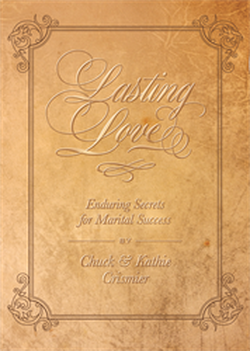
LASTING LOVE can be a dream come true. Yet love requires more than a dream or those loving feelings we so much desire.Lasting Love, Chuck and Kathie Crismier, celebrating their Golden Anniversary, unveil seven enduring secrets that will inspire and strengthen your marriage as it has theirs. COPY and PASTE this link to WATCH the TRAILER: https://www.facebook.com/Save-America-Ministries-204687919570536/videos
Past Episodes
This ministry does not have any series.
Featured Offer
LASTING LOVE can be a dream come true. Yet love requires more than a dream or those loving feelings we so much desire.Lasting Love, Chuck and Kathie Crismier, celebrating their Golden Anniversary, unveil seven enduring secrets that will inspire and strengthen your marriage as it has theirs. COPY and PASTE this link to WATCH the TRAILER: https://www.facebook.com/Save-America-Ministries-204687919570536/videos
About Save America Ministries
About Chuck Crismier
Contact Save America Ministries with Chuck Crismier
crismier@saveus.org
http://www.saveus.org/
Save America Ministries
P.O. Box 70879