
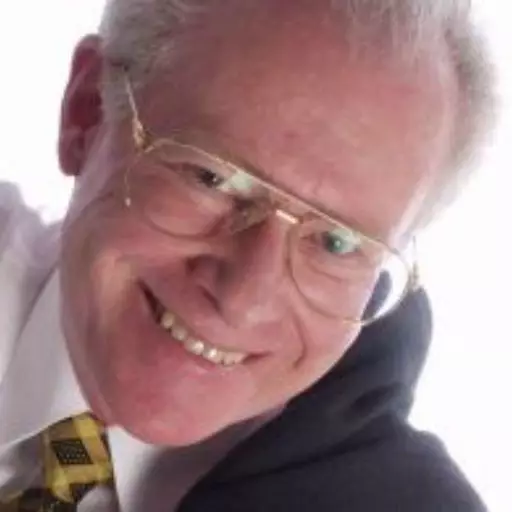
PRAYING LIKE JESUS


How do you pray?
w/ John Kimball
Announcer: This is Viewpoint with attorney and author Chuck Crismier. Viewpoint is a one-hour talk show confronting the issues of America's heart and home. And now, with today's edition of Viewpoint, here is Chuck Crismier.
Chuck Crismier: The Bible tells us that men ought always to pray and not to faint. We got a lot of people fainting out there because anxiety is taking over everywhere. Anxiety is taking over in the church. Who would have ever thought such a thing, but it is happening. Maybe it is because we are not praying as we ought to pray.
But how do I pray without ceasing? When should I pray? Let's take a journalistic look at this: who, what, why, where, and when? Who should be praying? Why should I pray? What should I pray about? When should I pray? Where should I pray? You see, all of those W's line up with journalism. On the other hand, Jesus spoke concerning this maybe more profoundly than journalists would.
That's what we're going to do here today on Viewpoint. We're going to take a look at this matter of prayer from Jesus' viewpoint. Now, we say regularly on this program that viewpoint determines destiny, and indeed it does, which means that Jesus' viewpoint concerning prayer should carry a tremendous amount of weight for us. And that's why we're going to focus on it here today on Viewpoint.
A lot of people will talk about the so-called Lord's Prayer and they'll call it the Our Father. Well, it is not the Our Father. We all have the same father if we are born again in Jesus Christ. Jesus said he was his father, that is, that God was his father. And then he told us to pray to the father. But it's not the Our Father. It's the Lord's Prayer, but actually our guest today says it's actually the Disciples' Prayer.
So we're going to talk about that here on the program today. But what's the purpose for prayer? What would you say the purpose for prayer is? How about types of prayer? Have you ever thought about different types of prayer? Praying, how often should we pray by the way? What are the benefits of prayer? And is it something that we should just pray for casually when we're in deep trouble, when we're in the depths of the foxholes of life? Is that when we should be praying?
Well, here are some statistics regarding prayer in America. Believe it or not, it's true. You know where these come from? These tremendous depths of wisdom of AI via Google. The depths of wisdom of AI, artificial intelligence, via Google. And here they are.
In 2024, approximately 44% of US adults reported praying at least once a day. It has kind of held stable, relatively stable, since 2021. While daily prayer has declined from over 50% since 2007, roughly two-thirds of Americans still pray with some measure of consistency. Grace before meals, a third of Americans always say grace, while 48% seldom or never do, including the President of the United States, who mocked the idea.
Public school prayer, 52% of adults favor allowing public school teachers to lead prayers that refer to Jesus. In fact, when I was a senior in high school in Lakeland, Florida, they had prayer every day before we began school. But that was then in 1962 and 63. Well, it might have had something to do with the Cuban Missile Crisis because the whole world, the whole nation, was under threat. We were all foxhole Americans at that time, feeling the threat of Soviet Russia.
Today on Viewpoint, though, we're going to take a look, a deeper look at this matter of the so-called Lord's Prayer or, as our guest John Kimball says, the Disciples' Prayer. He is actually located not that far from where I sojourned during my high school years or at least my senior year in high school there in Lakeland, Florida. John, it's good to have you on the program.
John Kimball: Hi, Chuck. It's good to be here. Thanks for the invitation.
Chuck Crismier: Well, you have a very energetic voice. And I really appreciate that. It means that you really have a passion for this subject.
John Kimball: I do. It's been a passion of mine from the beginning of my ministry many years ago. I started in the ministry in 1987 while I was still in seminary and was ordained in 92 and started my first senior pastorate in 92 and have been in the ministry ever since.
Chuck Crismier: Now, did you go to seminary or cemetery?
John Kimball: I went to seminary.
Chuck Crismier: Just checking. Wanted to make sure, sir. You know, one of the things that we found interesting uniting us was that in your denomination, which happens to be the Congregational denomination, one of your major churches is Lake Avenue Congregational, which was directly across from my law office for 20 years.
John Kimball: Yes, in Pasadena, California.
Chuck Crismier: Absolutely. And I met with one of the pastors there, who was a dear brother, met with him when I ran for the state legislature there in Southern California. So, yeah, we have a little doing a do-si-do across the country here. It's nice to make these kind of connections, isn't it?
John Kimball: It is.
Chuck Crismier: Okay. What is it that prompted you to write this little book concerning what you call the Disciples' Prayer and why did you choose that title?
John Kimball: Well, that's a long answer. So one layer of that answer would be my wife prompted me to write it. She's been prompting me to write it since 1992.
Chuck Crismier: Is she like the voice of the Holy Spirit to you?
John Kimball: Sometimes, yes. It was actually the very first, when I took my first senior pastorate in 1992, it was the very first series that I preached from the pulpit was on the Lord's Prayer because I felt like as a brand new pastor, if I could teach these people really to be fervent in their prayer, everything else would take care of itself.
And as I say in the introduction of the book, that really became a spiritual marker for me as well as for many people in that congregation. And it's been a journey on this same text for over 35 years as I've been in the ministry. And then to make a longer story short, last October, the Lord just really, or October of 24 actually, the Lord just really laid it on me it was time to write the book. And so that's where I started putting pen to paper and putting it together.
Chuck Crismier: Well, I appreciate the fact that you did and we don't always talk about prayer very much. There are so many issues in life, but sometimes we just forget to pray. Why do we do that?
John Kimball: Well, I think the church itself is kind of culpable in this. There are three things in my ministry that I am also a denominational executive so I have a national ministry as well. And I've seen across the country in the American church we don't read the Bible like we should anymore, which is a great concern to me.
Chuck Crismier: Especially men.
John Kimball: Men and women both, but yes it is true probably more with men. We don't make disciples like we should. We're really good at teaching people the academics of the Bible and the Bible stories, but actually making them disciples, followers of Christ, we're not doing such a good job anymore.
Chuck Crismier: I should have you on the program just to talk about that for an hour.
John Kimball: Well, I probably could.
Chuck Crismier: I believe you could because, you know, Jesus there in Matthew chapter 28 gave us his Great Commission. And he said go into all the world and preach the gospel teaching people to observe or obey everything that I have commanded you. In other words, to make disciples. We decided that he wanted us to make babies instead of disciples. What say you?
John Kimball: Well, I would say there's a difference between making converts and making disciples.
Chuck Crismier: That's exactly the point. We'll get back to this after the break, friends. John Kimball, our special guest today. The Disciples' Prayer. You're going to want to get a copy of this small book. It'll be very encouraging to you. $15. We'll put it on your desk or in your heart. It's on our website, saveus.org. Saveus.org. Be right back.
Announcer: Once upon a time, children could pray and read their Bibles in school. Divorces were practically unknown, as was child abuse. In our once great America, virginity and chastity were popular virtues and homosexuality was an abomination. So what happened in just one generation? Hi, I'm Chuck Crismier, and I urge you to join me daily on Viewpoint where we discuss the most challenging issues touching our hearts and homes. Could America's moral slide relate to the Fourth Commandment? Listen to Viewpoint on this radio station or anytime at saveus.org.
Chuck Crismier: Welcome to Viewpoint, my friends. It's conversation as always with ever-increasing conviction, talk that transforms. And I trust today will be no exception because we ought to pray and not to faint. But there's a lot of fainting going on out there. A lot of fainting. A lot of fear. A lot of apprehension.
And even as we see the potential of an attack on Iran just this next weekend, who knows? Who knows where it will all go? We don't know, but what we do know, we don't know about the future, but we do know who holds the future. And that's why we need to pray to the one who does.
And so today on Viewpoint, we're talking with John Kimball from Florida. And John, during the break, something came to my attention, to my mind, and that is in 1992. That's not when Columbus sailed the ocean blue, but it is when you launched the ministry there in that particular congregation where you are. It's also the very time when God spoke to my heart in Pasadena, California, across from Lake Avenue Congregational Church.
And he said Chuck, you've been pleading the cause of men long enough, I want you to plead my cause now as a voice to the church, declaring vision for the nation, America's greatest crisis hour. I said yes, sir. And that's how we formed Save America Ministries in 1993, but it was right there across the street. Can you believe somebody would, God would speak to somebody in their law office?
John Kimball: Sure.
Chuck Crismier: Well, thank you very much. I appreciate it.
John Kimball: And just for clarity, in 92, I was actually in Virginia where you are. I was pastoring in Suffolk, Virginia, where Planters Peanuts was founded. We were surrounded by peanut fields for the whole time we were there. The church that I'm pastoring now we planted in 2014.
Chuck Crismier: Oh, okay. I got the message clear then. We've got to clear things up and make sure we speak the truth from our hearts, right? Okay. Now, it's been called the Lord's Prayer and it's sung at weddings. And it's a very beautiful song when it's sung, Our Father which art in heaven. You know, when I used to have a tenor voice, I could sing it very well. But now that I've been on the air for 30 years, I have a basso profondo voice and I can't sing it anymore. But I can speak it. And Jesus said that we ought to pray. His disciples asked him, teach us to pray. And he said, okay, here you go. Our Father which art in heaven. Why do you think he started that way?
John Kimball: Well, I think that when the unknown disciple asked him, teach us to pray, I've always thought it's probably Peter, but he's not named in the scripture.
Chuck Crismier: Well, he was the mouthiest of all the disciples.
John Kimball: He was. But the idea was that many of the rabbis of that time all had their prayer frameworks based upon what we call their yoke, their interpretation of the Torah. And Jesus had a completely different yoke. His was not based on historic rabbis. His was really based upon his relationship with the Father and the kingdom of God. And they saw a fundamental difference in the result of his prayers, I think, probably from others. And so he asks, will you teach us to pray? And Jesus says, well, okay, we'll do that. And the reason we pray is we pray to Our Father. And uniquely, Jesus uses, because he taught them in Aramaic, their native language, he uses the word Abba as father. We have it translated down to us through Greek the word Pater or Patēr.
But Jesus used Abba, which really means papa or daddy. It was a very intimate expression. And so the way that he begins the whole prayer lesson is with this probably surprising intimacy that his disciples at that point probably not experienced yet.
Chuck Crismier: Okay. Our Father which art in heaven. Our Father. He has to be talking to people who actually believe that God is their father. In other words, he's talking to the Jewish people, to disciples who were heirs according to the promise to Abraham, Isaac, and Jacob, right?
John Kimball: Yes. It's those who are in a covenant relationship. And down through the ages, even in the time of Moses, Israel did use the term father or at least referred to God as father, but it really was reserved for Israel alone.
Chuck Crismier: So, that being the case then, when we talk about praying this prayer, it's not a prayer for everybody to pray because God is not the father of everyone.
John Kimball: So in the first couple of hundred years or so of the prayer's existence, if you go back in the history of it, it actually was very tightly guarded. They would only teach it to people once they had been converted and subsequently baptized. And so it really was, it was guarded, it was only for those who are in the believing community.
Chuck Crismier: That being the case, you know, there are so many scriptures that people try to import for everybody, sort of like the We are the World theory, that it's all about globalism, everybody that's born and of human flesh is of those who are entitled to pray this prayer or entitled to claim the blessings of God and so on, but it just ain't true, is it?
John Kimball: No, I would say based upon the history of Israel and the history of this prayer, if you really dig back into it, it's to be prayed by those who really are believers in Jesus, followers of Jesus, who have turned their lives over to him in surrender to the kingdom of God.
Chuck Crismier: That being the case then, I'm going to ask you a question that may be somewhat troubling to some people out there. If Jesus said we're to pray to the father, then why do so many Christians pray to Jesus? Careful, brother. I don't know if that's a knuckleball or a curveball, but I think it's a fastball.
John Kimball: Well, I think the answer would have to be if you're going to be biblical, we'd have to talk about the triunity of God and that God the Father is God, God the Son is God, and God the Holy Spirit is God. But the lesson that Jesus gave us was to pray to Abba.
Chuck Crismier: And that's what Jesus did.
John Kimball: Yes, it was.
Chuck Crismier: Jesus prayed to the father. And then he says that the father sent me, even so I send you. So we're to pray to the father, but we pray to the father in Jesus' name because he's our advocate with the father.
John Kimball: And the king.
Chuck Crismier: And the king. Yeah. So we're not praying to the Holy Spirit either. We're praying to the father.
John Kimball: Correct.
Chuck Crismier: All right. Just checking. You know, as a former trial attorney, I've got to do a little cross-examination here to make sure we have our T's dotted, our I's, excuse me, our I's dotted, our T's crossed, and we know what we're talking about. Okay. So Our Father which art in heaven, hallowed be your name. I thought his name was hallowed. I thought his name was above every name. In fact, his name was so unmentionable that they couldn't even mention his name. They didn't even want to spell it out. The Jewish people didn't even want to spell it out. So what does this mean, hallowed be your name?
John Kimball: So now we're getting into one of the things that really surprised me as I was doing the research for this book. And Jesus really is teaching his disciples to call down realities of the kingdom of God into our today where so essentially, one of the things I refer to in the book is that if you're familiar with George Eldon Ladd, he has a diagram where he talks about when the fall of humanity happened, the timeline was corrupted that we're all living on that we're all born into, conceived in sin and born in sin.
And so when Jesus came, when he was incarnate, he established a new kingdom timeline.
Chuck Crismier: So that's the kingdom now, but it's not the fullness of the kingdom that's yet to come.
John Kimball: Correct. So the kingdom is the wording that Eldon Ladd uses is it's here but not yet. And so what Jesus is doing here, there's three kingdom realities of the kingdom to come that he's actually calling his disciples and those of us that are followers today to pray into existence in this corrupt timeline that we're currently living in because as soon as we surrender to Jesus as our savior, we become citizens of heaven according to the apostle Paul, Philippians 3:20.
Chuck Crismier: I was just writing about that in my 12th book today about the citizenship of the kingdom and we've got kind of a mixed situation in the church today, an awful lot of Christians are trying to straddle the fence between citizenship in the authority of the world and citizenship with the authority of Christ.
John Kimball: Well, and that's what Jesus refers to in John 17 when he says we're in the world but not of the world. Our citizenship is now in heaven or in the kingdom. And so what Jesus is teaching his disciples to do is to call these three kingdom realities into being even now while we still walk the earth in this corrupt earth waiting for his return. And those three realities again our?
The first one is that be holy your name because it's actually an imperative the way it's worded in the prayer. So that would be that we'd be praying that everyone on the face of the earth would come to know God as he's revealed himself in his names and in his character and in the scriptures. The second one is come your kingdom, so the rule and reign of God to come and be established over every person that everyone would surrender to the rule and reign of God in Jesus Christ. And then the last one is that be done your will, that the actual will of God would be done as well. So he's teaching us to pray these down from heaven where they are realities now into our current life where clearly the world is not that right now.
Chuck Crismier: Isn't that the real issue that we're facing though, John, in God's own house, in the church house? It, we would be hard pressed to really think in any persuasive way that the kingdom was here because that would imply that Jesus was the king and if he was the king, we should be obeying his voice, but the word obey has become the most hated word in the church today. So his kingdom hasn't come, hasn't it?
John Kimball: Well, I, it has, but not yet. Exactly, exactly. And you know, I've had so many pastors and parachurch leaders on this program over the past five years or so who have admitted the word obey is the most hated word in the church today, yet it's the one word that Jesus said is necessary to please him.
Well, and you asked earlier about why people don't pray anymore, which is a great concern of mine. I think it's because we preach a gospel of salvation, we don't preach a gospel of surrender. And so we're really not surrendering to the rule and reign of God, we're just looking for him to be our fire escape in some cases and that is very concerning.
Chuck Crismier: I want to send all of our listeners to your church.
John Kimball: Well, I hope we have enough room.
Chuck Crismier: Well, you know, it would be a remnant anyway. So what we're really talking about here when you start boiling it down, there's tremendous implications to the simple words of this prayer.
John Kimball: Oh, incredible. Incredible. In the words of my mentor when we were discussing this right before I started writing it, he says pay careful attention how Jesus plays with time and space here because he's calling things that are currently a reality in heaven. So God's name is fully holy and recognized in heaven, everybody is surrendered to his rule and reign in heaven, and his will is done immediately in heaven, there's no resistance to it. But we're calling those realities that are down the road, if you will, in the not yet, into being now and it really is something we need to be teaching in the church as well.
Chuck Crismier: When we speak of holy is your name or be holy, Jesus said to his disciples, be ye holy for your father in heaven is holy. And we used to sing a song or maybe you're still singing it out there, holiness, holiness is all I long for, is what I long for. Well, I'm not sure that that's entirely true in the church today in America because we don't obey Jesus. We don't like what he requires.
John Kimball: Well, and I agree and I'm not sure that many in the American church today really understand what holiness means.
Chuck Crismier: And how would you describe that because the Bible says without holiness no man or woman will ever see the Lord.
John Kimball: Well, I mean, holiness is being set apart or set aside for the purposes of God. So it really is standing apart from those things that are common or base or unclean to use the Old Testament language or the world and reserving yourself for his purposes. And if we don't teach what it is, then it's hard for people to actually be that.
Chuck Crismier: So if we're straddling the fence, it would be hard to claim that we understood the nature of be ye holy.
John Kimball: I think that's true. And I want to give some grace because new believers, brand new believers, still have a, they're in a learning curve and so I want to be careful not to paint with too broad a brush.
Chuck Crismier: Well, I think we're all on a learning curve, aren't we, brother?
John Kimball: Well, amen.
Chuck Crismier: I'm finding I'm learning every day. Thank the Lord for that. In fact, I told my wife this morning, I said I am more and more valuing God's mercy.
John Kimball: Amen.
Chuck Crismier: We'll be right back after this, friends, having an open conversation here concerning the Lord's Prayer which our guest says is the Disciples' Prayer. I agree with him. $15 will put this tremendous book in your hands on the website saveus.org, call us at 1-800-SAVE-USA. We'll be right back.
Announcer: There is so much more about Chuck Crismier and Save America Ministries on our website, saveus.org. For example, under the marriage section, God has marriage on his mind. Chuck has some great resources to strengthen your marriage. First off, a fact sheet on the state of the marital union, a fact sheet on the state of ministry marriage and morals, saveus.org. Marriage, divorce, and remarriage, what does the Bible really teach about this? Find all of this at saveus.org. Also, a letter to pastors, the Hosea Project, saveus.org, and many more resources to strengthen your marriage. It's all on Chuck's website, saveus.org. Again, you can listen to Chuck's Viewpoint broadcast live and archived, Save America Ministries' website at saveus.org.
Chuck Crismier: It's a common phrase that the marriage, the couple that prays together stays together, the family that prays together stays together. Maybe, just maybe, if we took that seriously, we might have a lot less divorces and a whole lot more families that are pleasing the Lord. What do you think, John?
John Kimball: Oh, I absolutely agree with that.
Chuck Crismier: All right. Now, when Jesus launched into this passage in Matthew chapter six, he said, when you pray, enter into your closet. Now, is this mitigating against public prayer?
John Kimball: Absolutely not. No, it's just it's talking about the prayer posture. If you look at his teaching, so that the Lord's Prayer is actually taught in two different places. It's taught in Luke, which was mainly to his disciples, and then Matthew as part of the Sermon on the Mount, which was a much wider audience. But he starts out with actually giving two prohibitions almost before he gets into the prayer itself. He says don't pray like the hypocrites and don't pray like basically like the Pharisees. It's not supposed to be for show, it's supposed to be something very intimate and personal between you and your Father. So it's not that it should not be public, it's just simply saying you need to have the right posture. This is not for your own self-aggrandizement.
Chuck Crismier: All right, he also talked about not using vain repetitions, babbling like the proliferation of flowery prayers.
John Kimball: Yeah, I think sometimes that gets back, the flowery prayers I think sometimes get back into the prayer for show as well. But the vain repetitions, I think that one I think is particularly ironic because in so many churches today that recite the Lord's Prayer on a Sunday, and I'm not against reciting the Lord's Prayer as long as we pray it, but the thing that concerns me is so many people today when they do it on automatic pilot, their brain is not even engaged and they're babbling the very prayer that Jesus taught us how to not babble with.
Chuck Crismier: I'm so glad that you mentioned that because it becomes very trite then. It's almost meaningless. Well, I know what it is and so I go through the motions. It's like so many prayers, the rabbinical prayers and so on that are engaged in synagogues are often very much like that. I have been in some of those and hear the rabbis rattle on, even the way they read the word of God is almost meaningless. It's just I read it. And to me, that really is not what we're about. I remember being asked to read a psalm at a bar mitzvah one time a number of years ago in a synagogue. So I was surprised that they asked me to do that as a Gentile Protestant believer in Yeshua, but I did. And afterward, people came up to me and said we've never heard the Bible read that way. There was such passion, such meaning to it. And I think somehow we miss it when, and the same is true with the Lord's Prayer.
John Kimball: Yeah, so in my denominational role, I'm in churches all over the country on a regular basis. And when I'm on a Sunday morning if I happen to be preaching or part of the service and they go through the Lord's Prayer, a lot of times I'll stop afterwards and I'll ask them, so what did you just pray? You troublemaker, you. I know, but you look around the congregation and oftentimes people are going, huh, you know, they just did it without thinking about it, it was just automatic pilot. And if I have the liberty, sometimes I don't have the liberty to do that, but if I do have the liberty, you know, I'll talk a little bit about what some of those words mean, like, so what does kingdom mean? Let's talk about that.
Chuck Crismier: Well, let us talk about it because you mentioned that now and actually that's almost the essence of the first part of the prayer. Thy kingdom come, thy will be done. So if God's will is not being done, one has to question whether his kingdom has come.
John Kimball: Correct. If the kingdom is the rule and reign of God, then if you surrender to him as king, then you are his subject, you have to do his will. If you're not doing his will, then you haven't surrendered to him as king.
Chuck Crismier: Isn't that the real test then of Revelation chapter 13 with the infamous mark of the beast? It's going to test the allegiance of people as to who the king really is, who the authority really is.
John Kimball: Yeah, and this idea of surrender again I think is something that's largely missing from many different churches today. They just don't talk about it. And I think some churches they believe it, but they don't talk about it and so therefore it really doesn't get transferred to the congregation.
Chuck Crismier: Well, maybe it's because we don't sing that song anymore, All to Jesus I Surrender, All to him I freely give, I will ever love and trust him in his presence daily live, I surrender all.
John Kimball: Amen. All 340 verses of it.
Chuck Crismier: And you memorized them all, right? Okay. Now we've talked about the relationship between Christ and the Father, therefore for us and the Father. His kingdom coming, his will being done on earth as it is in heaven. So we talked about the kingdom now and the kingdom yet to come. Now we start talking about practical things because the other things have to be established first. We don't usually pray about the established things first, about his kingdom, we pray about what do I want? We got the gimme God blues, right?
John Kimball: So the second part of the prayer really cannot be prayed until the first part of the prayer is prayed, the kingdom realities, those things have to be established. But then I think Jesus recognizes we are human, we are living in a fallen world, we have needs. And so those human needs particularly those three that he mentions are important. So the first one would be, and we usually say give us today our daily bread. One of the things I bring out in the book is that the phrase there is a unique phrase that's not used anywhere else in scripture. And Joachim Jeremias has done some research into the actual Aramaic and found that a better translation for that phrase in Aramaic actually is tomorrow's bread for today. And so you're what you're doing is again calling on the abundance of the kingdom to be a provision for us today as we're living this out.
Chuck Crismier: Well, that makes more thought when Jesus said in verse 31 of that chapter, therefore take no thought saying what shall we eat or what shall we drink because you've already prayed provide tomorrow's today, we trust in you, Lord.
John Kimball: Exactly, exactly. And I'm careful in the way I phrase it in the book because I don't want it to come across as part of the whole blab it and nab it thing, but it really is one of the things we have to understand is that from the very beginning God's people, and so that would include us today in Christ, are blessed to be a blessing. We're not blessed so that we would get rich, not that I'm against having wealth, but we're given resources, we're given blessings by the Lord in order for us to bless others.
Chuck Crismier: In other words, God wants us to be kingdom conduits, not reservoirs.
John Kimball: Exactly, exactly. And I mean all the way back in Genesis 12 verses 1 through 3, that principle is established with Abraham. And so the idea here is that God knows we have needs and he loves to lavish abundance upon us, but we have to keep a kingdom perspective as we receive those blessings. It's for the mission of Christ and not just for our benefit, that really helps to keep us on the right track with that.
Chuck Crismier: And then forgive us our debts, trespasses, what's the right word there if any?
John Kimball: Well, I talk about that. The word really is debt. The word that is used there really would be something owed. And so we're asking for forgiveness, but the phrasing there really is better translated as we are even now forgiving those who are indebted to us, those who've sinned against us or those who've wounded us. And so it's not just a past tense, it's an ongoing, we have to be people who live in ongoing forgiveness and demonstrating that ongoing forgiveness.
Basically what Jesus is saying, one of the examples I've used when teaching on this is I tell people not to name any names, but think about the person that's wounded you the most or angered you the most or abused you the most and what Jesus is actually teaching us is Lord, you forgive me the same way I'm forgiving that person. Well spoken, well spoken. That preaches loud. It kind of pierces to the dividing asunder of soul and spirit, doesn't it?
John Kimball: Amen.
Chuck Crismier: And Jesus didn't let up on that. Even after the prayer, he says, and if you forgive men their trespasses, your heavenly father is going to forgive you, but if you don't forgive men their debts or trespasses, neither will your heavenly father give you your trespasses. Which tells me that unless we're willing to forgive, the forgiveness is not extended to us. And we've got to question, I know this might fight with some people's theology, but we've got to question how secure we are if we refuse to forgive.
John Kimball: Well, I think one of the things that Jesus is communicating through the prayer is that forgiveness is the heart of what we would call the Christian faith. And so it's a non-negotiable. God's not playing around on that point.
Chuck Crismier: Very well spoken, very well spoken. So we stayed out of the theological weeds with that. You did very well, my friend. I've got to hand it to you. And so before we go further, we're going to dig into some more of this after the coming break, but I want to make the book available to you, friends, because it's so helpful. The Disciples' Prayer. The simple yet profound framework Jesus gave his followers to use in prayer.
And see what we're doing, we're applying it. We're not just rhetorically reciting it here. We're actually applying it and that's what Jesus intended to do. That's what he wanted us to do. To be real about it. That's right. To make manifest that the kingdom has come among us and we're going to live accordingly.
Get a copy of the book. $15 will put it in your hands. It's on our website, saveus.org. Saveus.org. Give us a call, 1-800-SAVE-USA. That's 1-800-SAVE-USA. Or write to us at Save America Ministries, PO Box 70879, Richmond, Virginia 23255. Writing a check and $6 for postage and handling, and we're going to get it in your hands. So you've been pastoring for a long time, John. And as you look back upon this pastorate, what do you find is the general trajectory of professing Christians as we move forward? I want you to keep that question in mind as we move into the next after this break. Friends, it's so good to have you join us here on the program. We're confronting the deepest issues that touch our hearts and our homes from God's eternal perspective. I hope you see it that way. We'll be back in just a moment.
Announcer: Have you ever considered what the early church was like? Many people are developing a hard longing for a greater fulfillment in our practices as Christians. A recent study showed 53,000 people a week are leaving the back door of America's churches in frustration. What is going on? Why has there not been even a 1% gain among followers of Christ in the last 25 years? Could it be that God is seeking to restore 1st century Christianity for the 21st century? Jesus said, I'll build my church. Is Christ by his spirit stirring to prepare the church for the 21st century? The early church prayed together and broke bread from house to house. They were family and it was said by all who observed, behold how they love one another. Incredible. But the same can be found right now. Go to saveus.org and click Cell Church. We can revive 1st century Christianity for the 21st century. It's about people, not programs. It's about a body, not a building. That's saveus.org. Click Cell Church.
Chuck Crismier: Such a delight to have a new friend joining us here on the program today from central Florida, John Kimball, with his book, The Disciples' Prayer, which is a new terminology and I think perhaps a better terminology than the Lord's Prayer because it's about his disciples. His disciples asked him, Lord, teach us to pray. How should we pray? Another put it another way, how should we pray as we ought? Also, it said, what if I don't know how to pray as I ought?
Maybe our guest can answer that one in just a few moments, but the lingering question from before the break is what do you see, John, as a pastor for many, many years? Do you see the trajectory of the church being more and more Christ-like or less?
John Kimball: Well, what I will say is I think in with human nature, it's been the case all along that there have been those who have migrated toward a religious experience and then there's been those who've migrated toward faithfulness and maybe a third camp would be those who are brand new to the faith and being disciplined. My experience in the tribes that I'm in is that we're moving more and more toward faithfulness and I'm excited about that. So you're tribal. In that regard, yes. But you know, I'm also excited, Chuck, about some of the revival and awakening things that are happening globally on college campuses and stuff right now. And so a lot of that gives me hope that we're moving in the right direction.
Chuck Crismier: Well, I just talked about that this week concerning what's happening there in Lakeland, Florida. You heard about that?
John Kimball: Yes, huge. And it's actually spilled over to UCF right down the street from me. About a week and a half ago we had 1600 students that came to Christ at UCF.
Chuck Crismier: Hopefully, it moves more rapidly and more pervasively than the so-called revival of Wheaton College a couple of years ago. All right. Now we're at the point where Jesus said, lead us not into temptation, but deliver us from evil. Is you're saying, is Jesus saying that the father leads us into temptation?
John Kimball: No, and I actually address that in the book because that phrase has bothered me for years because the Bible says that God does not tempt anyone.
Chuck Crismier: But he will allow us to be tested.
John Kimball: He will allow us to be tested, yes. And so with the way that phrase is, you know, one of the things I say in the book is that he did actually let Jesus go through temptation as well. He let Job go through horrible temptation. Yeah. So there's this, this idea of testing the metal of your faith that is a legitimate temptation if you will.
But that last piece is really I think a twofold or two sides of one coin about delivering us from evil. One is the temptation side that we would not succumb to things that the flesh wants or the world is doing. But then the other side is that we do actually have an enemy who's got a target on our backs and we want to be delivered from him as well. And so Jesus is teaching us that last phrase is really I think a both and on those, not just for what the flesh wants, but how we can also be oppressed and attacked by the enemy.
Chuck Crismier: I have just written about that in three chapters in this new book, The Power to Overcome. The Power to Overcome. And I'll tell you, you've got the world, the flesh, and the devil and all three of them are the unholy triumvirate, aren't they?
John Kimball: They're in league against us, there's no doubt.
Chuck Crismier: Okay. Now let's talk about persecution. Because some people would say, oh, well, that's tempting me, that's leading me into temptation because the temptation then would be to deny Jesus. If I'm persecuted, Jesus said if they persecuted me, they're going to persecute you. Why do you think you should be different than your Lord? You should count it a blessing if they persecute you. Peter said the same thing. So what do you say?
John Kimball: Well, James says count it all joy when we face those different kinds of trials and temptations like that. So I think that we need to take Jesus at his word that we could very much face persecution and if you look around the world it is increasing significantly. I think it's only a matter of time before we start seeing more of it here in the States as well.
Chuck Crismier: That's why my latest book was When Persecution Comes, Preparing Hearts for Perilous Times. It's here. It's here. It's moving rapidly across the Western world.
John Kimball: Well, if the revivals and awakenings we were just talking about are real, the Bible does say where grace abounds, evil abounds all the or where evil abounds, grace abounds all the more. So you're going to see both sides of that happening.
Chuck Crismier: There you go. Exactly. But we want to be prepared to stand. And when we say lead us not into temptation, some people might say, well, I don't understand why I'm being persecuted. That's not right, that's not fair. I've been told by pastors and parachurch leaders across the country that everything should be wonderful, everything should be perky and happiness all the time.
John Kimball: Yeah, that's unfortunate that that is a truth that's happening in the church today. And many people I think are walking away from their faith because it turns out not to be true. The reality is when you say yes to Jesus, well, you've just stepped into a whole new set of difficult circumstances in many cases.
Chuck Crismier: Brings us back to the word surrender, doesn't it?
John Kimball: It does. Absolutely.
Chuck Crismier: So lead us not into temptation but deliver us from evil. Deliver us from evil. How does God deliver us from evil when the world is full of evil, the world, the flesh, and the devil are pressing upon us? We have that fleshly spirit, the carnal nature that Paul talks about in Romans chapter 8 says it's not even not even subject to the law of God, neither indeed can be. So we've got it right in our own bodies. Paul talked about it in Romans chapter 7, 6 and 7, he himself was dealing with it. How do we deal with that?
John Kimball: Well, I think that gets back to my comment about those who are religious versus those who are faithful. Those that would be pursuing faithfulness in Christ are practicing spiritual disciplines, they're in the word of God on a regular basis, they're at least growing those muscles. And and in doing that, we start walking with the spirit then we have the influence of the Holy Spirit with us to guide us to to deepen our faith walk with him. And we grow and that's that's how we we grow out of those human realities, those human challenges that we face. But people who are just merely religious they never get traction on those.
Chuck Crismier: How do we move from being merely religious to truly walking in the spirit in Christ?
John Kimball: That's a great question. And I think that is one of the great challenges of the American church, well, probably the global church, but my context is here in the US. The American church today, you know, I think part of it is we need to see more people with a prophetic personality if you will calling that out and saying look, this is not what Jesus called us to be. And in cases where in the work that I do with church revitalization, sometimes I have to have those tough conversations with congregations. And there's a lot of pushback to that.
Chuck Crismier: How about with pastors?
John Kimball: Sometimes with pastors too, although usually when I'm invited in the pastor's already on board.
Chuck Crismier: Okay. Well, in other words, it's kind of like paddling a canoe up Niagara Falls.
John Kimball: That would be a good illustration, yes.
Chuck Crismier: Yeah. Well, perhaps as you notice the kind of questions that are asked that we've been talking about here actually reveal that this is exactly what we're trying to do on Viewpoint. We're trying to drive the message deeper into the minds and hearts of we the professing Christian people so that we be doers of the word and not just hearers only because if Jesus is coming soon, and he's not coming back for a bride with spot, wrinkle, or any such thing, we better begin to take greater heed.
John Kimball: Amen. Amen. Yeah, it's Christianity can't just be the cultural thing, it has to actually be a matter of true faith.
Chuck Crismier: Tell me, the Congregational Church, I think there are at least two or maybe three different groups called Congregational churches, are there not? Distinguish them for us.
John Kimball: So most congregational churches in the United States today have kind of taken what I would call a left turn theologically to put it mildly. So our particular group is the Conservative Congregational Christian Conference based out of St. Paul, Minnesota. And our group has a pretty strong, very simple but pretty strong statement of faith of items that would be marked as historic Christianity. And so in our particular case, we still believe the Bible is authoritative, for example, we still believe in the Trinity and many of the things that you would say if you get rid of them, you get rid of Christianity itself. So we are Bible-believing congregationalists. And ironically, most of our churches are in the New England area where the liberal slide has taken a great effect.
Chuck Crismier: Isn't that amazing because that's where the original Congregational churches were there in New England. Yeah. In many towns in New England, you couldn't be a town if you didn't have a church at the center of it. And they were Congregational churches mostly. Very interesting when you look back on our history. What percentage would you say are evangelical Congregational as opposed to the more liberal bent?
John Kimball: Oh boy, it would be a guess. I really wouldn't know. I'm totally guessing, but maybe a third would be of those that call themselves Congregational today, maybe a third would be very staunchly Bible-believing.
Chuck Crismier: Well, that sounds about right. Interestingly, we have a very substantial listenership in New England. In fact, early on when we began this program 30 years ago, one of the first areas that grabbed a hold of this program was there in Massachusetts. And yeah, it's been pretty amazing. Some of people have called it God's Frozen Tundra up there, but in any event, it was nice to hear this information that you just presented to us.
John Kimball: Well, and I'll tell you Chuck, in our particular denomination, we're seeing a bit of a revival in New England right now, it's been very exciting.
Chuck Crismier: Well, that's very encouraging. Thank you for bringing that to our attention. So I'm going to give you the last word to speak to our listeners here today concerning prayer, concerning encouraging them in prayer.
John Kimball: Well, we asked the question, how do you pray? And I think that Jesus answered that for us in what we call the Lord's Prayer, what I'm calling the Disciples' Prayer. For me, the Lord's Prayer is John 17 where he prays his High Priestly Prayer for us. But he gave us a framework. He literally gave us a step-by-step manual, a lesson if you will, an outline to pray. And it's a great place to start because it covers all of the essential bases.
And if people really understand what they're praying and they don't just do it on automatic pilot, this can be a very powerful prayer. One of the things that I say in the book is that the Disciples' Prayer really is a prayer for kingdom citizens praying a kingdom prayer with kingdom authority on the kingdom mission. And it has, I think if people do that, if they really pray through that, it'll have an aligning effect on their lives.
Chuck Crismier: Love your emphasis and you mentioned the High Priestly Prayer of John 17. I think it's mostly not properly quoted. Everybody wants to talk about Jesus' words, Lord, that they may be one, that the Father, that they may be one that the world may know that thou hast sent me. But that isn't the essence of it. The essence of it began a few verses earlier when he said sanctify or set them apart according to thy truth, thy word is truth. And it's upon the basis of truth that we are to be united, not united by trying to unite.
John Kimball: Amen. And then understanding that Jesus said that he was the truth. I am the way, the truth, and the life. So it really is centered on him.
Chuck Crismier: You got it. Brother, thank you so much for joining us. I really appreciate it. Good to hear that something good is happening down there in Central Florida. Friends, get a copy of this great book, The Disciples' Prayer. $15 will put it in your hands. It gives us a closer look at the Lord's Prayer, which John calls the Disciples' Prayer, and I think that's an accurate way to put it.
$15 will put it in your hands on the website, saveus.org. Call us 1-800-SAVE-USA. Write to us at Save America Ministries and $6 for postage and handling. And I think you're going to be blessed. Now, become a partner, friends. As you know, we have no commercial support for this program and never have and never will. And there's a reason, because we don't want to be addicted to commercial support because then they can start demanding what you say or don't say. We listen to the Lord. He's listening to you. We cry out to the Lord to provide and he's calling out to you. If you hear his voice, would you provide? Would you become a partner? God bless you, be on Viewpoint.
Announcer: You've been listening to Viewpoint with Chuck Crismier. Viewpoint is supported by the faithful gifts of our listeners. Let me urge you to become a partner with Chuck as a voice to the church, declaring vision for the nation. Join us again next time on Viewpoint as we confront the issues of America's heart and home.
Featured Offer
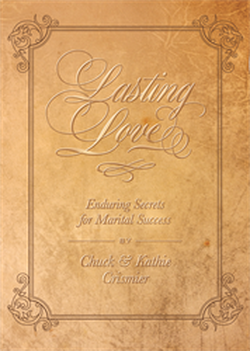
LASTING LOVE can be a dream come true. Yet love requires more than a dream or those loving feelings we so much desire.Lasting Love, Chuck and Kathie Crismier, celebrating their Golden Anniversary, unveil seven enduring secrets that will inspire and strengthen your marriage as it has theirs. COPY and PASTE this link to WATCH the TRAILER: https://www.facebook.com/Save-America-Ministries-204687919570536/videos
Past Episodes
This ministry does not have any series.
Featured Offer
LASTING LOVE can be a dream come true. Yet love requires more than a dream or those loving feelings we so much desire.Lasting Love, Chuck and Kathie Crismier, celebrating their Golden Anniversary, unveil seven enduring secrets that will inspire and strengthen your marriage as it has theirs. COPY and PASTE this link to WATCH the TRAILER: https://www.facebook.com/Save-America-Ministries-204687919570536/videos
About Save America Ministries
About Chuck Crismier
Contact Save America Ministries with Chuck Crismier
crismier@saveus.org
http://www.saveus.org/
Save America Ministries
P.O. Box 70879