
PERSECUTION PROVING CHRISTIANS


From Cameroon to Nigeria Christians Stand
w/ Don Shenk, Dir. of THE TIDE
Chuck Crismier: Today we talk about a country that perhaps you may never have heard of. We heard of a lot of countries in Africa, and some people think that Africa is a country. Well, it's a continent, friends, and it contains many countries. Many of those countries, well, if you had grown up in the area that I did and collected postage stamps, you wouldn't even recognize the names of the countries today based upon the stamps that were issued supposedly by those same countries 60, 70 years ago.
Things have been changing in our world, changing rapidly. Today, we talk about a country called Cameroon. Cameroon is in West Africa. I'll tell you, friends, when we talk about countries in Africa, we're talking about things that are changing very, very dramatically. One of the things that we saw and know are changing is the matter of Christian persecution.
What's fascinating about this is that we are being told that the Christian church or Christianity is growing more rapidly in Africa than anywhere else, perhaps other than Iran. Who would have ever believed it? On the other hand, while it was called the dark country or the dark continent of Africa, today it's being darkened by persecution, rabid, rabid persecution of some of the horrendous kinds that you can possibly imagine. People are herded into their churches and the churches are burned down with the people inside. It's just astounding.
Now, so astounding is it that our government, the United States government, has gotten involved and in fact, sent some troops over there to Nigeria to try to calm things down, and it hasn't settled the issue over there. It just hasn't settled the issue. Nigeria is the number three persecution area in the world. Number three. And it adjoins in the north a country called Cameroon.
Today on Viewpoint, we have a special guest who's joining us to talk about the matter of what is happening in Cameroon, why it's important, and why it is that there's almost absolute silence concerning what's happening there. Do we not care, or is it just too much and we can only focus on one country in Africa unless it suits our political interests?
So today on Viewpoint, we talk about the matter of Cameroon and persecution, and I'm glad that you've joined us. This conversation is always with ever-increasing conviction, talk that transforms. As you know, my last book was called When Persecution Comes: How to Prepare Our Hearts for Perilous Times. The reason that book was written is because Jesus, his apostles, all warned about persecution. Every one of them experienced massive persecution. Every single one of them.
They received persecution oftentimes from sources they did not expect it to necessarily come from. Sometimes it came from inside. It was an inside job. Sometimes it came from outsiders. But where is it coming from in Cameroon? Where is it coming from in Nigeria? We want to talk about that here on the program today. But it is coming. Persecution is here, and it's happening, yes, not only in Nigeria, not only in Cameroon, but also in America.
It just takes different forms here. It takes the form of, shall we say, lawfare. Lawfare against people, lawfare against Christians, lawfare against Christian businesses and so on. It's happening everywhere and it's growing. Just as antisemitism is growing around the world, so is lawfare against Christians in America and in the whole Western world.
The whole Western world. It's quite amazing, even so-called Christian Europe. Christian Europe has become anti-Christian Europe. In fact, just recently, in fact, this week, another report came out that there in Europe, the concerns are so great that it's even coming to the condition, to the attention of the governments of Europe that we ought to be doing something about this. It's not just antisemitism. It's anti-Christian from so-called Christian Europe.
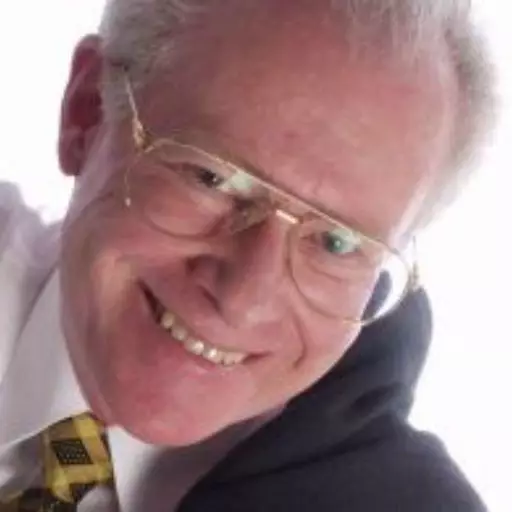
Well, today on Viewpoint, Don Schaick is joining us. He's with a ministry called The Tide. He's joining us to talk about something deep on his heart, what's happening, a Muslim jihadist war against Christians in Cameroon. Don, it's good to have you on the program, my friend.
Don Schaick: Thank you, Chuck. I'm glad to be here and glad to talk about something that should be of concern to all of us in the Christian world, whether we're here in America, in Europe, or in Africa.
Chuck Crismier: Well, the problem in America is that we just don't think that persecution is very real. It hasn't come upon us, and therefore we don't realize how real it really is because it takes a different form. It's not taking the marauding bands of rabid Muslims coming in with their sabers and firebombs and destroying. It's also coming in on the wings of even the law under color of law. So we don't recognize it here as we do elsewhere. Because it's not quite as severe here in the forms of shedding of blood, then we don't recognize it as very real and therefore it's kind of out of mind, out of heart, and therefore we just don't see it. But it's out there, isn't it?
Don Schaick: It is. I think one of the things that we have fallen prey to here in North America is that too many believers have fallen for the myth that we are to keep our faith to ourselves. We still live in a country where we have the freedom to share our faith, to live our faith. We can be just as, and I hate to use the word aggressive because that's sometimes taken the wrong way, but we can be just as forward in sharing our faith and talking about our beliefs and living out our faith as a testament and advocating for people around the world to have that same freedom.
Chuck Crismier: Yes, we should, but there are many things that we should do. There are many things that we should be that we are not.
Don Schaick: Absolutely.
Chuck Crismier: Therein lies our problem. If we're on the near edge of the second coming of Jesus Christ, we got a lot of things to be concerned about and maybe we're not, huh?
Don Schaick: One of the greatest concerns should be the kingdom of heaven and building up that kingdom. It's time for us to really understand that we live in a materialistic society, but we are in a spiritual eternity. Our materialistic aspect, that side of our life, has a very temporary timeline. We get drawn into that and pulled into that only and we don't focus on eternity. Eternity means forever.
Chuck Crismier: And we're in eternity now, aren't we?
Don Schaick: Absolutely. Yes, we are.
Chuck Crismier: I think that's something that isn't commonly recognized, that we really are in eternity as we speak. Speaking of eternity, you represent a ministry called The Tide. Tell us a little bit about that after the break. We're going into the break right now, Don. After the break, tell us a little bit about The Tide. Tides, they sound like water rushing in and then going out, ebbing out, coming in and going out. How does that relate to the ministry that you're involved with? We'll be right back.
Cameroon has one of the wettest climates on the earth. The rain is heaviest in the hot and humid southwest between July and September. The inland plateaus are cooler, but the average rainfall, well, it is unbelievable, friends. Maybe that's where this ministry gets its name, The Tide. Maybe it's the tides that are caused by the rainfall in Cameroon. Is that true, Don, or do we have it completely off base?
Don Schaick: Not quite, Chuck. I'll tell you how it came about. In 1946, here in South-Central Pennsylvania in Chambersburg, Chambersburg was getting its first radio station. Charlie Byers, Reverend Charlie Byers, was pastoring a congregation here. Some people in his church said, "You should do a radio program." He was a well-known speaker and evangelist, very good at presenting God's word.
They said they would pay the airtime for the first year if he would do it. So he did that. It kind of spread regionally. Eventually, when Trans World Radio started broadcasting into other countries, he took the program onto Southern Africa and into India, which were former British colonies, so English was widely understood.
But it was embraced much more in Southern Africa, and in India, it didn't really catch until they started doing it in the Hindi language. That started a transition from a domestic broadcast here in North America to focusing more on other parts of the world. It wasn't until 2008 we actually stopped doing an English program because there is so much good English programming available here in the US.
We realized that many of the countries where we have activities, there's just not Christian media available. We started as radio and just to get back to The Tide, let's settle that question. How did that name come about? When Charlie started the program, he had a theme song that he used. It was a song he loved, and it was called "When the Gospel Tide Rolls In."
It says, "Since salvation is free and you happy would be, work for Jesus today begin. Tell the wandering one what the Savior has done. Let the gospel tide roll in." He named his program The Gospel Tide Hour. Back then everything was only ever a half hour, but it was The Gospel Tide Hour. Later incorporated in the state of Pennsylvania as The Gospel Tide Broadcasting Association. We're known today shortened as The Tide.
Chuck Crismier: And where was that? Give us the timeframe that was.
Don Schaick: That started in 1946. Some people say Charlie was on the cutting edge of technology because that was the first radio station to open in Chambersburg, and he was on the very first day that they broadcast. He was on air.
Chuck Crismier: Isn't that interesting? Well, that's when the baby boomer generation started, 1946. All right, so The Tide. We understand the gospel tide rolling in. Is the tide rolling in or rolling out now?
Don Schaick: It depends on your viewpoint, doesn't it? We now say we're touching hearts on shores worldwide and going even inland. We do have a program we call Tidal Waves. Anyone who helps support our ministry on a regular monthly basis, we call them one of our Tidal Waves.
Of course, the perception is a tidal wave is this big tsunami, but a definition of a tidal wave is that regular, consistent lapping coming in. That's what we want to do. We want to be regularly, consistently getting the gospel truth out to people around the world.
Chuck Crismier: Okay, and that's through primarily radio?
Don Schaick: It has been and continues in many areas to be primarily radio. But our philosophy now is when we look at an area and we're starting a ministry, we look at how are people consuming media in that area? However they're consuming media, we want to have the gospel available to them in that medium.
Take a country like Zimbabwe, it's further south in Africa. Majority of the younger generation, they don't really listen as much to radio, but they are constantly on WhatsApp. So we have thousands of people in WhatsApp groups that are getting our daily devotionals and short audio clips. We still do a longer radio broadcast that reaches more of the people in the urban centers, but in the rural areas where there are older people that still listen to the radio more, they don't have the more modern technology of cellphones quite as readily available.
Chuck Crismier: All right, so people think of Africa as being poor, as being downtrodden and so on, but what you're testifying to is that even in the outlying areas of countries that we don't even think of and probably don't even know the names of, they are very up-to-date consumers of modern media, perhaps more so than a lot of us from the baby boomer generation.
Don Schaick: Well, I know the big cellphone companies won't want me to hear them tell them this, but we are getting ripped off on our cellphone plans here in America. I'll just tell you that.
Chuck Crismier: Okay, so they are listening in various ways. So when you say, "What's up," I'd say, "What's up?" What's up with us here in this country? What's up with the message out there in Africa? Now it's being said, we've been hearing now for a long time that Africa has the fastest-growing element of Christianity in the world, except for now Iran. But the reality is the nature of the Christianity that has been rising up in Africa is of an ilk that many of us would not recognize as genuine Christianity today. It's risen out of the Word Faith movement and is basically about getting money and getting rich.
Don Schaick: That is an unfortunate truth. As the gospel has spread so fast and the church has grown so rapidly, the capacity to develop truth-based teaching leaders who are soaked in truth and in scripture has fallen behind. What has picked up is, the prosperity gospel does get preached.
You tie that in with the propensity for syncretism, which is bringing in some elements of traditional religious or ancestral spirit worship. So there is an incredible number of Christians throughout Africa who have a foundation of the truth but are getting led a little bit sideways, I could say.
Honestly, that's not that much different than here in North America where we have a lot of believers and I'm not pointing fingers. I don't want anybody to be offended who's listening here. But there are a huge number of people who would say they're Christian because they're American, or God bless America, I'm an American and I'm a Christian.
Chuck Crismier: Or they're Christians because they believe in Jesus, but they also believe in New Age philosophy, they believe in Hinduism, they believe in a lot of other things too.
Don Schaick: Right. There is a solid foundation. God has a solid church foundation for his kingdom here in North America. I do praise God for that because ministries like The Tide, we couldn't exist if we did not have a strong church foundation here who's helping to support the ministry and enabling us to take the truth into other countries.
Chuck Crismier: Well, did you know that 12 of the original 13 colonies in this country had as their foundational documents the Great Commission of Jesus Christ right out of Matthew 28 as the foundation, one of the principal foundations for their very existence, that is to spread the gospel across the seven seas and the seven continents? I think Pennsylvania was one of those.
Don Schaick: Pennsylvania was, I believe, a central refuge for freedom of religion where people could be free to express their Christian faith and to share it.
Chuck Crismier: Well, William Penn was responsible for that. He said, "No cross, no crown." In other words, he believed that as a Christian we were to carry the cross of Jesus Christ in essence, just as Jesus said, "If you're not willing to pick up your cross daily and follow me, you can't be my disciple." William Penn lodged that in the history of Pennsylvania, saying no cross, no crown. So he was quite a guy.
Don Schaick: I'm grateful for that background. I think we're seeing across North America, as in many places of the world, a pushback against that. That's why I said I think there's so many of us who have withdrawn from living out our faith publicly.
One of the things that we do as The Tide is we have something we call the "Have You Heard" challenge. We're telling people, bring it into your daily conversations. Have you heard? Ask people, "Have you heard about Jesus?" And start a conversation. Share your faith. We are allowed to do that.
Chuck Crismier: Isn't that interesting? We're allowed to do that. We have freedom to do that, but we don't do it very much because we're afraid of something, maybe afraid of persecution, maybe afraid that somebody might reject me, maybe afraid that somebody might look askance at me or think that I'm some sort of a rabble-rouser. So we're not using our freedom very well, are we?
Don Schaick: No, we're not. What is so challenging to me is when I get into other countries and I see believers who don't have that freedom and are actually facing in many cases either being beaten or even martyred for sharing their faith and they will stand up and adamantly declare the gospel and stand firm in who Jesus is and what he has done for them.
Chuck Crismier: Yes, there's a simplicity to that. While we're arguing theological nuances and how many angels are dancing on the head of a pin, they're talking about the simplicity of the gospel and taking Jesus at his word. So to putting things in perspective here. All right, Don, you're in Pennsylvania. You're heading up this ministry called The Tide. Which countries there? Is it Cameroon that is a principal focus for you? Is it that you're not focused on Nigeria, or is it you feel that Nigeria is getting too much attention and Cameroon is being left out because the same things are happening in Cameroon that are happening in Nigeria?
Don Schaick: The thing is we follow where God leads us and opens doors. We did have a work in Nigeria for several years and that one kind of we left them. Our ultimate goal is to help establish indigenous ministries where we are having local people share the gospel with their own people in their own language, a culturally relevant presentation of the gospel. So it's not seen as something coming in from the West or outside influence.
In Nigeria, we grew it to the point where that ministry began to move forward on its own. As we look to other areas, we have active out-reaches in 14 different countries or regions and approximately 40 different languages. So it's not that we are not interested in Nigeria. I still have some close connections there. I hear from people in Nigeria. In fact, I just talked to a couple at a missions conference last week. They are from Nigeria. Interestingly enough, they are missionaries from Nigeria to Dearborn, Michigan.
Chuck Crismier: Well, yeah, because to be a Christian in Dearborn, Michigan is almost a death penalty.
Don Schaick: Absolutely. There's an incredible Islamic community in that area that is just growing and needs to know the truth about Jesus. So we have Christians from Nigeria are coming to North America and reaching out to evangelize Muslims in our own backyard.
Chuck Crismier: It's interesting. It was about 20 years ago I was in a flight across the country in a layover. During that layover, I believe it was in Cincinnati, I got into conversation with a young Black gentleman sitting across from me. He wanted to know what I was doing and like I wanted to know about him.
When he found out what we were doing, rebuilding the foundations of faith and freedom in this country, he said, "You know, I'm from Zimbabwe," he said. "We used to have missionaries come over here and we would ask them why is it that America is so great and so prosperous? And they would say, 'Well, it's because we believe in and trust Jesus Christ and the God that he served.' He said, 'Well, I have a question for you then. Whatever happened to America?'" We'll be right back. Stay tuned, friends. Whatever happened to America?
We've become rather smug in the United States of America over the past 50, 60 years concerning the faith once delivered to the saints. Indeed, because of that, missionaries are coming from around the world to America. Who would have ever thought such a thing? Well, let me just give you a little idea.
We've been on the air now for 31 years confronting the deepest issues of America's heart and home from God's eternal perspective. Do you know where the most difficult place in the country for us to bring this program is? The Bible Belt of America. That's the most difficult place.
Why would that be? Because there's a kind of biblical smugness, a kind of smugness, "Well, yeah, we believe in God. Well, yeah, we're Christians." Just not living like it, but we're Christians. Yeah, we got all the big churches in America right here, but we're just not living according to them. But we got it all together. Don't tell us anything. We don't need to know anything. We got it all together. That's why the divorce rate in the Bible Belt of America for the past 25 years has exceeded the nation as a whole by 50%. Can you believe it?
Don Schaick: I don't want to believe it, but I trust your statistics. Honestly, I know more about what's happening in other parts of the world than I know what's happening right here in North America.
Chuck Crismier: Well, I feel that God has taken a lawyer, a practicing attorney, and given us a mission to America, so to speak, confronting the deepest issues of America's heart and home from God's eternal perspective. That's what we do every day here on the program. But here we're going outside the country, well, inside to outside and then back inside the country today. A real world in which we live. Here you are heading up The Tide ministry. If people want to get involved with it or know more about The Tide ministry, how would they do that?
Don Schaick: They need to go to thetide.org. That's our website. There's a lot of information on the website about the various areas where we work, the different types of programs because we have a lot more going on than just getting Christian media out there. There's also the whole aspect of making disciples, planting churches, and also providing a compassionate type of an outreach. We are not predominantly a compassion ministry like some of those that do a lot of aid and community outreach, but we do a significant amount of that because people need to understand that Jesus cares about them where they are in life and not just what they believe, but how they survive where they are.
Chuck Crismier: So many of the ministries that are so-called compassion ministries, though, have largely forsaken the very purpose for which they went out there, and that is to spread the gospel of Jesus Christ. They're spreading the gospel of make-nice with the people to raise money because look what good deeds we're doing rather than the gospel. That's a very troubling thing as I see it. The same thing happened to World Vision, and I saw that from the inside out, being involved with one of the two original leaders and founders of World Vision. These things are happening everywhere. But you're keeping true to the faith, right?
Don Schaick: Yes, we are. We've been talking about Cameroon. We have outreach in several different languages there in different regions to people of different backgrounds. In the north, they're fairly strong in Islam. In the south and some of the other regions, more Christian, but there's also people who live along the rivers who worship river spirits.
Chuck Crismier: Well, you call yourself The Tide, but they've got the river.
Don Schaick: Absolutely. One of my favorite pictures is some baptisms taking place in a river. I just think, here's people who feared the water, feared the spirits that live in the water, and can find freedom from that and a baptism. But there's also a group in another area where they worship, they will exhume the skull of an ancestor and create a separate, sometimes they build a separate hut just for that or building, and they'll put it in the corner of their home and a shrine and they worship the ancestral spirit there.
Chuck Crismier: Is that mixed up also with those who profess to be Christians? Dare say it is.
Don Schaick: There's that syncretism again that does come in. For us to tell people, it's hard sometimes for people to distinguish between what is their culture and what is their religion because it's been so closely tied. They don't necessarily see that digging up that skull and creating a little shrine and putting offerings there and burning candles, they'll say, "Well, that's our culture." Well, that's also your religion because you believe that your health, your welfare, all of that is guided by the spirit and the ancestor that you're worshipping.
Chuck Crismier: Well, it's like in China, putting some food right in front of a little statue of Buddha and he doesn't eat a drop of it, doesn't eat a bite of it, but you're going to do that for the rest of your life. It's an interesting thing how we merge culture with Christianity. Christianity itself is not a culture per se. It is the worship of Christ and him alone. If we're worshipping and creating an admixture of all of these other belief systems in the name of culture, we're necessarily compromising the faith, aren't we?
Don Schaick: Definitely. That's why I feel it's so important that we help the indigenous church in other areas of the world. Just like we have to grow strong here in North America, we need to preserve the gospel truth of who God is, who Jesus is and his kingdom. We have to facilitate that preservation of truth, the establishment of truth and the preservation of truth in other countries around the world.
Chuck Crismier: I notice you mentioned the word "kingdom" a number of times. Jesus said, "Seek first the kingdom of God and his righteousness and then all the other things will be added." This whole idea of seeking first the kingdom of God seems to be something very hard even for American Christians to grasp because we actually tend to seek first the kingdom of the United States, so to speak, more than the kingdom of God. We don't know how to balance things out and truly seek first the kingdom, do we?
Don Schaick: I think that is a huge challenge for us right now with Christian nationalism. I know some people are going to be offended when I say this, Chuck, but I don't like when people say America is a Christian nation. I'll tell you why I say that. We were founded on Christian principles, but we are a perverted nation.
When you get into other parts of the world, I don't want them to see and to believe that what they're seeing coming out of North America in other channels, not from the missionary, the church is taking the truth out there around the world. But what the world also sees is the depravity.
Chuck Crismier: That's what they see predominantly, and that's why that man from Zimbabwe 20 years ago said, "Whatever happened to America?"
Don Schaick: Right. I don't want the world to think, if that's Christianity, we don't want that here.
Chuck Crismier: Exactly. I agree with you, and I think you've brought the proper balance there. The question is not whether we were founded as a Christian people, as a Christian nation based upon biblical principles and the gospel itself. Yes, we were, particularly before the Declaration of Independence and the formal formation of what is called the United States of America. Before that, everything that happened was based upon the foundation of the scriptures, everything. So in that sense, we were a Christian nation. We were founded as that, but we have distorted it, we have perverted it, and for that reason to say today that we are a Christian nation is a bit of a far reach, isn't it?
Don Schaick: Yes, I would agree with you on that. That's why I say I don't like to say America's a Christian nation. We are a haven for Christians, but we have taken that idea of freedom so far that I don't know how it has happened, but the church in America is losing its freedom while everyone else gains the freedom to be who they want to be.
Chuck Crismier: That's true. Absolutely. Okay, now having established all of that, let's go back to Cameroon now and Nigeria. You spent many, many years in a country called Zimbabwe, right?
Don Schaick: Correct. I was born there when it was still known as Southern Rhodesia. My wife and I went back and spent 12 years working as missionaries there. One of the things I did for seven of those years was to teach at a Bible school helping to train leaders. I can say today I have former students who are ministering in various places, not just in Zimbabwe. In fact, one of my former students is pastoring in a church out near Philadelphia.
Chuck Crismier: Isn't that something? So he's a missionary to Philadelphia. Philadelphia is not so much the city of brotherly love, but it needs a lot more of it, right?
Don Schaick: Yes, it needs a lot more of Jesus.
Chuck Crismier: Okay, so you spent all those years in Zimbabwe. I understand that Zimbabwe had one of the highest inflationary economies in the world.
Don Schaick: It did, and it still does not have its own currency. The inflation got so bad. Honestly, I have in my desk drawer here, I could make you a trillionaire just by handing you one note. I know that sounds silly, but it goes to show you that inflation is a big deal and it can destroy you.
Guest (Male): It does. A country that was the jewel of Africa still has a lot of natural resources and very innovative people, they survive. Zimbabweans survive because the people there adapt. Regardless of how much corruption is there in the government, the people on the ground have a plan. They have a lot of people in the Zimbabwean diaspora outside Zimbabwe who are helping to support. But there, it is a country that as you mentioned the inflation was so out of hand that they had to finally just give up their own currency because the government just kept printing money and handing it out.
Chuck Crismier: Well, we've been doing that, just not at the same level. That's right. Okay, so we're going to go back to Cameroon and Nigeria. Nigeria is about almost 50% Christian, 50% Muslim in the north. The same, I think, is probably true for Cameroon. You're going to tell us about that when we get back and why the persecution is so horrific and what it looks like there in Cameroon. We'll be right back, friends. Stay tuned, this is Viewpoint.
Welcome back to Viewpoint, I'm Chuck Crismier. The United States and our government has designated Nigeria there in Central Africa as a country of particular concern, meaning those are words that have meaning. In other words, the United States government does not look at Nigeria as a safe place to be. It's a dangerous place to be, very dangerous indeed.
46% of Nigeria are Muslim, 44% are Christian. The Christian faith believes in carrying the word of God, which is the sword of the spirit. Islam carries the sword of Muhammad, literally the sword. That's exactly the difference, one of the main differences between how Islam gains dominion and how Christianity moves in the hearts of men.
Therefore, persecution becomes an almost necessity if you're going to express the heart of Islam because it has to be governed by the carrying of Muhammad's sword. Therefore, Christians are in deep trouble in Nigeria, so deep that the United States government, just in the last couple of weeks, has actually warned the government of Nigeria, "You either get this under control or we're going to come in and take control." Now, whatever that means, that's basically the spirit of it.
From there, we move to Cameroon, which is right next door. Our guest today wants to talk about this matter of Cameroon. Why Cameroon? What's happening there that's different in Nigeria, Don?
Don Schaick: The difference really between Cameroon and Nigeria, there is also anti-Christian persecution coming from the hands of the Islamic radicals, Boko Haram and ISWAP, Islamic Southwest Province. The difference is in Nigeria they're much more densely populated and it is a roughly more in terms of the world economy a more predominant country in Africa. So it gets the news sometimes.
What happens in Cameroon, people are less densely populated and so there are oftentimes smaller village communities that are more isolated. Sometimes a radical group will come in and wipe out an entire village and it doesn't really even raise a blip on the media radar. Nobody really hears about it right away.
Chuck Crismier: Insignificant. Who are these people? Oh well, they weren't running an oil regime there. It doesn't matter to the rest of the world, so ho-hum.
Don Schaick: The other thing I think that sometimes plays into it is in Nigeria, as you mentioned, it's almost a 50/50 split between Christians and Islam. The politics often run along those two lines. It depends who gets the president is often known, he's either Christian or he's Muslim. Whereas in Cameroon, there's different dynamics at play there because there is actually believed to be more Christians in Cameroon.
But then there's also this problem of Cameroon at one time was under German control. Then when it was liberated, it was under French and English control. There was some Portuguese in there. I'm not aware of any residual Portuguese. I think Portugal was somewhere in between there. But as far as Portuguese speakers or a significant Portuguese community, I'm not aware of any there.
But what there is, there's a clear split between what they say the Francophone and the English. So there's a part of Cameroon that is talked about pulling away and forming their own country, and that would be a split between French and English. But then you've also got that overlap between religions.
There's much more, I won't say a greater diversity of religions because even in Nigeria, all of those traditional ancestral spirit worship and other religions are there, they've just been overshadowed so much by Christianity and Islam. Whereas in Cameroon, they're much more predominant. There are more people who are still enshrined and trapped in false religious beliefs.
Chuck Crismier: Do we find any indication of any significance of Christians attacking Muslims in Cameroon? How about in Nigeria? No. No. In other words, the attacks always come from Islam.
Don Schaick: And that's happening across Sub-Saharan Africa. If you would look at some of the statistics that are out there, over the past 10 years, there has been an incredible southward movement of that. Another country where we have work, we work in Mozambique also. In Mozambique there, we're working predominantly among the Chichewa people who are indigenous of Mozambique.
But they are feeling pressure coming down from the northern part of Mozambique. There's an insurgency of militant Islamic forces coming in and so we're seeing similar types of persecution where villages are being attacked, people are being murdered for their faith. It's happening down in Mozambique now.
Chuck Crismier: Well, it comes from Libya in the north on the Mediterranean and then also Northern Sudan and moves southward. That's what's happening. It wasn't too many years ago that I think it was 20 Christian men that were wrapped in orange jumpsuits were taken on the shores of the Mediterranean in Libya and had their heads chopped off by Islam right there for public consumption on international television. So it's a demonstration, "Hey, don't get in our way, we're coming for you."
Don Schaick: And I want to come back to something you mentioned, Chuck, about do we see Christians going out and attacking people of other faiths? And we don't. That's one of the things that I want to highlight about what we do when we train our indigenous groups and we make it a point not to attack other religions. We will defend if somebody wants to come and debate, but our primary our greatest tool and our most effective means of reaching people with the gospel is simply to present the truth of the gospel, present Jesus.
We don't go into Cameroon, we have within the Islamic community, we are having converts there not by telling them that Islam is wrong but by telling them that Jesus is right. Jesus is not a prophet, Jesus is the Son of God, and that Jesus has offered salvation for them.
Chuck Crismier: And to say that is deemed to be a crime worthy of death. To say that Jesus died on the cross and rose again and is the Son of God is deemed in Islam to be not only a merited death penalty but a mandatory death penalty.
Don Schaick: It is, but then in reality, for those who hear and embrace that message, it is life.
Chuck Crismier: There you go. Okay, so nothing has really changed. Nothing has really changed since the days of the early church, has it?
Don Schaick: No, it hasn't. Even Jesus said, "They're going to do worse to you than what they've done to me." Even Paul when he's talking in Romans in Romans chapter eight says, "Who shall separate us from the love of Christ? Shall trouble or hardship or persecution?" and he says all these things, he says, "No, in all these things we're more than conquerors."
Chuck Crismier: We're more than conquerors if we're more than conquerors. In other words, if we actually are living out the Christian faith from the heart, in reality, in truth and in spirit, then we're more than conquerors. If we're not, we're actually being conquered, aren't we?
Don Schaick: We are. That's what is so inspiring about so many of these people around the world that I meet. They are more than conquerors as they face that persecution because they don't hide their faith. They live it out actively. They embrace it and they have found a hope that goes beyond anything else that is so strong. We really need to get that foundation even broader here at home in North America.
Chuck Crismier: And I think that's ultimately the message why you're really on the air here today. That's what I think because we just don't quite have a comprehension, a realistic comprehension of what it means to live the Christian faith. We don't. That's why I wrote the book When Persecution Comes: How to Prepare Our Hearts for Perilous Times. You quoted Jesus, he said if they persecuted me they're going to persecute you. Why do you think you should be different than your Lord?
Don Schaick: And I am glad that you titled your book When Persecution Comes, not if.
Chuck Crismier: Thank you so much, Don. See, we're on the same page. We just had to have an hour's conversation in order to make sure that we're talking the same language, right?
Don Schaick: Yes.
Chuck Crismier: Okay, so here's what I'm going to do. I'm going to send you a copy of that book to encourage you and to use to encourage others. If you'll stay on the line after the program, we'll get your information, we'll send you a copy of that book. Not only that, but the book that just came out, my 12th book, is called The Power to Overcome: How to Live Triumphant in Troubled Times.
Don Schaick: I'd love to read that one also.
Chuck Crismier: It'll be on its way because you're in a position to be able to spread this throughout Africa, around the world. Just yesterday, a gentleman from Russia, I had lunch with him and he got a copy of the book, The Power to Overcome. I'll tell you, people all over the world are needing to get this message, these messages, and we actually have some examples, powerful examples of what it means to be an overcomer, but we don't consider them relevant because they're not American.
Okay, my brother. Again, if people want to get a hold of you or connect with The Tide ministry and what it's all about, how would they do that?
Don Schaick: Go to thetide.org and get all the information you want there. There will be a pop-up that will pop up. You can fill in all your information if you'd like to receive either mailings or our weekly e-news with update prayer points. That's at thetide.org, and we do need as many people as possible to stand up and help us declare the gospel truth around the world.
Chuck Crismier: There you go. Hey, thanks so much for joining us here on the program. I really appreciate it. And friends out there, remember, we have the Overcomer's Project that is before you. Tomorrow, Friday, is the last day to sign up for that particular project. For your gift of $250 to Save America Ministries, we are going to provide 10 copies of that brand-new book in your hands so that you can become a minister of our God to spread that around in your sphere of influence.
You say, "I can't do anything." Well, yes you can. You can be an instrument to get that message out to prepare other people in your sphere of influence. Are you willing to do it? Give us a call, 1-800-SAVE-USA. Write to us at Save America Ministries. If you write and put in a check, put on there "Overcomer's Project" if that's what you're interested in, and we'll get those books to you.
Otherwise, you can go to the website, saveus.org, right there on the homepage where it says "Donation." If you click that, it'll tell you exactly how to sign up for the Overcomer's Project. But friends, we got today and tomorrow. I hope you'll be part of that. Your gift there is totally tax-deductible because it's a donation. If you buy a book, that's not deductible.
Okay? So again, thank you so much, Don, for joining us here on Viewpoint today concerning Cameroon, concerning what's going on in Africa, concerning the matter of the victory in Jesus that people are having who will stand firm in the face of painful, painful persecution. God bless, friends. Be a blessing.
Featured Offer
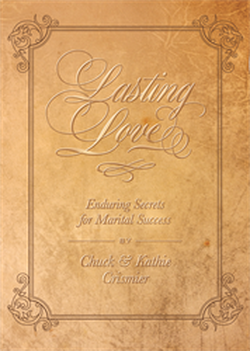
LASTING LOVE can be a dream come true. Yet love requires more than a dream or those loving feelings we so much desire.Lasting Love, Chuck and Kathie Crismier, celebrating their Golden Anniversary, unveil seven enduring secrets that will inspire and strengthen your marriage as it has theirs. COPY and PASTE this link to WATCH the TRAILER: https://www.facebook.com/Save-America-Ministries-204687919570536/videos
Past Episodes
This ministry does not have any series.
Featured Offer
LASTING LOVE can be a dream come true. Yet love requires more than a dream or those loving feelings we so much desire.Lasting Love, Chuck and Kathie Crismier, celebrating their Golden Anniversary, unveil seven enduring secrets that will inspire and strengthen your marriage as it has theirs. COPY and PASTE this link to WATCH the TRAILER: https://www.facebook.com/Save-America-Ministries-204687919570536/videos
About Save America Ministries
About Chuck Crismier
Contact Save America Ministries with Chuck Crismier
crismier@saveus.org
http://www.saveus.org/
Save America Ministries
P.O. Box 70879