
MASSIVE SEDUCTION GROWS


How to stay pure amid Deception
Announcer: This is Viewpoint with attorney and author Chuck Crismier. Viewpoint is a one-hour production confronting the issues of America's heart and home. And now with today's edition of Viewpoint, here is Chuck Crismier.
Chuck Crismier: Years ago, I was attempting to settle a case in Southern California in the Superior Courts of Los Angeles. It was a contract case, a case involving a contract. We had not been able to settle the case, and so it was brought in for a mandatory settlement conference before the supervising judge of the court. He called me into his office as he would do the other side of the litigation, and he addressed me. He was the only one that ever addressed me by the name Charlie. He said, "Charlie," and then he made a statement I will never forget. He said, "Don't you know contracts are made to be broken?"
That was the supervising judge about 40 years ago. Contracts are made to be broken. Well, how about compacts? How is a compact different than a contract or a covenant? Today on Viewpoint, we're going to take a look at this matter of compacts and covenants on the program because our special guest is going to guide us through a labyrinth of thoughts concerning ideas upon which our nation was born, how principles and faith and courage forged America.
But before we get into that, I want to introduce you to a compact. It's called the Mayflower Compact. It took place in November of 1620 as the Pilgrims landed at Cape Cod, there in what was supposed to be Virginia, but ended up being Massachusetts. Believe it or not, at that time, Virginia covered all the way almost from the complete south to the complete north of this country on the east coast, and then spread clear across to the west coast. Virginia was a big place.
But they actually were blown off course and landed outside the area of Virginia where they had a legal document to guide them. So now they have no legal document to guide them. They're blown off course, and they land at Cape Cod in what we now know as Massachusetts. And so they had to do something very quickly. They had to adopt something that would enable them to govern themselves legitimately, faithfully. And it's amazing how they did that.
They put together a very short document called the Mayflower Compact. Relatively few words, and it began with the words, "In the name of God, amen." In other words, in the name of God, so be it. Well, what was it that was to be? And how did it affect the future of our country? In fact, it's very possible we wouldn't have a country today if it hadn't been for the Mayflower Compact. So we need to form a little bit more about what that means.
I'm glad that you've joined us, friends. This conversation is always with ever-increasing conviction talk that transforms. I trust that today will be no exception. Now, before we introduce our guest, who's coming from to us from Georgia, I want to introduce you to an idea about the way we talk about ideas. I believe that there are two overused words in our country today. They're used so frequently, so repeatedly, that sometimes we wonder, what do they actually mean?
One of those words is ideology. It begins with the word idea, ideology. So what is an ideology? Well, very simply, friends, they are ideas. Ideas that do what? Ideas that guide, that inform, that equip. They're just ideas. And the other word is worldview. Worldview. What is a worldview anyway? You can't see the world for all its in it anyway. So what is it? All they are is beliefs. A worldview is beliefs.
So we have an ideology, we have worldview, we have ideas and beliefs. And today we want to talk about those ideas and beliefs. Then there are two overriding ideas in our country. Now, this may come as a surprise to you, but there are two overriding ideas that formed this country. You find them even in the Mayflower Compact. You find them in John Winthrop's Model of Christian Charity in 1630. And here they are. You may find these familiar because there was a lawyer in Jesus' day that tried to trip him up over this very idea.
He said, "What is the greatest commandment?" And Jesus said, "Love the Lord your God with all your heart, soul, mind, and strength. And the second is like it, love your neighbor as yourself." He said on these hang all the law and the prophets. And I'm going to tell you today, on those two hang all the past and the future of America. So today on Viewpoint, our special guest joining us, Lawrence Reed, Dr. Lawrence Reed, who we will hereafter call Larry. It's good to have you on the program, Larry.
Lawrence Reed: My pleasure, Chuck. Thanks so much for having me.
Chuck Crismier: Well, I know that it was a bit of a long introduction there, but I wanted to lay a foundation. You know, we lawyers are supposed to make opening statements to a jury so they understand what kind of evidence we're going to present. Hopefully, they understand a little bit about where we're going. All right, so you're the man today. You've been involved in talking about the history of our country and the important things related to it. Give us a little cross-section. You know as a trial lawyer, I have to qualify you as an expert witness, so that's what I'm trying to do right now. Give us a little statement about your background.
Lawrence Reed: Well, I was born in Pennsylvania. I earned my degrees at Pennsylvania colleges and went on to teach in Michigan at the college level for seven years. From then on, I have been running think tanks in one place or another as president. One was in Michigan, and I ran that for 21 years. Another in Idaho for three years, and then the Foundation for Economic Education for 12 years. I still, to this day, am a very active retired president emeritus of the Foundation for Economic Education.
Chuck Crismier: In other words, you're all about ideas.
Lawrence Reed: Yeah, absolutely.
Chuck Crismier: No wonder the title of your book, "Born of Ideas."
Lawrence Reed: Yeah, I'm trying to make the case in the very title that unlike most countries, we were not born here in America as an ethnicity or as a geographic chunk of something. We were born out of ideas.
Chuck Crismier: Isn't that interesting? Now, the only country that would be very similar to that would be Israel, wouldn't it?
Lawrence Reed: Yeah, I think so, although ethnicity does play a very major part in Israel.
Chuck Crismier: Sure, sure it does. But the earlier founders of this country, whether they be the Puritans, whether they be the Pilgrims, and those that followed them in that particular arena of time from 1620 to say close to 1700, they had a conviction that our country was very much like the way of the children of Israel leaving Egypt, didn't they?
Lawrence Reed: Yes, they did.
Chuck Crismier: All right, I want you to respond to that when we get back from the break. Yes, they did. What does that mean? Does it have any import for the ideas that have governed our country? We'll be right back, friends. Stay tuned. You're listening to Viewpoint. And remember, Viewpoint always determines destiny.
Announcer: Once upon a time, children could pray and read their Bibles in school. Divorces were practically unknown, as was child abuse. In our once great America, virginity and chastity were popular virtues and homosexuality was an abomination. So what happened in just one generation? Hi, I'm Chuck Crismier, and I urge you to join me daily on Viewpoint where we discuss the most challenging issues touching our hearts and home. Could America's moral slide relate to the fourth commandment? Listen to Viewpoint on this radio station or anytime at saveus.org.
Chuck Crismier: Welcome back to Viewpoint. I'm Chuck Crismier. Did the Pilgrims and Puritans in a sense, a figurative sense, come out of Egypt? And if so, why is it that they seemed to see America as an errand into the wilderness? They even used that language, an errand into the wilderness, just like Israel left Egypt into a wilderness. Why did they do that? What did that have to do with the overall thinking and ideas that gave birth to this country? Our special guest today, Dr. Lawrence Reed, heretofore called Larry. Larry, give us your thought on that.
Lawrence Reed: Well, when the Pilgrims came in 1620, there was only one existing English settlement in North America, and that was Jamestown, several hundred miles to the south. When the Puritans came in 1630, they settled in what is now Massachusetts, not very far from the Plymouth Colony of the Pilgrims at that time. Both of them, Pilgrims especially, were fleeing religious persecution back in Britain. And of course, needless to say, that's something that Jewish people have faced throughout their history and from all over the world.
When the Pilgrims came in 1620, they saw themselves as settling in a new world. They knew full well that they would likely put a permanent imprint on the very nature of this new world, that they were hoping to set up a place where people would be tolerant of different religious beliefs. The Puritans a little less so. They became a kind of tyrannical theocracy.
Chuck Crismier: Well, that's because they believed that the Church of England could not be purified. They believed that it was so bad that there was nothing further, nothing redemptive about it. And they got to clarify it and make it. In fact, John Winthrop, that godly attorney, said, "You know what? We're going to do what the churches in Europe refused to do. They supposedly are evidencing the kingdom of God, but they're not. We're going to do it. We're going to make it real." And that's what he put in his Model of Christian Charity.
Lawrence Reed: Yeah. So for various matters of faith, Pilgrims and Puritans came here to seek out the liberty that they didn't have back home. And that's something that they have in common with the Jewish people and the founding of Israel.
Chuck Crismier: Well, indeed. And of course, the same thing happened to our country. It was not very long. It was like a 40-year generation after the Pilgrims and Puritans landed and set forth their intent, which God had done with Israel at Mount Sinai. By the time 40 years had passed in the wilderness in America, they were already wandering away, such that a so-called spiritual liberalism began to invade even places such as Harvard and Yale.
Lawrence Reed: Yeah, and you also had a kind of dead church, you might say, by the early 18th century, where people were going through the motions. The pastors droned on in a monotonous fashion. They didn't have the fire or the passion.
Chuck Crismier: Some people think we do that today.
Lawrence Reed: Yeah. They didn't have the fire or the passion that would come with the Great Awakening in the 1730s and 40s.
Chuck Crismier: And along came Jonathan Edwards, who did read his message, but man, the Holy Spirit brewed upon that and the people hung to the pillars of the church as if they were descending into hell.
Lawrence Reed: Yeah, and George Whitfield was another one. I don't know if you saw the recent movie about him. "Great Awakening." I just thought it was fantastic. And I urge people to see that. You can stream it now. But it follows the friendship between George Whitfield and Benjamin Franklin.
Chuck Crismier: So how would you describe, then, the effect, idea-wise, of the Mayflower Compact and then John Winthrop's Model of Christian Charity 10 years later?
Lawrence Reed: The reason the Mayflower Compact is so important, and yet it's somewhat forgotten and often neglected in American history today, is that it's a defining moment. It's the first time in world history when two groups of people, in this case, the Pilgrims and the others on the boat known as the strangers, formed an agreement or covenant, contract you might say, in which they said, "Look, we've been blown off course, we're about to land, and we need to hold everybody together. So let's agree that we will form a government of mutual consent. We will be a tolerant settlement, and no one will be discriminated against because of their beliefs or lack thereof."
And you know, before in history, whenever there were agreements between people about the nature of governance, it always involved a monarch or a dictator and some group of people. Even the Magna Carta was between nobles in England and the king. But as the historian Rebecca Fraser points out, the Mayflower Compact was different. It was truly a social contract entered into voluntarily by people with no connection to a monarch or to a governing authority outside of themselves.
Chuck Crismier: All right, you mentioned social contract. That sounds an awful lot like Jean-Jacques Rousseau, who was into social contracts. How was it different?
Lawrence Reed: Well, Jean-Jacques Rousseau of the French Enlightenment took it to an extreme. He thought he could divine the so-called general will, which is like taking everybody's ideas and homogenizing them in a communal blender and then coming up with some kind of summation. And that meant that a lot of people would be dragooned by force into whatever the general will seemed to suggest. His problem was that he never defined what the general will was or how you arrive at it. And so it's dependent upon those in power and what they want you to think it is.
Chuck Crismier: So was all a theory?
Lawrence Reed: That's right. Whereas with the Pilgrims and the strangers on the Mayflower, that was a real social contract. It was written down and it was mutual, it was voluntary and did not involve any monarch or other existing government authority.
Chuck Crismier: But what do you make of the fact that it begins with the words, "In the name of God, amen"?
Lawrence Reed: Well, how could it not? These were people, the Pilgrims in particular, who came because they thought that God was directing their way. They were coming because they wanted a place where they could worship freely. And so God meant everything to them.
Chuck Crismier: So that gives all new meaning to the phrase that was adopted centuries later, "One nation under God."
Lawrence Reed: Yeah. We were, although we were not established as a theocracy when America was founded in the 1770s and 80s, we were immensely influenced by Christian beliefs and ethics and tolerance. And so we welcomed from the world, we welcomed people of all faiths to come to a place where they could worship freely and build a new future in a free country.
Chuck Crismier: And yet, it was the first Chief Justice of the Supreme Court who said we ought to prefer Christians for all of our elective offices.
Lawrence Reed: Yeah, that was his opinion, it was never codified in federal law.
Chuck Crismier: No, it was a belief.
Lawrence Reed: Yeah, and certainly one that is easily defended. I think there's a great deal of merit in that perspective.
Chuck Crismier: Well, exactly. And apparently, many years later, a fellow by the name of Alexis de Tocqueville, a secular Frenchman, came over to try to figure out what it was that made America great. And after nine months, it gave birth to a book called "Democracy in America." And his interesting observation was that the very most important thing that he noticed about the country was not all of its vast natural resources, wasn't even its democratic form. It was, he said, it wasn't until I went to the churches of America and heard her pulpits aflame with righteousness that I understood the secret of her genius and power. He said that Christianity was the first of its political establishment, its idea. What make what do you make of that?
Lawrence Reed: Oh, he was exactly right. And he saw it take many forms, not only in the passionate professions of faith by many Americans, but also by their very good works prompted by their Christian ethics that taught them to help those in need, to be responsible for their families and for those around them, to not expect that some distant government should provide them with everything.
They were going to town, as de Tocqueville might have said, in producing great charitable institutions and civic life and just a spontaneous order that wasn't directed by some central authority.
Chuck Crismier: He said it wasn't as if everybody was actually a professing Christian, but the Bible, the word of God, was the believed to be the absolute authority in the country.
Lawrence Reed: That perspective was very widely shared by Americans, probably for the first hundred years at least of our history.
Chuck Crismier: All right. Now, he contrasted that with France. And they had a revolution, 1789, right around the time of ours and when we established a constitution. And there was liberty, equality, fraternity. That was their idea. But in order to achieve that, they established an outright revolution against the whole concept of God, the whole concept of a creator, to the point where they actually changed the times and the laws in order to get rid of any biblical connection whatsoever. And so de Tocqueville said, you know what? Things in France in the name of liberty went just the opposite of what happened in America.
Lawrence Reed: Although de Tocqueville didn't say that, he was deceased by the time of the French Revolution, but that is certainly what actually happened. In the early stages of the French Revolution, things looked rather promising. It was inspired in part by what had happened in America in the previous decade. The Marquis de Lafayette, who had fought on our side in the war with the British, he wrote along with the help from Thomas Jefferson, the French Declaration of the Rights of Man and Citizen. So in the early months of the French Revolution, things looked promising. But it was hijacked by Rousseauian nut jobs.
Chuck Crismier: You mean like a lawyer by the name of Robespierre?
Lawrence Reed: Oh, he was among the worst.
Chuck Crismier: Well, he was called the Messiah, though. They actually called him the Messiah.
Lawrence Reed: And he created his own religion and called it the Cult of the Supreme Being. That was the last straw for a lot of French people.
Chuck Crismier: All right, so these were the ideas, then, that completely were opposite of America's founding. So when we talk about born of ideas, we have to really understand how powerfully different the ideas were. And by the way, I do believe that de Tocqueville wrote his book in 1830.
Lawrence Reed: Oh, I'm sorry. Yeah, I got my centuries wrong.
Chuck Crismier: That's all right. You know, once you get over a certain age, we have a propensity to kind of overlap ideas.
Lawrence Reed: Yeah, yeah. I had him a hundred years earlier. Sorry, my apologies.
Chuck Crismier: That's all right. Hey, listen, you wrote a book called "Born of Ideas: How Principles, Faith and Courage Forged America." And I want to make the book available to our listeners. $18 or more to Save America Ministries will put it in your hands. It's on our website, saveus.org. Give us a call at 1-800-SAVE-USA, or you can write to us at Save America Ministries, PO Box 70879, Richmond, Virginia, 23255. Write a check. $6 is for postage and handling, and "Born of Ideas" will be put in your hands.
So, what I found interesting about your book is that you have broken it down into little two, three, and four-page chapters. Each one representing a particular kind of idea that you believe were at the heart of the formation of our country and have driven it ever since. How did you choose these?
Lawrence Reed: Well, some of them I wrote as standalone essays and they were published by themselves in recent years. But then when it came time to assemble the pre-published works into a book and add some new ones, I had to think of common connectors and the proper logical order. And I wanted the chapters to be short enough and to still stand alone.
Chuck Crismier: You mean that people would read them.
Lawrence Reed: Yeah, that you could pick it up and just read one chapter before going to bed and pick up anywhere in the book thereafter. So that was the rationale. But I also wanted to bring to light some really key ideas, events, and people who were formative in America's colonial history and that played a role one way or the other in the coming of the Declaration of Independence.
Chuck Crismier: Well, you brought up a number of different people and names that we would not commonly know or even have heard of. And maybe we should take a look at a few of those. We'll be right back after this, friends. Get a copy of the book "Born of Ideas." I think it's going to be fascinating to you. How principles, faith and courage forged America. Going to be easy to read and hear. We're still remembering and celebrating the 250th anniversary of our country. Worth looking at again. "Born of Ideas."
Announcer: There is so much more about Chuck Crismier and Save America Ministries on our website, saveus.org. For example, under the marriage section, God has marriage on His mind. Chuck has some great resources to strengthen your marriage. First off, a fact sheet on the state of the marital union, a fact sheet on the state of ministry, marriage, and morals. saveus.org. Marriage, divorce, and remarriage. What does the Bible really teach about this? Find all of this at saveus.org. Also, A Letter to Pastors: The Hosea Project. saveus.org. And many more resources to strengthen your marriage. It's all on Chuck's website, saveus.org. Again, you can listen to Chuck's Viewpoint broadcast live and archived at Save America Ministries' website at saveus.org.
Chuck Crismier: Welcome back to Viewpoint, friends. I was saying, welcome back to America. Where can we find America today? Well, we find America actually in the ideas. And to the extent that we have become differed from the ideas that formed us as a country, one has to wonder, is this America? What is America anyway? What would you say, Lawrence?
Lawrence Reed: Well, I think America is a concept, a very lofty one that holds to itself some very profound notions. One is that as an individual, your rights come not from any government, but from your Creator. We also hold very dear the notion that when governments stop defending your rights and instead tyrannize over you, that you and others have every right to replace that government, that it is not entitled to govern you when it drastically misbehaves and deprives you of your rights.
Chuck Crismier: All right. You know, I'm glad you said that, but it also brings up something Christians are always bringing up, Romans chapter 13, where the Apostle Paul says that we should submit ourselves to governments of man because government is ordained by God for our good. But he also said very clearly that government is ordained by God for the purpose of dealing with those who are doing wickedly and to bless or reward those who are doing well. So when a government ceases to do well and starts doing wickedly, it seems that perhaps the Apostle Paul wasn't so affirmative of us submitting to such government.
Lawrence Reed: Yeah, Paul's admonition in Romans 13 presupposes government that is doing what it is supposed to do. In fact, the first thing one should ask if you think that he was saying obey any and all governments, no matter what they tell you to do, well then you have to ask, was he a hypocrite? Because he didn't do that. He was arrested three times. And he didn't go back to doing what the government told him to quit doing each time. I mean, he went back.
Chuck Crismier: Neither did Peter and John.
Lawrence Reed: Yeah, that's right. So yeah, if government doesn't, I mean, the Bible is full of examples that incur praise from the authors, including some of the apostles. It's full of examples of disobedience to tyrannical government. I mean, after all, if Mary had done what King Herod was expecting her and other Israelite women to do, she would have put Jesus to death. But of course she didn't, she broke the law.
Chuck Crismier: And so would have Moses' mommy.
Lawrence Reed: Yeah. So when government does what it's supposed to do, it defends and protects your rights and allows you to live in peace with others. But when it violates that, you have every right under Christian doctrine to join with your compatriots and do whatever is necessary to replace that government.
Chuck Crismier: So bound, if you reduce it all to its lowest common denominator, it would appear that government was ordained by God to protect against enemies, foreign and domestic.
Lawrence Reed: That's right. The Bible doesn't say you should have no government, everything should be just an anarchy. It says no, government should exist, but it should do the right thing. And when it doesn't, you can get rid of it.
Chuck Crismier: All right, so we have a war right now. People will call it a culture war. I don't believe it's a culture war. I believe it's a spiritual war that's manifested in the culture. And I think to use the term "culture war" is error. I think our Christian leaders have gotten into trouble going all the way back to the 1970s by saying that we're in war in the culture and they forgot to deal with the spiritual issues. And so it began to look hypocritical.
And I think that's why my friend Dr. James Dobson told me right on the floor of the National Religious Broadcasters Convention, he told me right out loud on national air, he said, "We've already lost the culture wars." That was 15 years ago. And he was considered to be the preeminent culture warrior. So we've got a problem in the way we think.
And I think perhaps as Christians, and I know you have told me very clearly that you are one, we've had a problem with how we actually chose to look at certain things. We didn't see them from God's viewpoint, we looked at them from the culture's viewpoint. What looks good, what looks nice, what makes us feel good, what gives us a kind of morality.
Lawrence Reed: Yeah, in recent years, Chuck, we've seen so many seemingly unexplainable crazinesses in our midst, from transgender ideology to a moral relativeness, relativity, I guess, would be the word. And sometimes people have asked me, well, where is this coming from? And I find it increasingly difficult to explain it in any other way than in terms of what I call the angelic conflict.
That's not a term that's original with me, but it refers to the fact that there is evil in the world. There is a war between God and Satan. And if I were Satan and my job was to undermine God's work and to prevent people from earning salvation, I would do a lot of the things that we're seeing done in the world today. I would get everybody that you can, that I could, to question truth. I would make it relative. All truth doesn't matter. It's whatever you think it is. No objectivity to it.
Chuck Crismier: Sounds like you're a wannabe Paul Harvey. "If I were the devil."
Lawrence Reed: Yeah, exactly. I think he nailed it with that commentary about what, 40 years ago.
Chuck Crismier: He sure did. Okay, now, if you were to lift up two or three people that we don't normally think about as having a significant contribution in terms of the ideals or ideas that were formative of our country, who would they be?
Lawrence Reed: Well, one would be Mercy Otis Warren. In her day, before she died, she was widely known in America as the conscience of the revolution. She was a playwright by profession, but in the 1760s and 70s, she was increasingly vocal against British tyranny. She had to put other people's names or pseudonyms to her plays because she knew the British would see them as subversive. And she opened her home to the first meetings of the Sons of Liberty, including to Samuel Adams.
Chuck Crismier: So she exercised hospitality which has been formative in the heart of America from its get-go.
Lawrence Reed: Yeah, it sure was. And it was nothing less than treasonous for her to be collaborating with people who were advocating for the separation of America from Britain. She later wrote a history of the American cause during the colonial period before the Declaration of Independence. And when Thomas Jefferson became president and she was still living, he required that book of Mercy Otis Warren's to be read by every member of his cabinet.
Chuck Crismier: Wow. Now, that's something that I had never heard. And so I appreciate your bringing that to our attention. I suppose there are a lot of things that I've never heard. Most people think I've heard everything, but I haven't by far. So thank you for bringing that to our attention. Who else comes to your mind?
Lawrence Reed: Well, we shouldn't forget those from other countries who left their homelands and came to America to fight against the British. Marquis de Lafayette, he was 19 years of age when he broke French law, by the way. He was forbidden to leave the country for the purpose of joining the American cause. France hadn't yet entered the war on our side.
But he broke the law, showed up at the Second Continental Congress in Philadelphia as a 19-year-old Frenchman, knocked on the door and whoever answered, Lafayette said, "I'm here to help. I want to join the Continental Army." And he was actually turned away at first. I mean, you could imagine whoever answered probably thought, "Who's this upstart punk kid?"
But he became a heroic fighter and one of George Washington's favorites. Washington came to think of him as a second son. He fought valiantly and was wounded at Brandywine. And he was there at Yorktown when we beat the British and effectively won the war.
But there were Polish people who came. Thaddeus Kosciuszko was one. He was an engineer, helped build the fortifications at Saratoga, which enabled us to win that battle. And that was the battle that prompted the French to join the war on the American side. Casimir Pulaski, known to this day as the father of the American Cavalry and one of only eight people in American history to be given the honor of honorary citizenship as an American. He's buried in Savannah, Georgia, close to where he died in battle.
And then you had Haym Salomon, a man from Poland who came as a very wealthy man about a year before the war began. But within a few years, he completely bankrupted himself because he gave everything he had to the American cause. He was making loans to the army that he fully expected to never get paid back, and he was giving money away. Whatever he could do of his own substance, he gave for the American cause.
Chuck Crismier: That's pretty amazing, but he didn't sign the Declaration.
Lawrence Reed: No, he wasn't an American, but what a hero he was.
Chuck Crismier: Isn't that amazing? We need to give credit to whom credit is due. What was it that he saw there, since your book is about born of ideas, principles, faith and courage? What was it that he saw that caused him to invest his life, so to speak?
Lawrence Reed: Well, it clearly was not ethnicity. He didn't come to America because he wanted to be with Polish people. He came here because of the idea that America represented. This is in a world, of course, of absolute monarchs. And he came here because he firmly believed that we had something right here that was quite promising, that each individual has a sacred right to his life and his honor and his freedom.
Chuck Crismier: All right, friends, your eyes and your heart, your mind are going to be opened as you read these simple chapters. "Born of Ideas: How Principles, Faith and Courage Forged America." Probably very encouraging to you. $18 will put it in your hands on the website, saveus.org. Call us 1-800-SAVE-USA, write to us at Save America Ministries, and $6 for postage and handling. "Born of Ideas" will be put in your hands.
Announcer: Have you ever considered what the early church was like? Many people are developing a heart longing for a greater fulfillment in our practices as Christians. A recent study shows 53,000 people a week are leaving the back door of America's churches in frustration. What is going on? Why has there not been even a one percent gain among followers of Christ in the last 25 years? Could it be that God is seeking to restore first-century Christianity for the 21st century? Jesus said, "I'll build my church." Is Christ by His Spirit stirring to prepare the church for the 21st century? The early church prayed together and broke bread from house to house. They were family, and it was said by all who observed, "Behold how they love one another." Incredible. But the same can be found right now. Go to saveus.org and click Cell Church. We can revive first-century Christianity for the 21st century. It's about people, not programs. It's about a body, not a building. That's saveus.org. Click Cell Church.
Chuck Crismier: He instigated the Boston Tea Party, signed the Declaration of Independence, called for the First Continental Congress and served as a member of Congress until 1781. He helped draft the Massachusetts Constitution, and his name: Samuel Adams. Samuel Adams. He's one of my favorites going back into the time of the Revolutionary War and preceding it. I want to let you into how he thought because we're talking about ideas.
So, as the Declaration of Independence was signed, he declared, "We have this day restored the Sovereign, to whom all men ought to be obedient." He was referring to God. "He reigns in heaven and from the rising to the setting of the sun, let his kingdom come." Now, he saw the birth of the nation as a demonstration of the coming of the kingdom of God. He just did. Whether you agree with that is not the point right now. That's what he saw, and there were reasons why he saw that.
He said, "A general dissolution of principles and manners will more surely overthrow the liberties of America than the whole force of the common enemy. While the people are virtuous, they cannot be subdued. But when they lose their virtue, they will be ready to surrender their liberties to the first external or internal invader." That's where we are today, by the way, friends.
He said, "Neither the wisest constitution nor the wisest laws will secure the liberty and happiness of a people whose manners are universally corrupt. He, therefore, is the truest friend to the liberty of his country who tries most to promote its virtue and who, so far as his power and influence extend, will not allow a man to be chosen into any office of power and trust who is not a wise and virtuous man. The sum of it all: if we would most truly enjoy this gift of heaven, let us become a virtuous people."
Now, what's that based upon? Well, in the book of 2 Peter, we find Peter saying this, "Add to your faith, virtue." So we can talk all we want about the Christian faith, we can talk all about our theories and ideas of faith, but if it's not born out in reality, we're a bunch of hypocrites. And he knew that, and it would destroy the country. What say you, Larry?
Lawrence Reed: You are exactly right, Chuck. When I think of Sam Adams, I think of one of my favorite biblical passages, which is 2 Timothy 1:7. Paul wrote it, and it says, "For God did not give us a spirit of fear and timidity, but of power, love, and self-discipline." That sure describes Sam Adams to a T.
Chuck Crismier: So why did they name a big beer after him? They reduced him to a mockery.
Lawrence Reed: Well, you'll have to ask the beer company. There may have been some personal connection, but I think it was started some years after the day of Sam Adams. But he was powerful, he was courageous. He was one of the co-founders of the Sons of Liberty. You know, the British so hated him that the shot that was heard round the world that was fired at Lexington that started the war in April of 1775 was prompted by the British desire to capture Sam Adams as well as John Hancock. They sent troops out from Boston and that famous shot was fired on the way to Concord at Lexington. They didn't find Hancock and Adams, so neither were arrested. But the British sure understood how powerful his words were.
Chuck Crismier: Okay, we don't quite understand the level of commitment that these people had because of the ideas. Somehow we have become adept at rationalizing away truth, at rationalizing away commitment to the fundamental principles of even our faith in the Lord. It's amazing what's happened in our churches today. Just amazing. I grew up in the church. My father was a pastor for 50 years, and I've watched this trajectory take place. We have gradually abandoned the foundations of the faith in many respects. And that, I believe, is why we are no longer a virtuous people in this country. We've actually given up those ideas in favor of what I would call pragmatism. What say you, Larry?
Lawrence Reed: Oh, I think you're exactly right. We've forgotten many of the principles that animated our founders. The church has abandoned many of the responsibilities that the Bible clearly says should be the church's, not government's. And we have forgotten so many of the great human beings who put everything on the line so that we could have the freedoms that we have today.
You mentioned how under-appreciated some of these people are, and I think of Nathan Hale. He was 21 years of age, a schoolteacher, when George Washington needed somebody to step forward and go into Manhattan as a spy to report on the British and their emplacements of troops and guns. Nathan Hale stepped forward, knowing it would likely be a suicide mission. Disguised as a Dutch schoolteacher, he went into Manhattan.
Unfortunately, his cover was blown when someone recognized him, and he was marched to the gallows. But even the British officers who were present at that were moved by his composure and what he said.
Chuck Crismier: Well, they elongated his neck. And of course, that's what's happening over there in Iran just this last weekend. Somebody else had their neck. But let's not forget Nathan Hale's last words as he was about to be hung: "I regret that I have but one life to lose for my country." And wouldn't that be interesting if indeed people, Christians today, had that kind of commitment when it came to the issue of persecution?
Lawrence Reed: Yeah, it's that kind of commitment of character and courage that really wins wars that otherwise may have seemed to be un-winnable.
Chuck Crismier: And wins the war of the spirit as well. Exactly. You know, so much of what formed our country back then has been largely erased away through pragmatism, rationalization, actually embracing things that our founders sought to escape from, and now we're running to.
Lawrence Reed: Yeah, there is a dire need, I think, for Americans to once again recall the reasons that we became an exceptional country. We need as a people to renew our faith and confidence in our Creator. We need to renew our understanding of the ethics of Christian teaching. We need to behave that way in our personal lives, and we need to hold our politicians accountable to those foundational beliefs.
Chuck Crismier: It's interesting because I decided, remember I opened the program with this idea of two overused words. One was ideology and the other is worldview. So I asked the infinite wisdom of Google, i.e., AI. Here was my question: Why do politicians use the word ideology instead of fundamental religious words? And here was the answer. I thought it was terrific. They said politicians use the word ideology instead of fundamental religious differences to keep campaigns inclusive, to avoid religious division. In other words, to avoid any discussion of truth and frame disagreements as rational political choices rather than un-compromisable matters of faith.
So the language helps them win more votes in a diverse society. Broader appeal: ideology includes people of all religions or no religion. Prevents conflict: talk about faith can start heavy arguments and anger voters. Sounds modern: the word ideology sounds smart, scientific, and open to change. Easier compromise: political views can be negotiated, but religious truths feel absolute and fixed. Therefore, I don't think the word ideology is the word that we should be using. I think it's deceptive. What's your thought on that?
Lawrence Reed: I think you're on the mark on that as well, Chuck. I don't use personally ideology very much because it is a man-constructed and very fluid notion.
Chuck Crismier: It's too ideological, right?
Lawrence Reed: Yeah, exactly. Too much rooted in what some would call consensus. And I remember what Margaret Thatcher said about that. Thatcher said very dismissively of consensus, she said, "Yeah, that which everyone says but nobody believes."
Chuck Crismier: Isn't that amazing? So where is the courage of convictions today? Because really, when you're talking about born of ideas, the ideas only matter if you have a conviction that those ideas are true and that you're going to do something about it. Or if you have a conviction about something that we call worldview today, which are really your beliefs, and you don't follow them, then the whole idea of worldview is meaningless. We just don't do what we say.
Lawrence Reed: Yeah, I tell audiences all over the country that courage of conviction is an element in strong character. It's an admirable trait that the good men and women of the past who've made a difference and made the world a better place certainly had, and that we need to find once again within ourselves the courage to stand for what we know to be right. As Edmund Burke said...
Chuck Crismier: Well, he said, "I can't do everything, but I can do something. What I can do, I should do, and by the grace of God, I will do."
Lawrence Reed: Yes, that's not the exact quote I was thinking of.
Chuck Crismier: I know that. I knew that too. Years ago, I could have recounted that quote off the top of my...
Lawrence Reed: Well, you see, we're both past an age where we would remember those things with absolute clarity.
Chuck Crismier: You're right. Okay, so you've devoted your life to dealing with these kinds of ideas and thoughts and communicating them. So where do you stand today? You said you're president emeritus. Where does the merit stand now? What are you doing?
Lawrence Reed: Well, after 12 years as president, I retired to the emeritus role, which is effectively still full-time for me, but it means I get to do the things I most enjoy: writing and speaking. I don't have the day-to-day responsibilities of fundraising and of administration and so forth. So I get to write books and articles and do a lot of public speaking.
Chuck Crismier: Well, fundraising is not fun-raising, is it?
Lawrence Reed: No, it isn't. And after 50 years of it in one capacity or another, that was a responsibility I was happy to pass off to a new president.
Chuck Crismier: I don't blame you. It's the one thing that I do not like. We make an opportunity for people to support. We have no commercial support for this program because to gain commercial support is to risk them telling you what to do or not to do in order to gain their funds. And we just don't do that. And so, I appreciate so much what you're doing, Larry. And what would you say to us today when we have young people, both Millennials and Generation Z, who have not been exposed or taught in any meaningful degree these foundational ideas for our country?
Lawrence Reed: I tell audiences all the time, Chuck, especially when I'm asked the question you just posed as well as the one I get most often, which is what do you think is the most important issue in the country? And the answer to that is in a single word, it's the same as it's always been here and everywhere, and that is character. Because everything flows from it. A nation that doesn't get character right is going to be a flop in many respects, and no country that ever lost its character kept its liberties.
Chuck Crismier: Well, it's interesting because Solzhenitsyn came over here from Russia, spoke to Harvard, and he said, "The one thing that I notice is really missing in America is courage." Courage lost, all loss. And therefore, what he was really saying is, I don't see character here worthy and able to preserve your country. All right, friends, Larry Reed, "Born of Ideas: How Principles, Faith and Courage Forged America." Thanks so much for joining me here on the program. The book $18 on our website, friends, saveus.org. Call us 1-800-SAVE-USA, write to us at Save America Ministries, plus $6 for postage and handling. We're wrapping up the 250th anniversary of the country. Still have the Constitution coming, the Bill of Rights, and so on. But let's get these ideas straight. I hope you'll make use of this book. God bless.
Announcer: You've been listening to Viewpoint with Chuck Crismier. Viewpoint is supported by the faithful gifts of our listeners. Let me urge you to become a partner with Chuck as a voice to the church, declaring vision for the nation. Join us again next time on Viewpoint as we confront the issues of America's heart and home.
Featured Offer
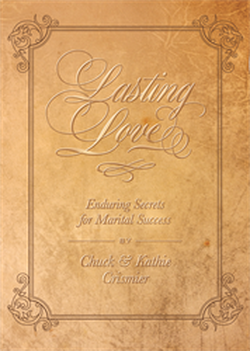
LASTING LOVE can be a dream come true. Yet love requires more than a dream or those loving feelings we so much desire.Lasting Love, Chuck and Kathie Crismier, celebrating their Golden Anniversary, unveil seven enduring secrets that will inspire and strengthen your marriage as it has theirs. COPY and PASTE this link to WATCH the TRAILER: https://www.facebook.com/Save-America-Ministries-204687919570536/videos
Past Episodes
This ministry does not have any series.
Featured Offer
LASTING LOVE can be a dream come true. Yet love requires more than a dream or those loving feelings we so much desire.Lasting Love, Chuck and Kathie Crismier, celebrating their Golden Anniversary, unveil seven enduring secrets that will inspire and strengthen your marriage as it has theirs. COPY and PASTE this link to WATCH the TRAILER: https://www.facebook.com/Save-America-Ministries-204687919570536/videos
About Save America Ministries
About Chuck Crismier
Contact Save America Ministries with Chuck Crismier
crismier@saveus.org
http://www.saveus.org/
Save America Ministries
P.O. Box 70879