

MARRIED...not STRANGERS


Don't Burn Your House Down
w/ Lindsey Maestas
Guest (Male): This is Viewpoint with attorney and author Chuck Crismier. Viewpoint is a one-hour talk show confronting the issues of America's heart and home. And now, with today's edition of Viewpoint, here is Chuck Crismier.
Chuck Crismier: Would you be surprised at the most common ways in which houses burn down? The most common causes of house fires? I checked it out, and AI for all of the truth that it delivers tells us this.
Cooking—unattended stoves, ovens, small kitchen appliances cause over 50% of residential fires. Next, portable space heaters, wood stoves—the second leading cause when placed too close. In other words, when we overheat in situations where things are combustible.
Faulty wiring, overloaded power strips, damaged extension cords—in other words, failure to keep up and maintain things in our home. Smoking materials, where people discard cigarettes and other kinds of things in potted plants, mulch, trash cans, in bed. And then open flames from candles when left unattended.
Notice the negligence aspect of almost every single one of these. Then another one would be lint build-up in dryer vents. We have a dear friend who started an entire business called Dryer Vents. That's right, and it's a big business now because people have realized that fire is caused by build-up of lint in dryer vents. I clean them every day.
And then, of course, there's intentional setting of fire. You would never do such a thing in your house, I know, but many people do inadvertently set their own houses on fire because they don't maintain their marriages. That's right, they don't maintain their marriages, so they're burning their own house down.
That's what our guest says today. She says, don't burn your own house down. Don't do it. So we hear the words, but the question is, do they really resonate in the practical areas of our life? Well, that's what we're going to talk about here today on Viewpoint. I'm glad that you've joined us. It's conversation, as always, with ever-increasing conviction, talk that should transform.
You see, God never gave us His word for information's sake. God was not interested in informing us; He was interested in transforming us. So all of the information that we find in His word is not for us to be prideful in all the information that we think we know, but rather to be a doer of the word and not just a hearer only, deceiving our own selves.
Well, there's a lot of deception going on in our marriages, and that's why we've had such a massive divorce rate ever since 1968 when the endeared Ronald Reagan in Southern California decided to sign the No-Fault Divorce Act, which he ultimately said was the worst thing he ever did in his whole life. But it set—it was the spark that got the fire going. And it did.
It got the fire going in the country. It got the fire going in the church. It got the fire going everywhere. And so we've been burning our own house down. And then it metastasized into so many other areas that we keep looking at as social malfunctions, but it all began with lighting that initial fire in 1968, burning our own house down.
Our special guest today, Lindsey Maestas, is joining us. She's written what I consider to be one of the best books that I have ever reviewed on the air in 31 years concerning marriage. This is a very, very encouraging book. It's so practical and it'll touch your heart. It really will. It'll touch your mind, it'll touch your heart, it might bring a few measures of conviction, but it will bring change that you can really believe in. Lindsey Maestas, joining us from Nashville, Tennessee. Lindsey, it's good to have you on the program.
Lindsey Maestas: Thank you so much for having me, Chuck, and thank you for your kind words. It makes me a little emotional. This has been a journey and it's so dear to my heart that having somebody receive it well and appreciate it means so much to me. So thank you for having me.
Chuck Crismier: Well, you're welcome and I thank you because one of the things that we do here, three days a week I do monologue, and many of our listeners prefer that. But two days a week we do interviews because I don't believe that I'm the only one that knows anything or that has anything to say.
So I want to help facilitate the messages that God has given to other people to help speak into the life of God's people. And of course, this is a day like that. God has marriage on His mind. We know that because He performed the first one and He's going to perform the last one called the Marriage Supper of the Lamb. And everything in between is a sandwich of marriage. Married to Israel—Israel didn't do well with God, betrayed God's marriage. The church is doing the same thing. We're in deep trouble, aren't we?
Lindsey Maestas: Yes, it's become a very common theme that I've noticed, and one of the things that prompted my passion for this topic, for marriage as a whole, is not only my own marriage and the marriages around me, but is the conversation that our culture is currently having around marriage.
And you see this on Instagram videos and TikToks where somebody expresses a difficulty within their relationship—their husband says something or does something—and rather than pushing them toward healing or restoration, the comment section is filled with commentary about leaving him, or get divorced, or life is better single anyways, or I experienced this and I'm so much better off alone.
They are not fighting for the covenant of marriage. People are not valuing the covenant made before God within a relationship. Instead, they're devaluing it and they're throwing it to the wolves. And nobody walks down the aisle preparing to get divorced. They desire a long-lasting marriage—a marriage that lasts until death.
But then life happens, and parenthood, and sickness, miscarriages—people grow apart—and they face these difficult things and they decide it's easier to throw their hands up than to fight for the goodness of what is a ministry within their marriage. And so I just believe that we're seeing these houses burn down all around us, and not because they're necessarily facing many different things than they used to—though social media adds difficulty there—but because the willingness to be resilient, the willingness to fight, the willingness to have self-control, the willingness to be selfless and a servant has faded because our culture has become so consumed with ourselves and our own happiness.
Chuck Crismier: So that's what the—it's a selfie culture then.
Lindsey Maestas: Absolutely. It's a me-me-me culture.
Chuck Crismier: All about me. You know, it's interesting you should say that because I'm remembering somewhere between 15-20 years ago, I was leaving the O'Hare Airport there in Chicago and right alongside the interstate there was a massive billboard, and all it said was, "Me, me, me." Me, me, me. It used to be said we're the "me" generation. It's the "me-me-me" generation on steroids now, isn't it?
Lindsey Maestas: Yeah, absolutely. Jim Gaffigan had done a series a long time ago, and whether or not you support his comedy, this part resonated and I thought it was funny, but he essentially says we go to the gym, and while we're at the gym, we look at photos to work on ourselves, and then we look at photos of ourselves on our phone because we want to be better for ourselves—which is not bad to take care of yourself—but then we wonder what else for myself is going to satisfy me. And we eat food that feels good for ourselves. There's just so much of ourselves in this.
Chuck Crismier: Well, it's the lordship of self, isn't it? And that's why feelings have overtaken faith, even in the church house, and our marriages are burning down and we don't even realize it. We'll be back after this, friends. You really don't want to miss Lindsey's book, "Don't Burn Your Own House Down." Twenty dollars will put it in your hands. It's on our website, saveus.org. We'll be right back.
Guest (Male): Once upon a time, children could pray and read their Bibles in school. Divorces were practically unknown as was child abuse. In our once great America, virginity and chastity were popular virtues and homosexuality was an abomination. So what happened in just one generation? Hi, I'm Chuck Crismier and I urge you to join me daily on Viewpoint where we discuss the most challenging issues touching our hearts and homes. Could America's moral slide relate to the Fourth Commandment? Listen to Viewpoint on this radio station or any time at saveus.org.
Chuck Crismier: Welcome back to Viewpoint. Are you burning your marriage down, perhaps inadvertently? Have you set the spark that got the fire going? And I'm not talking about the fires of intimacy; I'm talking about the fires that actually are internally smoldering and likely to burn your own house down.
Our special guest today, Lindsey Maestas from Nashville, she says don't burn your own house down. It's time to prioritize your marriage, your spouse, and yourself for a deeper connection with all of them. And I agree with her and you got to get a hold—friends, there's so much in this book that is so practical, so helpful, and it's written in a way—it's written in a way that I know will grab your heart.
Because the heart of the matter is the heart anyway. It's not about information; it's about how we perceive the things that are important and how it's transmitted to us. And that's what she's doing in this wonderful book. Twenty dollars will put it in your hands. It's on our website, saveus.org. You can give us a call at 1-800-SAVE-USA, or you can write to us at Save America Ministries, PO Box 70879, Richmond, Virginia 23255, writing a check adds $6 for postage and handling.
Now, Lindsey, as a good trial lawyer, I always had to qualify an expert witness. Every attorney has to qualify an expert witness to see if they are qualified to speak as an expert. So I'm going to qualify you now as best I can, very simply. First of all, how long have you been married?
Lindsey Maestas: I've been married 14 years and my husband and I have been best friends for 16 years.
Chuck Crismier: Best friends for 16 years. In other words, you have known each other for 16 years. Kind of like the trajectory that my wife and I had. We knew each other for a year, got engaged for a year, and then got married. So after two years, we have now been married 60 years as of July 29th. So that having been said, you got married when you were 22, right?
Lindsey Maestas: Correct, I did.
Chuck Crismier: Which means you are currently well-ensconced in Millennialville at age 36.
Lindsey Maestas: Yes, absolutely.
Chuck Crismier: See, I have certain kinds of abilities to discern the truth. So I didn't ask you how long you've been married; I just told you. I just told you how old you were. And that's important. It's important because people need to know where you fit in the cultural milieu of which we are right now.
And the Millennial generation has had very, very difficult times finding comfort in marriage. It's the Millennial generation that has dramatically changed the trajectory from marriage to cohabitation and then followed by Generation Z, which is even more so troubled and do not know how to find comfort in marriage because they saw what their grandparents and parents did with their marriages, even as Christians.
And so it's been very, very difficult to see a good model, a consistent model. And so we have what is called failure to launch. Millennials and Generation Z, through sociologists and so on, say they have a failure to launch. So you have, for instance, the guy that just attempted to assassinate our president—31 years of age, a graduate of Caltech, brilliant, and still living at home. We have this kind of situation. Now, it's that environment in which you and your husband are living. I am—probably—finding that the majority of those in your sphere of influence are in the broader range of Millennialville, right?
Lindsey Maestas: Yes, correct.
Chuck Crismier: So how would you describe, other than what I've said, the water you swim in, marriage-wise?
Lindsey Maestas: Well, I love what you mentioned about the sense of false adolescence. I think that there is this adolescence where men—many men—take it into adulthood, and they maintain this adolescence when they are meant to be men.
But what I would also add within my waters, my neighbors, my peers, is that you see this desire for connection, yet we are the most isolated, anxious, and depressed generation so far. And so what that is, though, is our phones and our social media—is we feel that it's connecting us, that it's giving us this sense—it is giving us a sense of connection, but it is false connection. It's false relationship. It's artificial.
Chuck Crismier: So it's artificial, synthetic.
Lindsey Maestas: It's absolutely artificial because it's not real. It is doses of personality, doses of agreement, doses of connection or lust. And it gives us a small dopamine hit, which fills our brain with joy and satisfaction, to a point where we're scrolling endlessly and looking at these Facebook updates or Instagram posts.
And then when we get in front of a person—a real person—we are bored. We are disconnected because our dopamine has crashed and we're wanting that constant stimulation.
Chuck Crismier: So in other words, we're just a bunch of dopes if we're continually in front of the social media, and the social media has become the premier engine of antisocialism.
Lindsey Maestas: Yes, and our attention span is so low that communication—going to bed together, looking into one another's eyes, or being intimate—has faded because our backs are turned to one another looking at our phones.
So that is what I see amongst my peers in so many ways is that connection has faded, but more even more than that, there is a lack—like I said before—a lack of desire to do the hard, holy heart work. We are unwilling in many ways because we want what we want, and what we want is self-gratification.
We are unwilling to look at our partner and their needs. One of my favorite chapters is called "Make the Dang Coffee." And in that chapter, I talk to my grandma—my late grandma—and she's one of my favorite people and she and my grandpa were married for over 55 years and they spoke to one another with so much respect and love. There were moments, sure, of irritability, frustration—just real-life relationship—but they always came back together with respect.
And I asked her—Grandma, in a moment, a season that was difficult between my husband and I—what is your one piece of advice? If you could give me one piece of advice for your relationship, for a long-lasting relationship, what would it be? And she said, compete with one another.
And I asked what she meant by this and of course, it wasn't malicious, where we're battling it out. She said, compete with one another in serving one another and in showing honor. So she would wake up on a Saturday and she would go out before my grandpa was up and wash his car. And he would come out and see that she had washed it, and he would go in—we have Czechoslovakian heritage—and he would make kolaches for her.
And she would notice that and she would go and iron his clothes. And it was a competition of love. It was a competition of selflessness and serving. And of course, it wasn't always like this, but they did everything in their power to take care of the other person's needs before their own.
On my Instagram, I shared about this post, and it went viral. And I believe it went viral because people are so used to the self-serving rhetoric that is in our society today that the idea or concept of serving somebody else more than you serve or take care of yourself is so foreign to them.
But I believe it's what our culture needs. We are called—scripture calls us to be servants. Jesus came not to be served but to serve and to give His life as a ransom for many, and our marriage is a ministry. And so how are we waking up every day and thinking, how can I make the dang coffee for my spouse even if they frustrated me last night? How can I serve them selflessly even when I don't feel like it? Because that act of love opens our hearts to them and to our marriage as well.
Chuck Crismier: Well, it can become a pattern. You start with a few days and it can become a pattern. You know, I was reminded of a song of yesteryear: "I've got to be me, I've got to be me, what else can I be but what I am." It's all about me, all about me, I've got to be me. And of course, Frank Sinatra—"I'll Do It My Way." Well, you put those together and you've got the new American anthem: I'll do it my way, it's got to be me, it's all about me.
And so for professing Christians who are trying to live a godly life in marriage, it's like paddling a canoe straight up Niagara Falls, isn't it?
Lindsey Maestas: It is. And I think one of the things that we get wrong and based on a lot of the conversations I've had is people will say—wives or husbands will say—I just feel like it's— I'm always the one. It's always me. I'm always the one starting.
And I understand that can feel very frustrating in a relationship when you feel that your efforts are not reciprocated. But what I would challenge with love is that a lot of the time we're doing these small acts, whether it's making the coffee or making dinner or going out of our way to plan a date, with an expectation of what their response will be.
We are not doing it out of a selfless heart, many of the times. We're doing it with an expectation of reciprocation. And when it's not immediately reciprocated—again we're going back to our culture of instantaneous responses—then we give up, and we get frustrated and embittered and eventually contemptuous, which doctors John and Julie Gottman, world-renowned marriage psychologists, say contempt is one of the greatest predictors of divorce.
This is the smirking, or the sarcasm, or the name-calling—the frustration toward one another that is built and built. There's not forgiveness that Christ has called us to forgive; we choose to sit in our anger. But what I would challenge is that everything must begin with you. You cannot control your partner. And say inevitably you were to get divorced, the only thing you would have at the end of the day after that divorce is you.
Is a mirror to look back at yourself and say, here are the areas that I could have softened, here are the areas in which I could have been more humble. Because marriage takes humility and vulnerability above almost everything else. We must be humble in heart, honoring Jesus with our lives.
But when we choose to say it can begin with me without expectation—and it'll feel like working out. It's going to feel like, oh, I'm doing this day after day and I'm not seeing progress. But then you look back in a year at the marriage you used to have versus the marriage you now have with a selfless heart and you see the difference in that relationship.
Chuck Crismier: Someone years ago said marriage is God's rubbing compound to make us more like Jesus.
Lindsey Maestas: Wow, that's good. I agree with that 100%. It is sanctifying. It truly is. It is so sanctifying because you are placed across from a person who sees your deepest flaws, your deepest fears, the things that make you quirky and weird and awkward and strange.
Chuck Crismier: Of course, that would not be a description of you though, of course. Weird and quirky and weird.
Lindsey Maestas: Oh, absolutely it would. I am weird. Aren't we all in our own ways? And then you're trying to present yourself well while navigating parenting which you've never done before—this is your first time parenting and so you're trying to figure that out—and you're navigating career changes and financial shifts and all of these things.
It is the most sanctifying experience because you're two sinful people coming together trying to make a good thing. But when we love like Christ loved the church, we live in such a way that we are saying, I am a failure essentially, I am depraved, I am a broken sinner in need of a Savior, in need of grace. And that includes within my marriage.
And the more we're able to see our brokenness, admit to our brokenness—not to sit in pride and say, I'm right and I'm going to sit here and not apologize because I'm right—but instead say, Lord, I realize that there are areas in which I could be right, but there are also areas in which I could be wrong, or stubborn, or prideful. Humble me, allow me to apologize for the areas in which I was wrong—maybe not the whole situation—but so that the enemy does not get a foothold in my relationship.
Because the reality, Chuck, is that we don't need a massive explosion of betrayal, an affair, lies to end a relationship. Oftentimes, the enemy just needs to use those little frustrations, those small disconnections, the lack of forgiveness in order to burn an entire house down.
Chuck Crismier: Well, they say it's the little foxes that spoil the vine. And we live in an area where there are lots of deer, and I love landscaping, and I plant, I design, I just love landscaping—have since I was ten years of age. And so what I've learned is the kinds of things that the deer love and what I have to do to protect them if I care for the landscape.
Deer can be a bad thing. They're trying to get rid of the deer out there in Santa Catalina Island off of Southern California because they're marauding through the nature-ville. So you can have mice, you can have deer, you can have poisons, you can have all kinds of things that eat away at your marriage, including the lack of time together. It seems to me that time together is the quintessential element for any successful marriage. What say you?
Lindsey Maestas: I absolutely agree with you. I think that friendship is the core of a healthy relationship.
Chuck Crismier: All right, we'll pick up on that after the break, friends. You have no idea the depths of joy and encouragement that you're going to get as you read this book, "Don't Burn Your Own House Down." Twenty dollars on our website, saveus.org. Call us at 1-800-SAVE-USA. We'll be right back.
Guest (Male): There is so much more about Chuck Crismier and Save America Ministries on our website, saveus.org. For example, under the Marriage section—God has marriage on His mind—Chuck has some great resources to strengthen your marriage. First off, a fact sheet on the State of the Marital Union, a fact sheet on the State of Ministry, Marriage and Morals. Saveus.org—marriage, divorce and remarriage. What does the Bible really teach about this? Find all of this at saveus.org. Also, a letter to pastors, the Hosea Project, saveus.org and many more resources to strengthen your marriage. It's all on Chuck's website, saveus.org. Again, you can listen to Chuck's Viewpoint broadcast live and archived, Save America Ministries' website at saveus.org.
Chuck Crismier: With almost every single page in this book—the book of our special guest, Lindsey Maestas, her book "Don't Burn Your Own House Down"—with almost every single page, there are nuggets of real-life encouragement and help and insight, so that we do not find ourselves unwittingly burning our own marriage down.
I'm leaving a little pregnant silence there so that we can consider this. I'm not saying this lightly, because let me tell you, I've been around a long time as you know. Twenty years as a practicing attorney where 40% of my practice was in the area of family law in the largest family law court in the nation, the Los Angeles Superior Court system.
Eighty percent of my clients came from the broader body of Christ. And what I discovered over those 20 years is very few of them really wanted or were willing to do what was necessary to keep from burning down their house. It was all about them. They didn't get it. They didn't understand God's view. They didn't understand that God had marriage on His mind and that marriage was a preeminent thing for God from the beginning of the book to the end of the book—they just didn't get it.
And even though they wanted a Christian lawyer, it's almost as if they wanted a Christian lawyer to tell them what they wanted to hear rather than what God would have them to hear. And so we wander down the marble corridors of the Los Angeles Superior Courthouse downtown LA, and you hear children cry, "No Mommy, no Mommy, no Daddy, no Daddy, don't do this."
They did anyway. The pain I continue to feel even right now as I share it with you. This is a very big deal. Marriage is one of the preeminent things that we have talked about on this program for 31 years. Why? Because it's preeminent on God's mind, that's why. Is it preeminent on your mind as it is on God's mind? God wants you to succeed in your marriage. He wants your marriage to glorify Him. Right? Not just to make you feel good, but to glorify Him.
We need to keep that in perspective. Now, our guest today, Lindsey Maestas, isn't giving that kind of forceful delivery as I am here trying to bring to the fore the seriousness of this matter before God. Because if we're on the near edge of the Second Coming, friends, don't you think we would want to get the thing that's most close on God's mind right? We wouldn't want to be burning our own house down while going to church. Oh, man. Lindsey, you didn't know all that about me and my background, but I'll tell you, this matter of marriage and divorce and remarriage has been probably number one, number two on our minds here through this program because it, more than anything else, reveals what our real spiritual life is about.
Lindsey Maestas: Well, I really appreciated hearing a piece of your story, Chuck, and I appreciate your delivery because I do think it is as serious as you are expressing it to be. Because there are families involved.
I am a child of divorce. I was four years old, my sister was six years old when my parents were divorced and we experienced what it felt like to have a broken family. And while I think my parents did the best they could with what they had after the fact and raised us up well and to honor marriage and to honor the covenant, it was not easy on us as children.
And so that is something that's always in my mind personally even when my husband Jesse and I have struggles and moments of or seasons, long seasons sometimes, of disconnection or frustration or confusion, that our children matter. Our children are important, our children and their future and their perception of relationship and the way that they view marriage and disagreement is so, so important that it forces us to go back into God's word, to get into prayer, to be in community, to seek mentorship and counseling so that we're consistently fighting to honor our children and their futures.
Because they didn't ask to be brought into this world, they didn't ask to be part of our family, and we are responsible for their future and their life. And so I, while I always and I even said in my book, I'm not immune to divorce, my husband could pack up and leave at any point and I understand that. But I know that it is my responsibility to do everything in my power to fight for the goodness of this marriage.
And I know there are many spouses who feel frustrated the lack of effort of another partner. But one question you asked me, Chuck, was about the friendship and relationship. And sometimes I think one of the things we battle with the most is we overtalk about our situation. We talk at one another and talk at one another about the problem and the problem and the problem and you get—it becomes so redundant and frustrating that you just feel like your whole marriage is a problem.
Chuck Crismier: Well, now wait a minute. Wait a minute. You're talking about this word "overtalking." It sounds an awful lot like what we experience on television where in political issues and so on, two opposite sides are brought on and one side insists on overtalking so you can't even hear what the other side is saying.
Overtalking—that is a characteristic of our time, and I know I had to intervene in what you were saying so you could say somebody might say, well you're just overtalking too. But I want to make sure we get that focus in there—overtalking. That's a big deal because it means we're not listening.
Lindsey Maestas: Yes. No, that is a great—that's great input. And I was just listening to the news today, it's funny you bring that up, and noticed that dynamic in the rhetoric. And what you see in relationship is often one person bulldozing another person, or one person who is more meek and they keep to themselves, but that meekness does not necessarily mean they are processing and dealing with the issue; sometimes they're internalizing the issue.
And what I encourage couples to do is to look back at their dating history, look back at when they were engaged—what made that so beautiful and fun? What made you want to get married? You're doing spontaneous things, you're talking on the phone about fun things that you enjoy until late into the night. You're doing activities and hobbies together, you're exploring new opportunities.
Dating is fun because it is light. And sometimes, I understand marriage cannot always be light with health issues and family and finances, but you are responsible to maintain the friendship of your relationship. So what does that look like? Does it mean you start playing pickleball together? Do you start going out and making sure that you're doing a date night once a week?
Whether it is free—a picnic on your living room floor or taking a walk around your neighborhood—or whether you're going out and doing something. Because you're prioritizing your partner, because as you said before, Chuck, you cannot replace quality time. And that quality time without talking about the issues—you're not allowed to talk about finances, children on a date; it is just meant to be enjoyment.
You can have a Sunday meeting where you go over all the responsibilities of life, but your date night is meant to be enjoyable. Go and do something you've never done before. Research shows through and through that couples who do spontaneous activities together are far more likely to stay together because you're experiencing newness, you're creating new memories, rather than constantly going back to the old.
And so maintaining that friendship and respecting one another, considering one another, taking notes on what the other person likes—they mention they really want some chocolate, they're craving chocolate—make a date at a chocolate factory, go make some—in Nashville, we have GooGoo Clusters—go make the GooGoo Clusters together.
Do the things that bring life. And then if I could also add, one way to maintain that friendship and vulnerability is to pray together. When you spend time praying over your partner and listening to them pray, you experience a different side of them. And this is really vulnerable. This took Jesse and I quite a bit of time, actually, to become comfortable with because it's very vulnerable and tender to speak to the Lord and to do so in front of your partner, especially if things are not comfortable at the time, feels—you're being very transparent.
But I would say that's what the purpose is, is to show them your heart, to show them what you pray for for your children, what you pray for for your dreams and yourself, what you pray for for them and your marriage. Allow them to hear that. And I do include in a lot of my work that studies show that couples who pray together have a significantly lower rate of divorce than couples who do not.
And I believe so much of it is the tenderness and the vulnerability that people are willing to express. When you're vulnerable emotionally, you then feel more comfortable being vulnerable as friends and sexually and intimately within the bedroom as well. So it all feeds off of one another and it all blesses each aspect of the relationship.
Chuck Crismier: Well, not only are you extremely articulate, knowing how to express things, but you also express the heart of the matter. And I think that's what characterizes your book so uniquely—is it's not just a book of information. Yes, you have information, but it's not just about information. It's about how to be the person that you say that you want to be, to have the marriage you say you want to have, and what are the ingredients of that and how to be about doing it, so that you're a doer of the word and not hearer only, deceiving your own self. So as you were chatting, I would say this: I believe you're called to the kingdom for such a time as this, to speak as you have in a unique way into people's lives for their marriages. That's my viewpoint.
Lindsey Maestas: Thank you, Chuck. I appreciate that so much. It's so interesting when doing work like this—and I know many people say this—but just to encourage listeners who may be fighting for the kingdom, whether they're working in ministry or within the church or fighting for marriages, is that the enemy really can find ways to attack the foundation or the confidence that you have in the word that God has given to you.
And that's something that Jesse and I have battled through and through within this and we've seen attacks on our marriage as we've worked on putting this out and my podcast. And your words, I just want to thank you because your words I feel like are sent from Jesus this morning to give me just a replenished hope and a replenished purpose and a reminder that God's work is God's work. And in spite of me, He will continue doing His work. So just to encourage other listeners in the same way, that He uses the weak of this world to make His name known. So continue on. But thank you for saying that, Chuck, it means a lot.
Chuck Crismier: All right, well bless you, sister. And we're going to be back after this break to look at each one of our lives. You asked a question before we came on the air: well, what were the areas of your life where you found it most difficult in your marriage, most stressful? I'll try to answer that and then you can answer it for your life, and hopefully it'll touch the lives of others. We'll be right back, friends. Don't burn your own house down.
Guest (Male): Have you ever considered what the early church was like? Many people are developing a hard longing for a greater fulfillment in our practices as Christians. A recent study showed 53,000 people a week are leaving the back door of America's churches in frustration. What is going on? Why has there not been even a 1% gain among followers of Christ in the last 25 years? Could it be that God is seeking to restore first-century Christianity for the 21st century? Jesus said, "I'll build my church." Is Christ by His spirit stirring to prepare the church for the 21st century? The early church prayed together and broke bread from house to house. They were family and it was said by all who observed, "Behold how they love one another." Incredible, but the same can be found right now. Go to saveus.org and click Sell Church. We can revive first-century Christianity for the 21st century. It's about people, not programs. It's about a body, not a building. That's saveus.org, click Sell Church.
Chuck Crismier: We've had most of the premier voices concerning marriage on this program over the past 31 years, coming from coast to coast. Almost all of the premier voices talking about marriage, including my friend Dr. James Dobson who just recently passed. I will say again, I don't think that there has been a single book that was more important, more applicable, more receivable, more understandable, more compelling, more deeply encouraging than this book, "Don't Burn Your Own House Down."
Sounds very negative, but it's not. The implication is unfortunately we unwittingly burn our own house down, our marriages. We just don't get it and we're living in a culture that is so demeaning to men and also to marriage that quite frankly, one wonders if anything can succeed. But we know that God's grace, which is His enabling power—it's not His favor, it's not just His favor to overlook your foibles, which are called sin, not mistakes, sin—it's not just His willingness to overlook that, that isn't His willingness. His willingness is to empower you to do His will. That's what grace is.
Mercy is what He extends to us because we're dead-bang guilty of not doing things His way. We need His mercy. But we also need His grace which is His enabling power to enable you and to enable me to do His will even amid a culture that is devaluing marriage and raising up selfishness as an idol in our midst, even in God's house.
So all that having been said, Lindsey, you asked me the question: well, what were the most difficult times in our marriage? Now, we've been married 60 years and as I shared with you earlier, the most difficult time—well, one of the most difficult times—was in the first eight to ten years. And the reason was because we were so enveloped in time being taken from us. We were giving ourselves to getting ahead, to do the things that we needed—education and so on—and it left very little time for us individually.
Hard to build a relationship and have friendship when you're not spending quality time together. The next time was when our kids, our girls, were in their teens. And they began to put—it began to put stress on us because they tried to work Mom and Dad against each other. And that put stress on us because now what are you going to do? And so we lived through that. It was very difficult.
And then a little later on when the Lord called me to leave the practice of law at the height of my career, now we're set forth, leaving everything we knew after 30 years of business, ministry, and political investment in California and go to the birthplace of the nation where we knew not a soul and God said I'll show you what to do. Well, it took a year and a half for us to understand what God was showing us what to do. And in that interim period, it was like a tremendous hyphenated area in our lives and my wife sensed my lack of— you know, what is going on, Lord, what do You have in mind, we're in this in-between zone. I don't know if we were in the wilderness or where we were, but it was very, very difficult and my wife felt that stress.
So those are three areas over time that were difficult for us, largely having to do with the use of time and how we dealt with one another. How about you?
Lindsey Maestas: Well, thank you for sharing that, Chuck. And as a former teen girl, I can imagine that was very difficult for you guys. I know it is not our desire to make lives easier for our parents, but as I became a parent myself, I have so much more compassion for my parents.
Chuck Crismier: And how many kids do you have and how old?
Lindsey Maestas: I have two boys. Sutton is ten years old and Saxton is eight years old. And I will say our difficult years were when they were young babies and I do share in Chapter 2 how I almost burnt my own house down, a very descriptive story of me actually walking out of my home from my husband, packing my bags after swearing up and down I would never say the word divorce because we were so depleted.
And it's not my proudest moment, but it's what brought me to this point to fight for marriage, to seek reconciliation, to have community and people who love Jesus around you because those people helped us. But it was during the time when we had a newborn and a toddler, we were exhausted, I was touched out, I felt like my husband was never waking up for the babies even though he was doing a million other things.
But my bitterness had grown and grown and he was feeling suffocated by my nagging and demands and I just crumbled to the floor one night when we had been woken up for the third or fourth time and I just said I can't do this anymore, I feel so alone. And I think that that is what many couples feel when they have children or when their spouse, like you're saying, Chuck, when you're so busy with work or school or growing a business that you feel like you're getting your partner's leftovers.
And Jesse and I were both giving one another our leftovers during that season. My son Sutton, which I also include in my story, is he has severe asthma. So we were always not only navigating two young children but one who couldn't really communicate when he couldn't breathe, so we're constantly monitoring his oxygen.
Chuck Crismier: Our oldest daughter had that so severely she had to be taken in the middle of the night many times during her early years to have adrenaline pumped into her heart.
Lindsey Maestas: I am so sorry to hear that because I know—a lot of people don't understand how terrifying it is because you just—they, especially at a young age, truly can't communicate when they're—and so we're just worried and we're watching his oxygen going down and taking to the hospital and getting oxygen tanks in the home.
And so obviously there's so many families who deal with health issues and strain and I don't think people realize the weight that that puts on a marriage. It can bond you, and there were moments when it brought Jesse and I together—you know, sleeping together on the hospital couch—those were sweet moments for us in a way because we felt connected, but also it exhausts you and depletes you and makes you snappy at each other and frustrated.
And so I would say when we were giving one another our leftovers is when we really were the worst of ourselves. We weren't seeking Jesus, we were just trying to survive, essentially. And sometimes marriage is just that. Sometimes marriage is survival and it's just fine. I heard Pastor John Piper say a long time ago, "My marriage was fine. It was fine."
And I remember thinking, "Oh, that's a horrible thing to say." But as I've been married longer, I understand it because marriage is not the ultimate. It is wildly important, it is a ministry, it honors Jesus, it reflects Jesus and His love for the church, but also it's not meant to be our peace or our happiness. It is not meant to be our idol where we seek our spouse to give us all of the things that we desire.
That is only for God to give us. And when we expect that from our partner, as I was during those seasons, I was wanting Jesse to fulfill everything and be this man that I had dreamt of—the Disney fairytales had promised me—and he didn't fulfill that because he's human and he's sinful, that I then had the option of resenting him or going to Jesus and saying, "Jesus, I am putting the wrong person on a pedestal. I am placing my husband as a God in a position in which he does not belong."
And so remove him and replace him with You and help me to worship You above all—not myself and not my partner. And that is one of the things, along with having very solid community of believers around us, that brought us back to a place of realizing we want to fight for our marriage and fight for our life, which then led to a decade of research for me in marriage and relationships.
Chuck Crismier: Okay, well there was a song years ago that went like this: "Got a good reason to take the easy way out." And we don't want to talk about the context in which that song was written, but that line continues to ring in my mind: "Got a good reason to take the easy way out."
That has become the motto of most people in their marriages, even in the church. Whatever is the easy way out. "Well, I can't do it." "Well, I don't feel good." "Well, this, that, well..." We have all these "wells" that we put in there and so it's time to take the easy way out. And of course, divorce then becomes the easy way out.
My wife and I basically made a pact that we would never use the D-word. Never. Ever. And we haven't. Not in the context of our marriage, ever, ever, ever. Does that mean there were never any pressures that might make us feel like that? No, it doesn't mean that at all. In fact, after those first years of our marriage, my wife came to me one day and she said, "Chuck, I don't have any more feelings for you and it scares me."
Now, she didn't say it in anger. She didn't say it in an anger, but boy did that ever get my attention. And rather than using a phrase out of the 1970s—"We'll go hang it in your ear," in other words, putting her off, basically lighting the further spark that would get the fire going even deeper—I said to her—I talked to the Lord, I said, "Lord, I gotta do something."
And He directed me to His word and for the next 30 days, I began memorizing the Sermon on the Mount. Every morning at 5:00 in the morning. And I memorized all three chapters of the Sermon on the Mount and began to apply it and so on. Thirty days later, my wife came to me and said, "Chuck, you're my best friend."
What happened? She saw a change that happened because the word was doing from the inside out what I had been trying to do from the outside in, even though I majored in psychology in college. Go figure.
Lindsey Maestas: Yeah. No, well, and it's the effort also. I think not only God is changing the heart as we're pursuing His word, but also a person appreciates the effort, that it's not—well, you didn't respond, Chuck, with, "Well, there's nothing I can do. If you lost feeling for me, I guess all is lost."
Because that is a defeatist mindset; it's one where it says there's nothing I can do about it. There is something you can do about it. We can always grow, we can always pursue change. And it's so important and I really want to hone in on that especially with young couples, to never say the word divorce because what we didn't realize at the time when it was thrown out so carelessly in the early years of our marriage is that it creates a lack of safety.
And when you have that lack of safety of, oh, this person could leave me at any moment because they don't care enough, they don't value this relationship enough, you then start to question everything through that lens. Oh, well if I make a mistake, are they just going to up and leave? If I do this, are they going to leave me? Is it that easy for them to just walk away from me? Is what we've built not important?
And so not using that word and committing to one another just like the Lord does that He will never leave—excuse me—never leave us and never forsake us. Are we giving that same honor to our marriage? And when we do not throw that word out and we still put in the effort and the love, it shows our partner, "Hey, I am a safe place and I'm here to stay even when things get difficult." And a lot of the time that is really all that a person needs is to see that you care and are willing to do the work to love them well.
Chuck Crismier: Years ago when I was in our early days of marriage, I did a lot of climbing. Rock climbing, peak climbing and so on. One day we were climbing the east face of Mount Whitney, the highest peak in the continental United States. And it was very, very cold, very cold.
And as we're up there at about 14,000 feet, all of a sudden, airplanes came over that mountain sweeping low and breaking the sound barrier. The whole mountain shook. I'm using this as an illustration because I had a problem with gratitude and praising my wife for years. I didn't see it growing up, but the Lord began to reveal to me, "You got a problem, son."
And the Lord by His spirit helped me to see that I needed to break the sound barrier. And from that moment on, I began to show gratefulness to my wife, to speak gratitude, praise, thanksgiving and so on, and it began to change everything. Began to change everything. And that was after many years of marriage. God has a plan and He has a purpose for every one of us. Don't give up and don't burn your own house down, my friends.
Lindsey Maestas, our special guest here today on Viewpoint. Get a copy of her book, please do it, please do it. Get it for your friend, your relative or whatever. Twenty dollars on our website, saveus.org.
Guest (Male): You've been listening to Viewpoint with Chuck Crismier. Viewpoint is supported by the faithful gifts of our listeners. Let me urge you to become a partner with Chuck as a voice to the church, declaring vision for the nation. Join us again next time on Viewpoint as we confront the issues of America's heart and home.
Chuck Crismier: Well, Lindsey, thank you so very much, sister.
Featured Offer
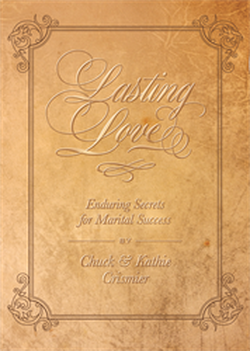
LASTING LOVE can be a dream come true. Yet love requires more than a dream or those loving feelings we so much desire.Lasting Love, Chuck and Kathie Crismier, celebrating their Golden Anniversary, unveil seven enduring secrets that will inspire and strengthen your marriage as it has theirs. COPY and PASTE this link to WATCH the TRAILER: https://www.facebook.com/Save-America-Ministries-204687919570536/videos
Past Episodes
This ministry does not have any series.
Featured Offer
LASTING LOVE can be a dream come true. Yet love requires more than a dream or those loving feelings we so much desire.Lasting Love, Chuck and Kathie Crismier, celebrating their Golden Anniversary, unveil seven enduring secrets that will inspire and strengthen your marriage as it has theirs. COPY and PASTE this link to WATCH the TRAILER: https://www.facebook.com/Save-America-Ministries-204687919570536/videos
About Save America Ministries
About Chuck Crismier
Contact Save America Ministries with Chuck Crismier
crismier@saveus.org
http://www.saveus.org/
Save America Ministries
P.O. Box 70879