

PERFECTION OF IMPERFECTION


The Constitution and the Future
Guest (Male): This is Viewpoint with attorney and author Chuck Crismier. Viewpoint is a one-hour talk show confronting the issues of America's heart and home. And now with today's edition of Viewpoint, here is Chuck Crismier.
Chuck Crismier: How long can a Constitution exist? How long can it survive? And how long can a nation guided and governed by that Constitution survive? That's the question before us here on Viewpoint today. As we look at the perfection of imperfection, the Constitution and the future. The perfection of imperfection. You say, what do you mean the perfection of imperfection? Well, the reality is, we're imperfect people. All of us are imperfect people and we all have different viewpoints. We all have different opinions.
And if you think that's not likely in the political realm, just consider our denominations. There are over 2,000 Christian denominations in America. There are over 22,000 such denominations in the world. Do you think they all agree? Absolutely not. Why do those denominations form? Because they didn't, they didn't agree and they disagreed. The Presbyterian Church is radically divided. The Baptist churches are divided. The congregational churches are divided. The charismatic churches are divided. The Methodist churches are divided. Why? Because the people are divided. How do you divide an imperfect and divided people? How do you unite them?
We pledge allegiance to the flag of the United States of America and to the Republic for which it stands, one nation, one nation under God, indivisible. How can we be indivisible? Only by a Constitution. However, imperfect it may be. So today we talk about the perfection of imperfection on Viewpoint, and I'm glad that you've joined us, it's conversation as always, with ever-increasing conviction, talk that transforms. To launch into the deep here, in her relatively short existence, our country, America, has influenced the world for good, as probably no other nation in history, although arguably, Israel.
From a fledgling association of 13 colonies that were struggling to get up and walk as a nation of one people, to its position as the nation to which all eyes of the world turn, America has been blessed, although many look at the negative side rather than the positive side. There is a negative side. Not everything was wonderful and not everything was cool. But before you criticize and choose, you might wish to walk a mile in the shoes of those who headed up those 13 colonies. That's a song of yesteryear, before you criticize and choose, walk a mile in my shoes.
Well, we're going to walk a mile, a few miles in the shoes of those who headed up those colonies, and why the formation of our Constitution is such a wonder, and how it is the most enduring Constitution in the history of the world. The problem is America is at risk even today, just as she was at the time of the formation of the Constitution. Our foundations are cracking, some say the country was built on cracking foundations in the first place. But it appears that God's hand of protection is being gradually withdrawn now.
The principles that made us great have become tarnished, our moral fiber has become corroded. We've been in turmoil from incessant in-fighting, just as they were at the Constitutional Convention. We've become a nation in which everyone is a minority striving for special interests, just as they did threatening the very foundation of the country itself. There seems to be no common sense, yet Thomas Paine wrote his book, Common Sense, at the time of the Revolution. So despite the horror of terrorism, our enemy most to be feared is not from without, but from within, just as it was after the defeat of the greatest power then in existence, Great Britain, but the beginning was just happening and it wasn't pleasant.
But there's a vicious moral and spiritual war raging in our hearts and minds as Americans today. So the question before us, can we survive? Can America be saved? And if so, how? So, as we launch into the deep here, our founding fathers deliberated day after day in the seething heat of a Philadelphia summer to try to hammer out a Constitution that would serve the emerging nation. They met with nerve-wracking frustration as the delegates from the colonies sought to protect their special interests. Tempers flared. The doors had been locked. Nobody could come in or out. It was in complete secret because of the seriousness of what was going on in that Constitutional Convention.
Passions were inflamed. The task of achieving any consensus for a workable plan for the new government seemed absolutely doomed. Some of the delegates had already walked out. 70 some had been invited, 55 showed up, and some walked out. At that moment of despair and seeming hopelessness, Benjamin Franklin, who was the elder statesman at that time by 81 years of age, rose and addressed the president of the convention, George Washington. And here's what he said: In this situation of this assembly, groping as it were in the dark to find political truth, and scarce able to distinguish it when presented to us, how is it happened, sir, that we have not hitherto once thought of humbly applying to the father of lights, that's a euphemism for God, to illuminate our understanding.
In the beginning of the contest with Great Britain, when we were sensible of danger, we had daily prayer in this room for the divine protection. Our prayers, sir, were heard, and they were graciously answered, and have we forgotten this powerful friend? Or do we imagine we no longer need his assistance? I have lived, sir, a long time, said Benjamin Franklin, and the longer I live, the more convincing I prove, proofs I see that this truth, that God governs in the affairs of men. Then Franklin went on, this is quite an address from Benjamin Franklin, who was not a particularly known religious person, although he did have quite a friendship with George Whitfield, the great evangelist, with the great awakening.
Benjamin Franklin went on to declare that the awesome assembly of the great minds of America, he said, if a sparrow cannot fall to the ground with his, his, that is God's notice, is it probable that an empire can rise without his aid? He then said, we have been assured, sir, in the sacred writings, that is the Bible, that except the Lord build the house, they labor in vain that build it. He then gave his personal convictions. Listen to this carefully. He said, I firmly believe that without his concurring aid, that is God's concurring aid, we shall succeed in this building, political building, no better than the builders of Babel.
We should be divided by our little partial local interests and projects, we'll be confounded, and we ourselves shall become a reproach and a byword down to the future ages. I therefore beg leave to move that henceforth prayers, imploring the assistance of heaven and its blessings on our deliberations be held in this assembly every morning before we proceed to business. Well, that assembly of 55 of America's greatest intellectuals and leaders solemnly and humbly adopted Benjamin Franklin's motion, and each session thereafter was begun by prayer, with prayer for God's guidance and wisdom, and the effect on the convention was nothing short of miraculous, but not perfect.
Today we talk about the perfection of imperfection, the Constitution and the future. I'm glad that you've joined us, friends, it's conversation with ever-increasing conviction, talk that transforms. Stay tuned, this is Viewpoint.
Guest (Male): Once upon a time, children could pray and read their Bibles in school. Divorces were practically unknown, as was child abuse. In our once great America, virginity and chastity were popular virtues, and homosexuality was an abomination. So what happened in just one generation? Hi, I'm Chuck Crismier, and I urge you to join me daily on Viewpoint where we discuss the most challenging issues touching our hearts and homes. Could America's moral slide relate to the Fourth Commandment? Listen to Viewpoint on this radio station, or anytime at saveus.org.
Chuck Crismier: So glad that you've joined us here on Viewpoint today, as we continue to prepare for the 250th anniversary of the political founding of our country. A publication recently came out titled Constitution of the United States, how an 18th Century Charter became the cornerstone of American democracy. It's a fascinating piece in a very substantial magazine format, and one of the articles in there, in fact, I would dare say that from their perspective, it was the leading article called Flawed Founding of the United States. Flawed Founding of the United States.
Now, why they chose to put that right up front, might be a wonder, because the reality is, why didn't they look at the amazing results? Why did they look at the flawed part rather than the fine part, the faith part? Well, it's because in our country today, we have a very broken and divided nation. We have those who like to look and choose to look always at the negative. They always choose to look at the imperfection. Others chose to look at primarily the perfection. In other words, that which was good, that was which was honorable, that which is something to be remembered and taught to our young.
Others don't want the United States to be exalted. They want it to be diminished, because they have a globalist view. They don't want to see the United States as, shall we say, the ruler of nations among the world. They want to see the United States as just one of the nations around the world that actually submits to a global government. With that view, you see, we have a very divided nation. Divided not only politically, but divided spiritually. Half of the nation, basically, is a God-fearing group of people, and the other half is not. That's a huge difference, friends, a huge difference.
So, with that understanding, we go back and take a look at what happened there in 1787. On September 17th, 1787, in Philadelphia, delegates from 12 American states concluded a convention to write a Constitution for their embattled country. The oldest delegate that we were talking about, Benjamin Franklin, a Pennsylvanian, had a colleague read a wrap-up speech. Franklin confessed that he disapproved of, quote, several parts of this Constitution, unquote. But he reported, quote, this Constitution, because I expect no better, quote, he supported it.
The alternative he feared was, quote, that our states are on the point of separation, only to meet hereafter for the purpose of cutting one another's throats, unquote. Now, does that sound like unity or division? Well, obviously, Benjamin Franklin was testifying to the amazing division between these 13 colonies, and only 12 of them showed up. Rhode Island didn't even show up. So much for unity. Unity, unity, this our cry. Well, how do you gain unity when you have disunity of viewpoints? You see, Viewpoint really does determine destiny.
So, Franklin's words probably are shocking because they contradict the great myth of the American founding, that that myth insists that a consensual set of heroic founders crafted the perfect Constitution to serve a united American people. It wasn't so. In fact, in 1787, very few people thought of themselves primarily as Americans. They identified with their state and they distrusted outsiders. Carolinians disliked Virginians, almost as much as New Yorkers despised New Englanders. Massachusetts man noted, nothing instead of a feeling as a nation, a state of our country, we look with indifference, often with hatred, fear and aversion to the other states.
Such distrust grew out of vast differences in climate, landscape, economy and culture. Subtropical slave-holding and rice-growing Georgia seemed a world away from the rocky soil, family farms and frigid climes of New Hampshire. A British immigrant to the colonies, Thomas Paine marveled, if there's a country in the world where concord will be least expected, it's in America. But he's the one that wrote the book Common Sense. Made up of as it is people from different nations, accustomed to different forms and habits of government, speaking different languages, and more different in their modes of worship, it would appear that the union of such people was impracticable, said Thomas Paine.
Americans needed a union of their states because they were so different and so worried, not because they were so harmonious and united. If divided into independent states, they dreaded replicating the wars that so often bloodied the diverse countries of Europe. So, Alexander Hamilton from New York, warned that without a new Constitution, the states would become an infinity of little jealous, clashing, tumultuous commonwealths, the wretched nurseries of unseeking, unceasing discord. So before the American Revolution, the 13 colonies had no unity, except the overarching rule of British, the British Empire.
And so, the enemies of our enemy become our relative friends, right? So Great Britain and King George III became the one that united them, when otherwise they were not united hardly at all. No taxation without representation. That's the ringing cry coming out of the Revolution. Well, from there, we take a better look, hopefully, although a distilled look, at what was happening there, uh, with regard to the Constitutional Convention and what preceded it. You see, if we don't understand what preceded it, it's hard for us to understand why this convention was so critically important.
It was important because without it, without a resolution, there would be no hope for the country. It would be like every, every state would be like a European country, and they would be fighting, there would be wars and wars and wars and wars continually. Now, in light of that, there was a compromise that was made earlier on. And that is after the Revolutionary War, they formed what we called the Articles of Confederation. The Articles of Confederation were the first effort to try to form a national government. The problem is that they were so fearful that somebody would gain, some state would gain superiority over other states, that they actually gave almost no power to the Articles of Confederation and to the Congress that was formed by the Articles of Confederation.
Not only did they provide almost no power, they provided almost no money. So the Articles Confederation that were formed in order to try to undergird the Revolutionary War. That's why the Revolutionary War went so unfinanced by the government. The government did not have any money. So guess who financed the Revolutionary War? One billionaire by today's standards, a fellow name of Morris, used his personal wealth to undergird the Revolution. In addition to Haim Solomon, a Jewish wealthy man, who spent his entire fortune virtually until he was a pauper in order to provide freedom from the tyranny of King George III and Great Britain.
Those two men together, one Jew and one Gentile, undergirded financially the Revolutionary War when the states themselves refused to cooperate financially under the Articles of Confederation. Now, just on a personal level, at least from my wife's viewpoint, the first president of the United States was not George Washington. The first president of the United States under the Continental Congress was Samuel B. Huntington, her distant cousin or uncle. Samuel B. Huntington was not actually president of the United States under the current Constitution, that began with George Washington in 1790, but he was the president of the United States in Congress assembled from 1781 to 1783, under the Articles of Confederation.
So, he's considered by some historians to be the first president of the United States because he held that position when the Articles of Confederation were ratified in 1781. He was also a signer of the Declaration of Independence and the Articles of Confederation. He was a founding father and served as the 18th Governor of Connecticut from 1786 until his death in 1796. So he held the highest executive office in the country during the Revolutionary War, under the Articles of Confederation that had proven to be inadequate to govern the country.
So, then came the United States Constitution, and we can already see how it could possibly have become a perfect document because of the radical imperfection of the people that were creating it. They were all with their special interests just as our Congress is today. All kinds of in-fighting, all kinds of conniving, all kinds of wars and rumors of war, so to speak, and conflicts and behind the scenes negotiations and so on, it wasn't a pretty picture. Not pretty at all, but they were desperate. Something had to be done.
And out of that came what we know as the United States Constitution, widely recognized, widely recognized as the world's longest surviving written charter of government. Now, that should say something. In other words, it wasn't perfect, but it was the process of the perfection of imperfection. Imperfect people created the document under what appeared to be God's guidance initially, because they cried out to the Lord to bring themselves together to at least establish something that was for a period of time dependable to form a nation.
Now you can have your own viewpoint as to whether or not that was proper, adequate or whatever. But the reality is, it produced the longest established government in the world, Constitution, codified national Constitution, still in force. It was designed to separate and balance governmental powers to safeguard liberty, equality and minority rights. It only had 4,543 words. 4,543 words for a Constitution, the shortest written Constitution of any major government in the world. Now it is said that if you can distill truth in a consolidated form, you're much better off than if you write many, many, many, many words.
This is an example of that. The consolidation of government and all of its checks and balances and so on, in only 4,543 words. It's amazing. And by the way, the original document is on display at the National Archives in Washington. Now, let's do a little comparison very quickly. If we do a comparison, we find out that France, remember France had a revolution at about the same time as the US. France was supposed to be the demonstration of the great enlightenment. Liberty, equality and fraternity. What happened?
France has had over 15 distinct constitutions or major constitutional revisions since 1791. Why? Because of France's turbulent political history, having moved through various republics, empires, restorations since the French Revolution. The current Constitution is the 1958 Fifth Republic Constitution, being the most stable. Now, why is it that France couldn't establish a stable government? I'm going to tell you why. You may not like what I have to say, but I believe it is true. France rejected God's authority in its revolution. Outright, notoriously, did everything you could to reject the creator of the universe.
In effect, raising the goddess of reason, inaugurating a lawyer, Robespierre, who was declared Messiah. They changed the laws to no longer coordinate with biblical weeks and months and years. It was notoriously anti-God and atheistic. What came from it? Disharmony, disunity, inability to create stability. But in the United States, it was very different. Stay tuned, this is Viewpoint.
Guest (Male): There is so much more about Chuck Crismier and Save America Ministries on our website, saveus.org. For example, under the marriage section. God has marriage on his mind. Chuck has some great resources to strengthen your marriage. First off, a fact sheet on the State of the Marital Union, a fact sheet on the state of ministry, marriage and morals. saveus.org. Marriage, divorce and remarriage, what does the Bible really teach about this? Find all of this at saveus.org. Also, a letter to pastors, the Hosea project. saveus.org. And many more resources to strengthen your marriage.
It's all on Chuck's website, saveus.org. Again, you can listen to Chuck's Viewpoint broadcast live and archived. Save America Ministry's website at saveus.org.
Chuck Crismier: Today we're looking at our Constitution, the Constitution of the present and its effect on the future, the perfection of imperfection. Anytime human beings are involved, there's imperfection, unless God himself has guided the hand specifically. Now interestingly, in my book, Renewing the Soul of America, in the chapter titled, A Nation at Risk. I have this sub-heading, Christian Consensus and America's Greatness. The consensus of Christian faith as the foundation of America and its greatness is replete in virtually every fiber of the original fabric of the nation.
All 13 of the original state colonies constitutions refer to Almighty God as the author of liberty, or declare reliance upon the hand and mercy of Providence. George Washington declared, of all the dispositions and habits that lead to political prosperity, religion, and we said that he meant Christianity and morality are indispensable supports. A generation after the Constitution was adopted, which by the way, does not mention God particularly, and didn't have to, because all the states did. That was their foundation. The states did recognize that they were under God.
Therefore, what they put together was predicated on what they already believed concerning the Bible, God's view of humankind and humankind's frailty and sinfulness. The Constitution reflected that understanding so as to bring about a Constitution that could guide a people that fundamentally had already pledged their allegiance to the God who preserved them a nation, and didn't have to repeat it in the Constitution. It had been stated in the Declaration of Independence. So a generation after the Constitution was adopted, when the French political observer, Alexis de Tocqueville, came to these United States in the mid-1800s to study the success of the nation, here's what he was, what, what moved him.
He had observed how France had struggled after the French Revolution, enmeshed in the Enlightenment, a secular, humanist, atheist world view. But in America, he found a nearly universal belief in the principles of the Bible as the basis both for life and for law. And so he wrote in his book, Democracy in America, America's great because America's good. Good according to what? According to the ways defined by God in his word. And if America ever ceases to be good, America will cease to be great. In fact, he said, it was not until I went into the churches of America and heard her pulpits aflame with righteousness that I understood the secret of her genius and power.
So those who try to say, well, our Constitution doesn't have any mention of God in it, that doesn't mean anything. It means that behind the scenes, every one of the states of the Union had their own governments that were predicated on the authority of God and the purposes for which the nation was being formed. And if you want to find out what those are, you get a hold of my book, Renewing the Soul of America. The last third of the book sets it forth with such explicitness to help us to regain an understanding of what this country was about.
We seem to have lost that in large measure today. Our Constitution is at risk today, every bit as much was in the day when it was signed. Why? Because of the fractional minds and hearts of we the people. Because we have lost the faith. We have actually forfeited the faith that unified them. First, it was their antipathy toward King George and Great Britain. Then it was the faith that unified them. All the other details involved a lot of argument, a lot of dissonance, a lot of pain.
Get a hot copy of the book, Renewing the Soul of America. It will edify you, it will encourage you, it will actually disciple you in many regards. That's why 38 national leaders endorsed it. $15 will put it on your, in your hands. It's on our website, saveus.org, saveus.org. Give us a call at 1-800-SAVEUSA, 1-800-SAVEUSA, or write to Save America Ministries, PO Box 70879, Richmond, Virginia 23255, writing a check at $6 for postage and handling. Okay. So, let's kind of give a bit of an idea as to why they had such tension there in the Constitutional Convention and why some would say, we had a flawed founding in our country.
Some Americans dissented from the Constitutional compromises that preserved slavery. Some did, not many. But why did they do that? Why did they dissent from the Constitutional compromises that preserved slavery? Because without doing that, without consenting to the document, they could have never gotten a document. That's why. It was imperfect in the sense that it did not deal with that issue. Perhaps other areas in which it was somewhat imperfect. But our Constitution provided for the perfection of imperfection. In other words, an amendment process under very, very serious consideration that would allow the Constitution to be amended if necessary, to bring about, shall we call it, the perfection of imperfection.
Believe it or not, the Bill of Rights was actually an addition to the Constitution. The Bill of Rights. And yet you think that's the Constitution. No, that's not the Constitution. The first 10 amendments to the Constitution are called the Bill of Rights. Why are they provided? Because the Constitution itself did not provide those protections. So it was the perfection of imperfection that brought about the 10 amendments, the first 10 amendments, called the Bill of Rights. It wasn't until the 13th Amendment came along in the 1800s that dealt with the issue of slavery.
You see, things had to be dealt with just as they are in your life, in your family, in your business, in your congregation. Things have to be dealt with over time because you can't just handle it all at one time. Have you noticed how in the Bible, God sets forth what his word was. He set forth his word with regard to Israel. He told them at Mount Sinai, he told them what to do and what not to do. And they entered into a marriage covenant with him, and agreed to do everything that God said. Yes, we will do that. But they didn't.
God had set forth the Constitution, the Bible, his word. But they didn't follow it. They were imperfect. The Constitution was perfect. They were imperfect. Imperfect people create imperfect documents. God is perfect in all his ways and did not create an imperfect Constitution called the word of God. Jesus was the word or the Constitution of God made flesh, fleshed out, so that we could see what it really looked like in living color. He said, if you will continue in my word, that is the Constitution of God, you will know the truth and the truth will make you free.
But the obverse is also true. If you will not continue in my word, you will not know the truth and the truth will not make you free. In fact, you will become unfree. You'll become a slave in one way or another. So when we, when we look to understand a Constitution and the Constitution of the United States. In effect, it is the most perfect Constitution ever written by humankind. By proof of its durability. By proof that it allowed for the people to come to grips with some of the imperfections due, by the way, to their own imperfections as a group.
Why? Because the, the states in the South had an economy built on slavery. That was their existence. How did you expect them to sign a Constitution that was going to completely undo their existence at that time, when they had no knowledge about how that would ever happen? The representatives in the Constitutional Convention realized that ain't gonna happen. They could not deal with that issue directly as many of them wanted to do. So, that being the case, the document had to be hammered out, realizing that that issue was not going to be dealt with, at least not directly.
So, it ended up being dealt with by what is called the three-fifths compromise. Now the purpose of the three-fifths compromise was to give recognition to the slaves in the South. To give them at least some vote because the slavery situation did not want to give them a vote. Well, in the North, the North didn't want to give the slaves the right to vote. Believe it or not. The South wanted to give the slaves the right to vote because there were so many slaves in the South that it would give them more voting power.
So a consensus was inaugurated on a temporary basis to give every slave three-fifths of a vote in the South.
Guest (Male): Have you ever considered what the early church was like? Many people are developing a hard longing for a greater fulfillment in our practices as Christians. A recent study showed 53,000 people a week are leaving the back door of America's churches in frustration. What is going on? Why has there not been even a 1% gain among followers of Christ in the last 25 years? Could it be that God is seeking to restore first century Christianity for the 21st century? Jesus said, I'll build my church. Is Christ by his spirit stirring to prepare the church for the 21st century? The early church prayed together and broke bread from house to house. They were family, and it was said by all who observed, behold how they love one another. Incredible. But the same can be found right now. Go to saveus.org and click cell church. We can revive first century Christianity for the 21st century. It's about people, not programs. It's about a body, not a building. That's saveus.org. Click cell church.
Chuck Crismier: Again, I welcome you back to Viewpoint. We're talking about the perfection of imperfection, I.E. the Constitution of the United States and the future. The perfection of imperfection. Yes, the Constitution was not absolutely perfect. Some would say, well, women didn't have the right to vote. Some would say today that the amendment that gave women the right to vote should never have been given. Why? Because it seemed to many to contradict the authority structure of the Bible. I'm just telling you, you can agree or disagree, I'm just telling you, that was a major issue and still is today.
Also, another issue had to do with, should people who have no skin in the game have the right to vote with equal power to those that have skin in the game? Therefore, why should a person who doesn't own property, doesn't pay taxes on property, doesn't own property, why should they have a vote, or a vote equal to those that have skin in the game or owners of property? Big issue. And how that has been dealt with, actually, has resulted in some serious problems in our country. If more people had skin in the game, they wouldn't so cavalierly want to vote for people to give them, give them, give them. I got the Gimme God Blues. Right?
So there are real, real issues, friends, real issues. And some of them were resolved in ways that perhaps from God's viewpoint were not perfect, were not right. But they were done in order to, shall we say, get along. The Constitution of the United States was a resolution of Rodney King's answer, can't we all get along? Yes, this is the best that we can do. That's what happened with the Constitution of the Constitutional Convention. So after long and heated debates, the delegates narrowly worked out a compromise between the small and large states. All states would have an equal vote in the Senate. Well, the big states moved more seats, received more states in the House of Representatives.
Then the delegates confronted an even more dangerous fault line between northern and southern states. That was slavery. Enslaved people comprised less than 4% of the northern population, compared to 40% in the South. So determined to protect their property rights in humans, Southern delegates worried about entering a more powerful union with Northerners critical of slavery. Southerners wanted a union strong enough to defend their states against slave rebellion and invasion, but too weak to tax or emancipate slaves. Some Northern delegates outraged Southerners by arguing that only free citizens should count in allocating seats in the House of Representatives. By excluding slaves, that proposal would reduce the South's relative weight in the Union.
The delegates compromised by mandating that three-fifths of the enslaved people would count in allocating congressional seats and presidential electors to the states. Was that a righteous decision? Well, it depends on how you look at it. It was the best that they could accomplish to bring resolution and peace at that time to establish a government. But in a second compromise, delegates kept the imported slave trade from Africa open for at least another 20 years. Third, the delegates agreed to a fugitive slave clause that required Northern courts, juries and sheriffs to force interstate runaways, runaways, back into bondage. By adopting the three-fifths clause, prolonging slavery importation and providing a fugitive slave clause, the federal Constitution in effect, defended slavery at the price of a stronger union.
That's true. But it didn't stay that way. 70 years later, the United States of America entered up into a tremendous battle, called the Civil War that wasn't civil at all. The future was at stake. And out of it came through Abraham Lincoln, who initially did not want to get into that battle, came the 13th Amendment. The founders bought time by building their union. They put off a civil war for another 74 years, weathering bitter crises. After 1819 and 1832, the elderly Chief Justice of the Supreme Court, John Marshall concluded, the Union has been preserved thus far by miracles.
I fear that they cannot continue. And they didn't. Because the Union ruptured in 1861, provoking a civil war. In that destructive conflict, Americans confronted their greatest fear. And it was dealt with. As Abraham Lincoln said in his Emancipation Proclamation, this government under God, shall have a new birth of freedom. The government of the people, by the people and for the people, shall not perish from the earth. What was that? The perfection of imperfection. So, to understand why the US Constitution needed to be written, we needed a quick history. I gave you a bit of a quick history here.
The Articles of Confederation were swiftly recognized as insufficient for the task of governing a new nation. As such, in May 1787, delegates from all 13 colonies were invited to Philadelphia for a Constitutional Convention to thrash out a new deal. 70 were invited, only 55 turned up. Rhode Island refused to send any delegates. So the doors of the Pennsylvania State House were locked. The windows were shuttered, and each was sworn to secrecy as they wrangled over many points of discussion. With such opposing viewpoints, order was needed. So someone had to preside over the proceedings. That was their first decision, and one of the few unanimous votes.
George Washington, the man who had led the Continental Army to victory in the Revolutionary War, was elected as president. There were two main factions housed within those walls, pro and anti-federalists. And that gave rise to the so-called Federalist Papers, back and forth, back and forth, back and forth. All of that had laid the foundation for the Constitutional Convention. The signing of the US Constitution was perhaps one of the most momentous events in world history, and continues to be so today. Does that mean the United States of America is the only valid nation of the world? No, it doesn't mean that at all.
But it does have a very unusual founding, more unusual than any other nation on the planet, except for Israel. Israel is the only other nation that was established on a covenant. Think about that. There's something unusual about the United States of America. We have been blessed to be here. But it should not be part of, it should not be a, a matter of pride. It should be a matter of ultimate humility, for God resists the proud, but gives grace to the, but gives grace to the humble. If we will humble ourselves under the mighty hand of God in this season, he just might preserve us a nation again.
He just might preserve us a nation again. Believe it or not, the Constitutional Convention, attended by 55 of the 70 appointed delegates, only 39 of them signed the final document. Amazing, isn't it? They had to have serious conviction at that time. They realized that it wasn't perfection. But they also put into that document the ability to perfect that which was imperfect. Question. Have you arrived? I, I'm asking you, have you arrived? Has your family arrived? Are you the picture of perfection before God, or before anyone else, your neighbors, or anyone else? Isn't it wonderful that we have a merciful God who is willing and able to perfect that which is imperfect in our lives?
And he will do that. If we're willing. If we're willing to humble ourselves and listen to his absolutely perfect Constitution, the Bible. Our problem is, we want to rewrite his Constitution to serve our desires. That's why we're in trouble as a country. That's why our country is so divided. And that's why our churches are so divided. The perfection of imperfection, the Constitution and the future. Thanks for joining us here on Viewpoint today. I hope this has been helpful. Get a copy of my book, Renewing the Soul of America, because it will help you to understand even better and get a, a view for the future.
Our individual and collective roles for the future. $15 on our website, saveus.org. You will be blessed. Renewing the Soul of America. Call us 1-800-SAVEUSA. Become a partner, friends. Save America Ministries, where we're rebuilding the foundations of faith and freedom. As a voice to the church, declaring vision for the nation, in America's greatest crisis ever.
Guest (Male): You've been listening to Viewpoint with Chuck Crismier. Viewpoint is supported by the faithful gifts of our listeners. Let me urge you to become a partner with Chuck as a voice to the church, declaring vision for the nation. Join us again next time on Viewpoint as we confront the issues of America's heart and home.
Featured Offer
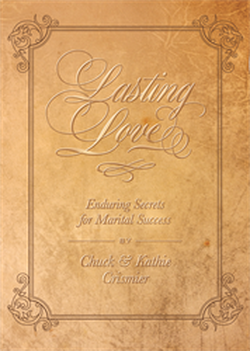
LASTING LOVE can be a dream come true. Yet love requires more than a dream or those loving feelings we so much desire.Lasting Love, Chuck and Kathie Crismier, celebrating their Golden Anniversary, unveil seven enduring secrets that will inspire and strengthen your marriage as it has theirs. COPY and PASTE this link to WATCH the TRAILER: https://www.facebook.com/Save-America-Ministries-204687919570536/videos
Past Episodes
This ministry does not have any series.
Featured Offer
LASTING LOVE can be a dream come true. Yet love requires more than a dream or those loving feelings we so much desire.Lasting Love, Chuck and Kathie Crismier, celebrating their Golden Anniversary, unveil seven enduring secrets that will inspire and strengthen your marriage as it has theirs. COPY and PASTE this link to WATCH the TRAILER: https://www.facebook.com/Save-America-Ministries-204687919570536/videos
About Save America Ministries
About Chuck Crismier
Contact Save America Ministries with Chuck Crismier
crismier@saveus.org
http://www.saveus.org/
Save America Ministries
P.O. Box 70879