
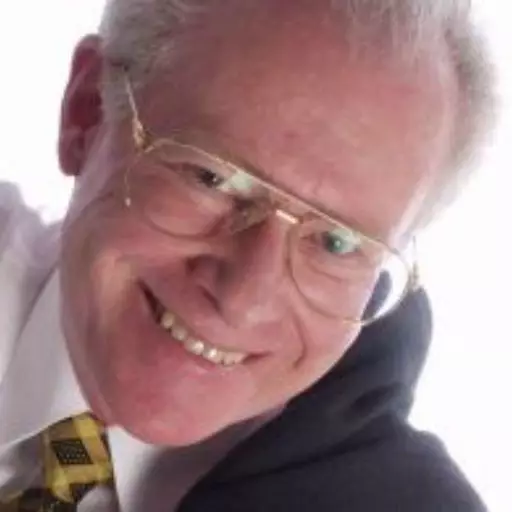
IS WEST WORTH DEFENDING?


If so, what needs to happen?
w/ Bill :Walton
Chuck Crismier: When did history, that is Western history, begin? Did it begin at year zero, supposedly marking the birth of Christ? Did it begin after the death, resurrection, and ascension of Christ in about 30 AD? When did the West begin, or was that just the East? Did the West begin with the Roman Empire that supposedly was the Rome of the West?
The Rome of the West defaulted to the Rome of the East, Constantinople in Turkey, and then it defaulted also to Moscow, which was deemed to be the third Rome. So what is the Western world anyway? That's what we want to talk about here today on Viewpoint. What is this West that we keep talking about? The poem says, "East is West and West is East and never the twain shall meet." So what is the West and what is the Western world? What defines the West?
One could say the West almost began around 600 AD. What happened just after 600 AD? The Prophet Muhammad began Islamic revelations, leading to the rapid rise of the caliphates across the Middle East, North Africa, and Spain, stopped only at Paris by Charles Martel.
But it didn't get stopped there. It continued on. First there was Charlemagne, crowned emperor of the Romans, the Holy Roman Empire, in 800 AD. And then we had America found, 1492, or Amerigo Vespucci before that. Is that the beginning of the West, or was it Europe, Western Europe? What is the West anyway?
Perhaps you've never thought about that, and maybe you weren't so interested in world history. But if you knew that history is not something boring but it's something boring down upon us with great vengeance even as we speak, then perhaps history might become important to you. So I welcome you to Viewpoint. I'm Chuck Crismier. It's conversation as always with ever-increasing conviction, talk that transforms.
We have a very special guest joining us here for the first time. His name is Bill, that is William Walton. He has a podcast show, and that's not all. He is the former chairman and CEO of a 10 billion dollar New York exchange-traded investment company. He's the producer of two films. This guy has been around the block more times than I can count, even though I dare say that if you calibrate all of the years that I've been involved in all the various things, maybe we're just about equal in all those things. So today on Viewpoint, Bill Walton is joining us here to talk about this matter of the West. What is it that we're trying to preserve? What is Western civilization? Bill, it's good to have you on the program.
Bill Walton: It's great to be on. I love your introduction. What an interesting topic. Big one. I love big ones. I've done a lot. I was chairman for about 14 years in a private equity venture capital real estate investing business. But I've also been president of the Symphony here in Washington D.C. and part of the trustee of the National Gallery. I've had an interest in the arts, but most importantly, I'm the lecturer and liturgist at Trinity Church in Washington, Virginia. I get to read the Bible every few weeks, which I think is one of the best things I'm doing right now.
Chuck Crismier: That's great. My wife and I are reading it every day. Every morning, that's the first thing we do. We get our coffee together, I get our vitamins together at the night, we spend a half an hour to an hour every single morning for the last 25 years reading the scriptures together. So I'm glad that you're doing that, reading the scriptures, because if we don't have them in mind, we're going to miss the very heart of Western civilization, aren't we?
Bill Walton: I think we are. Although it's funny you should bring this up in this way because I've got a podcast show, The Bill Walton Show, and I've also got a Substack site by the same name. I've begun writing some essays because there's a lot you can't capture in conversations. I've been trying to work out Western civilization, and one of my AI chatbots came back with five things that are the basis of what we've got in Western Civ. It started with Greek reasoning, and then we had Roman law.
Chuck Crismier: So you and I have inherited what I call a Greco-Roman civilization and way of thinking.
Bill Walton: Absolutely. And then it's further refined by Jerusalem's God. Then the thing that the West did was render unto Caesar what is Caesar's and unto God what is God's. We came up with the notion of the separation of powers between spiritual power and secular power.
No other religion has that. If you look at Islam, it's a theocracy. The Chinese used to have Buddhism, which was no separation between church and state, and of course the Chinese Communist Party is a religion unto itself and allows no distinction between their theology and their implementation of power. So you go across the world and you look at Western Civ and what we've got with our Greek reasoning, Roman law, Jerusalem's God, and the separation of church and state.
Then we've got a fifth thing, and I think it's interesting. We're about the only civilization that self-criticizes. We're continually trying to improve ourselves. We doubt, we refine, we move on. We're the only society that got rid of slavery.
Chuck Crismier: Isn't it interesting you talk about self-criticizing? There are 50 self-critics that have been hung from gallows in Iran just in the last month.
Bill Walton: That's why it's not exactly part of their civilization that you're allowed to self-criticize.
Chuck Crismier: Well, it is part of their civilization if you can call it civilization.
Bill Walton: They brook no dissent. It's their way or the highway, and it's murderous. It's Murder, Inc. in Tehran.
Chuck Crismier: What's interesting, Bill, is that if we go back to 1947, the Supreme Court made of supposedly nine reasonable men—everybody is questioning whether anybody's reasonable anymore, given all the jury trials and the woman on the Supreme Court that doesn't know what a woman is—in 1947 our United States Supreme Court did something historic. They decreed something as unconstitutional that was not even in the Constitution or discussed in the Constitution, and that was the so-called separation of church and state.
It wasn't even in there, and it was drawn from a letter that Thomas Jefferson wrote to the Danbury Baptists where they were concerned that the government was going to establish a governmental denomination like the Church of England. He said, "Oh no, we're not doing that. There's a separation in that sense from church and state." So the Supreme Court actually bootstrapped that letter into the Constitution, and it left us in a situation where the church that once had a handle, that is Christians that once had a handle to enter in and speak into their government, were declined to do so. That was a real shift in American thinking and also in Western civilization, I think. We'll be right back. Stay tuned. Bill Walton, our guest.
Welcome back to Viewpoint, friends. I'm Chuck Crismier. It's conversation as always with ever-increasing conviction, talk that transforms. So here on this program, as you know, we have plenty of information. The problem with information is if it's just information, it just sits there and we become obese with it. You know what happens with obesity? It can affect everything else in your body, not for the good but for the bad.
So too much information without transformation is very dangerous. So one of the things on this program is we emphasize transformation. In other words, with all of this information, what can we do about it? What should we do about it? Is there anything we can do about it? As Edmund Burke once said way back in the 1700s, "I can't do everything, but I can do something. What I can do I should do, and by the grace of God I will do."
So what is it that we can do? What is it that we should do? Is it a matter of sending letters to our senators? Is it a matter of sending donations to a political party, or is it something deeper? Is that Western civilization, or is Western civilization rooted not in the economy but in the heart? Bill Walton is joining us here, supposedly an AI expert. How are you an AI expert? That means almost intelligent, Bill.
Bill Walton: You haven't heard that one before, have you? No, I guess I'd call myself more a student of AI rather than an AI expert. I'm not sure there are 10 people on the planet that really understand AI, including the people making the models. What I think we need to do though is, it is happening, it's very powerful, very inevitable. So we need to arm ourselves with as much information about how it really works and use it to our advantage.
Chuck Crismier: Just yesterday we had an announcement from Anthropic saying there's a 10% chance that AI is going to take over and destroy civilization, all civilization.
Bill Walton: We have to remember that Anthropic has an agenda. His strategy for Anthropic, which has the Claude model, is essentially to try to scare people into thinking that AI is so terrible that he can get lots of federal government regulations and state regulations to make it such that the only company that's really going to be able to thrive in that environment is Anthropic. This is a competitive strategy to make people fearful about AI.
Chuck Crismier: Sounds like Google. Sounds like Meta.
Bill Walton: Google was a little more sneaky. They weren't out there giving these speeches about how terrible it is. And then on the other hand, you've got Elon Musk who's out there saying it's going to transform humanity, the best thing that ever happened. I don't think either one of them knows.
But Anthropic is really trying to get AI regulated. The thing that's looming out there is we do have this country called China, and China is rushing to develop its AI. China has none of the civil society protections or speech protections that we have. They have none. You have no ability to speak in China, and if you learn anything that you think the Chinese Communist Party could use, you're required to tell them about it because that's the national security law. So it's a totalitarian state developing AI, and China would very much like to have the rest of the world operating on its AI models. That would not be good for the United States.
So we're in a race. I don't think anybody can really actually define the exact terms of that race, but we do want to make sure that we know everything there is to know about how to use it. When people talk about 10% of people dying, they never tell us how that's going to happen. America is given to a lot of hysterias, and this looks like another one coming down the road.
Chuck Crismier: I have a question for you. You've named a bunch of the big names that are out there, the brilliant people with lots and lots of money, and they have all of these high-tech things, AI and everything else associated with it. So let's say that you brought 12 of these guys together, and they were brought by a court, by a judge, to a jury. And the judge is going to interrogate them for preliminary voir dire to see whether they're really qualified and whether they have any biases. Do you think a judge would be able to set such a jury?
Bill Walton: What's the case?
Chuck Crismier: The case is what is AI and what's its danger? Is it fundamentally dangerous to the West?
Bill Walton: I'd say no.
Chuck Crismier: Okay, but that's you. I'm talking about these guys sitting on the jury, the guys that run the tech companies.
Bill Walton: You see, they all have different viewpoints, and that's one of the things we Americans don't understand about juries. We think we are the jury. It brings a lot of stuff that's being talked about out in the blogosphere and the podcast sphere out there today. It's everywhere, and people are divided. The Western world just in the last week has been divided profoundly over even what is a jury and its responsibilities. It just is amazing to me. So anyway, that having been said, what is your podcast really about? The Bill Walton Show. Sounds like a basketball player.
Bill Walton: That's where everybody went when I first started my show seven or eight years ago. You'd Google me and you'd end up with the UCLA or Boston Celtics or Sonics website. But so what we are is, I spent a lot of years as a CEO and running a lot of organizations, and so I bring a businessman's perspective, somebody who's been responsible for building things.
I've interviewed a lot of the economic people, Steve Moore, Arthur Laffer, George Gilder, big brains. And they're all very interesting. But I took a year off because I thought I've got to get more focused, and what is it that troubles me about the world right now? I think the problem we have in the world right now is nobody knows what's true. We've got so many agendas, we've got so many voices, we've got so many disinformation sources. We don't really know what's happening in Iran, we don't really know what's happening in Ukraine. We've got AI bots on social media.
Chuck Crismier: And about 100 million podcasts. Is it that few? I mean, that's your claim to fame these days. I don't know anybody who doesn't have their own podcast. And if you didn't have one, you make believe you have one by all your blogs. It's amazing to me.
Bill Walton: You're right. It's crowded. It's quite crowded. But you've got to do what you do. So I've got a subtitle for my show that I'm rebooting right now. We've been working on it for the last three or four months, and we're just beginning to tape some new episodes. I'm calling it "How to Flourish in an Airless Age."
Chuck Crismier: How to flourish in a what?
Bill Walton: Airless age. I came up with that term, and I'm not exactly sure I can give you a Webster's Dictionary definition, but it has something to do with it being hard to breathe. It's hard to know what lines of action people should take in their life. One of the things that I'm very interested in is I get all these diagnosis podcasts. Everybody tells you how terrible the world is. We've got Islam as a problem, the Chinese Communist Party, cultural Marxism.
Chuck Crismier: And they have no answer, because it's all a matter of the heart basically. When you boil it all down, it's like what Jesus said. You can talk about the money, you can talk about the culture, you can talk about the politics, but ultimately the heart of the matter is the heart.
Bill Walton: The heart and what we can do for ourselves. What are our values? How do we live our life? That's the key. If you think we're going to change things by electing a different politician, or if you think we're going to arrange things by getting Congress to pass some law with some new policy or something like that, that's not going to change anything. We've broken our pick on that one for forever. I was chairman of the Tea Party Patriots for a while.
Chuck Crismier: Were you really?
Bill Walton: And I was all in with the Tea Party back in 2010 and had all this high idealism about elect the right congressmen, we're going to change this, change that. I put together something called the Ten Point Commitment to America that Republicans elected in 2010 were supposed to implement. It had things like why doesn't Congress obey the same laws, have the same health care we do? It was a pretty good list and it could have been actionable if they wanted to do it.
Chuck Crismier: If. Okay, hold on just a minute. You just named the biggest little word in the Bible. "If." That is the biggest word in the Bible, over and over from Genesis to Revelation. That word is the one that determines whether or not we hear or don't hear, whether we follow or don't follow, whether we grasp the message or don't grasp the message.
If. And so I think you really hit it right there, and the question is, okay now, what is this fulcrum of "if" at any turn that you and I have to handle in order to make progress or redirect Western civilization or Western society or the West, as we euphemistically call it? So how would you define the West?
Bill Walton: Right now I define the West as our institutions, the churches. I think I alluded to the roots of Western civilization, but geographically it's Europe, the United States, and many of the English-speaking countries, and also France, Germany, that is the heart of the matter when that was the heart of the Christian civilization. I think you saw the piece I wrote on the Crusades test. All of Europe and the Mediterranean was Christian until about 600 AD.
Chuck Crismier: But Christian Europe, you can barely recognize it even a little bit as Christian today.
Bill Walton: Do you know what percentage of Europeans go to church?
Chuck Crismier: Well, I know in France it's about 4% who claim to be Bible-believing Christians.
Bill Walton: That's about right. You walk into any big cathedrals and all you see are tourists; you don't see any worshipers. And in England, the UK, the big churches are being converted into mosques or bars.
Chuck Crismier: Well, and they're practicing Sharia law. And the most popular name among newborn babies is Muhammad.
Bill Walton: Defining the West as geographic, I think it was more importantly the civic traditions that I think particularly flourished here. A lot of them started in the UK, in England, Scotland, our mother country. But we invented this country based on ideas of the Scottish Enlightenment. Also we invented it most importantly as a Christian country. That's the thing about the Constitution and the thing I brought up earlier about separation of church and state. None of the founders believed that the Constitution would work if people were not Christians and had Christian morality.
Chuck Crismier: In fact, John Adams, the second president of the United States, said our government was made for a moral and Christian people and was wholly inadequate to the government of any other because our government is not capable of warding off the unrestrained passions of human beings that are not restrained from the heart. And so again, it goes back to the heart of the matter. Our founders believed that, and therefore they didn't have to form a government that was going to control the heart. That was the job of "we the people" who would speak into the life of the government.
Bill Walton: We formed the government which reflected our morality, our theology, our belief of God, and that created a very powerful society for probably 150 years. Good run through since 1800, 1798 or so when the Constitution was formed up until now. You're looking at well over 200 years, 250 years actually, we're celebrating that. And then if you go back to the Pilgrims and the Puritans, you're looking at 430 years or something like that. So we're a young country still comparatively speaking given the world. But what is the test for the West? Is there any hope for the West? And if so, where is that hope? We'll be right back with Bill Walton in just a few moments.
Again friends, I welcome you back to Viewpoint. Viewpoint does determine destiny. Remember, there are no neutral viewpoints. Your viewpoints on anything are not neutral. They have consequences. Every one of our viewpoints has a consequence, and we need to think about those consequences because they inevitably take place. Just because we spout off what we think today freely on a podcast or on blogs or whatever, those words have consequences. They really do, and we need to start thinking about the impact and import of those words.
Well, in my hands is a book called "Renewing the Soul of America," which I wrote and 38 national Christian leaders endorsed. People who actually were in very disagreement with each other on theological issues, but they endorsed this book. Why? Because for the first time they said, "Here's a book that actually gives us the real answers. The real answers of what to do in our country with all the mess that we're in."
And you have that at your hands, friends, for $15. "Renewing the Soul of America," one person at a time beginning with you. Go to our website, saveus.org. You can call us at 1-800-SAVE-USA or write to us at Save America Ministries, P.O. Box 70879, Richmond, Virginia 23255, writing a check and $6 for postage. And by the way, this book was served on all members of Congress in the United States Senate and the President and his cabinet. Served on all of them. Why? Because they needed to take notice. They've been put on notice. They really have, and this book provides the kinds of answers that will actually help us deal with the most fundamental problems that we face here in this country.
The number one institution—we're talking about institutions, Bill—the number one institution of this Judeo-Christian Western civilization is marriage. That's the beginning one. What happened to marriage?
Bill Walton: What happened to marriage is that it got devalued and the "till death do us part" ended up somehow becoming a marriage contract.
Chuck Crismier: Right. So if that most fundamental one is devalued, how about everything else that echoed from there?
Bill Walton: I think you're raising the issues I raise in my own show about how you flourish. You start with what you're doing as a person and your values. Marriage is a big part of that. My wife will tell anybody who will listen that the most important decision you can make is who you marry.
Chuck Crismier: How long you been married, Bill?
Bill Walton: I've been married for 38 years.
Chuck Crismier: Good for you. My wife and I just celebrated our 60th. And over hill, over dale, we hit the dusty trail and these chariots kept rolling along. And our time today is better than ever was, and we're so grateful that there wasn't anything that separated us till death do us part. So this is a very, very important thing, and I think we've forgotten the significance of it.
We like to look at things like homosexuality and same-sex marriage and transgenderism and all of these things. Those are the echoing consequences of the breakdown of marriage in the 1960s. That's my theory.
Bill Walton: Well, that's right. I think the ruling about same-sex marriage the Supreme Court handed down was a disaster because it's going to be overturned because it has no root in the Constitution or in law. Well, if we have people that follow the Constitution, that's my concern is that the other side, the left, is going to try to pack the court with people that could care less about what's written.
But the point is this is not just about marriage. We're getting back to the root of this, which is what Western civilization is about and its institutions and Christianity and all the things that are the glue that holds society together. By breaking up the definition of marriage—civil union wasn't good for them—and then now they've taken it all the way to the definition of what a female is, who a female is. It will never end. Well, it's destruction, and we're going to get into bestiality pretty soon.
Chuck Crismier: We're already there. Did you hear about the lawyer that was convicted of six acts of bestiality?
Bill Walton: No. I'm not surprised. I'm not surprised. What is it that Moynihan said, "defining deviancy down"?
Chuck Crismier: Wasn't that a great term, "defining deviancy down"? What a brilliant guy, a Democrat back there in the 1960s.
Bill Walton: He'd be appalled at the Democrats today, that's for sure.
Chuck Crismier: Yeah. Hey listen, you're talking in the piece that was forwarded to me, you're talking about the Crusades and how the Crusades impacted Western civilization and set the stage for where we are today. So give us your thumbnail sketch of your thoughts in that regard.
Bill Walton: Well, the Crusades happened because for 400 years after Muhammad got Islam started, it's not a religion of peace. It's a religion of conquest. If you don't accept the religion, beware the sword. So if you go through the whole so-called theology and what he'd written, it's really a handbook for military conquest in most part.
And for 400 years after 600—I think he died in 632 AD—they marched through all the Mediterranean countries and conquered almost three-quarters of the geographical area that had been formerly Christian. And then they began, in the process, they started converting churches into mosques. And next thing you know, for about the next thousand years, we've got that whole area is Muslim or Islam.
And in around 1092 in Europe they got a plea from the head of the church in Constantinople, which is still part of the last little piece of the Western Roman Empire, Eastern Roman Empire rather, to come save it. And they said judging by what had happened up to that point, we have to make a stand here. We have to protect what we are, we have to protect our way of life, we have to protect our religion.
And it's hard for people to conceive today, but Christianity was so central to day-to-day life that this was not a secular march for plunder, although there were certainly some people who were part of armies as part of the Crusades who didn't behave very well. But the central mission was pure and Christian and it was intent was to knock the conquest back.
Chuck Crismier: And to capture Jerusalem, which was the very centerpiece from God's perspective of the world.
Bill Walton: And so I wrote the piece because I was talking with somebody on my show not too long ago and we were talking about defending our civilization and our faith. And I said, "Well, we ought to think about the Crusades as maybe setting an example for us. Maybe it's time to start pushing back." And then 400 years after that was it Charles Martel?
Chuck Crismier: About 700 AD, he pushed back the final assault on Paris. If he had not done that, all of Europe would have been Muslim at that time.
Bill Walton: Exactly. And so Europe and the West remained largely Christian forever. I mean, the percentage of Christians in Great Britain in 1900 was close to 98%, and I don't know what the percentage was in the rest of Europe, but it was not dissimilar.
Chuck Crismier: Well, most of the missionary efforts went forth out of Britain. Even the famous "Chariots of Fire" movie of the 1980s, remember that? Eric Liddell, he became a missionary to China. He was from Scotland, from the UK, the broader UK, and most of the missionary efforts came out of the UK.
Bill Walton: Well, and they were quite successful. But then we know what happened in the 20th century. We ended up with Freud and all the deconstruction that happened during that period, secularization and rejecting Darwin. That's certainly in the category of the things that were set out to destroy Christianity. Christianity started getting mocked in Hollywood movies starting in the 50s and 60s, and then the culture turned.
So we find ourselves today where most of the great institutions, education, universities, K-12 even, a lot of the cultural institutions—I'd say almost all the cultural institutions and even the military—have been captured by the left, which is anything but Christian.
And so we find ourselves today with these institutions captured by leftists and cultural Marxists. And Donald Trump has done a fabulous job, I think, and it's under-reported, in pushing back against the kind of pernicious stuff they've put in place in the federal bureaucracy and the military.
Chuck Crismier: Whether you like his style or not.
Bill Walton: Well, nobody likes his style. He doesn't either, I guess. I worked for him, so I know all about it.
Chuck Crismier: I wonder if Melania likes his style. You don't see her much. But when she comes out, she sure knows how to present herself, doesn't she? Oh my God, and she's absolutely beautiful. If she were on the left, she'd be on every cover of every magazine.
Okay, I have a question for you, Bill. Another question. You know, I'm a former trial lawyer, and my favorite thing was not only to ask questions on direct exam, but even more favorable was to ask questions in cross-examination. So that's why I ask questions.
So let's say that you're concerned, which you are and I am too, about the condition of the West, of Western civilization. We could talk about institutions, we could talk about all this stuff. Question: let's say you've got Russia, then you've got China representative of Marxism and their control desiring to take over the world by 2050, which they've already declared. And then you have Islam. You've got Iran who has declared that they're going to rule the world from Jerusalem. You have Turkey that's declared the same thing under Erdogan. And then you have the United States in which, from within, we are being attacked viciously by those who are repudiating the very foundations of Western civilization. Who's the most at fault and where is the greatest danger? Answer that when we get back.
Chuck Crismier: Back in 1963, Nikita Khrushchev declared on behalf of Russia, the Soviet Union, to America, "We will destroy you." So the question now is, Bill, where is the major destruction coming from? What is it that you and I and we the people in this country that we have the closest relationship to, what is it that you and I should put our premier focus on?
Bill Walton: Well, our biggest enemy is the enemy within. And if you look at the forces already inside the wire, which is the military term for your defensive perimeter, we have cultural Marxism that's infected the school curriculum. We've got critical race theory in the army platoons where if you're white, you're irredeemably racist, and that's certainly not very helpful for military effectiveness.
And the military used to be just the opposite, which is a place that was truly colorblind and didn't really matter what you were as long as you could do the job, you could fight. So we've got a lot of cultural rot.
And we've got very aggressive movements. I didn't realize this until recently, but Mexico has something like 53 consulates. And what's happening in those consulates is they're not giving people travel papers; what they're doing is they're trying to create a Mexico-first, Mexican-first culture. And even third and fourth-generation Mexicans, they're trying to shape their loyalty first to Mexico and not America, not the United States.
Chuck Crismier: Well, they're Mexico. So.
Bill Walton: Well, yeah. Well, one thing I like about Donald, he might rename Mexico. He wants to rename New Mexico as New America. I hadn't heard that, but I certainly believe it. It's true.
Chuck Crismier: Well, hey you know, the bottom line it seems to me is like the famous cartoon said years ago, "We have met the enemy and it is us." In other words, the destruction that's happening to the West is an inside job primarily. And we cannot, we're powerless to resist say the Islamic revolution coming in because we ourselves are in revolution against ourselves. We have an ingrown spiritual cancer that is completely eating up the very organs of the West and the country.
Bill Walton: Well, but we can do something about that. The first thing you have to do is name it and see what are the forces that are gathering, gathering clouds, and what are they.
Chuck Crismier: That's what I did in "Renewing the Soul of America." That's why 38 national Christian leaders endorsed it. There was nothing like it in our country.
Bill Walton: You've got to name the enemy, and there are many of them now. I'm beginning to talk to people on my show about what those are. You first have to identify what you're up against, and then you've got to look to certain solutions that you can implement as an individual or community.
Chuck Crismier: Name some of them. Let's try to go beyond theory now, beyond generalizations, and name the three most serious problems inside America today that's threatening our institutions, that's threatening us as a people. Remember, it's not institutions, it's we the people. We are the institution.
Bill Walton: Well, the institutions are not what they once were. Let's take K-12 education, public education. It's completely controlled by the NEA and AFT, and they are not interested in the values that you and I share.
Chuck Crismier: Well, that started with Horace Mann and the foundation of the public schools in the 1800s.
Bill Walton: Well, they were factory schools. They wanted docile people. They wanted people coming off the farms to get in line, and it was a terrible structure. So one of the first things that we can do is start taking kids out of public school. We've got a homeschooling movement that's growing.
Chuck Crismier: My kids were homeschooled in days when it wasn't popular.
Bill Walton: See, we're not going to reform these institutions. I don't think there's an instance, I think, of a big bureaucracy that's reformed itself. If there is one, you can let me know. So you've got to start new ones. And so I think the most important part to start is with education. We've got to take that back. And so you think about all the things that you and I believe, we have to make sure that's the curriculum. We used to have a curriculum that taught a lot of the virtues, a lot of values.
Chuck Crismier: Yes. So we don't even teach Western history. We don't teach history from a truth standpoint but rather from a critical standpoint to demean history from a Western civilization perspective. Therefore, we're actually training our children to despise their own country.
Bill Walton: Well, that's Howard Zinn's textbook right there. And the New York Times has got their 1619 Project that says America didn't start in 1776, it started in 1619 when the first slaves were brought to America and that's.
Chuck Crismier: Well, how about in 1619 the first representative government of America met in Jamestown? Why didn't it start there?
Bill Walton: You're not in the editorial room of the New York Times. Come on! All these things have an agenda. And then I think we need, so starts education and I think it's also we need to spend a lot more time in local communities face-to-face with people talking, understanding, because we've become an anonymous society where everything's happening in social media, nobody gets together. Long ago there was that book "Bowling Alone" about the loss of community in America, and that's particularly after the COVID lockdowns. I always felt that the COVID lockdowns were part of a larger plan to isolate people from talking to each other.
Chuck Crismier: Do you know that Alexis de Tocqueville, a Frenchman that came over here from France to figure out what it was that made America great in 1830, when he finished his nine months of investigation, one of the things that he wrote in "Democracy in America" was he coined the term individualism. That's where it came from. And he said, "What I see happening in America is a spirit of individualism going awry that ultimately if it doesn't control itself into community, a sense of community, it will literally ultimately destroy the country." That's what he said.
Bill Walton: I didn't know that. I think he's probably right. But there's this myth of we were all rugged individuals in America and that's not true. I mean, we were communities. I don't know what the term is, I think it's communitarian where instead of rugged individuals, you had people working together, you had barn raisings, you had communities working together.
The local solutions and people making decisions that affect themselves, they know better than anybody else what kind of government they need. And so we've been sucking everything back up into a federal government that's remote. Just own a ranch in the West and see the effect that the federal government has on land use. I mean, look at the fires that we have in the West that we needn't have if we had that property in private hands. So there's a lot of things we can do if we stand up for it. And I hate to say this, but we've got too many lawyers in America.
Chuck Crismier: Come on man! You know, it was a lawyer that assaulted Jesus and he said, "What's the greatest commandment?" And Jesus took him at his question and said, "Well, it's to love the Lord your God with all your heart, soul, mind, and strength. Love your neighbor as yourself. On these two hang all the prophets." And the lawyer said, "You know what? You're right." Maybe, Bill, maybe if we just bought that simple truth and began to live it out, we might begin to see change we could believe in in this country.
Bill Walton: Churches, I mean, the whole community would gather together in faith, but also organize themselves politically. It's my solutions mainly involve staying local. Now that is a problem because I live in Rappahannock County for the most part, which is a lovely place in the Blue Ridge Mountains. So it's easy for me to talk about being local. I used to live in Manhattan. Now how do you go local in Manhattan? There are some structural problems to local solution in great big cities.
Chuck Crismier: Well, some of the structures were knocked down on 9/11.
Bill Walton: Well yeah, that's a whole. But yeah, one of the reasons I restarted my show is I'm very interested in answers and we're going to be exploring more concrete and specific answers. Remember, I'm a businessman and a CEO type and I'm looking for lines of action where we could actually, we're going to have to create new things. New schools, maybe new churches. Church attendance, I think, at least for the mainline Protestant churches has been declining for decades.
Chuck Crismier: Oh yeah, rapidly. It's growing in terms of numbers but internally, and I follow this, my program deals with what's happening in the church big time. And what's happening in the church is decay in spite of the seeming growth. Moral and spiritual decay in spite of the seeming growth. And that's what's so deceiving when you look at the bigger picture of what's happening in the Western world.
And that's really concerning to me. You go back and look at the Crusades, which we were talking about, they started there in just around 1096 AD and initially to capture Jerusalem, which God had set forth as the place where he chose to place his name there on the Temple Mount. Well, about 300 years all of that went on and on and on, eight or nine different Crusades.
And finally, I asked the question of the infinite wisdom of Google: Well, who won the Crusades? And they said Islam did. The Muslim forces ultimately won the overall conflict by the end of the 13th century. Well, guess what? They intend to win it again. And I mean when Iran through Ahmadinejad, the former president, declared, "We're going to rule the world from Jerusalem. We're not interested in ruling the world from Mecca. We're going to rule the world from Jerusalem." What do you think that says to the Western world? What do you think it says to Israel? What do you think it should say to all of us? No, their goal is not a nice religious, peaceful thing that George W. Bush told us after 9/11. No, their goal is to impose Sharia law from the very Temple Mount.
And so I wrote a book called "King of the Mountain: The Eternal Epic and End-Time Battle." That's really what we're looking at in terms of all of history. And if you see it any other way, you miss the picture. The picture is that the forces of our world are all choreographing together to establish their throne on the Temple Mount, just where the scripture says the Antichrist will ultimately declare his rulership. So what do we do in the meantime here in the little bitty United States of America, comparatively speaking to the world? What do we do to live a righteous life that is healthy and strong and encouraging to "we the people" to live a kind of life that's worthy of our investment? What do we do? This is "we the people." What do we do? I think that's what we've got to focus on. Bill.
Bill Walton: Well, I think you said it very well. It starts with ourselves. It starts with our faith. It starts with our virtues, the teaching of virtues, teaching others. We've got to build as individuals and as families and as communities. That's where it starts.
Chuck Crismier: Hey listen, can you stay on the line after we wrap up?
Bill Walton: Yeah, absolutely.
Chuck Crismier: I want to send you something. Okay. Friends, you've been listening to Viewpoint. Viewpoint does determine destiny. Our special guest today, Bill Walton. He has a program called "The Bill Walton Show." How can they contact that, Bill?
Bill Walton: Well, we're on YouTube, Rumble, Substack, all under the same name, William—The Bill Walton Show. And my Twitter, my X feed, is @WMBillWalton. And then also all the major podcast platforms. And I would love to hear from you. My email is walton@cgtv.us.
Chuck Crismier: All right. Well, right at the end of the program, I appreciate your joining us here on the program, Bill. God bless, be a blessing. And friends, get a copy of the book "Renewing the Soul of America." I think it'll be a blessing to you. $15 on the website, saveus.org. You've been listening to Viewpoint with Chuck Crismier. Viewpoint is supported by the faithful gifts of our listeners. Let me urge you to become a partner with Chuck, a voice to the church, declaring vision for the nation. Join us again next time on Viewpoint as we confront the issues of America's heart and home.
Featured Offer
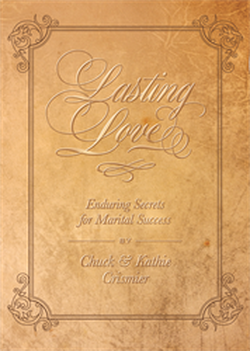
LASTING LOVE can be a dream come true. Yet love requires more than a dream or those loving feelings we so much desire.Lasting Love, Chuck and Kathie Crismier, celebrating their Golden Anniversary, unveil seven enduring secrets that will inspire and strengthen your marriage as it has theirs. COPY and PASTE this link to WATCH the TRAILER: https://www.facebook.com/Save-America-Ministries-204687919570536/videos
Past Episodes
This ministry does not have any series.
Featured Offer
LASTING LOVE can be a dream come true. Yet love requires more than a dream or those loving feelings we so much desire.Lasting Love, Chuck and Kathie Crismier, celebrating their Golden Anniversary, unveil seven enduring secrets that will inspire and strengthen your marriage as it has theirs. COPY and PASTE this link to WATCH the TRAILER: https://www.facebook.com/Save-America-Ministries-204687919570536/videos
About Save America Ministries
About Chuck Crismier
Contact Save America Ministries with Chuck Crismier
crismier@saveus.org
http://www.saveus.org/
Save America Ministries
P.O. Box 70879