
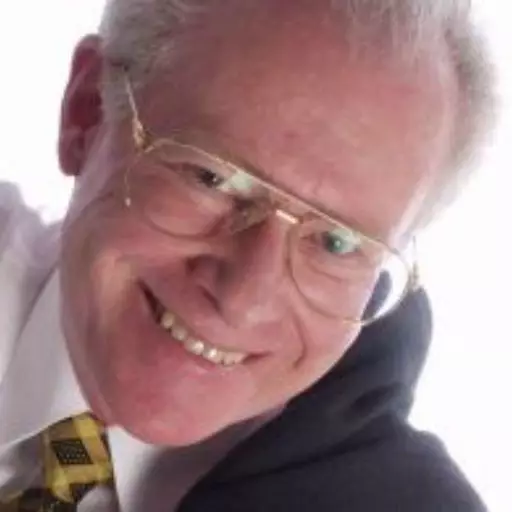
ILLUSIONS OF TRUST


Why is trust so fragile?
w/ Attorney Jeffrey Stephens
Chuck Crismier: What happens if you can't trust anybody? Well, according to the recent reports, trust in our society is at a modern low driven by intense political polarization, institutional decay, and the rapid spread of misinformation, which is another way of saying lack of truth. Only 22% of US adults trust the federal government. Plummeting faith in media also adds to it, as does skepticism of technology companies and a fragmented social fabric.
Trust in the US federal government has dropped from over 70% in 1958 to under 20% recently. From over 70% in 1958 to under 20% recently. That's massive, friends. 28% of Americans now hold unfavorable views of both major political parties. Over 50% of Americans believe social media has a negative impact on society, and roughly 70% do not trust these companies to determine what is accurate.
Social trust, the belief in the integrity of others, is declining. The inability to agree on facts is making it difficult, particularly when our former president said we believe in facts, not truth. Americans' declining trust in each other. Who says people can't be trusted? Well, about half of Americans. So today on Viewpoint, we're going to be talking about this matter of trust.
The interesting thing is that trust is directly related to truth. When truth falls on its face, trust is the consequence. Trust becomes the casualty, and that's what's happening. We don't love truth anymore in our country. We don't even love God's truth oftentimes in our churches today. We decide to play games with what God has said in His word and believe it if we want to believe it and take it at our own advantage, lining up at God's buffet table to accept what we want to accept as truth and deny the rest.
All of that is playing games with us and eroding the foundation of trust directly related to truth. But the interesting thing is that trust is always conditional. Always. You can only trust somebody that you believe is telling you the truth. If you don't believe they're telling you the truth, you don't trust them to the extent you don't believe they're telling the truth. So if you don't believe God's telling you the truth, you're not going to trust Him.
In reality, trust is the most fragile of all aspects of relationship. The most fragile of all aspects of relationship. Think about it. Marriages, why do you think the divorce rate since 1968, no-fault divorce in Southern California, why do you think that spread across the nation like wildfire? Lack of trust. Businesses, lack of trust. Between parents and kids fragmenting, lack of trust. Pastoral leadership, lack of trust. Our justice system, lack of trust. And even our relationship with God.
Well, why is this happening? What's going on? Today we have a very unusual program, a very unusual guest joining us to talk about this. We're not bringing a pastor on to talk about it. We're bringing on another lawyer. Another lawyer, believe it or not. The guys that you say you can't trust except when you are in desperate need, and then after they help you, you decide you didn't need them anyway.
Anyway, another lawyer joins us from Connecticut. We've been there, done that, we see the trust problem. This lawyer, by the way, has written a fascinating book. When I say fascinating, it's pretty compelling. What caught my attention, and I'm not into reading novels, but I received a promotion of this particular book like so many others on the internet. When I received it, the title caught my attention, and I said I want to take a look at this and see what it has to say. It's called Illusions of Trust. Well, the guy that's going to tell us about illusions of trust as we chat together today is Jeff Stevens. He's from Connecticut. Jeff, it's good to have you on the program.
Jeff Stevens: I'm honored to be here. Thank you for having me. Everything you just said, the way you laid it all out, I started to get the shivers because all of it is true. I would like to think that we still trust in God, but all these other institutions are so shattered by their lack of veracity, by their lack of truth, that trust has gone out the window.
It's affecting everything. As you said, it affects our personal relationships, our business relationships. It affects the simplest phone calls you get. How many phone calls do we get that are nonsense phone calls that are scams? You get emails and texts that are scams. Where does the trust begin? How do you recover it? That's really the conundrum.
Chuck Crismier: Isn't that interesting? How do you recover it since it's the most fragile of all aspects of relationship? It's difficult to gain trust, but it's easy to lose it, isn't it?
Jeff Stevens: Absolutely well said. That is so true. Once lost, it is very difficult to get it back. You mentioned marriages and the high rate we have, a divorce rate over 50% in this country. When I grew up, that was unthinkable. Now more than 50% of marriages end in divorce. I know people who have been married four times. You've got to be kidding me, right? But once you lose trust, it's very difficult to get it back.
Chuck Crismier: Well, you know what fascinates me, Jeff, is that the divorce rate in the Bible Belt of America for the past 20-25 years has exceeded the nation's all by 50%. Those are the people that are supposed to be trusting God and taking Him at His word concerning marriage.
Jeff Stevens: It's very sad. I actually, and I know we're going to talk about a lot of different things, hopefully, but I actually at one point a few years ago, with a psychiatrist friend of mine, wrote a book called The Road to Splitsville. It's nonfiction and it's all about divorce and why people get divorced. One of the major points in it is that people who get divorced tend to make the same mistake in the next marriage, which is why the divorce rate in second marriages is 70%. That's because you didn't figure out how to build a trustworthy relationship the first time around. That's the problem.
Chuck Crismier: My friend, you have really gone for the jugular here. I had no idea that you had written all this series of books, but in reality, there's a thread that ties them all together, isn't there?
Jeff Stevens: Very much so, especially my last few books. As mentioned, the new book is Illusions of Trust, which is a legal thriller. The book that preceded that was a part of a series about a CIA agent, an American agent. That's all about deception within the government. Things ripped from the headlines, but distrust in the CIA and our own institutions, in Big Pharma, and all of that played into this book called Enemies Among Us.
It goes to the same topic, which is trust. In Illusions of Trust, the new book, I tried to create a character who is really an idealistic young attorney. He really believes that truth is the main goal, whether you achieve it at a trial or in a negotiation. Whatever it is, you want to reach that truth. You have to have that kind of character and those kind of values.
It's very difficult to find now. Look at the media. Look at the absolute doubt that we have in the reports in the media. Did you happen to see CNN the other day do a special report about radicalization of Christians in the country?
Chuck Crismier: I've got to have you hold on to that after this break, Jeff. Hang in there, my friend. We'll be right back.
Chuck Crismier: Again, I welcome you back to Viewpoint. I'm Chuck Crismier. This conversation is always with ever-increasing conviction, talk that transforms, and I trust that today will have that same effect on your life and mine. As we talk about this, I believe that the Holy Spirit will pierce into each one of our minds and hearts because there are going to be areas with each one of us where maybe our trust quotient isn't quite what it ought to be.
Maybe our life, our behavior, the words of our mouth, our actions, our following through on our word, maybe it isn't what it ought to be. When Jesus Himself said that He would judge us according to our words, and by our words we would be condemned, that's a pretty tall order that you don't hear preached about in America's pulpits today.
Our guest today, a very interesting guest, Jeff Stevens, with his book Illusions of Trust. This is a novel that finds its heart and soul in the heart of crusty old New York legal system and high society. I'll tell you, when you start to read this book, you're going to get tangled into a maze of deception. Where in the world can I place my trust?
You're going to find yourself placing your trust in one place or in one person, and all of a sudden you realize, "Wow, that person wasn't trustworthy at all. Maybe I should trust this guy over here." Then you find out, well, maybe not so much. Maybe there's less trustworthiness across the whole board. Now what am I going to do about it?
Friends, this is what captivated me as I read the book. We're going to make the book available to you. Jeff, in fact, is going to make it available to you here today. We're going to have three copies that are going to be made available to you. Really, what I'm not going to do, and I'll tell you why I'm not going to do this, is because the book contains some language in it that we would not normally promote on this program.
I asked Jeff about that. Why did you do this? He said, "Well, because that's the way it really is in New York. That's the way it really is." What he's done is try to translate the way things really are for a novel purpose, but not because he's embracing this personally. In order to keep things pure and holy on this program, we're not going to offer it on our website, but we are going to offer it for you to communicate to us. Give us your address and so on. I'll forward it to Jeff and he will send you those books. Does that sound good?
Jeff Stevens: I will do that happily. Yes, that is indeed because you want to get the message out, right? What you said is interesting because a lot of movies and books and stories, there's a particular villain in the book. If you want to watch James Bond, there's Dr. No. We know who the villain is. What I tried to do in this book, and you've already pointed it out without giving any of the plot away, is that there are more than one villain in this book. There are various villains and we don't know who they are.
A tagline that my marketing people came up with was when I said the name of the book is Illusions of Trust, they came up with the line that trust can be the most dangerous illusion of all. It's so true because in my lifetime, I have been betrayed. I was betrayed by someone who I believed was my very best friend, and he did me wrong. There was no need for him to do it, but he was weak of character and it was something that was really painful for me.
But you have God and you say, "Well, these things are going to happen." God says yes they are, and you just have to deal with them. That's why faith is so important. Otherwise, how do you go forward? So when you say how do you trust, how do you know who to trust, what do you do and if you've been betrayed, then what? Well, we know at least as the joke goes, I know not to trust him anymore.
But that doesn't mean that I don't have faith in God and that I don't have faith in other people in my life, and you move forward. In the book, this young idealistic attorney, he has to deal with those things and he has to deal with the twists and turns, and as we call it in my trade, the reveals that occur during the story.
I think it's important for people to recognize those things because a lot of things come up in the book, including the media, including politicians, including people in the pharmaceutical industry and so forth, that we really have to look at what's going on because so much of the foundation of our society is crumbling and we just can't let that happen.
Before the break, I want to say my jaw fell open when I was watching this report that CNN reported on the rise of Christian faith in this country being regarded by CNN as radicalization. Could you imagine that they called it radicalization, like there's something wrong with people going into churches and being taught the word of the Bible and being taught about faith as if somehow this makes you some right-wing fanatic?
Well, guess what? The right wing, they're not the people who are pulling the guns out and shooting people. That's not what's happening here, folks. The mainstream media doesn't want to report that. So once again, we get to do you have faith in the media or do you not? Unfortunately, the mainstream media has its lowest trust rate in history. There's no more Walter Cronkite.
Chuck Crismier: It's amazing. A number of years ago, I was on a plane flight across the country. Had to stop in one of the layovers and I noticed a copy of USA Today. This was about 15 years ago. What caught my attention was on the front page of USA Today were three-inch high letters all in green. They were meant to really stand out there, and those three-inch letters spelled this word: TRUST.
The whole feature of that issue was to talk about the decay of trust in America. That really caught my attention and that was 15 years ago. Look what's happened since then. All right, so I want to ask you a question. As a good trial lawyer, I have to establish your bona fides, Jeff. We've got to determine whether you're truly an expert witness here or not. So how long have you been in law practice?
Jeff Stevens: I was admitted to the New York bar in 1974.
Chuck Crismier: That was the same year I was admitted to the California bar. There you go. We're a couple of, shall we say, experienced gentlemen.
Jeff Stevens: There you go, using the word gentlemen in a quasi-truthful fashion given the way people look at lawyers. Well, it's too bad that people look at lawyers that way because lawyers in many instances have brought that on themselves. Particularly, we talked about marriage, particularly in the matrimonial bar which I think are just the barracudas of the profession.
But putting that aside, I've been practicing law for 50 years. I've had a storied career in some ways. I've had some unbelievably exciting trials that I've participated in. I've represented celebrities who your listeners would know. I've had a really good time with it. But I've always written, and so Illusions of Trust is my ninth traditionally published novel. I keep at it, and I still practice law some. It's a great profession if you approach it from the right perspective. That's how I look at it.
Chuck Crismier: Well, I agree. We're supposed to be pursuing truth. It is said that cross-examination is the greatest engine of truth ever developed by man, and that was always the favorite part of my trial work.
Jeff Stevens: Oh, for sure. That's the most fun. That or a really, really good deposition where there's no judge to put the shackles on you. But you know, what you say though is true. It's interesting and I think it's a point that should not be glossed over by anybody. Doctors take the Hippocratic oath and first we have to do good and we have to heal.
There are doctors out there who practice bad things. We don't have to get into all of these horrible things they do to adolescents now or these drugs that they promote. Well, lawyers, it really is the same thing. We're here to help. That's what we're supposed to do. When you have been wronged, we're supposed to right that wrong. We're not supposed to become part of the problem. Too much of the bar becomes part of the problem.
But I was schooled by an attorney who's now gone. He was a wonderful guy, Brian Kenny. He was born in New York. His mother did not trust the New York City public school system, so sent him back to Ireland where he was taught by the Jesuits. As you well know, they can teach you but good. He came back here with a phenomenal set of values, and he taught me how to practice law with integrity. So when I went on my own, I stayed on my own and I followed the precepts of what he taught me about what's right in practicing law and what's not right.
Chuck Crismier: All right, I want to ask you a question because you started with that attorney. Did you ever practice in a larger firm?
Jeff Stevens: Never. Was never interested to me. I'll tell you why. Of course, you know the law, you're a lawyer, you know the practice. What I found is the friends of mine who graduated and went with big firms would constantly complain that what they would do is they would sit there endlessly writing briefs and reading through documents.
They would never get in the courtroom until they were 40 or 50 years old. Even when they got in the courtroom, it was a different kind of law. I practiced the nitty-gritty law where I took clients into court and tried to right the wrongs that were done to them or tried to protect them from being wronged. It never interested me.
Chuck Crismier: All right, so you did not practice what I call a high-rise mentality of hyperspecialization, but rather were engaged with real people with real problems out there. That was exactly my practice. Now, I never had a partnership. I believe that God told me do not go into a partnership. I had an associate, but I did not have a partner. Partners can be dangerous, can't they?
Jeff Stevens: Absolutely. I tried it twice. Neither lasted for more than a year. I was still young in those two instances and I realized this is not for me. Just as you said, I had to get hit in the head a couple of times. You learned it more easily than I did. But I failed twice, and one of them was not honest. Whatever, we get back to trust. The other one just was not a hard worker and I said we work at different speeds. But I've represented some great people and I've had a really enjoyable time doing it.
Chuck Crismier: Well, trust is foundational to a partnership. I believe that this is one of the reasons why the scriptures enjoin us against going into partnerships because of the trust issue. Also, because if you're a believer, a true believer, and the other person is not, you've already written the script for lack of trust.
Jeff Stevens: Oh, forget it. Absolutely right. Which is true, by the way, of friendships, of marriages, of anything, of business associations, but clearly in a law partnership, that's for sure.
Chuck Crismier: So, we've just dealt very practically now with business relationships, with legal. The same would be true for medical partnerships and so on. Any partnership is a problem if the two of you are not truly followers of the Lord Jesus Christ. That is, if you're a Christian. You're going to have problems, and you think you're going to convert the other person, you think you're going to make changes, but what happens is they end up changing you.
Jeff Stevens: There's a great song in the play Guys and Dolls and the line in it, "Marry the man today and change his ways tomorrow." That doesn't work.
Chuck Crismier: Okay, no it doesn't work at all. Okay, so now I want to make your book available as you said, Illusions of Trust. It's the title that captured my attention because I have experienced so much over the past 50 years since I became a lawyer and even during 40 some years of pastorship and dealing with the broader body of Christ. I have seen this problem as a major, major problem for us.
It's eating away at our souls. And so when I saw the title of this book, Illusions of Trust, I thought, "You know what? I'm going to take a look at this and I'm going to talk with you, Jeff, and I'm going to test you out in several ways before I agreed to bring you on the program." And now I'm so glad that I did agree to bring you on the program.
We don't necessarily agree on everything in the world, but it's obvious already that there's so much that we agree upon and we're talking from a very, what should we say, nitty-gritty viewpoint as to what this matter of trust is all about. So here's the book, friends. It's called Illusions of Trust. What you do if you're interested in this book, the first three people that contact us to say, "I'd like to get a copy of that book." We're not offering for any money. Jeff says, "Okay, I want you to read it."
Three copies available, the first three people. Give us a call, 1-800-SAVE-USA. Make sure you tell us what it is that you're wanting to do and we'll get back to you and get your address and we'll get the book to you. Okay, we'll be back with Jeff in just a few moments. Illusions of Trust, friends. The Enemies Among Us. Those who don't trust. We'll be right back.
Chuck Crismier: Trust, that's what we're talking about. Do you trust? Are you trustworthy? What does it mean to be trustworthy? Well, foundationally it means you tell the truth. You live the truth, you tell the truth, you don't live a facade. And yet our nation's motto, "In God We Trust," is like a facade over an untrustworthy country. That's kind of what we've become. An untrustworthy people with a facade that says "In God We Trust." Do we really trust God? Not sure about that anymore. What say you, Jeff?
Jeff Stevens: Well, I'm more optimistic than that. I have to say that I don't think that we've necessarily become an untrustworthy country. I think there are a lot of institutions that do not deserve our trust at this point. But I want to believe, and I do, I believe in God.
Chuck Crismier: Well, the devil believes in God, though, Jeff.
Jeff Stevens: Good one, that's good. I believe in God's goodness, though. I believe in righteousness. And I believe that, and this is going to sound a bit corny maybe, but this is how my mother taught me: if you do the right thing, then right things will come to you. That's how I view the world. And I feel that if you do bad things, if you are deceitful, or if you do things that are untrustworthy or you betray someone's trust, even if you don't suffer from that act at that moment, you will in the long term because as you say, it eats at your soul and it has bad consequences.
Chuck Crismier: So the fruit comes from the root of your unrighteousness. I think another phrase and aphorism that we understand is birds of a feather flock together. So unrighteousness or people that are untrustworthy flock together, and that's what we find in your book, don't we?
Jeff Stevens: Yes, indeed we do. As we do also, and I'm not trying to just plug another book, but Enemies Among Us is very much about that, about how these things become, I hate to use the word conspiracies because that always sounds like nutty, but that's true. And also a legal term that you and I learned in law school which is used many times, there's a concept in the law called the fruit of the poison tree.
To use a simple example that people see on TV all the time, that if the police, for example, do an unlawful search, they cannot use what they found because that is considered the fruit of the poison tree because their first action was improper. Well, that's how I see life in general.
Chuck Crismier: Even though you looking at it might think they should have accepted it in.
Jeff Stevens: Well, obviously. This case now, you saw this, this Luigi Mangione, who apparently, it seems pretty clear, but apparently is accused of shooting the head of UnitedHealthcare. And there's this whole debate which I find mind-boggling and I'm a lawyer. I find it mind-boggling that when they finally found him sitting in some fast food restaurant, he had a backpack there.
They didn't run out and find a judge to get them a search warrant. The police said, "Let's see what's in your backpack." That's pretty logical if you believe this man just shot somebody. And now they're actually arguing that what they found in the knapsack might not be admissible at trial. It's crazy. I know we want to protect the innocent.
Chuck Crismier: Because they didn't read the guy his rights at that time. I mean, come on. He fits the description of somebody who was just identified as having killed somebody. I'm not sitting there having a cup of coffee and chatting with the guy. I want to know what's in the backpack. It could be a bomb for all we know.
Anyway, isn't this fascinating? Well, we're revealing the kind of stuff that you and I have had to deal with. That, of course, is in the criminal arena. In the civil arena, we have similar kinds of things. You have to do things according to the law. And the reason why the laws are there is to make sure things are done on the up and up, and of course, that's what we're supposed to be doing. And when a lawyer tries to go around that, then he's dealing unrighteously from a legal standpoint and needs to be disciplined.
Jeff Stevens: Right. Absolutely. In fact, I will tell you that in the progress of my legal practice, in the early days I did a bunch of criminal cases. I morphed away from that simply because I didn't like the system. I felt the system was broken and since I did not have the ability to fix it, I just moved away from it. There are just too many games that get played by guilty people because they abuse a system that's designed to protect the innocent.
But the fact is this, in my experience, if you go through the process of investigating someone, arresting them and getting them indicted, I hate to say this is going to sound cynical perhaps to your listeners, but most of those people are guilty. Our system says even the guilty are entitled to a good defense. And I said that's right, but I don't want to be the guy to provide that defense. May I tell you a quick story about that?
Chuck Crismier: Sure.
Jeff Stevens: I was a young lawyer and I was on my own and I was in New York City. This young Hispanic guy who worked at a restaurant that I represented came to see me and he starts telling me this story about how he's been arrested and he needs legal help and it was all about an assault. I'm listening, I'm listening. To give you the punchline, it turns out that he beat his pregnant girlfriend.
I got up, I'll never forget this. I got up from my desk. I looked down at him and I said, "You have 10 seconds to get out of my office. 10 seconds or you're going to find out what that feels like." And the guy ran out of my office. Because he essentially had admitted to me that he had done this and now he wanted a defense and I said, "I'm not that guy." So you know, people may be entitled to a defense, that doesn't mean I have to be the person to give it.
Chuck Crismier: There you go. Wow, that's a very interesting thing that you've just shared. I think it's important for people to understand that not every lawyer is going to take on every case and situation just because a person may be legally entitled to a defense. On the other hand, you have to discern whether or not this person you believe may be inappropriately, unrighteously being accused or having other things brought against them.
For instance, the last case I handled was a major custody case in the Los Angeles Superior Court system, the largest family court in the country. And my client, a professing Christian, accused her husband of sexual molestation. Well, the tenor of things even at that time 30 years ago was if you're accused of sexual molestation, chances are even if you're not guilty, the courts are going to say, "Well, we're going to rule in favor of... well, we're just going to consider maybe you're not guilty but we're going to consider that perhaps you are. We're going to take the easy way here." And that's what they do.
This particular case went on and on and on. More and more and more court appearances and so on. And finally, I left the practice of law with the child in my client's custody. But she continued on and continued on and continued on to try to deprive the husband or the father of any kind of contact even under supervision. Finally, the court said, "Look, you have an agenda." Saying it to my client, "You have an agenda. You're not really honest about this. You just don't want to have your husband or the father of your children have any contact with your kids." And the court took the child away from her.
We had a situation, the supervising judge of the Pasadena Superior Court wrote an open letter to the newspaper warning people about making illegitimate claims about child molestation because it had become a pattern. In other words, there was no trust. The whole system was being undermined by false allegations.
Jeff Stevens: You're absolutely right. In those days, even now to some extent, they would always err on the side of caution. If there was molestation involved, they were not going to take a chance. Because they'd rather err on that side, but it's really not fair because there was another game that people played.
I'm not blaming women. This is not a sexist thing. I'm just saying it's something that I saw more than once where in the course of a divorce battle, the wife would call up and say, "My husband just beat me up," and the police would come and they'd throw him out of the house. She would get exclusive possession of the home pending the end of the divorce and all of this. It's really tough.
I would tell clients when I was handling them in those days, I represented both men and women, but if I represented the man and if it was a cantankerous or really confrontational divorce proceeding, I would say, "Never put yourself in a position where the two of you are alone anymore. Never do that. Because you could wind up with a problem." I saw it happen more than once.
I had a friend who was a serious criminal defense lawyer and remained with that and made a lot of money at it. Believe me, he made a lot of money because criminals tend to have money. But in any case, New York, right? And I said to him one day we're talking about this over a beer and I said, "How do you deal with this? I mean, I'm not going to ask you how you sleep at night, but how do you deal with it if you know you're representing a guilty person?"
He held up his hand and he said, "Here's my secret. I never ask them 'Did you do it?' I ask them one question: 'What can they prove?'" I said, "Wow, that's quite a distinction." He said, "No, think about it. If when you're talking about trusting, I don't want to trust whether he tells me he's innocent or guilty. All I want to know is, like for example, did you own a gun? Yes or no. I need to know whether you owned a gun so that I'll know that in terms of building your defense. But don't tell me what happened. Just tell me what they can prove." And I thought, well, that's kind of cute, but that didn't work for me. I'm sorry.
Chuck Crismier: Well, I understand that because what you're doing is hedging your bet with regard to truth. Truth is the foundation of trust, and absent trust, we've got a big problem. Isn't it interesting, Jeff, that it was a lawyer, Francis Scott Key, who gave us our national anthem? Who gave us our national motto, "In God We Trust"? A lawyer did that. So not all lawyers are bad, are they?
Jeff Stevens: No. Quite the contrary. I think that many lawyers are good. Many lawyers do great things. I know some women who volunteer their services for women in crisis where they really are battered or where they're in bad situations where they can't afford a high-priced matrimonial attorney or what have you. I certainly know that there are lawyers that do the right thing in terms of defending innocent people and so on. No, no, no. There are a lot of really good people who do it.
Chuck Crismier: What a delight it is to have you join us again here on Viewpoint over 30 years now. Monday through Friday, an hour a day live, confronting the deepest issues of America's heart and home from God's eternal perspective. We're doing that today as well as we talk about trust.
We know that trust, the foundation of all trust is truth. That trust is always conditional because you can't trust that which is untrustworthy. What makes something untrustworthy? Well, it's the condition of their mind, of their heart, and of their life. So the question is: is man basically good or not? If man is basically good, then he should be virtually trustworthy. If man is not basically good, there's a good reason why he should not be trustworthy. So which is it?
Well, the prophet Jeremiah said the heart of man is desperately wicked, who can know it? That's why we needed a savior, friends. And that's why we have a serious trust problem among us. Our guest today, Jeff Stevens, lawyer par excellence 50 years. We both were admitted to the bar, he in New York or Connecticut and then I in California, the very same year 1974. He's written a book called Illusions of Trust. Why is trust so illusory?
Jeff Stevens: I would like to respond to that as follows. I hate to disagree with Jeremiah, but they threw him in a pit. You just don't want to be thrown in a pit. I would prefer not to. But what I believe is that man is basically good. I know that's maybe not a popular view, but I believe that man is basically good and I think that what Satan's job is to be out there casting temptation in man's path every step of the way.
Whether it's money, women, privilege, whatever it is that might tempt somebody into doing something that is not good. So I think the key, and this is really what troubles me at this point of my life to look at this and see for my children, I have little grandchildren, and to see what are we going to do to rebuild trust in our society?
Because if you believe as I do that Jesus Christ gave His life for us as an exemplar, I think we owe it to God to do the best we can to be the best that we can be. And so it's really difficult when I see the things that go on and I simply don't understand them. I really mean that in the truest sense that I don't understand them.
Like for example, take this thing that's going on now and I know it's all the rage, it's on the news every day with ICE. People actually are interfering with federal law enforcement officers who are trying to arrest people who have committed crimes in this country. And they think that that's a good thing to do to interfere with ICE and the border patrol and federal agents and the National Guard. It's mind-boggling to me. I simply don't get it.
Chuck Crismier: Well, I think we're going to the issue of what should be trusted and who should be trusted. And those people that are doing that have the belief that man is basically good and anybody that's interfering with somebody's desire to do something is necessarily bad. Therefore, ICE is bad. Therefore, we must resist ICE.
Jeff Stevens: And I get that. I get that's the playbook for them. But for me, I look at it and I think you're trying to take criminals off the street, wouldn't you support that? And these people say, "Oh no, it's not important that they're criminals, we have to be good to them, we have to give them everything."
There's a new mayor in New York. You may have heard about that. He's authorized all of you to hear the five calls to prayer announced every day across New York streets on loudspeakers. By the way, did you hear what they did in Scotland about that? This is no joke. This is what they did in Edinburgh. They came out with bagpipes and they played national songs on the bagpipes at the same time. I love it.
Anyway, the other day an illegal immigrant, someone who's not here legally who had a criminal record, attacked a police officer with a 17-inch knife. The policeman's in the hospital and the assailant is in the hospital. Mayor Mamdani in his infinite Muslim communist wisdom went to the hospital not to visit the police officer, to visit the perpetrator and to tell the district attorney in New York that he doesn't think that this man should be charged with a crime because we just don't understand the hardship he's faced in his life.
Chuck Crismier: Or that we just don't understand that Islam is destined to rule the world and has to do so at the point of the sword as Muhammad required.
Jeff Stevens: That is for sure. And okay, so now wait a minute, I have to throw this in because now your listeners are going to say, "Who is this guy?" But the book before Enemies Among Us was called The Handler. And in The Handler, the same spy for the CIA that's the hero of Enemies Among Us, he's working to prevent some terrorist attacks.
In the book, in The Handler, I quote from the Quran because Islam is the only major religion in the history of the world that dictates that non-believers should be murdered. If you're Christian and you see someone who doesn't believe in Jesus Christ, you say, "Well, you've got no path to heaven, pal." Okay, that's your choice. If you're Jewish and people don't want to believe in the Jewish faith, the Jews say, "Whatever, that's up to you."
But in the Quran, it not only prescribes that infidels must be murdered, it gives you certain means of killing them. And that's what The Handler is about. When that book came out, boy, you can't imagine the backlash I got. "How dare you say these things?" Well, I said read the Quran. On every interview I did, I said just read the Quran. I cited the sections.
So yes, so they think that's going to be their path and instead of like the old crusades where we would have to fight them in battle, now they just go to these countries all over Europe and out-birth them. In the UK today, in England, there are 30 cities with Muslim mayors. Including London. And in cities that I love like you can't walk around Paris anymore. Amsterdam and Belgium are 50% immigrants at this point. 50%. So they just keep coming into the country, they have five and six kids and they say, "We don't have to fight you anymore, we're just going to out-birth you and take control."
Chuck Crismier: So in other words, those countries going back to our subject here had illegitimate trust in those people and did not realize or were unwilling to recognize that they were putting at risk the entire integrity and future of their country.
Jeff Stevens: Well said. That's so well said. And by the way, destroying their own culture. They're allowing their own culture to be destroyed in the process little by little. And that's what it takes because when trust is out the door, when we can't trust our systems, when we can't trust our government, then we allow these things to happen.
So the question is what do we do, at least in the United States? I mean, we can't control everything, but what do we do in the United States to rebuild trust? Well, we start with each other. And my pitch in a number of things, because I do promotions for my books obviously, and I do these 30-second videos that get posted and everything, but I don't always talk about my books.
What I talk about are random acts of kindness. My pitch is that we have to begin somewhere. And so help an elderly person across the street. Go help your neighbor shovel out their driveway where there's snow. If you see a homeless person, buy them a lunch at McDonald's. If you can't afford a lunch, buy them a cup of coffee. Just do something to make the world a better place because you will feel better about yourself and one person at a time will feel better and it builds trust.
Chuck Crismier: Thank you very much. When I wrote the book Renewing the Soul of America, the subtitle was called "One Person at a Time Beginning with You." And that's what you're actually saying. Let's not just decry the darkness, let's be the light where trust can be trusted, can be found.
And we can't save the world. It's like when I formed Save America Ministries and a former professor of mine asked me, "What have you done lately, Chuck?" I said we just formed a nonprofit called Save America Ministries. And in his normal acerbic fashion, he said, "Well, at least you didn't bite off more than you could chew."
Well, yeah, but you and I, we've been out there in the nitty-gritty. We fought the good fight. We understand a lot about human nature. We understand our commitment to following the Lord and we realize I can't do everything. But as Edmund Burke once said, "I can and should do something. What I can do I should do, and by the grace of God I will do."
Jeff Stevens: That's it. That's it in a nutshell. We can't go and solve all of these things. No one is going to walk into Minneapolis and say, "Listen folks, I've got the answer and so let's all come together and sing Kumbaya." That's not going to happen. But what you can do is you could do these small things.
You don't have to spend money doing it if you don't have money. You just can do nice things. If you see someone on the street, just say, "That is a beautiful smile," or tell someone, "You look terrific," or "That's a nice dress." Anything that you can do to brighten someone's day, it brightens it for all of us. As what do they say, a rising tide lifts all boats? It's the same thing with attitude. That's the whole point.
Chuck Crismier: All right, well attitude is related to aptitude and gratitude. So if you don't have a grateful heart, you're not likely to be portraying trust anyway. Look, here's the book Illusions of Trust. I still can't get over the title. It's so great.
Jeff Stevens: I just want to say just for everybody out there, notwithstanding this rather wonderful conversation, it's a legal thriller, it's an entertainment, it's fun, it's a page-turner. You'll really enjoy it. I hope you get it right now. By the way, I should have said this earlier on, right now there's a promotion if you're a Kindle user, you can buy it for 99 cents, believe it or not. But that's going to end in the next two weeks. So if you're interested, if you want to give it a shot for a dollar and if you love it let me know. I've got a website, you can contact me, we could have a discussion about it online, whatever.
Chuck Crismier: All right, what is your website?
Jeff Stevens: Jeffrystevens.com. Stevens is with a P-H. Jeffrystevens.com. And look for it. As I say, for a buck you could try it and if it doesn't work, well you didn't spend a lot of money on it. But in any event, you also have that other book Enemies Among Us. We've got a lot of those out there. All of these are novels. I don't write novels, that's not my forte, but you do. How many have you written?
Jeff Stevens: This is the ninth one and I've got a couple more that'll be coming out soon. And you're working on something you told me earlier.
Chuck Crismier: Yeah, I'm just putting the finishing touches on my 12th book called The Power to Overcome.
Jeff Stevens: I love that title, by the way.
Chuck Crismier: The Power to Overcome. Well, see, a couple of lawyers bantering here about the truth, about trust. What a great conversation. Jeff, thanks so much for joining me. Anytime give me a jingle. You've got my cell phone number, give me a jingle there.
And friends, he's promised a hard-band book to those of you. Three copies are going to be available to you if you want the book. Give us a call, 1-800-SAVE-USA, and give us your address and we'll provide it to Jeff and he'll get you the hard copies.
Okay, now friends, remember we have no commercial support for this program. The reason is because that would bring us into partnership with people who don't share the same values and then they try to control you and tell you what you can say or what you can't say. And so we've never done that in 30 years.
God gave us the responsibility to carry on this program. That's why I left the practice of law at the height of my career to plead His cause in the land as a voice to the church, declaring vision for the nation. That being the case, we trust in Him and He trusts in you.
So therefore in a sense we trust in you, but our trust ultimately is in God. If you're with Him and you believe in what we're doing here and you've been listening, your life has been changed, you've been encouraged, you've been strengthened, you've been corrected in righteousness, whatever it be, if you value it, become a partner.
Go to the website saveus.org. Give us a call 1-800-SAVE-USA. Write to us at Save America Ministries. Do it today, don't delay friends. You know a lot of people out there they just take it or leave it, but you know what? You can make a difference. You can make a difference, believe it or not.
So do it today, don't delay. A big thank you to Jeff Stevens for joining us here. Friend, pray for him because he's doing something through novels that yours truly cannot do. God bless and be a blessing, my friends.
Jeff Stevens: God bless you all. Thank you so much, Chuck.
Featured Offer
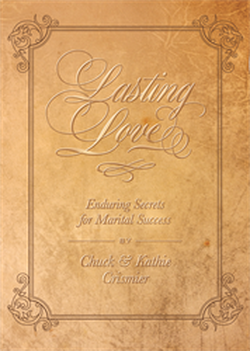
LASTING LOVE can be a dream come true. Yet love requires more than a dream or those loving feelings we so much desire.Lasting Love, Chuck and Kathie Crismier, celebrating their Golden Anniversary, unveil seven enduring secrets that will inspire and strengthen your marriage as it has theirs. COPY and PASTE this link to WATCH the TRAILER: https://www.facebook.com/Save-America-Ministries-204687919570536/videos
Past Episodes
This ministry does not have any series.
Featured Offer
LASTING LOVE can be a dream come true. Yet love requires more than a dream or those loving feelings we so much desire.Lasting Love, Chuck and Kathie Crismier, celebrating their Golden Anniversary, unveil seven enduring secrets that will inspire and strengthen your marriage as it has theirs. COPY and PASTE this link to WATCH the TRAILER: https://www.facebook.com/Save-America-Ministries-204687919570536/videos
About Save America Ministries
About Chuck Crismier
Contact Save America Ministries with Chuck Crismier
crismier@saveus.org
http://www.saveus.org/
Save America Ministries
P.O. Box 70879