
HOW NOISE DESTROYS


Do you have PEACE & Quiet?
Announcer: This is Viewpoint with attorney and author Chuck Crismier. Viewpoint is a one-hour talk show confronting the issues of America's heart and home. And now with today's edition of Viewpoint, here is Chuck Crismier.
Chuck Crismier: Florence Nightingale couldn't sleep. It was 2:00 AM in the military hospital amid the Crimean War, and the noise just never stopped. Buckets clanging, people shouting, machinery grinding drowned out the groans of wounded soldiers. The famous nurse wasn't troubled by the chaos of war, but by something she observed that her colleagues readily dismissed. Patients engulfed by noise simply could not heal.
Unnecessary noise is the most cruel absence of care which can be inflicted either on the sick or well, she wrote in her 1859 book called Notes on Nursing. What Florence Nightingale observed more than 160 years ago is now validated by scientific studies. Research confirms that noise, apart from disturbing the peace, injures the body from top to bottom, even if you don't consciously hear it.
That reminds me, my dear friends, of a three-hour stint my wife and I indulged in, encountered with about 500 other people in the general outlying area of Richmond, Virginia, where a promised and proposed data center is set to be located on 900 acres. 900 acres in an area it's just about a mile and a half from our home and right next door to an adult over-age-50 gathering of people, 500 homes all in one area right next door to this proposed data center.
The hearing was loud and clear, loud and clear, using the terms not likely but purposely as these 500 people gathered to listen to the proposal by the mega-company that is looking to install this huge data center with 12 major buildings and all of the massive generators that go with it. The response was not quiet. It was very noisy. They were concerned about noise. They were concerned about the health of the area.
They were concerned about even the economic effects of the data center and what would happen if a noise level, decibel level were to increase at a point where it was continuous, even though supposedly moderated to 58 to 60 decibels, would be continuous. Those generators would hum and hum and hum, and the massive nature of them would cause the earth to throb and the reverberating signals underneath the earth would cause the entire earth around to throb. The people were not happy. Not happy at all.
Today on Viewpoint, we’re dealing with an issue that isn't just data centers of which there are over 4,000 across the country. In fact, the majority of them, if we were to place the majority in any particular given area, is in Northern Virginia, up near our nation's capital. Dozens and dozens of massive data centers. When you’re looking at an area of approximately 900 acres, that’s a lot of space, sandwiched between residential neighborhoods. What would you expect to happen?
Is it worth it to our health? Is it worth it to our life experience? Is it worth it to our families? Is it worth it to anything that civilized society would desire to have those installed in an area that would be anywhere near residential life? Well, that’s the experience that my wife and I had last evening with about 500 other people who were, needless to say, they were really, really upset.
Really upset, they felt that the company that was proposing all of this was not telling them the truth, was just presenting a nice presentation and seeming to cover all the bases but not really. The reality would tell a different story. Today on Viewpoint, we want to take a look at a reality beyond data centers. The data centers present a very serious and sincere point of concern across the country.
Are we more interested in information, the proliferation of information and instant gratification with information that would be provided by AI and all of the data centers, or are we more interested in fundamental health and well-being? Is there a place for balance of both of those? We’re not going to argue that point here on the program today. I’m telling you, it was argued last evening without a question, and if you had been there, you would have become part of the expression. It would almost be impossible not to have become part of the collective expression of those residents who were concerned about what was going to happen when 900 acres adjoining their developments would have this monstrous data center installed.
I’m thinking back about a song that came out in the 1970s, I believe it was, it might have been the sixties. Simon & Garfunkel came out with this song. It was called Sounds of Silence. Remember that? Now, that’s all that I remember about it in particular, the sounds of silence. Are there sounds to silence? What is silence like anyway? What is silence like?
Would you like silence? Most people today don’t seem to even want silence. They don’t desire silence. In fact, they desire to have their ears and senses filled with noise. Why is everybody walking around with earbuds? Why is it there has to be intentional ongoing constant, constant, constant noise input into the ears? It’s almost as if we’re afraid of silence.
Afraid that something might happen, maybe we might find out about ourselves. Maybe there would be thoughts that would come into our minds. Maybe God himself might speak to us if we could possibly hear him, but maybe we don’t want to. Maybe that’s the reason the Scripture says be still and know that I am God. We don't want to be still.
I’m thinking about the prophet Elijah after the great confrontation that he had with the 450 prophets of Baal upon Mount Carmel in Israel. It was such an amazing thing that he had there and destroyed those prophets of Jezebel, the horrific, wicked queen of Israel married to a king called Ahab. She went after him for his life and he ran and he ran and he hid and he ran and he hid. There was a wind and another noise and then a still small voice. It was God.
Guest (Male): Once upon a time, children could pray and read their Bibles in school. Divorces were practically unknown, as was child abuse. In our once great America, virginity and chastity were popular virtues and homosexuality was an abomination. So what happened in just one generation? Hi, I'm Chuck Crismier and I urge you to join me daily on Viewpoint, where we discuss the most challenging issues touching our hearts and home. Could America's moral slide relate to the fourth commandment? Listen to Viewpoint on this radio station or anytime at saveus.org.
Chuck Crismier: Welcome back to Viewpoint. I'm Chuck Crismier. Today we’re talking about our health, believe it or not. We’re talking about our health, not only with regard to noise and sound but with regard to a lot of other things that I hope you'll stay tuned for because it may change your life. Today's program may change your life, may encourage you in ways that perhaps you hadn't thought about that would improve situations in your life, and that's why we want to talk about it here today on Viewpoint.
But the first thing has to do with this matter of sound, with the matter of noise and the damage of noise on our bodies, and then also the whole idea of peace. How can you have peace when there is no peace? How can you have peace in your heart when there's noise in your ears? Are the two not somewhat contrary to one another?
Why is it we’re so adverse to peace and quiet? We talk about peace and quiet, "Give me some peace and quiet," but in reality, if you look at American life today, if you look at families, if you look at the people around you, it doesn’t look like anybody’s looking for peace and quiet. They want just the opposite. Give me more noise, give me more activity, give me more this, more this, more that, more stress, more this. Don’t give me that peace and quiet stuff because that’s not cool.
I don’t know about you, but I crave peace and quiet. I crave peace and quiet. Why do I crave peace and quiet? Not because I don’t like activity, but because I know that without peace and quiet, I cannot be still in my own heart, in my own spirit. My mind itself is not prepared. My brain is not prepared to function as it should, and therefore my mind is not going to function the way it should. My innermost being is not going to be what it needs to be in order to even hear from God. And if I can’t hear from God, then what am I going to hear from? Everything else.
I think of the little plaque that we have in our home. It says if you don’t feel close to God, guess who moved? It’s very difficult to truly feel close to God if we’re in constant bombardment with noise. Now, you may call all of the music you listen to through your earbuds or whatever not noise, but too much is noise. It becomes noise because it’s covering over something else that’s far more important: peace and quiet.
So let’s talk about the matter of noise and the damage that it causes to our bodies, not to mention also our minds, our emotions, and so on. We opened the program today talking about Florence Nightingale, that famous, famous nurse back there in the time of the Crimean War. She noticed that because of the noise, people couldn’t heal. Soldiers could not heal. So what is noise? Well, some have said noise is defined as unwanted sound that has adverse effects upon health.
The American Public Health Association describes noise as a major public health hazard. Is it just the noise that’s perpetrated upon us, or is it also the noise that we bring upon ourselves? If you live in an area where lawnmowers are going and blowers and so on, some areas of the country have actually outlawed gas-powered mowers and blowers and so on to reduce the noise factor. I can’t say that there’s anything bad about that in and of itself.
But there is going to be noise in our lives. The question is how much of it are we going to welcome into our sphere of life? Noise is going to be there. Some kind of noise is going to be there. Even the cicadas at night in many warm and humid areas of the country, such as where we live, make noise. It’s a level of noise. It’s not overly offensive, but it is significant, those cicadas at night.
If we’re welcoming noise into our life, that’s probably a lot of where the problem is. How much of it am I welcoming into my life? Noise doesn’t just annoy or cause headaches. It actually steals years of your life. That’s what scientists are saying. Noise actually steals years of our lives. Long-term noise exposure is linked up to chronic stress and inflammation, which are further linked to many health conditions including cardiovascular disease and diabetes.
Don't tell me exactly how that works, but apparently it's real. Sound waves can have dramatic health effects, and sound waves come in many, many different forms from very many different locations. The ears are the gateway through which sound enters our body, the first body parts to be directly affected by it. As I well know, and my wife well knows, as we went to the eye, ear, nose, and throat doctor and testing the hearing this very week, as you grow older, you begin to lose sensitivity to sound.
Here come hearing aids to assist along the way. So those are not supposed to provide noise; they’re supposed to provide the ability to hear by diminishing the external noise. But our brains continue to respond to noise automatically. If there’s noise, the brain responds. I want you to keep in mind the word brain, because you’re going to find today on this program that the word brain comes up over and over again.
That brain sitting on top of your shoulders, we don’t think about it too much, probably because many of us aren’t thinking much at all. Life goes on, we don’t think. We’re not thinking. We’re not cognitive of the reality of what life is doing to us or with us or for us or whatever. But the brain is that computer up there, an incomparable computer sitting on top of our shoulders that actually is the facilitating ability in our bodies to be able to control and deal with issues such as the flow of blood, our emotions, our reactions, the choices that we make using our hands, our limbs, and so on. The thoughts that we think, all of it is connected with and run by that brain.
It would seem that we would want to do everything we could to protect our brains, other than just put a helmet on the head if we want to play football or ride a bicycle. But how about dealing with the issue that is the issues that are affecting our brains, not coming so much from the outside in terms of heavy-handed or dangerous situations that might collapse our brains inside of us, but actually harm them from the inside out?
Well, these harmful effects can occur quietly without people being consciously aware of them, and that’s part of the problem. Persistent sound activates the brain’s alarm system, triggering stress pathways and releasing stress hormones into the bloodstream, affecting our health. Environmental noise is more than just an everyday annoyance. It’s a biological stressor. In other words, it’s not just affecting what we hear, but it’s affecting the systems of our body including our brains.
An increase of about three decibels in residential traffic noise, a small but noticeable shift, is associated with a 22 percent higher odds of anxiety and 17 percent higher odds of depression. Additionally, long-term exposure to road traffic noise is linked to a higher risk of developing Alzheimer’s disease. Oh, now we’re starting to get into that memory thing. We’re starting to get into that frightful word, Alzheimer’s disease.
We don’t want sound and noise to come in and turn our lives upside down, inside out, and destroy us. Neither do we want the noise of the culture itself. Now I'm using the word noise a little differently. You can't measure this kind of noise on the decibel scale. This kind of noise is the noise that is should be unwelcome, the effects of the surrounding culture that is ungodly. That to us as followers of Christ is and should be deemed noise.
If we do not deem it as noise, we accept it as normal, and then it becomes assimilated into our minds, into our hearts, and it affects not only our minds and our hearts, but it also affects the rest of our bodies and our choices so that we can’t hear God. Now, I don't know about you, but that’s a pretty dangerous thing to me when you can’t hear God.
A lot of people say, "How does brother so-and-so seem he says I hear God speaking to me or sister so-and-so talks about that? I don’t understand. I’ve never heard from God." Maybe you never heard from God because you don’t listen. Maybe you don’t hear from God because your ears and your mind and your heart are so filled with noise, the noise of everyday life, the traffic around you, and I'm not just talking about driving traffic, I'm talking about the traffic of life that's just stealing people's attention out there.
Jesus himself, if you recall, had to get away from the noise. And they didn’t have motor vehicles. They didn’t have blowers. They didn’t have data centers. They didn’t have any of that kind of environmental noise in that day. But they had the noise of the clamor of people, the clamor of people around, and Jesus had to get away from the noise. Why? So he could hear from the Father.
That’s why he had to get away from the noise. He didn’t have to get away from the noise because he wanted peace and quiet in and of itself. He wanted peace and quiet so he could hear from God, so he could talk to his Father and hear his Father respond to him saying, "This is the way walk in it, son." That’s why Jesus wanted to get away.
So do you have a desire to get away? I believe there was a song years ago called Come to the Quiet. It might have been Michael Card, someone else, a Christian musician who had written that, Come to the Quiet. Yes, we need to come to the quiet. We need to be still and know that he is God. How can we do that though? One way that we can do that is to come apart. How do we come apart? I’m not calling us to fall apart, but to come apart from the noise.
Well, how about doing it just the way Jesus did? One of the things that my wife and I do, and I've shared this with you so often over the past 30 years or so, every single morning we come apart to begin the day. Before the noise hits, before the pressures hit, we purpose to come apart, have a cup of coffee together as we open the Bible, the word of God together. And we read, and we talk about it, and we apply it, and we pray.
And we seek to listen to the voice of the Father before all the other noise and stress of the day. And my wife said just again last week, she said, "Chuck, this is the best thing we have ever done." From her perspective, that was the best thing we have ever done as a couple. And here we are now, next week, getting ready to celebrate our 60th wedding anniversary. You got to come around to some quiet in order to do that, friends.
Sometime, there’s been a lot of noise in our life, a lot of things that we’ve done, a lot of activities that God has called us to do that weren’t always peaceful, but we still have to come away and be still and know that he is God. Little encouragement there. Now, one of the things that keeps people from being still or stills them in ways that are actually destroying their brains is too much television.
Now, you may seem this is strange, you’ve heard this before. No, you haven’t heard it quite like this before. Stay tuned and then we’re going to talk about some things that will help reduce dementia.
Guest (Male): There is so much more about Chuck Crismier and Save America Ministries on our website, saveus.org. For example, under the marriage section, God has marriage on his mind. Chuck has some great resources to strengthen your marriage. First off, a factsheet on the state of the marital union, a factsheet on the state of ministry, marriage, and morals. Saveus.org. Marriage, divorce, and remarriage. What does the Bible really teach about this? Find all of this out at saveus.org. Also, a letter to pastors, the Hosea project. Saveus.org. And many more resources to strengthen your marriage. It's all on Chuck's website, saveus.org. Again, you can listen to Chuck's Viewpoint broadcast live and archived. Save America Ministries website at saveus.org.
Chuck Crismier: We talk a lot about spiritual warfare. Spiritual warfare and everybody thinks about, oh, we’re fighting demons out there in the wild blue yonder. Never seen one, but we’re fighting them anyway, and the devil made me do it and all of this. Well, the reality is that most spiritual warfare has nothing to do with those things. It has everything to do with how we think in our minds and our hearts.
In other words, whether our minds and our hearts are aligned with God’s word, will, and ways or not. When our minds and hearts are aligned with God’s word, will, and ways, and our choices then correspond to what we say we believe, we have peace in our hearts. It’s not noise; we have peace. It’s called the peace that passes all understanding that will keep our minds and our hearts pure before him.
That’s what we want, right? But why is it that it seems to be so lacking in reality in the life of professing Christians? Why is it so lacking in the life of many of our pastors whose marriages are falling apart at the seams almost as fast as their parishioners? Every day, virtually, I receive more information from around the country and around the world of major Christian pastors falling apart at the seams.
Their marriages falling apart, their families falling apart, there’s no peace. Men will cry peace, peace, but there is no peace. It’s hard. And when I wrote the book, The Power to Overcome, I realized that it was going to involve a tension, a tension between peace and rest and warfare. Between peace and rest and warfare, because you cannot be an overcomer without the risk of being overcome. Therefore, to be an overcomer involves a kind of warfare.
Now, we can wage that war in a spirit of peace and trust and rest before God, or we can experience the ravages of that war by yielding to the spiritual noise of the culture and world around us, the bombardment and yielding to it. So the question I have for you is, are you an overcomer? Don't answer too quickly. The majority of our so-called fellow believers in Christ are not overcomers. They’re just not. The statistics prove it.
Their stories prove it, they’re not overcomers, they’re being overcome. And that’s a very serious thing if we’re on the near edge of the second coming, isn't it? Because Jesus said in the book of Revelation chapters two and three, seven times to the seven churches of Asia that represented the then-time church, the now-time church, and the end-time church: to him that overcometh, to him that overcometh, to him that overcometh, to him that overcometh. And he that hath an ear to hear, let him hear.
Jesus knew that the majority would not hear, and they would be overcome. And he was talking to the churches, friends. He wasn’t talking to pagans. He was talking to the churches, professing Christians. And then he wraps up the book of Revelation in chapter 21 with the same message. He that overcomes will inherit all things. But, and then it’s all the things that keep us from being an overcomer are not going to get those things.
Do you realize that the book of Revelation, the message of the book of Revelation is about overcoming? From beginning to end. And everything else in the middle that everybody wants to focus on because it seems sensational is not about how you and I live our lives. It’s information. It may seem sensational and interesting, but the book is about being an overcomer.
And so when I wrote the book, The Power to Overcome, it was like the Holy Spirit re-opened my eyes to see the real message of the book of Revelation and how intensely practical it is, how important spiritually it is for us to be prepared as overcomers. So that’s what the book is about: how to be an overcomer in these terrifying times in which we live. In fact, the subtitle is how to triumph in troubled times. The Power to Overcome, how to triumph in troubled times.
It’s on our website, saveus.org. $25 will put it in your hands. I tell you, it will be a message that will strengthen and encourage your heart. Really, it will. And you’re going to want to share it with other people because it’s going to encourage and strengthen their hearts because you’re going to realize how desperately it’s needed.
It’s on the website, saveus.org, $25. Call us at 1-800-SAVE-USA. Write to us at Save America Ministries, PO Box 70879, Richmond, Virginia 23255, writing a check add $6 for postage and handling. And then again, I would hope that some of you would take us up on the proposal to become part of the Overcomers Project, and that is to send your gift of $250 to Save America Ministries, and we will then provide to you 10 copies of that book.
It will be a totally tax-deductible donation to Save America Ministries, and we will provide 10 copies of the books for you to become a messenger and ambassador of God’s truth, to get the message out to those in your sphere of influence. You’re going to give the book out to different people in your sphere of influence that the Holy Spirit leads you to, to encourage and strengthen their life for such a time as this. Whether it be a family member, somebody you work with, maybe somebody in your congregation, maybe your pastor, and so on.
Everybody needs it. Everybody needs it. All right, to sign up for that, just go to the website, donation there on the home page, and follow through with that, or you give us a call 1-800-SAVE-USA say, "I want to be part of the Overcomers Project." Or you can write to us at Save America Ministries and write a check and on your check put Overcomers Project or send a little note, Overcomers Project, and we’ll get those books to you ASAP.
Okay, now there’s a whole lot that I want to share with you in the next few minutes, so I hope you’ll stay tuned. This study finds what you may not have expected: that tons of TV is shrinking your brain. Watching four or more hours a day of television is linked to higher risks of developing disorders including dementia, depression, and Parkinson’s disease. A recent study just came out.
Journal of Alzheimer’s Association suggests that individuals who reported watching TV very often in mid-life particularly later showed reduced volume in areas of the brain connected to memory, smaller frontal and occipital lobes, as well as areas of damage in the brain’s white matter linked to aging, stroke, cognitive decline, and dementia. Whoa.
So they say, well, you know, if you’re sitting, which is most people are doing when they’re watching television, they say you shouldn’t sit so much. Well, yes, we should get up and should be active. But what are we doing when we’re sitting? Are we thinking? Are we or are we just passively dinking out in front of a television? This is one of the reasons, friends, why we chose early on not to take this program on television, but to do it through radio.
You know why? Because with radio, it’s much more difficult to dink out. You really have to listen. You can’t be a voyeuristic kind of a person; you have to listen. And then you consider what’s going on and think about it in your mind and heart. See, that’s what’s necessary. It’s not a matter of watching something. Just the watching, the viewer kind of thing is not the most important thing.
The Bible says blessed are those that hear the word of God and do it. Just asking, just thinking out loud. Hey, how about a little chocolate, friends? Dark chocolate, that is, not milk chocolate. Dark chocolate relaxes blood vessels and boosts your mood. And we want to talk about why this is important. Everyone’s favorite indulgence, more than just a treat, dark chocolate is rich in nutrients and antioxidants and has proven benefits for heart and brain.
Aha, there it is again. Cocoa-rich chocolate can support cardiovascular health, cognitive function, metabolic balance, and emotional well-being. Where the evidence for dark chocolate gets compelling is its effect on vascular function, the endothelium, and nitric oxide. Moderate dark chocolate consumption may also help lower so-called bad cholesterol.
There’s a link, an established link between higher dark chocolate intake and reduced risk of developing type 2 diabetes, also, believe it or not. A randomized controlled trial found that three weeks of daily consumption of 85 percent dark chocolate significantly reduced negative mood while 70 percent dark chocolate had no effect. In other words, the darker the chocolate, the more value.
Other research found that daily intake of at least one-third of a dark chocolate bar over 30 days significantly improved self-reported calmness and contentment. In other words, it’s affecting your neurological system and your brain. So I thought that might be encouraging to you since, you know, we’re not coming against something here, we’re showing how a 2020 study published in Nutrients found that cocoa flavanols may act as neuroprotectors. They help protect the brain and support focus, memory, and learning.
That’s good news, isn't it? Now, I’ve got two more pieces of good news for you in the final section of the program here, and I hope you’ll stay tuned because, friends, these kinds of things are life-changing. They really are. They’ve affected my life, and they’ll affect yours as well. We'll be right back.
Guest (Male): Have you ever considered what the early church was like? Many people are developing a heart longing for a greater fulfillment in our practices as Christians. A recent study showed 53,000 people a week are leaving the back door of America's churches in frustration. What is going on? Why has there not been even a one percent gain among followers of Christ in the last 25 years? Could it be that God is seeking to restore first-century Christianity for the 21st century? Jesus said, "I'll build my church." Is Christ by his Spirit stirring to prepare the church for the 21st century? The early church prayed together and broke bread from house to house. They were family, and it was said by all who observed, "Behold how they love one another." Incredible, but the same can be found right now. Go to saveus.org and click Cell Church. We can revive first-century Christianity for the 21st century. It's about people, not programs. It's about a body, not a building. That's saveus.org, click Cell Church.
Chuck Crismier: I know that there are some who say that coffee is not good for you. There are some religions who religiously avoid coffee. However, studies increasingly show how caffeine intake can be linked to reduced dementia. A daily cup of coffee or tea may do more than wake you up. It could also help you keep your brain sharp as you age. New research tracking hundreds of thousands of people over decades suggests that moderate caffeine consumption is linked to a lower risk of developing dementia.
Caffeine increases the brain's activity and can accelerate the speed of messages between the brain and the body. A study recently published followed 132,000 people for up to 43 years and found that those who drank two to three cups of caffeinated coffee or one to two cups of tea daily had a lower risk of developing dementia than those who drank little or no caffeine. Now, what’s the connection there?
Well, here's part of the connection. Inflammation is being studied as a cause of cognitive impairment. In other words, losing your mind, friends. In other words, dementia, Alzheimer's, and so on. Caffeine has the potential to reduce oxidative stress and neuro-inflammation, which helps to decrease brain aging. Scientists propose that caffeine might protect the brain by reducing inflammation and improving blood vessel function. It may also enhance insulin sensitivity, which is important because diabetes is a risk factor for dementia.
Sounds like it might be important, right? The better cognition among tea and coffee drinkers may come from caffeine's ability to increase dopamine and acetylcholine in the brain, which are important for memory and cognition. This is not the only study like this, friends. Over the past 10 years, I have come across many such studies. And quite frankly, yours truly was never a coffee drinker until age 30.
I didn’t understand it. At first, I had to adulterate it with cream and sugar and so on, but for the past 20 years, no cream or sugar, just black coffee, and the blacker the better. Three to four cups a day, one during broadcast time, which I hold in my hand at the moment. Why? Well, because I find that it has the effect of keeping my brain alert and alive. Now science is proving those things. It also happens to be the best lubricant I’ve found for my voice during broadcast. No sugar, just black coffee.
Now, we'll move from coffee to cinnamon. Here is a spice that we think of, especially in the fall, we think of cinnamon on cereal and different ways that cinnamon is used, but a teaspoon of ground cinnamon has more antioxidants than a full pound of fresh blueberries, and you know how good blueberries are. My wife and I eat blueberries several times a week. Why? Not only are they good, but they're good for us.
We want to make sure that we’re intaking that which our bodies can uptake to produce what God would have them to do. So cinnamon is more than a spice. It’s a nutrient-dense product spice, but its benefits lie in what is called bioactive compounds like manganese and polyphenols. Cinnamon is packed with protective antioxidants such as polyphenols.
And what I want to do is encourage you very personally here. Cinnamon improves blood sugar control. A number of years ago, I discovered that every once in a while, I was feeling some strange little numbness in my toes. And I thought this isn’t good. I don’t like this. My father had diabetes, and we’ve known other people who had diabetes, and I don’t want to play with that stuff.
Diabetes is dangerous. And so I was concerned about that and I heard, how I heard it I don’t know, but I heard that cinnamon was a great antidote for blood sugar control and that it would help to stave off any advancing diabetes. And so I began to take cinnamon tablets, capsules actually, which I get at Costco. And you can get them at Walmart, you can get them just about anywhere. Cinnamon, get the strongest ones you can, one a day.
When I began to do that, when I began to take a cinnamon capsule once a day, I never, ever, ever, ever again had any of those sensations in my toes. Ever. Then I discovered as a result of these studies and so on, there’s a good reason for that because cinnamon helps to level out blood sugar levels and it also helps reduce both systolic and diastolic blood pressure, total cholesterol, low-density lipoprotein, triglycerides, and so on.
In other words, it’s good for you. And one doctor said cinnamon’s reputation as a potent anti-inflammatory is well-earned. One of the few natural compounds that shows consistent anti-inflammatory and antioxidant activity across multiple systems of the body, not to mention also its effect to ward off diabetes. Now, you may find some doctor out there that says, "Phooey, phooey, phooey on that." If you’re deep in diabetes, maybe so.
But if you really want to live, if you really want to prevent those things from coming on and you’re willing to control your diet in reasonable ways, start taking cinnamon. Not on my recommendation, but on the recommendation of these doctors and studies. Just thinking out loud, friends. And one other thing I'd like to bring to your attention because these are things that are so simple.
A lot of women, some men, have problems with urinary tract infections. Maybe you have. They call them UTIs. Everything has to have a label. And so they want to provide antibiotics and they want to provide this, that or the other. All kinds of ads on TV for dealing with UTIs and so on. How about going to Costco or to Walmart or some other place you want to go to, CVS, and get yourself a nice bottle, jar, whatever you want to call it, of cranberry tablets?
Cranberry, take one a day and say goodbye to your UTIs. It may sound strange, but I tell you, friends, I've had many people who’ve attested to that truth. These are just some things that we can encourage ourselves with. You see, it’s not just about negativity, it’s about dealing with the issues of life. God provides some of these things for us if we only knew about it. If we just only knew about it.
But you can know about it, you can hear this on the radio today and it can just go right through your ears and never rest to accomplish anything. And that’s why the Bible says, "He that hath an ear to hear, let him hear." So that has to do with every aspect of our lives. It has to do with things like this that can protect us and provide for us on the in the physical realm, and it also has even the more to do with things that can protect us and provide for us on the spiritual realm.
But if we're if our hearts and our minds and our brains are just overwhelmed with noise all the time, we forget, we can’t remember, we can’t grasp, we become more and more frustrated, and pretty much we just eventually lose it. That's what we think about Alzheimer's and dementia. You're just losing it. It's a scary thing, isn't it? But there are things that we can do about it.
There are people, lots of professing Christians, hundreds of thousands, millions of professing Christians are losing it every day spiritually because they don’t listen. They hear but they don’t listen. So Jesus said, "Blessed are those who not only hear the word of God, but do it." Be doers of the word and not hearers only, Jesus’ brother James said, deceiving our own selves. Let’s stop living areas of self-deception either physically or spiritually.
Let's get really engaged in living the life that God would have us to live. We can't do everything. You and I can't do everything, but we can do something. What we can do we should do, and by the grace of God we will do, right? It’s time for us to get off our lazy bums and be doers of the word. But we’re not able to do that when four hours a day we're in front of the television and we’re not taking care of our bodies and we’re exposing our ears, our minds, our wills, and our emotions to everything that is contrary to the word, will, and ways of God.
It just doesn’t work. And we don’t feel close to God because we’re not. Be still and know that he is God. And when you do that, when we do that, then we’re going to have the power to overcome. We’re going to know that God is working in and through us both to will and to do of his good pleasure. And we’re going to be on top, not on the bottom. We’re going to overcome and not be overcomers.
That’s why I wrote the book, The Power to Overcome: How to Triumph in Troubled Times. $25 will put this book in your hands. It’s a life-giving, life-sustaining, life-empowering book for these troubled times. And I hope you’ll get a copy of it. It’s on the website, saveus.org. You can call us at 1-800-SAVE-USA or write to us at Save America Ministries, PO Box 70879, Richmond, Virginia 23255, writing a check add $6 for postage and handling.
I appreciate so much those of you who continued to provide support month after month. There are so many who have been so faithful. I cannot tell you how grateful we are. But there are many who are listening, new listeners, that have yet to shoulder the plow with us to help us get the message out. And you notice there is no commercial support for this program. We’re 100 percent dependent upon God, and he is dependent on you. Hope you'll follow through. God bless and be a blessing, and be an overcomer. Do not allow yourself to be overcome, but you got to learn how to do that. The Power to Overcome will help you to triumph in troubled times.
Announcer: You've been listening to Viewpoint with Chuck Crismier. Viewpoint is supported by the faithful gifts of our listeners. Let me urge you to become a partner with Chuck as a voice to the church declaring vision for the nation. Join us again next time on Viewpoint as we confront the issues of America's heart and home.
Featured Offer
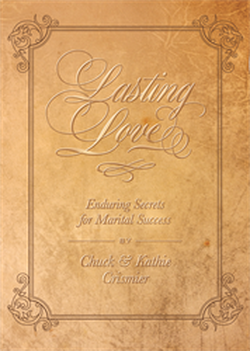
LASTING LOVE can be a dream come true. Yet love requires more than a dream or those loving feelings we so much desire.Lasting Love, Chuck and Kathie Crismier, celebrating their Golden Anniversary, unveil seven enduring secrets that will inspire and strengthen your marriage as it has theirs. COPY and PASTE this link to WATCH the TRAILER: https://www.facebook.com/Save-America-Ministries-204687919570536/videos
Past Episodes
This ministry does not have any series.
Featured Offer
LASTING LOVE can be a dream come true. Yet love requires more than a dream or those loving feelings we so much desire.Lasting Love, Chuck and Kathie Crismier, celebrating their Golden Anniversary, unveil seven enduring secrets that will inspire and strengthen your marriage as it has theirs. COPY and PASTE this link to WATCH the TRAILER: https://www.facebook.com/Save-America-Ministries-204687919570536/videos
About Save America Ministries
About Chuck Crismier
Contact Save America Ministries with Chuck Crismier
crismier@saveus.org
http://www.saveus.org/
Save America Ministries
P.O. Box 70879