
HOW ARCHAEOLOGY "SPEAKS"


Time tells the story of biblical truth
w/ Titus Kennedy
Chuck Crismier: Tell Megiddo told us a real story last year, archaeologically. In fact, it's one of the most famous archaeological discoveries of last year with 20 levels of ancient urban civilization discovered. It continues to be the connection of archaeological discoveries in the Jezreel Valley of Northern Israel.
Interestingly, I have some connection with the Jezreel Valley of Northern Israel as well. Many, many years ago I was encouraged to make a modest investment in a company called Zion Oil and Gas. Guess what? Zion Oil and Gas now has a 90-acre leasehold in the Jezreel Valley just under Tell Megiddo or just next to Tell Megiddo, expecting that somewhere, somehow in the near future there's going to be an expression of ground underneath Israel where petro-geologists believe there is oil but they've never been able to capture it right there near Tell Megiddo.
Tell Megiddo tells us a lot of other things about Israeli life. In fact, it tells us about a great king, Josiah. His reforms followed the reign of the idolatrous king Manasseh. The Bible says that there was no king like Josiah before or later. But verse 29 of 2nd Kings 23 says that the military blocking maneuver that happened at Tell Megiddo and in the Jezreel Valley ended his righteous life.
How was that discovered? By archaeology. Today, friends, we're going to see how archaeology speaks. Archaeology speaks and it speaks to us about biblical history. It speaks to us to confirm how what is stated in the Bible actually is true notwithstanding all the liberal so-called Bible scholars that try to debunk what the Bible has said.
Today on Viewpoint, we have a very special guest joining us. He is an expert in the area of Bible archaeology and the area of archaeology. He is so much of an expert that his very name has been pulled out of antiquity. His parents gave him a name pulled out of antiquity. His name is Titus. Apparently, he's related somehow to the ancient Titus that the Apostle Paul wrote about or wrote to.
This is Titus Kennedy, friends. He's the author of a book called Unearthing the Bible. Today we're going to talk about how archaeology helps us to identify the actual veracity, the existence of the people of the Bible. Titus Kennedy joins us from the Northwest. Titus, it's good to have you on the program.
Titus Kennedy: Great to be here. Thanks for having me on.
Chuck Crismier: You've been doing a lot of digging and there are many kinds of digging that people can do. Many of us have dug into the Bible. You can dig into the Bible and it's almost like every time you dig into the Bible every year, my wife and I go through the Bible, we dig, we read, and we explore and it's like new stones are overturned and we discover more and more things. You find that in the area of your work, don't you?
Titus Kennedy: Absolutely. There is a lot out there to find. Sometimes people think, haven't you guys been doing that for so long that there's nothing really left to discover? But really less than 10 percent of what could be discovered by archaeology has been so far. We have decades and decades if not longer of constant excavations to really bring up everything from the ground.
Chuck Crismier: Up from the ground it arises. Archaeology has also been somewhat fascinating to me because, not that I'm a serious student of archaeology, often times when you're digging around in the ground there are all kinds of little relics that become precious to the archaeologist but seem relatively insignificant to a person such as myself who does not delve into the ground that much. But archaeology from your viewpoint has tremendous import, doesn't it?
Titus Kennedy: It does. It really does. When I was first learning about archaeology, my assumption about history was just that we got all of our information from these old or even ancient books that had been passed down over the centuries. I didn't realize that people actually went to these locations, to these ancient ruins, and they excavated down into the ground and found all sorts of new information about the past and about history. That is really from a broad perspective what archaeology does. It gives us new information and more information about the past.
Chuck Crismier: How did you get into this anyway?
Titus Kennedy: I was always interested in history and some of my other favorite subjects were science and languages. All of those things fit together quite well into archaeology. But my initial introduction to it was going to visit an archaeological site, some ancient ruins, actually a Hawaiian village that had been excavated and then some of it had been rebuilt. That was one of my first ancient ruins that I ever saw.
Then the next year, I was given a book on the excavation of Troy, this project of Heinrich Schliemann where he was looking for the Troy of the Iliad. So that just opened up the world of archaeology to me. I found it fascinating. Then some years later, I started reading more about archaeology and the Bible specifically.
Chuck Crismier: Did you guys ever find Helen of Troy?
Titus Kennedy: They didn't, no. But they did find the city that she or her character lived in.
Chuck Crismier: The Bible talks about specific individuals and even though Homer in the Iliad talks about individuals there including Helen of Troy, they might be fictitious.
Titus Kennedy: Exactly right. The difference between the Bible and the Iliad is that even though both are ancient, both are talking about a real historical context and real places, maybe even an overarching event in the Iliad of the destruction of Troy, but in the Iliad you have all of these characters who we have no archaeological evidence for that any of them ever existed.
You could look at Achilles or Hector, Paris, Helen as you mentioned earlier, Priam and all these others, Agamemnon, and we just have no archaeological evidence for their existence. They don't really show up until hundreds of years after Homer wrote, around maybe 600 BC, we start to see some artwork with their names on it, but this is just depicting the story of the Iliad, it's not going back to the history 600 years before it happened. Then the difference with the Bible is that we have all these people who are attested by archaeology from the time that they lived.
Chuck Crismier: We're going to get into that in some depth through the balance of the program. We want to welcome Titus Kennedy, archaeologist-in-chief here, to speak to us concerning how archaeology speaks to the veracity of the Bible.
Once upon a time, children could pray and read their Bibles in school. Divorces were practically unknown, as was child abuse. In our once great America, virginity and chastity were popular virtues and homosexuality was an abomination. So what happened in just one generation? Hi, I'm Chuck Crismier, and I urge you to join me daily on Viewpoint where we discuss the most challenging issues touching our hearts and homes. Could America's moral slide relate to the fourth commandment? Listen to Viewpoint on this radio station or anytime at saveus.org.
In preparation for today's program, I went to the famous or infamous source of AI to determine the leading archaeological discoveries of last year. Each one of these articles claims to tell us about the 10 most striking biblical archaeological stories of 2023. But the one that stood out between both of these lists was the discoveries at Megiddo. There are others I couldn't relate to those. It seems that there are so many things in the archaeological world that archaeologists take great pride in in terms of their discoveries, but for most of us they don't seem to have all that relevant application.
But today on Viewpoint, Titus Kennedy is bringing to us not only one book but he's written a number of different books concerning archaeology and the Bible. How archaeology is confirming or speaking to us to verify the actual truth of the Bible including the people that are involved.
In his new book Archaeology and the People of the Bible, Dr. Kennedy is looking at about 130 people in the Bible and examining them from the viewpoint of archaeology. Can their existence be verified? And if not, was the Bible true? So the more that people can be verified archaeologically, it is deemed then the Bible is increasingly proven to be true, that its veracity can be trusted, and that is why he works and delivers to us a message here today.
While the historical accuracy of the Bible has long been a topic of debate and has fallen under increased scrutiny in recent decades, new archaeological discoveries from the expanded host of ancient sites found in the Bible lands continue to provide evidence pertinent to questions of reliability. I want to make the book available to you before we get back into it in depth. The book is a $28 book and it's yours for $21 on our website, saveus.org. You can give us a call at 1-800-SAVE-USA or write to us at Save America Ministries, PO Box 70879, Richmond, Virginia 23255. Ready a check at $6 for postage and handling. Again, the book Archaeology and the People of the Bible.
Titus, you've been involved in the field of archaeology for how long now?
Titus Kennedy: I've been out digging in the field for over 20 years. My first excavations were just as a student in the first year of university and then since then I've been digging primarily in the Middle East at biblical sites and doing projects every single year.
Chuck Crismier: You've been digging a long time. I do a lot of digging out in the yard, love to do landscaping and things like that. It's hard to keep the fingernails clean. How do you keep yours clean after 20 years digging in biblical soil?
Titus Kennedy: Sometimes I wear gloves. Other times you just got to spend some time cleaning up.
Chuck Crismier: Is that back-breaking science?
Titus Kennedy: It really can be. It varies from project to project and from archaeologist to archaeologist. A lot of project directors don't do much digging once they get to that point. I like to stay in the trenches so to speak. So even though I have a lot of recording to do and people managing, I do still dig every day that I'm out there at the site.
Chuck Crismier: You want to keep your work honest.
Titus Kennedy: Yeah, and I want to be involved in it as well. I want to continue practicing and doing it as long as I can because there'll be a day when I won't be able to, but also training graduate students and staff members to help them become archaeologists themselves. They need to be able to see examples of that work and I just enjoy participating in finding all these new discoveries.
Chuck Crismier: Doctors as they call them medical doctors and they have a practice. Do archaeologists have a practice?
Titus Kennedy: Sort of. I guess you would say our practice would be the institutions that we're affiliated with or maybe the projects that we're affiliated with. So in a way, yes.
Chuck Crismier: How do you get those projects?
Titus Kennedy: You've got to apply for them through the Department of Antiquities in whatever country that you're wanting to excavate, but you've also got to put together a team and raise funding to be able to do the project and organize all the logistics as well. There are various components that go into it.
Chuck Crismier: So the fundraising, how do you go about that?
Titus Kennedy: A couple different ways. One is you could yourself individually go and talk to potential donors, but generally how it works is that the institutions will try to raise funds or much of the funds anyhow for those projects and so they've got people who are dedicated to working on fundraising.
Chuck Crismier: When you say institutions, are you talking like universities?
Titus Kennedy: Universities, seminaries, research institutes. So the research institute I'm with is Discovery Institute, and then I also have dug under Biola University in the past and now with Shepherd's Theological Seminary, Shepherd's Institute of Archaeology, as well as some other institutions where I was a staff member not directing. Different schools or different research institutes are the ones that would be spearheading these projects.
Chuck Crismier: If you were to select the top couple of archaeological endeavors that you've been involved in particularly in the Middle East, what would they be?
Titus Kennedy: It's always interesting to dig in Jerusalem. I've done a couple of different digs in Jerusalem because you don't just have one excavation there. There's several different smaller sites in different parts of the city. But there's obviously so much biblical history there that it's just incredible to be a part of that.
When I was digging there, we were looking at time periods like the time of Jesus and the Apostles, the time of Hezekiah, a little bit of the Persian period, Nehemiah, and then even the intertestamental period. Really opportunities to connect with the text of the Bible and discover some things that are mentioned in the Scriptures, whether it's some walls that Hezekiah built or Nehemiah repaired or it's the coins of some of the officials mentioned in the New Testament like King Herod the Great or Herod Antipas the Tetrarch and others.
Chuck Crismier: There's been a lot of talk about gold and silver coins these days. A lot of people investing in them. What have you found in terms of coins there in Jerusalem?
Titus Kennedy: Coins are a fairly common thing to find in archaeology if you are excavating in what we call the Roman period. This is roughly equivalent to the New Testament period because coinage was so common. But usually the types of coins that we are finding are bronze coins, the less expensive ones, the ones that people might drop out of their purse or they drop on the floor and they aren't so concerned with finding that one little widow's mite like we've read about.
Chuck Crismier: Kind of like our pennies that are going out of existence.
Titus Kennedy: Absolutely right. But we do find some silver coins as well, just not as commonly. Those are really great finds because silver is preserved much better than these copper or these bronze coins. Then rarely, very rarely, do we find gold coins because gold was usually melted down and reused in ancient times and people, of course, are going to value that coin so highly that if they lose it, they're going to look for it and find it. So just really rare situations where we'll find a gold coin or a stash of gold coins.
Chuck Crismier: Back in the book of Genesis, we find a fellow, a very mysterious fellow showing up there. His name is Melchizedek. Abraham gave tithes to Melchizedek when he came back from the battle against the five kings. Then in the Psalms, we find the prophecy that Jesus Christ would be of the order of Melchizedek. Then the writer of the book of Hebrews also talks about this fellow Melchizedek who was supposed to have been priest of Salem which would have been Jerusalem. Have you found any records concerning this fellow Melchizedek?
Titus Kennedy: No, no one's found that yet, so maybe in the future at some time. But what we can say is that just as Genesis calls Jerusalem by this other name Salem in the earlier period, that's also what we see archaeologically because earlier references in inscriptions or texts to Jerusalem call it Salem, and then once we get to about the time of Joshua and the Judges we see it's called Jerusalem.
Chuck Crismier: So the things that we commonly understand in our reading of the Bible often times have a deeper history that using terms like Salem that we would not have normally attached to Jerusalem.
Titus Kennedy: That's right. Occasionally names of cities change and then we have other things like social customs could change and covenant format could change and even the price of a slave like in the Joseph story, that changed over time too. So it's really important and helpful when the Bible gives us this ultra-specific information that to the casual reader may seem like it's just an interesting detail, it's not relevant really, it's not necessary for the narrative of the story, but it does show the historical precision and accuracy and we're able to now check up on that and see the historical reliability of the Bible when the archaeology confirms those details.
Chuck Crismier: We've already talked about a fellow by the name of Josiah who was considered to be from God's perspective the most righteous king of Israel that there had never been one before him or after him quite like him, which is an astounding thing to say since God chose David to be a man after his own heart upon which to establish the throne of Jesus forever. But how about other persons? For instance, another one you just mentioned, Joseph. Have you found archaeological evidence of Joseph?
Titus Kennedy: I would say no, definitively we haven't for sure. There are various ideas about when exactly Joseph lived, which Pharaohs he served under, and if he might be attested in some Egyptian documents. There's nothing clear at this point, but I think eventually we will find something because he held this high position of Vizier and so likely we'll find some inscription or papyrus with his Egyptian name on it and perhaps some other information about his time in that position of Vizier.
Chuck Crismier: How about a woman by the name of Jezebel? Any archaeological confirmation of her existence there as the infamous wife of Ahab?
Titus Kennedy: Yes, we do for her. She's attested by a stone seal and this is inscribed with her name Jezebel and some other iconography that would be appropriate for a Phoenician princess. This comes from the 9th century BC, the time that she lived. So we do have Jezebel attested in the archaeological record.
What you'll find or what people will find generally is that as we get closer in time to the present, there's just more and more archaeological material that has survived. So you ask about Joseph earlier, we'll think about it. Joseph is hundreds and hundreds of years prior to the time of Jezebel. But once we get into this Kingdom period, the Divided Kingdom period, we have so many of those kings of Israel and Judah as well as the people that they interact with that are mentioned in the Bible. We have so many of them attested, and this just continues on as we get to the New Testament period where the vast majority of the officials are known through archaeological remains.
Chuck Crismier: How about David, the second king of Israel? It seems that there has been a lot of contention among so-called Bible historians or particularly liberals who have wanted to debunk the idea that David ever really existed, that he was fictitious. After the break, can you speak to us about whether or not you've found archaeological support for David there and the Temple Mount, actually. We'll be right back.
There is so much more about Chuck Crismier and Save America Ministries on our website, saveus.org. For example, under the marriage section, God has marriage on his mind. Chuck has some great resources to strengthen your marriage. First off, a fact sheet on the state of the marital union, a fact sheet on the state of ministry marriage and morals, saveus.org, marriage, divorce, and remarriage. What does the Bible really teach about this? Find all of this at saveus.org. Also, a letter to pastors, the Hosea project, saveus.org, and many more resources to strengthen your marriage. It's all on Chuck's website, saveus.org. Again, you can listen to Chuck's Viewpoint broadcast live and archived, Save America Ministries website at saveus.org.
According to the Bible, David ruled somewhere around 1000 BC, 1000 years before Christ. The "House of David" is a phrase that is often used. In fact, it's used in the books of Samuel, Kings, Chronicles, Psalms, Isaiah, Jeremiah, and Zechariah, including also the New Testament. So this phrase House of David, it sounds like it was pretty important, a dynasty. Can that be established, has that been established, confirmed archaeologically? That's the question before us as we move into this segment with our special guest Titus Kennedy.
His book Archaeology and the People of the Bible, Exploring the Evidence for the Historical Existence of Bible Characters. In other words, archaeology speaks. It does, archaeology speaks and helps us to understand and confirm the verity, the truth of the Scriptures. It's a $28 book, yours for $21 on our website, saveus.org. You can call us at 1-800-SAVE-USA or write to us at Save America Ministries, PO Box 70879, Richmond, Virginia 23255. Ready a check at $6 for postage and handling. The phrase House of David, do we have any archaeological evidence or discovery to confirm this notwithstanding what all of the debunkers of the Bible have had to say about it?
Titus Kennedy: You're right, that phrase "House of David" is important and we do have archaeological attestation of this, but it was in the relatively recent past. Throughout the '80s and the early '90s, it was getting to the point that most archaeologists and ancient historians, even many biblical scholars, were of the opinion that David was a mythological character. The reason was that we had no clear archaeological evidence for his existence.
In other words, they were working from the perspective of the Bible is guilty until proven innocent beyond a shadow of a doubt. It is interesting but that's how their perspective is. The problem with that is just from a purely historical, archaeological standpoint is we now have so many examples of this same thing happening where the Bible talks about such and such person or place or event and then scholars said that person didn't exist, this never happened, and then fast forward some years and archaeology comes up with this artifact or this discovery that demonstrates that the Bible is true and it verifies this person, place, or event. It's just kept happening.
Finally, a situation with David this happened as well because in 1993 the Tel Dan Stele was discovered and it's this victory monument of the Arameans, the enemies of Israel and Judah, and it was commissioned probably by King Hazael who's named in the Bible. He says that he has defeated these kings of Israel and Judah. He names Jehoram, son of Ahab king of Israel, and Ahaziah, son of Jehoram king of Judah, and he says king of the House of David. Suddenly we had David mentioned and not just David mentioned, but in the context of the kings of Israel and Judah and this phrase 'House of David' that's found in the Bible that denotes he was the founder of the dynasty of Israelite kings, and everything changed overnight. Subsequent to that, some other artifacts and sites were reassessed and then the Mesha Stele was found to have this House of David phrase as well. David's palace in Jerusalem was discovered and now some archaeologists are working on evidence that really shows there was a widespread kingdom ruled from Jerusalem by David just as the Bible narrates to us.
Chuck Crismier: It's quite fascinating. I think that was considered one of the greatest archaeological discoveries of the last 20 years.
Titus Kennedy: Oh yeah, I mean it's one of the great biblical archaeological discoveries period. It's one of the best examples used not only because of how it changed the perspective of so many scholars almost immediately and just serves as sort of a test case and lesson, but David obviously is one of the most important people in the Bible as well.
Chuck Crismier: We say that Jesus was born in Bethlehem of Judea in the days of Herod the king and the problem is what were the days of Herod the king? What was the reign of Caesar Augustus? Because it was in the reign of Caesar Augustus, the first emperor of Rome, that all the world was to be taxed or registered and that's why Joseph and Mary had to go on their way to Bethlehem where Jesus was born.
So the question then remains, when was Jesus born? Well, traditionally it is said that he was born in 0 BC, in other words right between, that's why we call it before Christ and after Christ. Then some said that he was born a few years later, but now it seems like the prevailing view is he was probably born somewhere maybe around 4 BC. Do we have any real archaeological evidence concerning the birth of Jesus?
Titus Kennedy: Well, we have a lot about the context of the birth and we have some things relating to the birth itself. We could just start with Bethlehem and archaeologically we can say that Bethlehem was a village that existed in the first century when Jesus was born and that there were shepherds who lived and worked around there. We've got this ancient church that commemorates the location where Jesus was born probably in a cave based on some sources going back to the second century even.
Chuck Crismier: But that's tradition. That's not necessarily archaeologically established as proof.
Titus Kennedy: Well, we can demonstrate archaeologically that Bethlehem was there in the first century. I mean the actual place because the church was built on supposedly the site of Jesus' birth, but you don't have any archaeological proof that that is exactly the place of Jesus' birth, do you? We couldn't prove something like a cave that was part of a house. No, we can't do something like that. But we can take the early sources and we can see that so few people lived there that there aren't a lot of options.
Chuck Crismier: So tradition triumphs in that case.
Titus Kennedy: Yeah, and tradition is not just like a in this case it's not just someone said it or it's a religious dogma. We're talking about ancient history of the early Christians that's been handed down in written form for centuries. So it's a little stronger than just saying like gossip that's gone around the neighborhood.
Chuck Crismier: Herod, obviously, was alive and well during that time and he was the quasi-Jewish Roman governor of Israel. There are those who said, well, he died before 0 BC so Jesus couldn't have been born during that time, he had to have been born somewhere before or during the time that Herod was alive which would bring it back to 4 BC. Any information archaeologically concerning that?
Titus Kennedy: Yeah, so Herod is actually one of the better attested rulers in antiquity. Part of this is because Josephus wrote extensively on his life, almost like a biography. But Herod was a great builder and a fairly powerful client king. So he left behind all sorts of architecture that he had constructed as well as his coins that he minted with his name and title on them and many other inscriptions. We have very solid evidence of Herod and his involvement and his position as king of Judea there. But his death seems to have occurred in about March of 4 BC. This is derived from information in the records of Josephus. So Jesus was born during the reign of Herod and prior to Herod's death.
Chuck Crismier: The interesting thing about that if we were to apply that, then we would have to say that Jesus was crucified and rose again in about 30 AD, not 33 AD.
Titus Kennedy: No, because Luke just tells us that he was about 30 years of age or around 30 years of age when he began his ministry. So we don't have an exact age number from the Gospel. So Jesus was probably in his late 30s when he was crucified in 33 AD.
Chuck Crismier: If he was crucified in 33 AD. We have no archaeological evidence to establish that, though, do we?
Titus Kennedy: We have historical evidence to establish that, yes. It's really the only option that he could have been crucified in 33 AD. If we take information in the Gospels and we put that alongside Roman period historical information, the reigns of different governors and emperors and high priests, then what we get to really is that 33 AD is the only option because you've got Pilate in power, you have Caiaphas in power, you've got Tiberius in power, the heir of Augustus. You've got the crucifixion occurring on a Friday on the eve of a Sabbath.
Chuck Crismier: We don't know that either. That's tradition. No, it's in the Bible. Okay, we can talk about that when we get back. We're talking with Titus Kennedy, an archaeological expert, Archaeology and the People of the Bible.
Have you ever considered what the early church was like? Many people are developing a heart longing for a greater fulfillment in our practices as Christians. A recent study showed 53,000 people a week are leaving the back door of America's churches in frustration. What is going on? Why has there not been even a 1 percent gain among followers of Christ in the last 25 years? Could it be that God is seeking to restore first-century Christianity for the 21st century? Jesus said, "I'll build my church." Is Christ by his spirit stirring to prepare the church for the 21st century? The early church prayed together and broke bread from house to house. They were family and it was said by all who observed, "Behold how they love one another." Incredible. But the same can be found right now. Go to saveus.org and click cell church. We can revive first-century Christianity for the 21st century. It's about people, not programs. It's about a body, not a building. That's saveus.org, click cell church.
Daniel there in the Old Testament was named by God as one of the three most righteous men that ever lived other than Jesus. In fact, Ezekiel talks about Noah and Job and Daniel as three of the most righteous men who ever lived. Daniel is the one from whom we get so much of biblical prophecy in the Old Testament. So how about verifying Daniel archaeologically? What say you, Titus?
Titus Kennedy: That's an interesting question. Daniel, of course, was his Hebrew name, and we read in the book of Daniel that they gave him a Babylonian name, Belshazzar. Now just like Shadrach, Meshach, and Abednego, these were their Babylonian names of Hananiah, Mishael, and Azariah.
Chuck Crismier: Aren't you glad, by the way, Titus, that your mom and dad didn't give you a name Belteshazzar?
Titus Kennedy: That might have been interesting. Maybe Nebuchadnezzar, that would have been okay.
Chuck Crismier: It sure would have been, right? Titus was interesting enough, wasn't it? Tell us about Daniel. What has archaeology discovered concerning him?
Titus Kennedy: We would expect really in Babylonian records to find his Babylonian name attested, not his Hebrew name. And that might be the case. So a number of years ago there was a scholar, William Shea, who was studying this and going through all these different Babylonian tablets and looking at the names. And he was arguing that we do have some cases of a Belshazzar who is an official in the Babylonian government who is not the same Belshazzar as the later king that appears in the book of Daniel. And those two would have had the same name because Belteshazzar is probably a intentional corruption of the name Belshazzar so as not to honor these pagan gods. We see this as a trend throughout the Old Testament. So he may be attested by his Babylonian name in Babylonian documents.
Chuck Crismier: It's interesting that the Bible doesn't tell us that Daniel had any kids, no heirs, so it would be hard to track him that way, wouldn't it?
Titus Kennedy: It would be. We don't see descendants, and so we don't see any information about "son of Daniel" or "son of Belteshazzar who is named Daniel."
Chuck Crismier: How about Ezekiel? Ezekiel tell us about the battle of Gog and Magog in chapters 38 and 39, the resurrection of Israel chapter 37 and so on. What do we find about Ezekiel?
Titus Kennedy: Ezekiel got a lot of historical content in his book. Some of it that was historical at the time, other that was prophesied and now is history for us. But as far as the character of Ezekiel, we don't at this time have any archaeological attestation for him. We could point to some things in his book, but not yet.
I would say good chance, though, because during the period in which he lived, this Kingdom of Judah and then the Exile period, there are many, many people who are attested by either ring seals or these stamp impressions, we call them bullae. In fact, that is how Isaiah is attested archaeologically through this impression from his stamp seal, and that is how Baruch the scribe is also attested through one of these stamp seals. So we may someday find that for Ezekiel as well.
Chuck Crismier: How about Joshua? Joshua fought the battle of Jericho. That's a very famous Joshua's the one that Moses conscripted to lead the children of Israel into the promised land, and for 24 years he led the battles to take over that land, Canaan land. How about him? What do we find?
Titus Kennedy: We don't have a name for Joshua. We don't have name attestation for him in any documents at this point. Although to me that's not very surprising because we're talking about someone who lived in the 15th and 14th century BC at a time when there wasn't as much written material and of course not as much is preserved from that period.
And who was Joshua? He was this military leader of the nomadic Israelites. He wasn't the king of some established civilization that was inscribing stone monuments all over the place. But we do have evidence of Joshua's conquest throughout the land of Canaan. So that in a way connects to Joshua and of course to the narrative of the book of Joshua.
Chuck Crismier: We're talking a lot in the news these days about Iran, which until 1935 was called Persia. Persia is mentioned quite a number of times in the scriptures. And there was a king named Artaxerxes. Xerxes, I guess, was actually the one that was in power at the time of Queen Esther and Mordecai where we have the book of Esther written about. So what kind of evidence do we have of Xerxes who was also called Ahasuerus?
Titus Kennedy: Xerxes and Artaxerxes, who are both mentioned in the Bible, both attested archaeologically really prolifically, especially Xerxes the first, Ahasuerus, because he was one of the major kings of this new Achaemenid Persian Empire. So we have all sorts of stone reliefs from his palaces depicting him. We have in royal inscriptions that he commissioned that have his name on them, have his father's name, sometimes his grandfather or his son.
And there are things specifically mentioned within the book of Esther connecting to Xerxes that we see as well. For example, we have his rule over this vast empire. In Esther it says that he ruled from Ethiopia to India and there's an inscription called the Daiva Inscription of Xerxes that gives us this same perspective and even names all these different regions but include that expansive area. We have the king's gate that's talked about or the Gate of All Nations discussed in the book of Esther chapter 2, and this gate was excavated in Susa and on it there's an inscription saying "I am Xerxes the Great King" etc etc and then he discusses this building here. And it's there right on the gate. Really strong and really illustrative of the historical reliability of Esther and also gives us insight into what was going on at that time and what everything looked like.
Chuck Crismier: Then again, we have another Persian king. He was called Cyrus the Great and he is the one who helped facilitate the rebuilding of the temple in the times of Ezra and Nehemiah as I recall. What kind of archaeological evidence do we have of Cyrus the Great? Apparently Israel believes that because they have actually made several coins now, and I have one right in front of me right now with Donald Trump's image superimposed over Cyrus the Great. It's called a Temple Coin issued there by Israel. So what archaeological evidence do we have of Cyrus the Great?
Titus Kennedy: Cyrus the Great, another incredibly famous and well-attested king, probably most known around the world for this artifact called the Cyrus Cylinder. And the Cyrus Cylinder was commemorating the capture of Babylon in 539 BC without a battle, just like we read in the book of Daniel. The Medo-Persian alliance takes the city. But that results in Cyrus letting the exiles go back to their homelands. And so this Cyrus Cylinder says that these captured people can go back home and they can take their religious objects with them. And that's just like we read in Ezra chapter 1 where the exiled Jews are able to go back to Judah, to Jerusalem, bring those things that were looted from the temple and then eventually they rebuild the temple in Jerusalem.
Chuck Crismier: It's interesting how modern-day Iran, which is ancient Persia, has taken such a radically different view toward Israel, isn't it?
Titus Kennedy: It is. But of course the people and the religion and the worldview of this ancient Persian Empire was very different than the controlling government at the present time in Iran.
Chuck Crismier: No question about that. So from your perspective, Titus, if you were to state just one person that stands out in your book Archaeology and the People of the Bible, which one person would it be?
Titus Kennedy: Usually I go to David because of that great story, but I also really enjoy talking about this Belshazzar character who I just mentioned briefly when we were talking about Daniel. He's this king that shows up in the book of Daniel and initially when scholars were starting to be more critical of the Bible and looking into what do we have historical, archaeological evidence for, they were saying this Belshazzar is a made-up king. He never existed. It's fictional. This is another component of the book of Daniel where we can see that this is not a historical book, it was written centuries later. We don't know about this Belshazzar.
Then what happens as excavations continue, these cylinders, these little cylinders of Nabonidus his father were discovered and it says on them that Belshazzar was his firstborn son, the crown prince. Then another document turns up and it talks about how Nabonidus left Babylon on this religious pilgrimage and he put his son, his firstborn son Belshazzar, in charge and gave the kingship over to him at that time. So we see exactly what's going on. He was the crown prince, his father was still around, but he was made king, acting king of Babylon because his father was gone, and that's also why Belshazzar offers third place in the kingdom there in the book of Daniel because his father was still around, so one and two were taken. Very interesting.
Chuck Crismier: I have a final question for you. How do these archaeologists that have made such bland statements clean the egg off their face? Aren't they embarrassed?
Titus Kennedy: Some of them don't. Some of them continue to espouse the views that they had earlier regardless of what's found and some may just ignore what's found and others may just quietly change the content of their lectures or their articles to update it. Really depends on the person. But we hope that when a major discovery like that is found that people do change their perspective and their views at the very least on that particular issue.
Chuck Crismier: You mean humble themselves?
Titus Kennedy: Yeah, or at least admit that we don't know everything, we're not always right, and if we can search for the truth and we can make mistakes but let's try to get it right.
Chuck Crismier: Well, that's why they say science was supposed to be the search for the truth.
Titus Kennedy: That's right. And the scientific method is, unfortunately scientists themselves aren't always acting on that.
Chuck Crismier: They've determined that they themselves are the method and that's the problem. Titus Kennedy, our special guest here, Archaeology and the People of the Bible, it's a fascinating book friends. It's yours for $21. It's a $28 book, yours for $21 on our website, saveus.org. Again, give us a call 1-800-SAVE-USA, write to us at Save America Ministries, PO Box 70879, Richmond, Virginia 23255, ready a check at $6 for postage and handling, and become a partner friends.
Day after day after day for 31 years now, we've been confronting the deepest issues of America's heart and home from God's eternal perspective and I hope it's been of value to you and confirming the truth now again, confirming the truth, the veracity of what God has said. In other words, archaeology speaks. God bless, be a blessing, and send those gifts by faith to Save America Ministries.
Announcer: You've been listening to Viewpoint with Chuck Crismier. Viewpoint is supported by the faithful gifts of our listeners. Let me urge you to become a partner with Chuck as a voice to the church declaring vision for the nation. Join us again next time on Viewpoint as we confront the issues of America's heart and home.
Featured Offer
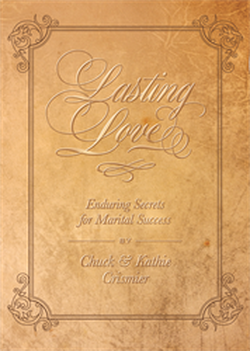
LASTING LOVE can be a dream come true. Yet love requires more than a dream or those loving feelings we so much desire.Lasting Love, Chuck and Kathie Crismier, celebrating their Golden Anniversary, unveil seven enduring secrets that will inspire and strengthen your marriage as it has theirs. COPY and PASTE this link to WATCH the TRAILER: https://www.facebook.com/Save-America-Ministries-204687919570536/videos
Past Episodes
This ministry does not have any series.
Featured Offer
LASTING LOVE can be a dream come true. Yet love requires more than a dream or those loving feelings we so much desire.Lasting Love, Chuck and Kathie Crismier, celebrating their Golden Anniversary, unveil seven enduring secrets that will inspire and strengthen your marriage as it has theirs. COPY and PASTE this link to WATCH the TRAILER: https://www.facebook.com/Save-America-Ministries-204687919570536/videos
About Save America Ministries
About Chuck Crismier
Contact Save America Ministries with Chuck Crismier
crismier@saveus.org
http://www.saveus.org/
Save America Ministries
P.O. Box 70879