
HIGH SCHOOL GRADS ILLITERATE


How to restore real education
Announcer: This is Viewpoint with attorney and author Chuck Crismier. Viewpoint is a one-hour talk show confronting the issues of America's heart and home. And now, with today's edition of Viewpoint, here is Chuck Crismier.
Chuck Crismier: It is often said and repeated that those who don't learn from history are doomed to repeat it. And if we don't learn from history, what are we going to learn from? But what is it we're learning? What is education about anyway? Woodrow Wilson, our president of times gone by, said, "A nation that does not remember what it was does not know what it is or even what it's trying to do." That was a profound statement that he made and I've never forgotten it.
He also said, "We're trying to do a futile thing if we do not know where we came from or what we've been about." Well, what have we been about? What have we been about as a world? What have we been about as a people? What have we been about as a country? What have we been about as Christians? He said America was born a Christian nation. America was born to exemplify that devotion to the elements of righteousness which are derived from the revelations of Holy Scripture.
Woodrow Wilson as president went on to say that the history of liberty is a history of limitations of governmental power, not the increase of it. When we resist, therefore, he said, the concentration of power, we are resisting the powers of death because the concentration of power is what always precedes the destruction of human liberties. Well, interestingly, Woodrow Wilson is not looked upon real favorably by conservative folk politically, but I'll tell you one thing: he had some very fascinating things to say that were true.
He tried to focus back on real education and real understanding even though he personally from a political standpoint seemed to maybe forget what he knew. And here he was a professor. So today on Viewpoint, we're taking a very interesting look at this matter of education. Education, what is it anyway? I certainly have had my share of education. My wife today was reminding me of all of the years and years and years of education.
It seemed that education had no end. First of all, there were 12 years from kindergarten up through high school, 12th grade. And then there were four years of college. And then there were a couple of years pursuing what I thought was going to be a Master's degree and a teaching credential. And then there were four years of law school. And it seemed like education never stopped. Then I had told my wife, "Maybe I ought to go to med school." She says, "Not on your life. You're not going to go to med school after four years of law school."
So a lot of years invested in education. But really when you think about it, what is education? Is it leading us to know the things that matter? Or has it actually been reconstrued, reconstructed, even subverted to lead us into things that didn't matter that much at all? All of that here today on Viewpoint and I'm glad that you've joined us. It's conversation, as always, with ever-increasing conviction, talk that transforms.
Michael Rose wrote a book called *The Subversive Art of a Classical Education*. He said we have to reclaim our minds in an age of speed, screens, and skill drills. Well, I would agree with him. So where do we stand in the matter of education as we normally think of it? Reading, writing, and arithmetic, the three Rs. Well, would you like to know? U.S. reading and math scores have hit historic lows, showing the lowest average reading score since 1992.
1992 was when the Lord spoke to my heart: "There's a lawyer in California saying, 'Son, I want you to plead my cause in the land as a voice to the church, declaring vision for the nation, America's greatest crisis hour.'" Well, America's greatest crisis hour started right there in 1992, 1993. And they're saying now, looking back at that time, that the reading and math scores in America have hit their lowest average reading score since 1992. And math scores dropped to 2005 levels.
About 32 percent of 12th graders are below basic proficiency in reading, and 45 percent fall below basic math skills. 21 percent of U.S. adults are considered illiterate, totally illiterate. And that's not all. Only 22 percent of 12th graders performed at or above proficiency standards in math, while 32 percent scored below basic in reading. Well, where does that lead us? Would you like to know as adults in this country?
54 percent of adults read below a sixth-grade level. 79 percent of U.S. adults are considered literate, while 21 percent are functionally illiterate. And of our youth, unemployed youth ages 16 to 21, they can't read well enough to be considered functionally literate for any purpose. Nearly 80 percent of those living in poverty read at or below a basic level. And when we talk about basic level, we're talking about basics. We're not talking about college entrance. We're talking about basics.
But then when we talk about college entrance, what we discover is that among Americans graduating from high school, many of them, if not most of them, are not even prepared to enter college. They have to take review courses to prepare them just to enter college after high school. 2025 represented the highest number of high school graduates though, 3.9 million. But what are they graduating from? And what are they graduating to?
What's happening with our education? Public K-to-12 schools enrolled 49.5 million students as of the fall of 2023. 5.2 percent of students ages 5 to 17 were instructed at home. 12th grade math scores hit their lowest level since 2025, and only 33 percent of 12th graders were considered academically prepared for college. Only 33 percent of 12th graders were considered academically prepared for college. That means that they have to take remedial courses if they're going to enter college.
But then if they enter college, what's the purpose? Why are they entering college? What kind of education are they supposedly getting, and why should they care? All of that here today on Viewpoint. And it's not about being negative; it's about being realistic. It's about taking a look at what matters in education. Certainly, the fundamentals matter. If you don't learn the fundamentals, then you have no foundation in which to learn anything.
If you don't learn basic reading, you're not prepared to read anything. If you don't learn basic math, you're not prepared to compute, not prepared to live in any kind of civilized world. You just aren't prepared. If you're not prepared to write, you're not prepared to live in a civilized world. Reading, writing, and arithmetic. That used to be the most essential foundation for all education. So whatever happened? What has been the nature of education, and where do we need to go from here?
How might we change this? Michael Rose says we need to subvert the current education that was subversive. Once upon a time, children could pray and read their Bibles in school. Divorces were practically unknown, as was child abuse. In our once great America, virginity and chastity were popular virtues, and homosexuality was an abomination. So what happened in just one generation?
Hi, I'm Chuck Crismier, and I urge you to join me daily on Viewpoint where we discuss the most challenging issues touching our hearts and home. Could America's moral slide relate to the fourth commandment? Listen to Viewpoint on this radio station or anytime at saveus.org.
Announcer: There is so much more about Chuck Crismier and Save America Ministries on our website, saveus.org. For example, under the marriage section, God has marriage on His mind. Chuck has some great resources to strengthen your marriage. First off, a fact sheet on the state of the marital union, a fact sheet on the state of ministry, marriage, and morals, saveus.org. Marriage, divorce, and remarriage. What does the Bible really teach about this? Find all of this at saveus.org. Also, a letter to pastors, the Hosea Project, saveus.org, and many more resources to strengthen your marriage. It's all on Chuck's website, saveus.org. Again, you can listen to Chuck's Viewpoint broadcasts live and archived at Save America Ministries' website at saveus.org.
Chuck Crismier: We're living in a world of artificial intelligence. In fact, the intelligence that we have is largely artificial. In other words, it's a pretense of that which it purports to be. If we have very few high school graduates who are even remotely qualified to enter college without pursuing a year or two of remedial classes in math, in writing, and so on, then what are we doing? What is the nature of education? What should education be about?
What should it lead us to? Certainly, one thing it should lead us to, again, is the very foundational things that are necessary for everything else, and that is reading, writing, and arithmetic, math. That's essential. But beyond that, we need to have a broader, greater vision of our world. We have to have an understanding. We actually have to have a remembering take place. Like Woodrow Wilson said, "A nation that does not remember what it was does not know what it is or even what it's trying to do."
We need to go back and remember a lot of things. That's what history is about. History is about remembering. It's about recalling to our present understanding what has happened in the past so that we are not doomed to repeat it. Michael Rose says there's a quiet rebellion stirring in the shattered corners of modern education, where a band of teaching heretics dares to champion something that's very unfashionable. He calls it classical education.
So he leads a classical school in what he calls our bewildering century that finds ourselves performing an act of magnificent absurdity, like a medieval scribe hunched over parchment while printing presses clatter in the neighboring room. He says the modern world, with its splendid scientific skepticism, would ask us a perfectly reasonable question: "Why persist in this antiquated endeavor? Why chain ourselves to dusty tomes when the whole of human knowledge glitters within a rectangle of glass and silicone?"
It is a sensible inquiry that demands an answer that transcends mere sense, he said. So he says, "I lead a classical school because there are truths that must be known, not as files to be downloaded, but as living realities to be encountered by living souls, real people." He said the supreme jest of our age is that we have mistaken information for wisdom and facts for truth. He says we built marvelous machines to tell us everything except what matters.
We've created educational systems that teach young how to operate devices while forgetting to teach them how to be human. The great catastrophe of our time is not that children fail to learn, but that they never have been taught what is worth knowing. The tragedy is continuing to unfold daily in our schools, and it is true. When I was a public school teacher for nine years from 1967 to 1975 before I started the practice of law, I experienced this in real time.
The first four years, I taught math, and started the first algebra course that that school district had had for eighth graders. And then I discovered that very few of the students were prepared for basic math. They weren't really interested in learning all that much, and yet educational philosophy was changing. It was turning on its head. It was as if the whole world, the whole country, had gone into a frenzy of repositioning, reevaluating, reconsidering what education was all about.
So they had a philosophy that if a student hadn't learned, a teacher hadn't taught. Well, that wasn't necessarily true either. So all the burden was put on the teacher, nothing on the student. And then again, parents were let off the hook for somehow raising their kids and teaching them how to learn. So the whole thing was being upset, and the California Teachers Association, which was supposed to be leading the world, leading the nation, was leading the nation into an educational false utopia.
So much so that we were actually forced to change the way we would talk, the way we would think. So we were sent off on the weekends for special training in how to think and how to talk. What was that all about? Well, we had to learn never to talk about facts and never to talk about truth. What we had to do is say, "I feel." I feel, I feel, I feel. So it was all about feelings.
So from that point on in the late 1960s to 1970, education began to revert from truth and facts to feelings. And here we are today. That same philosophy made its way all the way into the church house. So feelings became a replacement, a subtle substitute for faith and for facts. Well, when you're living according to your feelings, they change, don't they? They change not just daily, but they change every 10 minutes sometimes, depending on how much estrogen you may have in your system or testosterone.
Your feelings change. Do facts change? Does truth change? No, but your feelings change. So everybody has to talk in terms of their feelings. Then I remember talking to the principal of our junior high school or middle school, as you would some places call it today. And he was a professing Christian believer, and he knew where I was coming from. And I said, "How are we doing? Why are we doing this? Why are we yielding to this movement now to completely change the very foundations of education?"
Nothing's going to be true, there are no facts, and what we present as facts become relatively irrelevant because they're not lining up with our feelings. So he said, "Well, that's just the way it is. We've got to live with it." So I wrote him a letter. And in that letter, I said, "What we're doing is teaching armchair philosophies that cannot be tested in the fires of reality." Those are the words I used.
Armchair philosophies that cannot be tested and will not prove to be true in the fires of reality. Well, that's where we are today. And here we are so many years later, 50 years later, and all of that has proven to be true. Now, with math and writing and English, reading, writing, and arithmetic falling down to the lowest ebb ever, maybe some are prepared to reconsider. Maybe some are prepared to reconsider or to become as Michael Rose said, pedagogical heretics.
Daring to champion the unfashionable—in other words, going back not just to reading, writing, and arithmetic, but those are only foundations—and then to begin to look at things in a more substantive way that even history itself becomes important. Because again, as the professor-turned-United States President Woodrow Wilson said, "A nation that does not remember what it was does not remember what it is, does not know what it is or even what it's trying to do."
And that's kind of where we are, floundering because we don't understand our place in history. So what do we do? How do we respond to this? First of all, in my humble opinion—maybe you would consider it not that humble, but I've been around a while and have experienced these things in the fires of reality personally in my own education—then also having been involved in the whole field of education, including being a founder of a child Christian day school.
Also a board member and chairman of the board of a Christian elementary school, and then also a member of the board of directors of a Christian university. I think I've been around the field of education quite a bit, and know the trajectory that has taken place not only in our basic public schools, but also even in our Christian schools. Hate to put it that way, but it's actually true.
So we move from there, and our guest today was supposed to be Michael Rose. For some reason, we have not connected with him. And so yours truly is standing in the gap, as a good trial lawyer, standing when the witness fails to show up. It's a challenging thing when your key witness fails to show up in court and you're set for trial. Well, here we are, the trial now concerning the matter of education. And I'm going to share with you some of the thoughts that Michael Rose has put in his book, which I think is worth getting.
This is a $33 book; it's yours for $30. It's a hardbound book called *The Subversive Art of a Classical Education: Reclaiming the Mind in an Age of Speed, Screens, and Skill Drills*. All right. Among the things that he says are subversive acts is the matter of language, the subversive art of traditional grammar. Grammar. Now who wants to learn grammar? I mean, how dead could it be? How dull can it be?
Well, it may be dead and it may be dull, but it's very necessary because if you don't understand grammar, you're not going to be able to write a sentence that's going to be meaningful. You're not even going to make an application for a job, and you're not going to be able to speak straightly because you aren't going to know how to speak grammatically. So we need to begin to teach grammar again and sentence diagramming.
I remember back in the eighth grade, I had a teacher. Her name was Ruby Scove. And we called her like a general, General Scove. She was tough as nails, I'll tell you. But I'll tell you one thing: you could not be in Ruby Scove's class, which governed what we would call the basic essentials. It was language, grammar, reading, and history, all in one series of classes. And what I learned there with Ruby Scove has set the stage for me to be able to write 12 books, to be able to speak on the air here, to be able to do so many things over these years.
To be able to go to law school and be able to pass, to be able to graduate from college, summa cum laude. All of those things, why? Because she taught grammar, sentence diagramming, and how to genuinely read and understand things. I tell you, without those things, I just don't know where I would have been. I am so grateful for General Ruby Scove, who nobody liked. Nobody liked. But I'll tell you, she knew what education was about.
We need to get back to that even if we might consider it subversive to current educational thinking. Then there is the matter of engagement, subversive acts of engagement, like slow reading, or memorization. I remember, yes, I do remember, eighth grade, "The Midnight Ride of Paul Revere." "On the 18th of April in '75, hardly a man is still alive that remembers that famous day and year." Straight from the eighth grade.
"One if by land and two if by sea, and I on the opposite shore will be ready to ride and spread the alarm through every Middlesex village and farm." I value what that General Ruby Scove taught in terms of memorization there in the eighth grade. I value the memorization that was encouraged in Sunday schools during that time. Today memorization is given very short shrift in the church, given very short shrift in Christian homes. We don't memorize.
If you don't memorize, how are you going to meditate? What are you going to meditate on? The Bible tells us to meditate on the Scripture. If you don't memorize it, how are you going to meditate on it? And then how about our handwriting? We'll get to that in just a moment, friends. Stay tuned. You're listening to Viewpoint. Subversive education. Maybe we need to get back to a more classical form of education. What do you think?
Announcer: Have you ever considered what the early church was like? Many people are developing a heart longing for a greater fulfillment in our practices as Christians. A recent study showed 53,000 people a week are leaving the back door of America's churches in frustration. What is going on? Why has there not been even a one percent gain among followers of Christ in the last 25 years? Could it be that God is seeking to restore first-century Christianity for the 21st century?
Jesus said, "I'll build my church." Is Christ by His spirit stirring to prepare the church for the 21st century? The early church prayed together and broke bread from house to house. They were family, and it was said by all who observed, "Behold how they love one another." Incredible. But the same can be found right now. Go to saveus.org and click Cell Church. We can revive first-century Christianity for the 21st century. It's about people, not programs. It's about a body, not a building. That's saveus.org. Click Cell Church.
Chuck Crismier: With everything concerning everything going digital in our world, the whole idea of writing is disappearing. People went to typing, yes, nothing wrong with typing. But how about handwriting? Nobody today has been taught how to write. Don't even know how to sign their names. Amazing, utterly amazing. So guess what's happening? In many states of the union now, there is a remembering.
An educational remembering what a disaster we have brought upon our students by not teaching them to write with handwriting, cursive handwriting. They're just not prepared. They don't know how to write. They don't even know how to think, let alone write. And putting everything in the digital world and you've got to type everything, well, what happens if you don't have that? What happens if you don't have your little machine to work on, your phone or whatever? Now what are you going to do?
And how are you going to read the Declaration of Independence if you can't read handwriting? How are you going to read the Constitution if you can't read handwriting? You see the problem? The problem is we have actually antiquated ourselves from being able to know and understand things that were more important and serious. And now states of the union are going back to mandate cursive handwriting in school.
How many a generation or two of young people have suffered for lack of genuine education? It's like a subversive act now, isn't it? Teaching cursive handwriting. I consider my grandchildren. They can't even read my handwriting. I write in a birthday card or whatever and they can't read it. They have to have an interpreter. It's like they live in a foreign nation. States are saying, "Enough of this nonsense. We're going to teach cursive handwriting again."
And how about the matter of thinking? Thinking, not just being told what to think, but actually thinking. I remember taking geometry in the 10th grade. For me, geometry was harder than algebra. Once I got the hang of algebra, I had the hang of algebra. Geometry was a little tougher for me. But I value geometry because it involved a great deal of logical thinking with all of the corollaries that you had to learn.
It taught you how to think, how to reason, how to think. Isn't that one of the things that we need to know today? How to think? Not what to think, but how to think. And then we have the matter of history. The matter of history. To teach history today is like a subversive act because people say, "What relevance does that have? We live now. Why do we care about then?" Friends, that's the reason why so many professing Christians are utter and total illiterate when it comes to the Bible. Just illiterate.
In fact, one pastor of a mega-church said, "Don't pay any attention to the Old Testament, the 39 books of the Bible that precede the New Testament. Don't pay any attention to those; they're irrelevant." Do you realize what that pastor is doing? He's taking away the foundation for the whole New Testament so that people can't even understand the New Testament without the context of the Old Testament. They have nothing to base it upon.
Remember Woodrow Wilson? "A nation that does not remember what it was does not know what it is or even what it's trying to do." History is very, very important. I remember back in public school, and in those days public school, the public school situations that I was in were not infected with the subversive acts that have brought about the demise of education in our country. I was very blessed to be involved in the '50s and early '60s with some very sound, strong education from coast to coast.
23 different schools from coast to coast. Seen it all. History was a significant part of the game. Now, did I find all of history to be something to jump for joy with? No. Do I remember everything that I learned or was exposed to concerning world history or U.S. history? No. Do I remember the greater things? Yes. Are there things that really stood out that tied together like glue, that were the tendons and ligaments that tied together U.S. history and world history? Yes.
One of those great ones was the French Revolution in the late 1700s. If you don't understand the French Revolution, you can't even understand modern history because that's the root of modern history coming out of the so-called enlightenment and what the fruit of that was that was devastating to the world and continues to be devastating to Europe to this very day, the French Revolution. And you can't understand then how the French Revolution was a type of the end times that would usher in the Antichrist in a similar kind of revolution.
You see, if we don't understand history and pay attention to it, we'll fall right into the same traps that they fell into. So isn't it wonderful? We have a lot to be thankful for when we consider the founders of this country, the political founders of this country, for instance. We'll talk about them right now since we're moving toward the 250th anniversary of the country. What was it that they had in common that we don't have today in our educational system?
They understood history. Not only did they understand history, but they also knew how to write. They knew how to think. And guess where they learned those things? In homeschool and in small community schools in their towns. That's where they learned them. And those things were made important so that they were able then to put together a document called the United States Constitution which is deemed to be the greatest constitution ever conceived by man and has endured all of these 250 years, unlike any other nation.
Why? Because they knew history and they went back and they looked at Rome and they looked at the Greeks and they looked at Europe and they looked and they wove together and understood the dynamics of what was going together. What made for liberty? What made for democracy or a democratic republic? How did they even give us what is called a democratic republic instead of pure democracy? Because they discovered in the study of history that pure democracy was very dangerous in the hands, you see, of the majority.
It would be like a dictatorship in the hands of majority. So they gave us a republic if we could keep it. I'm so grateful to those founders who, by the way, many of whom could speak three and four languages: Greek, Latin, could read them, could understand them, could interpret them. Not only English but Greek and Latin, maybe French. These people were not ignoramuses.
And they didn't get their education from a dismal university that was teaching them underwater basket weaving and advanced BB stacking, along with various sexually oriented courses that would lead them to moral perversity. Education today, almost like a subversive act. Boy, do we need that. And the subversive art of teaching Western civilization. Why is it that Western civilization was deemed to be superior?
What was it about it? And what have we done through education to undermine it, taking away its superiority and bringing us now to the brink of moral, spiritual, and economic destruction? I want to urge you to get a copy of this book, *The Subversive Art of a Classical Education: Reclaiming the Mind in an Age of Speed, Screens, and Skill Drills*. $30 will put this hardbound $33 book in your hands. It's on our website, saveus.org. Give us a call, 1-800-SAVE-USA. Write to us at Save America Ministries, P.O. Box 70879, Richmond, Virginia 23255, writing a check add $6 for postage and handling.
I'm looking right now at an article that came out in a recent issue of the *Epoch Times* called "The Signals We Shouldn't Ignore About Artificial Intelligence." Misconception number two: AI is neutral. No, AI is not neutral. Misconception number one: AI is just a tool. No, AI is not just a tool; it is a means of trying to take over your ability to think. Are you understanding that?
It may seem to make it easier for a while, but it's taking away our ability to think. We'll be right back after this, friends. You're listening to Viewpoint. Viewpoint does determine destiny, whether you think it does or not. We'll be back.
Announcer: There is so much more about Chuck Crismier and Save America Ministries on our website, saveus.org. For example, under the marriage section, God has marriage on His mind. Chuck has some great resources to strengthen your marriage. First off, a fact sheet on the state of the marital union, a fact sheet on the state of ministry, marriage, and morals, saveus.org. Marriage, divorce, and remarriage. What does the Bible really teach about this? Find all of this at saveus.org. Also, a letter to pastors, the Hosea Project, saveus.org, and many more resources to strengthen your marriage. It's all on Chuck's website, saveus.org. Again, you can listen to Chuck's Viewpoint broadcasts live and archived at Save America Ministries' website at saveus.org.
Chuck Crismier: The founders in most advanced countries of the world appreciated architectural beauty. They just did. If you look at what's happening today, not so much. In fact, it's as if there's a rebellion against architectural beauty. Have you noticed that? In his book, *The Subversive Art of a Classical Education: Reclaiming the Mind in an Age of Speed, Screens, and Skill Drills*, Michael Rose says that there's a subversive art of pursuing the beauty through architecture.
Let me share this with you. I don't know where you live, but wherever you live across the United States, I dare say you're finding the same basic theme. Look at the new buildings that are being built. Look at the new apartment buildings, the new condos and so on that are being built around the country. In our area in greater Richmond, Virginia, we look around and my wife and I are absolutely, we're just beside ourselves to see what's happened to architecture.
There is none. It's just everything is a plain box. It's like they're building barracks. Everything is same old, same old. There's no effort to try to create beauty, no effort to try to create something that is of lasting beauty or art. It's just a box, just bland, same old, same old. Everything little straight lines, everything is just boxed in. Why? It's like we don't even value beauty anymore.
We don't even value architecture anymore. Architecture is an expression of the advancement of civilization. What is being built today is an expression of the decline of civilization, not the advancement. You say, "Well, why does that matter?" Friends, it's not that it matters in terms of eternity; it matters in terms of the condition of the mind and the heart and the people and what they value and what is appreciated.
Where is it coming from? It's coming from the innermost recesses of the minds and hearts that are being so stagnated, so digitized that there is almost no room anymore for valuing even architecture. It's true. And it's cheap. So we're about cheapness now. We don't value what is valuable; we value what is cheap. So it's cheap not to learn handwriting. It's cheap not to do this.
It's cheap not to do that. It's cheap not to learn music. It's cheap not to—you get the point. Whatever is easy. That's not how we built America. That's not how great civilizations were built—on that which is cheap. We don't even value liberty anymore because it's deemed to be too expensive. Whatever. The future's not ours to see, *que sera sera*, whatever.
And then there's the subversive art of resisting technological determinism, or the subversive art of technological discernment, or the subversive art of analog thinking, not digital thinking, analog thinking. The subversive art of permanence—that which is value and will endure. That's what we were talking about in terms of architecture. That which is of enduring quality. Not what can you get by with for the least amount of money at this point in time.
What is enduring? Even furniture now is being built to cater to tastelessness. There's no art in it. It's just cheap. Now you may not think it's cheap, but it is cheap. There's no artistry in it; it's just cheap. There is no sense of permanence or value beyond its usefulness for the moment. And how about the art, the subversive art of intellectual solitude? In other words, understanding that not being inundated, constantly bombarded through your eardrums and your eyesight and so on with all kinds of media experiences, whether it be music, whether it be whatever it happens to be.
There's something we're missing out on. No wonder God says, "Be still and know that I am God." We have to be still. We learn from being still. Not sleeping so much, but being still so that we can consider, so that we can even hear the voice of the Lord, so that we can even see the beauty around us rather than being so completely inundated with bugs in our ears. That's what I call them, earbuds.
Just noise makers, constantly. How can you live that way? That's not a way to live, friends. We're destroying ourselves from the inside out. We're subverting the best that God had to give us and then call it good when that which was good now has to be a subversive act to undo that which we've brought about to destroy ourselves. And then the art of reasoning. It's very hard to reason together today.
God says, "Come now and let us reason together, saith the Lord." You can't reason together. All we do is argue. That's why we refuse to be on any of the social media sites through this ministry. People say you've got to be on there, you've got to be on Facebook, you've got to be on YouTube, you've got to be on this, you've got to be on that. No, I don't got to be on those things. They're not leading people to truth; they're leading people to argue with one another, not to reason.
And now they're looking for clickbait—in other words, things that they can stretch out to the farthest extremes of reason to try to get somebody's attention to click on their particular site. That's no way to run an airline, friends, so to speak. That's no way to run a life. Can you imagine Jesus doing that? No. He would resist that at all opportunities. It's not life. It's catering to the flesh, and of the flesh leads to corruption.
A genuine education will lead us away from the tyranny of the flesh. And how about the matter of wisdom? People looking for wisdom. How many Christians are out there saying, "I need to find some wisdom somewhere." Somebody will quote, "Well, there's wisdom in a multitude of counselors." Yeah, there's also a bunch of confusion in a multitude of counselors. Depends on who the counselors are. And it depends on your ability to discern where truth is.
But if all you want to hear is what somebody will tell you what you want to hear, you're not interested in wisdom. You're just interested in somebody placating your flesh. True education for Christians will lead us away from that kind of thinking, pursuing wisdom. The Bible says, "With all your wisdom, get understanding." We need both wisdom and understanding. We need to be able to apply that which is true, that which is real, that which is honest.
We need to be able to apply those things, not just understand or know facts. Bible study that is about knowing facts is relatively irrelevant. You want to find out what the book of Revelation is about? Then find out what the purpose of the book of Revelation is for you. What is the real message of the book of Revelation? Oh, you're going to find that in my next book, friends, called *The Power to Overcome*.
That's what the whole book is about: the power to overcome. It's about overcoming. It's not about Armageddon. It's not about the four horsemen. Those are spaces in the pattern that sets the context for what the message of the book is about. The message of the book is about overcoming. And we're not prepared to do that. Everybody wants to get education of facts. They want fascination, not truth. They want fascination, not wisdom.
They want fascination, not understanding. To gain understanding is like a subversive art, exactly as Michael Rose wrote in his book, *The Subversive Art of a Classical Education: Reclaiming the Mind in an Age of Speed, Screens, and Skill Drills*. You might want to get a copy of it. It's pretty illumining, very illumining. $30 will put this hardbound book in your hands. It's a $33 book, yours for $30 on our website, saveus.org.
Give us a call, 1-800-SAVE-USA. Write to us at Save America Ministries, P.O. Box 70879, Richmond, Virginia 23255, writing a check add $6 for postage and handling. And let me add to that another story coming from the *Epoch Times* in the April 8th to 14th issue: "Pencil and Paper Versus Screens: Digitized Classrooms are Failing to Educate Students." Digitized classrooms are failing to educate students. Two-thirds of the public high schools and 40 percent of elementary schools provide devices, digital devices to their students.
And what's the result? Educational assessments are falling dramatically. IQ is diminishing. It's about how real learning takes place, human learning. You are not just an AI machine, my friends. You are a God-created human being made in His image so that you and I can have moral and spiritual discernment, which AI will not give to anyone. The three Rs—reading, writing, and arithmetic—remain the essentials for higher education of any kind.
So maybe we need to look at returning to a different kind of learning. It may seem kind of subversive to do that, but maybe it's time. And if you're the primary educator of your kids, which you are if you're a parent, maybe we need to take the leadership. It's our job to fix it, not the government's job. Thanks for joining us; I hope this has been helpful. And I hope you will seriously consider if you haven't already becoming a partner with us.
Confronting the deepest issues of America's heart and home from God's eternal perspective, that's what we did today, and that's what we do every day. It may not sell well, but it surely will live well when we buy it. God bless and be a blessing.
Announcer: You've been listening to Viewpoint with Chuck Crismier. Viewpoint is supported by the faithful gifts of our listeners. Let me urge you to become a partner with Chuck as a voice to the church, declaring vision for the nation. Join us again next time on Viewpoint as we confront the issues of America's heart and home.
Featured Offer
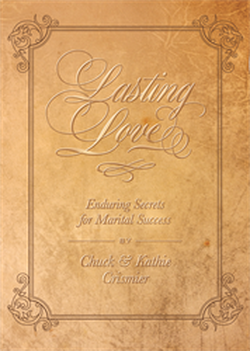
LASTING LOVE can be a dream come true. Yet love requires more than a dream or those loving feelings we so much desire.Lasting Love, Chuck and Kathie Crismier, celebrating their Golden Anniversary, unveil seven enduring secrets that will inspire and strengthen your marriage as it has theirs. COPY and PASTE this link to WATCH the TRAILER: https://www.facebook.com/Save-America-Ministries-204687919570536/videos
Past Episodes
This ministry does not have any series.
Featured Offer
LASTING LOVE can be a dream come true. Yet love requires more than a dream or those loving feelings we so much desire.Lasting Love, Chuck and Kathie Crismier, celebrating their Golden Anniversary, unveil seven enduring secrets that will inspire and strengthen your marriage as it has theirs. COPY and PASTE this link to WATCH the TRAILER: https://www.facebook.com/Save-America-Ministries-204687919570536/videos
About Save America Ministries
About Chuck Crismier
Contact Save America Ministries with Chuck Crismier
crismier@saveus.org
http://www.saveus.org/
Save America Ministries
P.O. Box 70879