
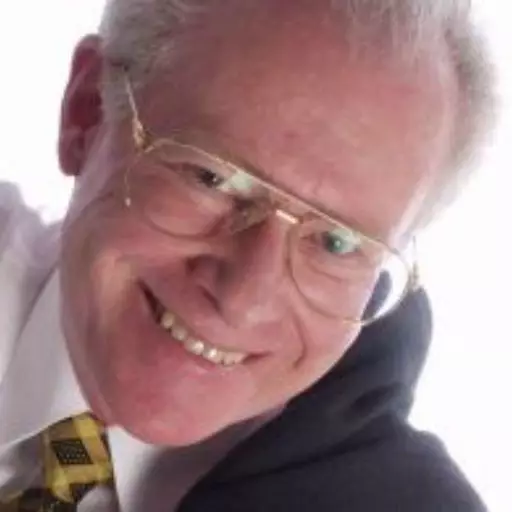
HEART OF APOSTASY


How Black Church Strayed
w/ Eric Wallace
Chuck Crismier: It has been said that what happens in Black America in one generation happens in all America in the next. Well, that was said quite some time ago. But if that be largely true, and many Black leaders so admit, what is the future of America? Will American Blacks significantly determine America's destiny? And what sort, what are the secrets of the histories of Israel and Black America that might help us to understand where we are today and the future of our country? And that's what we're going to talk about here today on Viewpoint.
There are many distinct similarities between historical Israel and the history of American Blacks. Absolutely true. In fact, when you think about it, the number one story in Black America is coming out of Egypt. "Way down in Egypt's land, tell old Pharaoh, let my people go." And so today on Viewpoint, we're going to have a very honest conversation concerning what's going on, has been going on in the mind and heart and communities and families and churches within the Black community in America.
In May of 1999, George Gallup, pollster to the nation, sent forth his Emerging Trends report. And here's what he said. I'm reading it directly: "African Americans set the pace for people of all colors in this country and arguably are among the most religious people in the entire world. It seems next to impossible," he said, "to find a Black who does not believe in God—100% of Blacks compared to 91% of Whites at that time. Believe it or not, that was 25 years ago, 26 years ago. 94 out of every 100 Blacks in the US express their belief that Jesus is God or the Son of God, compared to 82% of Whites at that time."
"The Bible is the literal word of God for nearly half of Blacks, but far fewer Whites. Not only do higher proportions of African Americans than Whites attest to basic religious beliefs, but higher proportions also practice their faith. That is, go to church. 54% of Blacks compared to 42% of Whites attended church in the last week." That was in 1999, 26 years ago. "Similar percentages of Blacks and Whites say that they pray: 93% of Blacks, 88% of Whites. A far greater proportion of African Americans than Whites, 86% compared to 55%, say religion is very important in their lives."
At the same time, 72% of Black babies are born to unmarried mothers. I want you to think about these statistics, and I want you to think about the statement made by George Gallup, the pollster to the nation, the most revered pollster at that time in America, a White guy, who said Black America is the most religious community in America. And he was talking about Christian.
Well, at the same time, we have another story, a very different story. And it comes from an article called "Bridging the Racial and Political Gap." And I'm saying these things and reading these things not to bring my own voice to the issue, but the voice of others who have had things to say. Because we're going to hear a gentleman coming on with us today that has some very profound things to say. His name is Eric Wallace, and he'll be joining us in just a few moments.
But this article says the Republican Party on the national level was started by several anti-slavery Democrats who had gotten tired of the party's ardent pro-slavery position. Democrats supported slavery as well as the Dred Scott Supreme Court decision, which stated Blacks were not persons but property. The early platforms of the Republican Party consisted of two issues: ending slavery and giving equal rights to Blacks, and the support of traditional marriage opposed to polygamy.
The first national Republican Party platform was a short document with only nine planks. But significantly, six of the nine planks set forth bold declarations of equality and civil rights for African Americans based on the principles of the Declaration of Independence. The Ku Klux Klan was started by Democrats to oppose Republicans.
In 1870, the 15th Amendment to the Constitution was passed, which guaranteed specific voting rights for Black Americans. The vote went like this: 81% of Republicans and 0% of Democrats. 0 out of 56 Democrats voted for voting rights for Blacks.
During Reconstruction, Republicans passed 23 civil rights laws which fully integrated juries, voting, and education. In four successive years—1866, 1870, 1871, and 1875—not another civil rights law was passed from 1875 to 1964 because in 1876, Republicans lost control of the Senate. In 1893, the Democrats regained control of Congress and the presidency under Grover Cleveland. They worked to repeal the 14th and 15th Amendments to take away voting and civil rights.
In 1896, the Supreme Court, also controlled by Democrats, reaffirmed segregation. In 1875, the Republican Congress banned all segregation, but in 1883, the Supreme Court struck down that law. Democrats opposed African American education. They did not want it at all, especially not mixed schools.
The Ku Klux Klan was started to oppose Republicans. The reason more Blacks than Whites were lynched by the KKK was that all Blacks were Republicans and easier to recognize than Whites. In the 1880s, no less than 11 different tactics were used to keep Blacks from voting in the Democrat-controlled South: literacy tests, poll taxes, White-only primaries, and gerrymandering to ensure only a small number of the Black population in each district could vote.
In 1921, Republicans introduced an anti-lynching bill, but House Democrats filibustered to defeat it. Democrats killed it every time it was introduced, and it's been introduced dozens of times. After the 1954 US Supreme Court ruling in Brown v. Board of Education, mandating desegregation of public schools, Southern Democrats stood in the way.
So let this sink in for a moment. During the time of the civil rights movement in the 1960s, there was not one Republican governor or state legislature in the entire South. Democrats controlled every Southern state. It was a Democrat governor who called out the dogs and used fire hoses to stop civil rights demonstrators in Selma, Alabama. It was Democrat governors in Georgia, Mississippi, Louisiana, and the entire South that opposed desegregation and civil rights legislation.
But one of the most astounding facts is about the 1964 Civil Rights Act and the 1965 Voting Rights Act. You would think that since Blacks were nearly all Democrats by 1964, that Democrats supported civil rights during the modern history. Wrong. Democrat President Lyndon B. Johnson, LBJ, tried to get the Civil Rights Act through the Senate. He couldn't do it, even though the Democrats controlled both the Senate and two-thirds of the House. He couldn't get it done. He couldn't even get it through the Senate Judiciary Committee.
So LBJ went to the Republicans for help. Republican Senator Everett Dirksen of Illinois came to his aid. In the end, only 63% of Democrats voted for the bills, while 79% of Republicans voted in favor of them. Not one Southern Democrat voted for either the Civil Rights Act even in the 1960s.
So why does Black America support the Democrat Party in lockstep ever since? That's the question. And another guy from Illinois is joining us here to talk about it. Stay tuned. You're listening to Viewpoint.
Chuck Crismier: A big welcome today to Pastor Eric Wallace, who has written a book called *The Heart of Apostasy: How the Black Church in America Abandoned Biblical Authority for Political Ideology and How to Reclaim It*. Eric, it's so good to have you on the program from Illinois, just like Everett Dirksen. Welcome aboard.
Eric Wallace: Chuck, thank you for having me.
Chuck Crismier: Well, as a trial attorney, we're known for presenting opening statements to a jury. And that's what I have just done. I've presented the good, the bad, and the ugly. We started out with the spiritual focus which George Gallup said was the most profound in Black America, seemingly because of all the churchgoing and belief in the Bible. You would think that the orientation of the entire Black community would have been almost exclusively in favor of biblical propositions, the way of life, and so on. You would think also that the choices that form the statistics in our country would also line up with those beliefs. But they don't. In fact, they run exactly opposite. How can you explain that as a Black pastor?
Eric Wallace: You ask the easy questions first. I want to ask a straightforward question so that we can understand where you're coming from. Because if we don't tell the truth, if we just dance around things, nothing ever really happens.
I'm trying to remember the name of the fellow who did *Rules for Radicals*.
Chuck Crismier: Oh, yes. It wasn't a guy. It was a gal. No, you're right. *Rules for Radicals*. That's exactly what Hillary Clinton and Barack Obama embraced there in Illinois.
Eric Wallace: Right. Saul Alinsky. What they do is they tar and feather the opposition in a way so that even the things that they're saying about the opposition are not true. But if you say it long enough and for a good amount of time and you create your argument so others can't really challenge you, it begins to stick.
And that's what the Democrat Party has done to the Republican Party and to conservatives. And how did they do that that impacted the Black community? See, it wasn't just the Republican Party. It was the Black community that we're talking about. How did the Democrat Party gain dominion over the Black community when the whole agenda, both moral and spiritual and political, of the Democrat Party was exactly the opposite of what African Americans claimed to believe?
Well, you got the Voting Rights Act. I mean, so you had a lot of these things get passed while there was a Democrat as president. And they see the Democrat, they see the president as the one who controls all these things, even though we know that's not necessarily true.
Chuck Crismier: Well, it was the president, though, in those instances, who did control, and he was Democrat. It was the governors who controlled, and they were all Democrat.
Eric Wallace: Yeah, but you had when Eisenhower was in there, he passed a couple of civil rights bills, but they were toothless. The Senate ended up taking all the authority out of the bill so it really didn't do a whole lot. Well, the Senate was led by not Republicans, but by Democrats. That's the problem.
Correct. Correct. So Democrats controlled the Senate, I believe they probably controlled the House. I don't remember exactly. But so they passed the Civil Rights Bill, passed the Voting Rights Bill. He then comes out with welfare and the War on Poverty, acting as if he's going to come and save the day to the Black community. That was LBJ who did that, right?
Correct. And so when you have people coming out and acting as if they're going to come and save you, they're going to be your saviors, you start looking elsewhere instead of looking at the church and what's going on.
And you could say at the same time, you also had some of the civil rights leadership. Now, I don't know if you know, there's a lot of things been coming out about Martin Luther King and the civil rights leadership and what they were doing and what they believed and didn't believe. They weren't really evangelical Christians.
Chuck Crismier: No, they were not.
Eric Wallace: And so which kind of explains to me, sometimes you get criticized that a lot of White evangelicals wouldn't join the movement. But now I understand because they understood that Dr. King was not an evangelical. He didn't agree with the virgin birth. He didn't agree in the inspiration of scripture. I mean, it's just a lot of different things.
Chuck Crismier: Well, he also believed in the universal brotherhood of man rather than the brotherhood within the church.
Eric Wallace: Absolutely. And so we start moving away. So we're still holding on to some of the doctrines that we believe in. But unfortunately, we've been told somehow that the conservatives aren't for you, the Republicans aren't for you, the Democrats are. That's why Joe Biden could say, "They'll put you back in chains if they get back in power," right? And the people believed it.
How could the people believe it when they had a whole history in front of them, including the founder of Planned Parenthood and eugenics, who had purposed to eliminate Blacks in America and encouraged Black pastors to jump on board and promote it?
So one of the things that I mentioned in my book, there's a book called *Steadfast Democrats*. And it was a bunch of Democrats who tried to figure out how it was that the Democrat Party was able to hang on to the Black vote, knowing that a lot of what you've already said is that the Democrat Party is more progressive and the Republican Party is more conservative.
How are they able to do that? And they came up with what they called socialized racial social constraint, which was a fancy term for peer pressure. So if you got everybody in Black leadership, everybody on what they call Black Twitter—I didn't know of such a thing until I started writing the book—you've got churches, you've got Black radio, you've got Black magazines and talk show hosts and everybody else actually singing from the same sheet of music, saying the same thing. "The white supremacy out there, we can't go out there without being afraid of being arrested. And we can't do all these things because White people are holding us back."
Chuck Crismier: Well, let's look at this. You and I have very little. We could probably spend three or four days talking about it. Maybe we should, because this is such an important subject. I do believe and have said for years on this program that I believe that the hope for America is in the Black community.
But if the hope for America is in the Black community because it's said what happens in the Black community in one generation takes place in all America in the next generation, then what is the hope for America? That's the position that I have come with.
And I believe that Black America looks to the story of coming out of Egypt, the great deliverance from Egypt, as the Black story. That is the Black liberation story. However, Israel came out of Egypt, but God could never get Egypt out of Israel, and there was the problem. And that's the same problem in Black America today, as I see it.
Eric Wallace: Well, I think they came out of slavery. So the story is interesting that you're bringing this up because one of the things we're doing is, so the book gives kind of a diagnosis of the crisis that's ahead that we see going on.
Chuck Crismier: Right. And we're going into that in some detail. But I'm challenging you and our listeners right up front because we can't dance around this and play pretend. Even if you go to Google and AI is going to give you answers concerning things that really don't allow you to get the truth because it's so compromised with political correctness.
Eric Wallace: Right. Right. And so at the moment, we're in the midst of putting together a documentary called *Black Families Matter: Reclaiming a Community in Crisis*. And so we look at what's happening now with, as you mentioned, all these 72% of babies being born out of wedlock. And when Moynihan wrote about it, it was like 24% in 1965.
Right. And so we're looking at that, and now only like less than 35% of Black—now it's bad all over for Black, White, and Hispanic, but Blacks are seem to be leading the way—that's less than 35% are even getting married, in some cases even getting married at some point.
Chuck Crismier: In fact, it's more like 40-some percent of Black women are not getting married. They're single.
Eric Wallace: Right. So there's a problem. And so one of the answers to this is to show people what is going on, who is it that we've been listening to. And that's, we shouldn't be listening to—it shouldn't be Black Lives Matter. The leaders of Black Lives Matter shouldn't be the ones leading the way. They're not Christians. They're ancestor worshippers. When they say their names, they're actually conjuring up these dead folks to come and be involved in their campaign and in their protests. So why is the church listening to these people? Why is the church listening to people like Al Sharpton and Senator Warnock and on and on?
Chuck Crismier: Okay, when you say "the church," let's be very careful about what we're talking about here. Are we talking about the bulk of the Black community that goes to church, or are we talking even more particularly the Black pastors?
Eric Wallace: I'm talking well, I mean, the Black pastors would be indicted for this because they're the leaders of the church, right?
Chuck Crismier: Well, not only are they the leaders, but the Black pastor is the main man in every woman's house. Think about that.
Eric Wallace: Well, that's, yeah, they've become the father, the male figure figurehead because a lot of our churches are full of women and don't have as many men that are involved in the church itself. Aha. So we've got a lot of different issues that are going on. And the hope is that people like me who are—and there are other folks, I'm not the only one. There are a lot of other folks out here that serve kind of as a prophet to the community—that this needs to stop. We need to go back to where we were before. In the 40s, 80% of Black children being born were born in two-parent households.
Chuck Crismier: Exactly. Okay, so after the Civil Rights Act of 1964, everything deteriorated. In other words, the greater the freedom, the greater the falling away from faith.
Eric Wallace: I think that the government handouts that came with that and said that your man has to be out of the home, you can't get these free benefits if there's a man in the home. And so, if there was a man around in order to get the freebie stuff—and a lot of young girls today have all these babies because they know they're going to get money. We're incentivizing people to have children out of wedlock.
Chuck Crismier: Exactly. And they're proud of it. Go back to school and are proud for their out-of-wedlock pregnancies.
Eric Wallace: So our hope is, and I agree with what you said, that if the Black community was to turn around and actually repent of some of the stuff that we've been doing, I can see a whole revival moving across the nation because I wrote the book and we've done the documentary as a microcosm of the larger society. Right. This is what's happening in our society, and it's overwhelmingly happening in the Black community, but it's also happening in the White community and Hispanic community.
Chuck Crismier: All right, and yet it's said what happened to the Black community in one generation happens in all communities. And so exactly the African American community has had the greater impact, not the lesser impact, the greater impact on the whole society.
Eric Wallace: Right. Right. I don't disagree. And that's one of the reasons why we're looking for the next phase we have after this documentary is what we're calling Repent Chicago. We're going to call the church itself, not just the Black church, but the church in Chicago and Cook County to come together, almost like, remember Promise Keepers? When Promise Keepers came together and were calling men to be keepers of their promise and to repent of what we've been doing or not doing? I think the same thing is necessary for the church itself, especially the Black church.
Chuck Crismier: All right, why not speak directly to the Black church instead of bringing everybody in? Because it's the Black church that has the import to affect everything else. When you mix it all up again, what you're doing is diluting the real focus which, if the hope is in the Black church, then let's clean up the Black church. Don't merge them all together as if somehow this is just a broad church issue. It isn't.
Eric Wallace: Well, this is the vision that God has put on my heart. The diagnosis, the book, deals with the Black church. The documentary deals with the Black church. But then the call is that the whole church needs to repent.
Chuck Crismier: Absolutely. Okay, I'm glad that you reiterated that. I'm trying to get this straight because the title of your book is *The Heart of Apostasy*. That is a very strong statement, brother.
Eric Wallace: Well, as I looked at the, so it's based on the book of Luke, the Gospel of Luke. And I had to actually write a paper for my PhD program. I flunked one of my exams, and I really didn't want to write another. And it's funny that God used a paper I wrote like 25 years ago as the theological foundation for looking at the diagnosis of the church today. I think we're in the same spot. We're waiting for Christ to return. Luke is writing to Theophilus and to the church understanding that he hasn't returned, but what should we do in the midst of the delay, right?
Chuck Crismier: Okay, so you believe that Jesus is coming soon. If you're preaching that Jesus is coming soon, very soon, as Andrae Crouch said, "Soon and very soon, we're going to see the King," right? Andrae Crouch and the Disciples. There's a Black leader there. "Soon and very soon, we're going to see the King." If you really believe that in Black America, why not preach it's time to get ready, prepare the way of the Lord? We'll be right back after this. *The Heart of Apostasy*. Get a copy of this. Actually, it's a very, very important book.
Chuck Crismier: Welcome back to Viewpoint. I'm Chuck Crismier. You've got to get a copy of this wonderful book, *The Heart of Apostasy*. Friends, it's very easy to read. It's very easy to read, and it's picking up the heart of our brother Eric Wallace. Now you may think some of the things that I've brought up and asked and so on and interrupted and so on indicate that there's a conflict between us. There is not. We're trying to lay out the real serious nature of this problem.
This is not a game. This isn't just some social issue. This is a deeply spiritual issue that goes to the very heart of preparation for the coming of the Lord. Not just the heart of America, but the coming of the Lord. And so our guest, Eric Wallace, has called this *The Heart of Apostasy*, and he's talking about within the Black community that George Gallup declared in 1999 to be the most spiritual or religious community in the world.
Get a copy of the book, *The Heart of Apostasy*. Eric, you say how the Black church abandoned biblical authority for political ideology and how to reclaim it. Is it just political ideology, or have they also abandoned spiritual authority from the scriptures and embraced a cultural mandate?
Eric Wallace: Yeah, I kind of say both on here. So when the Black church pact, so when the Democrat Party had their convention here in Chicago last time, and there was a thing called a Black church pact. And there were three issues that the Black church pact were standing for. One was gun violence, mass incarceration, and voter suppression. And I looked at that and I said, "Oh my goodness, why aren't you talking about the amount of babies being born out of wedlock? Why aren't you talking about the number of babies being aborted? Why aren't you talking about the fact that our kids are graduating from school, either dropping out or they're graduating and not being able to read?"
I mean, you want to talk about this ridiculous stuff, gun violence? Everybody knows that most Blacks actually are for the Second Amendment. They want to be able to hold a gun, have a gun to protect themselves from the bum down the street.
Chuck Crismier: Did you know that the recent statistics are that Black women are killed by far more often by Black men? In fact, almost all Black women are killed by Black men and in far greater proportions than any other women group in the country.
Eric Wallace: Oh, I don't doubt it. I mean, we kill ourselves more. It's not White people running around in hoods killing Black people. It's Black people killing other Black people.
Chuck Crismier: So why the apostasy? Apostasy means to fall away from a position that you once were.
Eric Wallace: Because they're listening to other people that they shouldn't be listening to. We've been told if we don't stick together, we're going to find ourselves back in chains. They're going to take away our voter suppression. They're trying to keep us from voting. Well, an ID does not keep anybody from voting. And most Black people believe a person should have an ID to be able to vote. You can't function in society without some kind of ID.
Chuck Crismier: Do you know that the Representative from New York, Elise Stefanik, she came out today in front of a group in Michigan and said that if the Save America Act, which would require people to have proof of citizenship before they vote, she said that would prevent the Democrat Party from ever being able to elect anyone to office thereafter? Do you realize what she said? She said the only way Democrats can be elected is to steal, to defraud, to bring in illegitimate people to vote. It's unbelievable. And she was applauded by a Black audience.
Eric Wallace: Wow. Okay.
Chuck Crismier: Yeah, I just, these things are so baffling to me and my heart breaks for Black America.
Eric Wallace: So we put the color of our skin, the amount of melanin in our skin ahead of our relationship to Jesus Christ. We are more, we show more loyalty to other Black people than we show to serving Jesus Christ. And what we don't understand, and I try and tell some of my Black brothers and sisters that, look, you can't blame White people for everything that took place against Black people.
It wasn't White people who did it. If you understand scripture, it's the enemy, it's Satan who was behind this. And it was Satan's folks who sold us into slavery. We were sold into slavery by our own brothers back in Africa, on the continent. Black, White people didn't go in there and grab people like they showed on *Roots*. No, they couldn't. They didn't have, during that time, what was it, the malaria? They didn't have anything to fight malaria at the time. Once they got it, then they were able to go in and colonize it. But that didn't happen generally speaking until after the slave trade was over.
Chuck Crismier: Eric, do you know Dr. John Perkins? You know of him? One of the foremost evangelical leaders in America for the past 40 years. He was number one advisory member on Save America Ministries when we formed in 1993, Dr. John Perkins. He had heard me speak more than any other American at that time, a Black man. And he knew my passion for Black America, and it always has been. And it grieves my heart that there is such resistance among Black pastors. They're afraid of their own people. They cannot and will not tell them the truth because they're more interested in pandering for power, perks, and position. It is grievous to me. What say you?
Eric Wallace: And me as well. And part of the problem is we're not, we have some converts and we have people like Barna said that are religious, but they're not disciples. And we have to create disciples. We have to get people to understand what it means to be sold out for Jesus. I am no longer Black first. I am a Christian first. Thank you. And you're my brother in Christ, regardless of what ethnicity—and race is really a made-up term. So whatever ethnicity we are, it doesn't matter where you're born, when you were born. If you believe that Jesus Christ is our Lord and Savior, He died for our sins and rose from the grave on the third day, and now He sits up in heaven waiting to return and take up His bride, the Church, then we're from the same family. Okay, there shouldn't be any.
And one thing I like to tell folks is that, look, you didn't decide what color you were going to be. God decided that you didn't choose that. You didn't choose how tall you'd be. You didn't choose what kind of hair or what color eyes. You didn't choose your parents. You chose nothing. God chose it all for you. So don't be upset with somebody because of the color of their skin. They had no choice in it. Shoot, if I had a choice, I might be a little darker and I might be at least 6'6" and play basketball like Michael Jordan.
Chuck Crismier: You know, I was very interested as I opened your book, I just flipped it open a while back, and I flipped it open to this you call "Doublethink in the Pews." And I think this really captures the issue: "How can we understand pulpits affirming movements like Black Lives Matter when those same movements reject the very values upheld by the Bible: life, family, order, and righteousness? This exemplifies modern-day doublethink in the pews. We believe in the Bible, but we support those who oppose its teachings. We stand for justice, but are silent about the slaughter of unborn Black children. We preach that Jesus is the way, but follow voices that reject His authority. This represents the apostasy of the Black church, a departure from truth, clarity, courage, and faithfulness."
Exactly. Then you say, "The state of Black church today reflects a heart condition in desperate need of healing." Friend, it doesn't need healing. It needs repentance if there's going to be healing, right?
Eric Wallace: Well, I think that's where I was going with it. The only way to get everybody wants to talk about healing because it has a touchy-feely aspect about it, but they don't want to talk about repentance. They say that's too negative.
Right. I can't stand it. I have a problem when people keep talking about racial reconciliation and I'm like, well, what does that mean? I mean, what are we talking about when we say that? What do we want to happen? I mean, they keep people continue to go after the Southern Baptists, even though the Southern Baptists have apologized for their stance on slavery and segregation back in the day. How many times did they need to apologize? It doesn't matter because this is the one sin, so to speak, that has been elevated in a politically correct way to be elevated above every other sin to obfuscate the need for repenting and admitting the other sins.
Eric Wallace: Yeah, it's become the unpardonable sin. That's what critical race theory, I mean, they say you White folks, I mean, you guys are, you can't help it. It's you're born this way.
Chuck Crismier: Yeah, so you can't be healed. We need to be healed, but you can't be healed. And we need reparations to help pay for it. And the whole fraud of the whole reparations piece, let's say you gave every Black person $100,000. So once they spend that, then what? If the young people go out and spend it on pot and on coke and whatever else, you haven't accomplished anything. You've actually deepened the problem.
Eric Wallace: Yeah, they're going to say it wasn't enough. They're going to come back for more.
Chuck Crismier: Hey, what you don't know, Eric, is that about 20 years ago, I was so moved by, I felt that God had put a mantle on me as a White guy to really plead the cause of Black America, particularly the church in the Black community. And so I prepared a document called "A Portrait of the Black Family." And it's on our website, saveus.org. You're free to go there, print it out, use it. Other pastors have used it. I have brought Black pastors into our home for a dozen evenings of meals together to talk about these issues. It's very serious, and I'm glad you're on.
Chuck Crismier: In November of 2003, *Ebony* magazine, one of the two major magazines published by and for the Black community, devoted its 50th-anniversary edition to talking about whatever happened to the Black family. Here's a quote from Dr. Julianne Hare: "The Black family has crumbled more in the last 30 years than it did in the entire 14 decades since slavery." That was in 2003, friends, 23 years ago.
William Raspberry, a Black commentator for the *Washington Post*, he's since passed. In 2005 wrote this: "There's a crisis of unprecedented magnitude in the Black community, one that goes to the very heart of its survival. The Black family is failing." Friends, if the family fails, everything fails. Do you realize that?
Then as if that were not enough, in 2011, I have in front of me, Eric, the edition of *Ebony* magazine called the "Special Report: The Black American Survey." Guess what they chose to feature on the front cover? A naked Black woman. Totally naked. Then it says she's baring her soul. Baring her soul. Then it's talking about Hip Hop's renaissance. Hip Hop has done more damage to the Black community and as a result, entered the White community than probably any other music style. What do you make of this?
Eric Wallace: Oh, it's the enemy. He comes to kill, steal, and destroy, and he's doing a very good job. And the church has been asleep. We don't understand. I mean, there's just so much going on, and you know this, Chuck. Not only with cultural Marxism that's being pushed these days, but also socialism. We also got Islamists who are taking over. I mean, we've got all these enemies that are coming against the church.
And I think, and my hope is that because of the book, because of the documentary, and because of some of the things that God has put on my heart to do over these next few years, is that it'll help turn the tide in the church. That there's this almost like what happened at Asbury at the school, where all of a sudden kids were coming together and they were praying and they saw the move of the spirit. That that happens and we're hoping that one of the places it happens is in the city of Chicago.
Chuck Crismier: Wouldn't that be amazing? The city that has been the birthplace for so much political fraud and corruption. What a miracle that would be.
Eric Wallace: And so we're trying to use the book, the documentary, should be finished hopefully by the end of this year, and we'll start showing it next year because next year is actually the 200th anniversary of the first Black newspaper where we get our name. The first Black newspaper was called *Freedom's Journal*. So we took that name and we added, it first started out as *Freedom's Journal* magazine, and then we added the Institute, so Freedom's Journal Institute. Because they said that they were tired of others speaking for them. They wanted to speak for themselves on matters that concern them.
And I felt the same way as a Black conservative. Who speaks for the Black conservative? Nobody but other Black conservatives. Jesse Jackson doesn't speak for me. Al Sharpton doesn't speak for me. Barack Obama didn't speak for me. So and with my background as a pastor but also as a biblical scholar, I have to get up and say this is what the text says, this is what it means, we need to follow it. So the people with the good and honest hearts are the ones who are where we need to be. How does one get a good and honest heart? The parable of the sower. You had the four different types of soil, but it actually was talking about the heart, the condition of a person's heart. And the condition of a person's heart determines how we hear. And how we hear determines how we grow.
Chuck Crismier: You know, the Scripture also says, Jesus said, "Be careful about how you hear," but he also said, "Be careful what you hear."
Eric Wallace: Exactly. Again, who we're listening to. And I kind of talk about that in the second chapter. So why are we listening to people who don't share our values? And that's part of the problem in the Black church because we have elevated our ethnicity above our faith walk and our faith commitment. And until we get that straight, we're going to continue to have some of the problems we're having. But my hope and my prayer, you can pray with me, my friend, is that some of the things that we're doing and some of my other friends across the country who believe like I do, and people like you, who will stand behind us and hold our hands up and say, "Yeah, listen to these folks right here. Listen to these believers right here. They're speaking the word of God and we need to support them in what they're doing."
Because we're the ones who go out into the mission field and talking to Black churches and Black folks while they call us coons and sellouts and Uncle Toms and on and on.
Chuck Crismier: Isn't that amazing? Isn't that amazing? You know, I do want to be supportive. In fact, I'm bringing you on because I am supportive of what you're doing. I am 100% supportive of what you're doing. The whole church is in apostasy in many respects. But the Black community is in double apostasy, having been denominated as the most religious or Christian in the country and in the world. So to whom much is given, much more is required, right?
Eric Wallace: Amen. And I put that "Christian" in quotation marks.
Chuck Crismier: I know, I know. Likewise, likewise. Hey, by the way, you didn't know this, but tomorrow my 12th book is coming out. It's called *The Power to Overcome*. It is going to be right on point for what you need: *The Power to Overcome*. Okay, now your book, *The Heart of Apostasy*, $19 friend is going to be yours. It's on our website, saveus.org. Give us a call, 1-800-SAVE-USA. Write to us at Save America Ministries. This is a very, very important book, and it's a very, very important broadcast.
If you have Black friends, relatives, and so on, then I urge you to have them listen to this program. Go to the website later on this evening when it's up on the website. And we're going to call it *The Heart of Apostasy*. And this is so important, you can't actually overestimate the importance of it. It's that important. And so I have a question for you, Eric. It costs money to produce a documentary or a movie. How are you doing that?
Eric Wallace: It's a walk of faith. We're almost finished. In fact, I sent out an email the other day to our email list asking folks to give some money so to help us finish. We have, do you know who Bob Woodson is?
Chuck Crismier: Yeah, sure. He was on this program a while back before he passed away.
Eric Wallace: And so we have him in the documentary. We interviewed him I think last year as we were interviewing people. So we've got Bob Woodson in it. We have Delano Squires. We have a couple of pastors. James Ward Jr. I don't know if you know James Ward. No. And so, but yeah.
Chuck Crismier: I hope you don't have that famous Black pastor that just recently, I think his name was Jamal, who came out and apparently got a young lady pregnant and fraternized with her for 12 or 14 years. And then she finally came out and he's basically exonerated. Everything's wonderful, everything's cool, and he's back in leadership. I don't understand it.
Eric Wallace: No, I don't either. And I don't understand how people can sit under him.
Chuck Crismier: Celebrated him for that. Said Jesus was wrong 85% of the time or something like that. It's just unbelievable. It's crazy. I would have gotten up and walked out.
Do you have kids?
Eric Wallace: I have two boys. Well, they're young men. One's about to turn 40 in August and one is 38.
Chuck Crismier: And here I thought you were probably about 40 or 50. I wish. You're almost as old as Moses. Hey, maybe you're the right age. Moses was 80 before God inaugurated him to go lead the people out of Egypt.
Eric Wallace: I'll be 68 in November.
Chuck Crismier: Well, you're just barely just getting out of over the hill and ready to really kick some rears out there spiritually, huh?
Eric Wallace: Hey, when you get to the point where you don't care what anybody thinks, when you get a certain age, it's like you don't care. You didn't call me, you can't cancel me, so I don't care.
Chuck Crismier: So I want to know how your young men are feeling about what their dad is doing.
Eric Wallace: Oh, you don't want to know. They're disciples of Bernie Sanders. In other words, you know exactly what you're talking about, and your own flesh has abandoned biblical authority.
Yeah, they came to Christ as youngsters. I got a chance, I think, to baptize both of them and sent them to Christian schools. But when they got older, you know, we lose them when they go to college. Yep. Well, they say that two-thirds of professing Christian kids once they turn 18, they're gone.
Yeah. We have to train them better. Again, making them disciples and not just converts.
Chuck Crismier: Exactly. So how about your wife?
Eric Wallace: Oh, she loves the Lord. We're involved in this ministry together. She's actually the executive director for Black Families Matter. So we started that obviously after Black Lives Matter. And our thing was, if you really care about Black lives, then you'd care about the family, right?
Chuck Crismier: All right. And what's your website?
Eric Wallace: So the website is freedomsjournalinstitute.org. Freedoms with an S. freedomsjournalinstitute.org. Okay, but your group is called Black Families Matter. Well, that's an initiative. And so you can find that on there as well. You can find information about the documentary as well when you go to the website. And there's information about the book as well.
Chuck Crismier: FreedomsJournalInstitute.org. This book, *The Heart of Apostasy*, represents the written expression of your sense of heart call at this time, right? Correct. And you believe that it requires that the heart, the soil of the hearts in Black America, has to be cultivated at best. We've got to identify the people who do have the heart in which the seed of the truth of the gospel can be planted, watered, fertilized, and you're calling that discipleship.
Eric Wallace: Amen. Yes. Every stage in the parable of the sower can be redeemed, but there has to be repentance that takes place. There has to be repentance that opens up the heart now to receive the word and to be discipled. And a lot of people don't want to be discipled because that means denying yourself, taking up your cross daily.
Chuck Crismier: It's going to take, you know, they say no pain, no gain. There's going to be some pain before there's gain if there's going to be a restoration of the heart of the Black family and the Black church, right?
I met a number of years ago with one of the premier prayer leaders in the country. I'm not going to mention the person's name. And I said, "Why is it that after all these years, starting with Vonette Bright and all these people we had these National Days of Prayer, and we focused on 2 Chronicles 7:14, 'If My people, which are called by My name, would humble themselves, pray, seek My face, and turn from their wicked ways, then I would hear from heaven, forgive their sin, and heal their land.' So we had heal our land. That was a theme. We had seek His face. That's all great. We had pray. But never turn from our wicked ways. Never a call to repentance."
I said, "Why is that?" Would you be interested to know what the person had to say in response? Three words: "It's too negative." Wow. The very thing that God said is the only hope for true freedom is too negative.
Brother, thanks so much. Eric Wallace, you can't do everything, but you can do something. What you can do, you should do, and by the grace of God, you will do and are doing, and I praise you for it. Thank you for it, and thanks for joining us here on the program today. Friends, get a copy of the book *The Heart of Apostasy*. $19 friend is going to put it in your hands on the website, saveus.org. Give us a call, 1-800-SAVE-USA. Become a partner. Do it today, friends. We're confronting the deepest issues of America's heart and home from God's eternal perspective. God bless and be a blessing.
Featured Offer
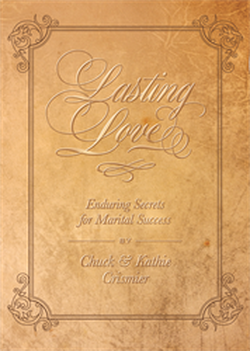
LASTING LOVE can be a dream come true. Yet love requires more than a dream or those loving feelings we so much desire.Lasting Love, Chuck and Kathie Crismier, celebrating their Golden Anniversary, unveil seven enduring secrets that will inspire and strengthen your marriage as it has theirs. COPY and PASTE this link to WATCH the TRAILER: https://www.facebook.com/Save-America-Ministries-204687919570536/videos
Past Episodes
This ministry does not have any series.
Featured Offer
LASTING LOVE can be a dream come true. Yet love requires more than a dream or those loving feelings we so much desire.Lasting Love, Chuck and Kathie Crismier, celebrating their Golden Anniversary, unveil seven enduring secrets that will inspire and strengthen your marriage as it has theirs. COPY and PASTE this link to WATCH the TRAILER: https://www.facebook.com/Save-America-Ministries-204687919570536/videos
About Save America Ministries
About Chuck Crismier
Contact Save America Ministries with Chuck Crismier
crismier@saveus.org
http://www.saveus.org/
Save America Ministries
P.O. Box 70879