

GRANDPARENTING


How to have eternal impact
w/ Lori Wildenberg
Voiceover: This is Viewpoint with attorney and author Chuck Crismier. Viewpoint is a one-hour talk show confronting the issues of America's heart and home. And now, with today's edition of Viewpoint, here is Chuck Crismier.
Chuck Crismier: It's been said that God has no grandchildren, no grandchildren, only children. But the average age of US grandparents is 68, with 67% of the adults aged 65 or older being grandparents. And those grandparents are contributing to the economy, spending over $60 billion annually on grandchildren. I wonder what they're doing with all that money.
Approximately 2.1 million to 2.7 million grandparents act as the primary caregivers for grandchildren. And about 45% of US grandchildren live within 10 miles of a grandparent. Interesting statistics, but what is the biblical role of a grandparent? Is there a biblical role? And if the Bible clearly defines the role of other family members, does it define the role of grandparents?
We want to talk about that here on Viewpoint today and, quite frankly, I think it is going to be talk that transforms. We're certainly confronting one of the deepest issues of America's heart and home here today, particularly for professing Christians, of which 99.5% of those who listen to this program are.
And so I welcome you to Viewpoint. I'm Chuck Crismier. It's conversation as always with ever-increasing conviction, talk that transforms. You say, well, how could you have increasing conviction about something so warm and cuddly as grandparenting? Well, maybe it's not as warm as cuddly as you think. A lot of grandparents think, oh, well, I have finally arrived. How great it is to be a grandparent.
Well, maybe you haven't been a grandparent very long because you might find that there are other things concerning grandparenting that don't always feel so great. Grandparenting is not just about feelings. It really is about faith. As in everything in our lives, without faith, it's impossible to please God as you know. And without true faith lived out as a grandparent, we can't please God either.
So today on Viewpoint, we have a very special conversation planned for you. Well, I say planned because we have scheduled Lori Wildenberg to join us here from Colorado. She is a former wannabe climber. Her children are all climbers, but she is scared of heights. And a lot of people are afraid of heights. In fact, grandparenting is one of the heights that many people are afraid of.
And so today on Viewpoint, we're going to be talking about that. And again, I welcome you aboard. Lori, it's good to have you on the program. Grandparents make great partners. That's a great title.
Lori Wildenberg: Oh, thanks, Chuck. I'm so excited to be here and talking with you about this important topic.
Chuck Crismier: So you're more excited to be here than you were on the slopes of a 14,000-foot peak in Colorado?
Lori Wildenberg: It always feels like a great accomplishment, but it does scare me a little and talking on this show only brings me joy.
Chuck Crismier: Well, when I was in my 20s and my wife was in her 20s, we spent quite a bit of time hiking and climbing in the Sierra Nevada mountains in California. And it was also a point of considerable trepidation for my wife. So after a few years of that, one day we had a—it started raining up in the mountains and we just wrapped up our tent very quickly and headed down to Fresno, California on the other side of the mountain and holed up in a hotel and from that time on, my wife and my daughter said, that's the kind of climbing we want to do, in hotels.
So but you've got a lot of kids. You have a lot of kids. How many kids do you have?
Lori Wildenberg: We have four adult children. And of the four, three are married. And of the three that are married, two have kiddos. And so we've got five grandkids.
Chuck Crismier: All right, five grandchildren. And we have three daughters. Together they have—we have 10 grandchildren and two great-grandchildren. And so we're not in competition, but we do know that we have a tremendous opportunity and responsibility. But with that comes tremendous challenge, doesn't it?
Lori Wildenberg: Oh, yes. And like you said, it's just a tremendous opportunity. And also, it's a command of the Lord's, which kind of surprised me. I didn't realize this until I started doing some research on grandparenting.
And here we are in Deuteronomy 4:9. Only be careful and watch yourselves closely so you do not forget the things your eyes have seen or let them fade from your heart as long as you live. Teach them to your children and to their children after them. Exactly. So we are called by God. We are commanded by God to help our kids and our grandkids along in their faith journey.
Chuck Crismier: You know, Lori, ever since our first daughter was born in 1972, I have had a strong, very strong feeling that first of all, the role of a parent is not to just give life to a child and not to just provide a roof over the head and food for the mouth and so on, but to truly provide spiritual leadership and a vision for the future, a vision not of some particular role such as being a lawyer, a doctor, or a nurse, or a teacher, or something like that, but actually a greater spiritual vision. And I think then once you have adopted that as a parent, you necessarily carry that on as a grandparent, don't you?
Lori Wildenberg: Well, you know, I don't know if it always transfers. I think there are some folks, like I knew that that was my responsibility as a parent, but until I started really investigating grandparenting and I've been a part of the Legacy Coalition, I've been on their Grand Monday Nights and then also attended a seminar by Larry Fowler.
When doing that, I thought, oh my gosh, I can't believe how impactful and important the grandparent role is in a moral and faith and values development, second only to parents. And I'm not sure that I really understood that until I started looking into it. And I'm so glad that the Lord opened my eyes to this because I'm very excited about it and passionate about telling other grandparents, hey, we've got a really important role in the lives of our grandkids and how can we live that out and support our adult children and their spouses in the process?
Chuck Crismier: Exactly. Well, what you didn't know is that a couple of years ago I wrote a book called Hearts of the Fathers, Leaving a Legacy That Lasts. And the opening words were taken from the father's heart for fathers. And this would also include grandparents. Give ear, oh my people, to the words of my mouth, which we have known of our fathers, which has told us.
We will not hide them from our children, showing the children's generation to come the praises of the Lord and his strength and his wonderful works that he has done. For he established a testimony and appointed a law which he commanded our fathers that they should make them known to their children, that the generation to come might know them, even the children which should be born, who should arise and declare them to their children, that they might set their hope in God and not forget the works of God, but keep his commandments and might not be as their fathers, a stubborn and rebellious generation whose spirit was not steadfast with God the Father. Psalm 78, very, very powerful words, and I think they set the stage for further conversation here between us. We'll be right back, friends. Stay tuned. Lori Wildenberg, our guest.
Voiceover: Once upon a time, children could pray and read their Bibles in school. Divorces were practically unknown as was child abuse. In our once great America, virginity and chastity were popular virtues and homosexuality was an abomination. So what happened in just one generation? Hi, I'm Chuck Crismier and I urge you to join me daily on Viewpoint where we discuss the most challenging issues touching our hearts and homes. Could America's moral slide relate to the Fourth Commandment? Listen to Viewpoint on this radio station or anytime at saveus.org.
Chuck Crismier: Welcome back to Viewpoint. I'm Chuck Crismier. Among other things, the role of grandparents includes being a heritage maker, a disciple maker, a teacher of God's word and law, sources of wisdom and guidance, and prayer warriors. All of those together and you know, many of those things differ according to our personalities as grandparents. Parents have different personalities, grandparents have different personalities.
And our relationship with parents as grandparents are meant to be partners with parents, not replacements. Unfortunately, many grandparents have been compelled to become replacements as the millions living with grandparents alone prove. So today on Viewpoint, our special guest, Lori Wildenberg, with her book Grandparents Make Great Partners. And before I forget, I want to make the book available to you. It is an excellent, excellent book to encourage you in so many different ways. It speaks to things we're not going to have an opportunity to get to here on the program today. It really does.
You're going to be blessed by this book. If you're a grandparent or about to be one or a great-grandparent, get the book. $15 will put it in your hands. It's on our website saveus.org, saveus.org. Give us a call at 1-800-SAVE-USA, that's 1-800-SAVE-USA or write to us at Save America Ministries, P.O. Box 70879, Richmond, Virginia 23255. Writing a check add $6 for postage and handling. Grandparents Make Great Partners.
So Lori, you have been impacted by your serious thinking about your role as a grandmother. And so you are called what by your grandkids?
Lori Wildenberg: Mimi. Mimi, yes. And my husband is Papa.
Chuck Crismier: Okay. Well, I'm called Papa, but my wife is called Nana.
Lori Wildenberg: Okay. That's good.
Chuck Crismier: So how is it we make these choices? Is it the grandparents that make the choice? Is it the parents or the kids? Who makes those choices?
Lori Wildenberg: Regarding the names? Well, I wanted to be Mimi. And so in my case, I definitely made the choice. And the reason was because when my son was little and he was especially fond of me, he'd call me Mimi. And I thought, wouldn't that be the cutest little grandma name?
Little did I know, here in Colorado and kind of more on the southern end of the United States, Mimi is a very popular grandma name and I thought I was going to have the most unique grandma name.
Chuck Crismier: Well, you just have to be a unique grandma.
Lori Wildenberg: Right. I have a unique story. So but yes, Mimi is my name. So I picked it, but there are other people where their families have the kids choose. There's one that I can think of where they call their grandma Mo, and they picked the name. And another one, which I think is very funny, they call their grandpa Grumpa.
Chuck Crismier: Well, as I recall, as I recall, since part of my heritage was from Sweden, I think they called them Moofar and Farfar.
Lori Wildenberg: Oh, okay.
Chuck Crismier: Something like that. But in any event, there are all kinds of names for grandparents. But the real issue is what kind of a grandparent am I? Am I a grandparent that really fulfills God's intent for grandparenting or am I just one who looked for freedom from responsibility in raising kids and now I can go out and play? What's your response to that, Mimi?
Lori Wildenberg: You know, I think that there are a lot of folks that are buying the enemy's lie of distraction. And that would include, you know, really just focusing on our own pleasure. Many grandparents, like a first-time grandparent is often in their 50s. But like you said, the average age tends to be around the 60-year-old.
But the first-timers tend to be right around their 50s and they haven't yet retired. Well, in a few years, they're starting to plan for that. And what they hear from the culture is, you know, this is your time to have fun, this is your time to spend money on yourself, this is your time to go play pickleball.
And you know, I think there's nothing wrong with playing pickleball. There's nothing wrong with living in a retirement community. There's nothing wrong with going on a river cruise. In fact, I would really like to do that. But at some point, we have to figure out what our role as a partner is.
Chuck Crismier: Well, I asked your husband to listen in to find out what you really wanted.
Lori Wildenberg: I know, I keep mentioning this river cruise thing. I'm hoping it's going to download into his brain.
Chuck Crismier: And you're not inviting your grandchildren on it either, are you?
Lori Wildenberg: Probably not that trip. But on others, we love to have full family trips. We think that's really a special thing. But yes, a river cruise perhaps just Tom and I would go on that.
Chuck Crismier: All right. You say a grandparent is a little bit parent and a little bit teacher and a little bit best friend. Help us to understand that because a lot of people think, well, a grandparent is just one that's out there to spoil the kids.
Lori Wildenberg: Yeah, and you know, I can understand the thought. Like, this is the time to really bring joy into the family because you have a lot less responsibility regarding the grandkids. Your responsibility, according to the Lord, is we are to talk about faith and to share our stories and, you know, to help them along in their faith journey.
But also, part of that is because we do have a little more time and we don't have the day-to-day responsibilities unless we are a grandparent who has taken on the role of parent. But we don't typically have the day-to-day responsibilities of raising those kids so that we are able to enjoy things a little bit more.
And of course, what we'll want to do is enjoy them within the context of what our adult children and their spouses feel comfortable with. So we want to be very careful to be respectful of what that quote-unquote spoiling might look like. It's great to have fun because when we have fun with our grandkids, that's one of the best ways to build relationship. So fun is good.
Chuck Crismier: Well, fun is good if it's undergirding faith.
Lori Wildenberg: Yes. Yeah, we don't want to step out of it. Right, right, exactly. You know, I think there's a lot of grandparents who are really good grandparents, but they're not thinking about being intentional Christian grandparents.
And that's a little different. So if you can weave like the fun, I've got, you know, one of the personalities of a grandparent that I've identified, I kind of picked nine, but one is called the Chum. And the Chum is all about relationship and having fun. And if you can weave that fun personality with the intentional Christian grandparent, you've got a pretty powerful combination there because it's really strengthening the relationship and then it's so much nicer to have faith go down without thinking so hard about rules and regulations.
What we've found is that a lot of people, young people who are deconstructing their faith have only been brought up with the thought of memorizing things, which is good. That being able to memorize a verse is good, but if it's only about memorization, knowing facts, and being obedient, they may feel like, well, why should I be obedient? Because they don't have a relationship with the Lord.
We need all of that together because God says if you love me, you will obey my commands. Well, we need to get to the place where our kids know that they are loved and they love the Lord back.
Chuck Crismier: Well, that's true. The problem is we have continual struggles with that big "if". I call the word "if" the biggest little word in the Bible. Every promise of God is conditioned on the word "if," including salvation itself. So the "ifs" of our life are more than just a simple two-letter word. They really are the fulcrum over which everything in life happens.
Lori Wildenberg: Yeah, those little words can be pretty powerful.
Chuck Crismier: Yeah, and that, by the way, that's something you can teach kids. It's very easy to use that. Well, if you do this, then what happens? If you don't do this, what happens? And you can even show the cause and effect.
Lori Wildenberg: Right, those natural consequences. Uh-huh, good.
Chuck Crismier: That's what God did in his word over and over and over again with Israel and they never quite seemed to get it. And those were just his children, not his grandchildren. Okay, you talk about the Chums, and of course there are parents that try to be chums too. They want to—instead of wanting to be parents, they want to be their kids' friend. And they end up, rather than being parents, the kids actually look back and they are disgusted that they were not parented.
Lori Wildenberg: Yeah, what happens with the Chum personality, the downside—there's the upside with the relationship—the downside is that those kiddos will end up resenting the parents if they only focus on the fun side. And the reason is because the parents aren't providing any guidelines or boundaries.
So the child feels like they can do anything they want and then when they do and then the natural consequence like the "if" pops in, they're angry with the parent because the parent could have stopped some of that pain by saying, hey, I'm not going to let you do this or I love you and I'm going to say no to that.
Chuck Crismier: Well, I have an interesting question for you then, Lori. And that is, what if you have a parent that wants to be the friend of their child, the chum, but the grandparent sees how dangerous that is and tries to, shall we say, provide a more parenting role to that child that is lacking it in their own parents' home? What do you do? What do you say you? What say you?
Lori Wildenberg: You know, that is—I am going to say that would be a really difficult situation. Normally you see it the other way around, where the grandparent wants to be, you know, the fun one and the parents are trying to teach the kids, you know, how to navigate life.
If it is that other way around, here's the thing that's really hard. First of all, you got to pray and ask the Lord for an opportunity to have a conversation with your adult child in private, to not do that in front of the grandchild so that you're undermining that adult child, their parent. Got to be very careful with that.
So you want the conversation to be private. You want them to be receptive so you need to pray about it. Sometimes when we see things that are going on in, you know, maybe our adult child's home and how they might be doing something, there is a temptation to dispense our great wisdom.
Chuck Crismier: Well, wait a minute. I thought that's what you did in your book Grandparents Make Great Partners. Isn't that what this is?
Lori Wildenberg: Well, yes, with the caveat of dealing in the realm of respect. And so we want to be partners with our adult children, but we have to remember our adult children, as you mentioned earlier, they are the parents and we have a role that is a supportive role. So our partnership isn't 50-50.
Chuck Crismier: Lori, I don't recall reading a chapter in your book that said—was titled Bite Your Tongue.
Lori Wildenberg: Well, there's not a chapter, but there are some definite warnings in the book about speaking out of turn. One thing that if we're careful about—if we're not careful, even if we say things with the very best of intentions, it might not be received that way and it will sound like criticism.
If we speak into something without being asked or without asking if it's okay, it's going to be received like we're critical and then they're not going to want to hear anymore from us. Because they have researched and they want to parent the way they want to parent just as we did.
So if we want to dispense our wisdom, whether it be, you know, encouraging them to be more structured in their relationship with their child or the opposite, maybe not being as structured, whatever the thing might be, we need to ask for permission. And I do think that the Lord will give us an opportunity to go ahead if we can pray about that and wait for the Lord to show us and to go ahead and ask our adult child, are you interested in hearing my perspective?
Chuck Crismier: Well, it looks like there's some delicacy that's involved in some of this. You've named nine different characteristics of various grandparents. Wow, are we going to talk about it? We'll be back.
Voiceover: There is so much more about Chuck Crismier and Save America Ministries on our website saveus.org. For example, under the marriage section, God has marriage on his mind. Chuck has some great resources to strengthen your marriage. First off, a fact sheet on the state of the marital union, a fact sheet on the state of ministry, marriage, and morals. saveus.org. Marriage, divorce, and remarriage. What does the Bible really teach about this? Find all of this at saveus.org. Also, a letter to pastors, the Hosea Project. saveus.org. And many more resources to strengthen your marriage. It's all on Chuck's website saveus.org. Again, you can listen to Chuck's Viewpoint broadcasts live and archived. Save America Ministries website at saveus.org.
Chuck Crismier: I can't imagine a book that speaks more poignantly to the various issues that any of us encounter as grandparents. That's this book by Lori Wildenberg, Grandparents Make Great Partners: How to Have an Eternal Impact on Your Grandchild's Life. $15 will put it in your hands, friends. It's on our website saveus.org. Give us a call, 1-800-SAVE-USA, 1-800-SAVE-USA, or write to us at Save America Ministries, P.O. Box 70879, Richmond, Virginia 23255. Writing a check add $6 for postage and handling.
How can we expect our government to correct all the ills of our time if we don't take a very significant role as grandparents in our own families? It seems to me that God has entrusted to us as grandparents a tremendous opportunity and responsibility. What say you, Lori?
Lori Wildenberg: I agree. And it all starts with the family, right? When we look at how the Lord created the world, first he created Adam and Eve, so that's the beginning, the marriage, and then the family is really—marriage and family are the first institutions he created. Government didn't come along until a little bit later.
Chuck Crismier: And where does Satan attack number one? The family, beginning with marriage, right?
Lori Wildenberg: Yes, absolutely. So, and it makes sense because if there's a breakdown in the family, then we look to other places to help us and often we don't look to the Lord, right? We'll look to government or look to education or look to entertainment. We need to be able to keep our eyes fixed on the Lord and do what we can to really nurture our marriages so that our families will flourish. And we want to see that through all the generations. We want to have our grandkids and our kids and their spouses in heaven with us. So yeah, we really have to nurture the family and not expect another institution to solve our problems.
Chuck Crismier: I notice a phrase that you used in your book that you want your grandchildren to know you as the person you really are. In other words, you don't want to be a phony. You want to be a real godly grandmother or grandfather. You want them to see the real you, not just a bunch of phony-baloney church-going once a week.
Lori Wildenberg: Yeah, we want to have that relationship and to come at the relationship with humility. And I think humility is a really great bridge to start relationship. And when you think of how Jesus came into the world, humble beginnings, right? As a baby, the God of the universe as a baby, what, a human baby? Think of that and born in very, you know, modest accommodations in the stable and then hanging on the cross and washing feet. Humility really is the place to start.
Chuck Crismier: Well, is that the title of your next book, Humility and How I Attained It? In a prideful way? Humility is a very, very difficult thing to talk about, isn't it?
Lori Wildenberg: It is. And I think if we can be, as you said, real, have our kids and our grandkids have a real relationship with us because they know who we really are, that would mean being able to ask for forgiveness when we've done something wrong or hurt someone. That would mean admitting that you didn't always do things perfectly.
When I teach classes to parents of pre-teens and teens, I will start out and say how many of you were pretty good teenagers? And usually I'm teaching these classes in the church, so most of the hands go up and then I'll say, well, how many of you were perfect? And all the hands go down. So that helps us remember, right? We want to remember that our kiddos and our grandkids don't come out of the chute knowing how to behave perfectly, knowing how to do things exactly right. And they're not going to be the best of the best in every single category in their life.
So it helps to share our stories of where we maybe didn't have great success so that they don't get so frustrated or they know that this is part of growing and learning and life experience, that things don't always go perfectly.
Chuck Crismier: Well, don't you think though there are things that grandparents should not be ultimately transparent about that doesn't do any good and all it does is give the grandchildren then something to say, oh, well, you weren't perfect either, so?
Lori Wildenberg: Oh, yeah. I see what you're saying. I think it's very dangerous. You want to be wise. Yeah, you want to be wise in what you share and to understand the child's personality. I mean, of course, you want to be discerning, I think is probably the best word in what you share.
You may not—and I think too, there are some grandparents that think it's very funny to talk about times when their adult child, who is the parent of the grandchild, they might think it's funny to share stories of what their child did in high school and maybe they went off the expected path and they think it's a funny thing to share. I don't think there's wisdom in that and I think you can hurt the relationship.
Chuck Crismier: I don't think so either. There's a level in which transparency is not healthy, it's not spiritually appropriate, and it actually lays the foundation for more rebellion. It's unfortunate but that's true.
Lori Wildenberg: Yes, I think you have to be very discerning. You're exactly right.
Chuck Crismier: You set forth nine different almost like personality types of grandparenting: the Chum, we talked about that, the Captain, the Consultant, the Ceremonial, the Cool, the Surrogate, the Christian Coach, the Checked Out, the Cancelled. I haven't read about any of them here though where they're checked in. You got the checked out. How about the checked in? Is there anybody that's really checked in with a godly view of grandparenting?
Lori Wildenberg: Well, of course the intentional Christian Coach is completely checked in. And that is the main personality that we really want to shoot for. And we may find ourselves in these different categories with either different individuals or different families. But if we can maintain the Christian Coach and of course we want to avoid the checked out. That's the grandparent that is only following their needs and their desires and not paying attention.
But if you do have a grandparent like that, if you're a parent and you want your parents, your children's grandparents to be more involved, let's assume the best. Let's assume that perhaps they don't know that you want that. So verbalize, hey, we'd like you to spend more time with the kids. So set out the expectations and then when they feel invited, perhaps they will come around a little bit more. You never know.
Chuck Crismier: Well, maybe the problem is that somebody says, well, yeah, we want you to spend more time with the kids, but their motivation is we don't want the kids around, we want to do our own thing, how about taking them off our hands? That's a whole different story, isn't it?
Lori Wildenberg: Well, there's nothing—I mean, I love babysitting my grandkids. And of course, you don't want the adult children to take advantage of that. Exactly. There may be times where it's appropriate for the adult child and the grandparent to have the conversation about what do we want this relationship to look like. In fact, I think that's probably a very good conversation to have where you can sit back and say, you know, this is kind of what I'm thinking, how do you see my role? How do you see the grandparent role? I think that's an actually a very good conversation to have. But I do enjoy watching my grandkids and I think it's really a great privilege to be able to do that. But I don't ever feel taken advantage of at all.
Chuck Crismier: You know, we had a very unusual situation. I don't know whether my sharing this is helpful to anybody, but we had three daughters. Every one of them has a completely different personality. Our oldest daughter homeschooled her children and because she also worked for me as my assistant, running my office and so on for this ministry, she was in our home. The kids were in our home. They were actually sort of, shall we say, raised in our home in large measure.
And so we were delegated what shall we say, quasi-parental authority to minister to them as parents so to speak, but as grandparents as well. And it was a unique role and has actually proven to be extremely beneficial over the years.
Lori Wildenberg: I love that that she delegated that to you. That is very cool because she passed along basically permission to be able to speak into their lives and maybe provide some guidance and perhaps even discipline in certain instances.
Chuck Crismier: Exactly. And we still do. Believe it or not, they're now in their late 20s and 30s. And guess what? Every year the parents invite us for the first of their two-week vacation for a whole week to gather with them to be grandparents among them and they want our presence there. Late 20s and 30s, they want our presence there and have asked us to lead them every morning as we did with our daughters, to lead them in application of the word of God for about an hour a day.
Lori Wildenberg: Oh my gosh, that is so special. That's a very big gift that you have there. Praise the Lord.
Chuck Crismier: Oh, don't think we're not grateful for it. That's the highlight of our time.
Lori Wildenberg: Yeah, I believe it.
Chuck Crismier: But then our other daughters have not had that kind of experience and their personalities are very different and so it's a challenge in each situation to be able to grandparent. You don't want to give the appearance that you're treating other kids more specially, but an environment has been created in which that necessarily happens. So it's a tough role. I'm trying to be very honest about this. This is not an absolute game we're playing here. This is something we've got to really work on before the Lord. We'll be right back after this, friends. Lori Wildenberg, Grandparents Make Great Partners. We'll be right back.
Voiceover: Have you ever considered what the early church was like? Many people are developing a heart longing for a greater fulfillment in our practices as Christians. A recent study showed 53,000 people a week are leaving the back door of America's churches in frustration. What is going on? Why has there not been even a 1% gain among followers of Christ in the last 25 years? Could it be that God is seeking to restore first-century Christianity for the 21st century?
Jesus said, I'll build my church. Is Christ by his spirit stirring to prepare the church for the 21st century? The early church prayed together and broke bread from house to house. They were family and it was said by all who observed, behold how they love one another. Incredible. But the same can be found right now. Go to saveus.org and click Sell Church. We can revive first-century Christianity for the 21st century. It's about people, not programs. It's about a body, not a building. That's saveus.org. Click Sell Church.
Chuck Crismier: Welcome back to Viewpoint, friends. My goodness, this little book is absolutely full and we can barely even touch the surface of it because it is so applicational for our lives. Don't give unsolicited advice to parents. Well, that's a tough one. That's a very tough one. So how do you be a grandparent when you have no grandparenting ability? It's a challenge, isn't it, Lori?
Lori Wildenberg: Yep. I just I really liked what you said in the last segment about how you're a little different grandparent with each of your daughters' children. And really how our adult children view us and our role really makes a difference in the type of grandparent that we can be. And here you were able to really pour into the lives of your one daughter's kiddos and it's welcome. And it may be different with maybe your other two girls and you have to—and I know that you have—you've got to respect that. And the thing that's I think pretty surprising is the adult children are really the ones that sort of frame or shape your role as a grandparent given the expectations that they have.
Chuck Crismier: Well stated. Say that again, Lori.
Lori Wildenberg: So they really frame what our role is in terms of how we are to be a grandparent. The parents do, yes. And that's a surprise. That was a surprise to me. And I think it's a surprise to many new grandparents that, okay, you know, it's really up to my adult child to determine the framework of this particular relationship.
Chuck Crismier: Yeah, I noticed here one woman responded you said, I bite my tongue daily. Okay, now you have some Grand Partner tips here. I want to read these off very quickly: the Grand Bs. Be interested, be responsive, be available, be positive, be discreet, be supportive, be encouraging, be respectful, be interactive, be sensitive, be fair, be kind, be loving, and don't be the boss. Ooh.
Lori Wildenberg: Don't be the boss to your adult children. Of course there's times with your grandkids you have to be the boss. Okay, just wanted to get that clarified. Of course, the grandchildren, you know, when you're there and the parents are not, of course you wear the hat of the boss. But when the parents are there and you are there, it's up to them to really parent those kids and step back unless they've given you permission as your daughter did. Unless they've given you permission, you need to hold back because they need to establish the fact that they are the authority figure with their child and then they pass off that authority to the grandparent if they are not around. So yes, exactly. The grandkids don't get to call the shots, good clarification there, Chuck.
Chuck Crismier: Yeah, well, we're trying to give both sides of the bargain here. But yet God gives us a responsibility and we can't shirk that responsibility. On the other hand, God's had to deal with his kids exactly the same way. Look at the whole story of Israel. He couldn't compel anybody to do what he wanted them to do. And he's God. He's the father and he could not—in fact, he said, look, I would have fed you with the best of the wheat, I would have done this, I would have done that, but you would not.
So how do you deal in a situation where you want to be a more godly grandparent to provide a better understanding, a deeper understanding of the kingdom of God for your grandchildren, but they would not?
Lori Wildenberg: Yeah, I think when we can think of important messages that our grandkids need to hear, I think that is something that's really critical. They need to know and in this world particularly that they are loved unconditionally by a good God and unconditionally by us. And they need to know that so they need to know that they've got belonging and security.
They need to know that they are capable, that God has gifted them with various sets of skills and abilities. They need to know this. And if you happen to be in a situation where the parents do not want you to be talking about faith, these are still messages you can supply to your grandkids. You can talk about they are loved and lovable, that they are capable, and that they were born on purpose for a purpose.
Chuck Crismier: How about communicating then your own story? For instance, in the Scriptures God says, remember, remember, remember, tell the people, tell the kids, tell the grandkids the mighty acts of God. Remember. What say you?
Lori Wildenberg: Absolutely. And as I read that Deuteronomy 4:9 that we are to remember and to share our story, absolutely. And story is such a good way to move into the heart of our grandkids. And it shows again the relationship. When you can tell your God stories to make it personal, not like God is out there, but God says he is with us. Throughout Scripture, he tells us in the very beginning in Genesis all the way through Scripture, all the way to the end, he talks about being with us. Jesus, Emmanuel, God with us, it is something that we want to communicate that the Lord is with us. And that is relationship and by telling our stories that is one incredible way to communicate relationship, personal relationship with the living God. So yes, stories are definitely something that we we want to communicate 100%.
Chuck Crismier: All right. And we don't want to fail in that. Because if we fail to plan to do it, we'll plan to fail. And we don't want to fail in that. Now there was an article that came out in the latest issue of the Epoch Times, a very painful article talking about broken relationships in families, between parents and children and then between grandparents and parents and grandchildren.
Ouch. You have an article or you have a chapter called The Grand Gap: Grandparents Experience a Double Dose of Excruciating Pain When They Are Estranged From Their Children and Cut Off From Their Grandchildren. Ouch.
I gave my daughter-in-law a big hug of thankfulness. I was working on this chapter regarding family division through broken relationships, opposing political views, mental illness, differing religions, world views, and I might introduce there discipline or lack thereof. Many women who emailed or messaged me share their heart-wrenching stories, a double dose of excruciating pain. How do you respond?
Lori Wildenberg: Yeah, there's so much heartache with that and this has really troubled me and I'm very glad you brought this up, Chuck, because what is happening in like the counseling area in this culture and not just secular counseling but also therapy from Christian counselors, oh yeah, is that they are talking about protecting peace. Have you heard this? You need to protect your peace.
Well, in protecting your peace, the thing that they often recommend is to sever or to be estranged from the family of origin. And when we talk about protecting peace, when I see what that looks like because I actually I've got clients as well and a lot of my clients now are parents of adult children who are estranged or they have a difficult relationship and the adult child says they want to protect their peace meaning I don't want you around because you upset me. Exactly.
Which what happens is that grows a hard heart. It doesn't protect that person's peace. They're still struggling. We don't want to be a peacekeeper, we want to be a peacemaker. We want to be somebody who works through things in order to get to peace, not keep things status quo.
And what we need to do, and this is a very hard and here's the word humble again, very hard humbling experience, we need to own what we need to own. And even if what we need to own is only 1% of the issue, only 1%, only a half a percent, we can own that and to say, hey, you know, work toward that repair because all relationships have opportunities for things to break down or the current word is to rupture. That happens in every relationship. No relationship is perfectly smooth. None.
And so we want to be able to be emotionally mature enough to work through those difficult things to either repair, restore, or completely just renew. Some things just need to be renewed. So yes, we but we have to be the ones that get that started. And it may not be received in kind. They may not come back and say, hey, and then would you please forgive me for A, B, or C? It's actually fairly unlikely that they will do that. But if you can get it started so that you can start to build more trust.
Chuck Crismier: In other words, you persevere. You persevere, you don't give up. And here's the problem. Here's the problem as I see it, Lori. And that is for the past 50 years, we have progressively introduced the lordship of feelings in the church. Feelings supersede faith. And therefore, we listen to our feelings more than what God has to say in our lives and it causes us to withdraw from even the experiences that God would use to strengthen us and to draw us closer to him. And if we live according to the lordship of our feelings, we're going to end up with more and more families estranged.
Lori Wildenberg: Yes. You know, and it's I think it's so good as as parents and even grandparents to actually delineate what is a feeling and what is a fact and to really start training our kids and our grandkids between those two. And I think that really helps with with the idea of of faith and what's in the Bible and what the Lord requires of us.
So I think if we can kind of talk about that, I think that will get us a little further. And then also to remember where are we unified? We may not be unified in the Lord, but could we perhaps be unified in the fact that family is important? Could could that—I mean, where can we find the thing? And when you find the thing, that's at least a starting point.
Chuck Crismier: In other words, find a foundation to build, find a foundation for building.
Lori Wildenberg: Yes, find something and and it could even be as surface as hey, we both like fishing or going to baseball games. It could be something as small as that, but it's a good starting point and trust the Lord that he will, you know, work through this with you.
Chuck Crismier: All right. Well, Lori, thank you so much. It's almost like climbing a 14,000-foot peak to be a grandparent these days, right? You better be roped up, you better have some protection from above, just as with climbing. And friends, you're going to want to get a copy of this book. Again, we have barely scratched the surface of what Lori has shared in this book, Grandparents Make Great Partners. It'll be a blessing for you. $15 will put it in your hands. It's on our website saveus.org, call us 1-800-SAVE-USA, write to us at Save America Ministries, P.O. Box 70879, Richmond, Virginia 23255. Writing a check again add $6 for postage and handling.
And again, become a partner with us, friends. We really are confronting the deepest issues of our hearts and homes, preparing the way of the Lord, yes, even today for the Lord's coming. We want to do what God would have us to do and be the grandparents that he would have us to be. Right? God bless you.
Voiceover: You've been listening to Viewpoint with Chuck Crismier. Viewpoint is supported by the faithful gifts of our listeners. Let me urge you to become a partner with Chuck as a voice to the church declaring vision for the nation. Join us again next time on Viewpoint as we confront the issues of America's heart and home.
Featured Offer
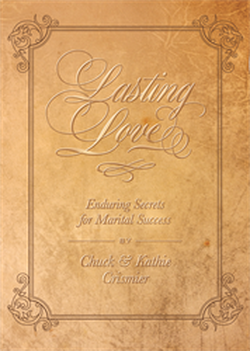
LASTING LOVE can be a dream come true. Yet love requires more than a dream or those loving feelings we so much desire.Lasting Love, Chuck and Kathie Crismier, celebrating their Golden Anniversary, unveil seven enduring secrets that will inspire and strengthen your marriage as it has theirs. COPY and PASTE this link to WATCH the TRAILER: https://www.facebook.com/Save-America-Ministries-204687919570536/videos
Past Episodes
This ministry does not have any series.
Featured Offer
LASTING LOVE can be a dream come true. Yet love requires more than a dream or those loving feelings we so much desire.Lasting Love, Chuck and Kathie Crismier, celebrating their Golden Anniversary, unveil seven enduring secrets that will inspire and strengthen your marriage as it has theirs. COPY and PASTE this link to WATCH the TRAILER: https://www.facebook.com/Save-America-Ministries-204687919570536/videos
About Save America Ministries
About Chuck Crismier
Contact Save America Ministries with Chuck Crismier
crismier@saveus.org
http://www.saveus.org/
Save America Ministries
P.O. Box 70879