
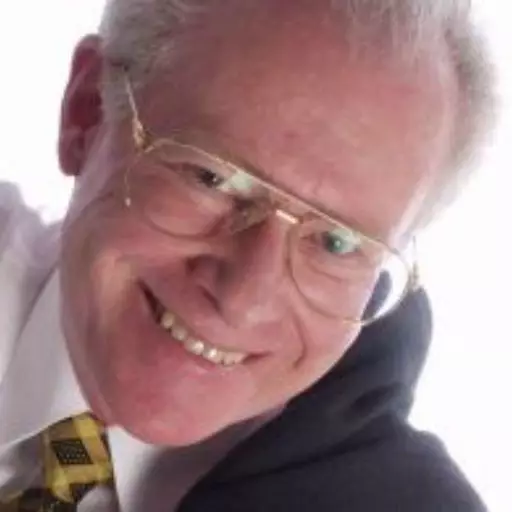
"GOOD" MONEY


Is that even possible?
w/ John Coleman
Announcer: This is Viewpoint with attorney and author Chuck Crismier. Viewpoint is a one-hour talk show confronting the issues of America's heart and home. And now, with today's edition of Viewpoint, here is Chuck Crismier.
Chuck Crismier: Well, it's been said that the love of money is the root of all evil. Some say the root of much evil. But also we're told that money can buy you anything but love. Money can't buy you love. Well, what can money do for you? That's what we want to talk today on Viewpoint.
Our guest today calls it good money. Six steps to building a financial life with purpose. You may wonder why you heard some preliminary comments from me with my guest, John Coleman, before we actually began running the program. It's because there was a mix-up with regard to his joining us and it was necessary to hurriedly connect and make some preliminary comments.
And that's what you heard before we actually formally launched the program. So John Coleman joining us here today on Viewpoint to talk about a book called Good Money. You may wonder "good money?" I thought we were supposed to be talking about Good Friday, the Lord is good, everything else is good, but money good? I thought money was filthy. You know, the Bible talks about filthy lucre, which is another word for money.
So why in the world would a man professing to be a follower of the Lord be talking about good money? We're going to have to find that out from him here on Viewpoint today. But one thing's for certain, you can't live without money. You're supposed to live by faith and we're supposed to live by faith, but faith has everything to do also with money, how we use money.
I'll bet there's not one person listening to this program that doesn't feel like they need money in order to live. The question is how much money do I need and for what purpose do I need the money? How am I going to use the money? Is it going to make me happier or unhappier? It's interesting that the scripture says adversity turns our hearts toward God, but prosperity turns our hearts away from God.
So why would we call it good money? Well, it's a good question and we're going to ask John, John Coleman, that question here today on Viewpoint. So I'm glad that you joined us, friends. It's conversation with ever-increasing conviction, talk that transforms and I trust that today will be no exception.
Yes, we're going to talk about very practical things with regard to money, but we're also going to interweave its presumption underlying everything that is talked about that we are followers of Jesus Christ. That being the case, it establishes the foundation for everything else, our attitudes, our purposes, our decisions, and so on with regard to money. So John, with that in mind, thanks for joining us here on Viewpoint.
John Coleman: Yeah, thank you so much for having me on. It's a pleasure to be here. I am in Atlanta, Georgia, which is my hometown, in my office today. And spring has come, thankfully, Chuck. So I'm excited for all the flowers that are blooming and how everything's waking up for the spring.
Chuck Crismier: Well, isn't that wonderful because my wife and I were just talking about that. You see all the fresh leaves, light green leaves coming out of the trees, particularly in areas of the country where we actually have seasons and it's a beautiful thing. You see the yellow flowers, the daffodils coming up and all of these kinds of things. But people are a lot of people looking for money to come up the same way. It's green after all. At least it used to be green. So now we're talking about silver and gold. I thought money was supposed to be green. What's going on?
John Coleman: Yeah, well, you know, and they say money doesn't grow on trees, Chuck. So unfortunately, it probably won't be blossoming. But no, I thought your introduction to the topic was so helpful because the Bible does have a lot of cautionary things to say about the topic of money.
And the title Good Money is really about how can we take this thing that can be so damaging and actually make it good in our lives and put it to good purpose. You know, the Bible has more than 2,300 verses that reference money. Not all of them call money explicitly evil.
In fact, 1 Timothy, which you cited, says the love of money is the root of all kinds of evil rather than money itself. And I think the Bible is clear that money itself is a neutral thing that comes with temptations. So many of the great figures of the Bible were actually blessed with extraordinary wealth. Abraham, David, others in order to build God's kingdom.
Chuck Crismier: Well, if David had not had some money, he would never have been able to buy the threshing floor of Araunah that ultimately became the Temple Mount.
John Coleman: That's right. And what God encourages us to do, even in the parable of the talents, which, you know, was about more than money, but I think used money for specific reasons, God wants us to multiply the money that he's given us if that's one of the blessings he's bestowed upon us, but always to use it for his purposes.
Money is not for self-enrichment, for power, for abuse. It's whether we can direct it towards the kingdom. He has so many verses about money and so many cautions about it because he knows it's one of those blessings that can be misused and poses unique temptations, which is why it's so important to reflect on it thoughtfully and deeply aligned with scripture.
Chuck Crismier: In fact, the Apostle Paul warned Timothy, his ministry sidekick, that those who enrich themselves with money purchase to themselves many sorrows. And we don't want to be involved in purchasing many sorrows, do we?
John Coleman: No, not at all. And Jesus in the Gospel of Matthew, he said that no one can serve two masters. You either end up neglecting one and serving the other. And he's specifically referencing whether we dedicate ourselves to our faith, towards God, towards Jesus, or whether we allow money to become an idol in our lives.
And that is the difficulty we have to navigate. You know, there are Christians who are blessed with money, who are blessed with the ability to make money. I'm an investor by day. My job is to expand the financial wealth that's given to me.
But for those in particular, he has messages about making sure that doesn't dominate your life. And indeed, as I wrote this book, that was the framework that I had in mind, supported by modern research. How can we take this thing that can be a blessing, is a necessity in everyone's life, but avoid the pitfalls of money and turn it into something that can be positive for human flourishing, for our ability to live a good life?
Chuck Crismier: Well, apparently a fellow by the name of Judas didn't have that idea. In fact, he carried the money bags for Jesus and the disciples. But he was a thief. He was not interested in blessing others or even being faithful with regard to money. And so when an alabaster box of great wealth was poured on Jesus' head before his crucifixion, he took tremendous offense at that because he said this money could have been used to help people and provide for so many other kingdom purposes. And he was offended and that offense concerning his ungodly view of money actually resulted in his betrayal of our Lord that led to the crucifixion. So we have a story of money right there leading up to the crucifixion, don't we?
John Coleman: Yeah, that's exactly right. And you framed it perfectly, which was Judas had become so obsessed with the financial wealth and indeed betrayed Jesus for a bag of silver, effectively. He had become so focused on that, it had become idolatrous in his life and he was offended by this overflowing generosity that Mary had demonstrated by washing Jesus' feet in this perfume that he couldn't see that this was the ability to celebrate the Creator of the universe, to really offer up this generous sacrifice to him. He was so worried about hanging on to these material possessions that he missed what was in his midst.
Chuck Crismier: And then not only did he get the money, but then he realized it didn't give him love, didn't give him satisfaction, and he threw it back in the chief priest's face. What do you know? What a lesson to be learned.
We'll talk more about good money when we get back with John Coleman. Get a copy of his book. $25 will put it in your hands. It's on our website, saveus.org, saveus.org. Call us 1-800-SAVE-USA.
Chuck Crismier: So good to have you join us here today on Viewpoint again, my friends. I'm Chuck Crismier. It's conversation, as always, with ever-increasing conviction, talk that transforms. And so hopefully some of the things that are shared here today from our special guest John Coleman and as we interact today will be a source of, well, encouragement. Maybe there'll be a certain amount of conviction. That's good, giving us a direction for how we can better serve the Lord and as he says in his book, flourish more effectively in the kingdom of God.
I grew up in a pastor's home. My father was a pastor in small churches across the country from east to west, from north to south. I went to 26 schools in the course of my upbringing across the country, which tells you that pastors then were moved very rapidly, usually at least every two years across the country in various ways because the denominations and so on did not want people to get accustomed to having the same man being their pastor for more than two years. They thought it wasn't wise.
So that's the environment I grew up in and also there was an attitude at that time, "Lord, you keep him humble, we'll keep him poor." In other words, they didn't want a pastor to have anything. In fact, so deeply was that rooted in the belief system in our country that pastors were not allowed to own homes. What did they live in? Parsonages.
Going all the way back into the early days of this country, pastors lived in parsonages that were provided by the congregation or the people. That's what I grew up with and quite frankly, it was slim pickings. Slim pickings. I remember so often, John, how periodically people would drop off groceries. They called them "poundings." They would pound the pastor and his family with groceries because they knew that it's not likely they had much money to buy them.
That's what I grew up with. And so it was slim pickings and fortunately my mother was a kind of gal who she had tremendous wisdom on how to manage with little. How to manage with little and make it look like much. And so it was a wonderful thing to see that happen, but it was also tough. That was the environment for my entire upbringing. How about your upbringing, John? Here you are, head of Sovereign Capital, but were you always involved in money?
John Coleman: No, you know, ironically, so I was not a pastor's son, Chuck, but when I was born, my parents were quite young. My dad actually at the time was a rodeo cowboy. So he rode bulls and saddle bronc horses. My mom cut hair. And so when I was young, we didn't have very much at all materially. And my dad, you know, over time, we worked our way into the middle class and things got a lot easier. But I remember from my early days what you're describing, you know, not having the food you wanted to eat, not living in the situations you wanted. And there was a great purpose in that.
Chuck Crismier: Well, you lived in a trailer, didn't you?
John Coleman: I did as a very young kid. We graduated to an apartment when I was probably three or four years old, but that first couple of years were in a single-wide trailer in Florida. Yeah.
Chuck Crismier: All right. By the way, did your dad ever get knocked off his high horse like the Apostle Paul?
John Coleman: Oh, my gosh, my dad got knocked off a lot of horses and bulls and he's got all the scars to show for it today. That was the only thing my mom ever banned me from doing professionally was rodeo. She told me she'd kick me out. So not a good long-term career decision, Chuck.
Chuck Crismier: But I'll tell you, when you're dealing with finances in the world of finance, it can almost be like riding the wild bull, can't it? I mean, they actually call it a bull market.
John Coleman: It's a bull market. That's exactly right. Yeah, you do feel like you get thrown about quite a lot, although I don't have to get a cast when I get bucked off. So it is a little bit easier.
Chuck Crismier: Okay. We want to get right to it here because your book is called Good Money. And why do you call it Good Money? That seems to be a turn of words that seems to be anachronistic to the actual commands of scripture. What say you?
John Coleman: Yeah, and it's really less about describing money as it is and more about an aspirational view of money. How can money be a good rather than a bad thing in your life? And we're all familiar that money can be destructive.
I've worked with incredibly wealthy people who are unhappy, who are off-course, who have hurt their families, where money has actually been a contributor to that. And if you look at things like studies of lottery winners, lottery winners go bankrupt or commit suicide at multiples of the rate of the general population.
And so the wrong habits, mindsets, and values around money can lead you astray. And the idea of the book was how do we cultivate the right habits, mindsets, and values around money so that it can actually be a good rather than a bad thing in our life. But I think in order to do that, you have to be quite reflective about what that money should be directed towards so that you can flourish in life, so that you can lead a good life.
Chuck Crismier: What does flourish mean to you? That's a very common word these days. Everybody wants to talk about human flourishing. What does that mean to you?
John Coleman: Yeah, absolutely. So the concept is quite old. The ancient Greeks called it Eudaimonia, which was the state of having the indwelling good spirit, having a good life. And that's really what it describes today, is a good life.
And that's importantly not just a happy life because we know that happiness is not what constitutes goodness in a human's life. That's a state in which a human is well-rounded as we're called to be. I think it's deeply aligned with scripture.
In the book, I actually rely quite a lot on a framework from Harvard University, actually a Christian faculty member who leads a program there called Tyler VanderWeele. And he highlights that this is the state of life where everything in your life is good, is oriented towards good.
And that's a combination in his view, six characteristics: character and virtue, happiness and life satisfaction, meaning and purpose, positive relationships, spiritual and mental and physical health, and then financial and material stability as the sixth category. But it's just a means, not an end. You know, those other things like relationships, generosity, meaning and purpose, those are intrinsically good. Financial and material stability is just the platform by which we're enabled to pursue those more meaningful things.
Chuck Crismier: All right. Well, you show a diagram in your book, centerpiece, the good life and then all of those six things surrounding it. It seems to me that based upon where you're actually coming from rather than marketing a book to the general audience out there of whatever spiritual calling orientation they might have, we as Christians would put not the good life but the life pleasing God in the centerpiece. What say you?
John Coleman: Yeah, I think that's exactly right. And you know, from the Christian conception, obviously God is at the center. And the good news is God has given us a pathway through scripture, through prayer, and certainly through the presence of the Holy Spirit to understand what it is that it means to live a flourishing life oriented towards him that includes all of these elements of what we do here on earth, being good parents, being good friends, being generous with others.
And one of the brilliant things I found in writing a book for the mainstream, which this is, is the deep alignment of modern research with what we've learned through scripture about what makes a person's life good. And it's amazing to me, maybe not amazing because this is what you'd expect, that a lot of the best research in the world about generosity, about earning, about purpose and meaning deeply aligns with what we learn through scripture constitutes the proper Christian life.
Chuck Crismier: Isn't it interesting that Jesus, and I think it was in the week before his crucifixion, he's talking about investing. He's talking about don't bury what you have and no, use it, invest it, and bring forth thirty, sixty, a hundred-fold return, that kind of a thing. Why do you think Jesus is talking about that when it seems inimical to all the other things that money is the root of all evil?
John Coleman: Yeah, and again, it's the love of money. This is the part people leave out of that 1 Timothy verse, is the love of money. Because one thing Jesus addresses quite frequently is I don't think God wants people to live in poverty, right?
In fact, Jesus says the poor we will always have with us. He talks about the blessings of the poor, but he also commands us to help the poor, to help the widow and the orphan, to help alleviate people's material circumstances.
Exactly. And so I think he wants a world of abundance in which people are well-fed, in which they're well-housed and clothed. And in fact, that's the calling. And I would say, you know, God can bless people in different ways. He blesses some with great spiritual gifts. He blesses others with great artistic talent. He's blessed some people, as in the parable of the talents, with the ability to create wealth, to steward that wealth, to do well with it.
And if that's something he's gifted you with or something he's gifted your family with, the question then becomes what are you multiplying those talents for, right? He calls us to be excellent at whatever we do. If we're excellent at investing to expand the talents, so to speak. But I think the important thing is then, okay, if you're gifted with that and if you are creating wealth for yourself and others, how are you directing that wealth really to serve his purposes and to build a better world around you, including for those who don't have as much as you have?
Chuck Crismier: John, there's a French word, raison d'être, which means a reason for being. And if you don't have a reason for being or a reason for gaining wealth or a reason for gaining resources, then why do it in the first place? What you're talking about in your book is what is your reason for being, isn't it?
John Coleman: Yeah, I think it absolutely is. And the point is we get in the most trouble when we think of money as the reason for being. Money as a goal, money as an idol, money as the thing that we're chasing, rather than simply a tool by which we achieve those more meaningful things in life.
With generosity, with creating workplaces that can help people to flourish, with building relationships, with creating great experiences for others, with living a life of character and virtue. If we can orient our resources towards that, much like Abraham did, for example, then we can actually be a contributor to the kingdom of God.
You know, Jesus partially brought on Judas initially in order to help them to manage the finances and to make sure that the apostles were cared for throughout their journey. And he went astray, right? In focusing too much on that and betraying his core principles. But God acknowledges that in this world, which is fallen, material sustenance is a part of life, that material is a part of life. And that's why he offers so much wisdom in those 2,300 verses to try and use that well, to live well in that context. Right.
Chuck Crismier: John, you're the founder of Sovereign, what is it? Sovereigns' Capital. The word sovereign seems to indicate to me either something else is sovereign or money is sovereign. What is sovereign in Sovereigns' Capital?
John Coleman: Yeah, so I wasn't a founder, but I did join a few years ago. I was blessed to join alongside a couple of founders. And it's actually Sovereigns' with an apostrophe S. Because the idea is that the capital we have is just stewarded on behalf of him who it actually belongs to, God.
And so it reminds us day to day that we are not the owners of that capital, that it's not ultimately for us, that it's under the auspices of the God that we serve and that we're intended to direct that with excellence towards the purposes he would have.
Chuck Crismier: All right, you use the word capital, which is directly related to the phrase capitalism. Capitalism is an ism or a belief system. How does what you do for Sovereigns' Capital redeem capitalism?
John Coleman: Yeah, and you know, Churchill once described democracy, I think, as the worst system except for all of the others. And capitalism is a bit the same in that I am a fan of capitalism as a mode of running an economy. We've seen the failures of things like socialism and communism.
And I think at its best, this free market economy unleashes people's talents. It certainly alleviated a lot of desperate poverty around the world. We've seen over a billion people lifted out of poverty over the last 40 or 50 years.
And it's also a way in which to unleash the talents of people, to allow them to be free to pursue what they're good at and to do so in a way that they can actually earn a living from that without some sort of top-down control. So I think the fundamental premise is unleashing the talents of others to try and create prosperity that's broadly held.
Where that goes wrong, obviously, is when capitalism itself turns into greed, when it turns into people hoarding wealth, when it turns into abuse or manipulation. And that's why I think it's so important in the Christian context. A lot of people, at least within the founding of the United States, would say that that Christian culture that was present was actually the restraint on the worst impulses of both democracy and capitalism. It built a trust-based society oriented towards the right purposes.
Chuck Crismier: So as we have fallen away from the King, from the Sovereign King of the world, Jesus Christ, as we've fallen away from him and his Lordship in our country, we've become more and more under the, shall we say, sovereignty of gold.
John Coleman: That's exactly right. And anytime you're trying to serve money, you really can't have two masters, right? You can't serve money nor can you pursue it without fault almost.
Chuck Crismier: Friends, I really urge you to get a copy of John's book, Good Money. I think it's going to, there's six steps to building a financial life with purpose and it is a godly view, a good and godly view. $25 will put this book in your hands. It's on our website, saveus.org.
Living with purpose, living with a godly purpose, with money as part of the manifestation of the tools to live according to that purpose. That's what Good Money, the book written by John Coleman, is all about. John, do you have kids?
John Coleman: I have four. Yeah, little kids between five and twelve.
Chuck Crismier: Wow. All right. So you're in a developmental role there with your wife.
John Coleman: Oh, goodness. Yeah. I feel like I'm getting developed every day, Chuck, is the truth, with that many kids running around.
Chuck Crismier: Well, you're going to have to start early to help them to understand the nature of money, of wealth, because they're going to get used to what you have and they're not going to necessarily understand why you have it, how you got it, and what to do with it.
John Coleman: Oh, goodness. It's such an important topic. The closing chapter of the book actually is about tying all the principles to money and kids. And I think we do a disservice to our kids in this country and in many countries around the world by not apprenticing them well in their financial lives.
First, we don't teach them the right practices, just to stay out of debt, to be responsible, etc. But on a deeper level, we don't teach them the mindsets and values that they need around money, or we tell them about it, but we don't apprentice them. We don't help them to live it out as they partner with us.
And so the chapter I learned the most from in writing this, as I talked to other families, was just how to apprentice kids well in money. And it's something we're now focused on as a family. And I think it engages all of these different areas: spending, giving, investing, earning, doing it well together.
And particularly generosity is such a core component of that when you speak about aligning it with our faith. And the kids need to see you living that out.
Chuck Crismier: Well, the Green family has been a wonderful demonstration of this, the founders of Hobby Lobby. And we see how they have used money. They are billionaires. Yes, they're billionaires, but what they've done is purposed.
The father brings the sons now and the whole family together to discuss how they're going to use the wealth that the Lord has enabled them to develop and to use it for His kingdom as they feel led to do. They don't play games with it. They're very serious about it. Are you serious about your ministry as Sovereign Investing?
John Coleman: Yeah, and you know, they are a great inspiration. I've had the privilege of interacting with the Greens and I think what they do really well, you know, they have this wonderful business, Hobby Lobby, that's in a capitalist system. They do very well with it. Obviously, in the workplace, I think their faith is reflected in the way the stores are run and they invest in growing that and providing great jobs for others.
And then the excess that they have, they don't use for self-enrichment. They use it to spread the gospel, to help the world around them, to care for the poor. And that's an inspiration. And I'll tell you one of the things that I've noticed about wealthy families that are functional versus dysfunctional.
The number one characteristic I've noticed of those families that are doing well is exactly what the Greens demonstrate, which is giving together, having a collective practice of generosity and an orientation to that. It was an inspiration for us.
We actually did our first full family giving session, even with our five-year-old, over Christmas this year, which is a practice we hope to introduce. And it honestly was one of the most encouraging things we've ever done with the kids. We gave them a little to give. They were able to give some of their money out of their ledgers from the chores that they'd earned.
And Chuck, one of the most striking things was, there were two striking things for me. One is the kids were more generous than my wife and I. Like, their ultimate impulse was...
Chuck Crismier: Well, that's because they didn't earn it.
John Coleman: It was convicting, though, because when we asked them, like, how much of what you have do you want to give to others, I remember my oldest, my twelve-year-old, who was giving to a medical charity related to a daughter's health condition that we have, said, "I want to just give it all, Mom and Dad. Like, why can't I just give it all?"
And then a couple of the others chimed in with their charities that we had helped them select and said, "I want to give it all too." And it just led to this amazing discussion with them about generosity. They did it with such joy.
And it was honestly so inspiring for my wife and I because we saw how just untethered from desiring material things they were, how much they wanted to help others. And it just created a dynamic within our family, I think, of generosity, which is so anchored, I think, in our faith, that it encouraged all of us on our journey.
Chuck Crismier: Some people think that it's the rich that are lusting after all of the money. But what I understand is that's not necessarily true. You can be poor and lust after what other people have. It's called covetousness. And it's one of the deadly sins. So whether you have little or whether you have much is not the issue. The issue is how do you view the money.
John Coleman: That's right. And you know, we are all built within us, we are fallen people, we're built within us this acquisitive nature. There's two psychological concepts I talk about in the book. One is the comparison trap, which is we think less about our absolute material state. Do I have enough? And more about having as much as our neighbors or more than our neighbors. We get caught in comparison.
And then there's something called hedonic adaptation, which is that part of human psychology that just never has enough. You think this new car is going to make you happy. The second you get the new car that's, you know, your dream car, you start to look at other cars that are even nicer. You start to want a nicer house and nicer watch.
And so you have to find a way to short-circuit that psychological impulse that exists within all of us and to really reflect deeply on how much is enough, what is our finish line financially, what are we intending to build together.
Chuck Crismier: Well, wasn't it a Rockefeller who was asked, seeing that you're so wealthy, haven't you got enough? And he said, "No, I just need one more million."
John Coleman: Yeah, the great quote. He had a great quote. A reporter asked him at the time he controlled 90% of the world's oil. He was worth about 2% of the US economy. Asked him, "John, how much money is enough?" And he said, "Just a little bit more." And you know, and it's kind of, we laugh about it, Chuck, but it's kind of the way that we all live, right?
And it's an impulse within humanity. There was actually a survey of about 2,000 people recently that asked people at different income bands how much would be enough for you to be happy and fulfilled. And at every band, it was more than I have today. So at 25,000 in income, it was 40. At 75, it was 100. At 250,000, it was 350,000. And we all kind of see how ludicrous that is when we talk about it, and yet when we have it, it's the impulse we all share.
Chuck Crismier: Isn't that amazing? So it's rooted deeply in our fallen nature.
John Coleman: That's exactly right. And you know, all of our worst impulses are a part of our nature. You know, there's kind of the split, nature with a lowercase n, which is like how we're born, and Nature, as Thomas Aquinas would say, what we aspire to as Christians, as people seeking to live fulfilled lives.
And the whole point of rejecting our worst impulses is trying to tame those and orient ourselves towards a higher purpose, escaping some of those natural impulses within us which can lead us astray. And I think money is absolutely like that.
That's why there's so much scripture about it. It's why there's so much great research today about trying to form the right habits and values. And that was really what drove me to write the book was to help people understand the healthy ways in which they can engage with money and what are the truly purposeful things they can direct it towards.
Chuck Crismier: Well, you've got "we must earn with purpose." There has to be a purpose deeply rooted in our minds and hearts. If we understand that we're called to be good stewards and that what we have is not ours anyway, that we're holding it in trust for the Lord, we're trustees for God, that would make a huge difference, wouldn't it?
John Coleman: Yeah, absolutely. And the earning with purpose chapter I started with because, you know, earning is the first way in which we encounter money. It's the way we bring it in. And one of the devastating things to me is how many people work 30, 40, 50, 60 hours a week and don't really have a sense of meaning and purpose in their work.
The statistics are terrible in the US. Only around 17% of Americans say that work is a significant source of meaning and purpose in their lives. Only around 20% of Americans say they are engaged at work. And if you think about the way in which we spend our time, we spend more time at work than anything else in our lives: church, with our families, etc.
And for that not to be a significant source of meaning, for us to not feel like we're having an impact and just working for a paycheck, I think is devastating because that's not what God calls us to. It's not the way in which we're wired to live. And that was why I thought it was most important to start with that chapter to help people reorient themselves to not just working for a paycheck, but working for a greater purpose.
Chuck Crismier: I think it was Paul Tournier that came out of the Holocaust, one of those guys. He said, "He who has a why to live can withstand almost any how." And what you're talking about with purpose is the why that I'm working. What am I doing? How can what I'm doing, whether I'm a checker at the store, whether I'm pumping gas, whether I'm washing cars, whatever it is that I'm doing, how is my mind and my heart turned toward being a servant of the Lord at that time?
John Coleman: That's right. And I'm of the opinion, as you just stated, that almost any job can be meaningful. A quick story out of my last book, The HBR Guide to Crafting Your Purpose, I interviewed a wonderful believer named Curtis Jenkins, who was a bus driver in the Dallas school district.
And you know, not a lot of kids grow up saying, "I want to be a bus driver," right? It's not one of those jobs that we think of as inherently meaningful. And yet Curtis started thinking of his job not as like picking people up at Point A and dropping them off at Point B, but creating a healthy, joyful environment for kids and being a caretaker for kids.
He said, "I'm the first adult they see when they leave home, the last adult they see before they get home. I don't know what their school life is like or their home life is like, but their time with me is going to be good." He celebrated these kids. He gave them fake jobs, like they were the secretary or the president or the security guard.
He would get them to sing to each other on their birthdays and give them gifts commemorating great achievements they had, like writing a book. And they interviewed the kids and it was amazing how Curtis took this job that could be absent meaning for some and just made it one of the most meaningful things for him and these 30 or 40 kids he had every day in the world.
Chuck Crismier: And so he had joy in his heart and brought that joy and meaning at the same time.
John Coleman: 100%. And I think we have that opportunity in each of our jobs, right? It just takes some reflection and tweaking our jobs. Think about the Chick-fil-A cashier who says "my pleasure" and greets you with a smile and how that can lift your day. It's just incumbent upon us to find that and build it out.
Chuck Crismier: Change how you think about money. Earn, spend, give, and invest wisely. Save for freedom, not retirement. Whoa! Now there's a powerful word: save for freedom, not retirement. Freedom to do what? Well, John, give us your insight.
John Coleman: Yeah, so I, this is maybe my most controversial chapter. I am not a believer in the concept of retirement, Chuck. I think that, you know, for a Christian, there's really nothing in scripture that would encourage us to do what I call conventional American retirement, which is withdraw from the work, save up enough that you can just live off your wealth.
Chuck Crismier: You know what retirement means, John? It means put on new tires and get rolling again.
John Coleman: That's right. That's right. And no one expects an 85-year-old to push as hard as a 25-year-old and you know, health may dictate some of those things. But I think we're called to live our entire lives with excellence, pursuing impact for others and really deploying our talents that we've been given for positive purpose.
And you know, what's interesting, Chuck, is I think the scripture calls us to that. The research really disabuses us of this notion that retirement is good as well. The Social Security Administration has estimated that delaying retirement even one year reduces all-cause mortality by 24%.
Those who are active in retirement, community service or other jobs, have lower heart disease rates, have a better sense of meaning and fulfillment, are less lonely. And so really, I'm encouraging people, instead of thinking about working a job for a paycheck, saving up enough they can withdraw and just engage in pure leisure, to think about how they create a stable financial base so that throughout their lives, until they're no longer able to work for health reasons, they can direct their talents toward creating positive impact for themselves and for others.
And I do think financial stability plays a role in that. It gives you more freedom to pursue those things. But it doesn't mean checking out and just taking your talents away from the world at some point in your life.
Chuck Crismier: A friend of mine grew up in poverty and one day he had the opportunity to meet someone who was launching a quick-print kind of business. It wasn't called Quick Print. And as he talked with the guy, he had no training in that, but he told the fellow, he said, "Look, I don't want to work for you. What I want to do, I want to own this business. And if you'll franchise it to me, I will become the very first sample of what your business can be. Just trust me."
He was a good friend of mine and over a period of about 20 years, he not only developed that particular store as the premier store in the country, but owned seven more stores which he did the same thing with to show how he could develop such a wonderful business for that man who had the original vision.
Well, my friend's purpose was not to get rich per se. It was to retire early for what purpose? No, not to play golf, but so that he could engage in ministry without any financial demands whatsoever. And that's exactly what he did. He retired supposedly, sold his business at 48 and then began to become a leader in a large church in the country, not a pastor, but also his business skills were necessary for that particular church.
I think it's important for us to understand that there are skills that God develops in us that enable us to be stewards of those skills and abilities that He builds in us over years that can now be used and applied in another more kingdom-oriented purpose.
I remember when the Lord spoke to my heart in 1992 after 20 years of law practice in California, very successful practice. And he said, "Son, you've been pleading the cause of men long enough. I want you to plead My cause in the land as a voice to the church, declaring vision for the nation in America's greatest crisis."
I said, "Yes, sir." And so we began the practice of selling everything that we had: business, ministry, political involvement in Southern California. And now he says, "Okay, I want you to go to the birthplace of the nation and I'll show you what to do." That's when we launched this radio program almost 31 years ago.
So we don't have to depend on any man's money. In fact, we refuse to take commercial support for this program because it can turn your heart and what you say or don't say. So God has purposes. He has plans if only we're willing to see them and work them out. We have to listen to his voice, don't we?
John Coleman: Yeah, that's exactly right. And what a beautiful example. Chuck, I tell the story in the book of a friend of mine who set a financial finish line, which is an important topic in my mind, which is, "Hey, this is how much money we're going to take and not a dollar more for us. This is the lifestyle we want."
And beyond that, I'm going to dedicate everything to, in his case, to charity and towards building his businesses similar to the Greens to create meaningful workplaces. He was so successful, he ended up, quote-unquote, retiring only three or four years into his business in the sense that he had the number that they had set for themselves.
But what it's allowed him to do, he works harder today than ever before, but all of the profits that are not reinvested in those businesses then go into a foundation that's building charter schools, that's building churches around the world, that's really helping others.
And he's even more motivated and engaged today because he's not just working for himself. He can see the direct financial impact on others of the work he's doing. And I think that freedom is a way for us to unlock additional impact and really use our talents even more aggressively for the benefit of others.
Chuck Crismier: Well, you say we invest for impact, for purpose, not just to make money, but for purpose. We give generously and well. In other words, God isn't interested that we become kingdom reservoirs. He wants us to become kingdom conduits, doesn't he?
John Coleman: Yeah, that's right. And generosity is one of those topics I think so central to the Christian faith, but unfortunately, Chuck, it's one that we do quite poorly. If you just look at the statistics, only around 1.5% of professing Christians tithe, even of evangelical Christians, less than 4%.
Yeah, and if you look at the stats in the US, only around six in ten Americans give anything to charities each year. The stats for Christians are only a bit higher than non-Christians. And like you said, only under 2% of GDP is given to charity each year.
And yet generosity on one side is something we're so clearly called to throughout scripture. It's one of the clearest commands. And the research, which complements that again, would show that it not only unlocks benefits for others but for ourselves.
So generosity is baked into us. They've done studies of toddlers as young as two, and those who are generous throughout their lives are happier, they're more socially engaged, they feel greater purpose, they even have better physical health outcomes.
I mentioned that with retirement, but they have lower rates of all-cause mortality, for example. Generosity really unlocks something in us that allows us to flourish in special ways even as we're creating flourishing among others. And so I think it's a huge loss that we as Christians in particular are not more generous than we are. And that's the focus of that chapter is how can we be more generous consistently.
Chuck Crismier: Well, my wife and I were so moved by God's call for hospitality, which is virtually lost in American society these days, in fact, so much so that Christianity Today several years ago asked the question, "Whatever happened to hospitality?" And so we actually wrote a book, The Power of Hospitality: An Open Heart, Open Hand, and Open Home Will Change Your World.
Well, it's the same spirit that we're talking about here. We began to invest in things that would enable us to be, to express more hospitality, to reach into the lives of people, to bring them into our home for purposes of the kingdom of God.
And it began to be a, shall we say, almost a signature of our lives there in California and then even when we came to the East Coast. So what we're talking about here has a broad impact on our lives and for the value that we feel that we have in our world.
I think God wants us to sense that we have a purpose, a reason for being, and that God has a calling for each one of us. But we've got to seize that opportunity and have the vision for it, don't we?
John Coleman: Yeah, absolutely. And I think, in fact, God has multiple callings for each of us. This is a topic I've written about pretty extensively. We can get too obsessed with a single calling and forget that God has called us to different roles in our life.
You, for example, or me, Chuck, like, I've got a calling to be a great husband. I'm the only father my kids can have. I've got a calling to be a great father, a great friend, a minister through the charities I'm involved in, an investor on behalf of the people I'm investing for in this faith-driven investment concept that I have.
Chuck Crismier: And a voice for the kingdom of God here on radio.
John Coleman: Hopefully, I am trying, Chuck. I'm not quite as good as you, but I'm going to do my best on that front. And I think that's an encouragement, right, is that we're not just called to one thing. We're called in our Christian life to be Christians in everything that we do. And God has special callings for everyone throughout their lives. And I think it's our ability to tap into those, to see those, and to take advantage of those and really to serve faithfully in those roles that really defines a flourishing life as I said in a holistic life.
Chuck Crismier: All right, so you're CEO of a company, Sovereigns' what? Give me that again how it actually is.
John Coleman: Sovereigns' Capital.
Chuck Crismier: Sovereigns' Capital. Okay, so exactly what do you do in 60 seconds for Sovereigns' Capital?
John Coleman: We are a faith-driven investment firm. And so our basic thesis is we invest alongside Christian leaders who are dedicated to showing love of neighbor and creating human flourishing in the companies that they are leading and creating, whether that be in venture capital or private equity, so that we can create flourishing work environments for people.
Chuck Crismier: So if anybody listening today says, "You know what? I'm really drawn to this. I really love what you're saying." If somebody wanted to really get in touch with you in that regard, how would they do it?
John Coleman: We've got a website, sovereignscapital.com. And you can come and take a look at us and research all the different things that we do. And there's an email where you can reach out as well.
Chuck Crismier: Sounds good. So some last words for us here, what would they be?
John Coleman: I'd just give encouragement to your audience, Chuck, that all of us, we live in the most prosperous society in the history of the world. And that doesn't mean no one is struggling. And for those struggling, I think those are our calling as Christians to help those who are struggling, the orphan, the poor, the widow, etc.
For those of us who have more than we need, which is the majority of Americans today, I would encourage you that that is a great blessing, but it also comes with a great responsibility. And to really be careful about thinking through your conception of the good life aligned with your faith.
What are the components of that? And how can I use this wealth that I've been given, whatever level that may be, to best serve God's purposes for our lives and to create flourishing in our own families, our own lives, and the lives of others? And I think that's eminently achievable. I think it takes time and thoughtfulness and faithfulness in what we do. But I do think that money that we've been given can be a blessing, it can be good money if we're thoughtful about it and direct it properly.
Chuck Crismier: Well, apparently God thought that because in Deuteronomy chapter 8, he said, "Take heed lest when thou hast eaten and art full and hast built goodly houses and dwelt therein, and when thy silver and thy gold is multiplied and all that you have is multiplied, that you forget the Lord your God who gave you the power to get wealth that he might establish his covenant which he swore unto your fathers."
Wow, God gave us the power and the authority to do this, but not for our own selfishness. Because as he said to Abraham, you're blessed to be a blessing. Blessed to be a blessing, that's what good money is, isn't it?
John Coleman: That's exactly right. I couldn't have said it better myself, Chuck. And of course, we're both plagiarizing God on that. So he gets the credit for it, but you articulated it wonderfully.
Chuck Crismier: Well, we have to borrow his authority. Thanks for joining us, John. Friends, get a copy of the book. I think it'll be encouraging to you, Good Money. $25 will put this hardbound book in your hands. It's on our website, saveus.org. It's something that will reorient your thinking so that we don't have stinking thinking. Stinking thinking concerning money.
Yes, the love of money can be the root of a lot of evil, but it also is a tool for kingdom purposes. You make the choice. You make the choice and God will help you make the necessary choices to prosper for his purposes. Good money, $25 on our website, saveus.org. Write to us. Become a partner, friends. You know even today we're preparing the way of the Lord for history's final hour. We've got to get the message out. Guess what it takes? Time and money. Time and money. That's right, time and money. Use it for kingdom purposes. God bless you and be a blessing.
Announcer: You've been listening to Viewpoint with Chuck Crismier. Viewpoint is supported by the faithful gifts of our listeners. Let me urge you to become a part with Chuck as he brings a voice of vision to the nation. You can write to Save America Ministries. You can also visit the ministry website at saveus.org. That's saveus.org. Or you may call us at 1-800-SAVE-USA. That's 1-800-728-3872. Until next time, may God reach and may God bless America as we labor to reach the heart of the nation from the heart of the nation.
Featured Offer
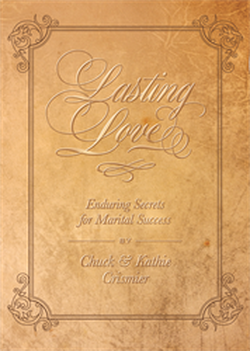
LASTING LOVE can be a dream come true. Yet love requires more than a dream or those loving feelings we so much desire.Lasting Love, Chuck and Kathie Crismier, celebrating their Golden Anniversary, unveil seven enduring secrets that will inspire and strengthen your marriage as it has theirs. COPY and PASTE this link to WATCH the TRAILER: https://www.facebook.com/Save-America-Ministries-204687919570536/videos
Past Episodes
This ministry does not have any series.
Featured Offer
LASTING LOVE can be a dream come true. Yet love requires more than a dream or those loving feelings we so much desire.Lasting Love, Chuck and Kathie Crismier, celebrating their Golden Anniversary, unveil seven enduring secrets that will inspire and strengthen your marriage as it has theirs. COPY and PASTE this link to WATCH the TRAILER: https://www.facebook.com/Save-America-Ministries-204687919570536/videos
About Save America Ministries
About Chuck Crismier
Contact Save America Ministries with Chuck Crismier
crismier@saveus.org
http://www.saveus.org/
Save America Ministries
P.O. Box 70879