
EMBARRASSED OF JESUS


How closely do you follow?
w/ Travis Johnson
Guest (Male): This is Viewpoint with attorney and author Chuck Crismier. Viewpoint is a one-hour talk show confronting the issues of America's heart and home. And now with today's edition of Viewpoint, here is Chuck Crismier.
Chuck Crismier: Does the Constitution really say what it says? Does the Bible actually mean what it says? Did God actually say what he meant and meant what he said? How about you? Today on Viewpoint, we're going to take a look at the matter of words. Why words matter.
And they do. Words matter so much that our very trust depends upon them. Our trust in our government depends upon them. Our trust in one another in marriage depends upon them. Our trust in our pastors depends upon them. But when words begin to be morphed, when words and their meanings begin to be twisted and turned and euphemized so that, in fact, we are actually undermining the very purpose for the words, then what happens? Why do words matter?
Well, from God's viewpoint, from Jesus' viewpoint, words matter tremendously. Jesus made a couple of statements concerning words that are almost never taught about, never preached about, and we can understand why. He said, "By your words you will be justified and by your words you will be condemned." By your words you will be justified and by your words you will be condemned.
How could he say such a thing? Well, it's because words are containers. They're containers of faith, they're containers of truth, they're containers of love or the opposite thereof. They're containers, like atoms are containers of many other ingredients inside them. Scientists know many of what those ingredients are, but atoms are containers, and words are like atoms. They contain.
They contain truth as an essential, but they also contain emotions that reveal the real truth behind what is being said or the lack thereof. We say that many a truth is spoken in jest, and yet we don't jest about the truth. Well, hopefully not. But we do. And when we jest about the truth, maybe we're actually having the effect of demeaning or mocking the very heart of what words are from God's perspective.
David said, "Thy word is a lamp unto my feet and a light unto my path. I will hide your word in my heart that I might not sin against you." But how about the United States Constitution, for instance? Does it really say what it meant and meant what it said? And are we to understand it and interpret it accordingly, or are we to allow cultural changes of the way we choose to look at words to change the very heart and soul or truth of what was said in the Constitution? Let me give you an illustration as we launch into the program here today.
The Fifth Amendment was ratified in 1791. It says that private property shall not be taken for public use without just compensation. At the founding of our country, public use meant what it sounds like: roads, forts, post offices, bridges, and so on. Things that the public actually walked on, drove up, defended itself with, or stepped into the doors of.
James Madison and Mason, the men who wrote these protections, were not naive about the government's hunger for citizens' land. They wrote the protection in the Fifth Amendment against takings to keep their own government from doing what King George had done in England.
But in 2005, the United States Supreme Court ruled in a case called Kelo versus City of New London that the city could take Susette Kelo's house, not for a road, not for a fort, but to hand her property to a private developer who promised tax revenue and jobs.
Here's what the court said: "Promoting economic development is a traditional and long-accepted function of government," and ruled that the city's plan unquestionably serves a public purpose. But notice the swap of words. The Constitution says a public use, but the court changed the word to a public purpose.
One word was changed. Five words on a page, ratified in 1791, were quietly read to mean something the people who ratified them would never have recognized. So, the Pfizer plant that was supposed to bring jobs to New London never even opened. Susette Kelo's pink cottage was hauled away to another lot. The land where it once stood sat empty for years, and the redefinition outlived the project that justified it.
Wow. You say, "Yeah, but, shouldn't we be able to reinterpret what was said even though we pledged our loyalty to the Constitution? Shouldn't we be able to reinterpret what was said in order to kind of morph into today's practices?" That's a question. That's on the table here today. But let's apply it in a different way, a much more important constitution called the Holy Scripture.
People today, including pastors, say, "Well, shouldn't we be able to change the application of what was said in order to conform to our more modern cultural understandings and ways that we do things and what we believe in today?" What would your answer be? The answer for most Christians today is yes, we should be able to change those things. You know how we know that's the answer? Because that's what we do. That's exactly what we do.
For instance, if Jesus said, "Thou shalt not commit adultery," and we say, "But you don't understand my marriage, but you don't understand this, but you don't understand that," you begin to get the picture. That's exactly how Satan worked in the Garden of Eden. Genesis chapter three.
He asked the question, "Hath God said?" Notice "said" implies words. In other words, did God say these words? What words? "Thou shalt not eat of the tree of the knowledge of good and evil, for in the day you eat thereof, you shall surely die." That's what Satan was asking. Did God say that?
The answer was an obvious yes, and Satan knew that. But that was not Satan's ploy. His ploy was to get Eve to rationalize or reapply the words that God had said as if they were not actual truth, but to conform them to her own predilections, her own eyesight, her own desire and hopes and dreams. And indeed she did. "You shall be like gods," and the rest is history. Words matter. But why? We talk more about that as we come.
Guest (Male): Once upon a time, children could pray and read their Bibles in school. Divorces were practically unknown, as was child abuse. In our once great America, virginity and chastity were popular virtues and homosexuality was an abomination. So what happened in just one generation? Hi, I'm Chuck Crismier and I urge you to join me daily on Viewpoint where we discuss the most challenging issues touching our hearts and homes. Could America's moral slide relate to the Fourth Commandment? Listen to Viewpoint on this radio station or anytime at saveus.org.
Welcome back to Viewpoint. I'm Chuck Crismier. We ask the question today: What is truth and why do words matter?
Chuck Crismier: Why do words matter? In 1991, Patterson and Kim, two advertising executives with the J. Walter Thompson advertising agency, published a moral portrait of the American people titled The Day America Told the Truth. Their results quantified our personal ethics, values, and beliefs as a people based upon the largest survey of private morals ever undertaken in any country on Earth.
Their goal was to probe beneath the public position of Americans, that is you and I, we the people, to see what we really believe. Well, chapter four of their book was titled "American Liars." Very strong words, aren't they? Offensive to our sensibility. Contrary to what we want others to think about us.
But Patterson and Kim's exhaustive research revealed that 91% of us lie regularly. Conscious, premeditated lies, so they concluded, "Lying has become a cultural trait in America. Lying is embedded in our national character." What a national disgrace. And it's all about words.
Lying is about using words inaccurately, inappropriately, under false pretenses, for personal agendas, and to morph and to change the meaning of words to accomplish something that we prefer. So as Patterson and Kim observed, we no longer can even tell right from wrong. We can no longer tell right from wrong. Friends, that was in 1991. Just imagine how it is today.
We've turned the morphing of truth into an art form. We've turned words into nothing but predispositions towards a particular feeling that I have at a given moment. Interestingly, The Epoch Times in a recent issue had a column by Patrick Keany called "When Language Loses Its Moral Weight." And we're not going to go into the totality of his article, but distill an essence of what he's really saying here to help us understand what we've really done to words.
He said, "A poster in a local coffee shop caught my eye. Abuse," it said, "should not be confined to physical or sexual violence. Rather, it extends into various other areas such as the technological, the financial, and the spiritual." Of course, he writes, "no one doubts that humans have ingenious ways of behaving badly."
"A spouse who monitors the family finances with ungenerous rigidity, a colleague who uses technology to exclude others from decisions, a partner who treats shared obligations with habitual carelessness may all behave badly. These are failures of judgment, character, or consideration. Such behaviors may frustrate, disappoint, or even corrode trust. But they are not, without further qualification, forms of abuse. And to name them as such is to blur distinctions that moral clarity requires."
"When everything is called abuse, the word loses its moral gravity. And when it happens, those who suffer real abuse are not better served, but quietly obscured." Then he goes on to talk about another word, the word "violence." "What was once contested in argument is now experienced as violence," he said.
The language of injury has migrated into the domain of ordinary intellectual agreement. To call words violence is not merely to intensify disapproval but to collapse an essential distinction. Violence, properly understood, involves the coercive violation of a person. Speech, even when harsh, false, or misguided, belongs to a different order. It can wound, offend, and unsettle, but equating it with violence itself confuses categories.
But that's what we do. We use words increasingly to confuse categories. Sometimes we use them euphemistically to diminish the implication or sound of the words that we don't really like. For instance, we might use the word "hate" that has changed completely over time. Now we call anything that is culturally, anything that disagrees with my particular viewpoint as hate speech.
Anything that disagrees with a particular religious stance is called hate speech. Anything that disagrees with a particular sexual proclivity is called hate speech. It's not hate speech at all. It's just a new term that's been used to try to amplify and put a more serious spin on that which is not what we're contending that it is.
And it's being done for political power. It's being done for control. It's being done to diminish the ability of anybody else to fail to accept your particular viewpoint. Anything that doesn't go along with your viewpoint then becomes hateful or hate speech, even punishable by law. You see what we've done to language? Hate really means hate. It doesn't mean dislike. It doesn't mean you disagree with something. It means you hate.
The fear of the Lord is to hate evil, the Bible says. In other words, we should hate evil, not people, but evil. We should hate evil because evil is hateful and hated by God and is contrary to all of God's creation intentions for humankind. That's why we should hate evil. The fear of the Lord is to hate evil. That's a legitimate use of the word hate.
This matter of words has really troubled me of late. It's interesting that lawyers are called wordsmiths. That's what we do. We deal with words. We try to discern the meaning of words, the application of words, whether it has to do with the Constitution, whether it has to do with contracts, whether it has to do with the Bible.
A few years before I left the practice of law, I was in the position of trying to wrap up a particular personal injury case. Actually, it was a contract case. It wasn't a personal injury case. And we were brought into the overarching judge's chambers for a settlement conference, a mandatory settlement conference before the case went to trial.
And this judge knew me pretty well. I was a frequent lawyer in his presence, in his courtroom, as I was in all of the courtrooms in that particular location. And so he brought me into his chambers, and here's what he said. It really shocked me. Remember, this is the superior court presiding judge.
He said, "Now, Charlie, you know contracts were made to be broken." It shook me. Here is a superior court judge, a supervising judge, good-natured as he was, telling me, "You know, counselor, that contracts are made to be broken?" Really? What he was actually saying without using the words was words don't matter.
And when you sign your name to words, it doesn't matter. You just are going to have to be willing to suffer the consequences if you don't obey the words. God had a very different view concerning words, concerning vows, concerning serious matters where you commit to something.
He said, "Better don't vow and not pay. Better it is that you not vow than that you vow and not pay. And don't say before the angel that you just made a mistake or an error. Don't say that because it's not true. You vowed, you stated, and you're held accountable for it."
The same is true, you see, with regard to our marriages. We enter into not a marriage contract, but a covenant. We vow before God and these witnesses until death do us part. How is it then we can so seriously and casually set aside the vows that we have made? It's because we no longer attach credibility or seriousness to the words.
Have you noticed what's happened? That's the reason why we have such a massive divorce problem ever since 1968, when Ronald Reagan, there in California as Governor, signed the no-fault divorce act. He thought he was doing something good and nice to diminish the acrimony of a divorce case.
But what he really did was facilitate the proliferation of divorce, which God says he hates. So we played games with words. Words matter, and they have consequences. That's why Jesus said by our words we will be justified and by our words we will be condemned.
When was the last time you heard that passage read or preached on in the congregation where you worship? Probably not recently, if at all. Why? Because it doesn't market well in today's culture. Words are that important? From God's viewpoint, yes, they are.
We must say what we mean and mean what we say and then are held accordingly from God's viewpoint. Now, you may have a different viewpoint, you may have a different way of looking at it, but it doesn't matter. God's viewpoint is the only one that ultimately really matters, isn't it?
That's why God says, or Jesus said, "Do not say to someone that you're a worthless human being and don't say you're a fool." Don't say those things because when you do, you are actually diminishing that which God has created in his image, and you don't have that ability and that responsibility. That's God's responsibility, not yours.
It's interesting. There's so many things in the Bible we just don't accept. We don't accept because we decided that we know better. The same is true in our culture today. Here we are on the edge of the 250th anniversary of the political birth of the country, but truth has become of such little value in our current society that it's actually become the subject of a lot of jest.
By way of illustration, not long ago I was preparing to speak to a particular group, and the master of ceremonies, as part of his introduction, knowing that I was a lawyer, set forth the following scenario as the humor for the day. He said, "A man gathered his three trusted counselors about him: his psychologist, his accountant, and his lawyer, to pose them a most profound question: What is one plus one?"
To which question the psychologist replied, "What do you feel it should be?" The accountant inquired, "What do you need it to be?" And the lawyer, in true allegiance to his client, responded, "What can we make it out to be?" Now, we can say that's sort of humorous, but pastors have now joined the ranks with the psychologist, as feelings reign supreme over truth that undergirds feelings.
The same is true with lawyers. Pastors have become like lawyers in true allegiance to their parishioners. So what do they do? They modify the implication of the word of God, parse the words, euphemize them to say something more sweetly, more nicely, so that it does not have the impact that God intended for it to have. A crusty Roman Governor Pontius Pilate stood as a judge over the land over Jesus who had brought him before him and the words of that governor continued to ring throughout history. What is truth? Jesus said, "I am truth." He said, "What is truth?" and we're asking the same question today. Words really do matter.
Guest (Male): There is so much more about Chuck Crismier and Save America Ministries on our website, saveus.org. For example, under the marriage section, God has marriage on his mind. Chuck has some great resources to strengthen your marriage. First off, a fact sheet on the state of the marital union, a fact sheet on the state of ministry marriage and morals, saveus.org. Marriage, divorce, and remarriage. What does the Bible really teach about this? Find all of this at saveus.org. Also, a letter to pastors, the Hosea project, saveus.org. And many more resources to strengthen your marriage. It's all on Chuck's website, saveus.org. Again, you can listen to Chuck's Viewpoint broadcast live and archived, Save America Ministries website at saveus.org.
Welcome back to Viewpoint. I'm Chuck Crismier. In my book, Renewing the Soul of America, chapter seven is called "Nothing But the Truth."
Chuck Crismier: Truth has been an essential ingredient of the American character. We've admired those who dared to venture out into uncharted waters and wilderness in our early life as a nation. So we admired those who dared to tell the truth. But if I would hear the truth, I have to tell the truth. If I expect to hear the truth from my leaders, I have to be willing to tell the truth myself.
And that's our problem. As Patterson and Kim, the two advertising agents for the J. Walter Thompson agency said in their book, The Day America Told the Truth, America's become a nation of liars. We don't tell the truth. So if we want to restore, if we want to restore, have any hope of restoring integrity in our country, true integrity in our country, a government we can trust, changes we can really believe in, we're going to have to start telling the truth and mean it.
We're going to have to start using words that say what we mean and mean what we say instead of trying to change things and morph them to say something else to achieve an objective. Words themselves are carriers of truth. If you go back to the book of Mark, chapter four, you find Jesus telling the parable concerning the four different kinds of ground in which the seed is planted.
Some is hard ground, some is weed-infested ground, some is rocky ground, and some is good and fertile ground. So his disciples asked him, "What is this all about? What are you trying to say?" And Jesus responded, he said, "Here is the meaning: The seed is the word." What word? The word of God.
In other words, the word of God is a seed. It produces after its kind: first the blade, then the ear, then the full corn in the ear, Jesus said. In other words, it will accomplish that which it is intended to do if it is properly sown. If it's sown on hard ground where you're not really willing to receive it, it's not going to produce much if at all.
If it's sown in weedy areas where you refuse to get the weeds out of your life, it's probably going to be taken over by the weeds. But if it's sown in good ground, then it will produce after its kind: 30, 60, and 100-fold. Words matter. God's word matters. God's word actually does matter. "Every word of God is true," the Psalmist said. He is a shield unto them that put their trust in him. Add thou not unto his words, lest he reprove you and you be found a liar.
How do we add unto the word of God? By changing the words, by changing the meaning and application of the words to conform to what we prefer them to say in our cultural milieu. That's how we do it. And we do it with great skill. Believe it or not, Jesus took real pains to address the lawyers of his day.
Now the lawyers of his day were actually religious lawyers. They weren't so much civil lawyers; they were religious lawyers. In other words, they were responsible, they dealt with the word of God, to parse the word of God, to proclaim the word of God. But here's what they did. They took the words of God and then they amplified them to say what they thought they ought to mean and to add to them in such ways as it put burdens on the people far greater than the word itself did.
Jesus said, "You're putting upon people burdens that they cannot bear." The lawyers did it. Lawyers do that to this very day. Sometimes they add to the burden, sometimes they take it away. And we have it done in our churches today. Theologians and pastors serve as lawyers, not over civil matters but over spiritual matters.
And they parse the words of truth in order to make the people feel better toward them, or in order to try to market the gospel, which actually is only formed in the word of truth. But they modify the truth in such ways as to try to make the truth more sellable. The truth is not for sale. Truth is not for sale. It's either for receiving or rejecting, but it's not for sale.
Words matter, and words contain truth. Jesus said in Mark chapter four, he said, "The word is the seed" or "the seed is the word." He also said that the ground upon which the seed is planted is the heart. So words connect with our hearts. That's why Jesus said out of the abundance of the heart the mouth speaks.
He's talking about words. Words that come out of the heart. The heart is the ground for which words are conceived, used, and spread abroad. When we speak, we are actually speaking seeds. The seed of truth from the word of God, or other kinds of seeds that we desire, that we prefer, that we want to modify to make easier for people to receive or whatever.
But truth is truth. It is what it is. And it's not to be modified. It's just not to be modified. I looked up this matter of truth, just asked the question of the famous moderator of all truth, Google. Truth is fundamentally defined as the conformity of statements, beliefs, or thoughts with reality and actual facts. From whose viewpoint? God's viewpoint.
It represents the way things actually are rather than how they are imagined or desired to be. While often objective and independent of personal opinion, it can also encompass personal subjective experiences. That becomes a person's view of truth. One might say, "Well, that's my truth because this is the experience that I had."
But objective truth is independent of belief, while subjective truth relates to personal experiences and feelings. What we have done is defaulted from objective truth in favor of subjective truth in America. And that's led to all kinds of problems. Historical truths are no longer truths but are redefined.
I bought a couple of magazines this last week concerning our nation and the 250th celebration and the Constitution and so on. Interestingly, as I read through, historical truths were modified. Why? Because the writer of these various pieces in the magazines had a different viewpoint that they wanted to communicate. It was a narrative that they wanted to communicate rather than actual truth.
Truth contrasts with falsehood, which represents a failure to align with reality. It's an essential, enduring concept in human inquiry, law, and daily life, essential for forming accurate knowledge. This is the problem with science, friends. Science is the pursuit of truth, but it isn't truth. It may obtain certain truths, laws, for instance, the law of thermodynamics and so on.
But in and of itself, science is not truth. It contains theories that are gained from certain observations and then are tried to be tested out, but if they can't truly be tested, they remain untruths; they're just theories, opinions. But they're presented as truth because it's science. That actually, friends, becomes scientism, a belief system. It's very deceptive. I write about that in my book, Seduction of the Saints. It can be very deceptive.
We have to be lovers of truth, not lovers of opinions, not lovers of pseudo-authorities. Science itself is not an authority. Science is a pursuit. It's a system of trying to discover certain laws of nature, truths about nature. But even evolution itself, you see, is still just a theory. Just a theory. And a reality, if scientists are honest, they admit it. They admit it.
But they can't bring themselves to admit it because then it makes them look bad, so they have to present it as truth. But it's not truth until proven false. It only becomes truth when proven to be true. Let's understand the difference, and words matter.
Guest (Male): Have you ever considered what the early church was like? Many people are developing a heart longing for a greater fulfillment in our practices as Christians. A recent study showed 53,000 people a week are leaving the back door of America's churches in frustration. What is going on? Why has there not been even a 1% gain among followers of Christ in the last 25 years? Could it be that God is seeking to restore first century Christianity for the 21st century? Jesus said, "I'll build my church." Is Christ by his Spirit stirring to prepare the church for the 21st century? The early church prayed together and broke bread from house to house. They were family, and it was said by all who observed, "Behold how they love one another." Incredible. But the same can be found right now. Go to saveus.org and click Sell Church. We can revive first century Christianity for the 21st century. It's about people, not programs. It's about a body, not a building. That's saveus.org. Click Sell Church.
Welcome back to Viewpoint. I'm Chuck Crismier.
Chuck Crismier: The truth about creation is that in the beginning God created Heaven and Earth. How did he do that? By the word of God. The Heavens and the Earth were created by the word of God so that things which ultimately appeared were made with things that did not then appear. The word of God.
Words are creative. They are. And God knew that. And he wants us to understand how important words are. Then, in the fullness of time, he sent forth his only begotten Son, full of not only grace and truth, but he was called the Word of God. The Word made flesh. Then again in Revelation chapter 19, he's returning again on a white horse to speak in lordship and take dominion over the nations. How is he going to do that? With the word of his mouth. Read it in Revelation chapter 19.
Words matter from God's viewpoint, and they need to matter from our viewpoint too. If our nation is to be respected in the world, our words must matter. The words of each one of us in our households, in our marriages, in our businesses, have to matter. How we deal with the IRS has to matter. Am I representing the truth concerning my deductions, concerning my income and so on? It all begins at home. Words matter.
To tell or not tell the truth is the question. To tell the truth I must know the truth. In matters of fact or principle, only one truth exists. Truth about facts or principles has nothing to do with my feelings, goals, needs, or wants. It is just what it is: truth.
Now I want to make available to you my book, Renewing the Soul of America: One Person At A Time, Beginning With You. This book helps us to understand so many, many things about our country, what went good and right in the beginning and what has gone wrong and what we can do about it. And it all comes back to you and me. That's why 38 national Christian leaders endorse this book, because they saw this book as radically different than anything else out there, that it really contained the answers that would bring about the renewing of the soul of America, the mind and heart and emotions.
$15 will put it in your hands. It's on our website, saveus.org. Give us a call, 1-800-SAVE-USA, or write to us at Save America Ministries, P.O. Box 70879, Richmond, Virginia 23255, writing a check at $16 for postage and handling. Again, there's an entire chapter called "Nothing But the Truth." Our Sacred Honor, The Lamp of Virtue, Take Courage, so many of these chapters, Semper Fi: Always Faithful. These are chapters that help us to get a grip on who we are as a people. A matter of principle, restoring the American vision, and so on.
Thomas Jefferson, our third President and the drafter of our Declaration of Independence, reflected saying this, quote, "Honesty is the first chapter in the book of wisdom," unquote. Shakespeare said, "No legacy is so rich as honesty." So to tell the truth, I have to tell the truth.
And there's a standard for truth. It depends on words. Our words will communicate whether we embrace truth or not. Without a standard, there is no truth. Truth becomes whatever I want it to be, whatever suits my private purposes at a given moment. Truth can be measured or evaluated only against an objective standard. And our founding fathers held high the standard for truth. You know what it was? The Bible, believe it or not, as the expression of an all-knowing and loving creator to his creation.
It was their final authority. It was the foundation for freedom. Upon that standard, they found this nation of freedom. Even Benjamin Franklin, who wasn't exactly a Christian, said, "He who shall introduce into public affairs the principles of primitive Christianity will change the face of the world." Truth and freedom are just completely inseparable.
Our founders embraced the words of Christ. What were they? "If you continue in my word, you shall know the truth and the truth shall make you free." So, have you embraced the truth of your creator? Not just that God is a creator and that Christ actually was the one who created the worlds through the words of his mouth, which the Bible says, but do you actually embrace all the truths of your creator?
It's one thing to believe that God created; it's another thing to believe in the God who created and to believe the God who created. See, our problem today is not so much whether we believe in God or not. Almost everybody believes in God in some way.
Our problem is we just don't believe him. We don't take him at his word because we think our words and our wills can supersede in some way what he has said. That's how Satan got Eve in the garden, friends, and his methodology has never had to change because it's so effective. "Hath God said?" And we respond, "Yes, but."
We're full of "yes, buts." In other words, our own words to modify or morph what God has said. We look at the wars that go on periodically concerning the Constitution. What are they really about? They're not really about what the Constitution says; they're about what we want it to say. That's what the wars are about. And that's why the Supreme Court has a difficult job because it serves in a culture that it knows what the people want. And the people are divided 50/50.
Some want closer to what the Constitution actually says because it aligns more with what God has said. Other people, half the nation, don't want that message; they want a different message. They want it to say what they want it to say, which is mostly contrary to what God has said.
Friends, that's how we got Roe versus Wade in 1973. Roe versus Wade did not come about because of an honest appraisal of the Constitution. It had nothing to do with the Constitution. They made up the response to Roe versus Wade out of whole cloth. In other words, nothing was based really in the Constitution, no constitutional basis.
And that's why it was recognized for all these years since 1973 that ultimately it would be overturned because it was not constitutional. The very ruling of the Supreme Court itself was not constitutional. And ultimately it was deemed to be not constitutional. The same is true what happened in 1947. In 1947, the then Supreme Court ruled that there was a separation of church and state. There's nothing in the Constitution to say such a thing. Nothing. And they knew it. But they nevertheless ruled that there was a separation of church and state in the Constitution.
It was an unconstitutional ruling on the Constitution because words matter and they ignored them because they sensed that the culture was moving away from the authority of God and his word in the culture. The same is true with the ruling that took place concerning homosexual marriage. You remember, down in Texas a few years ago?
That ruling had nothing whatsoever to do with the Constitution or anything in the Constitution. It was made up out of whole cloth to try to conform to the spirit of the age in the culture. In other words, they prevented the Constitution from doing its job to guard against the very things that it was intended to do and protect the country from the very thing that the court did to conform to the ways of the culture.
Therefore, it is now believed that that decision will also be overturned as unconstitutional because it twisted the words of the Constitution into something that didn't exist. This is the battle that we have, friends. And we're doing exactly the same thing with the word of God.
That's how we've ended up with serial adultery in the body of Christ, the proliferation of divorce, even the advancement of homosexuality in the church, and transgenderism even. All of these things have happened because we decided to twist the words of God to suit our own culture predilections and try to make people feel better. God didn't give his word to make us feel better. He gave us his word to cleanse us from all sin so that we would be better. In other words, we would be righteous.
Truth and freedom are inseparable. Our founders embraced the word of Christ. So what truth do we embrace? Can you build a life upon it? Can you rebuild a nation upon it? Do you even care? When I served as a trial lawyer, every witness that I called to testify was required to give an oath, which I have changed from the word "oath" to "promise" to meet the objections of those who do not believe that it's appropriate to take an oath.
The court reporter would address the witness and say, "Will you now stand before God, before your children, before grandchildren, your spouse, your business associate, the IRS, your parishioners, and your fellow Americans and repeat after me: I do now solemnly swear or promise to tell the truth, the whole truth, and nothing but the truth, so help me God." Now, the part concerning standing before God, the children, grandchildren, your spouse, and IRS and so on, I added that in there so that we would understand that in effect, you and I are solemnly swearing as American Christians exactly to do that.
We will stand now before God, before our kids, grandkids, your spouse, your business associates, the IRS, your parishioners, and your fellow Americans and repeat, "I do now solemnly promise to tell the truth, the whole truth, and nothing but the truth, so help me God." Would you do that? This is how you apply the word of God.
You don't apply the word of God just by reading it. The future of our kids depends upon your commitment and mine to truth, to the words of our mouths. As the scripture says, "May the words of my mouth and the meditation of my heart be acceptable in your sight, oh Lord, my strength and my redeemer." The words of my mouth and the meditation of my heart.
See, you can have words that are inconsistent with the meditation of your heart. So, do we care for our country? Do you care enough to tell the truth, the whole truth, nothing but the truth? Our example of truthfulness is the key to restoring the glory, prosperity, and blessing of our land. It's also the key to renewing the soul of our country.
And may God, through truth and our words lived out in your life, bless America. And may his truth march on in your boots and mine through our words. Thanks for joining us here on Viewpoint today. I hope this has been helpful, maybe a little challenging. It's okay. That's what God's word is for. Renewing the soul of America. Get a copy of the book, $15 on our website, saveus.org. It will be very encouraging to you, uplifting, and help you to get a new vision for the 250th annual celebration of our birth. God bless you and God bless America.
Guest (Male): You've been listening to Viewpoint with Chuck Crismier. Viewpoint is supported by the faithful gifts of our listeners. Let me urge you to become a partner with Chuck as a voice to the church, declaring vision for the nation. Join us again next time on Viewpoint as we confront the issues of America's heart and home.
Featured Offer
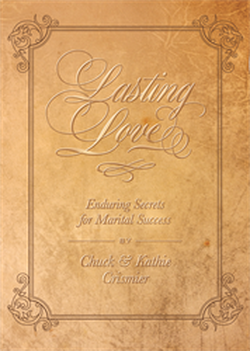
LASTING LOVE can be a dream come true. Yet love requires more than a dream or those loving feelings we so much desire.Lasting Love, Chuck and Kathie Crismier, celebrating their Golden Anniversary, unveil seven enduring secrets that will inspire and strengthen your marriage as it has theirs. COPY and PASTE this link to WATCH the TRAILER: https://www.facebook.com/Save-America-Ministries-204687919570536/videos
Past Episodes
This ministry does not have any series.
Featured Offer
LASTING LOVE can be a dream come true. Yet love requires more than a dream or those loving feelings we so much desire.Lasting Love, Chuck and Kathie Crismier, celebrating their Golden Anniversary, unveil seven enduring secrets that will inspire and strengthen your marriage as it has theirs. COPY and PASTE this link to WATCH the TRAILER: https://www.facebook.com/Save-America-Ministries-204687919570536/videos
About Save America Ministries
About Chuck Crismier
Contact Save America Ministries with Chuck Crismier
crismier@saveus.org
http://www.saveus.org/
Save America Ministries
P.O. Box 70879