

DECONSTRUCTION IS DANGEROUS


How reactive feelings undermine faith
Chuck Crismier: We're either constructing, retaining, and rebuilding or deconstructing. Today on Viewpoint, we take a look at the deconstruction of faith. We're talking about the deconstruction movement that's been taking place over the past 10 to 15 years and is continuing its march through professing Christianity in the United States of America and perhaps around the world. There are many reasons why Christians, people are deconstructing their faith. There are those who have been leading actual missions to deconstruct people's faith, taking and charging fees for joining groups in order to help with the deconstructing of their faith.
Why would anybody want to do that? Why is it that Generation Z and the Millennials have been so heavily involved in it? And why is it that their parents and grandparents actually facilitated the reasons why Millennials and Generation Z are deconstructing? All of that here on Viewpoint, and I'm so glad that you've joined us. It's conversation as always confronting the deepest issues of America's heart and home. And this is one of those.
A writer says, many years ago, my Christian beliefs were challenged intellectually by a progressive Christian pastor. It threw me into deconstruction that took several years to fully come out of. I found out later that he himself had already deconstructed and had hoped to propel his congregation into deconstruction so he could convert them to progressive Christianity. And he was very good at it. In fact, he was almost totally successful and it took me and my friends years to come out of it, that is, those of us who did.
As of today, we're told that there are about 300,000 posts on Instagram utilizing the hashtag #deconstruction. The vast majority are from people who have deconverted from Christianity, become progressive Christians, embrace same-sex marriage and relationships, rejected core historic doctrines of the faith, or are on a mission to crush what they call white Christian patriarchy. Online, there are countless deconstruction therapy and counseling sites which will facilitate your deconstruction and reconstruct you with mindfulness or the contemplative practices that progressive Christians favor, like Richard Rohr.
Then there are conferences for you to attend to be taught how to break free from toxic religion, to reject Christian dogma, and learn to embrace what basically adds up to almost kind of a warmed-over Buddhism. So what is this deconstruction anyway? Over the past year or so, it's become common for Christian leaders to refer to deconstruction as something potentially positive. One writer said, when I first heard that take, I thought, hmm, that could work. Just deconstruct the false beliefs and line up to what you believe was Scripture. Well, that was operating from the foundation of belief that objective truth exists and can be known.
But, said the writer, as I continued to study the movement, that understanding of deconstruction became untenable. The fact deconstruction has little to do with objective truth and everything to do with tearing down whatever doctrine someone believes is morally wrong. And that's because the way the word is most often used in the deconstruction movement has little to do with objective truth and everything to do with tearing down whatever doctrine someone believes is morally wrong. Take for example, a woman by the name of Melissa Stewart, a former Christian, now agnostic atheist with a TikTok following of more than 200,000 people.
She describes how lonely or isolated she felt during her deconstruction and how discovering the #exevangelical opened up a whole new world of voices who related to what she was going through. So her TikTok platform now gives her the opportunity to create that type of space for others. So she is commenting now on the deconstruction movement through an ex-evangelical podcast. So all of this is happening, friends, and you may not even be aware of it. But there are many that are becoming aware of it. In fact, your own young people may be aware of it and may actually be affected by it.
So here on Viewpoint today, we're going to take a clear look at this and then from that, we're going to see how it fits the whole idea of overcoming. What is it that has to be overcome? Is the deconstruction movement and the tendency, the attitudes, the feelings, the openness toward deconstruction of faith, actually a resistance to the whole idea that we have to be overcomers? Just recently, I had a conversation in an interview which kind of gave the feeling like, well, why should we be overcomers?
What in the world would it be to be an overcomer if we confessed and believed in Jesus Christ 30 years ago? And I mean, what is there to overcome? Aren't we saved? Aren't we on the way? Why do we have to overcome anything? And then they become confused. And then they say, well, if I'm not already in, then I'm going to go out. I'm going to leave, I'm going to deconstruct, I'm going to get out of here, I'm going to form my own religious beliefs, I'm going to form my own way to heaven if there is one.
So this situation really hits the nail on the head. Deconstruction is not about getting your theology right. In fact, the word itself is built upon what they call postmodernism and carries the baggage of moral relativism. For instance, if your church says a woman can't be a pastor, the virtuous thing to do would be to leave that church and deconstruct out of that toxic and oppressive doctrine. But deconstructionists may say they are simply rejecting cultural beliefs that have become entangled with Christianity. But these so-called cultural beliefs often include doctrines like the substitution atonement and biblical marriage.
But deconstructionists don't regard Scripture as being the final authority for morality and theology. They appeal primarily to science, culture, psychology, sociology, and history. So now this whole thing is kind of exploding that portrays even Martin Luther and even Jesus himself as a deconstructionist. Unbelievable. Well, Martin Luther tried to reform the Catholic Church to get back to Scripture. Jesus is the word made flesh, but he didn't come to deconstruct the Bible. In fact, he said, I am the way, the truth, and the life.
In fact, he is called the word of God, not a word from God, the word of God in human flesh. So today on Viewpoint, we take a closer look at this matter of deconstruction and the whole world may seem so confused. And yet it reflects a world in which people who profess to be followers of Jesus Christ are exceedingly confused. And if they're confused, then are they true believers? Have they ever been true believers? Some would say no. But then others say the idea that people who have deconstructed never had trusted Jesus is absolutely false. They did, but something came in to intervene and caused them to deconstruct. We'll be back.
Do you have any children or grandchildren or do you know of anybody, a friend, a relative, a neighbor of some who has a child or a grandchild who has, say, gone to college or university, even a Christian college and university, and when they came back, they seem like a completely different person? All the beliefs that they seemed to have when they went have been deconstructed and sometimes reconstructed, and you hardly even recognize the person when they come back. And you find out, well, I don't even know how to have a conversation with this person.
It's like there's no unity of mind and heart anymore. They've gone off into a different world. What has happened here? My wife has explained this conversation with so many women in various women's groups as she is involved in prayer groups and Bible studies and so on. She says, "You know what, Chuck, this seems to be a very common thing among women." Their kids and their grandkids have become, well, somebody might call them spaced out. But it's not an issue of drugs. It's an issue of something has radically changed.
Not radically changed in being converted to Christ in a way from something else, but actually deconstructing, moving away from the faith once delivered to the saints. How could such a thing be? But it is. It has been generally called deconstruction. Whatever name you want to attach to it, we'll call it deconstruction for today. And so today, we continue a look at that. Another article says, "When I, years ago, my Christian beliefs were challenged intellectually by a progressive Christian pastor." Wow, a progressive Christian pastor. Is there such a thing?
What is a progressive Christian pastor? Is he a Christian? What makes him Christian? If he's progressive, what does that mean? Does it mean that he doesn't believe in the faith once delivered to the saints? Does it mean he doesn't really believe in the authority of Scripture? Well, indeed, that is what it means. Progressive means you progress beyond the authority of Scripture and the idea of absolute truth. Now it's fascinating when we go back about 10-15 years, the studies that were being done by George Barna, a pollster of the church, and some other pollsters were finding that among Christian young people, and this would have been back when the Millennials were young, that fewer than 9% of them, fewer than 9% of them believed in absolute truth.
Yet they called themselves Christians. Now how is that possible? If Jesus Christ is the way, the truth, and the life and you believe that, then what did it mean to become a Christian? And if you're becoming a Christian, then what does that mean? What does it imply? I was challenged about this on the radio, not on my program, but another program just yesterday. "Well, if I became a Christian, then if you say we need to be an overcomer, and Jesus says we need to be an overcomer, why do we need to overcome anything? We're already there. So what's the big deal? Are you saying that we're not Christians?"
No. What does it mean to be a Christian? Somebody asked the question, "Well, let's say that you've lived your whole life as a pagan. Maybe you're a young person, maybe you're older. And you lived your whole life outside the realm of Christ. You become a Christian and you're a new babe in Christ. Now what? Are you saying such a person has to become an overcomer?" Absolutely. Everybody has something to overcome. And no matter how long you've been walking with the Lord, you have something to overcome. Why? Because you still live in the cesspool of the world and the culture around you.
And a major part of that which must be overcome is the ways of the world and the winning nature of the world. Also, you walk in the flesh. You have a body and you were born in sin. In sin did your mother conceive you, the Bible says. And so even though we're born again, or that is, we have made the decision to follow Jesus Christ and to receive his forgiveness for the sin that we have committed up till then, he's faithful and just to forgive it. And he does because of his mercy. He does not desire that none should perish and all should come to repentance.
But now what does he expect? Is that it? No, that's not it, because we still live in a fallen world. And because we live in a fallen world, we're prone to be fallen. And it's that proneness to be fallen that we have to overcome. So we overcome what? We overcome the world, we overcome the flesh, which drives us into all kinds of things that we shouldn't be involved in, like sexual promiscuity, like stealing, like cheating on our income taxes, all kinds of things. And then, of course, we have the devil.
We have the devil who is a deceiver and he uses—he actually assists you to commit yourself and yield to the world and the flesh. Because the devil never makes you do anything. The devil doesn't make us do anything, but he certainly creates the avenue through which we can be and are deceived. And that's why he's called a deceiver. He's called a liar, the father of lies. That's who he is. And that's what he did in the Garden of Eden. Remember, in the Garden of Eden what he did? He used the Scripture to deceive.
He asked Eve, the wife of Adam, who was created by God and who had received a word from God that of the tree in this garden, you may eat, but you may not eat of the tree of the knowledge of good and evil, for in the day you eat thereof, you shall surely die. She heard that from her husband that God gave her to be her covering, to be her spiritual leader, to be her protector, to wash her with the water of the word, so to speak. So Satan comes along and he doesn't go to Adam. He went to Eve.
Why did he go to Eve? Because she was more susceptible because of the flesh, more susceptible to yield to his seduction. So he asked her the question, "Hath God said?" It's a very simple question. "Hath God said that you should not eat of the tree of the knowledge?" "Yes," she said, "That's true. He did. He said, 'Don't eat it.'" So you would think that would be the end of the story. But it wasn't because Satan had a reason for using the Scripture. He got her to affirm the Scripture and then put an alternative reason upon it why God said it.
He didn't say God didn't say it. He didn't attack Scripture in that way. That would have been too obvious. So he said, "But the reason God said it was that he knew that you would be just like him knowing good and evil. So hey, this is a good thing, Eve. Now that you know how important that tree was and why God said that, hey, you certainly are going to want to eat of this tree." And it all looked good to her. She looked and the fruit looked great. It was very enticing. In fact, her eyes were open. She saw, she looked, and that's what happens. Our eye gates get us in trouble, right?
And our ear gates get us in trouble. Sometimes our smell gates, but normally it's our eyes and our ears get us in trouble. And they're drawn into something else. We're drawn away from the truth and we embrace deception or a lie unwittingly, so to speak. It's almost as if we didn't really believe that, but we did. So nobody is really deceived against their will. Nobody. Eve wasn't deceived against her will. Adam wasn't deceived against his will because he knew exactly what God said. In fact, the Scripture says Adam wasn't even deceived. He just rebelled.
He just agreed with his wife, knew what God had said, and it didn't matter. He deconstructed the faith from the get-go. Eve deconstructed the faith through the help of Satan, the deceiver, and the rest is history, what you and I have to deal with. Our kids are dealing with it now. And if we're on the near edge of the second coming, we have to believe and should believe that these attacks are going to become ever more increasing, greater, more insidious, and that's what the deconstruction movement is all about. That's what it's all about, friends.
By the way, if you don't have a copy of my book, "The Power to Overcome: How to Triumph in Troubled Times," you need to get it ASAP. This is the moment of truth. This is the moment that we're in. And even as I've been discussing this with other talk show hosts and so on, I discover how difficult it is for many of them to realize how serious this problem is because they don't want to deal with it. It doesn't make people feel good. It's not about feelings, friend, it's about our faith. And if we rely upon our feelings, we are in effect just reiterating Eve's seduction in the garden.
We become Eve. And that's one of the major problems of our time. So let's take a further look at this matter of deconstruction. What is it? Well, if you were to ask the infinite wisdom of AI or Google or whatever, they're going to tell you it's taking part and rebuilding the religious beliefs, doctrines, and cultural practices that were learned earlier in your life. That's what it is. And it's popularized through social media, through podcasts, and the so-called ex-evangelical movement. In other words, getting out of the evangelical church, out of the evangelical belief system, out of the evangelical movement.
In fact, what it really is is getting out of genuine Bible belief. That's what it is because the evangelical movement in this sense of the word means believing the Bible as absolute truth and then responsive to what it says. But they don't like that. They don't like that idea. "No, I'm my own person. I want to believe what I want to believe and what makes me feel better at the moment. So don't tell me that I have to believe this, that, or the other. No, I'm going to believe what I feel I should believe." Notice the lordship of feelings then.
But look how your feelings change. I mean, let's be realistic. Men's feelings change from time to time. Look how easy it is for a man's eye gate to grab his attention and his feelings if he sees a beautiful woman. Look what happens to him. God created man with eyes that perceive those kinds of things and instantly there are certain kinds of feelings that result. That's why pornography is so powerful and successful. That's what it works on. Consider a woman. A woman has a period once a month. During that period, her feelings change.
To some, it almost seems like she's becoming another person, kind of out of herself, so to speak. The hormones change, the feelings change. So if we allow our feelings to govern us, there's really no hope for an anchor for our soul. We're going to be in moral and spiritual and emotional chaos. And the deconstruction movement plays upon that. Plays upon the idea that, "You know what, we're not real happy with the way things are going and I just don't feel comfortable." Or how about this?
"You know, I can't get enough money together to buy a house. I really wanted to buy a house and I can't seem to get enough money together to buy a house. So I asked the Lord to give me enough money within the next six months to buy a house and it didn't happen. Therefore, I can't trust God and I'm going to walk away and I'm going to deconstruct my faith." That's the thinking, friends. Don't question it. I've heard it directly from people's mouths. Young people, that's how they think, many of them that is. So what are some of the causes of deconstruction? We'll look at that when we get back. Stay tuned. This is Viewpoint.
Make sure, friends, you get a copy of "The Power to Overcome." Don't delay, just get it done and begin to read it one chapter at a time and just think about it, ponder it, ask the Lord what he would have you to learn from it. It's so practical. It's not overpowering. My wife, who has a much different personality than I, says, "Chuck, this is so wonderful. It's so encouraging. You're just helping us along so that we can be and become the people that God wants us to be and not get caught up with the things that tear us away."
"The Power to Overcome: How to Triumph in Troubled Times." $25 will put the book in your hands. It's on our website, saveus.org. You can give us a call at 1-800-SAVE-USA, 1-800-SAVE-USA, or write to us at Save America Ministries, PO Box 70879, Richmond, Virginia, 23255, writing a check as $6 for postage and handling. Okay, now we want to delve a little bit deeper into this matter of deconstruction. And I hope you just stay with us here because this is a much bigger issue than you might imagine. It really is.
And our young people, and I say young people, I don't mean just teenagers, I'm talking about those who are Generation Z, I'm talking about Millennials in particular, but even their parents. Even their parents have taken the lead in deconstruction. The parents, in fact, and let me be real honest about this, if we want to find out where all of this began in modern culture, it began in the 1960s. I call it the great truthquake. The entire largest generation in American history called the baby boomer generation, that were then tantamount to the Millennials and Generation Z of our time today.
That's who they were. They were born in 1946, right after the end of World War II. And they became the hippies of the 1960s. Now what were the hippies? The hippies were a group, it was a cultural—man, how do we even describe it—a cultural invasion, a spirit that took over the Western world and particularly in America, from coast to coast. People began to deconstruct their clothing, deconstruct their wares, deconstruct their hair, deconstruct everything that seemed to resemble anything that had previously been experienced and to throw it all away, including truth, including the idea of biblical truth.
And so you had what came out of that was the sexual revolution. It was a—what happened there was a complete rebellion against authority: God's authority, man's authority, government authority, parental authority, and yes, biblical authority. That's what the hippie movement was about and the baby boomer generation were the leaders of it. Those are the people that then took over the educational system in our country. How do I know that? Because even though I was one year removed from that generation, I still was in effect part of it. And I watched it as it made its way through our culture in Southern California and across the world, across the whole country.
It was like a plague that had hit the country. Then that group of people had children. Their children were called Generation X. Now why were they called Generation X? Well, because in effect they were x-ed out of the family. They didn't have a clue about anything. They were—it was like they were cast off. They were like a boat that was sent out into the river without any anchor, just float around because the parents had no anchor. Their parents had given up every anchor to reality. So that's what they inherited.
Then they had kids. That became Generation Y, the Millennials. Well, guess what would happen with the Millennials? They were invested and affected, infected by the very same spirit that was inherited by their parents from the baby boomers. Listen, my friends, I've lived through it all, every single year of it, and watched it from coast to coast. This is exactly how it happened. And the very same thing happened in the church, beginning in Southern California. That's where it started right there in Pasadena, California, where I practiced law for 20 years, where I lived for 30 years.
And I watched the entire pattern develop. The church growth movement was the religious expression of deconstruction, the initial efforts at deconstruction in the body of Christ. They just didn't call it that. They called it the "God is love" movement. So the God of the Bible, who was the God of truth and the God of justice and judgment in addition to being the God of love, was rejected in favor of just a God of love and kindness and mercy. So we taught a false gospel. We only taught a half a God, a half a gospel, a half a God.
And so we misrepresented the gospel and why did we do it? To grow churches, that's why we did it. We did it to grow churches, big churches, and that's how the megachurch movement began, the deconstructing of the faith. Now nobody saw it that way. They didn't really think of it that way, but that's what it was. In fact, Robert Schuller, Dr. Robert Schuller, who was at the very heart of it all, the leader right there in Southern California, bringing thousands and thousands of pastors to come in every year to be discipled into his church growth vision, wrote a book.
And in that book he says, "Look, it is abuse to tell people they're sinners," which is the very heart of the gospel and why the gospel's needed: because of sin, because the wages of sin are death, but the gift of God is eternal life through Jesus Christ our Lord. He said, "No, that doesn't market well. You can't sell that to people. What they really need is more self-esteem. In other words, they need to feel better about themselves. So tell them how to feel better." And that became the religion, the marketing Christianity of the 1970s and 1980s.
But then it was deemed to be not sufficient, not sufficient marketing because too many people said, "I still don't want that. I still don't want what you're selling here." So they developed the seeker-sensitive movement. That was the church growth movement on steroids. So again, there was a complete change in the church across America gradually, incrementally. It did not matter what denomination you were part of. It affected every denomination, every church in America. The spirit of it is what infected the church. And it resulted in a progressive deconstruction of the faith and we didn't even realize what hit us.
Because the kids that were coming up, the Millennial generation that was coming up and being indoctrinated by the church growth movement and by the seeker-sensitive movement, that's all they knew. That's all they knew. They didn't know anything else. They didn't know biblical authority. They didn't know that God was something other than just a God of love and mercy, that he was also a God of truth and to be obeyed, not just okayed. And then, of course, you got Generation Z at the end of it here. Wow, I feel sorry for Generation Z. What they have inherited is awful.
One Christian leader back in the 1970s said, "You know what, what parents allow in one generation will be doubled and tripled in the next generation." And that's exactly what happened. So what's happening today? This whole deconstruction thing is a echoing reflection of what happened in the 1960s all over the world. Now that having been said, I think it should help us to understand this isn't just a problem with people facing paganism. No, friends, this occurred in the heart of professing Christianity. Not just the so-called mainline churches. No.
In fact, the churches that have been most participant in the church growth movement and the seeker-sensitive movement have been the so-called evangelical churches. God's warmest audience has become like the Laodicean church. And God is knocking at the door. He said, "Is there anybody in there who will hear my voice, who cares about me as the word, the will, the truth, and the life? Anybody anymore? Or are you just lordship of your feelings and using me as a mascot?" That's the picture of the Book of Revelation, Chapter 3, the church at Laodicea. We are that church. No question about it.
Now when we get back, we're going to go and look at some of the causes of deconstruction other than the one we just talked about. If we don't understand how these things happen and that we have been caught in the midst of this maelstrom of disbelief, unbelief that's been sold to us in the name of Christianity, we'll never get it. How do we get our hands—have you ever considered what it would be like to try to nail Jell-O to a wall? That's what it's like to try to describe in detail what deconstruction is like because it takes so many different forms.
And in different people's lives, it may be the result of different thinking, different ways that was leading to this so-called process of deconstructing in a person's life. But the common causes of deconstruction are like religious trauma, where somebody experiences or witnesses spiritual abuse or hypocrisy or toxic environments within a church leadership. So they react to it. Instead of embracing the fullness of truth, they just react to their experience. And so instead of bringing correction in your own life to what you see as abuse taking place elsewhere or hypocrisy, instead of being, "I'm not going to be hypocritic," instead people turn against those who are hypocritical or conducting themselves wrongly and say, "I don't want any part of that."
Friends, when you do that, what you're basically saying, "I don't want to be a Christian like that." Well, that's fine. That's a good thing. But you shouldn't deconstruct the whole faith just because you don't want to be a Christian like a hypocrite. No. What's the remedy? Don't be a hypocrite, which means you have to exercise the power to overcome when others are not. That's why you need the power to overcome and the Holy Spirit gives us the power to overcome, but we have to exercise it. It's there and it's available. He gives it to us.
And even as I wrote the book, "The Power to Overcome," it is a tool, it's a means of helping people come to grips with what they're struggling with against the world, the flesh, and the devil. How to get a handle on this and live victoriously. That's what the book is about. And every single one of us is facing these challenges, including yours truly. Every single one of us on this planet. I don't care what pastor you look to, he's facing this challenge. I don't care how popular you think he is. I don't care how wonderful you think he is. He's facing these challenges.
Let me give you an idea. In my book, "The Power to Overcome," in the section dealing with the devil, I talk about how so many places in our country are called after the devil. In fact, there's not one place that I know of in the whole country—no garden, no forest, no mountain, no tree, no nothing—is called by the name of the Lord. None. The closest to it is in Colorado, a place called the Garden of the Gods. Everything else is called after the devil. You'll be fascinated when you read the book. And there's a reason for that.
There's a place in Southern California called Mount Baldy. It's a 10,000-foot peak in Southern California, in the San Gabriel Mountains, or yeah, I think it's San Gabriel Mountains or San Bernardino Mountains. It's called Mount Baldy because it's not a peaked peak, it's a rounded peak. So in the summer and fall, it is bald. But in the wintertime when the snow falls, it becomes gorgeously beautiful. And that's when I chose to climb it. I didn't want to climb it during the summer. I didn't want to climb it during the spring.
I wanted to climb it during the winter. Why? Because it's so gorgeous and so beautiful, very, very worthwhile. And so numerous times with a friend of mine, we would climb Mount Baldy: 10,000 feet. And you get to within about a quarter of a mile of the summit and stretching out before you is a narrow ridge, and by narrow ridge I mean comparatively speaking, it's maybe three to five feet wide. Three to five feet wide. So it's not particularly dangerous in and of itself. But it's a narrow ridge because everything else is like Baldy. Okay, so you have to traverse this narrow ridge that is about maybe 300 or 400 yards long.
In the wintertime, that ridge is covered with snow. And because it's at high altitude, the winds pick up the snow and blow it in the most amazing beautiful forms over that ridge and it almost looks like whipped cream forming what they call cornices. Now cornices, as beautiful as they are, are terrifyingly dangerous because they have no support under them. The snow whips up like whipped cream over that edge and it blows out—it can go over several feet, five, six, seven feet out and it's just fantastic to look at.
And people don't realize how dangerous it is. And it has been said that that has become one of the most dangerous mountains in America, not one of the most difficult mountains but one of the most dangerous. You know what they call that 300 or 400 yard space of that narrow ridge? It's called the Devil's Backbone. Now you can see why. It claims so many lives unsuspectingly, the Devil's Backbone. Now on either side of that ridge is a 2,000-foot drop-off. 2,000 feet. So you look down, you can see way off on the right, way off on the left.
It's a gorgeous place. But it's also profoundly dangerous if you don't understand the danger of—or the treachery that awaits you on the Devil's Backbone in winter. So here is my application. I want you to think very strongly about this. In a period of a year and a half, 13 major ministries, the pastors, revered pastors in America, some of the most revered in the world, collapsed on the Devil's Backbone. Their ministries fell apart on the Devil's Backbone. You say, "How so? Did they go up to Mount Baldy?" No, they didn't go up to Mount Baldy. They didn't have to.
They were on the ridge of life and they succumbed. They were so carried away with their ministries that they missed the fact that they were being overcome by the world, the flesh, and the devil. And Satan took them down. It was as if they had been walking the Devil's Backbone and were the casualties of the Devil's Backbone. And if God can allow them to fail to exercise the power to overcome, what would happen with you? You see, we don't quite understand how these things work. Every single one of us puts our pants on one leg at a time.
Every single one of us has blood surging through our veins, hopefully. We are required by God to be overcomers. We must be overcomers. And the reason is because there is something to be overcome. And that's what my book reveals. It reveals it out of the word of God. It makes it so clear you just can't miss it. That's why my wife says, "Chuck, this is such an amazing book. People have to read it." $25 will put it in your hands. It's on the website saveus.org. It's right there on the website saveus.org. Give us a call, 1-800-SAVE-USA, write to us at Save America Ministries, PO Box 70879, Richmond, Virginia, 23255, and $6 for postage and handling. It'll save your life. It may just save your life so you don't fall off the Devil's Backbone.
There's a sense, friends, in which we're all walking the Devil's Backbone. He is out there seeking whom he may destroy. The Apostle Peter writes about that: "Your adversary the devil as a roaring lion is roaring about seeking whom he may devour." He's a deceiver, a seducer, and he will take you out and use every conniving way he can do it to follow your feelings, to follow the culture around you, to conform to its word, its will, and its ways. That's what we're called to overcome. The Apostle Paul put it this way: "Don't be conformed to this world, but be transformed by the renewing of your mind that you may prove what is that good and acceptable and perfect will of God."
Religious trauma is one of the reasons why people get involved in deconstruction of the faith. Intellectual friction, people struggling to reconcile church teachings with modern science or history or global perspectives or politics or whatever, which is another one: moral and political misalignment. Then another one is, "Well, I didn't get all the answers I wanted," or "I just get shallow platitudes from leaders when asking hard questions about suffering or theology." So what do we have to do? Well, you can either get involved in reconstructing.
So those who are deconstructing their faith then are supposedly being led into reconstructing into something other than the faith once delivered to the saints. In other words, form your own version of Christianity, basically almost replacing the God of the Bible with your own God. That's exactly what Time Magazine talked about on April 15, 1993 on its cover story called "The Church Search." Way back then, friends, they said, "This is the generation that already forgot God." That was in 1993, the very year we formed Save America Ministries.
Now you can see why God called me to leave the practice of law, to plead this ultimate cause of a lifetime to a jury of my peers, particularly the church in America. Somebody had to have been there and done that and seen it all to be able to plead this cause. Too many want to be comfortable. They just want to continue on the way they are and be led by the Pied Piper over the cliff. And whether you fall off the cliff or take a running leap off the cliff doesn't matter. You still end up at the bottom of the cliff and it ain't good.
Agnosticism or atheism, moving to completely away from the basic belief of the Scriptures, abandoning God altogether. And then disillusionment, that's another reason why people fall into deconstruction. A prolonged state of spiritual limbo, isolation or skepticism toward organized religion. So what we're talking about here, what I'm talking about has nothing to do with what we call organized religion. We're not talking about steeples, we're not talking about pews. We're talking about alignment with the truth, the word, the will, and the ways of the Lord.
Jesus said this: "Not everyone who says unto me, Lord, Lord, or calls themselves a Christian is going to inherit the kingdom of God, only those who do the will of my Father." In other words, we have to be doers of the word, not just hearers only, not relying upon our feelings, but relying upon faith. The just shall live by faith, not by their feelings. So how can you explain high-profile pastors and singers like Joshua Harris, a former megachurch pastor, author of a best-selling book, now who is charging $275 a whack to be part of a seminar teaching people how not to walk with God?
Come on. But this is what's happening, the deconstructing of the faith. Thanks for joining us. Again, get a copy of the book, "The Power to Overcome." You may think I'm speaking strongly. Friends, if I spoke with a lisp in my voice and a limp wrist, would you hear it? I don't think so. Somebody is going to have to speak fairly strongly and directly to get the attention of God's people. Hopefully, this has helped today. God bless, and be a part of the overcomers.
Featured Offer
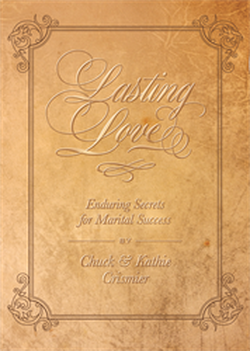
LASTING LOVE can be a dream come true. Yet love requires more than a dream or those loving feelings we so much desire.Lasting Love, Chuck and Kathie Crismier, celebrating their Golden Anniversary, unveil seven enduring secrets that will inspire and strengthen your marriage as it has theirs. COPY and PASTE this link to WATCH the TRAILER: https://www.facebook.com/Save-America-Ministries-204687919570536/videos
Past Episodes
This ministry does not have any series.
Featured Offer
LASTING LOVE can be a dream come true. Yet love requires more than a dream or those loving feelings we so much desire.Lasting Love, Chuck and Kathie Crismier, celebrating their Golden Anniversary, unveil seven enduring secrets that will inspire and strengthen your marriage as it has theirs. COPY and PASTE this link to WATCH the TRAILER: https://www.facebook.com/Save-America-Ministries-204687919570536/videos
About Save America Ministries
About Chuck Crismier
Contact Save America Ministries with Chuck Crismier
crismier@saveus.org
http://www.saveus.org/
Save America Ministries
P.O. Box 70879