
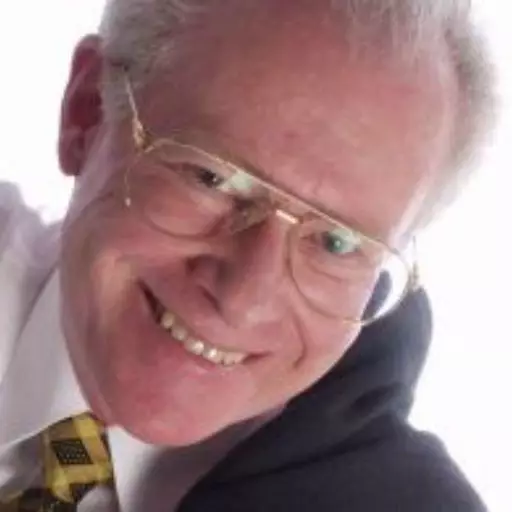
CULTURE OF THE WORD


In the world of the culture
w/ Lucas Woodford
Guest (Male): This is Viewpoint with attorney and author Chuck Crismier. Viewpoint is a one-hour talk show confronting the issues of America's heart and home. And now, with today's edition of Viewpoint, here is Chuck Crismier.
Chuck Crismier: Is the church called to be relevant, or is it too relevant if it follows the word? And if the word, that is the word of Christ, was made flesh, then we're called to flesh it out. That is, flesh out the word. For Jesus said, "As the Father has sent me, even so I send you."
So, the question is, did Jesus come to redeem the culture or to save us from the culture? To baptize into a kingdom, a culture of the word of God. And what would that mean? Are we called to be relevant to the culture, or are we called to a different culture to live in the midst of a culture that finds the word otherwise irrelevant?
Today on Viewpoint, we're going to talk about that, and I'm glad that you've joined us. It's conversation as always with ever-increasing conviction, talk that transforms. Many of you know, having heard this program for years, knowing that we've been on the air now for 31 years come the seventh of next month, always confronting the deepest issues of America's heart and home from God's eternal perspective.
Well, here's the interesting thing in preparing for this enterprise that the Lord has called me to do after leaving the practice of law at the height of my career in 1992. You remember also that I was a public school teacher for nine years in Southern California. During that time, in 1970, I had a school principal, a very fine man, who understood well that I and two or three of my other buddies were born-again evangelical Christians. We loved the Lord and sought to do His kingdom.
But this was in the time when education was turning on its head. Hyper-liberalism was being introduced to American education right there in Southern California. We were told that we needed to abide by new ideas, new principles, and we had to turn the whole idea of faith into feelings. We could no longer talk in terms of truth. We couldn't talk in terms of "I believe." We couldn't talk in terms of "that's a fact." We always had to say now, "I feel."
Well, I went to the school principal, who was very proud, but he was very strong in the fact that he was a Missouri Synod Lutheran. So, I said to him, "How is it that we can continue to absorb and conform to the mandates of this culture now in education when we know very well that it's not biblical, it's not godly, and it's leading us away?"
Guest (Male): Unfortunately, it's just the water we swim in, and that's what we got to do.
Chuck Crismier: So, I wrote him a letter. And I said, "Sir, how is it that we can in this day and age teach and require others to follow a pattern and instructions that are, shall we say, leading us into a situation where we're teaching armchair theology that's not applicable and not going to survive the fires of reality?"
Guest (Male): Well, I guess that's just the way it is.
Chuck Crismier: Well, that's the problem we have, friends, in our culture today. It's just the way it is. Well, if that's just the way it is, then how are we to be? How are we to be as Christians? I'm not saying those things to mock the man. He was caught. He was there, a school principal under the dominion of a district that was requiring, as all the districts in the state of California were requiring at that time.
We've had exactly the same problem throughout the entire church ever since. Going back to the very next year in Southern California came what was called the church growth movement. It came right out of Pasadena, California, right where I practiced law. As a result of that, it spread across the nation, requiring us all to bow to the structures of the culture in order to win the culture for Christ.
Maybe some of you remember that, or maybe you're not old enough to remember it. But then again, by the 1990s, the church growth movement was deemed to be inadequate. It wasn't relevant enough. So then we had to go to the seeker-sensitive movement, which was sponsored actually by the one who had started the church growth movement that built the Crystal Cathedral to be more relevant in Southern California.
He led disciples that led some of the largest Christian groups in the world to follow the same pattern. He said, "We don't want to teach people about sin because to call people sinners is abuse. No, we need to teach them to have more self-esteem. That's what they really need." Out of that came the seeker-sensitive movement. Let's be more sensitive and give people more self-esteem. So the word of God fell on very, very hard times in the pursuit of relevance.
All that having been said, we are now living in times that reflect all of that pursuit of relevance, and we see that we have become increasingly irrelevant to the culture that never ceases to change. So our guest today, Lucas Woodford, didn't live through those times, but he's seen the result of those times. He and his co-author writing this book, The Culture of God's Word, say we need to pursue a faithful ministry in a post-Christian society. We've got to get back to the culture of God's word, not the word of the culture. Lucas, it's good to have you on the program.
Lucas Woodford: Thanks so much. It's a joy to be with you.
Chuck Crismier: Well, coming from Minneapolis, Minnesota, one wonders what the culture of the word there is. What is the culture of the word in Minneapolis, Minnesota?
Lucas Woodford: Well, the culture of the word, of course, is always going to be the Lord's word. That's at the core of it. But in the culture at large, the culture of the world is empty and void of truth. People go after their feelings. They make what they think is right in their mind to be that which they pursue and go after.
My wife and I were just lamenting on another public policy being proposed that by third grade, our governor is trying to legislate children are supposed to know the realities of what same-sex relationships are like. They're supposed to understand the different genders that society wants to impose upon people.
The lack of truth and objective truth within our state and the challenges that we face are there. But there are those who, of course, remain following God's word. And in the midst of what you might call cultural darkness and mayhem, we have the light of Christ in His word that leads us forward.
So we remain confident that God's inerrant, infallible word is going to lead us forward. As my co-author Harold Senkbeil and I write in our book, it is a transcendent truth that God's word brings about. When we sow the word, the word continues to create its own culture.
Chuck Crismier: And it will not return void. And that's what we want to get to. I really appreciated the opportunity to receive and review this book and have the conversation with you, Lucas. We're going to move further and dig into it deeply and apply it to restore the culture of the word.
Once upon a time, children could pray and read their Bibles in school. Divorces were practically unknown, as was child abuse. In our once-great America, virginity and chastity were popular virtues, and homosexuality was an abomination. So what happened in just one generation? Hi, I'm Chuck Crismier, and I urge you to join me daily on Viewpoint where we discuss the most challenging issues touching our hearts and homes. Could America's moral slide relate to the Fourth Commandment? Listen to Viewpoint on this radio station or anytime at saveus.org.
Is it the culture over Christ, culture and Christ, or Christ over culture? That's an interesting question, and it has been confronting the church for a very, very long time. Peter Marshall, the former chaplain of the United States Senate, said this. He wrote a book and actually spoke to the United States Senate, "Christ or Culture." We'll either have Christ or culture.
But what did he mean by that? When you say Christ or culture, what do you really mean? Well, if Christ was the word made flesh, the living word, and He came to flesh out the word so that we could see it and turned around and said, "As the Father sent me, even so I send you now," that means you and I in a sense are to be the living word. We either live that out in confidence, trusting that from God's viewpoint, it's going to be hyper-relevant to those in the culture that are prepared for salvation, or it's not. It either is or it isn't. And so we have to decide whether or not we're going to trust the word of God. I think that's the big problem that we're facing. We have a trust problem. Lucas, what say you?
Lucas Woodford: I agree. I think especially for the Holy Christian Church, do we believe the word of God and what it says? Do we trust that it's going to do what it says, or is it the word of God plus something else in terms of how the church goes about its life in the world? Of course, what my counterpart and I in our book advocate regularly is it's the word of God and the power that is in the word that needs to lead us forward and what the church needs to stand upon.
It brings to us objective truth, morality, the message of salvation by the shed blood of Christ earned for us on the cross and His empty tomb. The joy of knowing that brings us confidence then as we live in a world full of darkness. We live with the light of Christ and can have that confidence. So we can trust God and His word to lead us forward, even though it may be difficult at times.
Chuck Crismier: Well, it will be difficult. Jesus said it would be difficult. Paul said it would be difficult. Peter, James, John, they all said it would be difficult. That difficulty was framed in Jesus's words: "If they persecuted me, they'll persecute you." In other words, they're not going to receive what you have to say. But as many as would receive, they would be called the sons of God. And so therein lies the trust factor. We have to believe that what Jesus set in motion intended to remain in motion and not to be acted upon by some outside force in His name to try to create relevance.
Lucas Woodford: That's right. What we use as the backdrop for the book, the Book of Acts, really demonstrates that trusting His word at the start. It begins with the ascension of Jesus there, and then you see in the Book of Acts, Pentecost at the start. Then what we would probably call some mini-Pentecosts all throughout the book where the word of God goes about and the word grows. The word of the Lord grows, says the text, three different times in the Book of Acts.
Where the word is at work, there we know the Holy Spirit is at work. It is so significant for us to recognize the truth and the power in the word. The word is not just mere information. The word of God says what it does and does what it says. It's just not some nice emotional information, perhaps, but it carries and speaks realities. That's key for us as we deal with not just immorality but a spiritual unrest. We battle against the principalities and the authorities of darkness. The word of God is always central and at its core. A phrase we often use: as the word is sown, the culture is grown. The word of God brings its own culture to those who teach it, preach it, speak it, and share it. There's a distinctiveness that carries forward in their life together.
Chuck Crismier: Well, the question then is, are we to save the culture? Or are we to save, as Jesus came to save the culture of His day, or did He come to save the people from the culture that had contaminated their minds and their hearts and taken them away from the kingdom of God? If we have the view that our goal, our responsibility is to save the culture, i.e., a culture war mentality, we're going to be gravely disappointed.
For instance, about 15 years ago, the great Dr. James Dobson had joined me on the air at the National Religious Broadcasters Convention. We were talking together because I had known him before he even started Focus on the Family in Pasadena, California. He said to me, Chuck—this was an admission that's almost beyond the ability to comprehend—he said, "Chuck, we have already lost the culture wars."
That was at least 15 years ago. We have already lost the culture wars. Well, what did that imply? It implied in many things to me that all of the church growth movement, all of the effort to grow huge churches and carve away the corners and keen aspects of the gospel or the truth of the word of God had not worked. The pursuit of relevance had not worked. In fact, the culture had become ever increasingly more corrupt. So this has been a serious confrontation that we've had for the past 50, 60 years in our country. The church didn't really have confidence in the word of God, it seems.
Lucas Woodford: Right, and I think this is why we stress so significantly and use scripture itself to demonstrate that. It's the text of scripture over against the context of culture and that battle that takes place. We believe that the text of the word of God must always be that which leads the church forward. Now, we can have some common-sense approaches about it as we go about talking about preaching, teaching, and evangelizing the word, but it must be the word that leads the way. Otherwise, the church begins to look essentially like the culture itself, and there are no distinguishing marks. The reality, of course, is that the church isn't there to win a culture war. It's there to proclaim the message of salvation and God's word to the people who live in the culture.
Chuck Crismier: And we can't save them. Doesn't the scripture say that only those whom the Holy Spirit calls are saved?
Lucas Woodford: Correct. It's the Holy Spirit who, by the word of God, calls, gathers, and enlightens the whole Christian Church on Earth. It's the Lord and His word that must be that which does it. It's not by our willpower. It's by God and His powerful word that brings about the conversion of hearts and brings about belief and then trust in Christ and His word.
Then it allows them to go about living their lives in a culture that's chaotic and full of unrest, but in a confidence that the Lord of their lives and the Lord of the church is going to lead them forward. Then they can go about exercising their daily stations of life, daily vocations of life, quite confidently, even as it seems the culture around them might be full of unrest or hostile to them.
Chuck Crismier: To be the church, we must be the church. It's not something out there. It's something up close and personal, starting with every single individual. Friends, I don't know how to explain to you how important this book is. It's a small book, but let me tell you, it packs a wallop to help us get re-enculturated into the culture of God's word. Not to try to make God's word palatable to the culture. It never will be.
What we want to do is embrace the word of God in its fullness, just as Jesus did, and then trust the results to him. It's a hardbound book, yours for $15 on our website, saveus.org. Give us a call at 1-800-SAVE-USA, or you can write to us at Save America Ministries, PO Box 70879, Richmond, Virginia, 23255. Writing a check, add $6 for postage and handling, and we'll get it in your hands.
I would also seriously recommend that you consider getting one for your pastor. Really, I would suggest that because pastors are struggling. They're struggling with relevance. Everybody tells them they have to be more relevant. In other words, they have to conform to the ways of the culture in order to win the culture. Jesus didn't do that. The Apostle Paul did not do that. You might say, well, didn't he say you have to be all things to all men that you might win some? Yeah, but he didn't say you have to conform to the culture. You just have to understand it. But you don't have to conform to it. It's the word that wins.
The first Christians were not driven by their cultural context but by the word of Christ. They weren't seeking to convert cultures, but people who lived in various cultures. For 2,000 years, Christians have held that the church cultivates its own transcendent culture in a rapidly shifting social context. The culture of the word is what Christians were seeking to accomplish. Christendom became the defining feature of Western culture. Culture did much of the heavy lifting when it came to teaching Christian virtue, even in churches, because we lived in Christendom.
Christendom has ended, though. The bond between church and society has been severed. It's easy to look wistfully at the past through rose-colored glasses, and we need to quit looking at the kingdom nostalgically through cultural rearview mirrors and see that this new context of the culture of the word does its work. In other words, that the word of God does its work.
So if we want to revive Christendom and turn back the clock and restore more comfortable norms of yesterday, the old good old days were not what they seemed to be or what we think they were. So now we need to talk about, as we're on the near edge of the second coming of Jesus Christ, what did He really want from us? Do we really trust His word? Is His word so strongly rooted deeply in our minds and our hearts and our understanding that we actually have given ourselves to carry the cross of Christ in the midst of a culture that despises such an idea?
That's where we are today. And if we try to keep up with the recent trends, the latest trends, our guest says you'll be in a constant scramble. If you try and ride ever-shifting cultural waves, you'll lose your balance. They crest and then they fall again before you know it. And when it comes to human culture, the present is always morphing into the past, giving way to yet another craze. And the next new thing approaches fast only to vanish to make a way for the next wave. Instead of playing catch-up with the culture of trends, it's better to root the church's mission in things lasting and solid, the abiding word of God that stands forever. Lucas, do you believe we're on the near edge of the second coming? I don't mean the day and the hour. Do you believe we're in the season?
Lucas Woodford: Well, I think that's what scripture does tell us. It tells us to ever be watchful. We don't know the day or the hour.
Chuck Crismier: So that would mean that we would want to seriously check ourselves whether we really are people of the word, huh?
Lucas Woodford: I agree. I think that's what the church constantly has to take a look at itself and what it is that are the defining marks of the church. That's what prompted us initially to take a look at writing this of the things we looked around and saw within the church were trying to present itself as the church, and it was looking more like the culture than it was the church of the scriptures.
Chuck Crismier: Do you see that also in the Missouri Synod Lutheran where you and your co-author have been rooted?
Lucas Woodford: Yes, we see the temptation for that. We try to, as a denomination of the word, as we try and recognize, we're always taking a look at that. But the temptation is always there. And so there are congregations that will try and look at the culture first and how can we be relevant to folks and then make the church in the image of the culture. So then part of my role as a district president or a bishop, if you will, is to come alongside of those congregations and those pastors that I oversee and to bring the truth to bear and God's word to bear that it's the word of God that always guides us. And so we try to be very intentional about that as a church body.
Chuck Crismier: So if you're a bishop or overseer in the Missouri Synod denomination, you must be the husband of one wife.
Lucas Woodford: Correct.
Chuck Crismier: And you also have seven children, a quiver full. So you're obedient to the word of God that says, "Be fruitful and multiply."
Lucas Woodford: We do our best and walk forward as much as we can by faith.
Chuck Crismier: So I have a question for you, and this is where relevance comes in. So you're a father, you have seven kids. What are their age ranges from youngest to oldest?
Lucas Woodford: I have age ranges from 22 down to four years old.
Chuck Crismier: My goodness, my goodness. You've got basically two whole generations or cultures involved. So here's the question: How are you engendering the culture of the word in those kids who are growing up in the culture of the world?
Lucas Woodford: That's a great question. So important for us in our household, we have our kids in the word. Now, we've chosen to homeschool. We also have Lutheran parochial schools that they were a part of when I was leading as a senior pastor in a parish before this job. But you integrate the word of God into their daily life. And so then we also model it. So we have our family devotions, we have our family time for prayer and for singing the hymns, and then we also have the time for allowing the mind to dwell on the word of God creatively. So we try to be intentional. Now, we're not perfect, and it's not something that is unachievable for the average person. In our household, it can be chaotic with a number of kids and a number of age ranges.
Chuck Crismier: You must have a very patient wife.
Lucas Woodford: She is a saint, that is for sure. She is a wonderful helpmate and great blessing from the Lord. And so it is wonderful, and we're on the same page. It's hard, it's very hard work, but it's still very joyful. And in the midst of it, exercising our vocations as husband and father, but then her as mother and wife, but then to our children as parents, we try to be very intentional amid the messiness of life, amid the different ages, amid the different spilled milk or teenage crises that they might have, but that we cultivate that word within our home in our daily stations of life. So important to be intentional about it.
Chuck Crismier: Well, she must have modeled herself after Susanna Wesley, who is said had 11 kids and in order to get some privacy before the Lord, she had to pull up her petticoat over her head so as to privatize herself from the kids once in a while.
Lucas Woodford: Yes, the moment she wants to have a moment of peace, the door's being knocked on or someone's trailing after her for something. This is true. That's part of what a large household is.
Chuck Crismier: I was thinking, I had already said that I had been involved in so many different things over the years. My father was a pastor. He got his start in the Salvation Army and he was preaching an evangelistic crusade. My mother was playing the piano. Their eyes met, and the rest was history. So from there, he moved on to the Nazarene Church and also the Methodist Church in those days, not the Methodist Church of these days, but of those days, and preached there in two separate congregations. Went to California, preached in the Nazarene Church, then became involved in the Conservative Baptist denomination for a while and planted a home mission church. Was involved in the Evangelical Friends Church.
So I had involvement in all of those, not to mention the fact that in addition to that, I was exposed to the Congregational Church, evangelical style, and also had exposure in the word of faith movement and also the charismatic movement. And all told, I figured I've had involvement somewhere, somehow in about 10 different denominations and other church movements. You think that might have given me a little bit of exposure to what's going on in the body of Christ?
Lucas Woodford: I think so. You've got some experience and some stories to tell, I am sure.
Chuck Crismier: Oh, I'll tell you, do I have stories to tell. There are some stories I'd rather not tell. You know, those were the days when pastors were not allowed to own a house and they believed that you had to move denominations. Denominations did not believe that a pastor should remain in one congregation for more than two years. So I was raised in 24 different schools across the country. You think that might have given me some exposure to our country?
Lucas Woodford: Just a little bit.
Chuck Crismier: Okay, well, here's the deal. I mentioned all those things because I don't represent myself as one committed to a denomination, but as one committed to the lordship of Jesus Christ. And I believe as I looked at your book here and as I looked up Missouri Synod, the goal of your denomination is to establish and follow the lordship of Jesus Christ as expressed in the word of God, not to be accommodated to the culture. Do I have that correct?
Lucas Woodford: That's right.
Chuck Crismier: Okay, now that being the case, then you would not see Martin Luther as a saint to be bowed to.
Lucas Woodford: Correct. He was a formative thinker in the reform of the church where his very protest with the church at the time was because it had gone away from the word of God.
Chuck Crismier: Yeah, he wasn't actually trying to establish the Protestant Church; he was trying to reform the Catholic Church.
Lucas Woodford: Absolutely, that is absolutely right. And so we esteem him in so far as he was bringing reform and calling us back to the word of God.
Chuck Crismier: Back to the word of God. And that's, you know, there's a program for years that airs on the radio called Back to the Bible. And we just went through a series of 500 national Christian and political leaders reading the Bible across the fruited plain of America. Did that restore the Bible to America?
Lucas Woodford: Right, that's a great effort and attempt to, but it will always be something we have to keep coming back to.
Chuck Crismier: In fact, they had to read it oftentimes from a museum called the Museum of the Bible. Why did we need a museum of the Bible if our culture and if our country was dedicated to the authority of the scriptures? It's maybe because we weren't all that dedicated to the authority of God in His word, even though His word was engraved on many of our national buildings there in Washington, D.C. But is it engraved on the membranes of our minds and hearts? That's the real issue. We'll be back with you after this, friends. The Culture of God's Word. You gotta get this book.
What in the world is the culture of God's word? That's what we're talking about here today on Viewpoint. Our special guest Lucas Woodford, co-author of this book with his buddy Harold Senkbeil, and I want to make sure you get this book because it is so important. It's so easy to read and so profoundly applicable to our times. $15 will put this hardbound book in your hands on our website, saveus.org. You can give us a call at 1-800-SAVE-USA, or you can write to us at Save America Ministries, PO Box 70879, Richmond, Virginia, 23255. Writing a check at $6 for postage and handling. Also, I would seriously recommend that you consider getting a copy for your pastor or for someone else who is in leadership. Because, friends, the leaders of the professing Christian church in America have been enculturated with the spirit of the world while supposedly teaching the authority of the word of God.
It's unfortunate. I've seen it happen from coast to coast, and it is very painful to see. And the effects of it have been nothing short of spectacularly not in accordance with the word of God. In 1983, the United States Congress declared the Bible to be the word of God. Did you know that? The Congress declared the Bible to be the word of God. Now, why was that? It's because by 1983, the United States Congress had gotten the understanding that the Bible had lost its authority in the culture by 1983. 14 years later, George Gallup, the great pollster in America, had a series of articles that came out saying our country had become biblically illiterate. Not only that, he said that we still claim to love the Bible, we just don't read it. In other words, we don't know what it says, we don't do what it says, and we don't seem to care.
So where are we today? Is this book, this message, the Culture of God's Word, relevant for us? Friends, it's more relevant than you might care to admit. It's hyper-relevant. In fact, that's one of the problems with the word of God. It's so relevant that we try to create alternative relevance for it in order to market it or sell it to a fickle culture. That's the reality of our time.
So our special guest and his co-author, Lucas Woodford now has written this wonderful book. It's so simple but so profound. So Lucas, what I'd like to do in the next 12 minutes or so is go through a series of things that you have said in your book to kind of give us some framework on which to rely. You say the word faces opposition. Why does the word face opposition, as we see in the Book of Acts?
Lucas Woodford: Right, because the evil one, Satan himself, of course, tries to infiltrate the world and the people there, and so they want to reject it just as Jesus was rejected. So those who follow Him will be rejected.
Chuck Crismier: Isn't that the reason why Jesus promised persecution? Isn't that the reason why the Apostle Peter said, "Look, don't be so concerned about the strange thing that's about to happen to you because if they persecute you and you have these trials because of the word, this is exactly what Jesus said was going to happen"?
Lucas Woodford: That's right. The joy of it, of course, though, is when Jesus says, He says, "In this world you're going to have trouble, you're going to have tribulation, but take heart, I have overcome the world." And of course, as the word made flesh, He gives us that confidence that even when we're facing persecution, even when we're enduring hardship, just as He did, we carry forward trusting Him and bringing forward the fruits of faith and bearing the truth of God's word right where we're at. We don't have to be some super-Christian to go about it, but we are called to be faithful where we're at in our daily station or what we call our daily vocation of life, our earthly callings where we are at in our homes, our families, in the congregation, in our church, and then certainly in society itself.
Chuck Crismier: And in reality, faith is not just something we have; it's something we do, isn't it?
Lucas Woodford: Yes, it's a living, busy, active thing.
Chuck Crismier: Okay, now you talk about the embodied word. That's Jesus the embodied word, right?
Lucas Woodford: Right, so in recognizing the reality, it's not just a thought out there. The word of God comes out and goes into our lives, into our stations of life, but as the church itself where we gather together. So it's not simply an online virtual world, but we are in this flesh together and so incarnate, just as our Lord was incarnate. So we come in the flesh together. And so one of the very important realities: hospitality. Why the importance for that? Because the church is an embodied community where we're sharing one another's lives.
Chuck Crismier: Well, it's interesting you should say that, and time is so short here, that's why I'm interrupting. But about 20 years ago, Christianity Today, the magazine sponsored by Billy Graham, had the cover story, "Whatever Happened to Hospitality in the Church?" And that's why my wife and I were moved to write the book The Power of Hospitality.
Lucas Woodford: Excellent. That's so important yet still today. In a world that doesn't know what it means to be human, when we have people that can't define what is a woman, we need to embody the reality of the truth of God's word and then to be hospitable in a world that's so inhospitable. And so welcome those who are refugees against the chaotic culture and the inhuman world to welcome them into the truth of God's word and to love them in the midst of that chaos that they're in and bring that truth of Christ and His word to bear upon their life.
Chuck Crismier: So if Jesus was the word made flesh, then we're called to flesh out the word.
Lucas Woodford: That's right.
Chuck Crismier: All right. Okay. And so He gave us the written word. The written word is the word of God. All scripture is breathed out by God, profitable for teaching, reproof, for correction, for instruction in righteousness, that we might be made perfect, thoroughly furnished unto every good work. So why is it we don't have such confidence in the word?
Lucas Woodford: Right, that's a question we keep asking and why we're promoting the culture of God's word. It's a return to it.
Chuck Crismier: Exactly. All right, so the word is inspired. What does that mean?
Lucas Woodford: Well, it's God's word. He's the one that gave it to us by His spirit, who has inspired those to write it, even though it's in multiple what we call different books or letters, epistles, from the Old Testament to the New. It's God's word that He has given to us, and we trust it as authentic, as real from Him. It's the heart and center of the church's life that it brings about by the power of the Holy Spirit working in those who wrote His word.
Chuck Crismier: And the word of God is not there to inform us, but rather to transform us, isn't it, primarily?
Lucas Woodford: That's right. Yes, it nourishes us. It leads us forward into a life of faith and then into a life of love for the Lord and service to our neighbor and loving of our neighbor.
Chuck Crismier: So you can own 10 Bibles in all the different translations, and you can even memorize the whole Bible and still not get it.
Lucas Woodford: That certainly is possible. That certainly is.
Chuck Crismier: Because it's not meant to be idolized; it's meant to be obeyed.
Lucas Woodford: Lived, yeah, obeyed, lived, trusted. Absolutely. That's why we say that the culture of the word is the fullness of life given by the word of the triune God.
Chuck Crismier: So the Bible is not to be okayed but obeyed.
Lucas Woodford: Right. It's there for God wants us to hear it, to believe it, to trust it, to obey it.
Chuck Crismier: All right, here's one of the fascinating things then, and that is that the word obey is now deemed to be a four-letter word in the church today. I've had so many pastors on this program who've admitted that the word obey is the most hated word in the church. How can that possibly be when Jesus said, "If you love me, you're going to obey me and keep my commandments"?
Lucas Woodford: That's a good question.
Chuck Crismier: Which is what we try to do here on this program is ask good questions that probe deeply into our minds and hearts because we're so caught in the midst of a culture that is defining our thoughts, our ways, our words, even our churches, that we've become lost. And Jesus is out there trying to find us because we're prodigal.
Lucas Woodford: Right, yeah. And in that prodigal, that parable is so powerful. The welcome that the prodigal receives when he comes back. So he's one that certainly disobeyed the father, but because of the father's wonderful mercy and grace given to him and received that, it's a great capture of what our Lord Jesus gives to us following the will and obeying the will of the Heavenly Father for our salvation.
Chuck Crismier: So as we're thinking about this, and I'm thinking about you use the word mission throughout your book in various places. A lot of pastors talk about missional missions and so on. It's kind of like a buzzword, missional. Right? It's kind of like the new buzzword, resilience. Every pastor, every author, every broadcaster has to keep talking about resilience now. It's the new buzzword. But the reality is that if we talk about mission, we need to take it from Jesus's viewpoint. So if we go back to Matthew Chapter 28, which is called the Great Commission, that is the committing of us to Jesus's mission, He said, "Go into all the world, preach the gospel," that is the word, "baptize them when they receive the word and Yeshua as their savior," and then He said, "teaching them to obey everything that I have commanded." That's the mission, isn't it? The mission isn't fundamentally evangelism. It's teaching people or discipling them to do the will of God, just as Jesus did. Isn't that right?
Lucas Woodford: That's right.
Chuck Crismier: So even there, we've missed the point. If we focus primarily on what we call evangelism, it's an American-style thinking that we can get people to notch a belt and we can market the so-called heads that we have baptized and think we've done the mission of the church. But as Billy Graham said on Larry King Live years ago when he was asked, "Surely there's nothing that you would be sad about or disappointed about in your ministry?" and Billy Graham said, "No, there really is. I didn't focus on discipleship." Isn't that interesting?
Lucas Woodford: That's right. And that by chance happens to be an emphasis of my very first book that I wrote on where the good news of Jesus of proclaiming and discipling people gets turned into a law that must be obeyed as the mandate for the church. And so the good news gets lost in the zeal for to try and evangelize as the sole purpose of the church.
Chuck Crismier: Wow, you actually wrote that book.
Lucas Woodford: Yeah, I footnote it in this current book, but yeah, I wrote on Great Commission, Great Confession or Great Confusion: The Mission of the Holy Christian Church, where I unpack that whole thing and study the nature of the different movements at the time. And this was back in 2011 or '12, but called that very thing out.
Chuck Crismier: Well, some people would say you were ahead of your times. I would say you're right on time. There you go, right on time. The culture of God's word, friends, what a wonderful conversation with Lucas Woodford. There you see, I'm not tied in with any particular denomination. People ask what religion are you? I'm a Christian, I'm a follower of Jesus Christ, and take His word at face value. I want to do what it says, obey it, and trust it because I trust Him. How about you? Do you really trust the word of God? Is His word working mightily in you? The culture of God's word. Get a copy of this wonderful book. $15 will put it in your hands on the website, saveus.org. Give us a call, 1-800-SAVE-USA, write to us at Save America Ministries and add $6 for postage and handling. And become a partner. You see, we're confronting the deepest issues of America's heart and home from God's eternal perspective. That's what we're doing today, preparing the way of the Lord for history's final hour. God bless and be a blessing.
Guest (Male): You've been listening to Viewpoint with Chuck Crismier. Viewpoint is supported by the faithful gifts of our listeners. Let me urge you to become a partner with Chuck as a voice to the church, declaring vision for the nation. Join us again next time on Viewpoint as we confront the issues of America's heart and home.
Featured Offer
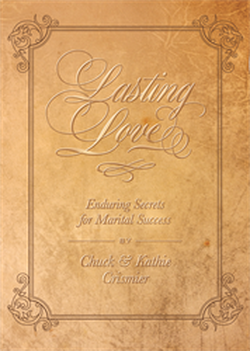
LASTING LOVE can be a dream come true. Yet love requires more than a dream or those loving feelings we so much desire.Lasting Love, Chuck and Kathie Crismier, celebrating their Golden Anniversary, unveil seven enduring secrets that will inspire and strengthen your marriage as it has theirs. COPY and PASTE this link to WATCH the TRAILER: https://www.facebook.com/Save-America-Ministries-204687919570536/videos
Past Episodes
This ministry does not have any series.
Featured Offer
LASTING LOVE can be a dream come true. Yet love requires more than a dream or those loving feelings we so much desire.Lasting Love, Chuck and Kathie Crismier, celebrating their Golden Anniversary, unveil seven enduring secrets that will inspire and strengthen your marriage as it has theirs. COPY and PASTE this link to WATCH the TRAILER: https://www.facebook.com/Save-America-Ministries-204687919570536/videos
About Save America Ministries
About Chuck Crismier
Contact Save America Ministries with Chuck Crismier
crismier@saveus.org
http://www.saveus.org/
Save America Ministries
P.O. Box 70879