

"CONSERVATIVE" SOCIALISM


The New Antitrust Paradox
w/ Robert Bork Jr.
Chuck Crismier: Trust is a very big issue. About 15 years ago, as I was traveling across the country and in a layover, I came across a copy of USA Today that we find at all the airports around the country. The front page was very fascinating. In huge green letters, not just the usual type, but huge green letters, was this word: trust. Trust. It was talking about how it would be very difficult for Americans to trust their institutions today, and that was 15 years ago.
Well, the issue of trust is a very big issue. It's an issue in our marriages, it's an issue in every aspect of our life, in our businesses, everywhere, and yes, including our country and its government. But what does the word antitrust mean to you? Does that mean that we're against trust? What does antitrust mean? If you call them antitrust laws, what could that possibly mean? Why would we have laws that are against our trust? Isn't it that we want to have more trust in our government? We want to have more trust in our businesses. So, what in the world are antitrust laws?
If you were to go to the famous source of Google, you would get this answer. Antitrust policy is a set of government laws and rules that keep business markets fair. These rules stop companies from forming monopolies, fixing prices, or cheating to beat rivals. The main goal is to protect buyers so they get lower prices and better choices. They come out of three basic core US laws: one called the Sherman Act way back in the 1890s that outlawed price-fixing and attempts to create a monopoly; then came the Clayton Act in 1914 to stop risky business mergers and unfair corporate setups; and then finally, the FTC Act of 1914 bans unfair methods of competition and deceptive trade.
So, the main goals are to encourage competition, block bad mergers, and punish cheating. So, what should be so bad about that? Is this a form of silencing people that have something to say? Could antitrust laws be used to actually control what is said, what is done, what is published, what is made, or anything that we do today? What is the power of antitrust laws? And is it possible that they could actually be undermining a republic, undermining a democracy, a Republican democracy? Is that possible?
Well, today on Viewpoint, we have a very special guest joining us. This guest is rooted in American history deeply, not because of himself, but because of his dad. His dad was called Robert Bork, and he was a famous judge. Actually, the whole term "getting borked" came out of Robert Bork, the father of our guest today, Robert Bork Jr. Our guest today was not borked, but his father was. We'll find out what that was and we'll find out also why Robert Bork the son wants to join us here today to talk about antitrust and the threat of conservative socialism. He says that this matter of antitrust laws is really becoming dangerous. You say, "How could that become dangerous?" Well, we'll find out today on Viewpoint, so I'm glad that you've joined us. It's a conversation with ever-increasing conviction, talk that transforms. Robert, it's good to have you on the program, my friend.
Robert Bork Jr.: Thanks for having me on. I appreciate it.
Chuck Crismier: Well, you've been involved in this antitrust thing for a very long time. You kind of inherited it through your dad, didn't you?
Robert Bork Jr.: I did. Actually, I spent my life after college—I went to Carleton College in Minnesota and graduated in 1977. It's so long ago.
Chuck Crismier: Were things a little bit more settled there in Minnesota when you were in college?
Robert Bork Jr.: It was just cold. They had big mosquitoes, and it was cold in the wintertime. But after college, I became a reporter, a journalist, which was what my father actually had hoped to do. There's a whole story there, but he ended up being a lawyer. I ended up being a reporter for a dozen years and worked all over the country.
Ultimately, I got so fed up with the so-called profession of journalism in 1987, which coincided with his confirmation hearing, that I quit and decided to get off the bench. I thought I was on the bench, that I was an observer, not a player. I decided to get into the game and started working on Capitol Hill at the Heritage Foundation back then, worked in the first Bush White House for the US Trade Representative, and then started doing communication work, writing speeches and other things.
I didn't really get involved in antitrust until many years later, really about six years ago, when I heard Senator Warren on TV talking about how we needed to use antitrust law to rein in corporations, monopolies, and capitalism. I just thought, "Oh my goodness gracious," and my father had written the book about antitrust when he was at Yale Law School, and it had changed antitrust law. So, I wondered if it was still in print. We needed to make sure that it was still available, and it wasn't. So, I got the rights away from the publisher and republished it myself. I created a publishing house and published the book. It's available on Amazon and it's called *The Antitrust Paradox*.
He pointed out what had gone wrong or really had never been right about antitrust. As you mentioned, the Sherman Act was written in the 1890s by Senator Sherman, who was the brother of the famous Civil War General Sherman. So, it goes way back.
Chuck Crismier: So, was the Sherman Act as destructive as Sherman's march to the sea?
Robert Bork Jr.: Some might argue that, but I would probably say that Sherman's march to the sea was more destructive. But the law was confusing. It was vague. It was open to interpretation.
Chuck Crismier: As most laws seem to be.
Robert Bork Jr.: Well, not a tight interpretation. It was just out there, and it needed to be reined in. I'm happy to tell you how he did that and how we find ourselves today.
Chuck Crismier: Well, great. Well, that's what we're going to do here in the balance of the program here. Welcome back to Viewpoint, friends. I'm Chuck Crismier. It's conversation as always with ever-increasing conviction, talk that transforms. You say, "Well, how could my life be transformed with a conversation concerning antitrust laws?" Well, let's put it this way: we want to get inside the motivation for the kinds of laws that are being passed and why they're being passed. Are they moral? Are they amoral? Are they immoral? Are they advancing the cause of freedom, truth, righteousness, and justice in the nation, or are they actually inhibiting those things or actually frustrating them?
So, today on Viewpoint, our special guest, Robert Bork—we'll call him Bob from this point on. Bob or Robert. Robert, first of all, your encounter with Elizabeth Warren on the radio—was that before or after she became Pocahontas?
Robert Bork Jr.: Well after. But not to belabor this too much, I just felt I needed to help represent—my father had passed by this point, he died in 2012. For me, this has been protecting, defending, and advancing his legacy in antitrust and other things. So, I decided I'm going to publish this book. I did. I got Mike Lee, the senator from Utah, to write an introduction. I wrote a foreword into that book. We circulated it all over the Hill. We've given it to the law school libraries and to lots of law students through the Federalist Society and elsewhere.
Chuck Crismier: Well, you've formed Bork Publishing. Have you been borked?
Robert Bork Jr.: Me? No, I've never been borked. Certainly not the way he was.
Chuck Crismier: Hey, could you refresh our memories as to how that happened? What happened to your dad? It was a horrible thing, and that's where the phrase "you've been borked" came from. Tell us about that.
Robert Bork Jr.: Okay. Well, so your listeners may recall it's been a long, long time. 1987, President Reagan nominated my father, who was a judge on the DC Circuit Court of Appeals, to be a Supreme Court Justice. Scalia was already on, Rehnquist was the Chief, and they nominated my father. The left organized the first political campaign against a Supreme Court nominee in history. There have been many since, but that was the first.
We were unprepared for it, and the White House was unprepared for it. It was a horrible thing to go through. He was slandered regularly. You may recall that Ted Kennedy got up on the floor of the Senate within minutes after my father's nomination and gave a speech about "Judge Bork's America," which was a land of back-alley abortions and rogue police breaking into bedrooms to see if you were using contraception. I mean, it was just madness, utter madness.
The whole thing went on for many weeks, and actually, the "bork" term came up when my father was defeated and they nominated somebody else to replace him as the nominee. One of the luminaries of the left got up and said, "Well, we're going to bork him like we borked the last one." That's when it became a verb. And if I could get a nickel for every time somebody used that, I would be a rich man.
Chuck Crismier: Well, I appreciate you refreshing our understanding and memory of history going back to 1987. 1987 was also a very tumultuous year for many when it encompasses a day called Black Monday or something like that where the whole stock market collapsed.
Robert Bork Jr.: Right. And there's some theory—I can't prove it—that it was actually the defeat of my father's nomination which just pulled the rug out from under the market. They just thought—not that they necessarily wanted him necessarily, but they thought, "Oh, we're heading down a very dark path," and people started pulling their money out of the market, and that's—I don't know for sure, but the stock market lost a third of its value in two days.
Chuck Crismier: I remember it.
Robert Bork Jr.: Me too.
Chuck Crismier: All right. So, that having been established, and we've kind of given your bona fides here for your ability to speak with some measure of authority concerning this matter of antitrust laws. So, your dad had written a book. He was strongly concerned about the direction of antitrust laws and their effect on American capitalism, freedom, and Republican democracy. Freedom. Yeah. So, synthesize that concern very quickly and then we'll expand on it.
Robert Bork Jr.: Okay, great. I should just say—and I'll be very brief about this—you mentioned antitrust at the beginning and what is it. Back when these laws were written, many, many large corporations, like Standard Oil and others, were organized as trusts, not corporations as we think of them today, but as trusts. So, these laws were written to be opposing what the trusts were doing. So, they were antitrust.
Chuck Crismier: So, what were the trusts doing? I mean, the word trust sounds like a good thing. We're encouraged to write trusts, including our wills and our trusts. But why were these trusts so problematic?
Robert Bork Jr.: They were perceived to be problematic because these trusts were buying up oil companies, drillers. They were expanding their share of markets to the point of monopoly, meaning that they controlled the market for different things.
Chuck Crismier: So, the railroads, the oil companies, all of those things then were being built as trusts and then taking over like Pac-Man and eating everything else alive.
Robert Bork Jr.: Yes, that seemed to be what was going on. So, these laws were written over a period of really 30 years to somehow control that. I prefer to refer to this as competition law. In a modern context, competition law. So, it's really about how businesses are supposed to compete with each other and are they doing that.
So, my father came along in the '60s and he was an antitrust professor at Yale Law School and other things—constitutional law. But he started writing a book in the '60s and he finished it and published it in 1978 called *The Antitrust Paradox*. The paradox being that these laws were just a mess, and they were not being used well. They were open to really very loose interpretation by judges, like Justice Brandeis on the Supreme Court and Justice William O. Douglas.
People would bring these cases, and somehow or another, the weaker of the two competing companies, the less efficient of the two competing companies that were suing each other, the weaker one would win. Now, you'd think, "Well, why is that?" And my father's analysis of this was the one that won is not helping the consumer; it's not working to the advantage of the people, its customers.
Chuck Crismier: Well, I think the rationale was very much like why Jewish people in America support the Democrats: because they look at the Democrats as supporting the low guy on the totem pole. So, therefore, those same people on the Supreme Court would vote for what they thought were the low guys on the totem pole, and that's how it happened. So, somebody that was more successful became, "Well, you're going to be antitrusted out."
Robert Bork Jr.: I think it's worse than that. I think that Louis Brandeis and William O. Douglas really had a real aversion, a real disdain for wealth, big business, and capitalism. So, they were ruling against the winner in favor of the loser, the victim. They perceived that to be the victim.
Chuck Crismier: Well, we've had victimology ever since, haven't we?
Robert Bork Jr.: Even before. But yes, ever since. So, my father wrote this book called *The Antitrust Paradox*, and he did a lot of economics research. In fact, he taught himself—I was there, I was a young boy at the time in the '60s when this was starting—and we were in his home office on the third floor of our house in New Haven, and he'd be working on these ideas. He taught himself calculus so that he could do this.
Chuck Crismier: Wow. A bright fellow. He was Newtonian then.
Robert Bork Jr.: Maybe a little. But so, he wrote this book and applied economic analysis to what the courts had done, what the laws were supposed to do, and were they accomplishing it. His answer was no. And then he said, "But what they really should have been doing—and the best way to interpret antitrust's purpose," and he said it was in the original meaning of the laws, "was to advance the consumer welfare. What is good for the consumer is what should be the focus of antitrust law."
Chuck Crismier: All right. So, how do we determine what is good for the consumer? That's a matter of opinion, isn't it?
Robert Bork Jr.: It's a matter of economics. It's a matter of opinion, but I think it's based in fact and in economics. So, the question is for him, "Was this proposed merger or other action that a company wanted to do—was it efficient? Would it create more efficiency? Would it create more output? Would it innovate? Would it create more jobs and wealth for the people, for the consumer?" And the answer for him was if that's what it did, and you could analyze that and present real economic analysis to that effect, then the government should leave these companies alone. If you could say, "No, I don't think so. Here's the proof that, in fact, it has a malignant effect," then you'd say, "Okay, let's investigate and perhaps bring a case to block the merger or the acquisition or whatever."
Chuck Crismier: Well, we have a major such case going on right now: Paramount and I'm who else is involved in this, and it's going back and forth and back and forth. Are they going to allow this merger or not?
Robert Bork Jr.: Yeah, Paramount and Warner Brothers. It's a long story. But yes, I think it's a perfectly legitimate merger. I think that if you look at it closely, what the concern of those who want to block it is that somehow or another, it will create a monopoly in the movie business, which is utterly ridiculous.
Particularly when you look at the markets today, it's not just a handful of studios. You have Amazon, which actually owns MGM, and you have others like Netflix. There are all these other companies out there that control and make movies and television shows and other things like that. So, I don't think if you look at it fairly that there's any monopoly there.
Chuck Crismier: Well, if you allow two major companies to merge, don't you almost by definition take away control from others? It becomes a pseudo-monopoly or merging towards a monopoly.
Robert Bork Jr.: No. I love your choice of "pseudo-monopoly" because you know what the word "pseudo" means: false. So, it's a false monopoly or a pretended or almost or whatever. So, no, because—I don't have the numbers in front of me right at the moment—but the percentage of the market, and that's what you look at. First of all, let me just say one thing about this. Monopolies are not per se illegal. You can have a monopoly. It's how you got it. Did you get it fairly? Did you make the better mousetrap? I mean, Google. Google became the leading search engine not by buying up all these other companies and suddenly, "Aha, they have the biggest share of the market." No, they built something, and everybody flocked to it. The better mousetrap.
Chuck Crismier: And that's why we call it "Googling" something.
Robert Bork Jr.: Yes. They probably have lawyers worrying about that. Coca-Cola used to have lawyers running around trying to keep you from ordering a Coke when you wanted a Pepsi. You got a Pepsi; they would panic over their trademark. But no, so Google can be a monopoly as long as it got it fairly. And the other half of that is as long as they don't abuse their market power. And of course, they've been sued; lots of these big tech companies have been sued.
Chuck Crismier: Yeah, well, and that's going to be the continuing thing because humankind is by nature, what should we say, greedy. And so, that's what we need to take a look at. Is this a balancing out of human nature greed? How does it affect freedom? How does it affect justice? We'll talk more about that when we get back, friends. And the book, *The Antitrust Paradox*. I believe Elizabeth Taylor had a market control, a monopoly on marriages. She had seven of them, as I recall. Doesn't mean she took over marriage, but one has to wonder. Another famous person out there claims that he has—what is it, a hundred children? A hundred children by how many different mothers? So, does he have a monopoly on the making of children?
Well, that's not the kind of monopoly that we're talking about here, friends, but it is a bit humorous, although serious on the moral side of things. But our guest today, Robert Bork, has a fascinating book called *The New Paradox: Antitrust and the Threat of Conservative Socialism*. The threat of conservative socialism. So, as Shakespeare said, "A rose by another name would smell as sweet," so socialism under the name of conservatism—does it still smell like socialism? Well, our guest today says, "Hey, we're right on the edge of it and this is very dangerous."
In fact, he says what's the result when the Republican Party, the long-time champion of free market principles, discards them to embrace many of the state-based solutions of the Democratic Party? You have conservative socialism. And nowhere is the leftward turn of the Republican Party more apparent than in antitrust, he says, on Capitol Hill. Republican senators long seen as rock-solid conservatives are aligning with Senator Elizabeth Warren to endorse government schemes to control the internet and to widen antitrust enforcement to make virtually any significant business deals impossible. It will be the fossilization of capitalism. That's a term I'm just underlining it now, Robert, the fossilization of capitalism. Very, very descriptive term.
So, friends, the book, *The New Paradox: Antitrust and the Threat of Conservative Socialism*. $19 will put the book in your hands on our website saveus.org. It's on the website saveus.org. Give us a call: 1-800-SAVE-USA. 1-800-SAVE-USA. Or write to us at Save America Ministries, PO Box 70879, Richmond, Virginia 23255, writing a check add $6 for postage and handling. We're talking about antitrust today, its implications, its meaning. And when you start using terms like "conservative socialism," you start getting my attention, Robert. Can you describe what you mean by that? Help us to get inside the term.
Robert Bork Jr.: Absolutely. So, we normally associate socialism with the political left. But socialism is not fundamentally about left versus right. It's about the growing merger of political power and economic power. Government increasingly directing private enterprise, deciding winners and losers, using markets as instruments of political control.
Chuck Crismier: All ostensibly, by the way, for the benefit of the people.
Robert Bork Jr.: Well, that's what they tell you.
Chuck Crismier: That's exactly why I said ostensibly. I chose the word carefully.
Robert Bork Jr.: Yes.
Chuck Crismier: Remember, I am a lawyer.
Robert Bork Jr.: Well, you seem to have gotten over most of it. So, that's good. You seem like a nice guy.
Chuck Crismier: We're working at it.
Robert Bork Jr.: That's right. I was going to be a lawyer, but I decided against it so I could do this kind of stuff. But anyway, I've often said the moment businesses spend more time managing politicians than serving customers, capitalism begins to die. And that's sort of—well, it's been going on for a long time, but I think we're really at a tipping point.
I'm going to spend two more seconds on history and then back to this. So, my father wrote this book as I was saying, and amazingly, a lawyer—so I guess not all lawyers are bad—a lawyer who had a client in the Supreme Court with an antitrust case cited the book. A year after the book was written, the Supreme Court wrote an opinion, eight-to-zero, in favor of this lawyer's client and cited—because the lawyer, the advocate had cited—my father's book and talked about consumer welfare, the consumer welfare standard.
The Supreme Court basically codified it—not really, it's not a statute—but the Supreme Court said, "This is how we're looking at antitrust now," and it's been interpreted—antitrust laws have been interpreted and cases have been interpreted—through the lens of the consumer welfare standard ever since. So, that's since 1979. And so, when Elizabeth Warren decided she wanted to go—you'll like this—on the warpath against business and capitalism, she and others like Biden and his FTC chairperson, Lina Khan, came in to destroy the consumer welfare standard because it stands in the way. It is a neutral principle that helps courts and enforcement agencies decide whether a case deserves to be prosecuted. If the consumers are treated fairly, if they benefit from the merger or the acquisition or whatever the business practice is, then you leave them alone.
Chuck Crismier: All right. So, what was the goal, though? Why would somebody not want somebody to stand in the way of that kind of decision?
Robert Bork Jr.: They want to tear it down because it gives them more political power. If you can define for political reasons what you think the outcome ought to be, whether it is to advance labor, to advance socialism, to advance communism, to rewrite capitalism in what they believe in, then that's what you need to do. But you need to get rid of this pro-consumer view of antitrust, the consumer welfare standard.
So, that's what the Biden administration tried to do. They took the—basically, the FTC and the DOJ antitrust division had a set of guidelines. Every year, I mean, they publish these guidelines; every administration has them. The Biden administration took the consumer welfare standard out of the guidelines, and they prosecuted, investigated, and prosecuted just about every single merger that business wanted to do during the four years of the Biden administration.
They brought cases which are still in court. And don't get me started about the Trump administration because the Trump administration is supporting many of these cases. Well, they actually brought some before the Biden people came in, and the Trump administration is supporting that. The Trump administration has what they call an America-first antitrust. That's their focus.
Chuck Crismier: In other words, you put your own spin on what you think the goals should be for antitrust if it creates what you're trying to accomplish.
Robert Bork Jr.: Right. If you've already now Chucked out—
Chuck Crismier: Careful! You just used my name in an abusive fashion.
Robert Bork Jr.: All right. Well, I apologize. But it's the most abused name in America anyway. It's okay, I got borked. After bork, I don't know. But look, if you thrown out this principle of the consumer welfare standard, then everything is fair game for whatever reason. If it could be a conservative reason, the current FTC didn't put it back; they adopted the Biden administration's antitrust guidelines, and they have been going at it ever since.
Chuck Crismier: And twisted it to serve their own agenda.
Robert Bork Jr.: Absolutely.
Chuck Crismier: So, what concerns me here is that what we're looking at is what you might call power politics using the antitrust venue to achieve power politics and to control economics and business and do favors for a variety of businesses. So, it no longer is about the purpose of antitrust to protect the consumer, but it's about protecting political power.
Robert Bork Jr.: Right. It's to punish. Conservative socialism, like its brother or sister on the left, is used to be used to punish large corporations, small corporations, reshape labor markets, direct industrial policy, advance nationalism, and attack companies that are culturally or politically disfavored.
Chuck Crismier: Would that at all also involve controlling communications? We're running afoul of this as we speak right now because of the digitization of everything.
Robert Bork Jr.: Right. Look, I think one of the worst things that big tech has done—well, did and may still be doing to some degree—is to control speech, particularly conservative speech. It happened at X, or whatever X was before Twitter. And it doesn't happen as much there as it used to; I think there's probably still some. It certainly happened at Facebook, but they seem to have mended their ways to some extent. And it happens all the time.
But that is not—and so this was actually what the left did to try to attract the right, the conservatives in the Senate, like Chuck Grassley, who's a big conservative socialist now. And Ted Cruz was, and of course, the worst offender of all is the senator from Missouri, Josh Hawley. Oh my goodness, oh my goodness. We're going into a break here. Now you've really got my painful attention, and we're going to have to talk about this. You just talked about some big water carriers out there, and we need to dig a little deeper here. Friends, get a copy of the book, *The New Paradox*, on the website saveus.org.
Welcome back to Viewpoint, friends. There are so many things rattling through my mind even during the break looking at human nature, the greed behind human nature. Liberalism says we can control the greed because we're just going to control everything. Well, you can't control human nature that way. Government, on the other hand, is supposed to protect people. The fundamental rule or purpose of government is to protect the people from enemies foreign and domestic.
So, supposedly antitrust laws are to protect the people from domestic abuse. I guess you could translate it that way. But when government is run also by greedy people, then you've got a real problem. And government can take dominion and control over everybody else. And so, you have this tension that develops, it seems to me, Robert. It's the kind of tension that is built into our very form of government because as our founders said, they distrusted democracy greatly because it was subject unless the people were fundamentally moral and godly. They couldn't be trusted. They would become the most tyrannical government ever on the planet.
So, they gave us a republic with checks and balances, and even those checks and balances are being sought to be removed by the very forces, the very people that you're saying are trying to undo the antitrust laws and their purposes. That's how I see it. Give us your take.
Robert Bork Jr.: Yeah. Well, I agree with that. And I think what we have today—and we've had for a long time, but it seems to be just unfettered today—is the number one monopoly: our government trying to take control of our lives in every single way, not just in antitrust, not just in the law. But we're slowly but surely unraveling some of this.
I mean, this is not antitrust, but it's connected. You know that the Supreme Court recently got rid of the law that basically makes the independent agencies work, the authority that Congress basically gave to the FTC, the FCC, and the Fed and others to allow them to legislate essentially, to adjudicate like the judicial branch. And they've now started to reel that back in. And so, more freedom to us, more accountability to the people we elect because those independent agencies, those people aren't elected.
Chuck Crismier: They're like shadow governments, aren't they?
Robert Bork Jr.: Well, yeah. And I think that, frankly, it's because Congress is lazy and doesn't want to have to do the hard work of, "We think this is a good idea. Now you guys go figure out how to make it work." They should be—Congress should be holding hearings and writing these regulations themselves, not just distributing that power to the independent agencies. And of course, all of this is that we are as citizens allowing our federal government to nationalize decision-making, and that is the death knell for free enterprise.
Free markets disperse power. We want free markets. Government planning concentrates power. We don't want concentrated power. I mean, that's the whole point of the antitrust laws, which was, "We don't want concentrated power in these trusts, in these companies. We want it dispersed. We want more competition."
Well, in my lifetime, and I'm sure in yours and many of your listeners, the power seems to be being grabbed by the federal government more and more so that power isn't dispersed. And then, of course, we have a Supreme Court now which basically believes that the states should have—and which is what the founders believed—that the states should have all the powers not delegated to the federal government.
We need to do more of that. That's why I'm in some ways glad to see in antitrust—which is the area that I most talk about—I'm glad to see that state AGs are bringing antitrust cases because they're closer to the ground. They're closer to the consumer than the FTC or the DOJ is. And so, for example, when they bring a case like in the Ticketmaster case, the Live Nation case, they have citizens, they have constituents who were affected by this and they can represent them perhaps more effectively than the Federal Trade Commission, which looks at it entirely as a power grab and not as a consumer safety or a consumer regulatory matter. Anyway, I've now really wandered off.
Chuck Crismier: Well, no. You say in your book, and I'm picking up some of these statements because they help us to translate this into the minds and hearts of we the people, common people. You say, "If populist antitrust succeeds in destroying the consumer welfare standard," which was that standard that your father brought, "it will degrade democracy by empowering unelected bureaucrats in the Federal Trade Commission."
Let's talk about the term "populist antitrust." Because populism right now seems to be the order of the day. It seems to gain traction here in this country. It seems to gain traction in Europe—populism—and it wins a lot of the affection of people. It's popular. So, we could call it popular antitrust. Why is it popular increasingly among so-called conservative government officials?
Robert Bork Jr.: Because they've lost track or lost faith or they've just forgotten the essential principles of conservatism, which is not populist. It's principled. Again, going back to the consumer welfare standard, which is why I got into this in the first place. It is a neutral principle. It doesn't favor Democrats or Republicans. It puts the consumer at the center of decision-making. The consumer, the voter, the citizen at the center of decision-making. And if they are benefiting, then great. If they're not benefiting from a transaction or a practice, whatever, then you go in there.
But the government has been under Biden and under Trump has been really focused on trying to break those kinds of the freedom that comes from that.
Chuck Crismier: Why would Ted Cruz, why would Josh Hawley, why would Chuck Grassley—why would these guys who are such strong advocates for freedom and for conservative positions, why would they be prone to follow this pattern?
Robert Bork Jr.: Because they are afraid of bigness. There's nothing wrong with bigness if it actually helps the consumer, helps the citizen. But they as the government don't like a challenge to their—really, I mean, it almost seems too simple to not understand—the government likes to be in charge. They want to be the boss. And if Amazon or Google—
Chuck Crismier: Well, let's say that Amazon wanted to absorb Costco and wanted to absorb all of the other big kinds of entities out there where people buy, then what would you say about that? Would that be a proper place for applying antitrust?
Robert Bork Jr.: It certainly would be the proper place to have an investigation, to apply economic analysis. I would want to know what is that going to look like. What is going to happen? What percentage of the market will they then control and what will they do with it? What would they propose to do with it?
Chuck Crismier: Well, what do you think they'll do if they're motivated by human nature? We know what human nature looks like. Even God told us what that looks like in the scriptures. That's why we need a savior. So, we know what human nature does and the trajectory that it always takes. So, can we actually trust that?
Robert Bork Jr.: I think what you do is apply, as I—the only thing I can do is bring a kind of analysis to it that allows you to make a decision. Will there be—will that create more innovation? Will that create more efficiencies? Will the consumer pay less? Will the system work better? Will there be more jobs created by this merger?
Again, that one is a particularly, I think, it's a good example for the purpose of the conversation. I don't think it's the kind of likely thing to happen. But what's going to happen with Paramount and Warner Brothers? First of all, they're not going to have a monopoly in the creation and production of movies or video entertainment. They will have something like—I forget what the number is, but it's like in the 20s or 30s percent overall.
But maybe they will create new and better products, new and better systems for making movies and delivering them. When you go to a movie theater now, you are not looking at 70mm film anymore. You are looking at a digital package that is delivered to the theater and screened—put on the screen—by computers. That is the result of decades of innovation by the movie business so that they can do that, make better, clearer, better products. And now they can just figure out how to do it with the popcorn so it doesn't cost 15 bucks. That would be another.
But that's—it's costing that because we want more money. Milton Friedman used to say, "Who's greedy? Everybody's greedy." Everybody is looking to advance their own position, their own wealth.
Chuck Crismier: In other words, so it's whatever the market will bear.
Robert Bork Jr.: Right. And if people want to pay ridiculous sums of money to see Taylor Swift, that's up to them. I didn't do that. I'm paying ridiculous sums of money to go see the Washington Nationals play this weekend. But I might not in the future as the price goes up.
Chuck Crismier: All right. I'm going to bring up another aspect to this and that is we're moving inexorably toward globalism. Some might say we're pulling back from that. Some say under Trump we're pulling back from that. But the trajectory of history is moving toward complete global government. The World Economic Forum has basically declared the implementation of that by 2030. Many of the major business corporations in this country and the world have dedicated 2030 as their goal for the implementation of these globalistic commitments. So, my question then is if we apply the same kind of principle to corporations that are increasingly international corporations increasingly taking over the replacement of governments throughout the world, can we trust even the efforts to produce antitrust laws to control the situation? It seems like the inexorable end is: can't control it. What say you quickly?
Robert Bork Jr.: Well, I hope you're wrong. And I think that we will have—the United States will be a sovereign nation for the indefinite future. And I think even when we have the next administration, which might be Democrats ultimately, I think Americans won't accept anything less than that.
Chuck Crismier: Robert, I appreciate your joining us here. I wish we had more time to chat. Friends, *The New Paradox*. $19 on the website saveus.org. Call us: 1-800-SAVE-USA. Write to us at $6 for postage and handling. Become a partner, send your gift by faith to Save America Ministries. Do it today, don't delay. Friends, where's our trust? We'll be back tomorrow.
Featured Offer
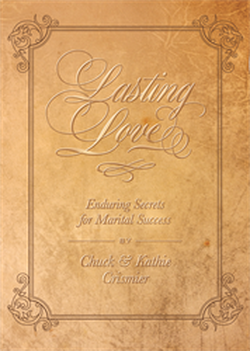
LASTING LOVE can be a dream come true. Yet love requires more than a dream or those loving feelings we so much desire.Lasting Love, Chuck and Kathie Crismier, celebrating their Golden Anniversary, unveil seven enduring secrets that will inspire and strengthen your marriage as it has theirs. COPY and PASTE this link to WATCH the TRAILER: https://www.facebook.com/Save-America-Ministries-204687919570536/videos
Past Episodes
This ministry does not have any series.
Featured Offer
LASTING LOVE can be a dream come true. Yet love requires more than a dream or those loving feelings we so much desire.Lasting Love, Chuck and Kathie Crismier, celebrating their Golden Anniversary, unveil seven enduring secrets that will inspire and strengthen your marriage as it has theirs. COPY and PASTE this link to WATCH the TRAILER: https://www.facebook.com/Save-America-Ministries-204687919570536/videos
About Save America Ministries
About Chuck Crismier
Contact Save America Ministries with Chuck Crismier
crismier@saveus.org
http://www.saveus.org/
Save America Ministries
P.O. Box 70879