

CONFLICT WITH ADULT KIDS


How CAN or Should We Respond?
w/ Dr. Kathy Koch
Voiceover: This is Viewpoint with attorney and author Chuck Crismier. Viewpoint is a one-hour talk show confronting the issues of America's heart and home. And now with today's edition of Viewpoint, here is Chuck Crismier.
Chuck Crismier: The Scriptures tell us that blessed is the man or woman that has a quiver full of kids. A quiver full of kids. That would be at least six. Well, Susanna Wesley had 11, I believe, and so many others have had many, many kids. But what happens if you have kids and they grow up and they're not like the kids you thought you were training to grow up? They grow up to be something other than what you expected. Now what?
Not all of them grow up like Susanna Wesley's kids or like even the matter of Jonathan Edwards' kids, who ended up producing so many, many college presidents and even vice presidents of the United States. But what happens if you have an adult child that grows up and doesn't want to act like the child that you thought they would be?
How do you resolve conflicts and find peace and hope with adult children? This is one of the strangest, one of the most difficult things that parents have to deal with. And today on Viewpoint, Kathy Koch is joining us. Dr. Koch is joining us to tell us exactly what we have to do. She has the prescription all laid out. And friends, I've got to tell you, if you haven't listened, you need to listen today because she is going to tell us exactly what we need to do. Aren't you, Dr. Koch?
Dr. Kathy Koch: Oh my gosh, that's so optimistic. I love that. I will do my very best. Every situation comes much too close to home.
Chuck Crismier: Well, the reason I can present it that way is because all of this comes much too close to home. Much too close to home. We have three daughters. We have 10 grandchildren, two great-grandchildren. And all that out there is not necessarily great. It's a challenge, it's a challenge always. The Bible says train up your child in the way they should go and when they are old they will not depart from it. I think that's more of a declaration that this is most likely to happen, not an absolute promise. What say you?
Dr. Kathy Koch: Definitely. What we know from that Scripture is that they'll have the wisdom in their mind, heart, spirit, and soul if it was taught to them. But that doesn't necessarily mean they're going to follow it day by day. And I would also say that have we taught it, explained it, amplified it, mentored, and taught for it, or have we just lived a model of truth before them? That's going to be weak. Kids need to hear from our mouths: "This is the way you should go."
Chuck Crismier: "This is the way you should go, walk in it." But the talk that we have given doesn't always produce the walk that we had hoped for, does it?
Dr. Kathy Koch: Right. And we have to understand as parents that there are other influences on our children and over our children, more so now than ever before because of social media. We do the very best we can. We raise them up to believe these things, to walk in these ways, to understand that the family values matter.
And then there's independence. Let me remind all of our listeners that there is this launching idea that is God's design. You've always known it. The Facebook posts just crack me up when they say, "Slow down children, don't grow up so fast." Did you not know this would happen? Have you not been prepared to have a different life yourself once your children are out of the home? It's awkward, it can be difficult, but this is what's supposed to happen. They're supposed to launch. We're supposed to change our relationship with them, even though it's hard and awkward and can be really challenging.
Chuck Crismier: Well, they say the phrase is always around "let go and let God." Well, so if that's true, let go and let God, then what's the role of the parent? The continuing role for a parent even as your child has grown up.
Dr. Kathy Koch: Right. We need to change from an active parent. I actually say at the beginning of the book that the noun parent, you'll always have that noun. Your kids will always have the noun child. But you don't parent as a verb unless invited to do so. You guide, counsel, suggest, build up, cheer, mentor, teach, but you don't parent because you're not controlling them like you thought you were. You were never really in control.
But now you need to take on a role of coach, mentor, advisor, sounding board, and you have to be satisfied by that. And if you're not satisfied by that, they will begin to ignore you and you'll have nothing. It's really sad, obviously.
Chuck Crismier: So what we're talking about then is about the issue of authority. When your child has passed the age of majority, you gradually lose your authority in the sense that you thought you had it as a parent, and now your authority is only by worthy of your example that you have given over the years and you've got to rest in that. Is that what you're saying?
Dr. Kathy Koch: I think that's very, very well put. We have to realize that that's good. But if we've met our needs by our authority—if our whole security is our children are wonderful, my identity is I'm a mom, my belonging is I'm their mom, look at them, they're amazing—then who are we? My purpose is to raise them and look at how well they're doing, and my competence is I'm a really good mom.
Or I could have done all of that for the dad who's listening. Then who are we? But that's inappropriate. That's idol worship. God didn't give you children so that they would meet your needs. It's not their job to make you look good as a mom. But if that's what was happening—and I understand it, this is why I do what I do here at Celebrate Kids—I understand that, but it's unhealthy.
We need to let them launch and we need to let them walk in the valley every once in a while because that's how they grow up. That's biblical. So we need to make sure... go ahead.
Dr. Kathy Koch: When you use the word launch, we have a situation now where social experts and observers are saying that one of the premier characteristics of Millennials and, yes, Generation Z is failure to launch. They don't either want to launch, don't feel like they're able to launch, or want to pretend that they're launching while remaining under your tent, but not under your authority. How does a parent deal with all that?
Dr. Kathy Koch: With prayer. In other words, men ought always to pray and not to faint. I think you earn the right to be heard the older that they are. And we need to understand that. They're not launching well partly because we have done all the thinking for them. I wrote a whole book on resilient kids. If you have over-parented them and if you have helicoptered and smothered them—and again, this was parenting that you thought was good, I'm not saying you did anything intentionally wrong.
But if you were the kind of mom or dad who moved the juice, grabbed their lunch, told them that soccer tryouts are Saturday and asked if they want to go to the backyard and practice. If you did all the thinking for them, which you thought was good parenting and it might have been, and the children didn't resent it back then for the most part, they were grateful for your help. But that caused them to be weak and fragile because now they don't know how on their own to think and reason and figure out how the world works.
And now they're fearful. And if you continue to smother, they'll resent you. So it's awkward because you want to help them. But if they think the only kind of parent you can be is an over-parent, a smothering parent, they might walk away from you because they don't want that anymore. They need to grow up by failing, if you will, making some mistakes. The Bible's real clear in James chapter 1 and Romans chapter 5. We develop endurance, hope, character, and faith when we struggle and succeed at it. So we need to let them grow and then they'll launch. But if we don't let them, they won't. So smother love is not God love.
Voiceover: Once upon a time, children could pray and read their Bibles in school. Divorces were practically unknown as was child abuse. In our once great America, virginity and chastity were popular virtues and homosexuality was an abomination. So what happened in just one generation? Hi, I'm Chuck Crismier, and I urge you to join me daily on Viewpoint where we discuss the most challenging issues touching our hearts and home. Could America's moral slide relate to the fourth commandment? Listen to Viewpoint on this radio station or anytime at saveus.org.
Chuck Crismier: Welcome back to Viewpoint. I'm Chuck Crismier. We're talking about resolving conflict and finding peace and hope with adult children. Dr. Kathy Koch says that there are strategies and conversations that can work to help us in this endeavor.
And friends, I want to make available her little book that might just be the answer you have been waiting for. We need all the help we can get, all the encouragement that we can get for this particular situation with adult kids. And it's not getting easier, it's getting more difficult. Actually, becoming more difficult.
And so, it's a $16 book, yours for $15 on our website, saveus.org. That's saveus.org. You can give us a call at 1-800-SAVE-USA, 1-800-SAVE-USA, or write to us at Save America Ministries, P.O. Box 7087, Richmond, Virginia, 23255. Writing a check, add $6 for postage and handling. It might be the cheapest way to get resolved, get some help for this very challenging situation that many, many a parent is dealing with.
So, Kathy, it's good to have you on the program here today. Listen, how long have you been involved in counseling kids or counseling parents with regard to kids?
Dr. Kathy Koch: Well, let me think. My ministry is 34 years old, which is amazing. Prior to that, I was a professor, school board member, teacher, and coach. So I have invested my entire career, my entire life really, in the family dynamic and it's a real privilege to do so. This is my ninth book and I speak worldwide and every state. It's just a privilege to be in front of parents of all ages and in churches, schools, conventions, conferences. I just came back from a large homeschool convention. So I'm working with parents of all aged people.
Chuck Crismier: Well, you're the founder of Celebrate Kids. What's that all about?
Dr. Kathy Koch: It's what we do here. We do believe in celebrating kids. I'm an author, podcaster, teacher at conventions. I work with youth pastors. I do pro-life work. I work with kids in chapel talks or youth group presentations in churches. I do a lot of parent education sponsored by Christian schools and churches or events.
I want kids celebrated for who they are and not just for what they do. I want kids celebrated the way Jesus did. Jesus celebrated kids when they were the forgotten generation. But when the learned men, the disciples, asked Jesus who among us is the greatest, He called up a child. And I just imagine them whispering, "Did He hear the question right? It shouldn't be a child." But Jesus celebrated kids when they were ignored by others, and we should be doing that, too. We've got to pay attention to our kids and then, of course, we have to pay attention to our parents.
Chuck Crismier: My wife Kathy is involved—in fact, her name is Kathy as well. And she is involved with several women's groups. And one of the things that she comments to me about after meeting in these various groups is how concerned the various women are in these groups about their adult kids. It's a matter of almost universal concern. Is it really that big a deal?
Dr. Kathy Koch: It's pretty epidemic that our parents and adult children are not getting along. For the parents who get along, praise the Lord. But it's very sadly and there are two or three main reasons that I think that the adult children are trying to separate and we can talk about those. But it is sadly an epidemic.
Chuck Crismier: We find that also in the Scriptures. In fact, we find that David had some problems with his own kids. In fact, so much so that his son Absalom rose up against him and was going to have him killed. So this is something that the Bible doesn't hide from us. There are situations where the kids rise up. We find a fellow, a high priest, his name was Eli, and he had some kids that were pretty wicked. They were trying to rule in the church and committing fornication, adultery, and all kinds of nasty things. Eli had no control over them, but he had not exercised the authority that he did have and God judged him for it. So to what extent is God going to judge us for the kids that are responding in rebellion?
Dr. Kathy Koch: Boy, that's a relevant and an important question. The first thing I think of is God's grace and mercy. Praise the Lord. He understands situations and He is full of grace and mercy. He is also truth and I praise God for that.
Chuck Crismier: But He gave no grace or mercy to Eli. He said, "You have not done what you should have done as my high priest and as a father, and therefore there isn't going to be a single descendant that you're going to have that's going to live to see the light of day."
Dr. Kathy Koch: He may do that for some who are listening. That is His right. So let's change as quickly as we can. Let's remove sin from our lives. Let's ask to be forgiven. Let's live on a different path. Let's admit where we have fallen. And the hope for the adult parent who's listening, or the parent who's listening is, the kid has always been your guinea pig. Your firstborn has always been the guinea pig.
And so you're still learning how to parent an adult child and how not to parent. And the adult children are learning how to be adult children. This is awkward and it is difficult. But we can't lose hope. I think what God's going to be really sad about maybe is that we lose hope in Him. We can't hope in our children and we can't hope in ourselves. We're not worthy of that. But we can hope in God. And I think He must be very disturbed and disappointed when we have given up on Him because we've tried different things and it doesn't appear to be working and so we just stop trying. That's not right.
Chuck Crismier: That's not right either. So God as a Father kept trying. Finally He realized, "My kids don't want to follow me." He did. The whole Old Testament shows us that God's kids didn't want to follow Him. Very few of them really followed Him. What does that say to us, if anything? Another curveball.
Dr. Kathy Koch: Pride, right? If we're prideful, we can figure this all out. Pride is why does God hate it? It's because it wrecks everything. Pride wrecks families. Pride wrecks today and tomorrow. Pride causes us to be unteachable and we don't take risks and we don't grow and we don't love well. We think that we're worthy of all praise and so nobody else is. So I think a lot of this is rooted in pride, rooted in a lack of teachability, and a lack of acceptance of our situation. We don't move forward with hope. There's a lot there that I could—that's where my brain goes, though. It's pride, it's a lack of hope, we're not teachable. We're uniquely—no, we're not.
Chuck Crismier: Okay. Well, that actually plays into your chapter that says "Look honestly at yourself." You must examine yourself at least as much as you critique your adult children. Why is that?
Dr. Kathy Koch: Amen. Well, again, I wrote the book primarily for parents, although adult children have read it and are telling me really good things about their reactions to the book. Adult parents often think children are at fault. Children think the parents are at fault. That's why I write in the book about blame shifting. It's killing us. We have got to be humble and believe that maybe we have done some things wrong.
Now, most parents who've done things wrong didn't intentionally do anything wrong. And I write boldly about that. Now, if you did do something intentionally wrong, own it. Ask to be forgiven if sin was present in that situation. But most parents parented the way that they knew how. They've never intentionally been bad at it. Things just have happened and snowballed.
Now, again, there might be some people listening where they admit, "No, I really did sin against my kids. I was not effective and not good at this." Then own that and ask to be forgiven. That would be a given. But in most cases, it's just a lack of wisdom, a lack of information, an inability to love the unlovable in different situations. It was awkward. But that chapter two, people have wanted to skip it, but when they don't skip it, they're grateful for it. We have got to be willing to look at ourselves.
Chuck Crismier: Well, I'm thinking, Kathy, that this might be a really big situation, particularly if God tells us how to parent, which He does. The simplicity of it is not only are you supposed to love your kids, but even more than that, you're supposed to discipline them. You're supposed to train them up in the way of the Lord. You're supposed to not cease from disciplining them in the sense that you don't spare the rod or you will spoil the child.
The Bible also says that if you do not parent that way, you actually hate your child. Now, how does an adult child respond then when a parent has refused to parent God's way even while claiming to be a believer?
Dr. Kathy Koch: Right. They will walk away most likely, especially if they know that their parents were not following the Lord's way. If a parent raises children in the faith, if they're believers, if they're trying to model God's ways and God's will, and they don't follow through in the best ways, the kid may figure that out and they will resent that. That's certainly true.
What becomes really awkward is that you can't parent in the same way now. If you blew it, if you weren't following God's way—and we understand that, it's hard, who knows? Maybe you weren't even a believer when you raised your kids, but now you're a believer and now you're looking back with tremendous regret. Be careful of judging yourself for things that were not yours. You did the very best that you knew.
Chuck Crismier: But how about if you're a believer? See, 99 percent of those that are listening to this program over the past 32 years are believers.
Dr. Kathy Koch: Right. But were they believers back when their kids were five, six, and seven? Not necessarily. Now, if they were, did they know those Scriptures? Were they in a church that taught those beliefs and those disciplines? This, again, I hear from people all the time who weep with me that they got it wrong, but they didn't know what was right.
Chuck Crismier: What if they did know what was right and they didn't like it? It didn't feel good to them. They thought they could become their kids' friend rather than their parent.
Dr. Kathy Koch: Right. Then they need to repent of that and they need to say to their kids, "I was wrong. I was lazy. I was disobedient. I was immature in my faith. I did not do this well. Please forgive me." And then they need to turn back to God and say, "I am so sorry that I let you down and I am more disappointed than you're disappointed in the fact that my kids are not walking with you."
We've got to own it. We've got to ask to be forgiven. We work to reconcile. We work to restore those relationships and we deeply apologize and then we prove to our kids that we're going to get it right from going forward.
Chuck Crismier: Listen more, talk less. In other words, as a parent of an adult child, you no longer have the ability to speak into the child's life. Is that what you're saying?
Dr. Kathy Koch: You earn the right to be heard. I have written in many of my books to listen long no matter the age of your kids. Seriously, we need to honor them by wanting to hear them. What I say in this book is you listen to understand, you don't listen to judge. And you don't listen to reply with your best instruction. You listen to understand. If your child loves you enough to pour their heart out to you about their relationship, their finances, their career, their educational path, the first words out of your mouth: "Thank you for sharing with me. I love knowing what's going on with you. Are you needing to vent or do you want some input?"
Chuck Crismier: Oh, okay. So you have to ask whether they want some input, otherwise you're just a listening ear.
Dr. Kathy Koch: Well, yes. I believe that adult children resent it when we parent and they're already adults. You might believe that you've done some things badly and you know that your kids are immature—they're 26, they're 21, they're 32—and they're making less than great decisions that you think you have all the answers. They consider it disrespectful for you to offer input that they've not asked for.
This is clearly in the research that we've done and if you want to restore your relationship where they will trust you with more of their information, then we need to be willing to hear. We need to seek understanding and clarity and then we say, "Hey, would you want some input?" And this is really hard, Chuck, but if they say "not yet," we say "okay. I'm available and I'm here, but let's change our subject."
Chuck Crismier: Oh, so when you see your adult child running into the street in front of a semi, which can happen—I'm using that figuratively—you realize, you see that they're heading for massive destruction. Then what? You keep your mouth shut or speak up?
Dr. Kathy Koch: I would yell stop, but I wouldn't elaborate. Based on my work, I would yell stop. I might say, "That's not a good direction for you to go in and you know that it's not a good direction." Now, don't—be careful of saying "I've told you before." Be careful of saying, "I'm glad you're finally rid of that relationship, my goodness, he wasn't good for you." Be careful of coming across again as a know-it-all judge because the adult children are telling me that they have not appreciated the weight of being responsible for Mom's joy. So you've got to be really careful. It's hard.
Voiceover: There is so much more about Chuck Crismier and Save America Ministries on our website, saveus.org. For example, under the marriage section, God has marriage on His mind. Chuck has some great resources to strengthen your marriage. First off, a fact sheet on the state of the marital union, a fact sheet on the state of ministry, marriage, and morals. Saveus.org: Marriage, Divorce, and Remarriage, what does the Bible really teach about this? Find all of this at saveus.org. Also, a letter to pastors, the Hosea project. And many more resources to strengthen your marriage. It's all on Chuck's website, saveus.org. Again, you can listen to Chuck's Viewpoint broadcasts live and archived on the Save America Ministries website at saveus.org.
Chuck Crismier: Welcome back. Some adult children want to talk forever. Others don't want to talk at all. How do you deal with a situation like that, Dr. Koch?
Dr. Kathy Koch: Oh, my goodness, my friend. We pray. We pray that their heart would soften, that they would recognize that we have wisdom. We have to make sure we're not judging them. This is why they're closing their ears, perhaps. We are grateful for what we have. I write in the book about being grateful for what you have rather than only disappointed with what you don't have. Well, that's a very important thing.
Look for the growth that you see. Celebrate it. Thank them for reaching out. You miss them. Just say, "I knew our relationship would change when you moved out and got your own job and perhaps they're married. I knew our relationship would change, but man, I just got to tell you, I miss you. I don't need to be in your business. I know that you're an adult, but I'd love to know more about what's going on. Do you miss knowing what's going on with me? Do you miss what's going on with your grandmother? We used to—when you lived here, I would be able to update you regularly. Do you ever think about her?" We can ask some of those questions, but we have to really be careful. It feels disrespectful to them when we instruct without them asking for it. It makes them feel weak, and no adult wants to feel weak, especially with their parent.
Chuck Crismier: Wow. You're talking some tough stuff for a lot of parents out there. And yet you wrote the book because parents of adults are asking for input and we need to understand again that this is hard. And it's not—we don't have to look back and ask "What did we do wrong?"
It is possible you did nothing wrong. It's possible you raised them up in the nurture of the Lord, you took them to church and Sunday school, you trained them in how to change a tire and change the oil, you fed them well and you've been available to them, but there are so many voices in the culture today. And there's so much that, there's right and there's wrong and there's different and it's just hard.
Chuck Crismier: And so many different personality types. Yes, that's true too. And we need to understand that they're going to be—all of us probably, everybody listening probably went through some season where we were lost and didn't last as long as some of our adult children are demonstrating lostness. But we don't need to panic. God's still on the throne, He's not surprised, He loves them more than we ever would or could. And we need to turn them over. I have a whole release, as you know in chapter one, a "Release Them to the Lord" declaration because it can't be about us.
Chuck Crismier: You talk about grief, how to handle grief. And one of the illustrations that you give is being cut off from your grandchildren. I have heard many a story about that. How do you deal with that?
Dr. Kathy Koch: You own the sadness. The other chapter is on grief because grief is not just for the loss of life. It's for the loss of relationships, the loss of dreams, the loss of hope, the loss of expectation. When your grandkids are cut off, you, if you can, say to the parent, to your adult children, "I am sad for the decision you've made. I don't understand it. I was looking forward to relating well to your children and being a grandmother and going to their school programs. I don't understand it. Can you help me understand? Is there something I've done wrong?"
What I write in the book about the reality that a lot of our adult parents have reimagined the story and they're cutting us off and cutting off the grandkids because they see their upbringing in a very different way from what was true because they're believing the liar and the lie. If you have a chance to say that to them, please say it. If you can't say it because they won't hear it, then you pray for your grandchildren.
You pray the word, you pray with their name in the Scripture, you pray specifically for them and you pray boldly that God will surround them with His people who will show them the delight of the Lord. You may not be the one to win them to Christ, you may not be the one to win them back to the church, but you can pray. God hears your prayers. He loves the grandchildren more than you ever do, ever could. And you pray: Father God, I pray that my grandson's soccer coach would be a believer. I pray that my child will play softball with believers and that they will have a joy in them that is compelling to my granddaughter and that she will ask the kind of question that would allow the softball mate to say, "I go to church, do you want to go to church with me?" or "We have this thing called Vacation Bible School that's really fun, do you want to come?"
And I pray Father God that my children, the parents of my precious granddaughter, will say yes. Help me in humility not need to be the one, but pray Father God that you'll surround them with others that can be the one.
Chuck Crismier: Wow. Adult kids will sometimes lead you into grief. And that grief may be different for a mother or grandmother than for a grandfather. Women are much more emotional, much more deeply rooted in mothering. They have a different viewpoint on those relationships often than fathers and grandfathers do.
It seems to me that perhaps a father, grandfather, has an additional challenge in how to help a mother or grandmother cope with the grief that she feels in the breakdown of relationship with her kids.
Dr. Kathy Koch: That's a really sensitive statement. I love that. You're exactly right. The mom and the grandmother will often feel it way deeper. They will often feel more responsible. They are the nurturers. They probably were the more active parent between a mom and a dad.
So, for the husband, father, grandfather figure to hug and to listen to the spouse, for the dad to listen to the mom, for the husband to listen to the wife and say, "How is this making you feel?" and to support them. One of the things I say boldly in the book is that you need to remember that you're more than a mom. And this is where the dad, the husband, could be a blessing—not in judgment, not to say, "Being a mom, just give it up, it's not happening right now." Don't ever say that. They're always going to want the relationship back.
But remember that you're also a choir member and you're a volunteer at the county food bank and you're a greeter in the children's wing on a Wednesday night. And remember how you're volunteering to serve our neighbor who had knee surgery and can't garden and she's so upset that there are going to be weeds because she loves her flowers. Remember, sweetheart, you're so many other things. Lean into those things. I think God is sad when the sadness overtakes us and we become nothing.
Don't give the power over to your adult kids like that. They're making choices that grieve you, and that's right to be grieved and to be sad, you can even be angry, but don't be despairing because God is so much more than this. And He created you for so much more. I think if you're grieving and you've lost hope of everything, that's idol worship.
Chuck Crismier: Well, it's interesting because we look in the Scripture, we find how God grieved. As a Father He grieved over Israel. Israel He called His son. He took His son out of Egypt, and yet He grieved over them from the very get-go in those first 40 years. In fact, they went through a wilderness experience precisely because they didn't follow the ways of their Father.
They didn't do the will of God, and so they had to go through these trying experiences. And over and over again, God says as a Father, "I did this for you, I performed miracles in front of you, I did this, I did this, I loved you, and look, you've rejected me at every turn." Can you imagine God's grief?
Dr. Kathy Koch: Totally. It's so immense. His heart is so for us. I say all the time that the cost of deep love is deep grief. But I wouldn't not love in order to prevent the grief. Deep, intimate, authentic love is important and it's what we're called to. Created in God's image, He is love. So we will love. If we don't love, we will be broken by that.
Rejection is a huge thing, isn't it? Oh, it is. And then we analyze. Well, why are they making these decisions? We may never know. We may never know. Don't let that wreck you, ruin you, destroy the life that God would want you to live. It's a very, very hard thing to live even though your grandchildren are not a part of your life. But I think we must. I don't want you to give so much power to the devil that the lack of commitment, relationship, and love destroys you. Walk on the narrow path in another direction and do what you can and hope. Hope in God that there'll be a change of perspective someday. It might be that when your grandchildren become 18 and are adults and have freedom that they'll reach out to you.
Chuck Crismier: Well, what about—we were talking earlier on about the failure to launch. One of the characteristics is that we've got kids in their upper 20s, in their 30s, and even their 40s that are still living at home. Does the parent have any authority in a situation like that? How is a parent supposed to handle that? Do you kick them out of the house? Do you say, "Hey, it's time for you to launch, get out of here, be a man, live up to your responsibility, you say you're an adult, how about living like it?" What do you do?
Dr. Kathy Koch: Yeah, it becomes really, really hard. If you've taught them how to be an adult—that sounds so bizarre to say—if they understand how to handle finances and they have work ethic and they have a job, what are they doing at home? Now you can decide about this. Maybe your home is large enough and they have an independent space and they have a bedroom and they've turned another bedroom into a living room for them with your permission. And they're not smothering you and they're not depending upon you for everything. Maybe there are blessings in that.
Chuck Crismier: But is that kind of thing stunting to the child so that the child becomes ever more just a child and never grows up?
Dr. Kathy Koch: It can for some kids. They can take advantage of it and they don't have to launch, they don't have to develop independence. In other cases, they go out and they have a job and they have friends and it's actually just good, it just is a living arrangement. So it's hard for me to say. I think the motivation of the kid for living at home is important to consider. Are they lazy? Do they want everything handed to them on a silver platter? That's inappropriate. Or are they looking for a goal and they need money and staying at home is going to be really healthy for them and maybe they have a parent who has health issues and would benefit from being at home. So I think it depends on a variety of situations.
God didn't—we're not—we don't give birth to a child to maintain childhood for the rest of their life. We don't raise up a child—we don't disciple a child spiritually in order to become our slave spiritually. No, to become an adult, to be wise and responsible as a Christian adult.
All of this reminds me of a song of yesteryear: "He is 20 and 11, 2 times 6 and 2 times 7. He's a young thing and cannot leave his mother." That would be 54 years of age, I figured it out. But there are people like that. This is an age right now where there is much of that kind of dependency on parents. What say you?
Dr. Kathy Koch: I think it's often—and I don't say this lightly—I think it's often the fault of the parent whose only identity has been mom. It's usually the mom. Their security is in their children's behavior, their identity is I'm a mom, their belongingness is to the child, their purpose is to parent, and their competence is I'm a mom. That's inappropriate. That's idol worship. That's expecting a child to provide for you what God is designed to provide.
He needs to be your security. He gives identity. He provides belonging. He gives purpose and He is your competence. So often it is the reality that the parent has not grown up or the parent has not developed a full life and the kid knows it and the kid feels some responsibility and the kid stays home because the mom has actually blackmailed them into being home, if you will. "I can't live without you."
Chuck Crismier: Maybe Dad is addicted the kids to trust his financial largesse and therefore impair the child from ever growing up and becoming a responsible adult.
Dr. Kathy Koch: Yes, that's a fair statement as well. It can be the dad involved. And then what does the kid do? Adult children have said to me, "I'm afraid if I move out, my mom will kill herself." And I don't think that's super common, but I think that is reality. And then again, if we haven't taught the child how to make decisions, how to handle valley experiences, the child is fearful. The child would rather be successful at home than a failure outside of the home. So it is awkward.
Chuck Crismier: You mean about politics and lifestyle and all that kind of thing? That's real, in fact it's more than just real, it's traumatic. I hear parents continually talk about how they can't even talk with their kids anymore. The kids, for instance, went off to the college that the parent financed only to have them equipped to despise the kingdom of God, to reject biblical authority, and then the parent can't understand why the kid comes back and rejects everything that the parent stood for. This is a very troubling thing.
Dr. Kathy Koch: Oh, it is. And we've got to grieve that. We can be angry for a season and sad and we can grieve and again, don't look back with shame and regret. If you allowed them to go to a college, you thought it was going to be okay. Don't look back with today's wisdom and judge yourself too harshly. You chose your alma mater, it was a great college for you, or you allowed them to go to this school, you researched it, you vetted it, you had no idea what the faculty was going to teach your kids. And so we can be sad and we can be disappointed, we can even be mad for a season. But again, it's not something you intentionally saw coming or you would have prevented it most likely, you would have tried to.
Chuck Crismier: And how about the son or daughter that says, "I'm going to move in with my boyfriend, I'm going to move in with my girlfriend." Now what do you do?
Dr. Kathy Koch: You let them—if you can—you let them know, "I'm disappointed in your choice." And be careful of "we raised you better than that." That doesn't do anybody any good. They know how they were raised. But you can express your disappointment. And they're going to say, "Oh, well, we're going to save a lot of money and we're going to get married."
Chuck Crismier: How about God's authority on it? Biblical authority on it. Should the parent express that?
Dr. Kathy Koch: You, if you—yeah, carefully. Carefully. If they are Christ followers—are they believers in name only? Have you seen fruit? Are there other places in their life that you see them acting on their biblical understanding? You can then say, "I'm shocked or I'm disappointed that you would grieve God like this. I don't understand why you wouldn't place your relationship with Christ first." I would communicate that. I might say that without the girlfriend or boyfriend being there. I might do a one-on-one with my kid. I'm just sad that God's opinion of you doesn't matter anymore.
Chuck Crismier: What about the child who, having been raised in a biblically focused home where the parents raise the kids in church with the same teaching—I'll give you an illustration. My father was a pastor, 50 years. Five kids. We all grew up with the same parents, we all grew up with the same teaching, both my father as a pastor, my mother leading us in understanding, memorizing the Scripture, teaching us moral authority and all of those things.
But of the five children, only three ended up following the Lord. Two became radically prodigal. One was prodigal for most of the person's life until breast cancer came along. And it has been a very painful situation. How do you understand a situation like that?
Dr. Kathy Koch: We may never understand it, and that's really hard. We want to look back and go, well—and I write in the book about don't parent with the "if onlys." "If only we would have not changed churches when we did. Oh, if only I wouldn't have moved across the country, maybe that's what did it." Be really careful of that. You may never understand. You pray optimistically for the future rather than judging the past.
You have conversations if you can. We're all individuals. We have personalities, we have learning styles, we have spiritual gifts, we have the gifts from Ephesians 2:10. We have no idea who our kids are paying attention to at school. Which teacher misled them? Which relationship at work brought them down? There's all kinds of things that happen there. We are responsible for what we're responsible for, which is biblical truth. Teaching it, not just living it out, but communicating it with truth.
Also, really interesting, relationships amongst siblings matter. The oldest kid, the youngest kid, the male and the female relationships, there's relationships there that matter. There's all kinds of things that can happen. And I do want parents to be responsible. I want parents to do the best that they can do. But I'm also saying you might never know what happened. So you walk forward with your head held high. Did you do what you could do? Did you pray? Did you lead them in Scripture? Did you worship as a family? Yes or no? How active were you as a believer yourself as an example? And then we continue to pray. Again, we honor God by saying they're your kids and I'm trusting you to help me raise them. It becomes so challenging. But I ended the book with a whole chapter on hope because if that's the story and this is—I grieve that for you and your siblings and your parents. Can we still hope in God? Yes. Because He's not surprised.
Chuck Crismier: What about the—one of the most grievous things that I had to endure was to watch my youngest brother, whom I had befriended all of my life in ways that his siblings did not. And he seemed to be a good person. He didn't go to church, although when my parents were older, he took them to church every week. Every week.
And I sat with him in the last weeks of melanoma. And he said, "Chuck, please don't talk to me anymore about Christ and Christianity, because," here's what he said, "since the age of 15, I have never believed." I was blown away. Just blown away. Talk about grief. Talk about grief.
And I'll tell you, here doing what I do here, having left the practice of law at the height of my career after 20 years, and for 31 years now pleading this ultimate cause of a lifetime to a jury of my peers, the church in America, I feel the grief. I do. And it's very hard. Finding hope when life unravels. The truth is that most of our miracles come from long obedience in the same direction. That's faith, isn't it? Faith is a long obedience in the same direction and that's what God calls us to notwithstanding what seems to happen.
Dr. Kathy Koch: Right. We've got to—it's what honors Him and that's what I think we're called to do.
Chuck Crismier: All right, friends. Here's the book: Resolve Conflict and Find Peace and Hope with Adult Children. Your gift of $15 will put this $16 book in your hands. It's on our website, saveus.org. Call us, 1-800-SAVE-USA. Write to us at Save America Ministries, P.O. Box 7087, Richmond, Virginia, 23255. Writing a check, add $6 for postage and handling.
And I'm even saying these things with hopeful tears in my eyes because you and I stand in the place of God, in a sense, with regard to our kids and grandkids. Pray, believe, trust. Put them in God's hands. Thanks for joining us. Become a partner. Send your gifts by faith, friends, to Save America Ministries. Do it today. Don't delay. We're confronting the deepest issues of America's heart and home from God's eternal perspective.
Voiceover: You've been listening to Viewpoint with Chuck Crismier. Viewpoint is supported by the faithful gifts of our listeners. Let me urge you to become a partner with Chuck as a voice to the church, declaring vision for the nation. Join us again next time on Viewpoint as we confront the issues of America's heart and home.
Featured Offer
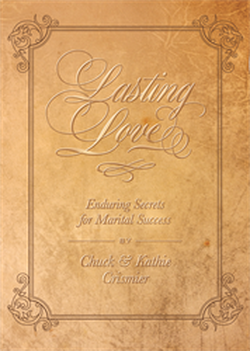
LASTING LOVE can be a dream come true. Yet love requires more than a dream or those loving feelings we so much desire.Lasting Love, Chuck and Kathie Crismier, celebrating their Golden Anniversary, unveil seven enduring secrets that will inspire and strengthen your marriage as it has theirs. COPY and PASTE this link to WATCH the TRAILER: https://www.facebook.com/Save-America-Ministries-204687919570536/videos
Past Episodes
This ministry does not have any series.
Featured Offer
LASTING LOVE can be a dream come true. Yet love requires more than a dream or those loving feelings we so much desire.Lasting Love, Chuck and Kathie Crismier, celebrating their Golden Anniversary, unveil seven enduring secrets that will inspire and strengthen your marriage as it has theirs. COPY and PASTE this link to WATCH the TRAILER: https://www.facebook.com/Save-America-Ministries-204687919570536/videos
About Save America Ministries
About Chuck Crismier
Contact Save America Ministries with Chuck Crismier
crismier@saveus.org
http://www.saveus.org/
Save America Ministries
P.O. Box 70879