
COMMUNISM or CHRIST


Is this America's Final War?
w/ Bradley Thayer
Voiceover: This is Viewpoint with attorney and author Chuck Crismier. Viewpoint is a one-hour talk show confronting the issues of America's heart and home. And now, with today's edition of Viewpoint, here is Chuck Crismier.
Chuck Crismier: What is communism? Is it just an ism, or is there something more dangerous about it? Is it just an ism, an idea, or is it something more dangerous? Today on Viewpoint, we're going to be taking a look at this matter of communism and why it is that it just might be much more dangerous than we even think that it is. In fact, our guest today says that we have been in a 100 Years' War with communism.
It's a play on the 100 Years' War that came out of Europe. The 100 Years' War in Europe, now we have a 100 Years' War in America over the issue of communism because it began in 1917 with the communist revolution. The actual Communist Party began in Russia in 1919, and here we are, 2026, 100 years later, and the war is still going. In fact, it's not just going, it's accelerating. And it's coming in on little cat feet so that people don't recognize it for what it is.
So today on Viewpoint, we're going to be taking a look at this, and I'm glad that you've joined us. It's conversation as always with ever-increasing conviction, talk that transforms. Several years ago, as you know, I wrote a book called Messiah: Unveiling the Mystery of the Ages. And it sets forth a dozen or so different messianic movements that are vying for dominion and authority in our world to ultimately rule the world.
I want to share with you some of the words in the chapter called "The Marxist Messiah." Karl Marx despised religion, calling it the opiate of the people, yet he, in effect, reduced socialistic communism to a secularized form of eschatological, or end-times hope, religion defined by his own dogmas. So a fellow by the name of Ludovica Lalli captured the religiously covenantal concept of Marxist theology without God.
Here's what he said: "The prophet Karl Marx arrived with the aim to save the least of society, the proletarians or the workers, through the establishment of the new covenant with dictatorship of the proletariat. The dictatorship of the proletariat is that eschatological meaning driving the Marxist credo, the establishment of a new material and moral order. The communist revolution represents an operative and cultural event that is perfectly comparable to the process of Christian evangelization."
"While the dictatorship of the proletariat is the ultimate goal, the supreme materialization of the Marxist political thought, Marxism does not only resemble a religion, it is a clear religious account based on hope and the recurrent form of religious commitment. So, while Marxist sociology and economics make no assertion about religious issues other than to in practical effect seek to supplant religious implications, Marxist philosophy is the theology of God-denying atheism pursued religiously."
And liberation theology is a Christianized offshoot of Marxist philosophy that emerged politically in Latin America in the 1950s and 60s. It has since spread throughout the world, including the United States, in so-called black theology. And now it's taking over America in the form of Democratic Socialists of America. So I welcome you aboard, friends. I'm Chuck Crismier. It's conversation as always with ever-increasing conviction, talk that transforms, and today is no exception.
Our guest today is very concerned about this matter of communism. In fact, in my book, King of the Mountain, several years ago, in the chapter called "The Bear versus the Pope," the bear representing Russia, there is a subtitle called "Communism is not dead, but sleeping." Communism not dead, but sleeping. But is it sleeping today? Our special guest, Dr. Bradley Thayer, joins us. Brad, is communism sleeping?
Bradley Thayer: No, it's not sleeping. It's wide awake, extremely active, and it's doing everything it can do to destroy the United States as a constitutional republic and to spread its totalitarianism in the US as well as more broadly in the West. So no, it's not dormant by any stretch of the imagination. It is one of the most active ideologies around today.
Chuck Crismier: It sure is. In fact, I'm thinking back. I've been around quite some time. Back in late 1956, I was 11 years old at that time, and Nikita Khrushchev promised Americans that we would be buried. He said, "We will bury you." We will bury you. Now, he wasn't talking about bombs and guns. He was just saying, we're going to take you over, and we're going to do it without guns. Is that what's happening to us now?
Bradley Thayer: Yes. Chuck, we defeated the Soviet Union, and that was a major victory in that Cold War that lasted from about 1946 to 1991. Americans made tremendous sacrifices during the Cold War. Many Americans were killed in Korea, of course, and Vietnam and elsewhere fighting the Soviet bloc. But we defeated the Soviet Union. We did not defeat communism, the ideology.
Communism is alive and well in China. The Chinese Communist Party is doing everything it can to undermine us abroad and within the US. And Chuck, as you know, there are communists who are active, very active, in the borders of the United States. They don't call themselves communists, of course, which is one of the tools the communists use: never to label themselves or to reveal the truth, but hiding behind progressivism or Democratic Socialists of America, some other term.
But at the fundamentally, this is a communist project where you have Americans working to destroy the US as a constitutional republic at home, supported by the Chinese Communist Party. So it's one fight, the fight against the CCP and American communists at home.
Chuck Crismier: Well, communism still lurks there in Russia, though. It's under cover.
Bradley Thayer: Yes, you always have to worry. You can't uninvent Leninism, sadly. So we always have to worry about the threat of it reappearing in countries. And it still exists, of course, not just formally. It still exists in Cuba and in North Korea, as well as China and Vietnam. So it's alive and well in many states.
But it is a fundamental, it's an existential threat, as President Trump has mentioned several times in his Truth Social posts and in his speeches which he's given, particularly on July 3rd at Mount Rushmore and then, of course, on Independence Day, where he underscored the threat of communism, saying that it is the greatest threat the United States has ever faced. And that's music to my ears because that's the argument of the book, exactly that: that this is the greatest threat that we've ever faced. And we have to act like it and respond accordingly, Chuck. Simply put, we're not doing enough to defeat this ideology.
Chuck Crismier: Well, I think probably a lot of it is that we don't understand what it really is. We think that basically it's all been taken care of because Russia is not carrying on in the name of the Soviet Union now, although Putin said that was the worst thing that ever happened, to get rid of the Soviet Union.
Brad, as a former trial lawyer, I know I feel like I'm constantly speaking to a jury. And so we kind of approach things a little bit that way. We first have to make an opening statement, which I've done concerning this matter, but then we have to present evidence, both documentary and testimonial. And you are the testimony here that is providing that. And I'm kind of doing the examination.
But in doing that, we have to clarify a few words, I think. One of those is everybody is talking today, not about communism, but about fascism. Everybody is accusing, not everybody, but many of the so-called progressive movement are accusing President Trump of being a fascist. Other people are being a fascist. Everybody's a fascist. If you can't think of any other name to call them, you call them a fascist. So what is a fascist?
Bradley Thayer: Well, in political theory, of course, fascism is the idea that there is a central party which is ruling, which is working in conjunction with labor and business to advance the national interest.
Chuck Crismier: Well, I thought that's what communism was.
Bradley Thayer: No, communism's very different. Communism is a totalitarian ideology. In fascism, you have with Mussolini's Italian fascist movement, you had opposition. Most folks don't realize, of course, the King of Italy was still on the throne. There were centers of political opposition to Mussolini. And in fact, they were strong enough to overthrow Mussolini after the invasion of Sicily in 1943. You were never going to overthrow a Soviet government, a communist government. They don't tolerate coups or other centers of power. This is a totalitarian ideology, and not a fascist.
Chuck Crismier: So fascism, therefore, is actually where the government allows capitalism, right?
Bradley Thayer: Yes, allows capitalism, unlike communism.
Chuck Crismier: But it also controls the basic system under which that capitalism works.
Bradley Thayer: Indeed it does. And it works with labor as well, not in a totalitarian effort to essentially deal with the inevitable tensions between capital and labor. So there are multiple centers of power in a fascist government. The party typically is the strongest, but it's not the only one.
Chuck Crismier: All right, so it has a kind of dictatorship, but not total dictatorship.
Bradley Thayer: Yes, it's not totalitarian.
Chuck Crismier: But then when we look at communism, which is another ism. These are all isms, which means they're belief systems where there's some kind of nugget of truth or several nuggets of truth around which the artificial is built. And so communism is what?
Bradley Thayer: Well, communism is the belief that as Lenin advanced it very importantly, and I think rather than talking about Marx and Engels, it's far more important to talk about Vladimir Lenin. Because what Vladimir Lenin did is, first of all, he made tremendous theoretical contributions to communism. But more importantly, he made communism happen. So this is a guy who took theory and turned it into practice.
Chuck Crismier: All right, so the theory, though, the theory was Marxist theory, was it not?
Bradley Thayer: Well, with Lenin's insights as well. Marx and Engels said the working class should unite to overthrow the capitalist class. Lenin's contributions were, first, that's never going to happen. What you needed to have was a party of supremely disciplined individuals who drove a revolution forward. It was the party that was going to be the vanguard of the proletariat that was going to bring about the revolution.
Secondly, Lenin also, in opposition to Marx and Engels, Lenin recognized the peasantry could be a revolutionary class in his mind, where Marx and Engels had contempt for the peasantry. But Lenin recognized, of course, their important role that they could play. So Lenin also united workers and peasants. You may remember the Soviet flag, the hammer and sickle, right? Worker and peasant coming together under the red star of the party of communism. But Lenin is the guy who made it happen.
Chuck Crismier: All right, so in other words, that's where force comes in. Socialism is a system, it's a belief system that's rooted in economics. But when you translate that from a system of thought into action, that's where communism comes in. It's the enforcement agent of socialism.
Bradley Thayer: Well, I would see it a bit differently. I see communism as being discrete from socialism. Socialism might be the idea that, for example, that you've had traditionally in Western European politics, Scandinavia, for example, where you have democracy. You have a democratic form of socialism, but the economy is very tightly controlled. Communism leads to totalitarianism. There's no variation. It's a one-to-one ratio.
Chuck Crismier: All right, that may be true, but then why is it that people are saying that the Democratic Socialists of America, then, are heading toward communism when in fact they're just doing exactly what you described of the Scandinavian states?
Bradley Thayer: I see that a bit differently, Chuck. I see the Democratic Socialists of America as just being a front organization. So in order to understand American politics today, I think we need to understand that there has been a strong communist movement in the United States since 1919. 1919, 1921.
And that movement took over the Democratic Party. And communists are always very good at using front organizations and fellow travelers. So, for example, a role that the DSA might be playing is to give, through its pronouncements, through its candidates, etc., room for the Democratic Party to pull itself ever more so left, which is the direction they want to go anyway.
Chuck Crismier: All right, but there has to be some saleable point, something that motivates, moves the general public to be willing to accept that idea because, generally speaking, they don't want dictatorship, they just want all the benefits that come from it.
Bradley Thayer: Right, and there is. What the communists are promising is a millenarian end. If you support us, we're going to end in a paradise. If you support us, we're going to end in a place where there are no more conflicts and where divisions in society are going to be addressed.
Chuck Crismier: So it's their version of 72 virgins.
Bradley Thayer: Yes, that's it exactly. It's a millenarian end, no doubt about it. It's the same, it's the promise of a paradise on earth that you'll have if you just abide by the dictatorship. Of course, it will never work and it always ends in blood and tears. But nonetheless, they have very valuable rhetorical tools they can use.
Chuck Crismier: So it is actually a messianic vision, an eschatological vision of the end of the age, the end of whatever, in which communism becomes the ultimate utopia to bring peace on earth, goodwill toward men.
Bradley Thayer: Yes, that's the end. Of course, it's all about power. These are individuals who have no concern whatsoever. Lenin was never a worker. He was never a peasant, and he was contemptuous of it. You have to understand, these guys just made it up. They just made it up. This ideology served as a mechanism for them to seize power and to rationalize their seizure of power. But they're a group of thugs who are very intelligent and very driven individuals to be sure, but they're simply thugs.
Chuck Crismier: Well, whether it was Lenin or Leon Trotsky or Stalin, they were all of the same ilk, and as a result of their belief system, ultimately, throughout the world, over 100 million people have lost their lives to this utopian vision.
Bradley Thayer: Yes, indeed. Over 100 million people have, indeed. It's horrific. And that's about 100 years.
Chuck Crismier: So why is it that people, why is it that normal average thinking people, they don't have to be geniuses, why would they be so attracted, so drawn, so willing over time to receive such deception?
Bradley Thayer: Well, to the degree that people are involved, for example, in America, why they might have such support for it, I think we need to talk through that. But communism doesn't ask whether you want to be a member of it or not. It's going to be forced on you. It's going to be imposed upon you brutally.
Why are people attracted to it? Well, I think, Chuck, part of it is the promise. Communism promises to take from those who have and give to those who don't have.
Chuck Crismier: Okay, that's getting down to the point. In other words, it's a cult of envy. It's driven supremely by envy.
Bradley Thayer: And it promises to right wrongs. It says you've been oppressed, and I'm going to address that. I'm going to go after your oppressor. So jealousy folks might want to say, well, I've been oppressed. I'm in difficult circumstances, and I'm looking for an ideology which is going to say it's going to destroy, annihilate my oppressor.
Chuck Crismier: Isn't that what the entire progressive movement is about, to create victims and their oppressors? So everybody, if you don't like them, they're the oppressor and you're always the victim. You have no responsibility. Therefore, take from them, give to me, and that leads to the entire entitlement movement. All of this works together as one, doesn't it?
Bradley Thayer: Yes, it does indeed. So we can understand why folks would be attracted to these appeals. It's going to take from those who have and give to those who don't have. It's going to right wrongs purportedly, and it's going to do so quickly. And there's an urgency also because the communists are always in a hurry. There's an activity that might be very attractive for younger folks to be involved with at direction they're moving.
Chuck Crismier: It's something for me to do. I can get out there and demonstrate. I can carry flags. I can make a lot of noise.
Bradley Thayer: Yes. And they claim to be on the right side of history. Okay, well, if you're young, you may want to be on the right side of history, whatever that is, but that appeal, "we're on the right side of history, we're moving forward towards a better aim and a better future." Well, we can understand why folks support this.
Chuck Crismier: Yep, you sure can. It's very attractive, especially if you don't have any anchor for your own soul, and you're looking for something out there that seems to provide meaning to you when you have no meaning in your life.
Bradley Thayer: Or if you have no understanding of history. True. And if you have no understanding of the value of America and of Western civilization.
Chuck Crismier: All right, so what is the value of America then? You see, there are going to be a lot of different viewpoints about this, and we need to talk about this. Because if we don't, then we still are confused. If we think that the value of America is the word freedom, but we don't even know what that means, or we think it means capitalism and we don't even really know what that means, then maybe we are so confused that we don't even know what we're fighting against in this war.
Bradley Thayer: Indeed. In the book, I argue there are three key points that Americans need to understand. First, the American spirit. We are a unique people in a unique land.
Chuck Crismier: In what way? In what way are we unique? Because if we can't define that, we don't even know what kind of people we are.
Bradley Thayer: We're unique because we were born politically mature. We are the first liberal revolution in world history.
Chuck Crismier: Unlike the French Revolution.
Bradley Thayer: The French Revolution went off into a very dark path and then it was overthrown by a dictator, Napoleon. Our Founding Fathers recognized that we are unique. We made our government. We, the people of the United States, made their government. They declared themselves to be independent and they did that without a king, an established church, an aristocracy.
Chuck Crismier: All right, we'll be back after this, friends. Stay tuned.
Voiceover: There is so much more about Chuck Crismier and Save America Ministries on our website, saveus.org. For example, under the marriage section, God has marriage on his mind. Chuck has some great resources to strengthen your marriage. First off, a fact sheet on the state of the marital union, a fact sheet on the state of ministry marriage and more. Saveus.org. Marriage, divorce, and remarriage. What does the Bible really teach about this? Find all of this at saveus.org. Also, a letter to pastors, the Hosea project. Saveus.org and many more resources to strengthen your marriage. It's all on Chuck's website, saveus.org. Again, you can listen to Chuck's Viewpoint broadcast live and archived, Save America Ministry's website at saveus.org.
Chuck Crismier: Again, I welcome you back to Viewpoint, friends. We're talking with Brad Thayer concerning his book, America's 100 Years' War: How to Win Against Communism. In order to win against communism, you have to know what your enemy is. And in order to win, you have to know who you are. One of the presidents of the United States once said, "A nation that does not remember what it is or what it was does not know what it is or even what it is trying to do." And that's part of our problem.
So that's why I'm trying to be very particular here as both a direct and cross-examination at the same time of our special friend, Brad Thayer, to make sure we get to the very root of who we are. And if we think we're something other than what we were, then maybe that's part of our problem. Maybe that's one of the reasons why we're so susceptible to communism or socialism or whatever you want to call it. So, Brad, you have said that one of the foundational things, the three things that you think are so important, are that we are a different people and formed our own government.
Bradley Thayer: We're unique people. Our spirit, the spirit of 1776, the spirit of America, was embodied in all Americans until recently, of course, when the communists obviously ejected that. But in American history, we recognize that there is, as the founders did as well, that we were born politically mature. We made our revolution and we decided how we would govern ourselves. And that is unique in international politics. That is a unique revolution.
Chuck Crismier: Brad, that sounds like it's terribly driven by the spirit of pride and not humility.
Bradley Thayer: Well, there's much to be, we should be very thankful and grateful and proudful, I would say, about America and what it has accomplished and what Western civilization, which is also so thankful.
Chuck Crismier: You know, here's one of the points that I think we're missing. And that is America didn't begin in 1776. That was the political birth of America. That was not the birth of we the people. We the people began in 1620 with the Mayflower Compact in the name of God, amen, that formed the first representative government in America.
Then, 10 years later, a godly attorney by the name of John Winthrop brought over four boatloads of Puritans. Before they landed, because they were outside the Virginia Charter, they wrote their own charter. It was called "A Model of Christian Charity." And there, both the Mayflower Compact and John Winthrop's "Model of Christian Charity" expressed the real spiritual foundations of the people that gave a foundation for the political birth of the nation. So if we just look at the political birth of the nation, we don't know what kind of people we are.
Bradley Thayer: I think that's a very important point. Thank you. And we need to recognize that the founders had, of course, an environment that was anchored in Christian thought, of course, and in Western civilization, which is so important. Christian belief and Western civilization, which is also so important. So I see the spirit of America, Western civilization, the fact that we are a part of that and that has given us so much, the world's greatest civilization.
Chuck Crismier: Exactly. So we're abandoning, though, the problem is we're abandoning the concept of what was Western civilization and embracing a different kind of civilization.
Bradley Thayer: Oh yes. Oh yes.
Chuck Crismier: Right? All right. So what was point two then?
Bradley Thayer: Well, point two is the ideology of political liberalism. And an ideology of political liberalism says that we must see individuals as individuals. We are not members of classes. We are not groups. We are not white or black, or a man and a woman. We are individuals, and every individual has rights given by God. And those rights cannot be taken away by a state. They can't be taken away by Vladimir Lenin or they can't be taken away by the EU or name your political entity. They cannot, they exist.
Chuck Crismier: All right, that comes then, going back again, that comes from the deeper spiritual foundation that went all the way back to 1620 and 1630.
Bradley Thayer: Yes. And from that, of course, we know those inform how we generate our political institutions and how we generate an appreciation of the value of liberty and freedom, the need to have faction posed against faction. Of course, the genius of the American political system and our political institutions as the founders generated them and which Americans sustained generation after generation until very recently.
And the last point we've already mentioned, Western civilization. Our spirit, our ideology of liberalism, are all products of a greater civilization. We are a part of a greater whole. And that greater whole has, as American identity has been under terrible assault, so too Western civilization has been under horrific assault.
Chuck Crismier: Exactly. So look at where it began. It began in Europe. They called it Christian Europe. But Europe is anything but Christian today, yet it's still Western civilization, but it's been perverted.
Bradley Thayer: Oh explicitly. I mean, the point is you've got neo-Leninists in charge of Europe and they're doing everything they can do.
Chuck Crismier: Right. So we are very susceptible. In fact, we're playing footsie with Canada, with Europe, and we claim to be of the same ilk. But they're much further along in embracing the foundations of both socialism and communism than we are. But we're following in their jetstream, aren't we?
Bradley Thayer: Oh that's a danger, Chuck. That's such a danger that we are. We are still products of Western civilization and this can be saved. Western civilization can be saved, but it will take Americans and it will take Europeans, Canadians, Australians, New Zealanders to have, if you will, a rebirth of their identity, a recognition of their greatness.
Chuck Crismier: All right, so what does that identity look like? Let me give you an illustration. See, now I'm going into the cross-exam mode here, not for an antagonist, but actually to try to make sure we get the total picture out here. Several years ago, Vladimir Putin made a statement. He said that Russia had become the moral guardian of the world, that America had become the moral perverter of the world. Now, we have all of our different viewpoints about Vladimir Putin and so on, but that was his viewpoint and there are things that support his viewpoint with what he's done in Russia.
Whether or not we agree with how he does it, that's what his viewpoint is. So if that be true, even partially true, how is that, how are we able to resurrect the kind of people that supposedly we were in order to defeat communism when we actually are playing the game of communism to make it work even in our own country by becoming such an immoral people?
Bradley Thayer: Chuck, I think two big points there. First, we need to remember who we are as Americans and as members of Western civilization. Secondly, we need to understand how communists operate, how they enter into your society and unhinge it, how they attack every element which, if you will, binds a society. And so when we do that, we understand what needs to be repaired and what needs to be repaired with dispatch. That is, there's not a moment to lose in terms of this.
The communists are very good at destroying your society. They come in and they take over the ideas industry. The ideas industry are K through 12, colleges, universities, your museums. They take over your media and they take over your think tanks, if you will. Wherever ideas are generated and sustained, as Reagan said, we're only a generation away from being lost because every generation has to teach the next.
Chuck Crismier: All right, so when Hillary Rodham Clinton, together with her husband, embraced the Rules for Radicals, which were an American form of communism, socialism taking over the country, what do you make of that? And that was in 1995.
Bradley Thayer: Chuck, this has been working in the Democratic Party for many, many decades. Earl Browder, you may remember the name Earl Browder? He was a general secretary of the Communist Party of the United States. And in the 40s, Browder recognized the future of communism as an organized movement was going to be in the Democratic Party. It was not going to be in the Communist Party of the United States of America. But it was going to be in the Democratic Party. So you would still have a Communist Party, but the energy, the focus, the Leninist drive, had moved into the Democratic Party.
Chuck Crismier: All right, so it would euphemistically be called Democratic Progressivism.
Bradley Thayer: Sure. Browder wanted the communists to move, the Leninists in essence, to move into the Democratic Party because the Democratic Party was competitive. It was a stepping stone to a revolution. If you could take over the Democratic Party, you could then realize your communist revolution.
Chuck Crismier: All right, so I want to go from there and leapfrog then back to the Democratic Socialist America platform. I have it right in front of me here. Here are the key proposals. Government overhaul: writing a new US Constitution that abolishes the Senate. In other words, no checks and balances. Leadership changes: replacing the President and Supreme Court with leaders chosen directly by Congress. In other words, the exclusive rule of the people without any checks and balances.
Economic control: moving large corporations into public ownership. The ability to actually control all finances through corporations. Immigration: ending ICE detentions, deportations, and border restrictions. In other words, flooding the country with those who are not citizens or committed to the American vision.
Political accusations: Republicans and conservative leaders argue that the DSA's goals amount to communism dressed up as reform. Critics point out that elements of the platform mirror Marxist ideas about seizing the means of production and abolishing traditional governance. Political opponents use these policies to label progressives and mainstream Democrats as extremists ahead. That's where we are.
So the next heading here is Democratic Socialism versus Communism. What's the difference? With communism, hope becomes horror. It's painted as a wonderful utopian idea, but it ends up in horror. Welcome back to Viewpoint, I'm Chuck Crismier. America's 100 Years' War with Brad Thayer. And it's a very detailed book going back, looking rather intensely at what has happened in our world since 1917 and the Bolshevik Revolution.
And so here we are, Brad, trying as best we can, translate to people who, on the one hand, we hear the word Marxist, Marxist, Marxist. We hear the word Democratic Socialists of America. We hear all of these words, and now we're hearing communist, communist, communist. Well, we didn't respond much to the Marxist issue. We didn't much respond much to the socialist issue. Why should we respond to the communist issue? We've already been sucked into the jetstream.
Bradley Thayer: Well, we should respond to it because everything is at stake. They are just a half a step away from realizing their revolution. And I don't mean in 10 years, I mean in 2029. In 2029, you could lose this country as a constitutional republic in short order. So Chuck, you read what the DSA says. You know what the Democrats, of course, and again, the DSA are a front organization for the Democrats.
Chuck Crismier: Well, the Democratic Party has completely lost control of its own party, and it's now being led by the Democratic Socialists of America.
Bradley Thayer: You know that they will do the following things: they will pack the Supreme Court, so there is no judicial check. They will add states: Washington, DC, US Virgin Islands, Puerto Rico. They will import people by the tens of millions, not just the 20 million plus that Biden did in a period of open borders. They will do 60 million people. They will do 80 million people.
Chuck Crismier: Whatever it takes to flood the market, so to speak, so that there can be no more vision for the America. You're bringing in vast numbers of people that have no clue of what the country's about.
Bradley Thayer: Exactly. So Chuck, at that point, America as a constitutional republic is over.
Chuck Crismier: Brad, I so appreciate you being with us today on Viewpoint and for the writing of this book, which is just essential, America's 100 Years' War: How to Win Against Communism. Friends, you've got to read this book. It's at saveus.org. May God bless you as you read and as you pray for our nation. I'm Chuck Crismier. This is Viewpoint. May God bless you and your family. Goodbye.
Featured Offer
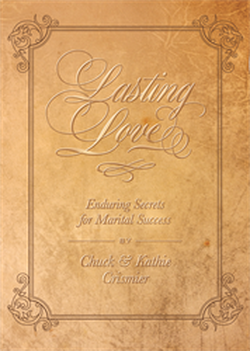
LASTING LOVE can be a dream come true. Yet love requires more than a dream or those loving feelings we so much desire.Lasting Love, Chuck and Kathie Crismier, celebrating their Golden Anniversary, unveil seven enduring secrets that will inspire and strengthen your marriage as it has theirs. COPY and PASTE this link to WATCH the TRAILER: https://www.facebook.com/Save-America-Ministries-204687919570536/videos
Past Episodes
This ministry does not have any series.
Featured Offer
LASTING LOVE can be a dream come true. Yet love requires more than a dream or those loving feelings we so much desire.Lasting Love, Chuck and Kathie Crismier, celebrating their Golden Anniversary, unveil seven enduring secrets that will inspire and strengthen your marriage as it has theirs. COPY and PASTE this link to WATCH the TRAILER: https://www.facebook.com/Save-America-Ministries-204687919570536/videos
About Save America Ministries
About Chuck Crismier
Contact Save America Ministries with Chuck Crismier
crismier@saveus.org
http://www.saveus.org/
Save America Ministries
P.O. Box 70879