

CAN CONSERVATISM SAVE US?


What is missing in the message?
Guest (Male): This is Viewpoint with attorney and author Chuck Crismier. Viewpoint is a one-hour talk show confronting the issues of America's heart and home. And now with today's edition of Viewpoint, here is Chuck Crismier.
Chuck Crismier: Was Jesus a liberal or a conservative? Was he a progressive or was he a passionate conservative? Today on Viewpoint, perhaps that's a good way to open our discussion concerning the role of conservatism because indeed we have some potential problems with regard to the word conservative, with regard to the word conservatism. Is conservatism the foundation for American salvation?
Interesting question, isn't it? Is progressivism the foundation for American salvation? How about liberalism? Most Christians tend to gravitate toward conservatism, but not everyone. In fact, the Democrat Party is made up of progressives. Some profess the name of Christ, but increasingly very few profess the name of Christ.
What is this matter of conservatism and liberalism? How can we understand them? Was Jesus a liberal or a conservative? Was he progressive or was he passionately conservative? I welcome you to Viewpoint. I'm Chuck Crismier. Our conversation is, as always, with ever-increasing conviction, talk that transforms. We're going to delve into this in ways that perhaps you have never thought of.
Maybe you haven't thought of it as the way we open the program today. Was Jesus actually conservative? Was he liberal? Was he progressive? Who was he? He wasn't a politician, except there are those in America who say yes, he was a politician par excellence and he went about to try to change society.
Is that what he did or did he do something else? Was he actually conservative in his rhetoric? Was he about to change society and progress to something else, or was he trying to return to something and conserve it? I recently received an article called "Why Christless Conservatism Can't Save America." It caught my attention. Christless conservatism. Is there such a thing?
Indeed, there really is, but what is it? How are we to understand the nature of Christless conservatism as opposed to a Christian who might be conservative? Will conservatism save America? If you go back to the era of the 1970s, late 1970s moving in through the 1980s and 1990s, we had what was called the Moral Majority movement.
The Moral Majority was led by a pastor, Jerry Falwell, and there were a number of others who came along with him, including Dr. James Dobson, including the founder of the Family Radio Network, American Family Association, and there were others, D. James Kennedy, Pat Robertson, and a number of others who were part of that Moral Majority movement.
They're all gone. Every single one of them is gone. Fifteen years ago, I was broadcasting on the floor of the National Religious Broadcasters Convention and Dr. James Dobson joined me. We had known each other for a very, very long period of time. In fact, he was one of the first donors to Save America Ministries. I'll never forget it. I still have a copy of the $300 check that he gave back in 1993.
We were chatting together and he made a very interesting statement to me. In fact, I thought it was a rather bold statement. He said, "Chuck, we have lost the culture wars." This was about 15 or so years ago. He said we have lost the culture wars. Well, that was the very foundation of the conservative movement at that time, the Moral Majority, looking to find a restoration of conservative biblical ideals, moral ideals, trying to restore a moral America.
For if we could restore a moral America, then we could have a good America. In the lines of the famous de Tocqueville, America is great because America is good, and if ever America ceases to be good, America will cease to be great. How are we going to restore the greatness of America? By becoming more moral.
All the emphasis of the culture wars is how to make the nation moral again. It was a conservative movement rooted in a kind of quasi-blend of political conservatism and Christianity. It wasn't pure in and of itself. It was an admixture of political conservatism or some aspects of it and the pursuit of morality in the country, claiming that it was a Judeo-Christian conservatism.
Along about 50 years ago, with our nation's bicentennial, I was running for office in 1976 as a Republican for the State Legislature in California. I had never been involved in politics before. During that period of time, there was a congressman who was traveling the country from Arizona. His name was John B. Conlan.
He was carrying a message all across America that we have to return to our Judeo-Christian values and we have to get more Christians into elective office in our country. His message really caught a lot of people and he was brought all over the country to speak in Christian gatherings, large Christian gatherings, and he became very popular as a speaker. Congressman John B. Conlan. We've got to get more Christians into government.
That was the movement that came about at our nation's bicentennial. I gravitated toward that. Of course, I was running for the State Legislature at that time, so the message really resonated. But it didn't resonate very long in the state of Arizona because the very next year after our bicentennial, Congressman John Conlan was not re-elected. Apparently, Arizona didn't much like his message. Arizona has become very liberal actually, politically.
Congressman John Conlan, as popular as he was to communicate a kind of Judeo-Christian conservatism, could not be handled in Arizona. He was not welcome anymore. What is welcome in America? Anything? We'll be right back.
Once upon a time, children could pray and read their Bibles in school. Divorces were practically unknown, as was child abuse. In our once great America, virginity and chastity were popular virtues and homosexuality was an abomination. So what happened in just one generation?
Hi, I'm Chuck Crismier, and I urge you to join me daily on Viewpoint where we discuss the most challenging issues touching our hearts and homes. Could America's moral slide relate to the fourth commandment? Listen to Viewpoint on this radio station or anytime at saveus.org.
In reality, people would have every right to question whether American Christianity today is conservative. Why? Because we have followed the drift of liberalism and progressivism, even in God's own house, even by major, major leaders in our country over the past 50, 60 years. It may come as a surprise, but it actually is true, and we're going to see how that works even within the church.
What is Christless conservatism then? This author, Seth Udinski, says Christless conservatism can't save America. Within the conservative movement, there are all kinds of diverse representations. I believe a wide tent is necessary to accomplish political goals that establish a rule of law that is just, morally upright, and beneficial to society.
So I'm all for the things to accomplish political ends that might include that. But I reject Christless conservatism, he said. The power of the conservative movement is not in the policies it upholds. Its power is in the core of its base, that is Christianity or the Christian faith. This leads to a necessary question. Without Christianity, can you still have conservatism?
I guess it depends on how you brand conservatism. This writer said, I would argue an emphatic no. Take abortion for example. Why fight for the lives of unborn children if you don't believe they have been created by God and given true dignity? This does not come from any political philosophy. It comes from the Christian worldview.
You take that away and you take away all the power behind the pro-life argument. The same goes for the LGBT movement, immigration, gun laws, government overreach, and all other issues in which the conservative movement engages. Each of these issues is at its core a spiritual issue with an answer in the Christian worldview.
In short, if you take Christianity out of conservatism, you rip the heart out of the conservative movement. I agree, except that conservatism did not begin in the heart. It began as a political ideology. He continues to write, this is one example of the end result in Christless conservatism. Our politics truly must be driven and governed by our faith in the Lord Jesus Christ.
Our faith in him must come first. The lesson, Christians must not stay silent on political issues. That includes pastors, many of whom have become notoriously silent on issues that are not culturally palatable. In an effort to win people to Jesus through winsomeness, kindness, and an air of acceptance, many pastors have inadvertently shepherded souls directly to hell by not lovingly and courageously calling those souls to repentance.
Let's fight for conservative values, but let's lean on what truly makes the conservative movement mighty, the Christian worldview. Imagine the impact of a united conservative front, not one merely united over an agreement on the Second Amendment or anti-wokeism, but united under the blood of Christ. That would be a political movement with serious power, he says.
It's true, but then there are those, many are arguing today that you cannot mix Christ and politics. To do so is to undo the Christian message, that it's all about Christ but not about politics. But then also within that area of professing Christians, they will turn around and say that Christ was a liberal politician, that he was a progressive, that he came to change society and he came to rectify social issues, and his message was all about changing society.
Is that true? Certainly, the effect of his message was to see certain changes occur in the society, but was that why he came? We would be hard-pressed to say that's really why he came, because he said, "I came to save sinners." Paul, the apostle Paul, gave the message that he said, "My message is to save sinners, of whom I am chief."
We have a problem, a real problem that goes to the very heart of our thinking concerning Jesus, the message of the gospel. Was the gospel good news because of a political impact, or was it good news because of the spiritual death penalty that was on the heads of every man, woman, and child without Christ? Where are you going to put your emphasis?
If you put your emphasis on the social change, you have already undermined the very essence of the gospel. The very essence of the gospel was not to provide good news by changing society. It was to provide good news by bringing about a freedom from sin that drove every other aspect of the negative aspects of society, but even more than that, kept us from relationship with God and consigned us to an eternal death penalty.
That having been said initially, we're going to go on now, and what I'm trying to do, this is a little bit difficult and I don't want you to get lost in the weeds here, so I've done everything I can to try to protect us from the weeds as we go further into this discussion of conservatism. We need to understand the dynamics of what is taking place.
It has actually led us to a kind of diversion from truth. When you replace the main thing with a secondary objective, you necessarily will end up compromising the truth. You can't help it because the secondary agenda, which would be conservatism, would replace the fundamental basis of the gospel.
I hope you're listening carefully because if we preach the message of conservatism by itself, we have actually deceived ourselves and the country and have missed the very revolutionizing aspect of which conservatism can arise, and that is the conversion of the human heart. Let me put it this way.
You may recall that there was a period of time in which Pat Robertson was involved in a particular political movement led by a political movement, and the leader of that left and went to form his own political efforts to raise up political candidates. Ralph Reed was his name, Ralph Reed.
Pat Robertson replaced Ralph Reed as the head of the Christian Coalition, there's the other name, the Christian Coalition, and replaced him with two men. I believe they were both congressmen, Don Hodel and Randy Tate. Don Hodel and Randy Tate were brought in by Pat Robertson to lead the Christian Coalition after Ralph Reed left.
Ralph Reed was a big focuser on conservatism and a fundraiser and so on, and trying to put political candidates, conservative political candidates in office, which was deemed the way to save America. But then Don Hodel and Randy Tate came in and they made a very earth-shaking statement.
If we would fill every elective office in America with professing Christians of the type that we have today, America would still not change. They said America will not change until the hearts of the people change. In other words, the hearts of we the people change. For that, they were removed by Pat Robertson from heading up the Christian Coalition, and actually the Christian Coalition fell apart.
It could no longer sustain itself because these two men had spoken truth to power, so to speak, and had revealed the problem. The problem was not political conservatism or the lack thereof. The problem was the heart of we the people, whether liberal or conservative, whether Christian or un-Christian regardless. The hearts of we the people were not prepared to follow God's ways, so that the very purposes for which supposedly political conservatism would bring about a restoration in the country.
You could not raise money at that time by saying that filling all the elective offices in the country with professing Christians of the type that we had at that time, or even this time, would change America. That message would not raise money. So the Christian Coalition declined and went into demise.
In other words, to focus on the main issue would not raise money. You've got to focus on a secondary issue, conservatism. If you focus on conservatism, then you get to focus on people's behavior and so on, and you can raise money because you're setting up this group of conservatives against this group over here of progressives, and therefore now you have an enemy and you can raise money. That's how it works. That's how it's always worked. It works that way today.
Now we have a divide in the church, a big divide. It's not just in the mainline churches that have supported progressivism, political progressivism and liberalism. It's in the evangelical church. In fact, our young people today are having a serious problem. They don't know how to relate at all to the concept of conservatism.
Very few know how to relate to that, and they're in great chaos and confusion. You say, "Well, how about Charlie Kirk? Didn't he provide some direction in that regard?" Yes, but even there, as much as he tried to focus on the truth of the Word of God and so on, the message that came across to most was it was a political message.
In fact, those who honored him conveyed exactly the same idea. His message was primarily political even though he spoke of Christ and so on. That being the case, conservatism became the alternative to Christ. In a very real way, conservatism, the pursuit of conservatism, became an alternative to Christ. It was a political answer to a spiritual problem. Therein lies our problem today.
What is conservatism anyway? What is it? Well, it depends on who you talk to. Conservatism is a bit of an amorphous thing, just like progressivism is a bit of an amorphous thing. It's like trying to nail Jell-O to a wall. It just doesn't fit all the time. So there are ways in which we can identify conservatism in general. Let me share some of those with you.
Conservatives favor institutions and practices that have evolved gradually and are manifestations of continuity and stability. Notice the words continuity and stability. Government's responsibility is to be the servant, not the master, of existing ways of life, and politicians must therefore resist the temptation to transform society and politics.
This suspicion of government activism distinguishes conservatism not only from radical forms of political thought, but also from liberalism, which is a modernizing, anti-traditionalist movement dedicated to correcting the evils and abuses resulting from the misuse of social and political power.
It was not until the 18th century, the late 18th century, in other words, 1700s, in reaction to the upheavals of the French Revolution in 1789, that conservatism began to develop a distinct political attitude and movement. The term conservatives was first introduced in 1815 by supporters of the newly restored Bourbon monarchy in France.
Then there was a fellow by the name of Edmund Burke, a very famous fellow. He wrote "Reflections on the Revolution in France." It was a forceful expression of conservatism's rejection of the French Revolution. We're going to take a look at what he had to say and where all this went from there, and then we'll leapfrog into our time today. If we don't understand where we were, we don't understand where we are or even where we're going or trying to do. We'll be right back.
There's so much more about Chuck Crismier and Save America Ministries on our website, saveus.org. For example, under the marriage section, God has marriage on His mind. Chuck has some great resources to strengthen your marriage. First off, a fact sheet on the state of the marital union, a fact sheet on the state of ministry, marriage, and morals. saveus.org. Marriage, divorce, and remarriage. What does the Bible really teach about this?
Find all of this at saveus.org. Also, a letter to pastors, the Hosea project. saveus.org. And many more resources to strengthen your marriage. It's all on Chuck's website, saveus.org. Again, you can listen to Chuck's Viewpoint broadcast live and archived at Save America Ministries' website at saveus.org.
Welcome back to Viewpoint. The Moral Majority failed in America, starting in the late 1970s and moving on into the late 1990s. The Moral Majority failed precisely because we tried to change society from the outside in rather than trusting God to change from the inside out. In other words, we tried to enforce morality by law, under color of law, when in fact the hearts of the people were not there.
Therefore, there was resistance. The '60s revolution in the United States of America was a manifestation of that resistance. It spread all over the Western world. It was a rebellion very much like the French Revolution. A rebellion against all authority, parental authority, government authority, religious authority.
It was a rebellion against authority and it was the Baby Boomer generation that led it, the largest generation in American history up to that time, led the rebellion. It was a kind of French Revolution but it was in America where it started and spread all across Europe. You had certain representations of that in the music realm, whether it was the Beatles, whether it was the Rolling Stones or whatever else.
No wonder they couldn't get any satisfaction. They tried, they tried, and they tried, but they couldn't get no satisfaction because you can't get satisfaction through political responses. Liberal, progressive, rebellious, you can't get satisfaction that way. So the conservatives said, "No, we can get satisfaction by preserving as much as we can the status quo.
We can preserve the status quo and therefore preserve an element of satisfaction so we can all get along, we can do well, and we can prosper because now we're going to have all the riches that we need and all the other problems will take care of themselves because money answers all things." Well, along came Edmund Burke, whose book "Reflections on the Revolution in France" in 1790 expressed a lot of what he thought about that French Revolution.
For Burke and other pro-parliamentarian conservatives there in England, the violent, untraditional, and uprooting methods of the revolution outweighed and corrupted its liberating ideals. In other words, they went about things the wrong way. The general revulsion against the violent course of the French Revolution provided conservatives with an opportunity to restore pre-revolutionary traditions and several branches of conservative philosophy soon developed.
It was out of the French Revolution, in essence, that the whole concept of conservatism developed. It was a reaction. A common way of distinguishing conservatives from both liberalism and radicalism is to say that conservatives reject the optimistic view that human beings can be morally improved through political and social change.
That is the foundational belief of progressivism, of Godless progressivism, that people are not fundamentally evil, they're fundamentally good, and therefore human beings can be morally improved through political and social change. In other words, by compelling them. That sounds an awful lot like communism, doesn't it? Socialism, communism.
Skeptical conservatives merely observe that human history under almost all imaginable political and social circumstances has been filled with a great deal of evil. Far from believing that human nature is essentially good, conservatives tend to assume that human beings are driven by their passions and desires and are therefore naturally prone to selfishness, anarchy, irrationality, and violence.
Conservatives look to traditional political and cultural institutions to curb human's base and destructive instincts. Edmund Burke said people need a sufficient restraint upon their passions, which is the office or purpose of government, to bridle and subdue those passions. Families, churches, and schools must teach the value of self-discipline, and those who fail to learn this lesson must have discipline imposed upon them by government and law.
Without the restraining power of such institutions, conservatives believe that there can be no ethical behavior and no responsible use of liberty. When you think about that, you realize that going back to the time of the American Revolution, when you have John Adams, the second president of the United States, making a statement that we have no government armed with power that could withstand the waves of human passions, evil passions.
He said our government was made for a moral and Christian people, and is wholly inadequate to the government of any other. In other words, our founders believed almost universally not in the fundamental goodness of man, but in the fundamental sinfulness of human beings. We've completely turned that on its head now, even in the conservative movement.
It's very hard to maintain that idea, which is the biblical idea that forms the foundation of the salvation message and of Christ coming, the foundation of the whole gospel itself, that humankind is fundamentally sinful and evil. As Jeremiah said, the heart of man is desperately wicked, who can know it?
How do you raise money preaching that message today? You don't because the majority of people, even though they can read in their Bible that all have sinned and come short of the glory of God, they still don't believe it. They still want to believe that everybody's good in their own way. Even a song came out and said something like that.
Everything's beautiful in its own way. Well, there's a certain truth in that, but not ultimate truth. Everybody is a sinner. Everybody is prone profoundly to sin. Friends, if you want to know why we needed a book called "The Power to Overcome," that's the reason. That's the reason, because we are not overcomers today, we have been overcome.
You're not going to overcome evil with conservatism by itself. That's why the culture wars failed. We thought we could overcome evil or liberalism with conservatism. No, there's no salvation in conservatism. Conservatism is a viewpoint, a political viewpoint, that is valuable in and of itself, but only if the people are pursuers of truth in Christ, if they're pursuers of truth in Christ and submitted to Christ in their hearts.
Conservatism has no salvific ability. John Adams made it clear. Our government is made for a moral and Christian people. It's wholly inadequate to the government of any other. We can't control you. Robert Winthrop, another, said, we will either be governed by the Bible or the bayonet. In other words, the heart of man is the problem.
The problem is not the politics. The politics are a reflection of the heart. And the heart of man is desperately wicked. Liberal politics, progressivism is a reflection of the heart that says fundamentally we can save ourselves. Conservatism, on the other hand, doesn't say we can save ourselves in the sense. We just have to protect against the progressive advance as much as we possibly can to protect against complete social destruction. That's what conservatism is about.
We're in a situation right now where we don't even realize how we have been seduced into a false trust. I'm not against conservatism. Don't get me wrong. Conservatism is useful and it's an appropriate thing based upon the Word of God, but it's not a matter of a worldview. It's a matter of a God-view.
We have a general Christian worldview, we just don't have a very good God-view and we certainly don't have a very good view of God's view of the human heart. That's why conservatism will not save us. It just will not. Mike Johnson, a fine Christian man, happens to be the Speaker of the House, the third most powerful job in the American government today.
He wrote a paper called "Seven Core Principles of Conservatism." He wrote it in 2018 before he ever became Speaker of the House. He called them timeless principles that made our nation the freest, strongest, and most prosperous in human history. Bear in mind, Mike Johnson is fundamentally a strong believer.
That's the foundation for why he could write that conservatism involved the timeless principles that made our nation free and strong. Number one was individual freedom. Number two, limited government. Number three, the rule of law. Number four, peace through strength. Number five, fiscal responsibility. Number six, free markets, and number seven, human dignity.
These are all, shall we say, applicational expressions of conservatism. The question is, how is it applied? What does it actually look like? Liberalism will not work. Progressivism is godless. Where are we going to go from here? We'll be right back.
Have you ever considered what the early church was like? Many people are developing a heart longing for a greater fulfillment in our practices as Christians. A recent study showed 53,000 people a week are leaving the backdoor of America's churches in frustration. What is going on? Why has there not been even a one percent gain among followers of Christ in the last 25 years?
Could it be that God is seeking to restore first-century Christianity for the 21st century? Jesus said, "I'll build my church." Is Christ by His Spirit stirring to prepare the church for the 21st century? The early church prayed together and broke bread from house to house. They were family, and it was said by all who observed, "Behold how they love one another."
Incredible, but the same can be found right now. Go to saveus.org and click "Cell Church." We can revive first-century Christianity for the 21st century. It's about people, not programs. It's about a body, not a building. That's saveus.org. Click "Cell Church."
Welcome back to Viewpoint. I'm Chuck Crismier. Today we're having a very serious look at conservatism versus progressivism, where it fits with regard to our claim of salvation in Christ, how it affects the future of our country, and our thinking concerning the kind of people we should be electing, what we should trust in them, if anything, and why we should trust them at all.
If they do not have a fundamental biblical worldview, God-view, and human-man-view, in other words, realizing man is fundamentally sinful and wicked, who can know it, they cannot adequately govern. It's impossible because the people are ungovernable. Therefore it requires more and more restrictive laws to try to govern a people that are otherwise ungovernable.
They should be governed from within instead. Now they have to be governed from without. When you have 500 young people, just this last weekend, 500 that raged through several businesses in one small area of a city and overturned everything and terrified all of the people around, 500 young people all under 18, they are ungovernable.
No amount of laws can govern them. Their parents have not governed them. Their parents have not submitted themselves to the government of God. They've not raised their children to be governed by God, and therefore they cannot be governed by man. No amount of laws are going to be able to deal with that kind of outrageous rising up of young people just to rage through and do whatever they want to do because they want to do it. That kind of spirit is growing.
Conservatism is a cultural, social, and political philosophy and ideology that seeks to promote and preserve traditional institutions, customs, and values. Seeks to promote and preserve a range of institutions in Western culture such as the nuclear family, organized religion, the military, the nation-state, constitution, property rights, rule of law, aristocracy, and monarchy, depending on the country that it's involved with.
That's where conservatism is. That's the heart of conservatism. The problem is that conservatism is not the ultimate thing. It's a political thought. It is a political ideology. There is nothing wrong with it in and of itself, but what are you preserving things from and what are you preserving things to?
Conservatism is a conserving movement. What are you seeking to conserve? You're seeking to conserve as best you can what would seem to be good, what could seem to be right, what could seem to be orderly, what could seem to protect the majority of the people from the raging power of young people such as we just talked about and other kinds of nefarious behavior. That's what conservatism is.
But if you continue to compromise those things that can be or must be conserved, you actually have become a participant in progressivism. That's exactly what happened with the foundation of Evangelicalism. You no longer hear people talk about being a Bible-believing Christian, they're just called an Evangelical.
But what does that mean? It doesn't mean hardly anything anymore. Progressivism has stripped away the meaning. Here's what one writer said, the New Evangelicalism is a movement born of an effort to compromise the Christian faith with certain theologically liberal ideas, tendencies, and philosophies. It's not conservative at all.
Evangelicalism is not conservative. It's only trying to conserve certain aspects of the Bible. What aspects is it trying to conserve? One in particular, what we call confessional salvation. In other words, the only thing that we need to do is get people to make a confession of Christ. That was the idea, the fundamental idea of Evangelicalism.
Guess who became the primary exponent of Evangelicalism? Billy Graham. When did that start? In 1949. But the movement of the New Evangelicalism began right after World War II, it took formal shape in the 1940s right after World War II when I was born, when theologians and church leaders such as Harold John Ockenga and Carl F.H. Henry sought to distance themselves from strict, isolated fundamentalism while retaining what they thought to be traditional theological orthodoxy.
The traditional theological orthodoxy was basically limited to Jesus is God, He's Lord, He came to save us from our sins. If you will confess Christ with your mouth, the Lord Jesus, and believe in your heart, you shall be saved. Therefore get people to confess Christ and we've finished our job, that's Evangelicalism.
Then we all get to church and have people saved every Sunday or every Saturday whenever people are going together, that's the message. That was the message of Billy Graham. He would hold up his Bible, I was there in Los Angeles when he held this big crusade, and he said, "The Bible says."
Yes, the Bible does say that, but that's not all the Bible says. The Bible doesn't just say, "Confess your sin." The Bible says, "Be ye holy, for I am holy." The message of holiness and righteousness was almost never preached under the New Evangelicalism. It didn't market well. Why? Because you can raise money getting people to sign up for Jesus, claiming to make a confession with a card or whatever. But you can't raise money discipling people. It just doesn't sell.
Do you see what's happened? Unfortunately, whether he realized it or not, and I'm not here to run down Billy Graham, he was a great man, no question about it, however, he propelled this newly shaped movement into the mainstream. It was a compromising move to get people away from taking the Bible in its whole at face value and to focus in on one particular, and that is getting people saved, in other words, make confessions of faith.
Notch people, get people to notch your belt for a ministry or whatever else and then you can market that out there and see how effective I am. Then out of that came the movement's cultural footprint, the magazine Christianity Today. It was a whole new way to try to look at the Christian faith in the context of American culture.
It was all about trying to enculturate Christian faith for American culture at that time as we moved into the 1950s. Whether you wanted to call it making it relevant, whether you wanted to call it making it practical, I have no problem with the practical aspect or relevance. What I have a problem with is compromising the fundamentals in order to market the gospel and make it more palatable to the masses. That's what Evangelicalism did.
Today the word Evangelical has become almost a mockery. You have people on the news media and so on who will refer to an Evangelical almost with a sneer. It doesn't mean anything anymore. All you had to do was profess Christ, claim to go to church, and you're an Evangelical now. But it's not changing a person's life. Not changing their life.
Didn't change their person's life, didn't change their family's life, didn't change their church's life, and it didn't change the country's life. And if it did, then why is it that the modern proponents of Evangelicalism in Dallas, Texas, major, major, major ministries, broadcasting ministries, huge congregations and so on, 13 of them failed in a matter of 18 months just a couple of years ago?
Why? Because our gospel has been whittled down progressively. The problem isn't conservatism, the problem is we haven't faced the fundamentals and adopted to them because we don't think they sell well. Why should we come alongside what you're doing here? You're saying it because you're saying it doesn't sell well. I'm not here to try to sell anything.
I'm here to be a voice crying in the wilderness. We're living in a wilderness, friends. A wilderness that's largely defined in its broader aspects by the name of Christ. We're abusing the name of Christ and He has become little more than a mascot and not the Master at all. Conservatism now has replaced Christ. And that's not going to work. We're seeing it doesn't work.
Should we be conservative? Yes, but not as a replacement for the more fundamental element and that is we're all sinners. We've got to walk not only in salvation by confession of faith, profession of faith, but that faith, that belief has to be real. It has to be borne out in reality and that's what the Hebrew meaning of the word believe is.
It means not only that I give certain mental assent to certain things, certain facts, it means that I actually conform my life. My whole life is conformed to those things. As Paul said, "For to me to live is Christ and to die is gain." He wasn't trying to pander to anybody out there. He said actually to the Corinthians, he said, "The more I love you, the more you despise me."
Why? Because he had the willingness to tell them the truth concerning their lives and their lifestyle, which was totally contrary to the word, will, and ways of God. He went so far as to say, "Don't you know, don't be deceived, neither fornicators nor idolaters nor practicing homosexuals and so on, people that are continually," they're not going to enter the kingdom of heaven. Put that in your eternal security pipe and smoke it.
We're living in a time when we desperately need to be overcomers because we are being overcome. We really are, by the world, the flesh, and the devil. If you don't have that book "The Power to Overcome: How to Triumph in Troubled Times," and these are those times, I urge you to get it. $25 will put it in your hands. It's on our website saveus.org. Call us 1-800-SAVEUSA. Write to us at Save America Ministries. Add $6 for postage and handling.
I just did an interview today down in Louisiana concerning it. The gal was just blown away. She says, "Wow, this is exactly the message that we need." What do you think? Thanks for joining us. Become a partner, friends. We dare not trust the sweetest frame but wholly lean on Jesus' name and everything He called for us to do, to be doers of the word and not hearers only.
Guest (Male): You've been listening to Viewpoint with Chuck Crismier. Viewpoint is supported by the faithful gifts of our listeners. Let me urge you to become a partner with Chuck as a voice to the church, declaring vision for the nation. Join us again next time on Viewpoint as we confront the issues of America's heart and home.
Featured Offer
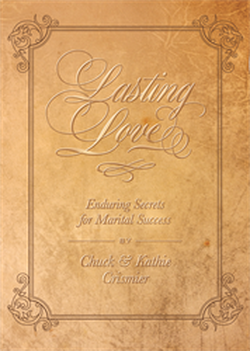
LASTING LOVE can be a dream come true. Yet love requires more than a dream or those loving feelings we so much desire.Lasting Love, Chuck and Kathie Crismier, celebrating their Golden Anniversary, unveil seven enduring secrets that will inspire and strengthen your marriage as it has theirs. COPY and PASTE this link to WATCH the TRAILER: https://www.facebook.com/Save-America-Ministries-204687919570536/videos
Past Episodes
This ministry does not have any series.
Featured Offer
LASTING LOVE can be a dream come true. Yet love requires more than a dream or those loving feelings we so much desire.Lasting Love, Chuck and Kathie Crismier, celebrating their Golden Anniversary, unveil seven enduring secrets that will inspire and strengthen your marriage as it has theirs. COPY and PASTE this link to WATCH the TRAILER: https://www.facebook.com/Save-America-Ministries-204687919570536/videos
About Save America Ministries
About Chuck Crismier
Contact Save America Ministries with Chuck Crismier
crismier@saveus.org
http://www.saveus.org/
Save America Ministries
P.O. Box 70879