
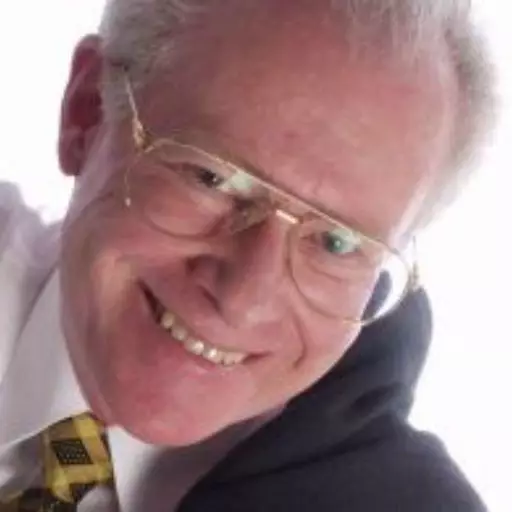
AMERICAN POPE vs. AMERICA


Can Vatican politics be understood?
w/ Paul Kengor
Chuck Crismier: It's an unprecedented situation with the first American Pope directly assailing the American president over the war in Iran. President Donald Trump is accustomed to criticism from coast to coast, from Democrats, disaffected Republicans, late-night comedians, and massive protests. Yet in his second presidency, Trump's most influential American critic doesn't live in the country but at the Vatican.
Never before has the relationship between Washington and the Vatican revolved around two Americans, specifically a 79-year-old politician from Queens and a 70-year-old Pontiff from Chicago. They share some common cultural roots, yet bring jarringly distinct approaches to their positions of vast power. The relationship comes with risks for both sides, says this article from Newsmax that came out today.
A theology professor from Fordham University says this is a very stark contrast and an inflection point for American Christianity. Yet the US administration, which has close ties to conservative evangelical Protestant leaders, has claimed heavenly endorsement for Trump's war on Iran. When Trump was asked whether he thought God approved of the war, he said, "I do, because God is good, and God wants to see people taken care of there in Iran."
Franklin Graham said of Trump that God raised him up for such a time as this. But Pope Leo countered in his Palm Sunday message that God does not listen to the prayers of those who wage war. He referenced an Old Testament passage from Isaiah, saying that "even though you make many prayers, I will not listen; your hands are full of blood." Therefore, God couldn't have listened to the prayers of King David, the second king of Israel, whom he called a man after God's own heart.
We've got some problems, friends. We've got a whole lot to talk about here on Viewpoint today. Our special guest joining us is the author of *American Pontiff: Pope Leo XIV and His Plan to Heal the Church*, Paul Kengor. It's so great to have you on board, my friend. It took a long time for us to connect, didn't it?
Paul Kengor: It did, and my apologies for that. I'll tell you, I don't think I've ever been so besieged with questions and requests about the American president and the American Pope. In fact, I did a book a few years ago called *The Pope and the President*, and it was about John Paul II and Ronald Reagan.
Chuck Crismier: Well, that was a different era.
Paul Kengor: Yeah, I'll tell you. That was the era of Malachi Martin.
Chuck Crismier: Yeah, that's exactly right. That was Malachi Martin, and you had this really outstanding relationship between a non-Catholic, a Protestant American president, and you had a Pope who was Polish. They really bonded over mutual goals in the Cold War. In fact, they especially bonded over the fact that both of them were nearly assassinated just six weeks apart.
On March 30, 1981, Ronald Reagan was shot in Washington, DC, outside of the Washington Hilton by John Hinckley, who just missed by a few centimeters from the president bleeding to death. Then six weeks later, May 13, 1981, in St. Peter's Square, John Paul II was shot by a Muslim Turk named Mehmet Ali Ağca. The two of them had been planning to get together ever since Ronald Reagan was elected, and it was that shooting that separated them. They eventually came together a year later at the Vatican in June 1982, and they said that they believed that God had spared their lives for a special purpose, which was to work together to peacefully defeat atheistic Soviet communism.
Chuck Crismier: With Margaret Thatcher, yeah.
Paul Kengor: With Margaret Thatcher and all of that. I set that up as quite the contrast between what's going on right now with a Pope that's very clearly against the American intervention in Iran at the moment, or at the very least is just urging both sides to lay down their weapons. Popes pray for peace.
Chuck Crismier: Of course they do. You know why they pray for peace? Because they consider themselves the Vicar of Christ, and Jesus was supposed to be the Prince of Peace, so they think they're supposed to be the prince of peace, right?
Paul Kengor: Well, that's right. And also this is very important too, so much so that I almost thought of this as the subtitle for my book, and I noticed that the Pope beat me to it. The Pope's book is called *Peace Be With All of You*, and that came out about six weeks ago.
Chuck Crismier: Well, those were his famous words when he came out and announced his pontificate.
Paul Kengor: That's right. So he steps out onto the loggia on May 8, 2025. I have a question for you.
Chuck Crismier: The apostle Paul said the same thing in many of his epistles. "Peace be unto you." So was he a Pope?
Paul Kengor: Well, he wasn't, but a lot of people—Catholics certainly—consider Peter to be the first Pope. That's what Catholics believe. As Cardinal Robert Francis Prevos coming out onto that loggia said, his first words were in Italian. He said, "La pace sia con tutti voi," peace be with all of you. You hear this enormous applause from the throng below because they're all like, "Who is this guy? What's he going to say?"
So these are good words, and after you get that applause, Robert Francis Prevos, now Leo XIV, says his next words. He says, "These are the first words of the risen Christ to the apostles in the upper room."
Chuck Crismier: And yet when Jesus said, "My peace be upon you," he said, "I'm calling you to a different kind of peace. My peace is not the same kind of peace that you're thinking of," and they didn't applaud him.
Paul Kengor: Right, no, that's right. At that moment in the upper room, you can imagine Peter. Peter's thinking to himself, first of all, as it says in the scriptures, they were all terrified. They thought they had just seen a ghost. Then Peter's probably doubly terrified because the last time he had seen Jesus, he denied him three times.
Chuck Crismier: Exactly. "Do you love me?"
Paul Kengor: Exactly. So he's probably thinking at that moment, "Oh, I'm really going to get it now." But instead, what does Christ say? He says, "Peace be with all of you." Then he repeats it, and he repeats it again. So Leo XIV, those are his first words. That's his first message. In that opening message on the loggia, which I cut and paste from the Italian translation, it was about 600-some words. He said the word "peace," he echoed the word "peace" 10 times.
Chuck Crismier: Wow. Well, maybe the more we say the word, maybe we get the reality of it. I don't know. On the other hand, it says men will cry, "Peace, peace," but there is no peace, right out of the scriptures. You can quote the scriptures for a lot of things, Paul.
Just so you know, because you've never joined us here, this is an issues-oriented program. We are unadulteratedly Christian, unadulteratedly based upon the authority of the scriptures from cover to cover and the cover too. I don't happen to be a Catholic or the son of a Catholic priest. I was the son of a Protestant pastor, however, and that in and of itself is not the issue.
What we're here to talk about is that you've written a book called *American Pontiff* about Pope Leo. We're going to make it available here on the program today, and we're going to have an honest conversation concerning this man, concerning the times in which he lived, you live, I live, and in which we're talking about this. It has tremendous impact for our world, and we'll be right back, friends. Stay tuned.
Once upon a time, children could pray and read their Bibles in school. Divorces were practically unknown, as was child abuse. In our once great America, virginity and chastity were popular virtues, and homosexuality was an abomination. So what happened in just one generation? Hi, I'm Chuck Crismier, and I urge you to join me daily on Viewpoint, where we discuss the most challenging issues touching our hearts and homes. Could America's moral slide relate to the fourth commandment? Listen to Viewpoint on this radio station or anytime at saveus.org.
In 376 AD, a fellow by the name of Gratian became the first Roman Emperor to refuse the idolatrous title of Pontifex Maximus and presented that role to the Bishop of Rome, also known as today, the Pope. By that time, Roman bishops had gleaned substantial political power, and in 378 AD, Bishop Damasus was elected Pontifex Maximus, the very first Pope in history to bear the title, which basically meant the merger of church and state, the Maximus Pontifex.
All the pomp and ceremony that had characterized Rome's pagan worship was imparted into the Roman version of Christianity. Historian Will Durant in *Caesar and Christ* puts it this way. He said the transfer of the power of Rome's decaying government to the increasingly politically powerful Roman version of the Christian church was the Roman See increased its power, its wealth, and ecumenical charities, exalted its prestige. By the middle of the third century, the position and resources of the papacy were so strong that Decius vowed he would rather have a rival emperor in Rome than a Pope.
The capital of the entire empire became the capital of the Roman Catholic Church. Rome absorbed a dozen rival faiths and entered into Christian synthesis. It was not merely that the church took over some religious customs and forms common in pre-Christian Rome, the stole and other vestments of pagan priests, the use of incense and holy water, the burning of candles, the worship of the saints, the law of Rome as the basis of canon law, the title of Pontifex Maximus for the Supreme Pontiff, and the Latin language as the enduring vehicle of Catholic ritual.
Now, those are words, they're not my words, they came directly from *Caesar and Christ*, and it puts some things in perspective here as the launching pad for the further conversation with our special guest, Paul Kengor, who by the way is a very knowledgeable and resourceful person. New York Times best-selling author, he's written the book *American Pontiff: Pope Leo XIV and His Plan to Heal the Church*. Bill Donohue, president of the Catholic League, says this captures the drama that led to the election of the first American Pope.
I want to make the book available to you before Paul and I get into further conversation. Who knows where that will go? It's a $35 hardbound book, yours for $30 on our website, saveus.org. $30 on our website, saveus.org. You can call us at 1-800-SAVE-USA, or write to us at Save America Ministries, PO Box 70879, Richmond, Virginia 23255. Write a check and add $6 for postage and handling.
Paul, as I indicated, this is an issues-oriented program. We don't do argument here. We do discussion, but we don't do argument. Believe it or not, about a month ago I had on this program the author of the history of the famous or infamous, whichever position you have, Malachi Martin, who wrote that famous book *The Keys of This Blood* that I'm looking at right now in my library, 700-some pages. There was a guy tied to the hilt with Pope John Paul II, and he called him the consummate geopolitical Pope. So the papacy has, going all the way back certainly to 300-some AD, been heavily involved in the political scene, hasn't it?
Paul Kengor: Oh yeah, it sure has. Malachi Martin was really a remarkable individual, Chuck. He also wrote the book *The Jesuits*, which really was an exposé on how badly the Jesuits had gone off the rails. At one point, the Jesuits were called the Pope's crusaders. They were these fearless defenders of orthodoxy, of the magisterium of the Catholic Church, Catholic teaching. Now they're extremely liberal.
In fact, Malachi Martin, there was a time under John Paul II when they seriously considered excommunicating or at least cutting the Jesuit order altogether, not recognizing the Jesuit order. Malachi Martin would have probably rolled over in his grave when a Jesuit was picked, Jorge Mario Bergoglio, as the next Pope, Pope Francis, in March 2013.
Chuck Crismier: Who would have ever believed such a thing? Just as who would have ever believed that an American would ever be elected Pope?
Paul Kengor: Well, that's right. In fact, what Cardinal Bergoglio as Pope Francis did, and my chapter on him in the book is called "I Want a Mess," those are the words of him. He lived that in typical Jesuit fashion. He questioned so many things, raised so many questions, had all these synods, would drop some statement from 40,000 feet in the air flying over Europe somewhere about whether the devil exists or whether hell exists, some statement on this or that.
Pretty soon by the end of the 12 years of his papacy, it was a mess. It was complete chaos. One of the main themes in the book is that one of the reasons that the conclave came together under this unknown American who had spent 22 years in Peru, Cardinal Robert Francis Prevos, was they all saw in this guy somebody who was calm, measured, more thoughtful, more careful, and would simply bring normalcy back to the papacy.
Chuck Crismier: In other words, less emotional and less leftist and progressive as was Francis.
Paul Kengor: Yeah. The weird thing about Francis too is that Francis, on one hand, take an issue like homosexuality. He famously or infamously said on the airplane—he made many of these statements on the papal plane—he said, "Who am I to judge?" Now, if you really unpack that, he might well have simply been saying that only God can judge. No one can judge a man's soul or behavior. As Francis even said, "If someone's legitimately trying to live the Christian faith, who am I to judge?" Well, yeah, okay.
Chuck Crismier: That's not really how the words of a Pope would be taken then by a whole raft of people around the world that are promoting sodomy, lesbianism, transgenderism. They're looking for some nice little words to latch onto to say, "Hey, see, the Pope gets me."
Paul Kengor: That's exactly right, and that's what they did with that. But then Francis had many other statements where—and I don't know if I can even use some of these words on your show. They're considered invectives and slurs of homosexuals, the one that begins with the F-word. In fact, Francis said—
Chuck Crismier: That's a different F-word, by the way.
Paul Kengor: It is. It's a different F-word. That's exactly right. I can say the Italian. He said to a group of priests in private, "C'è un'aria di frociaggine al Vaticano." There is an air of—I think I can say this word, it's an old English word—there is an air of faggotry at the Vatican. Francis said that twice. Francis a number of times said, "Do not let homosexuals in the seminary. Do not do it." In one statement, he said, "They can be good boys sometimes, they can behave themselves sometimes, but it is too much of a risk. Do not let them in the priesthood."
He said on marriage, "It must be between a man and a woman. We must say this." On gender ideology, he said, "God made us male and female, there is no debating this." He said gender ideology is comparable to the educational policies of Hitler. On abortion, he said, "Having an abortion is like hiring a hitman."
Chuck Crismier: And then you're still talking about Francis. Isn't this amazing? Because he turns right around and seems to give carte blanche, opening his arms. He says, "We're opening the church, we're opening the Roman Catholic Church with its mothering arms to all practicing homosexuals and divorced people and remarriage, adulterers, serial adulterers. We're just opening our arms because who am I to judge?"
Paul Kengor: Well, and to make it even more official formal, because I know you're not directly quoting him there, but he had, for example, a statement about two or three years ago—I cover this at length in the book—where they seemed to, they did, issue papal blessings to same-sex couples.
Chuck Crismier: Right.
Paul Kengor: When they try to explain this, his head of the Dicastery for the Faith, which was a position once held by intellectual giants like Cardinal Joseph Ratzinger, he brought in a fellow Jesuit from Argentina, Tucho Fernandez. When they try to clarify what they meant by this, they made it even messier. It could be simply that they were—you see the word "blessing" as like an approval. I bless what you're going to do. I approve of what you're doing. But a blessing can also be done like, "Hey, father so-and-so, I'm going to be taking a flight to Texas this weekend. Can you give me your blessing for safe travel?"
Chuck Crismier: That's a different story.
Paul Kengor: Exactly. And so when they tried to clarify all this, it got to the point where not even the left-wing German Cardinals were really clear with what exactly the Pope was doing here.
Chuck Crismier: Well, here's the problem, going back to the word of God, the Book of Romans, chapter one. The apostle Paul writes about those who, having abandoned the fear of the Lord and honoring God as God, their foolish minds and hearts become darkened, and they're given over to pervert themselves from the creation order and to begin to do things among themselves, sodomy and so on, that he says are not convenient. In other words, that are an abomination before God. At the end of that chapter, he says, "And it's not just those who do those things, but it's those who approve them or go along with them. They're going to bear the same burden."
Paul Kengor: Yeah. Well, and immediately it was asked of the Vatican, "Are you blessing same-sex marriages?" And the Vatican seemed to say, "No, definitely not. We are not equating unions with marriages." Well, the next day, quite literally in the New York Times, there's a picture of LGBTQ activist Jesuit priest, father James Martin, blessing a same-sex married couple in Manhattan. Everyone's like, "Well, this isn't supposed to happen."
So then people quickly said, "Pope Francis, Cardinal Fernandez, Vatican, could you please clarify that this isn't supposed to happen?" And what do we get? Crickets. No answer. So what do you get? You get confusion. You get a mess.
Chuck Crismier: You know why? Here's the reason why. It's the same reason why Pope Leo is after Donald Trump concerning the attack on Iran. Exactly the same reason, just a different object. He doesn't want an attack. He just wants peace. Let's just get along. Let's just go along to get along. But the unfortunate thing is, it wasn't Francis, it was Pope Leo who did not take the leaders of Iran to task for the two-day long assassination of 40,000 of their own citizens just to preserve their own power, perks, and position. Where was the voice of Pope Leo for peace then?
Paul Kengor: Yeah. I think really, Chuck, this is what's hurting Leo's credibility on this. I've written three or four pieces on it. I wrote one for *Crisis Magazine* on Monday, and I even said in there that, look, obviously we don't expect the Pope on Easter Sunday to come out in his homily and make a just-war case for the American intervention in Iran. We don't expect that. But it would be nice if to condemn Islamic extremism.
I guess part of the problem is he's only been Pope since last May, so there hasn't been the time. Francis halfway through his pontificate made statements like, "The Koran teaches peace. The Koran is opposed to every form of violence."
Chuck Crismier: Well, that's what George W. Bush said two days after 9/11. That's what George W. Bush said right after 9/11. And then if that were not enough, he said all religions worship the same God.
Paul Kengor: I know exactly what he said. Exactly what he said. So with the case of Leo, and I'm tracking this very carefully, at first the statements from Leo starting about six to eight weeks ago, they were general calls for peace. Lay down your arms. Like, all right, okay, that's what Popes do. They pray for peace.
I think what really set him off—I know what really set him off in the last few days, it set me off too—that Donald Trump Easter Sunday message at 8:03 AM on Truth Social where—and I got that text message while I'm sitting in church.
Chuck Crismier: Shame on you, Paul.
Paul Kengor: Yeah, yeah. But so I'm sitting there. It's 11:10 AM, and I'm wondering where my 18-year-old son is. So I'm a little bit worried. Where is he? Why is he not here? My phone is buzzing in my pocket over and over and over again. And I thought, "Okay, my son maybe got in a car wreck or something, I'd better check my phone." I checked my phone. My son is okay, he's just late. But the president's not okay. He issued this message.
Chuck Crismier: He's going to destroy the civilization of Iran overnight. All right, we're going to be right back after this, friends. We're talking with Paul Kengor, as you can see, in a very open conversation here. There's no war between us. We're having a very open and understandable conversation, a Protestant and a Catholic.
There is so much more about Chuck Crismier and Save America Ministries on our website, saveus.org. For example, under the marriage section, God has marriage on his mind. Chuck has some great resources to strengthen your marriage. First off, a factsheet on the state of the marital union, a factsheet on the state of ministry, marriage, and morals, saveus.org. Marriage, divorce, and remarriage: What does the Bible really teach about this? Find all of this at saveus.org. Also, *A Letter to Pastors*, *The Hosea Project*, saveus.org, and many more resources to strengthen your marriage. It's all on Chuck's website, saveus.org. Again, you can listen to Chuck's Viewpoint broadcasts live and archived on Save America Ministries' website at saveus.org.
The American Pontiff versus America. Wow. Is that the case that it is? I don't know, but it certainly looks like that given the words that are flying back and forth. The first American Pope, Leo XIV, against Donald J. Trump on behalf of the United States of America.
The book before us is a hardbound book by Paul Kengor. This is the official, early on, definitive biography of the first American Pope. It's a $35 hardback book, yours for $30 on our website, saveus.org. Give us a call, 1-800-SAVE-USA, write to us at Save America Ministries, PO Box 70879, Richmond, Virginia 23255, writing a check and $6 for postage and handling.
Paul, as I indicated, there is so much that you and I could talk about here. I wish we had two or three hours. I really do, because it's not just the generalities, it's the nuances. They say the devil's in the details, well so is the truth.
Paul Kengor: Well, the devil's really in the details of some of this stuff for sure.
Chuck Crismier: Well, he sure is. Now the interesting thing is, we were talking about Francis and his problems with homosexuality and same-sex marriage and divorce, remarriage, and all of that. Here's an article that comes from the Vatican City today. Pope Leo XIV says family is between a man and a woman and asserts the dignity of the unborn. Well, that's not much different than what Francis said originally, is it?
Paul Kengor: That's right. Francis said it a lot. Leo has said it so far at least a half a dozen times.
Chuck Crismier: So why is it we can't get a clear statement that's believable?
Paul Kengor: Well, and by the way, I teach at Grove City College in Grove City, Pennsylvania, and I was talking at 2:00 in my class to my students about the story that broke yesterday or the day before about allegedly Trump officials meeting with the Vatican and threatening them and talking about the Avignon Papacy and making a veiled threat to the Vatican.
Chuck Crismier: Yeah, I have that article right in front of me right now.
Paul Kengor: Yeah. And I called my best student assistant and I said, "You know, I started researching this. I don't know, smells kind of fishy." And then as right when class ended, EWTN News, Catholic News Agency, put out an article saying that a statement from the Vatican said none of it happened.
Chuck Crismier: Isn't that amazing?
Paul Kengor: Yeah. And the Trump team yesterday said grossly distorted, terribly exaggerated, this didn't happen. Exactly. So it's kind of, speaking of the devil in the details. One of the things that Pope Francis was actually good about was he probably talked about the devil more than any Pope I can remember. And he used to say all the time, he used to say the devil is behind every calumny, every smear. And he called for an entire new generation of exorcists. He calls for an exorcist in every diocese in the world. And Francis or Leo a few weeks ago reissued that call for an exorcist in every diocese in the world.
So these guys very much know that the devil is a prowling lion out there looking for souls to devour. And a big difficulty for me as a historian, as a papal biographer, is trying to sift through these stories and figure out fact from fiction. And a lot of the times I noticed who was really pushing the story that I just mentioned: *The Daily Beast*, which is a big left-wing publication, right? And Yahoo News, which is terribly biased. Yeah.
So it's really difficult oftentimes to know what the truth is with a lot of this. For American and American Catholics, I remember a lot they would be saying to me, "Why isn't Pope Francis condemning Nancy Pelosi?" And I would say he has no idea who Nancy Pelosi even is. He doesn't read American newspapers.
Chuck Crismier: Well, Pope Leo should probably know.
Paul Kengor: Oh, he knows. And by the way, Pope Leo is a Republican. I lay this out in the book. He voted in the Republican primaries in Illinois four consecutive times after he came back from Peru. His brother Lou, who lives in Florida, is a huge Trump MAGA conservative.
And one of the first things that everybody did when they found out who Leo was was they went to Lou's Twitter account and got all of the statements from Lou about Nancy Pelosi and Kamala Harris and calling all of them names and with some really incendiary comments.
Chuck Crismier: All right. Speaking of that, that's a political term. This program, by the way, even though we deal with political issues, economic issues, all kinds, we deal with moral and spiritual issues on top of it all. We're much more interested in that. I didn't leave the practice of law to play politics. I had run twice for the state legislature in California, and the Lord spoke to my heart after 20 years of law practice, "Son, you've been pleading the cause of men long enough. I want you to plead my cause in the land as a voice to the church, declaring vision for the nation in America's greatest crisis hour here on the near edge of the second coming." I have a question for you. Do you think Jesus is coming soon?
Paul Kengor: Yeah. Well, I'll tell you, I've felt that way for a long time. And speaking of California and politics, and as you probably know, I'm a Reagan biographer. I've done 10 biographies of Reagan, and the 2024 *Reagan* movie with Dennis Quaid was based on one of my books on Ronald Reagan. And in *God and Ronald Reagan* in 2004, I devoted a lot of ink in that book to Ronald Reagan's sense that he believed that he was living in end times.
Chuck Crismier: Yeah.
Paul Kengor: And it was certainly looking like it in the '70s and in the '80s and with Gorbachev. And then, I mean, you and I are both old enough to remember Iranian leaders like the Ayatollah Khomeini, Hashemi Rafsanjani, Mahmoud Ahmadinejad. Saddam Hussein was trying to quite literally rebuild Babylon in Iraq and fancied himself a new Nebuchadnezzar.
Chuck Crismier: Exactly. Well, we don't know the day or the hour, but we ought to know the season, shouldn't we, Paul?
Paul Kengor: We should, and it certainly does feel like we're in those times. And what's really troubled me, I mean just over the last week, is what's gone down during this time of Easter. I mean to wake up on Easter Sunday morning and see that statement from Donald Trump, who I voted for, where he issued this F-bomb message.
Chuck Crismier: He's going to destroy the civilization of Iran overnight. All right, we're going to be right back after this, friends. We're talking with Paul Kengor, as you can see, in a very open conversation here. There's no war between us. We're having a very open and understandable conversation, a Protestant and a Catholic.
Paul Kengor: I know exactly what he said. Exactly what he said. So with the case of Leo, and I'm tracking this very carefully, at first the statements from Leo starting about six to eight weeks ago, they were general calls for peace. Lay down your arms. Like, all right, okay, that's what Popes do. They pray for peace.
I think what really set him off—I know what really set him off in the last few days, it set me off too—that Donald Trump Easter Sunday message at 8:03 AM on Truth Social where—and I got that text message while I'm sitting in church. I know I shouldn't be checking my phone.
Chuck Crismier: Shame on you, Paul.
Paul Kengor: Yeah, yeah. But so I'm sitting there. It's 11:10 AM, and I'm wondering where my 18-year-old son is. So I'm a little bit worried. Where is he? Why is he not here? My phone is buzzing in my pocket over and over and over again. And I thought, "Okay, my son maybe got in a car wreck or something, I'd better check my phone." I checked my phone. My son is okay, he's just late. But the president's not okay. He issued this F-bomb message.
Chuck Crismier: He's going to destroy the civilization of Iran overnight. All right, we're going to be right back after this, friends. We're talking with Paul Kengor, as you can see, in a very open conversation here. There's no war between us. We're having a very open and understandable conversation, a Protestant and a Catholic.
Paul Kengor: Well, that's right. And looking at all of this within the context of Easter and Lent before that. Right now, I mean this is amazing, Chuck, think about this: We took out, or the Israelis took out, the Ayatollah. The Ayatollah's dead. The successor to the Ayatollah Ruhollah Khomeini, who was in there from '79 to '89. And this guy took over for him. They have a whole Shiite Messianic Muslim theology about the hidden Imam. Right now, I don't know who's in charge in Iran. In fact, the current Imam who's supposed to be the successor actually seems to be hidden.
Chuck Crismier: All right. Well, let's talk about that. You've brought this up, and this is a very, very good segue into the reason why this is important. Why is this going on in Iran right now? Where does it fit in the greater picture panoply of God's purposes and declarations of prophecy right there in the scriptures? It's there, not necessarily in the specifics that people would look for.
The reality is that Islam is dedicated to destruction, dedicated to the destruction by its own words over and over again of America representing the great Satan and Israel representing the little Satan. In addition to that, you brought up the 12th Imam, the Mahdi, the Messianic Messiah of Islam. And they believe that in order for him to come, it is their responsibility to create global chaos. That's the reason why they needed to have a nuclear bomb so they could hold the world under tyranny. And this is an effort to stave that off, because that's exactly where they intended to go. What then would Pope Leo say to that? That's an interesting thing.
Paul Kengor: Yeah. No, for sure. And I don't know how steeped he is in reading the Koran and Islamic theology. Folks listening, what we've just talked about here, this is Shiite Islam that we're talking about. But 90% of the world's Muslims are Sunnis. However, 90% of the Muslims in Iran are Shiite. The only Shiite majority countries are Iran and Iraq, ironically, who were killing each other from 1980 to '88.
Chuck Crismier: And what did Jesus say about the words of your mouth? He said out of the abundance of the heart, your mouth speaks. So when you hear what's coming out of Shiite Islam, they are actually communicating their absolute dedicated intentions. And quite frankly, those fundamentalist Muslims are more strong in their convictions than most Christians.
Paul Kengor: Yeah. No, they're definitely very convicted. They know their book. They know the Koran. And by the way, most Sunnis and most Sunni Muslims throughout the Middle East, including the Saudis, the Egyptians, they don't like the Iranians. Saddam Hussein threatened to wipe out the Persians and the Jews both.
Chuck Crismier: And the Saudis don't like them either. We'll be right back after this, friends. You can see why Paul Kengor and I may have hours of conversation that we could engage. We'll be right back after this. Get a copy of his book *American Pontiff*, it will be quite fascinating. $30 on our website, saveus.org.
Have you ever considered what the early church was like? Many people are developing a heart longing for a greater fulfillment in our practices as Christians. A recent study showed 53,000 people a week are leaving the back door of America's churches in frustration. What is going on? Why has there not been even a 1% gain among followers of Christ in the last 25 years? Could it be that God is seeking to restore first-century Christianity for the 21st century?
Jesus said, "I'll build my church." Is Christ by his spirit stirring to prepare the church for the 21st century? The early church prayed together and broke bread from house to house. They were family, and it was said by all who observed, "Behold how they love one another." Incredible. But the same can be found right now. Go to saveus.org and click "Sell Church." We can revive first-century Christianity for the 21st century. It's about people, not programs. It's about a body, not a building. That's saveus.org. Click "Sell Church."
The American Pontiff versus America. Wow. Is that the case that it is? I don't know, but it certainly looks like that given the words that are flying back and forth. The first American Pope, Leo XIV, against Donald J. Trump on behalf of the United States of America.
The book before us is a hardbound book by Paul Kengor. This is the official, early on, definitive biography of the first American Pope. It's a $35 hardback book, yours for $30 on our website, saveus.org. Give us a call, 1-800-SAVE-USA, write to us at Save America Ministries, PO Box 70879, Richmond, Virginia 23255, writing a check and $6 for postage and handling.
Paul, as I indicated, there is so much that you and I could talk about here. I wish we had two or three hours. I really do, because it's not just the generalities, it's the nuances. They say the devil's in the details, well so is the truth.
Paul Kengor: Well, the devil's really in the details of some of this stuff for sure.
Chuck Crismier: Well, he sure is. Now the interesting thing is, we were talking about Francis and his problems with homosexuality and same-sex marriage and divorce, remarriage, and all of that. Here's an article that comes from the Vatican City today. Pope Leo XIV says family is between a man and a woman and asserts the dignity of the unborn. Well, that's not much different than what Francis said originally, is it?
Paul Kengor: That's right. Francis said it a lot. Leo has said it so far at least a half a dozen times.
Chuck Crismier: So why is it we can't get a clear statement that's believable?
Paul Kengor: Well, and by the way, I teach at Grove City College in Grove City, Pennsylvania, and I was talking at 2:00 in my class to my students about the story that broke yesterday or the day before about allegedly Trump officials meeting with the Vatican and threatening them and talking about the Avignon Papacy and making a veiled threat to the Vatican.
Chuck Crismier: Yeah, I have that article right in front of me right now.
Paul Kengor: Yeah. And I called my best student assistant and I said, "You know, I started researching this. I don't know, smells kind of fishy." And then as right when class ended, EWTN News, Catholic News Agency, put out an article saying that a statement from the Vatican saying none of it happened.
Chuck Crismier: Isn't that amazing?
Paul Kengor: Yeah. And the Trump team yesterday said grossly distorted, terribly exaggerated, this didn't happen. Exactly. So it's kind of, speaking of the devil in the details. And you know what, I don't know that it did work. I don't know that it worked, and this is what concerns me about everything going on right now is I don't know how this ends.
We're dealing with a totally different beast. I'm choosing my words carefully here. I mean this is not—the Russians could be deterred. Ronald Reagan said we learned a long time ago that when you approach the Russians with a dove of peace in one hand, you had to have a sword in the other. The Russians respect strength, not weakness, peace through strength. The Russians could be deterred. Nikita Khrushchev and Kosygin said to Fidel Castro and Che Guevara and the Cuban ambassador during the Cuban Missile Crisis, "We see that you would like to die beautifully, comrade. We do not want to die so beautifully." They could be deterred. I don't know if the Iranians could be deterred.
Chuck Crismier: That's exactly my point. That's exactly my point, because we've never dealt—the world has never dealt with a group that was eschatologically fixed on global destruction in order to bring about the salvation of the world.
Paul Kengor: Yeah, and to bring about their end times, to prompt the return of the Mahdi, the 13th Imam. Exactly right.
Chuck Crismier: Exactly. And in the late 1990s, Louis Farrakhan went over to Iran, spoke with the then-President Rafsanjani, and Ahmadinejad was then there as well. And he spoke to him and he said, "Iran is the vanguard of the Islamic revolution worldwide." Basically he said, "You're the guys. Allah is depending upon you to create global chaos in order to usher in Sharia law to govern the world."
Paul Kengor: Well, and indeed a Sunni Muslim wouldn't think that, but a Shiite Muslim would. Because they have this entire different theology based on the hidden Imam. For people who don't totally understand that, there were 12 previous Imams, and according to Shiite theology, they believe that this hidden Imam, this Mahdi, has been with—it's in a process of what they call occultation. He's like hidden like the way that a celestial object is hidden behind another celestial object. And as Mahmoud Ahmadinejad himself said in an interview with ABC News a few years ago, he said, "No, we believe that the Mahdi will return and he will return with Jesus Christ to bring peace to the world." But before that happens, you're going to have some sort of apocalyptic showdown that's going to take place.
Chuck Crismier: All right. Here's what we can be confident of, Paul. Even if a further major attack would be made on Iran to bring them in, shall we say, to submission with regard to uranium, with regard to nuclear power, with regard to the Straits of Hormuz and so on, even if that were to happen, we know from biblical prophecy that Iran's not going to be destroyed. How do we know that? Because in Ezekiel 38 it tells us that Iran, which was then known as Persia, is going to be among a group of nations that will secretly attack Israel to take a spoil in the end of the age, at the latter days at the end of the age. We know that, therefore we know Iran is not going to be totally destroyed.
Paul Kengor: Yeah. Well, and unlike Iraq where it says in the Old Testament, "Babylon, you've become a haunt of demons. Babylon shall fall never to rise again." And so we could say with some confidence when Saddam was up to his mischief, Saddam Hussein—I remember at the time talking about this in the 1990s with a group of friends—about him rebuilding Babylon, and a close evangelical friend of mine, my friend Scott, said, "Well, he's not going to succeed." And we said, "Why do you say that?" And he said, "Because the scriptures say Babylon will not be rebuilt." And Saddam indeed failed in that task.
But the Persians, yeah, the Iranians, I mean this goes back—and Saddam, Saddam actually had a plaque on his desk and a plaque that was also a pamphlet that his radical uncle who raised him had produced. The plaque on his desk said, "Three whom God should have never created: Persians, Jews, and flies." So he wanted to eliminate Jews and he wanted to eliminate Persians. So the battle with the Persians and the Iranians goes way back. And a lot of people today think, "Oh, this just all happened with Jimmy Carter and the way he blew things up and screwed everything up," which he did, allowing the fall of the Shah and the Ayatollah to take over. This all starts in 1979. Well, the modern radical terrorist state starts in 1979, but the history of Persia with the Jews goes back multiple millennia way back in BC times.
Chuck Crismier: Well, it does. There's so much history that people do not know, and because of our ignorance, we're not able to connect the dots. But even more so because of our lack of understanding of biblical prophecy and how it fits together. There's no way that I can sit here or you can sit here and say, "Well this is that, and this is exactly what's going to happen."
We see the signs, we get ready. Jesus said we should get ready. Almost all of his parables were there specifically to encourage his followers to get ready for his return. We're not ready.
Paul Kengor: Yeah. And if I may connect this to our overall topic, how striking is it given what you and I are saying that for the first time ever, there's an American Pope?
Chuck Crismier: Yeah. What are the implications of that? I don't know.
Paul Kengor: Yeah, exactly. And at the time a lot of people just thought—we thought, "Oh, that's cool, an American Pope." No, there must be something else. Look, in 1978, for the first time in 455 years, the conclave under Michelangelo's *Last Judgment* in the Sistine Chapel picked a non-Italian as Pope. They picked a Polish Pope from the heart of the communist bloc. And look how that played out. The Cold War was over 11 years later.
Chuck Crismier: Yeah. And then there was also the prophecy back in the 1300s that foresaw that Benedict XVI would be the last Pope.
Paul Kengor: That's right. The prophecies of Malachi. Not Malachi Martin. But yeah, that's right. And some people thought that Pope Francis was not actually a legitimate Pope. So that could fit into this whole thing of what's going on now too. But of all times to have an American Pope right at the time that the American president is at war on the side of Israel against the Persians. There's something deeper going on here.
Chuck Crismier: That's true. Now one of the things that's deeper, and our listeners need to understand this, we have lots of Catholic listeners to this program, and one of the things they need to understand and probably already do is that I personally do not believe that the Pope is the Vicar of Christ. I believe that the Pope is like a bishop of a large group of people in—
Paul Kengor: He's the Bishop of Rome for sure.
Chuck Crismier: Well, exactly, he's the Bishop of Rome. That's what he is. I don't believe he's the Vicar of Christ. He doesn't stand in the place of Christ. I do not believe that Peter was the first Pope. I believe when Jesus said, "You are rock and upon this rock I will build my church," he was talking about the rock of revelation that he was the Christ, the son of the living God, not that Peter was going to be the rock upon which he would build his church. Jesus said, "I'll build my church and the gates of hell will not prevail against it."
But having said that, what we have is a large number of people, a lot of number of peoples across the country, across the world, who certainly have been raised in the Roman Catholic Church. Many are turning there, and I am not here to rail against those people. What I'm here to do is to encourage people to embrace Jesus Christ as Lord and Savior, to obey his voice, not the voice of human beings that purport to be his representative, but to obey the voice of the Lord and to do his will and prepare the way of the Lord in their hearts for history's final hour. What say you?
Paul Kengor: Yeah. Well, there's a lot I could say about that. I'm looking at the clock, I don't think I could give a full answer to all of that. By the way, I am a former Protestant, so I know all of this very well. I'm actually a convert to the Catholic Church. But one thing that I'll say that my Protestant friends always say to me—and they said it to me more during the Francis papacy than any other time—they said, "We can't lose the papacy. We can't lose the Pope because we orthodox Protestants will be in trouble. We need Rome for stability." And I think that's right.
Chuck Crismier: That's very interesting. Very, very interesting. Hey Paul, I consider you a friend and so glad you joined us here on the program. If you've got some other things to say, you've got my attention here. We've had a wonderful conversation. Friends, the book *American Pontiff*, a $35 hardback book, the definitive biography of Leo XIV, $30 on our website, saveus.org. Give us a call, 1-800-SAVE-USA, write to us, become a partner, friends. Send your gifts by faith to Save America Ministries, PO Box 70879, Richmond, Virginia 23255. God bless, be a blessing, and let's follow the Lord with a whole heart. Not half heart, whole heart.
You've been listening to Viewpoint with Chuck Crismier. Viewpoint is supported by the faithful gifts of our listeners. Let me urge you to become a partner with Chuck as a voice to the church, declaring vision for the nation. Join us again next time on Viewpoint as we confront the issues of America's heart and home.
Featured Offer
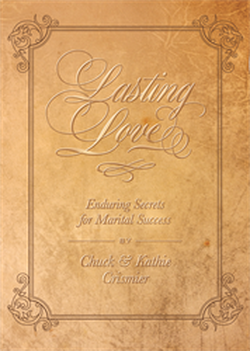
LASTING LOVE can be a dream come true. Yet love requires more than a dream or those loving feelings we so much desire.Lasting Love, Chuck and Kathie Crismier, celebrating their Golden Anniversary, unveil seven enduring secrets that will inspire and strengthen your marriage as it has theirs. COPY and PASTE this link to WATCH the TRAILER: https://www.facebook.com/Save-America-Ministries-204687919570536/videos
Past Episodes
This ministry does not have any series.
Featured Offer
LASTING LOVE can be a dream come true. Yet love requires more than a dream or those loving feelings we so much desire.Lasting Love, Chuck and Kathie Crismier, celebrating their Golden Anniversary, unveil seven enduring secrets that will inspire and strengthen your marriage as it has theirs. COPY and PASTE this link to WATCH the TRAILER: https://www.facebook.com/Save-America-Ministries-204687919570536/videos
About Save America Ministries
About Chuck Crismier
Contact Save America Ministries with Chuck Crismier
crismier@saveus.org
http://www.saveus.org/
Save America Ministries
P.O. Box 70879