
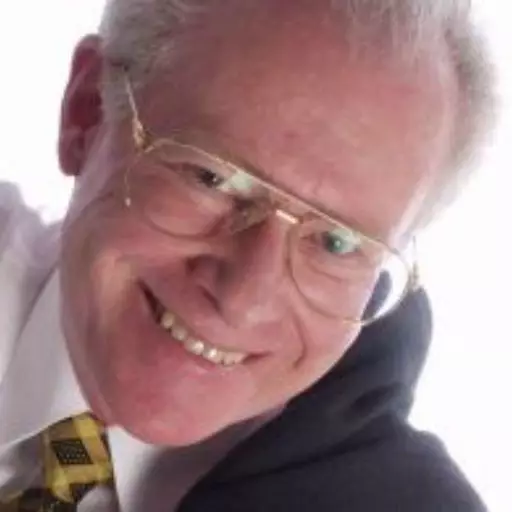
A GOD-SHAPED MIND


Opening the "Faith Portal"
w/ Chuck Coker
Chuck Crismier: What is the mind? If the Apostle Paul says, "let this mind be in you which was also in Christ Jesus," what did he mean? Was he talking about your brain? What was he talking about? Our thought processes? Was he talking about the heart?
Does the brain control the mind? Are the brain and the mind the same? How is the mind different from the brain? Is it different? Can the mind heal the body? Well, we know that the brain itself doesn't heal the body in and of itself, because every one of us has a brain and our bodies aren't healed necessarily.
So what is this business about the mind and the brain? The Apostle Paul made it very clear in 1 Corinthians that the natural mind cannot understand or comprehend the things of the Spirit of God, for they are foolishness unto him, neither can he know them, for they are spiritually discerned. Then he said we shouldn't be judging those that are outside because they don't have the mind of Christ, but he said we should be judging those that are on the inside of the church precisely because we have the mind of Christ.
So the question I ask you as we launch into the program today is, do you have the mind of Christ? Do you have the mind of Christ and what does it mean to have the mind of Christ? That's going to be an interesting question as we process that in a very fascinating, interesting way here today on Viewpoint with my own namesake, a fellow by the name of Chuck, Chuck Coker, and he's written a book, *A God-Shaped Mind*.
Well, friends, that brings us to another question. Is the mind and the brain not the same? The brain is the physical organ inside your head made of cells, blood vessels, and tissue. The mind is the non-physical set of processes like your thoughts, feelings, and consciousness that the brain produces. Thus saith AI.
Well, AI must be right then, right? Then another article covering neurotheology says, are we hardwired for God? That comes from the psychiatrictimes.com. Are we hardwired for God? Another wrote a book called *The Spiritual Brain: A Neuroscientist's Case for the Existence of the Soul*. Well, is the soul the same as the brain or the mind? What are we talking about here, and is there anything within the realm of science itself that can help us to understand and comprehend?
Is science completely disconnected from our minds, from our brains, from our souls, from our spirit? How are we to understand these things? Is there any way within the scientific purview to understand these things? That's what we explore here on Viewpoint today, and again, I'm so glad that you've joined us. It's conversation, as always, with ever-increasing conviction, talk that transforms.
So what would a God-shaped mind look like? I remember Pascal said that there's a God-shaped hole or in every man in his heart, a God-shaped space in the heart. Well, is there a God-shaped space in the mind or is the mind itself God-shaped? Today, Chuck Coker joining us. Did I pronounce your last name correctly?
Chuck Coker: You did indeed, Chuck.
Chuck Crismier: Well, that is a wonderful thing. I must have a God-shaped mind then. We got one thing right then. Chuck, it's good to have you on the program. You know that you and I bear the most abused name in America. They put it in roast, they put us out the window, they up-chuck us. They do all kinds of strange things with us. Have you ever noticed that?
Chuck Coker: Oh, more than once, and it's amazing the derivations of that name that have been thrown at me from time to time.
Chuck Crismier: Well, it actually is a nickname for Charles, and Charles has a much more glorious meaning, which means manly. So I hope you're living up to that definition.
Chuck Coker: Well, one would hope when one has fostered nine children.
Chuck Crismier: Okay, fostered nine children. Did they have God-shaped minds?
Chuck Coker: Well, they do. They're the fruit of my loins and I have invested over 50 years in these kids.
Chuck Crismier: Okay, so this is a fascinating question, Chuck, and I'm curious. What has caused you to write this fascinating book? It's not just a blip kind of a book. It's a fascinating book. You explore these things from a scientific and biblical standpoint and try to weave them together. Is it even possible to weave them together? What caused you to get into this in the first place?
Chuck Coker: Well, my previous book was labeled *Are You Coachable?*. In that time when I was researching that particular book in a study with DePaul University, the thing that I found was that there was a direct correlation, and the most major correlation was the fact that if a person did not have expressed humility, they simply lost their capacity for a growth mindset. In other words, their mindset became fixed.
So the question arose in my brain of, okay, how do we develop a growth mindset? Do we have the capacity for it? Is it a personality trait or is it just something that Carol Dweck imagined at some point?
Chuck Crismier: Well, I've discovered, Chuck, having been a school teacher early on for nine years during some of the most terrifying times in the history of American education, that is right after the Vietnam War, and then also having pastored and having been a practicing lawyer with 80% of my clientele coming from the Body of Christ, I have discovered that perhaps it might be said that a massive number of American people, in fact professing Christians, are not educable. They're just not educable.
They're resistant to learning, they're resistant to change, they're resistant to any kind of formation beyond the givens in their life. What would that have to do with a God-shaped mind? It sounds to me like if we have a God-shaped mind, we wouldn't be fixed like that from the get-go.
Chuck Coker: Well, Chuck, it's an excellent question because it's one that as believers we have to begin to explore and understand, because here's the challenge. You and I both know that the word "doctrine" from Greek means divisions, and there are so many denominations that what has happened through the years is people have tried to make carbon-copy Christians of who they are.
You and I both know that when you do that, you are creating a cult; you are not making a disciple. Discipling means allowing the person to come to their fullness the way God created them, and Paul uses some very explicit verbiage in the pastoral epistles because he is speaking to leadership in the church. He uses the Greek word *Sophron* and its derivative *Sophronizeo*, which means speak to a person in their natural personality style so that they can be edified into who God created them to be.
Chuck Crismier: All right, we'll pick up from that after this break. Chuck Coker with his book *A God-Shaped Mind*. We're going to have to really explore what in the world he just said. So stay with us, friends, we'll be right back.
Viewpoint determines destiny. There are no neutral viewpoints. Every viewpoint has a consequence. It just does. It's just the way God wired things in our world and it's way our thinking is wired to understand that every viewpoint has a consequence. So today, we're actually struggling with a kind or a nuanced viewpoint concerning the matter of our minds, our brains, the head, the brain that's the physical organ on top of our heads, hopefully it's there for you, and what it is the difference between the mind and then the spirit and is the mind actually the mind, will, and emotions? Is that what the soul is? What is the soul?
Our guest today, Chuck Coker, just told us that God wanted every person to be instructed with regard to how to develop—he's talking about a kind of discipleship that would involve speaking to someone in the manner in which their personality and their ears could hear. Now, I'm not sure exactly what that means or what the import of it is, but Chuck, you made a statement that the word "doctrine" means division. But when I look up the word "doctrine," it means teaching. It means instruction. It's very similar to the word "Torah" in the scriptures, the first five books of the Bible, which are called the instructions or teachings. So where do you get the idea that the word "doctrine" means division?
Chuck Coker: Well, it was used interchangeably, especially during the church fathers' period of time, that the doctrines or the teachings are what actually separated people like the Marcionites, the Gnostics...
Chuck Crismier: Okay, now I understand what you meant. So in other words, doctrine is teachings, it's instruction, but they might end up causing division. In fact, they do cause division necessarily, and that's why we have 2,200 denominations in this country, ostensibly all Christian, and over 20,000 worldwide. And they're all teaching something different. Something different, all in the name of Christ. So, question, can they all have the mind of Christ?
Chuck Coker: Of course not. You've laid that out as you opened the program when you quoted 1 Corinthians 2:14. The natural man doesn't understand spiritual things because they're spiritually discerned. So what studies like from Harvard and Baylor University and other major universities have identified is that without this faith-based experience that we call salvation, the mind cannot fully develop to its full potential.
Chuck Crismier: Oh, so in other words, the concept of a new birth actually has to do with the opening of the mind and heart to discern things from a spiritual perspective.
Chuck Coker: That's correct. And at that particular point, what happens is the brain is flooded with dopamine, oxytocin, and serotonin, creating joy and belonging. At that point, the mind creates between 700 to 1,000 new neural connections every minute during that process. So what God is doing is he's giving us more brain power to not just understand the things that we see, because that's what the default mode network is that we are born with. That's survival instinct, but God wants us to understand cause and effect, and that requires different dimensions of thinking that we do not have based on our sight, our hearing, our tasting, and those kind of things. God's opening up the different dimensions for us to see things that we could not see or understand before.
Chuck Crismier: All right, so when Jesus says to the religious leaders of his day who claimed to be the spiritual leaders of Israel, he said, "You claim to see, yet your blindness remains. But if you understood that you were blind, then you would be able to see." Now, it seems very strange that he would say that, but that goes along exactly with what you're just saying now.
Chuck Coker: Exactly. It's 2 Corinthians 4:18. We fix our mind not on the things that are seen, but the things that are unseen, because the things that are seen are temporary and the things that are unseen are eternal. This is why when we look at 1 John 2:12-14 and we see the spiritual maturity stages, we identify that the Pater, or the church father, understands cause and effect. He because he has known Christ from the beginning and he knows Christ from the beginning.
So cause and effect is what the mature Christian understands, and that's why they can be, shall we say, a prophet. You know, the Hebrew word *Naba* means to bubble forth, to communicate these aspects so that they bring understanding to the other people. That's why Jesus' last edict to us was, make disciples. And disciples all have the same, same, same purpose, and that is to glorify God.
Chuck Crismier: Well, that's true, but how do they get there? How do they become disciples? Jesus said in Matthew 28, the Great Commission, he said, "Go into all the world and make disciples, teaching them to obey everything that I've commanded." That seems to be the nature of discipleship. But in my understanding, having grown up in the church, even in a pastor's home and in many different denominations and so on, what I see discipleship taking is learning what a particular church or denomination's doctrine is, their teachings, not learning what God has said. And so they're not learning being led to obey God, but rather to obey the precepts of men. What say you?
Chuck Coker: I cannot disagree with that, because the discipleship that Christ was talking about is bringing a person to become the person they were created to be. That's how we glorify God, and it's just as simple as that. That's why sanctification is so unique to each individual. We cannot compare ourselves to other people because we do not have the same mind, we do not have the same experiences, and the Spirit is going to speak to us differently.
Chuck Crismier: Okay, but we're supposed to have the same mind, the mind of Christ.
Chuck Coker: The mind of Christ, if we understand the Trinity, is the same mind of God and the same mind of the Holy Spirit. So they are congruent. And when we receive the Holy Spirit, we have access to that cause and effect that will teach us to take that next step in the sanctification process rather than become a carbon copy of someone else.
Chuck Crismier: You know, I'm thinking about the application of this, because on this program we try to—we're not unwilling to talk about theory and concepts, but we want to talk about application and the implications. So I'm thinking, my wife and I just celebrated our 60th anniversary. We knew each other for two years before that. So for 62 years, we were together, not living together, but we were together and learning about each other.
The scriptures say very clearly that a husband and wife are to be, shall we say, the model, the earthly model of Christ and his church. So you have a husband and you have a wife, and then you have the Holy Spirit. And those three then become the Trinity expressed on this planet in a very earthly way. That being the case, if husband and wife are in Christ, then naturally they are going to have the mind of Christ. And even though a husband and wife have different personalities, that mind of Christ is going to unite them continually the more so with every year that they live so that they're displaying the mind of Christ which actually brings glory to God. Is that a good way to express it?
Chuck Coker: That certainly is, and we have to look at the Hebrew word *Echad*. *Echad* is used not just in reference to the Trinity, but it's also used in reference to marriage because marriage is to emulate the Trinity because we have the same focus, the same attention, and our minds are working together to build each other. That's why we become one through physical actions where we exchange spirits, mentally when we worship together, and spiritually when we pray together. Because how can a husband understand what's important to his wife if they do not pray together?
Chuck Crismier: Or study the word together.
Chuck Coker: That's correct. It is critical because as the minds grow together, it blends the same way that the natural man blends with the spirit, and we call that crystallized intelligence. When the deep neural reservoir of accumulated wisdom that's not accessible for one person is combined with the others.
Chuck Crismier: You know, it's interesting as we're talking about this because this is defining the exact experience that my wife and I have been cognizant of, conscious of, the last several days since we returned from our celebration of our 60th. And we're sitting there every morning as we've done for 30 years, every morning with our cup of coffee and the Word of God, reading it, discussing it, explaining it, applying it, praying about it, discussing its application in our family and various aspects of the Body of Christ and so on. And what we're discovering is there is an amazing growing unity together in Christ so that it's like we have the same mind even though we have very different personalities.
Chuck Coker: That's absolutely right. And that is the whole concept. And it's like Jesus passed to his disciples, but then he spent all of those months in the desert with Paul to rearrange Paul's thinking, because Paul was an academic and Paul needed to unlearn the academics and understand the relationship with God, with Jesus, and with the Holy Spirit. Otherwise, he would not have been able to plant the churches because it takes relationships to build those church bodies that Paul did not have. He was more interested studying under Gamaliel to be the smartest guy in the class because he had an issue that the other people in the Jerusalem training did not have. He had an issue, his grandparents were born and lived in a little city called Gischala. Gischala is guess what? 24 miles from where? Nazareth. And nothing good comes from Nazareth as we all know.
Chuck Crismier: Well, that's why Paul had to be knocked off his high horse and blinded for three days in order for God to get his attention, because the pride had to be knocked out of him. And then it took humbling himself before Ananias, a Christian that he hated, to have God begin the work of restoration of his own mind and then taking him off to Arabia for some special tutelage by the Holy Spirit.
So it's really fascinating you should bring that up. Friends, *A God-Shaped Mind*, that's the heart—that's the title of this book, *The Neuroscientific Path to Spiritual Maturity*. We'll get into some of those details now as we go into the second half of the program. It's a $28 hardbound book, yours for $21 on our website, saveus.org, saveus.org. Give us a call, 1-800-SAVE-USA, 1-800-SAVE-USA, or write to us at Save America Ministries, P.O. Box 70879, Richmond, Virginia, 23255. Writing a check, add $6 for postage and handling.
This is not just a matter of confession of faith, friends. This is a matter of complete transformation. This is a matter of what it means for our minds to truly be God-shaped or shaped by God by His Holy Spirit. Isn't that what we want? Do we want just a some sort of a cognitive assertion of religious facts? Is that what God is looking for? Or is he looking for somebody like Jesus who said, "I didn't say anything I didn't see the Father say, I didn't hear anything I didn't say anything I didn't hear him say, and I didn't do anything I didn't see him do." Then he said, "As the Father sent me, now even so send I you." I want a God-shaped mind. I'm sure you do too. We'll be right back.
The Christian faith is not defined by science. In fact, science is a process. It's a process of analysis, theorization, testing, and conclusions that change over time based upon changing information. That's science. Science wants to get inside the spiritual mind, wants to get inside the Christian faith to try to comprehend it. Can it be completely comprehended for the world of science? I don't think so. But can scientists make their best effort to do so? Yes, they can.
So we're going to talk a little bit about that in the second half of the program here today with our special guest, Chuck Coker, and his book *A God-Shaped Mind: The Neuroscientific Path to Spiritual Maturity*. Now, when we talk about spiritual maturity, what we're talking about is being disciplined for destiny. We're talking about being and becoming and embracing the mind of Christ, to walk in it, to think like it, to behave like it, to have the same goals, the same expectations, the same hopes, the same dreams, the same orientation to the kingdom of God. Those are all the things that actually become part of the God-shaped mind in discipleship. But how do we get there?
Are we hardwired for God? Psychiatrictimes.com came up with this article: Are We Hardwired for God? Neurotheologians argue that the structure and function of the human brain predisposes us to believe in God. They claim that the sight of God's biological substrate is the limbic system, deep within the brain, which has long been considered to be the biological center for emotion. A prominent neurotheologian goes a step further to suggest that the limbic system is dotted with God neurons and God neurotransmitters.
Well, I don't know how to relate to that, my friends. Maybe our guest today will tell us. The article goes on to say, "The first task of any scientist attempting to link genetics to spirituality is to show that spirituality can be defined and quantified." But how does one quantify spirituality, a quality that would seem by its very nature to defy measurement? Well, who can measure spirituality? Certainly not a human being because it can be faked. Did you know it can be faked? You can fake humility. I have watched people fake humility in the church for years and years and years. They might as well have written the book *Humility and How I Attained It*. Because you can fake spirituality.
So who is the ultimate determiner of whether somebody is truly spiritual and has the mind of Christ? God alone, because he searches the mind and the heart. So, Chuck, as we go into this second part of the program here today about the God-shaped mind and neuroscientific pathway, where would you put our focus to comprehend what science thinks they've discovered concerning the mind and how it is oriented towards spirituality or not and what resistances the scientific world finds that keep us from walking in the Spirit of Christ?
Chuck Coker: Well, I think the most important thing we need to understand is that in 1 John 2:12-14, God has given us a four-step process that we can look at and comprehend. And that is the *Technion*, or the dependent child; the *Paidion*, the learning, growing child; the *Neaniskos*, the young adult; and the *Pater*, which is the church father.
Now, if you look at those different stages from scientific evaluation and testing, you can literally see the differences in how the brain is working differently because the new neural pathways that are created not only enlarge and or shrink based on that particular stage. And let me give you an example.
When you move into the spiritual child where Jesus says, "Let the little children come to me," it is the childlike stage where we want to ask questions. And that is where the brain does something called synaptic pruning, and it begins to expand with neuroplasticity so that when the spiritual gifts come and land in us, they literally begin a process called epigenetic modification, where the cells begin to literally express themselves differently. You're still Chuck Crismier, I'm still Chuck Coker, but our cells are now working differently and expressing ourselves differently because we have moved into this stage where our epigenetics are changed.
And what happens is the hippocampus literally stores facts, and that facts, what it does is it reduces the size of the a part of the brain called the amygdala, which is the fear center. That's why we get the peace that passes understanding. So can these things actually be measured and will they help us better understand the stages of spiritual development? Yes. Are they the answers for everything? No.
Because we live in a four-dimensional world, Chuck. You know that. Length, width, depth, and time. God lives in 10 to 11 dimensions, and this has been documented by people like Hugh Ross, the astrophysicist, who is a Christian apologist. And what we are getting when we have the Holy Spirit is we are getting some of those extra dimensions, and this is what is altering our brain. It is literally changing us as we go through the four spiritual stages. And when we reach that Pater stage and we begin to disciple, we are smart enough to know that we're not trying to make carbon copies; we're trying to maximize them because they have a different sphere of influence that God is going to use them in than we will.
Chuck Crismier: All right, so going back to—you said the amygdala has to do with fear. And I want to go back to the childlike faith. To me, the essence of the childlike faith is not questioning. That's more in a teenage level. The essence of childlike faith is trust. Unfortunately, I find after 31 years on the air here every day live, over 4,000 Christian leaders on this program and dealing with my brothers and sisters all across the country, I find that precious few of them have genuine trust. You know how I know that? Because they don't obey. And a child will obey his parents if he trusts them. So we haven't even passed the elementary stage. We haven't even gotten through the elementary stage, which is trust and obey. How are we going to mature into another stage as we move forward in the mind of Christ if we refuse to enter the most basic part of the learning journey?
Chuck Coker: Well, that's a good question.
Chuck Crismier: Well, it sure is because the word "obey" has become the most hated word in the church today by the admission of many pastors on this program.
Chuck Coker: Well, you know, if you go to Isaiah, it says obedience is better than sacrifice. And you have to go back to that concept. Because yes, trust is the fundamental that is built into the spiritual infant, the *Technion*. I was referring to the *Paidion*, which is the seeking child who is taking in information. But you're absolutely right. The *Technion*, the spiritual infant, what they do is they have something called mirror neurons in the brain that build the trust based on the reaction of the parents and the response from the parents. So that creates what's called a habit loop formation in the basal ganglia, where repeated prayer, scripture, and worship gives them spiritual grooves to actually work from.
Chuck Crismier: But if we don't develop that on a daily basis with the Lord, then we're stagnated. We can't move forward beyond that in the mind of Christ, can we?
Chuck Coker: No, of course not. That's why many people sitting in the pews of our churches today never progress. They never find that peace that passes understanding because they're not applying and building the neural networks to the Holy Spirit. Why do we get spiritual gifts after all? It's not just to do things; it's to follow the commands to encourage other people, to be hospitable to other people, to serve other people. That is God communicating to us and opening up those channels so that service now becomes the key element. Because here's the thing that we know is that receiving a gift, the reward system only lasts for a minute. But the investment in other people lasts a lifetime, and that's what God is teaching us: it is better to give than receive.
Chuck Crismier: And that's why Jesus, just before his crucifixion, right there at the last supper, girded himself with a towel and washed his disciples' feet. And he said, "Look, the Gentiles look at leadership and power as lording it over other people. It should not be that way with you." What he's really saying is, if you want to have the mind of Christ or the mind of the Father, then you must adopt a completely different mindset, and that is in humility serving one another.
Chuck Coker: Well, what you've just alluded to is what we see in the *Kenosis*, or the *Carmen Christi* of Philippians 2:5-11. This was a song that Paul and the early church sang, but what it is, is Christ emptying himself. It's the *Kenosis* concept. And the reason that God exalted him was because he did what? He humbled himself to the point of death. So if we don't humble ourselves, how can God exalt us?
Chuck Crismier: There you go. We'll be right back after this break, friends. Viewpoint determines destiny.
Spiritual believers, true believers having the mind of Christ, must understand the Solomon story. How once he gained the whole world and then became proud and arrogant, having become the wisest man in the history of the world, owning everything, and then became proud. Developed over a thousand wives and concubines, violated everything that God told him not to do, set himself up with chariots and horses, which God told him not to do, and the rest, the kingdom was divided.
Question, I wonder, Chuck, if the kingdom is not being divided in many of our homes, in many of our hearts, in many of our churches, because perhaps having been, shall we say, born again or revived in Christ, we get arrogant. We get prideful. And we think we can do it our own way and we can run the church our own way and we can develop a church growth movement and set aside the things that are so essential to living a righteous and holy life in order to grow churches. Isn't that exactly what Solomon did?
Chuck Coker: Absolutely. And you know, it's Romans 1, you know. God gave them over to their own leaning. People—what we have to do is we have to look at the examples that are there. The examples show that when the Israelites did well and excelled well and were profitable and prosperous, what happened? They got cocky. And when they got cocky, the Lord had to let the people run over them.
Chuck Crismier: Well, that's exactly what happened with the first king of Israel, Saul. God raised him up and he was humble, in fact, he was hiding among the stuff, he didn't want to become king. God exalted him, he stood head and shoulders above the people. And then all of a sudden, he realized, "I'm king. Hey! I'm a replacement for God. I can do my own thing now." So he didn't have to obey God, he could pick and choose. Isn't that exactly what Christians are doing all across the country, including pastors, picking and choosing what to consider important in the word of God, what not to consider important, so we actually are abandoning progressively the mind of Christ and replacing it with our own.
Chuck Coker: Well, we have been taught in our society that exalt yourself because no one else will. And that has been locked into the memory of our kids coming up through high school, college, etc. And when they believe their own resume, God's going to have to humble them at some point. And we all have reached a point of humility and it's not because we've just been bad.
Because here's what I believe, Chuck, is I believe the decisions that we make literally and the consequences that come about literally determine our path in sanctification, if we are in fact committed to Jesus Christ. He is going to rearrange things or arrange things in a way that we will repeat that until we get it. And as we work through that process, eventually if we are committed, we will learn.
But the important thing to remember is that our lives are not about us. Our lives are about God and his kingdom. And when we understand that and can literally accept the little portion of the world that we live in, we are now beginning to approach some level of spiritual maturity.
Chuck Crismier: Well spoken. You know, I was thinking about that King Saul and, you know, when the point came where he was told to destroy the Amalekites and to destroy them down to the ground and not to take anything from them. And in fact, he did destroy them, but he saved the king and he saved the animals. And he said he did that because he wanted to sacrifice to the Lord.
So in other words, he said, "Yes, but." Just like Satan in the Garden of Eden came to Eve and said, "Hath God said?" And she said, "Yes, this is what God said." And then Satan responded and said, "But, but." And he put an idea into her head that she could elevate her own viewpoint as equal with God's. And the rest is history. That's how sin entered into humankind.
Saul did exactly the same thing. He substituted his own mind, his own will, his own carnal nature, his own fleshly nature for what God had said. And it was so severe, the consequences, that God sent Samuel and he says, "Look, to obey is better than all your sacrifices, all your religious talk, and to harken than the fat of rams. And God is taking the kingdom from you." No, God didn't just take the kingdom of Israel from him, but he took his spirit from him. Now, that is a severe repercussion for not walking in the mind of Christ. When you run the risk of actually having the Lord remove his spirit from you, you're in deep, deep trouble. And that's what happened.
The same happened with a man by the name of Eli, who was the high priest. He didn't do God's will God's way. He reasoned and rationalized himself as a father with his two sons who were wicked as the day is long. And because he did not do what God told him to do, God took from him his entire posterity. There was not to be a man left on the face of the earth who would inherit the name of Eli, and yet he was a spiritual leader. This is tough talk for troubled times, I think. Indeed.
Okay, my brother, *A God-Shaped Mind*. Do we have a God-shaped mind from the get-go? Are there those who have a, shall we say, an atheistic shaped mind that God can't enter? Or does everyone have essentially the same initial ability and it's how you respond?
Chuck Coker: Well, I think the important thing to remember is that each person is born with that capacity. That's why the scripture says that he loved the whole world and he was willing to die for everyone. But we all make choices, and those choices have an impact on how well our God-shaped mind develops.
If we do not understand and we do not accept the principles that have been laid out, which God has preordained for us, our mind will never be God-shaped. You see, it has nothing to do with intelligence. You can have 180 IQ, but you still cannot interpret spiritual things without the Spirit of God. And that's why Paul says he gives us a deposit of the Spirit so that we can begin to interpret the different dimensions of God's thought and God's direction as we walk this sanctification process. So do we all have the same potential at birth? Yes. But you know, it's a matter of how we are created, the environment that we're in, and the giftings that we are given.
Chuck Crismier: How about the choices that we make?
Chuck Coker: Yes, absolutely. So it's a matter of what are we going to do with what we've got. Because the potential is there. It's born into us. Each of us has it. But if we are not going to open up the faith portal, our mind will never reach its full potential. It says that in the scripture and 1 Corinthians 5:17 and it says it neurologically from scientific studies from multiple universities around the world.
Chuck Crismier: I am captured by that language, "opening the faith portal." Now, science is trying to open the way for the God particle through a portal there in Switzerland by accelerating neurons or protons or whatever it is. But that's not what we're talking about here. We're talking about our minds and our hearts becoming conformed to the word, will, and ways of the Lord. And that's what he desires, and I trust that's what our listeners desire here on the program today.
And that means, shall we say, using a euphemism, opening the faith portal. That means we have to be willing to humble ourselves, to be doers of the word and not hearers only. That's what James, the brother of Jesus, had to say. He said—Peter said that we should be in humility, for God resists the proud but gives grace to the humble. So we should humble ourselves before the mighty hand of God that he may exalt us in due season, casting all our care upon him, for he cares for us. We need to be sober and vigilant, for our adversary the devil as a roaring lion walketh about seeking whom he may devour. How does he do that? By stealing the mind of Christ. That's how he does it. He does it through the world, the flesh, and the devil and works against the mind of Christ.
I want to live in the mind of Christ. None of us is perfect. Right, Chuck? You're at 80, you're not perfect yet, are you?
Chuck Coker: Absolutely not. I still got a long way to go.
Chuck Crismier: Yeah. So we're pressing toward the mark. We can't go back and correct that which is in the past, but we press toward the mark for the prize of the high calling of God in Christ Jesus. The Apostle Paul said, "Look, I've not been the person that I should have been. I was a murderer, I was a bad, bad guy, zealous for God but a bad guy in doing it. But I have to forget those things and God has created in me a new being. And now I'm reaching forth to those things that are before, I'm pressing toward the mark for the prize of the high calling of God in Christ Jesus."
Friends, that's what we need to do. Let this mind be in you which was also in Christ Jesus. Thought it not some something to be grasped after, made him—humbled himself and made himself a servant and became obedient even to the death on the cross. God bless, be a blessing, friends. We want to have a God-shaped mind. We want to do things from God's viewpoint because viewpoint always determines destiny. Let this mind be in you which was also in Christ Jesus. God bless, be a blessing.
Featured Offer
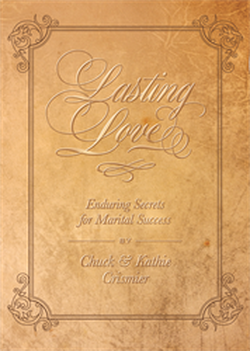
LASTING LOVE can be a dream come true. Yet love requires more than a dream or those loving feelings we so much desire.Lasting Love, Chuck and Kathie Crismier, celebrating their Golden Anniversary, unveil seven enduring secrets that will inspire and strengthen your marriage as it has theirs. COPY and PASTE this link to WATCH the TRAILER: https://www.facebook.com/Save-America-Ministries-204687919570536/videos
Past Episodes
This ministry does not have any series.
Featured Offer
LASTING LOVE can be a dream come true. Yet love requires more than a dream or those loving feelings we so much desire.Lasting Love, Chuck and Kathie Crismier, celebrating their Golden Anniversary, unveil seven enduring secrets that will inspire and strengthen your marriage as it has theirs. COPY and PASTE this link to WATCH the TRAILER: https://www.facebook.com/Save-America-Ministries-204687919570536/videos
About Save America Ministries
About Chuck Crismier
Contact Save America Ministries with Chuck Crismier
crismier@saveus.org
http://www.saveus.org/
Save America Ministries
P.O. Box 70879