
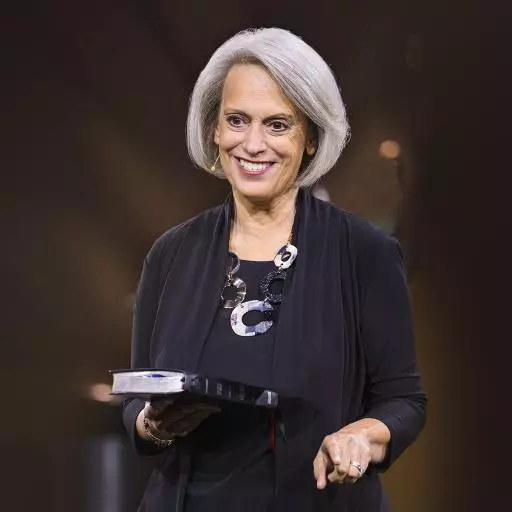
You Can Trust God to Write Your Story, Ep 4 of 4


If a movie plot wrapped up in just a few minutes, you probably wouldn’t be too interested in seeing it. Engaging stories require a process, and as much as you’d like the tough circumstances in your life to wrap up right away, your life story requires a process too. Nancy DeMoss Wolgemuth explains more on Revive Our Hearts.
Danna Gresh: If a movie plot wrapped up in just a few minutes, you probably wouldn't be too interested, would you? The best stories require a process. And Nancy DeMoss Wolgemuth says so does your life story.
Nancy DeMoss Wolgemuth: When we say you can trust God to write your story, that doesn't mean you can trust that God's gonna turn this thing around tomorrow or even in this lifetime.
Danna Gresh: This is the Revive Our Hearts podcast with Nancy DeMoss Wolgemuth, author of surrender: The Heart God Controls, for March 25th, 2026. I'm Danna Gresh. Revive Our Hearts will turn 25 this coming fall. Would you do me a favor? Let us know how the Lord has used this ministry in your life. Just head to ReviveOurHearts.com and find "Contact Us" at the bottom of the page.
Now, humans love stories. I mean, we rush to buy books, tickets to the theater, and to watch movies because we're inspired and entranced by the plot and the characters and everything in the story. It was that love of stories that inspired our host Nancy and her late husband Robert to write the book, *You Can Trust God to Write Your Story*. And it's full of true stories that will inspire your heart, and it's the inspiration behind the current series we've been in here on Revive Our Hearts. Here's Nancy.
Nancy DeMoss Wolgemuth: We're talking about trusting God to write your story. And that's not hard when the story is like this perfect fairy tale—all's well, all ends well, they all lived happily ever after—except life isn't that way, right? And so the hard part is trusting God when the plotline goes in a way that you would not have scripted yourself. You say, "Who would have thought of that?" Well, God thought of that. And God has made provision by His providence to care for us even when those plotlines seem like they're crazy.
Being followers of Christ doesn't make us immune to pain and heartache. We need to remember that. Listen, there's great joy in being a Christian, in following Christ, but most of the joy is yet to come. And in between now and then, we have creation, fall, redemption—that's the period we're living in, between the fall and the new creation. We've talked about this in this series. And between now and then, there's heartache, there's pain. In fact, some of the godliest men and women in scripture suffered greatly.
And that's not a coincidence. In fact, that's part of how God made them godly and used them greatly because of the things that they suffered. God usually doesn't write the story in the way that we would if we had the pen. God uses trouble to change us and to reveal Himself to our world as others see His grace in us. One of the couples we interviewed for this book, *You Can Trust God to Write Your Story*—there are a lot of different friends of ours that we interviewed about different subjects—but one of them said to us at the end of the interview, "Our story says a lot about our God."
I loved that line. And isn't that the point of each of our stories? That our story should say a lot about our God? That we would trust Him in the good times and the hard times in such a way that those around us would say, "Look at their God. He's so good, He's so faithful, He's so amazing." You see, the way we respond to our story tells others what we think God is like. That's one of the most powerful witnessing tools there is.
Now, that's not saying like just suck it up and act like nothing's wrong. No, people need to see that we grieve, that we mourn, that we hurt, that we ache, but that we have grace in the midst of that and that we trust that God is good and wise and that what He is doing is for our good and for His glory. In the Old Testament there was a woman named Naomi. You've probably heard of her. She had to leave her homeland in a famine, so she's a refugee. She goes to Moab with her husband and two sons.
While she's there, her husband and her two sons all die. So she's bereft. She's widowed, she's lost these two adult sons, and she ends up moving back home to Judah with Ruth, who is the widowed wife of one of her sons. So Ruth, who was married to one of Naomi's sons, and now they're both widows. Both of these women have had a hard life. Both of them are outcasts and stigmatized. They have no means of provision, no future, no hope. I mean, to be a widow today is hard, but not like it was in that era.
Where there was no male to provide, there was no... you would have your land taken away. Naomi had likely already lost her land through leaving her homeland, and she had no way of making a living. So as their story unfolds, Naomi and Ruth, these two women, demonstrate two very different views of God. Naomi sees God as her antagonist. The antagonist in a story is the bad guy, right? We have the protagonist, the hero, and then we have the antagonist, the one who causes the trouble.
Naomi saw God as her antagonist, the source of her misery. Listen to a few of these verses in Ruth. She says, "The hand of the Lord has gone out against me." "The Almighty has dealt very bitterly with me." "I went away full, and the Lord has brought me back home empty." "The Lord has testified against me, and the Almighty has brought calamity upon me." She knows that He's the mighty God, but she in a way is saying, "I feel like God hasn't lived up to His name. He hasn't done what I know He can do, what I thought He would do, what I thought He should do."
So my misfortune is the result of God being hard on me. Ruth, on the other hand, who wasn't even from the Jewish faith—she was a foreigner brought into the people of Israel—she saw God as her protector. Someone who could be trusted, even when she couldn't see or understand what He was doing. You remember Boaz, the wealthy landowner who lived nearby, who ultimately became Ruth's husband and provider? But Boaz had heard of what Ruth had done for her mother-in-law Naomi, and he praises Ruth for her kindness.
And he says in chapter 2, verse 12 of Ruth, "A full reward be given you by the Lord, under whose wings you have come to take refuge." See, Naomi is saying God has been hard on me. Ruth communicates a view of God as someone under whose wings she could take refuge. He was her protector. He was her defender. Now, Ruth's trust was not in Boaz, as generous and kind a man as he was. She looked beyond her benefactor to God Himself for shelter, safety, protection, and provision. And God did not fail her, nor did He fail her mother-in-law Naomi.
So think about the problems and pains in your life and say, "What does your response to those situations tell people about God?" Do people looking at you think that God is your antagonist? Or do they know that you see Him as a protector and a provider? This kind of grace-enabled faith that God is good no matter what, that you can rest in His providence, that He is faithful, that you can trust Him to write your story—when you have that kind of faith that God gives you by His grace when you're in the middle of a dark situation or deep valley, that kind of faith is stunning to our world.
When God's children offer up that kind of costly worship, His story is proclaimed to those who might not otherwise ever have heard it. How many people have heard the gospel because of Joni Eareckson Tada, who has spent over 50 years of her life as a quadriplegic in a wheelchair? Stunning, right? She makes the gospel believable. Not because her life is easy—it's hard. None of us would want that life, but wouldn't we love to have the fruit that's come out of it? His story is proclaimed and heaven applauds as His loved ones on earth acknowledge that He is worthy to be praised no matter what.
Now sometimes, and we see this often in the scripture and in our own experience, sometimes the pain and the hurt is because of ways that other people have sinned against us. The ways people sin against others are almost limitless. And sometimes those sins of others hit our lives or the lives of those that we love with the force of a wrecking ball. It may take us years to regain our equilibrium, and in some cases, the perpetrator may never be brought to justice or repentance in this life.
And in those moments, we can feel that someone other than God is writing our story. That that person, that perpetrator, that person who sinned against us or against someone we love is writing the story. And we can wonder whether God really can be trusted in the face of those kinds of atrocities. And yet our faithful, loving God has the power to redeem the unredeemable and to turn ashes to beauty, not just in spite of the injuries we've suffered, but sometimes actually through those very wounds.
So what does it mean to trust God to write your story when others have sinned against you, perhaps grievously and perhaps with no evidence of remorse or repentance? Well, it means trusting that God has purposes for you as well as for others who are part of your story and that those purposes will be fulfilled in spite of or perhaps even through the wrongdoing that you have endured. It means trusting Him to provide for you and to protect you though others have failed to do so.
It means trusting that in His way and in His time, He will deal with your offenders. Trusting Him to protect your heart from becoming bitter or holding hostage those who've sinned against you. It means trusting Him for grace to forgive that which seems unforgivable. It means trusting Him and His way and His time to redeem and overrule the losses caused by those who've sinned against you. Now, all those responses might seem impossible, even ludicrous, if it weren't for the fact that we have a Savior who knows what it is to be sinned against through no fault of His own and who suffered for us—the righteous suffering for the unrighteous—and as He did, He continued entrusting Himself to God who judges justly.
I want to take just the remaining moments we have here and look at an Old Testament character. Another one, we've looked at Ruth and Naomi here briefly, but I want to look at just some moments from the life of Joseph. And when you're struggling with having been sinned against or wronged by others, how to trust God to write your story in those moments, Joseph is a great story to get to. And we're just gonna skim the surface of this, but you can read that whole story in Genesis chapters 37 through 50.
Those last dozen or so chapters of Genesis are the story primarily of Joseph. Joseph, you may be aware, was the 11th son of Jacob. He was favored by his father but he was taunted and rejected by his brothers, his older brothers. His brothers were jealous. They wanted to get rid of him, so they threw him into a pit, sold him into slavery in Egypt at the age of 17. So here's a teenage boy whose life has been turned upside down, topsy-turvy.
His father doesn't know what has happened. The brothers concoct a lie, say an animal must have destroyed him. So his father has no idea what's happened, and it's a long time before the dad knows. There are a lot of stories being written here—the brothers' stories, the dad's story, Joseph's story. But Joseph is taken into Egypt and he goes to work for Potiphar, who was captain of Pharaoh's guard. And in time, Joseph, who was a faithful employee, everything he touched turned to gold.
His bosses were always blessed because of his work ethic and his wisdom. But Potiphar's wife falsely accused Joseph of attempted rape. And as a result, Joseph was thrown into prison for a crime he did not commit. And scripture makes it clear that he didn't. To the contrary, he had protested. He had said, "No, I can't sin against God. I can't sin against you." We know what happened in this case. Unlike some cases that hit the news where we don't really know who did what, in this case we know that Joseph did not do what he was accused of. He was falsely accused and he's thrown in the slammer.
We don't know how long he was in prison, but we know that it was from the time he was 17 until the time he was 30—so 13 years between the time he worked for Potiphar and the time he served in prison. So the time in prison was at least two years. We know that because of other parts of the story. And while he was in prison, he helped a couple of the inmates who were also employees of Pharaoh. And they promised that when they got out, they would put in a good word for him.
But they got out and they totally forgot about Joseph, who continued to languish in prison, unseen, unknown. You just think, "End of story," right? This is hopeless, this is helpless, and God had given him promises when he was a young man, but it looked like there was no way those promises would ever be fulfilled. It looks like end of story and it's a bad story and a bad ending. Now looking back from our vantage point, we can see the purposes of God being brought to pass in and through Joseph's life.
But from his perspective, rotting away in that prison, he faced mostly unanswered questions and unjust circumstances over which he had no control that continued year after year. So when we say you can trust God to write your story, that doesn't mean you can trust that God's gonna turn this thing around tomorrow. Now, God will give blessings along the way, but the end is not necessarily now or soon. It may not be until eternity that we see those questions answered and those circumstances addressed justly.
Yet we know something important about Joseph's situation that made all the difference in the world. Even though nothing was turning around, even though it looked horrific from all measurements, Genesis chapter 39, verse 2, the scripture tells us, "The Lord was with Joseph." The Lord was with Joseph. The Lord was with Joseph. Everywhere he went, the Lord was with Joseph. And as we reflect on this story, in the midst of hardship and pain and injustice, we see God's unmistakable hand, His sovereign pen.
And we see that this story is not simply about one man. As with each story that God writes, as with your story and mine, Joseph's story is part of the unfolding of a grander plot. It involves his brothers, his father, the rescue of his extended family from starvation, what God did in Egypt in overcoming and judging the Egyptian gods, in saving the people of Israel. It's a lesson in forgiveness and reconciliation and eventually the salvation of a nation from 400 years of slavery and abuse.
The story is so much bigger, grander, greater than what Joseph could see in that moment. That's what I've been trying to help us see through this series. We need the perspective that what we see now is not the whole of the story and it's not the end of the story. I love that quote of Dr. John Piper. I've used it many times and I go back to it again and again. He said, "In every situation you face, God is always doing a thousand different things that you cannot see and you do not know."
So perhaps from where you sit today, you can only see miscellaneous, frayed, disconnected strands that make no sense at all no matter how hard you try to figure it all out. All you can see is injustice and pain. And Joseph would surely have identified with you. But as Joseph would one day learn on the flip side of the tapestry that God is weaving in and through our lives, the tangle of threads that we can see on the underside of that tapestry, on the flip side, God is creating a picture of great beauty, great value, for those who will trust Him to write their story.
Doubtless, if he'd been given the opportunity, Joseph would have written a different story, a different script. And so would you and so would I. But with each twist and turn of this story, this young man was being shaped and transformed by God. And that's what I want to point us to at the end here, is not a verse in Genesis, but a verse about Joseph in Psalm 105. You might just want to jot down that reference: Psalm 105, verses 17 through 19.
It describes this remarkable progression of how God used Joseph's circumstances to transform him. It says, "The Lord had sent a man ahead of them," ahead of His people, into Egypt. The Lord sent Joseph, not his brothers, ultimately. His brothers were the ones who sold him into slavery in a human level—they sent him—but in the big picture, the truest picture, it was God who sent Joseph into Egypt. Joseph, who was sold as a slave. His feet were hurt with fetters, his neck was put in a collar of iron, until what he had said came to pass—the word of the Lord tested him.
This young man whose father loved him so dearly, this young man who dreamed that he would one day be exalted as the ruler of a nation, was sent ahead by God to a foreign land where, unknown to anyone including Joseph himself, God intended to use him to provide for His people. And once there, in what seemed like a failure of God's story, God's plan, Joseph was sold and shackled as a slave. And there, in those horrendous circumstances, the word of the Lord tested him. It shaped him, it honed him, it changed him, it transformed him. The word of the Lord because the Lord was with Joseph.
Taking this message to heart can make a huge difference as you navigate your own challenges and disappointments and pains, ways people sin against you, ways they wreck your life. Listen, the hardest parts of the story that God is writing in your life are not random or meaningless. They are full of purpose. And many of the good things that God has planned for us will never happen apart from seasons of suffering and hardship and trials. You can read that all through the scripture and you can see it in the lives of those who've suffered but who have trusted God in the midst of suffering.
In due time, all that God has intended for you and for this world will come true. In the meantime, just as God was with Joseph, so God will be with you. Even in the prison, even in the foreign land, even rejected, even separated from his family, even not seeing his father for all those years, God will be with you. And God will be sending His word to test you, to change you, to hone you, to refine you until the promises of God one day are fulfilled. And that's a God you can always trust.
How have you been hurt? How have you been wounded? Listen, I'm not minimizing the pain. I'm not minimizing the offense. But I'm telling you that God is faithful and God is good. And even if your eyes are filled with tears, as I see right here on the front row in front of me—I don't know what's in her heart or your heart, I don't know what's in your story—but I know that God is there. I know you can trust Him. And I know that in the end, all will be well.
And you will thank Him and you will bless Him and you will worship Him. You can trust God to write your story. Lord, I pray for someone listening today who's in the throes of that woundedness, that injustice, being sinned against, being wounded so deeply. I pray that You would assure that woman of Your presence, that You are with her. That You are there in her home, in her workplace, in that family dealing with the chaos caused by other people who sinned against her or against someone that she loves.
And give grace, O Lord. Give grace to trust when she cannot see. To lift her eyes up and to worship even in the midst of the pain, knowing that the day is coming when there will be no more pain, no more sorrow, when all wrongs will be made right. And Your children, those who've trusted You to write their story, will be with You for an eternity of nothing but beauty and glory and happily ever after. I pray in Jesus' name. Amen.
Danna Gresh: Amen. When life is really hard, you can still trust God to write your story. We've been listening to Nancy DeMoss Wolgemuth. She was praying for us to see that God's purposes for His children are always good even when we can't understand why He's allowing something to happen. I hope you felt the comfort of knowing God is sovereign over your life today.
If you need even more encouragement as you trust God with your story in the days to come, I want to get a book into your hands. It's written by our host Nancy DeMoss Wolgemuth and her dear husband Robert, who went to be with Jesus this past January. It's titled, *You Can Trust God to Write Your Story: Embracing the Mysteries of Providence*. As Nancy's navigated this new chapter of widowhood, I've seen firsthand how she lives out the message of this book. She really has entrusted her story to the Lord.
We'd like to send this resource to you when you make a donation of any amount to the ministry of Revive Our Hearts. You can make that gift by visiting ReviveOurHearts.com or call us at 1-800-569-5959. Be sure to ask for your copy of *You Can Trust God to Write Your Story*. Alright, I've got some exciting news for you. Today is the very first day of our spring sale. You can stock up on meaningful gifts for those you love most.
We've curated a collection of books, Bible studies, devotionals, and more to help hearts flourish in Christ this spring and beyond. Now, maybe you've got a high school or college student in your life preparing to graduate. Pick out a beautiful biblical graduation present for them. Or maybe you've got a friend you'd like to bless with a thoughtful "just because" gift. The sale includes resources for moms, couples, single women—you name it. We hope you'll take a look at ReviveOurHearts.com.
Today we heard about the mysteries of providence. Tomorrow we'll explore a time in history when the hand of providence moved people all over this country to repentance and trust in God. We'll talk about the Great Awakening of the mid-1700s and a new movie coming out and lessons we can learn from men like the preacher George Whitefield and his unlikely friend Benjamin Franklin. Please be back for Revive Our Hearts. This program is a listener-supported production of Revive Our Hearts in Niles, Michigan, calling women to freedom, fullness, and fruitfulness in Christ.
Featured Offer

Choose a resource to help you grow.
Past Episodes
- 3 Doctrines that Fuel Endurance
- 3 Life-Changing Lessons for Young Women
- 3 Reasons to Join the 2026 Bible Reading Challenge
- 3 Ways to Love Your Friend When It’s Hard
- 3 Women Who Were Grateful for God’s Word
- A Great Awakening, with Kim and Katie Miller
- A Harvest of Joy
- A Heart Grounded in the Word of God, with Chris Brooks
- A Hurting Home Became an Open Home
- A King’s Preparations, Plans, and Provision
- A Wife’s Submission: What it Is and Isn’t
- A Woman Adorned and Adorning
- Advent for Exiles, with Caroline Cobb and Erin Davis
- Always Grateful: Ciara's Story
- Always Thankful (Psalm 66)
- An Unhurried Holiday Season
- Anticipating Advent
- Be Still, Heaven Rules
- Be the Warmth: Cultivating Hospitable Character
- Behold the Big Story of the Bible, with Kevin DeYoung
- Behold the Daily Mercy of the Word, with Dannah Gresh
- Behold the Living Word, with Jackie Hill Perry
- Behold the Power of the Word to Save, with Kelly Needham
- Behold the Wonder of the Word
- Behold the Word Recovered by God’s People, with Mary Kassian
- Behold, Hearts on Fire with the Word
- Beholding the Wonder: True Woman '25
- Beyond Cliches: Real Encouragement for Single Sisters
- Blessing for the Year End & the New Year (2 Cor. 13:11-13)
- Blessings and Curses: A Look at the Life of Balaam
- Broken Vessels in Romania, with Asheritah Ciuciu
- Brokenness: The Heart God Revives
- Celebrating God’s Abundance
- Celebrating the Gift of Grandparents
- Choosing Grace over Gossip
- Choosing Servanthood Over Celebrity
- Come Adore: The Gospel in Carols
- Consider Jesus: Surrendered Servant and Savior
- Control Girl, with Shannon Popkin
- Corporate Revival
- Crossing the Finish Line: Remembering Robert Wolgemuth
- Ease Into the Bible, with Jean Wilund
- El Shaddai: The All-Sufficient One
- Embracing God as Father
- Enlarging Your Heart for Eternity, with Colleen Chao
- Esther: God's Woman at God's Time
- Faithful, Not Famous with Laura Gonzalez de Chávez
- Finding Freedom from Fear, with Judy Dunagan
- Finding My Father Father: How the Gospel Heals the Pain of Fatherlessness, with Blair Linne
- From Death to Life: Hope After Abortion
- God’s River Flows in Spain and Brazil
- God’s Word and Our Emotions
- God’s Word and Your Life
- Gospel Mom, with Laura Wifler and Emily Jensen
- Grace for the Depressed
- Grateful, then Graceful, with Mari Glick
- He Gives Grace to Mothers, with Sarah Walton and Linda Green
- Helping Kids Think Biblically, with Elizabeth Urbanowicz
- His Healing Touch
- How God’s Love for Women is Displayed in the Old Testament, with Dr. Katie McCoy
- How Less Scrolling Could Change Your Life, with Lara d’Entremont
- How to Have a Happy New Year (Psalm 1)
- How to Have a Marriage that Magnifies God
- How to Have a Quiet Heart
- How We Got Our English Bible
- Humility, Not Pride
- Learning to Love the Old Testament, with Jennifer Smith
- Lessons from Levites
- Living Out the Beauty of the Gospel
- Living Water
- Living Well, Finishing Well, with Mark DeMoss
- Loving and Living God’s Word, with Kelly Needham
- Persecution, Perseverance, and the Key to Sustaining Faith, with Dr. Karen Ellis
- Persevering Love for the Local Church
- Pleading the Cause of the Unborn
- Practical Bible Study Tips
- Practicing Thankfulness, with Sam Crabtree
- Precepts, Parkinson’s, and the Truth That Sets Us Free, with Kay Arthur
- Psalm 23: Our Good Shepherd
- Read Your Bible!
- Rediscovering Intimacy With God
- Relationship Refresh: Helping Your Community Thrive in Christ
- Remembering Voddie Baucham, Jr.
- Renewed and Restored (Psalm 23:2-3)
- Revive Me According to Your Word
- Revive My Heart, Lord!
- Ruth: The Transforming Power of Redeeming Love
- Safely Home: Honoring Robert Wolgemuth
- Saying, “Yes, Lord!”
- Saying, “Yes, Lord” When Life is Hard
- Science, Scripture, and a Life Transformed, with Dr. James Tour
- See for Yourself: Get to Know Your Bible, with Kelly Needham
- Showing Kindness, with Kathy Branzell
- Sin, Suffering, and the God Who Restores
- Sorrowful, Yet Always Rejoicing
- Spiritual Disciplines We Forget About
- Spiritual Habits for Little Hearts
- Spiritual Mothering
- Spiritual Strength for an Evil Day (Ephesians 6)
- Steadfast Faith
- Storm Shelter
- Supporting Your Suffering Friend, with Jani Ortlund
- Surrender: the Heart God Controls
- Tell Yourself What’s True
- Telling the Greatest Story
- Tender Counsel for the Fearful and Grieving, with Paul Tautges
- The Beautiful Process of Repentance
- The Beauty of Living Out the Gospel as a Woman
- The Book of Books
- The Cross and Clothes
- The Four Emotions of Christmas
- The Glory of Face-to-Face Fellowship
- The Grace of Remembrance
- The Incomparable, Incarnate Christ
- The Joy of Bible Journaling
- The King Still Has Another Move
- The Personal Devotional Life
- The Personal Devotional Life: Beyond Quiet Time, with Dr. Henry Blackaby
- The Power of Words
- The Ultimate Meaning of True Womanhood
- The Well-Watered Woman, with Gretchen Saffles
- The Wonder App: Transforming Screen Time into Scripture
- Three Gifts Suffering Gives
- To The Woman Who Doesn’t Feel God’s Love
- Treasuring Christ in Our Traditions with Noel Piper
- True Woman '25 Panel Discussion: Behold the Word in Every Season
- Trusting God When Tragedy Strikes
- Truth Talk for Hurting Hearts, with Dawn Wilson
- Walking Through Life's Deserts
- What “Yes, Lord” Looks Like
- What Do We Do with Unfulfilled Longings?
- What Sisterhood Is (and Isn’t)
- What's in a Dad?
- When Busyness Threatens Intimacy with God
- Where the River Flows: The Life-Giving Work of the Spirit
- Why Study the Bible?
- Women of the Resurrection
- Wonder of the Word Made Flesh
- Word Before World, with Gretchen Saffles
- You Can Trust God to Write Your Story
- Your Will Be Done: Rebecca Ellerman’s Story
- You've Come a Long Way, Baby! (Mary Kassian)

Featured Offer
Choose a resource to help you grow.
About Revive Our Hearts
About Nancy DeMoss Wolgemuth
Nancy DeMoss Wolgemuth has touched the lives of millions of women through Revive Our Hearts and the True Woman movement, calling them to heart revival and biblical womanhood. Her love for Christ and His Word is infectious and permeates her online outreaches, conference messages, books, and two daily nationally syndicated radio programs—Revive Our Hearts and Seeking Him. Her books have sold more than four million copies and are reaching the hearts of women around the world. Nancy and her husband, Robert, live in Michigan.
Contact Revive Our Hearts with Nancy DeMoss Wolgemuth
Revive Our Hearts
P.O. Box 2000
Niles, MI 49120
1-800-569-5959 (toll-free)