
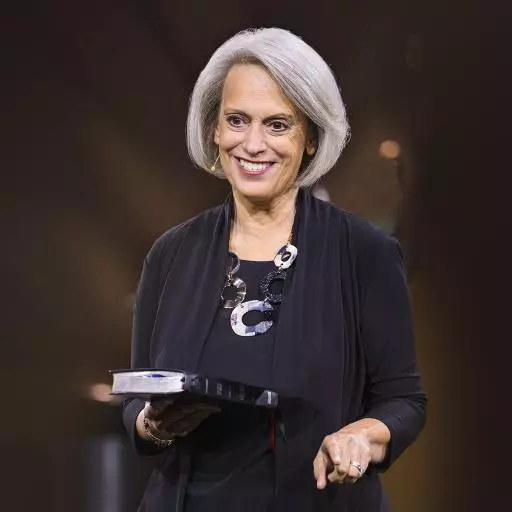
You Can Trust God to Write Your Story, Ep 2 of 4


Your life is a story, and like every novel worth reading, it will include some challenging plot twists. Nancy DeMoss Wolgemuth will help you anticipate those ups and downs by keeping your eyes on the author and finisher of your faith. That’s on Revive Our Hearts.
Nancy DeMoss Wolgemuth: Don't expect your life story to be smooth and easy. God rarely writes tidy, neat, sanitized stories. He doesn't write boring stories, but he can be trusted to write them well.
Dana Gresh: This is the Revive Our Hearts podcast with Nancy DeMoss Wolgemuth, author of Surrender: The Heart God Controls. For March 23, 2026, I'm Dana Gresh.
Nancy and her late husband, Robert, wrote a precious book together not too long ago. It's called You Can Trust God to Write Your Story. That's the topic of today's teaching. Here's my friend, Nancy.
Nancy DeMoss Wolgemuth: Often when Robert and I would strike up a conversation with someone we just met, it could be someone at Lowe's or someone who's come to drop something off at the house, a delivery man, or somebody who's shuttling us at an airport, one of the things we'll say if we have more than just a minute is, "So, tell us your story. Tell us your story."
We love hearing people's stories. Actually, we've been talking in the room here for the last thirty minutes or so before we started this session and just hearing some of the stories of women in the room. They're so different. Some of them are way different than mine, and your story is probably different than the woman sitting next to you. But we love those stories, and we all have a story. I have a story, you have a story, everyone has a story, no matter what age you are, no matter what your background. Your story is unlike anyone else's story.
Now, you may think as we talk about your story, "Well, there's nothing special about my story. I can't imagine that anybody would be interested in hearing it. I just have a boring, ordinary story." Or you may be kind of on the other end of the scale and you think, "My story is such a mess. I can't imagine that anybody would want to hear this, and I can't imagine that this story could ever turn out well."
The mess you're referring to might be because of circumstances in your life that were beyond your control. Things that have happened to you, maybe when you were a child. Or some of the mess may be the result of—and this is true for all of us, by the way—foolish or sinful choices that you have made. But maybe that's all just come together, it's a big mess, and you are ashamed of your story. It's not a story you'd really want to share with anyone. And you think there is no way my story will ever become something of great worth or great beauty. There's no way God could use my story. There's no way God could use me.
Whether you think that your story is too ordinary and insignificant to matter or your story is too messed up to ever have a happy ending or to be useful to anyone, the fact is your story matters to God. God cares about your story. You may be listening to this program today, this podcast, this broadcast, and maybe this is the first time you've ever listened to this kind of Christian teaching, and you're thinking, "God cares about my story?" He does. Maybe you've been a Christian for a long, long time, but you've lost a sense of the fact that God cares about your story. And that God is intimately involved in your story in ways that maybe you can't see.
God is writing a story in and through your life. What we're going to talk about over these next days is the fact, the truth, the bedrock-solid truth that you can trust God to write your story. And you can be confident that your story, no matter how messed up it may be right now, that your story will end well. It will have a happy ending. Some of you are going, "No way. That's not possible." I'm telling you, it's true.
You may have heard of Alex and Stephen Kendrick. These are brothers who spend their time looking for and telling great stories. You may have seen some of the films that they've produced: Facing the Giants, Fireproof, Courageous, War Room. Robert and I have watched a number of these together and always with some tears. It's always got some tear-jerking moments in these amazing stories. So one day, as we were writing this book, You Can Trust God to Write Your Story, we called Stephen Kendrick on the phone. Stephen and Alex are friends of ours, and we said, "Stephen, you write stories. Tell us: what makes a great story? What makes a compelling story?"
We had a really interesting conversation. Stephen pointed out that if someone tells a story about, say, a woman who gets up, has breakfast, goes to work, comes home, has dinner, goes to bed, and repeats the same thing the next day, everyone says, "That's boring." No one likes to read or watch a dull story. We want the stories that we watch on movies or that we read in novels. We want them to have intrigue and action and conflict and twists and turns and problems to be solved.
But when it comes down to our lives, we think differently. That boring, uncomplicated story that we don't want to watch is the way most of us want to live. We want our story and the stories of those we love to be predictable. To have Hallmark movie endings where everything gets tied up neatly in 90 minutes and the good people fall in love and live happily ever after and the bad people go away and are never heard from again. That's not the kind of movie we want to watch, but that's the kind of life we want to live. That's the kind of life you want for your kids. That's the kind of life you want for yourself.
So when the unexpected or the unwanted twists and turns happen in our stories—you receive that troubling medical report, you open the pink slip from your boss, you lose that baby, or you learn that a friend has been gossiping behind your back—whatever. When those twists and turns come that we didn't plan for, that we didn't want, we feel disappointed or betrayed or sometimes, depending on the news, even devastated. But God rarely writes tidy, neat, sanitized stories. He doesn't write boring stories. In fact, many of the accounts that we find in Scripture are pretty messy.
Think of stories like Joseph being falsely accused and thrown into prison for refusing the advances of his boss's wife. That's messy. Think about Daniel being tossed into a den of lions because he refused to obey the king's edict that outlawed prayer. That's messy. God's stories are rarely neat, but they are orderly, and he is orchestrating them. That's what we're going to look at: how God is writing our stories and how he can be trusted to write them well.
I want to ask you to turn in your Bible if you have one, or scroll there if you'd like. If you're driving, I don't recommend this. You can just keep listening. But if you're where you can look at your Bible, I want you to look at this passage: the Gospel of Matthew, the first book of the New Testament, chapter one. We're going to read the first 16 verses. I want to give you a snapshot of the story that God is writing in this world.
This is kind of an odd passage to turn to to tell that story. You'll see what I mean by that in just a moment as I try to read it. Matthew chapter 1, verse 1: "The book of the genealogy of Jesus Christ, the son of David, the son of Abraham." You say you're going to read this genealogy? You bet I am, because genealogies tell stories. My family has a genealogy. I'm not familiar with lots of the parts of it, but some years ago, for Christmas, one of our family members gave us this big, huge document with parts of our genealogy that go back to Charlemagne. Now, there were some gaps, there were some pieces we don't know, but on my mother's side, my genealogy goes back to Charlemagne the Great. And that's amazing. That genealogy, that chart, that big piece of paper shows a story. This genealogy shows a story that God is writing.
It's the genealogy of Jesus Christ. Verse 2: "Abraham was the father of Isaac, and Isaac the father of Jacob, and Jacob the father of Judah and his brothers, and Judah the father of Perez and Zerah by Tamar, and Perez the father of Hezron, and Hezron the father of Ram, and Ram the father of Amminadab, and Amminadab the father of Nahshon, and Nahshon the father of Salmon, and Salmon the father of Boaz by Rahab, and Boaz the father of Obed by Ruth, and Obed the father of Jesse, and Jesse the father of King David.
And David was the father of Solomon by the wife of Uriah, and Solomon the father of Rehoboam, and Rehoboam the father of Abijah, and Abijah the father of Asaph, and Asaph the father of Jehoshaphat, and Jehoshaphat the father of Joram, and Joram the father of Uzziah, and Uzziah the father of Jotham, and Jotham the father of Ahaz, and Ahaz the father of Hezekiah, and Hezekiah the father of Manasseh, and Manasseh the father of Amos, and Amos the father of Josiah, and Josiah the father of Jeconiah and his brothers, at the time of the deportation to Babylon.
And after the deportation to Babylon, Jeconiah was the father of Shealtiel, and Shealtiel the father of Zerubbabel, and Zerubbabel the father of Abiud, and Abiud the father of Eliakim, and Eliakim the father of Azor, and Azor the father of Zadok, and Zadok the father of Achim, and Achim the father of Eliud, and Eliud the father of Eleazar, and Eleazar the father of Matthan, and Matthan the father of Jacob, and Jacob the father of Joseph the husband of Mary, of whom Jesus was born, who is called Christ."
In 16 verses there, you have the Old Testament. But it's condensed and compacted into a line of names, a genealogy of names. I'd like to make three observations about this genealogy that tells us or hints at so much of the amazing story that God is writing in people's lives and in this world. Three observations: the first one, there's a handful of well-known names in this genealogy. You may have noticed the patriarchs of Israel: Abraham, Isaac, and Jacob. There's some familiar kings: David and Solomon and a few others. Mary and Joseph, you probably caught their names. And a few others that are familiar, and we're familiar with the stories of some of these people. When I say David, you automatically, if you've been around the Word of God for some time, you think of stories that relate to David.
But a lot of these names that I read are unfamiliar to us. And I might add, hard to pronounce. I have no idea if I said their names correctly in most cases. And we don't know their stories. Most of the people in this list we know very little, if anything, about their stories. And these people and their stories may seem insignificant to us. Many of these people's stories, the ones we do know about, were messy. It included having failure and rejection and baggage. Some of these people lived in times of turmoil. Some were exiled from their homeland. We read about the deportation to Babylon. It's one phrase, but imagine what that piece of the story meant to the people who lived at that time and who went through that deportation. It talks about after the return from the deportation, the exile, and imagine what that season meant to the stories and the people who lived at that time.
Some of the people in this list, when you see the backstory in the Old Testament, some of them were godly people. Some of them were definitely not. I noticed in this list there was one godly dad who had a very ungodly son, Uzziah and Manasseh. Imagine the pieces and parts of that story. If you have a prodigal, a child who breaks your heart, that's part of the story here. But in God's wisdom, for reasons known only to him, each of these people was included in the family line of Christ. With all of their different stories, with the good and the bad, the beautiful and the ugly, the insignificant and the famous, they were all chosen to be included in the family line of Christ.
These people had no way of knowing that their names would be included in this genealogy. When they were living their story, they just had that little moment in time they could look at. They couldn't see the big whole 16 verses we just read that span thousands of years. They had no way of knowing they were part of this bigger picture. They lived, they died, not knowing the significance of their story or how it connected to God's greater story. And isn't that the way in a sense that we live and die? We're in a moment of time, we're experiencing what we're experiencing right now, it may seem very insignificant to us, but we don't see how it connects to other people, to other generations, to the bigger story that God is writing.
Let me make another observation about this passage. It's an obvious one: if you look at verse 1 and then you look at verse 16, this story starts and ends with Jesus. This is his story. That's what history is, by the way: his story. Verse 1 says, "The book of the genealogy of Jesus Christ." Verse 16: "Mary of whom Jesus was born, who is called Christ." This story that God is writing is all about Jesus. Romans 11:36 tells us, "For from him and through him and to him are all things. To him be the glory forever. Amen." That describes this passage. This isn't about these other characters. Every other character, no matter how famous or not famous, from Shealtiel to David, they're all bit characters compared to the major character who is Jesus.
Colossians 1:17 says, "He is before all things, and in him all things hold together. He is the beginning, the firstborn from the dead, that in everything he might be preeminent." This is his story. This is all about him from beginning to end. Then I want you to notice another thing about this genealogy. In today's culture, this maybe wouldn't seem so remarkable, but in this era, it was extremely unusual, and that is the fact that there are five women included in this genealogy. Why would I say it's unusual in that culture? Family lines were normally traced through the men. You would not have seen the women figuring this prominently in a genealogy.
But this is intentional on God's part, inspired by the Holy Spirit. Each of these women had a story that could have disqualified her from being included in the line of the Jewish Messiah. Let's look briefly at those five. Verse 3 talks about Tamar. Tamar was a Canaanite widow, not among the chosen seed of Israel, a Canaanite widow who posed as a prostitute to seduce her father-in-law. Now, you wouldn't think that if God were writing the story of his son, he would include a woman like that, would you? Would you think God wouldn't include a woman like you and your past? God chose this woman. God said her story is part of my story, part of the story I'm writing. I'm going to use her story, ugly and messy as it is, to be a part of a beautiful story that I'm writing.
That's Tamar. Verse 5 talks about Rahab. Rahab was also a Gentile, and she was a prostitute. She had a story that should have never been included. If we'd been writing the story, we likely would not have included Rahab in the story. She was brought into this story intentionally by God, maybe among other reasons so that some people in this room could realize that your story isn't too messy to be something God can use in the big story he's writing. Rahab. Verse 5 also talks about Ruth. Ruth was a Moabitess. God had forbidden the descendants of the Moabites from entering into the temple for ten generations. They were outcasts. There's a whole big long backstory to that. She was also a widow. In that day—we'll talk more about Ruth in this series—widows would have no hope, no hope of provision, no future. So here's a woman who's not a Jew, she's a widow. Why would she be included here? Reasons known only to God.
We can find more of those as we unpack her story in the Scripture, but it's just a reminder that God uses messes to make a beautiful story. Verse 6 tells us about a woman who isn't even named. She's called "the wife of Uriah." We know her name is Bathsheba, who became pregnant when King David abused his authority and had an illicit sexual relationship with her. Why would this woman be included? Why would I be included? Why would you be included? Because God knows the story he's writing and it's a story of grace, and grace isn't grace if there aren't messes to fix. Grace isn't grace if there isn't sin to be dealt with, whether it's your sin or the sin of others who have messed up your life.
We have in verse 16 Mary. You think, "Oh, Mary, the mother of Jesus, finally someone who's got a beautiful story." Well, Mary in that culture, this would have raised some eyebrows because she had the stigma of a teen pregnancy. She was an unwed teen mother. Why would God include this woman in her story? Why would God write this woman into the script? This wasn't an accident. These women were not accidental. God didn't say, "Oops, what am I going to do to fix that, now that that woman's in this story? How am I going to fix that mess?" No, these were all part of an intentional story that God was writing in his providence to rescue and redeem this fallen human race by means of a savior. His name is Jesus. It's no accident that these five women were included. And some other really bad characters that you'll find among the men also—it wasn't just the women. But God chose each of these individuals to be a part of a story that he was writing.
This passage reminds us that God knows our story and he cares about it. And that no matter what has happened to us, or no matter what we have done, or no matter the era in which we live and the circumstances of our lives, we can be objects of his grace. And our lives can be connected to the lineage of Christ and be a part of his redemptive story that he is writing in human history. You can trust God to write your story. You see, we'd like to experience the benefits and the blessings of suffering, the hard parts of the story, without going through the hard parts of the story, right? We admire other stories of others who've shown great grace in the midst of fire, but we want our own stories to be fireproof, right? We know that diamonds are formed in the dark places of the earth under intense pressure through prolonged periods of time. But we want the outcome, that beautiful, precious jewel, without going through the process, right?
What's the bottom line? We'd want to write a story in which we don't really need God. But God loves us too much to let us have that kind of life. God loves you too much for that. Steven James is a best-selling novelist who's written extensively to help people be better writers. He talks about how transformation takes place in a good story as the characters respond to the circumstances in the plot. So you have these hard circumstances, these bad circumstances, these unexpected circumstances, but as the characters respond to the circumstances, the characters are changed. They're transformed.
He talks about two kinds of characters that you'll find in stories. He calls them pebble people and putty people. Let me explain how he describes the difference. He says if you take a pebble and throw it against a wall, it'll bounce off the wall unchanged. But if you throw a ball of putty against a wall hard enough, it will change shape, right? He says when you throw a putty person into the crisis of a story, he is forever changed. He'll always be a different shape at the end of the story than he was at the beginning. You see, pebble people in God's story tend to be resistant to what God wants to do in their lives. They don't want to change, and sometimes they get even harder.
But putty people say to God, "You're the potter, I'm the clay. Change me, mold me, if necessary break me, remake me. Make me the person, change me into the person you created me to be for your glory." God's story is about far more than just giving us an uneventful joyride to heaven. It's about preparing and fitting us for heaven. Changing us, making us into his likeness. Transformation. It's about his kingdom coming, his will being done on earth in us as it is in heaven. That means he's got to change us. So, are you a pebble person or a putty person?
Would you take just a moment right now to pray: Lord, I want to be a putty person. I want to let you change me through the circumstances in my story. Would you write your story in and through my life? And then just tell him, Lord, yeah, there are pieces and parts of my story, maybe my past, that are messy. They're not the way I would have scripted it, but I trust you. I trust you to write my story. I trust you to make me the woman or the man that you made me to be for your purposes, for your glory, and by your grace. Amen.
Dana Gresh: Amen. Nancy DeMoss Wolgemuth has helped us evaluate the stories of our lives. Now, maybe you've listened today and you've been challenged to embrace some of the chapters you haven't been too comfortable with because they contain twists and turns that you didn't plan on. Nancy's reminded us that we can trust God through all of it.
Nancy and her dear husband Robert, who went to be with the Lord not too long ago, they wrote about this in their book entitled You Can Trust God to Write Your Story. You'll read about many people whose stories contained chapters they didn't plan for and really didn't want to have written in their lives. But through it all, we're encouraged to keep our eyes on the Lord and trust him, even when it's very difficult to believe that there's a happy ending.
I'd love to send you a copy of this book. It's our way of saying thank you when you make a gift in any amount to keep Revive Our Hearts coming to you on the air each weekday. You can make that gift at ReviveOurHearts.com or call us at 1-800-569-5959. We've been talking a lot about this good God who writes good stories, but there might just be a listener today who doesn't know him.
If that's you, would you visit ReviveOurHearts.com/goodnews? There you'll learn about the God who loves you more than you could imagine and you'll learn how you can have a relationship with him. Again, visit ReviveOurHearts.com/goodnews.
So, God is God and we are not. We get that. But when he writes the story in ways we don't expect or even want, it can get kind of hard to trust him. Am I right? Tomorrow Nancy helps us see the big picture and gain the right perspective. I'm Dana Gresh. Please be back tomorrow for Revive Our Hearts. This program is a listener-supported production of Revive Our Hearts in Niles, Michigan, calling women to freedom, fullness, and fruitfulness in Christ.
Featured Offer

Choose a resource to help you grow.
Past Episodes
- 3 Doctrines that Fuel Endurance
- 3 Life-Changing Lessons for Young Women
- 3 Reasons to Join the 2026 Bible Reading Challenge
- 3 Ways to Love Your Friend When It’s Hard
- 3 Women Who Were Grateful for God’s Word
- A Harvest of Joy
- A Heart Grounded in the Word of God, with Chris Brooks
- A Hurting Home Became an Open Home
- A King’s Preparations, Plans, and Provision
- A Wife’s Submission: What it Is and Isn’t
- A Woman Adorned and Adorning
- Advent for Exiles, with Caroline Cobb and Erin Davis
- Always Grateful: Ciara's Story
- Always Thankful (Psalm 66)
- An Unhurried Holiday Season
- Anticipating Advent
- Be Still, Heaven Rules
- Be the Warmth: Cultivating Hospitable Character
- Behold the Big Story of the Bible, with Kevin DeYoung
- Behold the Daily Mercy of the Word, with Dannah Gresh
- Behold the Living Word, with Jackie Hill Perry
- Behold the Power of the Word to Save, with Kelly Needham
- Behold the Wonder of the Word
- Behold the Word Recovered by God’s People, with Mary Kassian
- Behold, Hearts on Fire with the Word
- Beholding the Wonder: True Woman '25
- Beyond Cliches: Real Encouragement for Single Sisters
- Blessing for the Year End & the New Year (2 Cor. 13:11-13)
- Blessings and Curses: A Look at the Life of Balaam
- Broken Vessels in Romania, with Asheritah Ciuciu
- Brokenness: The Heart God Revives
- Celebrating God’s Abundance
- Celebrating the Gift of Grandparents
- Choosing Grace over Gossip
- Choosing Servanthood Over Celebrity
- Come Adore: The Gospel in Carols
- Consider Jesus: Surrendered Servant and Savior
- Control Girl, with Shannon Popkin
- Corporate Revival
- Crossing the Finish Line: Remembering Robert Wolgemuth
- Ease Into the Bible, with Jean Wilund
- El Shaddai: The All-Sufficient One
- Embracing God as Father
- Enlarging Your Heart for Eternity, with Colleen Chao
- Esther: God's Woman at God's Time
- Faithful, Not Famous with Laura Gonzalez de Chávez
- Finding Freedom from Fear, with Judy Dunagan
- Finding My Father Father: How the Gospel Heals the Pain of Fatherlessness, with Blair Linne
- From Death to Life: Hope After Abortion
- God’s River Flows in Spain and Brazil
- God’s Word and Our Emotions
- God’s Word and Your Life
- Gospel Mom, with Laura Wifler and Emily Jensen
- Grace for the Depressed
- Grateful, then Graceful, with Mari Glick
- He Gives Grace to Mothers, with Sarah Walton and Linda Green
- Helping Kids Think Biblically, with Elizabeth Urbanowicz
- His Healing Touch
- How God’s Love for Women is Displayed in the Old Testament, with Dr. Katie McCoy
- How Less Scrolling Could Change Your Life, with Lara d’Entremont
- How to Have a Happy New Year (Psalm 1)
- How to Have a Marriage that Magnifies God
- How to Have a Quiet Heart
- How We Got Our English Bible
- Humility, Not Pride
- Learning to Love the Old Testament, with Jennifer Smith
- Lessons from Levites
- Living Out the Beauty of the Gospel
- Living Water
- Living Well, Finishing Well, with Mark DeMoss
- Loving and Living God’s Word, with Kelly Needham
- Persecution, Perseverance, and the Key to Sustaining Faith, with Dr. Karen Ellis
- Persevering Love for the Local Church
- Pleading the Cause of the Unborn
- Practical Bible Study Tips
- Practicing Thankfulness, with Sam Crabtree
- Precepts, Parkinson’s, and the Truth That Sets Us Free, with Kay Arthur
- Psalm 23: Our Good Shepherd
- Read Your Bible!
- Rediscovering Intimacy With God
- Relationship Refresh: Helping Your Community Thrive in Christ
- Remembering Voddie Baucham, Jr.
- Renewed and Restored (Psalm 23:2-3)
- Resting in God's Providence
- Revive Me According to Your Word
- Revive My Heart, Lord!
- Ruth: The Transforming Power of Redeeming Love
- Safely Home: Honoring Robert Wolgemuth
- Saying, “Yes, Lord!”
- Saying, “Yes, Lord” When Life is Hard
- Science, Scripture, and a Life Transformed, with Dr. James Tour
- See for Yourself: Get to Know Your Bible, with Kelly Needham
- Showing Kindness, with Kathy Branzell
- Sin, Suffering, and the God Who Restores
- Sorrowful, Yet Always Rejoicing
- Spiritual Disciplines We Forget About
- Spiritual Habits for Little Hearts
- Spiritual Mothering
- Spiritual Strength for an Evil Day (Ephesians 6)
- Steadfast Faith
- Storm Shelter
- Supporting Your Suffering Friend, with Jani Ortlund
- Surrender: the Heart God Controls
- Tell Yourself What’s True
- Telling the Greatest Story
- Tender Counsel for the Fearful and Grieving, with Paul Tautges
- The Beautiful Process of Repentance
- The Beauty of Living Out the Gospel as a Woman
- The Book of Books
- The Cross and Clothes
- The Four Emotions of Christmas
- The Glory of Face-to-Face Fellowship
- The Grace of Remembrance
- The Incomparable, Incarnate Christ
- The Joy of Bible Journaling
- The King Still Has Another Move
- The Personal Devotional Life
- The Personal Devotional Life: Beyond Quiet Time, with Dr. Henry Blackaby
- The Power of Words
- The Ultimate Meaning of True Womanhood
- The Well-Watered Woman, with Gretchen Saffles
- The Wonder App: Transforming Screen Time into Scripture
- Three Gifts Suffering Gives
- To The Woman Who Doesn’t Feel God’s Love
- Treasuring Christ in Our Traditions with Noel Piper
- True Woman '25 Panel Discussion: Behold the Word in Every Season
- Trusting God When Tragedy Strikes
- Truth Talk for Hurting Hearts, with Dawn Wilson
- Walking Through Life's Deserts
- What “Yes, Lord” Looks Like
- What Do We Do with Unfulfilled Longings?
- What Sisterhood Is (and Isn’t)
- What's in a Dad?
- When Busyness Threatens Intimacy with God
- Where the River Flows: The Life-Giving Work of the Spirit
- Why Study the Bible?
- Women of the Resurrection
- Wonder of the Word Made Flesh
- Word Before World, with Gretchen Saffles
- You Can Trust God to Write Your Story
- Your Will Be Done: Rebecca Ellerman’s Story
- You've Come a Long Way, Baby! (Mary Kassian)

Featured Offer
Choose a resource to help you grow.
About Revive Our Hearts
About Nancy DeMoss Wolgemuth
Nancy DeMoss Wolgemuth has touched the lives of millions of women through Revive Our Hearts and the True Woman movement, calling them to heart revival and biblical womanhood. Her love for Christ and His Word is infectious and permeates her online outreaches, conference messages, books, and two daily nationally syndicated radio programs—Revive Our Hearts and Seeking Him. Her books have sold more than four million copies and are reaching the hearts of women around the world. Nancy and her husband, Robert, live in Michigan.
Contact Revive Our Hearts with Nancy DeMoss Wolgemuth
Revive Our Hearts
P.O. Box 2000
Niles, MI 49120
1-800-569-5959 (toll-free)