
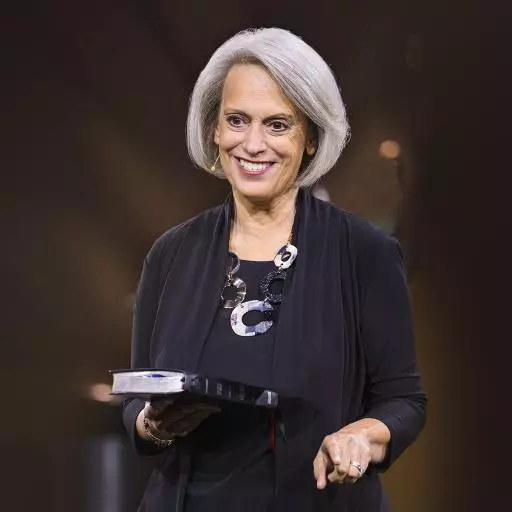
What Is a Woman? Ep 2 of 7


God’s design for you isn’t random. It’s not small. Instead, it’s woven through with eternal purpose. In this episode, Mary Kassian begins answering the question, “What is a woman?” and she shows you just how intentional God was in making you. Join her on Revive Our Hearts with Nancy DeMoss Wolgemuth.
Mary Kassian: You are a living masterpiece handcrafted in God's image. So what does this mean for you? It means that you don't have to compete with men to prove that you're valuable; you already are. You don't have to erase the distinctions between male and female to claim your dignity; it's already yours. You don't have to become more like a man to matter. Woman was never planned B.
Guest (Male): This is the Revive Our Hearts podcast with Nancy DeMoss Wolgemuth, co-author of True Woman 101, for July 10th, 2026.
Dana Gresh: I'm Dana Gresh. Today, we're back with Mary Kassian. She's kicked off a brand new series yesterday called "What Is a Woman?" If you missed that introductory episode, you can find it at reviveourhearts.com or, of course, on the Revive Our Hearts app. Today, Mary's going to take us deeper.
Mary Kassian: When was the last time you stood before a masterpiece? It's been a long time since I've been at the Louvre, but I still remember those halls. There you see real art, the kind that stops you in your tracks. Massive canvases, ancient sculptures, centuries of human skill on display. Greatness presses in from every direction.
On the staircase, the towering Winged Victory leans forward, wings spread wide, descending from the heavens. And you turn a corner and suddenly you're swallowed whole by the largest painting in the entire gallery, The Wedding Feast at Cana. And larger than life doesn't even begin to describe it. Every single inch pulses with energy: gestures, music, laughter, celebration spilling from every corner of the canvas.
And right there at the center, the miracle. Quiet, almost hidden, Jesus turning water into wine. And the wall dazzles—rich color, opulent detail, energy so alive you feel like you could step right into the scene. You linger. You can't help but linger. It pulls you in like a magnet. And just across the room, the Mona Lisa. Small, familiar, almost understated.
I'd seen her a thousand times on mugs and posters and magnets, but standing there, pressed in by the crowd, something shifts. The reproductions fall away and you see the subtlety, the restraint, the depth in her gaze. She pulls you in too, but differently. And you realize, this is a masterpiece, not just because of what you're looking at, but because of the one who made it. Leonardo da Vinci, his genius undimmed by centuries.
And you know what strikes me most about a masterpiece? It's not just what you see; it's who you're encountering. Every brushstroke, every detail, every choice the artist made reveals something about the artist: his vision, his skill, his heart. Now, the Mona Lisa isn't valuable because it's a painting of a woman. It's valuable because it's Leonardo da Vinci's painting of a woman. The artist gives the artwork its worth.
And here's what I want you to understand today: you are a masterpiece. Not a reproduction, not a copy, not a cheap imitation hanging in a gift shop. You are an original, handcrafted by the master artist himself. Last time we asked the question the world is afraid to answer: what is a woman? And today, we'll begin to unpack a definition grounded in Scripture, one that celebrates God's design and points to something far greater than ourselves.
Here's where we begin: a woman is God's living masterpiece, handcrafted in His image. Let's break this down because every word matters. Masterpiece. How did God create the masterpiece of humanity? The details are recorded for us in Genesis chapter two, verse seven: "The Lord God formed the man out of dust from the ground." Now, that word "formed" is packed with meaning. The Hebrew word is yatsar, and it's the same word used for a potter working clay on a spinning wheel.
Now, this isn't casual work; this is artistry. This is skill meeting intention. This is a craftsman who knows exactly what he's doing. I've stood in a pottery studio and watched an artisan at his wheel. His hands never stop moving, pressing here, smoothing there, drawing the clay upward with just the right pressure. Every touch is deliberate. And what starts out as a shapeless lump of clay slowly takes form—a bowl, a vase, something both functional and beautiful.
And that's the image that God gives us: a potter at his wheel, shaping humanity with patience and precision and care. With the rest of creation, what did God do? He spoke. "Let there be light," and there was light. He commanded the waters to gather, and they obeyed. And he called forth vegetation and animals, and they appeared. Day after day, creation unfolded at his spoken command. But day six, when God created humankind, he rolled up his sleeves, he got his hands dirty.
He scooped up dust—common, ordinary dust—and began to work it, shaping, forming, crafting with the care of an artisan. The image echoes throughout Scripture. Isaiah captures it beautifully: "We are the clay, and You are our potter; we are all the work of Your hand." Do you see yourself as a work of art fashioned by the master craftsman? Not thrown together haphazardly, not slapped together on an assembly line, but shaped with intention, designed for a specific purpose?
The Apostle Paul picks up the artisan imagery when he writes to the church at Ephesus. He tells them—tells us—in Ephesians 2:10 that we are God's workmanship, created in Christ Jesus for good works. And that word "workmanship" is the Greek poiema, and it's where we get our English word "poem." So think about that for a second. You are God's poem, his work of art, his masterpiece. And here's what makes Paul's words even more stunning.
He's not just talking about your physical creation. He's talking about something that happens when you come to Christ. God doesn't just save your soul and call it done; he recreates you. Just like he formed humanity from dust at the beginning and breathed life into us, he now forms us anew through spiritual rebirth. And if you believe in Jesus, you become his work of art all over again. Born once from your mother's womb, born again by God's Spirit. His living masterpiece, crafted twice. Created in the beginning and recreated in Christ Jesus.
You are not mass-produced. You are not one in a million identical copies rolling off some cosmic assembly line. You're unique, custom-made, God's one-of-a-kind work of art, both in your physical creation and in your spiritual recreation. And here's what sets you apart from every masterpiece hanging in every museum in the world: you're alive. Alive, living. And that's the second word of the definition that I want to emphasize. We are not simply God's masterpiece; we are his living masterpiece.
Genesis 2:7 continues: "He breathed the breath of life into his nostrils, and the man became a living being." Now, can you picture this scene? God has just finished forming man's body from the dust, and the shape is there—the arms, the leg, the torso, the head. Every detail is perfectly crafted, but the figure lies still, lifeless—a sculpture, clay. And then comes the moment that changes everything. God bends down, close, intimate, face-to-face, and breathes into the nostrils.
And suddenly, suddenly, there's life. Clay turns to flesh. A heart beats in the chest that was silent. Lungs expand, eyes open. This is personal in a way nothing else in creation is. God didn't breathe into the skies, he didn't breathe into the oceans, he didn't breathe into the animals—only humans. And that shared breath reveals an intimacy, a connection between man and maker that no other creature experiences. And that breath, that divine breath that God breathed into humanity at creation, is sustaining you right now, this very moment.
Every time your heart beats, every time you blink, every time your lungs fill with air, you breathe because he breathed. That artwork in the Louvre is stunning, yes, but it's static; it's dead. It doesn't change. It doesn't grow. It doesn't breathe. And the Mona Lisa will look essentially the same a hundred years from now as she does today. But you, you're different. You think, you feel, you dream, you create, you relate, you worship. You're a living, breathing, thinking, feeling work of divine artistry.
A living masterpiece, not just alive in a biological sense, but alive with the very breath of God, your creator. God breathes life into man, but his creative work doesn't end there. Later in the day, God does something unexpected. He changes his technique. He doesn't reach down for another handful of dust and start the process over. Instead, he continues to handcraft humanity, but this time something different, something costly. Verses 21 and 22 explain.
So the Lord God caused a deep sleep to come over the man, and he slept. God took one of his ribs and closed the flesh at that place. Then the Lord God made the rib that he had taken from the man into a woman and brought her to the man. Now, really consider what's happening here. God reaches into his firstborn's side, wounds him, pierces him, removes a rib—wet, warm, living bone and flesh, membrane and marrow. And from that rib, from that bloody piece wrenched from its place above Adam's beating heart, God creates woman.
Now, this was messy. This was surgical. This was shocking. In the creation of man, God got his hands dirty with dust; in the creation of woman, he got them bloody. God put his firstborn under, laid him open, watched him bleed. And the first Adam gave of his own flesh so that he might win a bride. It cost God, it cost Adam, it cost dearly. And do you see the shadow here? The hint, the foreshadowing? Because thousands of years later, another man—Jesus Christ, the last Adam—would have to be wounded for his bride to live.
His side would be pierced, his blood would flow. He would give up not just a rib but his very life so that his bride, the church, could be born. Notice, too, that the word used for woman's creation is different from the word used for man's. With Adam, God formed him—yatsar, the potter's word. But with Eve, God made her, and the Hebrew word here is bana. It's the word for building. It's the same word for building a house or building a temple or Christ building his church.
So God didn't just form woman; he built her, handcrafted her. I wonder what it was like: God bent over Adam's still body, hands bloody, absorbed in his creative work—building, shaping, forming. I wonder if his hands trembled thinking of the weightiness of it all. Every curve a signpost, every feature a foreshadowing, thinking ahead past this man, this woman, past this garden, this moment to another wound, another side pierced, another bride purchased at infinitely greater cost.
He was making her, but he was undoubtedly thinking about her—the bride his son would one day bleed for. A view of me. Did his breath catch as he considered the cost? When God stepped back to admire his work, I imagine he smiled. He knew the end of the story. He could already see the wedding supper of the Lamb, taste the feast, feel the joy, exult in the victory. Sin and death defeated, the bride finally, gloriously, forever united with her groom.
That's what he envisioned when he handcrafted woman. That's what he envisioned when he handcrafted you. When a craftsman works with his hands, he leaves his mark on what he made. God is no different. He didn't just handcraft woman; he left his fingerprints on his work. A woman is God's living masterpiece, handcrafted in his image. Theologians call this the Imago Dei, the image of God. You bear God's fingerprints, and that's foundational to everything: your worth, your purpose, your identity, and your womanhood.
Listen for the word Genesis 1:26-27 keeps coming back to: "Then God said, 'Let us make man in our image according to our likeness.' So God created man in his own image; he created him in the image of God; he created them male and female." Did you catch that? In our image, in his own image, in the image of God. Three times in two verses, Scripture is hammering this home. And as if that weren't enough, it throws in one more word: likeness. Same idea, different word, just to make sure we get it.
Male and female, both equally, both fully bear the image of the Almighty God. And this is the foundation of your worth—not what you've accomplished, not how you look, not your relationships or your resume or your bank account or your social media following. You bear the image of God, and that gives you a dignity and value that nothing, nothing can diminish or destroy. Being made in God's image is about what you are, who you fundamentally are, and also about what you are meant to do.
Think of image less as a noun and more like a verb. You're not just carrying God's image; you're imaging God. You're representing him, reflecting him, making him visible in a world that can't see him directly. You are a God-imager; that is your purpose. And this is true from the very moment of your existence. From conception, every single person is an imager of God. It's not something you grow into or earn through good behavior, or not something that you can lose.
Being made in God's image is what separates humans from every creature and gives every person, from the missionary in the jungle to the drag queen in the library, inherent dignity and worth. Not because all bear his image equally well, but simply because all equally bear it. Imago Dei. God's fingerprints are on every single human, including you. And that means you share qualities of God's nature. You can think and reason and create.
You can discern right from wrong. You can appreciate beauty and find meaning. You can love deeply, and you can pursue truth relentlessly. And most amazingly, you can have a relationship with God himself. The creature can know the creator—talk to him, listen to him, love him, be loved by him, all because you bear his image. But here's the hard truth: because of sin, we don't image God the way we should.
When Adam and Eve rebelled, something shattered. We still carry God's image—that core identity never disappears—but now it's damaged, marred. Instead of perfectly reflecting God's holiness and love, we battle selfishness and pride and rebellion. The mirror's cracked. You can still see a reflection, but it's distorted, fractured, incomplete. Think about what it's like to look into a cracked mirror. The reflection is still there, but something's off.
The crack distorts, it fragments. You might see your eye in one piece and your jawline in another and the two halves not quite lining up. You're still recognizable, but something's wrong with the image. And that's what sin did to the image of God in us. We still bear his image, it's still there, still recognizable, but sin cracked the mirror. And what we reflect is real, but it's fractured. And that's why Jesus came. Paul tells us in Colossians 1:15 that Jesus is the image of the invisible God.
Not a cracked reflection, but God himself made visible. The perfect image, the unbroken mirror. And through faith in him, the crack in us can be healed, restored, so we can bear his image in the way we were always meant to. God created you in his image, and that means that your life is meant to put his character on display, to make his invisible attributes visible, to showcase his beauty to a watching world.
And here's where your womanhood becomes central to the story, because your life is meant to showcase not only the beauty of his character, but also the beauty of Christ's story: the gospel. Male and female together display the fullness of what God wants to reveal, like two sides of a coin. Your womanhood tells part of the story that can't be told any other way. So what does this mean for you? It means that you don't have to compete with men to prove that you're valuable; you already are.
You don't have to erase the distinctions between male and female to claim your dignity; it's already yours. You don't have to become more like a man to matter. Woman was never planned B, never an afterthought, never a lesser version of man. She was the culmination, the crown, the finishing touch. When God created man, he said it was good, but after he created woman, only then did he look at everything he had made and declare it very good.
The male-female binary, marriage, family—God's divine power and nature and cosmic plan engraved on flesh and bone. Every temporal physical reality a shadow of something gloriously permanent. Woman is God's living masterpiece, handcrafted in his image. God made you a woman on purpose, for a purpose far bigger than yourself. Your womanhood isn't just about you; it never was. It's about the story God is telling, the story of a bridegroom who loved his bride enough to bleed for her.
The story that will culminate in a wedding supper and a joyful union that will never end. And you, woman, were made to tell that story every day, in your very body, in your very being. And that's how intentional your creation was. That's how precious you are. And that is how loved you are. And that's why knowing who you are matters, not just for you, but for every person whose life you touch. Your womanhood tells the story of Jesus, the story the world desperately needs to hear.
Dana Gresh: We've been listening to Mary Kassian. Little by little, she's helping us answer the question: what is a woman? Today we learned that we're living masterpieces handcrafted in God's image. His design is breathtaking. And as we continue in this series, it's just going to shine brighter. If you've been enjoying this series, then I think you'll love Mary's newest book. It's titled *What Is a Woman? The Question Our World Is Afraid to Answer*.
This resource covers similar topics to our podcast series, but it's more expansive. It takes these topics and really plumbs the depths of each one. You're going to walk away with a holistic understanding of what it means to be a woman, not according to Mary Kassian, as much as we love her, but according to God himself. Her goal with this book is to point you straight to him. You can find *What Is a Woman?* exclusively at reviveourhearts.com/store.
And good news: when you make a donation of any amount to support Revive Our Hearts this month, we'll send you a copy as our thanks. To give, all you have to do is visit reviveourhearts.com or call us at 1-800-569-5959. I can't wait for you to enjoy this timely biblical resource. Well, I sure hope your weekend is wonderful. Hope you can worship the Lord together with your church family.
And Monday on Revive Our Hearts, we'll talk about being true women of prayer. How's your prayer life? Could you stand a dose of encouragement? Well, Nancy, Kimberly Wagner, and others will have that for you next week. Please be back for Revive Our Hearts.
Featured Offer

New book from Mary Kassian. With your donation of any amount.
Past Episodes
- 3 Doctrines that Fuel Endurance
- 3 Ingredients of a Revived Heart
- 3 Life-Changing Lessons for Young Women
- 3 Marks of an Unshakable Woman
- 3 Reasons to Join the 2026 Bible Reading Challenge
- 3 Ways to Love Your Friend When It’s Hard
- 3 Women Who Were Grateful for God’s Word
- A Cry for Revival: Isaiah 63-64
- A Great Awakening, with Kim and Katie Miller
- A Harvest of Joy
- A Heart Grounded in the Word of God, with Chris Brooks
- A Mighty Fortress Is Our God (Psalm 46)
- A Song for Weary Pilgrims (Psalm 137)
- A Woman Adorned and Adorning
- Advent for Exiles, with Caroline Cobb and Erin Davis
- Always Grateful: Ciara's Story
- Always Thankful (Psalm 66)
- An Unhurried Holiday Season
- And the Bride Wore White, with Dannah Gresh
- Anticipating Advent
- Be the Warmth: Cultivating Hospitable Character
- Becoming a Fruitful Woman
- Begin at My Sanctuary
- Behold the Big Story of the Bible, with Kevin DeYoung
- Behold the Daily Mercy of the Word, with Dannah Gresh
- Behold the Living Word, with Jackie Hill Perry
- Behold the Power of the Word to Save, with Kelly Needham
- Behold the Wonder of the Word
- Behold the Word Recovered by God’s People, with Mary Kassian
- Behold, Hearts on Fire with the Word
- Beholding the Wonder: True Woman '25
- Beyond Cliches: Real Encouragement for Single Sisters
- Blessed by a Godly Mother
- Blessing for the Year End & the New Year (2 Cor. 13:11-13)
- Blessings and Curses: A Look at the Life of Balaam
- Brokenness: The Heart God Revives
- Celebrating God’s Abundance
- Celebrating the Gift of Grandparents
- Choosing Grace over Gossip
- Choosing Servanthood Over Celebrity
- Choosing to Stay in a Difficult Marriage
- Come Adore: The Gospel in Carols
- Crossing the Finish Line: Remembering Robert Wolgemuth
- Ease Into the Bible, with Jean Wilund
- Enlarging Your Heart for Eternity, with Colleen Chao
- Exploring the True Woman Manifesto
- Faithful, Not Famous with Laura Gonzalez de Chávez
- Finding Freedom from Fear, with Judy Dunagan
- Finding My Father Father: How the Gospel Heals the Pain of Fatherlessness, with Blair Linne
- Finding Soul-Deep Satisfaction in Jesus
- Food Is Not the Enemy: Discover Freedom from Food Fixation, with Asheritah Ciuciu
- Free to Be Real
- Freedom in Christ
- From Death to Life: Hope After Abortion
- From Desperation to Deliverance: The Promise of Psalm 107
- Fruitful in Christ
- Fullness in Christ
- God’s Grace for Weary Moms
- God's Power to Revive a Heart, with Andrea Griffith
- Grace for the Depressed
- Hallelujah! A Praise Celebration (Psalm 113)
- Helping Kids Think Biblically, with Elizabeth Urbanowicz
- His Healing Touch
- Holy Week Heart Prep: The Wonderful Names of Jesus
- Hope in the Midst of the Hard
- How God’s Love for Women is Displayed in the Old Testament, with Dr. Katie McCoy
- How Less Scrolling Could Change Your Life, with Lara d’Entremont
- How Long, O Lord? Learning to Pray Through Pain
- How Remembering Eternity Transforms Today (Psalm 90)
- How to Have a Happy New Year (Psalm 1)
- How to Have a Marriage that Magnifies God
- How to Have a Quiet Heart
- How We Got Our English Bible
- Indispensable Ingredients for Life
- Instruments of Grace
- Intimacy with God
- It’s Possible! Learn to Control Your Mind and Emotions
- Leading Children to Love the Word
- Learning to Love the Old Testament, with Jennifer Smith
- Living Out the Beauty of the Gospel
- Living Well, Finishing Well, with Mark DeMoss
- Loving and Living God’s Word, with Kelly Needham
- Persecution, Perseverance, and the Key to Sustaining Faith, with Dr. Karen Ellis
- Persevering Love for the Local Church
- Pleading the Cause of the Unborn
- Practical Bible Study Tips
- Practicing Thankfulness, with Sam Crabtree
- Precepts, Parkinson’s, and the Truth That Sets Us Free, with Kay Arthur
- Psalm 23: Our Good Shepherd
- Putting God's Word First, with Gretchen Saffles and Janine Nelson
- Read Your Bible!
- Rediscovering Intimacy With God
- Relationship Refresh: Helping Your Community Thrive in Christ
- Remembering Voddie Baucham, Jr.
- Renewed and Restored (Psalm 23:2-3)
- Renewing Your Mind
- Revival Begins with You
- Revive Us Again (Psalm 85)
- Ruth: The Transforming Power of Redeeming Love
- Safely Home: Honoring Robert Wolgemuth
- Science, Scripture, and a Life Transformed, with Dr. James Tour
- See for Yourself: Get to Know Your Bible, with Kelly Needham
- Showing Kindness, with Kathy Branzell
- Sin, Suffering, and the God Who Restores
- Sorrowful, Yet Always Rejoicing
- Spiritual Disciplines We Forget About
- Spiritual Habits for Little Hearts
- Spiritual Strength for an Evil Day (Ephesians 6)
- Steadfast Faith
- Storm Shelter
- Supporting Your Suffering Friend, with Jani Ortlund
- Surrendering Your Independence
- Tell Yourself What’s True
- Telling the Greatest Story
- Tender Counsel for the Fearful and Grieving, with Paul Tautges
- The Beautiful Process of Repentance
- The Beauty of Living Out the Gospel as a Woman
- The Four Emotions of Christmas
- The Glory of Face-to-Face Fellowship
- The Gospel Is Everything: 25 Years of Pointing Women to Christ
- The Humble Savior Who Came
- The Incomparable, Incarnate Christ
- The Joy of Bible Journaling
- The Joy of Embracing Biblical Womanhood, with Laura Perry Smalts
- The Legacies of Two Godly Fathers
- The Personal Devotional Life
- The Personal Devotional Life: Beyond Quiet Time, with Dr. Henry Blackaby
- The Power of Words
- The Well-Watered Woman, with Gretchen Saffles
- The Wonder App: Transforming Screen Time into Scripture
- Three Gifts Suffering Gives
- To The Woman Who Doesn’t Feel God’s Love
- Treasuring Christ in Our Traditions with Noel Piper
- True Woman '25 Panel Discussion: Behold the Word in Every Season
- True Womanhood for Today
- Truly Strong: Becoming Women Who Depend on the Lord
- Truth Talk for Hurting Hearts, with Dawn Wilson
- Walking Through Life's Deserts
- What Do We Do with Unfulfilled Longings?
- What Freedom, Fullness, and Fruitfulness Really Mean, with Robert Wolgemuth
- What Is a Woman? with Mary Kassian
- What Sisterhood Is (and Isn’t)
- What’s the Point of Praise? 3 Reasons Your Worship Matters
- When Busyness Threatens Intimacy with God
- When Prayer Sparks Revival, with Bob Bakke
- Why Study the Bible?
- Wonder of the Word Made Flesh
- Word Before World, with Gretchen Saffles

Featured Offer
New book from Mary Kassian. With your donation of any amount.
About Revive Our Hearts
Married, single, young or older, you'll want to join us every day for practical, biblical insights on becoming a fruitful woman of God. Best selling author and national radio host, Nancy DeMoss Wolgemuth makes the Scriptures come alive. You'll be touched by Nancy's messages and by the passion of her heart.
About Nancy DeMoss Wolgemuth
Nancy DeMoss Wolgemuth has touched the lives of millions of women through Revive Our Hearts and the True Woman movement, calling them to heart revival and biblical womanhood. Her love for Christ and His Word is infectious and permeates her online outreaches, conference messages, books, and two daily nationally syndicated radio programs—Revive Our Hearts and Seeking Him. Her books have sold more than four million copies and are reaching the hearts of women around the world. Nancy and her husband, Robert, live in Michigan.
Contact Revive Our Hearts with Nancy DeMoss Wolgemuth
Mailing Address
Revive Our Hearts
P.O. Box 2000
Niles, MI 49120
Telephone Numbers
1-800-569-5959 (toll-free)