
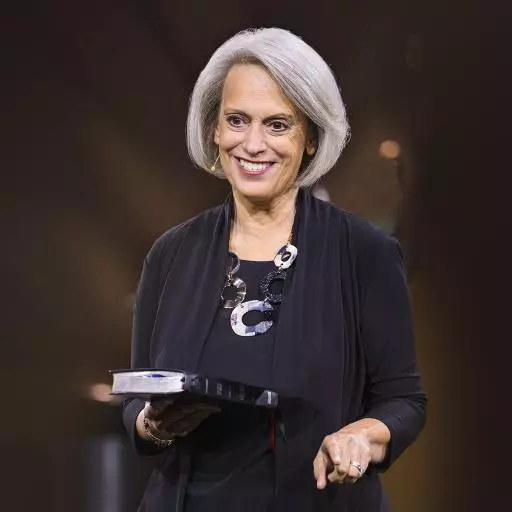
Truly Strong: Becoming Women Who Depend on the Lord


What does it mean to be truly strong? We’re often tempted toward self-sufficiency, but this is ultimately exhausting. Guests Mary Kassian and Kristen Wetherell suggest that true strength begins with dependence…on Revive Our Hearts Weekend, with Dannah Gresh and Nancy DeMoss Wolgemuth.
Dana Gresh: What comes to mind when you hear the word dependent? Does it make your stomach twist and turn? Do you feel defensive, maybe even angry? Or do you think, yeah, I am dependent, and you know what? That’s okay. In fact, it’s really good. I’m your host Dana Gresh, you’re listening to Revive Our Hearts Weekend.
Discomfort is kind of our natural response to the idea of dependence, don’t you think? I mean, maybe we think it threatens our autonomy, makes us small, or leaves us vulnerable when those we depend on fail. But in Christ, we see all these fears flipped upside down.
We find that autonomy is overrated when we can belong to such a good Savior. We discover that our smallness is an opportunity to magnify His glory, and we learn that we are never vulnerable in the hands of a God who cannot fail us. So what if we befriended our weakness instead of pushing it away?
Today we’re exploring the beauty of becoming women who depend on God, and I hope that by the end of this half hour, you’ll breathe a sigh of relief. That’s our goal today, because we’re going to see that we were never made to hold all the things together. No, we were not meant to be strong in and of ourselves. Instead, we can collapse into the arms of a Savior who is always strong on our behalf.
I’m excited. Let’s dive in. First, we’re revisiting a conversation I had with two of my precious sisters in ministry, Nancy DeMoss Wolgemuth and Mary Kassian. We were chatting about Mary’s book. The title: The Right Kind of Strong.
Mary Kassian: And we’ve been unpacking the passage from Second Timothy about weak women. That was not a good thing. Paul did not say, "Oh, women are weak, and women should be weak, and all women are weak." In this passage, in mentioning these women, it’s not a compliment. He’s saying these women were diminished. They were less than they should have been.
Dana Gresh: And in saying that, wasn’t he saying, "Rise up and be strong"?
Mary Kassian: Absolutely. So let's go back to that passage. The one we're talking about today, this seventh surprisingly simple habit, is kind of an oxymoron. It's not what you would think about what it means to be strong. But let's just back up for a moment and get the context.
Paul says to Timothy, who’s the pastor of this church in Ephesus, "There are those who creep into households and capture weak women. These women are burdened with sins, they're led astray by various passions, they're always learning and never able to arrive at a knowledge of the truth."
Now, as we come to that seventh surprising habit, what is the bad habit we need to put off and the right habit we need to put on? These women considered themselves to be strong women. These were women who lived in a very pro-woman culture at the time.
Dana Gresh: They probably felt a little bit like you did when your brother called you weak. I’m sure they weren’t happy about this.
Mary Kassian: Exactly. If a pastor or a blogger called me out for being a weak woman, I think I’d get my hackles up a little bit still to this day, because I don’t want to be weak. And they didn’t think they were. They thought they were strong. But here’s the paradox: in order to be a strong woman, ultimately, we need to rely on God. We can’t find our strength in ourselves. We need to find our strength in a Savior. A weak woman really thinks that she’s strong, but a strong woman understands that she is weak and in need of a Savior.
Nancy DeMoss Wolgemuth: Say that again, Mary. That is so powerful and such a good distinction. So it depends how you're using the word weak, right?
Mary Kassian: It does, but the Bible redraws the boundaries. It changes the definition of what is actually weak and what is actually strong. So the bad kind of weak woman, the kind Paul’s talking about here in Timothy, she tries to act strong. She thinks that she’s strong. But a truly strong woman recognizes that she’s weak and in need of a Savior. She looks to Christ for strength.
Dana Gresh: And when we say that we need to be weak in a sense, that’s not something the world thinks very highly of. They say weak means insecure, feeble, frail, vulnerable. And we say there’s a kind of weakness that really is strength.
Mary Kassian: There is. And Paul talks about that. He says, "When I am weak, then I am strong." When I am fully dependent on Jesus, when I understand and admit my need and admit my need for Jesus and admit my weakness, that’s when His strength can shine through me.
Whether He is working out of an area of strength—and I think that we want to give women permission here to feel that they are strong and that God is giving them strength and that they are strong women—but they’re not strong in and of themselves. Exactly. Even when I’m working out of my strength, even when I’m doing what comes very easily to me because it’s in my gifting, it’s in my personality, even then, when I’m working out of my strength, even then I need to recognize that everything I am, everything I have, everything I do is because of Jesus.
Dana Gresh: And apart from Him, we have nothing, we are nothing, we don’t have anything to offer. We are nothing apart from Him. We are weak.
Mary Kassian: We are weak. The amazing thing about this message is that you can be a strong woman whether you feel like a strong woman or not. You can be a strong woman even when you feel weak. And in fact, Christ’s power and His strength is put on display most dramatically through our weaknesses.
Dana Gresh: The right kind of strong—that’s what we want to be, isn’t it? We had such a good time discussing the book by Mary Kassian, The Right Kind of Strong, along with Nancy DeMoss Wolgemuth. In fact, the three of us chatted so much, we actually ended up with a whole podcast series on the topic of true strength. You can find that in the transcript of today’s episode along with information about Mary’s book, The Right Kind of Strong. Just go to reviveourhearts.com/weekend and select today’s episode.
This is Revive Our Hearts Weekend. I’m Dana Gresh. Now, maybe you’ve read Proverbs chapter 31 a time or two over the years. If so, you’ll recognize the phrase, "she clothes herself with strength." It sounds like a lovely concept, but we don’t always slow down and consider what does this really mean? What should it look like in our daily lives? Nancy’s going to help us get practical as she shares a little about the Proverbs 31 woman.
Nancy DeMoss Wolgemuth: She's a busy woman. She's an active woman. She's a diligent woman. And she's probably at times, undoubtedly, she's a tired woman. And so we see a very practical verse: Verse 17, "She girds herself with strength and strengthens her arms." If you're following along in the New International Version, it says, "She sets about her work vigorously; her arms are strong for her tasks." Or the Amplified Version is helpful here: "She girds herself with strength, spiritual, mental, and physical fitness for her God-given task, and she makes her arms strong and firm."
Now that word gird, "she girds herself with strength," that word means to equip or prepare for action. She does what she has to do to be equipped and fit to do what God has called her to do. And at different seasons of your life, that may look different. It's not always the same requirement for each season of life, but this woman does what she needs to do to be strong, to be equipped, to be girded up, prepared for action.
And we see a woman not just in this verse but throughout this chapter who works with energy and enthusiasm. She's not a woman who's dragging around. Now, that makes you think maybe this is superwoman, this woman does not exist, there is no such woman. But God has provided His grace to strengthen us to do His will. Whatever I need to do the will of God wholeheartedly and cheerfully and willingly at any season of my life, God can give me the grace and the strength to do that.
But I have to cooperate with Him in appropriating that strength and that grace. I want to be a woman who works with energy and with enthusiasm. Now, I'm not always that. And you see me when I'm teaching and prepared and on the platform, but what you don't see are the behind-the-scenes times, sometimes very late at night, sometimes early in the morning, the long days, the long hours when I am feeling very weary under the pressure, under the gun of all that is required to do what God has called me to do.
And then this verse challenges me that I need to be taking some practical steps to strengthen myself to be fit physically, mentally, emotionally, and spiritually to do the will of God, whatever that requires. It means I need physical strength. As long as God gives health, I need to be maximizing what He has given me physically to be developing a greater endurance, a greater capacity for endurance.
Now, I'm not a person who naturally is real interested in things related to nutrition and exercise. That's not one of the things that I have a lot of focus on in my life. But I need a little bit more focus. And my dad used to remind us that Paul said to Timothy that bodily exercise profits little. But, he would say, it does profit a little.
And no need on any of these things to go to excess or extremes or to have this become your god, but physical exercise, I'm finding the older I get, is important. And I'm finding the older I get, the more important it is what I eat. I found that I could live on fast food when I was in my 20s, but when I hit 30, I couldn't keep living that way and have the strength to do what God had called me to do.
I find it's even more important that I take care of this temple, this body that the Holy Spirit lives in, that God has given me. And so some practical ways: If you find yourself just not having the energy to do the will of God, to be a mom, to keep up with those kids, to do whatever God has called you to do, I just say practically, watch your sugar intake. I found myself recently just almost on an addiction to sugar. I had let things go and took about a 30-day period recently and said, "I'm just going to stay off of sugar."
And through most of that period of time, there were a couple exceptions, but I can't tell you how much better I started to feel quickly after I got rid of the headaches from getting off the sugar. It was just a practical thing that I found myself having more strength and energy to do the will of God. That means that eating has to do with our ability to glorify God.
Physical exercise: I find that when I am getting moderate physical exercise that I have greater stamina, I have greater physical energy, greater capacity for serving God and others. I don't get tired so easily. And we know medically and physically that physical exercise is a help in dealing even with our emotional well-being, depression.
Now, I'm not saying that if you're depressed and you go out and take a walk that all of a sudden you won't be depressed, but physical exercise is one very important ingredient in dealing with depression. And particularly if you're a wife and a mom, you want to have emotional strength and reserves to give to your family. And if you're always living on the edge of depression, it may be that just some simple steps—now, if you're depressed, it may not seem simple to get up and take a walk, but that's where just taking some steps of obedience, as hard as they may seem, may help just to lift your spirits and make you more fit, girded up for action to serve your family.
When I have some moderate physical exercise on a consistent basis, it just improves my overall outlook on all of life. And I find that when my body is disciplined, that I am more likely to be disciplined in other areas of my life. And when I let this area of physical discipline go, you know what goes next? My tongue. I start wasting time, my temperament, my reactions, everything else seems to get out of control when I let my body go.
Now, this is not something that comes easily for me, and I find myself particularly in the last couple of years thinking, "I just don't have time. I just can't fit this in." And God has been gracious to put some people around me who care not just for my soul but care for me as a person. And I had a woman call me recently and she said, "I want to challenge you." She didn't call out of the blue. She is a friend and a praying friend, but she had been praying for me and she said, "I think you need to go back to walking."
I had put that aside for some period of time here. She said, "I need to get to walking again. Could we hold each other accountable?" And she emailed me just in the last day or two and we emailed each other and reported to each other. I did get my three walks in last week. The third one, I promise you, I would not have gotten in had I not known that she was going to ask how it was going. But I am so thankful for friends like that who will help me gird myself for action, to be strengthened physically.
The goal here is not to have a model's body. The goal here is not to be a bodybuilder or to fit the world's picture of thin and tanned and toned and all of those things that are so important to the world. The goal is whether you eat or drink or whatever you do, do it all to the glory of God. I want my life to bring glory to God. I've asked God to let me serve Him with strength until I'm 85 years old. And God may not give me that many years, He may give me more years than that, but that's just something that has been a desire of my heart. That's how many years God gave Caleb to serve Him back in Joshua chapter 14. And I've said, "Lord, would you let me serve you with strength until I'm 85 years old?"
And I want to do what I need to do with this body to have it fit enough to fulfill the purpose for which God has put me here on this earth, so that I don't have to be sluggish and always exhausted. And I know there's seasons of your life—I'm looking here at some mothers who are at a season of life where you're going to be tired, and there's no sin in that. But as God gives opportunity and as He speaks to your heart, look for ways even physically to be fit for the tasks God has given you.
Dana Gresh: Such an honest, helpful word from Nancy DeMoss Wolgemuth. I think she brought out an important distinction here. She affirmed that we do depend on the Lord for strength, but that doesn’t look like just sitting on our sofas and saying, "Well, I guess I’m weak, so I’ll let God take over from here." No, we are not weak in the Lord. Truly strong women know that dependence on God and hard work go hand in hand. He invites us to participate in His strength and to do meaningful kingdom work in the process.
Now, maybe like Nancy, that looks like asking a friend to hold you accountable to exercise. Maybe it means collecting some healthier recipes to prepare, recipes that will better nourish your body for the work God is calling you to. Maybe take a few minutes today to ask God, "How can I live more faithfully in Your strength?" This is going to differ from woman to woman and season to season, but God’s strength is the constant.
Now, I bet a lot of us could agree we need God’s strength to be faithful in our spiritual disciplines—habits like praying and reading the Word. I got to sit down with my friend Kristen Wetherell not too long ago to talk about this. Kristen is a pastor’s wife, mother, and the author of numerous books including Help for the Hungry Soul. Here’s a piece of our conversation.
You mentioned that we try to fit things into our God-shaped hole that they don't satisfy because they don't fit there. What are some examples of things that maybe you've used to try to satisfy your heart?
Kristen Wetherell: I think I'm quick to turn to people rather than the Person. I am so quick. And that's not necessarily all bad, because I'm surrounded by amazing people, people who love the Lord, people who will point me to the Lord. And thankfully, a lot of the time they do. But my very first response is not to turn to prayer and talk to my Father. It's to pick up my phone and try to find an out from my situation or a solution for what I'm walking through in a friend or in my husband. And like I said, that's not a bad thing. These are friends and spouses and family members, church family. They're good gifts.
Dana Gresh: I think sometimes it's whether or not it's the first thing. Sometimes I am picking up my phone saying, "People, please pray about this, that, or the other thing," and I haven't even prayed yet. I haven't talked to the Lord. I haven't said, "God, do you see what's going on?" And so sometimes even those good things, when we turn to them as the first thing, they start to be a competitor with God, right?
Kristen Wetherell: That's right. And the word competitor is a great word because in our struggle with weariness, a lot of us struggle with a sense of purpose and finding, rooting our purpose in Christ and our identity in Christ. And for myself, I think I try and fill that God-shaped hole with praise from people. So I can turn to people for help, but I can also turn to them for honor, and I can also turn to them for praise and affirmation. And that will never satisfy me, because the more I get, the more I want. And so am I turning to the Lord for that? Am I looking to Christ to be that solid rock, that rock that fills that God-shaped hole? Won't change. Big difference between the two.
Dana Gresh: So how do we redirect ourselves from those counterfeits—sometimes good things, but they don't belong in our God-shaped hole—how do we redirect?
Kristen Wetherell: Well, we need God's mind to fill our own minds, right? And we need God's will and His priorities to fill our own hearts. And so where do we get that? How do we get that? Well, it's a work of the Holy Spirit. It's not something that I can conjure up or that anyone else on their own can do for me. It's a work of the Holy Spirit that primarily comes through the Word of God, which is such a gift to me because how else would I know who He is? How else would I know in full the full perfect revelation of God? How else would I know unless He had given me it in the form of this book that we call the Bible? It's such a beautiful gift when you think about it that way. It's something that I can touch with my fingers and something that I can see with my eyes, and yet it's a spiritual thing. It's the God of all creation speaking to me, speaking to us. It's such a gift.
Dana Gresh: Now, before we talk about how satisfying that can be, because oh, I have tasted it and I know that it is good, I imagine there's someone listening right now who says, "Oh, I have grown weary in my Bible reading. Like, that's making me weary." What would you say to her about that?
Kristen Wetherell: I would say that that is also me in certain seasons. And I have found that weariness—another word for it may be dryness, spiritual dryness—tends to be a bit cyclical. So I've been there and then at times I come back there. And I would encourage you that perhaps the lack of hunger and the weariness might be God's way of reminding you how much you need Him. Because I can't cause within my own heart any love for the Lord unless He stirs it up within me. I can't change this weariness that I sometimes feel about opening the Bible on my own.
And so it is really a ripe opportunity to freshly turn to the Lord and tell Him what you're feeling, honestly, and say, "Lord, my heart's not in the right place. I don't even want to do this right now. So please would You help me? And please would You show me something in what I'm about to read that would stir up more and more of a hunger?" And then secondly, I would say we just keep coming. We just keep coming and we trust that the promise that God gives us about His Word doing His work in our hearts is greater than what we may or may not be feeling at any given moment. It's worth holding on to. It's worth taking God at His Word. So we're honest and we just keep coming.
Dana Gresh: I think too, when we come, we have to come with the right mindset. Many times when I look back at seasons of dryness, I was faithful in my Bible reading, I was faithful in my prayer time, my quiet time, but I was dry. It's because I was going for the wrong motivation and I was looking at my Bible through the lens of me instead of the lens of Jesus. How can focusing on Jesus in the reading of God's Word change the way we have an appetite for the presence of Christ through the pages of scripture?
Kristen Wetherell: I'm so glad that you brought this up. Yes, that's me. My first inclination is to check today's reading off the reading plan. Check. Little type A maybe? Yes, and then to feel really great about myself because I did it. And I imagine that some of the listeners too. But you know, if we're just coming to check off a box, if we're just coming to glean some information, if we're coming even to simply try and solve a singular problem that we're going through, we're missing the point because the whole entire Bible, it's one big story, and the entire story is about Jesus.
And God has given us this story in order to draw us into it, in order that we would know this Jesus and walk with Him, to not think about Him and His truth and His gospel as ideas or theory, but to take hold of His hand as a person and say, "Lord, I need You. My whole life is bound up in Yours." If you've trusted in Christ, your whole life is bound up in His. You are one with Him. And so our greatest privilege is to get to know Him and to walk with Him and then to be, in the process, transformed into His likeness. But we can't see Him with our eyes right now. It's a walk of faith. We walk by faith, not by sight. And so this is hard for forgetful people.
Dana Gresh: You know, as you're talking, I'm thinking of a scripture verse that's just screaming out at me because you're saying we can't do it ourselves. I mean, even spending time in the Word of God, we can't have a desire for that outside of the Holy Spirit. At the same time, we can set the stage for the Holy Spirit to fan that desire, to give us that desire and that appetite. And I'm thinking of Hebrews 12 which says we lay aside every weight and the sin that clings so closely to us, and we run with endurance the race that's set before us, looking to Jesus.
Some versions say the author and perfecter of our faith. And it goes on to talk about the joy set before Him, He endured the cross, despising the shame, and He is now seated at the right hand of the throne of God. But just fixing your eyes on Jesus, looking to Jesus, He is the author and perfecter of our faith. He writes the faith in us. We can't do it. We can position ourselves for Him to do the writing. We can say, "Look, Lord, my day today is an empty slate. Will You show up? I'm fixing my eyes on You, I'm steadying my gaze on You. Will You write faith onto my heart?" And the places, you know, when you talk about coming back again and again, we're not going to have a perfected faith until we see Him face to face, right? But He can do even that. He can perfect what's not perfect in us. So it really does rely on Him. And so many times we're making that reading the Bible time about us, like you said, crossing it off.
Kristen Wetherell: That's right. I love how Peter talks about this dual simultaneous reality, the work of the Spirit and yet our human responsibility to open the Word. Peter talks about this as if we're newborn infants longing for the pure spiritual milk, that by it we may grow up into salvation. And if you've ever been around a newborn baby, all they want is the milk. They're just hungry, they're growing. If they don't get the milk, they wither and they don't grow.
And yet a newborn baby doesn't produce the milk it needs to survive. And yet if a baby doesn't put him or herself in the position to receive the milk, what's it all for? They're not going to receive it. And so similarly, are we putting ourselves in the position? Are we making the choice to open God's Word and to say, "Okay, Lord, now You do what only You can do through this work"? It's both and.
Dana Gresh: Amen. Kristen Wetherell encouraging you: rely on the Lord. Now, I hope that sigh of relief we talked about earlier is coming on right about now. You don't have to do it all on your own. Actually, the Lord wants to give you His strength for all of it. I'm so glad, so thankful His power is perfected in our weakness, aren't you?
We’d love for you to continue soaking in this truth. And that’s one reason we’re offering Nancy’s devotional, Dwell: 30 Days with God in the Psalms. Through reflections on 30 Psalms, Nancy gives you a fresh vision of the God who’s strong on your behalf. In times of sorrow, joy, in everything in between, He is faithful. We would love to send you a copy of Dwell when you make a donation of any amount to support the work at Revive Our Hearts. To give and receive your copy of Dwell, visit reviveourhearts.com/donate.
Next weekend, we're going to take today's conversation even deeper. We're not only dependent on the Lord, but we find complete satisfaction in Him. How exactly do we do that? Come back and find out. In the meantime, I hope you'll wish all the dads in your life a Happy Father's Day, whether he's your own dad, a spiritual father in your life, or your husband, the father of your children. This weekend is an opportunity to bless him with your words. Thanks for listening. I'm Dana Gresh. We'll see you next time for Revive Our Hearts Weekend.
This program is a listener-supported production of Revive Our Hearts in Niles, Michigan, calling women to freedom, fullness, and fruitfulness in Christ.
Featured Offer

You want a meaningful devotional life. You need it. But how can you get it? Dwell: 30 Days with God in the Psalms, will help you lie down in green pastures as the goodness of His Word surrounds you, supports you, and satisfies you.
Past Episodes
- 3 Doctrines that Fuel Endurance
- 3 Ingredients of a Revived Heart
- 3 Life-Changing Lessons for Young Women
- 3 Reasons to Join the 2026 Bible Reading Challenge
- 3 Ways to Love Your Friend When It’s Hard
- 3 Women Who Were Grateful for God’s Word
- A Cry for Revival: Isaiah 63-64
- A Great Awakening, with Kim and Katie Miller
- A Harvest of Joy
- A Heart Grounded in the Word of God, with Chris Brooks
- A Mighty Fortress Is Our God (Psalm 46)
- A Song for Weary Pilgrims (Psalm 137)
- A Woman Adorned and Adorning
- Advent for Exiles, with Caroline Cobb and Erin Davis
- Always Grateful: Ciara's Story
- Always Thankful (Psalm 66)
- An Unhurried Holiday Season
- And the Bride Wore White, with Dannah Gresh
- Anticipating Advent
- Be the Warmth: Cultivating Hospitable Character
- Becoming a Fruitful Woman
- Begin at My Sanctuary
- Behold the Big Story of the Bible, with Kevin DeYoung
- Behold the Daily Mercy of the Word, with Dannah Gresh
- Behold the Living Word, with Jackie Hill Perry
- Behold the Power of the Word to Save, with Kelly Needham
- Behold the Wonder of the Word
- Behold the Word Recovered by God’s People, with Mary Kassian
- Behold, Hearts on Fire with the Word
- Beholding the Wonder: True Woman '25
- Beyond Cliches: Real Encouragement for Single Sisters
- Blessed by a Godly Mother
- Blessing for the Year End & the New Year (2 Cor. 13:11-13)
- Blessings and Curses: A Look at the Life of Balaam
- Brokenness: The Heart God Revives
- Celebrating God’s Abundance
- Celebrating the Gift of Grandparents
- Choosing Grace over Gossip
- Choosing Servanthood Over Celebrity
- Choosing to Stay in a Difficult Marriage
- Come Adore: The Gospel in Carols
- Corporate Revival
- Crossing the Finish Line: Remembering Robert Wolgemuth
- Ease Into the Bible, with Jean Wilund
- Embracing God as Father
- Enlarging Your Heart for Eternity, with Colleen Chao
- Faithful, Not Famous with Laura Gonzalez de Chávez
- Finding Freedom from Fear, with Judy Dunagan
- Finding My Father Father: How the Gospel Heals the Pain of Fatherlessness, with Blair Linne
- Food Is Not the Enemy: Discover Freedom from Food Fixation, with Asheritah Ciuciu
- Free to Be Real
- Freedom in Christ
- From Death to Life: Hope After Abortion
- From Desperation to Deliverance: The Promise of Psalm 107
- Fruitful in Christ
- Fullness in Christ
- God’s Grace for Weary Moms
- God's Power to Revive a Heart, with Andrea Griffith
- Grace for the Depressed
- Helping Kids Think Biblically, with Elizabeth Urbanowicz
- His Healing Touch
- Holy Week Heart Prep: The Wonderful Names of Jesus
- Hope in the Midst of the Hard
- How God’s Love for Women is Displayed in the Old Testament, with Dr. Katie McCoy
- How Less Scrolling Could Change Your Life, with Lara d’Entremont
- How Long, O Lord? Learning to Pray Through Pain
- How to Have a Happy New Year (Psalm 1)
- How to Have a Marriage that Magnifies God
- How to Have a Quiet Heart
- How We Got Our English Bible
- Indispensable Ingredients for Life
- Instruments of Grace
- Intimacy with God
- It’s Possible! Learn to Control Your Mind and Emotions
- Leading Children to Love the Word
- Learning to Love the Old Testament, with Jennifer Smith
- Living Out the Beauty of the Gospel
- Living Well, Finishing Well, with Mark DeMoss
- Loving and Living God’s Word, with Kelly Needham
- Persecution, Perseverance, and the Key to Sustaining Faith, with Dr. Karen Ellis
- Persevering Love for the Local Church
- Pleading the Cause of the Unborn
- Practical Bible Study Tips
- Practicing Thankfulness, with Sam Crabtree
- Precepts, Parkinson’s, and the Truth That Sets Us Free, with Kay Arthur
- Psalm 23: Our Good Shepherd
- Putting God's Word First, with Gretchen Saffles and Janine Nelson
- Read Your Bible!
- Rediscovering Intimacy With God
- Relationship Refresh: Helping Your Community Thrive in Christ
- Remembering Voddie Baucham, Jr.
- Renewed and Restored (Psalm 23:2-3)
- Renewing Your Mind
- Revival Begins with You
- Revive Me According to Your Word
- Revive My Heart, Lord!
- Revive Us Again (Psalm 85)
- Ruth: The Transforming Power of Redeeming Love
- Safely Home: Honoring Robert Wolgemuth
- Science, Scripture, and a Life Transformed, with Dr. James Tour
- See for Yourself: Get to Know Your Bible, with Kelly Needham
- Showing Kindness, with Kathy Branzell
- Sin, Suffering, and the God Who Restores
- Sorrowful, Yet Always Rejoicing
- Spiritual Disciplines We Forget About
- Spiritual Habits for Little Hearts
- Spiritual Strength for an Evil Day (Ephesians 6)
- Steadfast Faith
- Storm Shelter
- Supporting Your Suffering Friend, with Jani Ortlund
- Tell Yourself What’s True
- Telling the Greatest Story
- Tender Counsel for the Fearful and Grieving, with Paul Tautges
- The Beautiful Process of Repentance
- The Beauty of Living Out the Gospel as a Woman
- The Book of Books
- The Four Emotions of Christmas
- The Glory of Face-to-Face Fellowship
- The Gospel Is Everything: 25 Years of Pointing Women to Christ
- The Humble Savior Who Came
- The Incomparable, Incarnate Christ
- The Joy of Bible Journaling
- The Joy of Embracing Biblical Womanhood, with Laura Perry Smalts
- The Legacies of Two Godly Fathers
- The Personal Devotional Life
- The Personal Devotional Life: Beyond Quiet Time, with Dr. Henry Blackaby
- The Power of Words
- The Well-Watered Woman, with Gretchen Saffles
- The Wonder App: Transforming Screen Time into Scripture
- Three Gifts Suffering Gives
- To The Woman Who Doesn’t Feel God’s Love
- Treasuring Christ in Our Traditions with Noel Piper
- True Woman '25 Panel Discussion: Behold the Word in Every Season
- Truly Strong: Becoming Women Who Depend on the Lord
- Truth Talk for Hurting Hearts, with Dawn Wilson
- Walking Through Life's Deserts
- What Do We Do with Unfulfilled Longings?
- What Freedom, Fullness, and Fruitfulness Really Mean, with Robert Wolgemuth
- What Sisterhood Is (and Isn’t)
- What’s the Point of Praise? 3 Reasons Your Worship Matters
- What's in a Dad?
- When Busyness Threatens Intimacy with God
- When Prayer Sparks Revival, with Bob Bakke
- Why Study the Bible?
- Wonder of the Word Made Flesh
- Word Before World, with Gretchen Saffles

Featured Offer
You want a meaningful devotional life. You need it. But how can you get it? Dwell: 30 Days with God in the Psalms, will help you lie down in green pastures as the goodness of His Word surrounds you, supports you, and satisfies you.
About Revive Our Hearts
Married, single, young or older, you'll want to join us every day for practical, biblical insights on becoming a fruitful woman of God. Best selling author and national radio host, Nancy DeMoss Wolgemuth makes the Scriptures come alive. You'll be touched by Nancy's messages and by the passion of her heart.
About Nancy DeMoss Wolgemuth
Nancy DeMoss Wolgemuth has touched the lives of millions of women through Revive Our Hearts and the True Woman movement, calling them to heart revival and biblical womanhood. Her love for Christ and His Word is infectious and permeates her online outreaches, conference messages, books, and two daily nationally syndicated radio programs—Revive Our Hearts and Seeking Him. Her books have sold more than four million copies and are reaching the hearts of women around the world. Nancy and her husband, Robert, live in Michigan.
Contact Revive Our Hearts with Nancy DeMoss Wolgemuth
Mailing Address
Revive Our Hearts
P.O. Box 2000
Niles, MI 49120
Telephone Numbers
1-800-569-5959 (toll-free)