
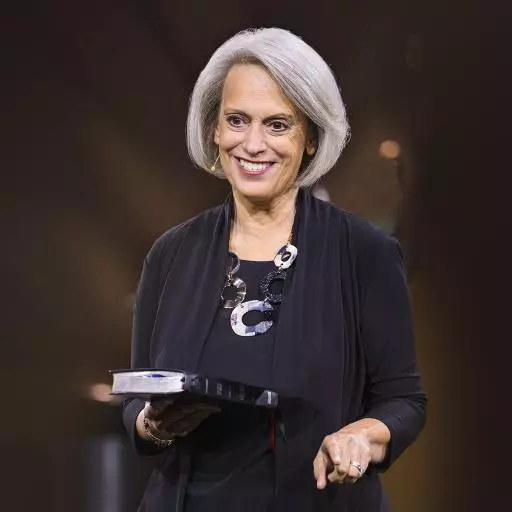
The Wonderful Names of Jesus, Ep 1 of 6


Throughout history, a battle has raged between earthly rulers and the true King. And though we don’t crown a king in the United States, that battle for rulership still continues. Nancy DeMoss Wolgemuth describes what it means that Jesus is our King on Revive Our Hearts.
Nancy DeMoss Wolgemuth: Have you acknowledged Jesus as the rightful ruler of your life? You battle against Jesus as Lord, you will lose. The only way to win is for you to say, "Yes, Lord. Yes, Your Majesty. I bow before You as my King."
Dana Gresh: This is the Revive Our Hearts podcast with Nancy DeMoss Wolgemuth, author of Choosing Gratitude. For March 27, 2026, I’m Dana Gresh.
What’s in a name? Well, actually more than you might think. In fact, have you heard of onomastics? It's a field of study and it means the study of proper names—what names mean, where did they come from. Names are descriptive. They distinguish us from others.
Leading up to Easter Sunday, we're going to study some of the names of Jesus, and as we do, we're going to learn a lot about who He is. We're going to get to know Him better. Are you ready to dive in? Here’s Nancy with the name of Jesus number one.
Nancy DeMoss Wolgemuth: Well, this weekend we're going to be celebrating Palm Sunday. I want to take a moment to look at one of the Gospel accounts of the triumphant entry into Jerusalem that we celebrate as Palm Sunday. I'm looking at John chapter 12, the Gospel of John, chapter 12, beginning in verse 12.
The next day, the large crowd that had come to the feast heard that Jesus was coming to Jerusalem. Now, Jerusalem is in Judah, the kingly tribe, and Jerusalem is known as the City of the Great King. So they took branches of palm trees and went out to meet Him, crying out, "Hosanna! Blessed is He who comes in the name of the Lord, even the King of Israel!"
The King of Israel. That's the name we want to look at today. Now you know from reading your Old Testament that the Jews were expecting a Messiah who would be a great political and military leader. By the time Jesus came to this earth, the hope of the Jews was that this Messiah would overthrow the hated Roman rule. And so they cried out to Jesus, thinking maybe this was the one: King of Israel. "Blessed is He who comes in the name of the Lord."
Well, verse 14: Jesus found a young donkey and sat on it, just as it is written. Now we have a quote from the Old Testament book of Zechariah, chapter 9. Just as it is written: "Fear not, daughter of Zion; behold, your King is coming, sitting on a donkey’s colt." So hundreds of years earlier, this promise, this prophecy had been written and now it's being fulfilled as Jesus travels into Jerusalem.
So Jesus comes to assert His authority over the City of the Great King. But look, He comes riding not on what would be a typical military mount, which would be a horse, but He comes instead on a donkey as a humble Shepherd King. Not at all what the Jews were expecting.
And in fact, verse 16 tells us even His own disciples did not understand these things at first. But when Jesus was glorified, then they remembered that these things had been written about Him and had been done to Him. Now, King of Israel, King of the Jews, the King—one of the wonderful names of Jesus.
As is true with other names, this name reminds us that He is God. It reminds us of the deity of Christ. For as we go back to the Old Testament, we see in no uncertain terms that God is the King. We see, for example, verses that tell us about the duration of His reign: "The Lord is King forever and ever. The Lord sits enthroned over the flood; the Lord sits enthroned as King forever. The Lord is the true God; He is the living God and the everlasting King," the Scripture tells us.
He reigns forever. This is a King with no term limits. He reigns forever. And then we see not only the duration of His reign, but we see the extent of His rule. Psalms tells us that "the Lord Most High is to be feared, a great King over all the earth." The extent of His rule is the whole world. He created all of this world, and He is rightfully its sovereign ruler.
And then we see not only His duration and the extent of His rule, but His rank. Psalm 95 tells us, "The Lord is a great God and a great King above all gods." There is none higher. He is the King of kings. Now God set Himself up to be Israel’s King. He was rightfully their King. He had chosen them, He had called them out, He was their King.
But when we come to 1 Samuel chapter 8—I’m going to ask you to turn there, but you might want to jot down that reference because it's a really important turning point in Israel's history. The leaders of Israel came to Samuel, who had been their judge, he had been a prophet, and they said to him, "Appoint us a king to judge us like all the nations."
So they came to Samuel and they said, "Yeah, we know we've got this God-King thing, but we want an earthly king. We want a king we can see. We want one who we can touch, we can go visit him." And Samuel was disturbed by this because he knew that God was the King of Israel. So he prayed, he talked to the Lord about it, and the Lord said to him, "Go ahead and give them a king."
He says, "For they have rejected Me from being King over them." And then He says to Samuel, "Solemnly warn the people and tell them that since they are not willing to have Me rule over them, they will have an earthly king who will serve himself rather than his subjects. These kings that you get, this next king, he will tax and confiscate your property. He will conscript your sons and your daughters. You will become his slaves."
And then He says, "In that day you will cry out because of your king whom you have chosen for yourselves." You can choose your king, but you can't choose the consequences. You reject God from being your King, you will experience the consequences of having any king other than God.
So Israel rejects God as their King, and it's kind of this love-hate relationship they have with God. "Oh yes, we want You, oh God, we need You." They get desperate, they cry out to Him. But then God helps them, He delivers them, and they go back to wanting to have their own way, to have their own rulers. And they have this whole crazy list of kings—some good, some bad, but none like God.
So throughout the Old Testament, we see prophecies that God will one day send a King to rule over His people. Let me read some of those prophecies to you. Micah chapter 5: "But you, O Bethlehem Ephrathah, who are too little to be among the clans of Judah, from you shall come forth for Me one who is to be ruler in Israel, whose coming forth is from of old." He's been around a long, long time, but He’s going to be the ruler over Israel. It’s a Messianic prophecy.
Jeremiah 23 has another one: "Behold, the days are coming, declares the Lord, when I will raise up for David a righteous branch, and He shall reign as King and deal wisely, and shall execute justice and righteousness in the land." There’s a King coming. He’s going to come out of the line of David, and He will reign as a King. He will be a wise, just, and righteous King.
And then Zechariah 9, the prophecy that was referred to in the triumphant entry that we read about in the Gospel of John, says, "Rejoice greatly, O daughter of Zion! Shout aloud, O daughter of Jerusalem! Behold, your King is coming to you; righteous and having salvation is He, humble and mounted on a donkey, on a colt, the foal of a donkey."
So we see that this King to come, this promised Messiah, He will be a righteous King. He will be a humble King. He will come bringing salvation. And as we come to the pages of the New Testament—of course, these Old Testament Jews looked forward to the coming of this King—now we look back and we see, yes, these passages were talking about Jesus.
Jesus fulfilled all of these Messianic prophecies. He is the promised King. He descended from the royal line of David. We read in Luke 1 as the angel said to Mary, "This son who you're going to have, He will be great. He will be called the Son of the Most High, and the Lord God will give to Him the throne of His father David, and He will reign over the house of Jacob forever, and of His kingdom there will be no end."
The angel was saying all these prophecies that were in the Old Testament about this coming King, they're about to be fulfilled. This child you're going to have, He is this promised King. Now throughout Jesus' earthly life and ministry, and even beyond that in the rest of the New Testament, people acknowledged Jesus as King.
Matthew chapter 2: After Jesus was born in Bethlehem of Judea in the days of Herod the King—now we have some competition—behold, wise men from the East came to Jerusalem saying, "Where is He who has been born King of the Jews?" Now we have a rivalry. We have Herod who thinks he's the King of the Jews, but these men see this prophecy, they come and they say there's one who has been born who is the King of the Jews, for we saw His star when it rose and have come to worship Him.
Now there you see a setup for what is going to be till the end of this present age, a battle between kings of the earth and the Lord Jesus, who is the King of kings. We see others acknowledging Jesus as King. You remember in John chapter 1 when Nathanael met Jesus, and Jesus told Nathanael things about himself that nobody else could have known, and Nathanael was amazed and he said, "Rabbi, You are the Son of God! You are the King of Israel!"
What was he saying? "You're the one we've been waiting for. You're the one who was promised. You're the one that was prophesied about. You are the Messiah, the King of Israel." In the book of Acts chapter 17, as the early church was being founded, when they could not find these disciples, they dragged Jason and some of the brothers before the city authorities shouting, "These men are all acting against the decrees of Caesar"—Caesar thought he was the king—"saying that there is another King, Jesus."
So here again you see the conflict, the tug-of-war, the battle between earthly kings and rulers and Jesus, who claims the right to be the King of kings and, in fact, is. Now what's interesting as you read through the Gospels is how many times Jesus refused the people's efforts to make Him an earthly king, because they had a wrong concept of what kind of King Messiah would be and what His kingdom would be like.
So, for example, we see in John 6: "Perceiving that they were about to come and take Him by force to make Him king, Jesus withdrew again to the mountain by Himself." Have you ever seen anybody where the people are clamoring, "We want you to be the president, we want you to be the prime minister, we want you to be the king," and he says, "No thank you. This is not an election. This is not a contest. My kingdom isn't what you think, and I'm not the kind of king you think." So He withdrew.
In John chapter 18, we see this conversation that Jesus has with Pilate, and Jesus says to Pilate, "My kingdom is not of this world. If my kingdom were of this world, my servants would have been fighting that I might not be delivered over to the Jews, but my kingdom is not from this world." You see, because His kingdom is not of this world, He doesn't use this world's methods to accomplish His purposes. He's an entirely different kind of King.
Well, this coming Sunday we celebrate Palm Sunday and then we move into the Passion Week of Christ. At the end of that week, during the trial of Jesus, which probably took place late Thursday night or early Friday morning, Jesus was questioned by Pilate. Luke 23 tells us, "Then the whole company of them arose and brought Him before Pilate. And they began to accuse Him saying, 'We found this man misleading our nation and forbidding us to give tribute to Caesar'—that was a lie—'and saying that He Himself is Christ or Messiah, a King.'"
And Pilate asked Him, "Are You the King of the Jews?" And He answered him, "You have said so." Now Jesus didn't deny that He was the King, but He wasn't the kind of King they thought they were expecting. And as the trial of Jesus unfolded, as the passion of Christ unfolded, Jesus was mocked as the King of the Jews. He was rejected as the King of the Jews.
Let me read you a few verses from John chapter 19. The soldiers twisted together a crown—it was a crown of thorns—and put it on His head and arrayed Him in a purple robe. Crowns and robes belong to kings, right? Purple is the color of royalty. But they were not sincere at all in crowning Him as King. They came up to Him saying, "Hail, King of the Jews!" They were mocking Him and they struck Him with their hands.
Now it was the day of preparation of the Passover. It was about the sixth hour. Pilate said to the Jews, "Behold your King!" They cried out, "Away with Him, away with Him, crucify Him!" Pilate said to them, "Shall I crucify your King?" The chief priests answered—the chief religious leaders said—"We have no king but Caesar."
Now keep in mind the Jews hated Caesar. They hated the Romans. They don't want to be ruled by the Romans; they wanted to toss out the Roman rule. They wanted to do away with the Romans. Many of the Jews wanted to kill every Roman if that were possible. But here even the religious leaders, and especially the religious leaders, would rather have had Roman rule than to accept Jesus as their King. Crucify Him. He says He's the King. We don't want Him to rule over us. He's not the kind of King we want.
Well, Pilate probably got it better than the religious leaders, though he was confused himself, and he declared Christ’s kingship at the cross. John chapter 19: "Pilate also wrote an inscription and put it on the cross. It read: Jesus of Nazareth, the King of the Jews." The chief priests of the Jews said to Pilate, "Do not write the King of the Jews, but rather, this man said, 'I am the King of the Jews.'" Pilate answered, "What I have written I have written."
Pilate got it right, didn't he? He is the King of the Jews. And there on that cross, the King of the Jews, the King of the universe, the King of kings laid down His life for His subjects. Now we know that He didn't stay on that cross, that He came alive, He rose up from the dead. He spent 40 days here on earth and then He ascended into heaven, where God exalted Jesus to His right hand, to that place as the King of kings.
And we know as we read throughout the New Testament that one day that King will return in all of His splendor and glory to rule over all the nations of the world. The kind of King the Jews were expecting in the first century—He is that kind of King, but He wasn't going to come and display His power then in that way. He came first as a suffering King, to die as their King. But when He comes back, He will come to fulfill all those Old Testament prophecies about reigning and ruling forever from sea to sea.
So we read in Matthew 25: "When the Son of Man comes in His glory, and all the angels with Him, then He will sit on His glorious throne." And then we come to the book of Revelation where you see the final chapter on so much of this story. When you get discouraged, when it seems like the kings of the earth are winning, that they're having their day, that they're overcoming the saints—Revelation talks about war in heaven and war on earth between the followers of Christ and the followers of the Antichrist.
And when you think that Antichrist and his forces are winning, you need to read to the end of the book and remember what's coming, what's happening. Revelation 11 tells us, "Then the seventh angel blew his trumpet"—these are still trumpets of judgment—"and there were loud voices in heaven saying, 'The kingdom of the world has become the kingdom of our Lord and of His Christ, and He shall reign forever and ever.'"
And then we come to that chapter, Revelation 19, one of my favorite chapters in all of God's Word. I love them all, but this is an amazing chapter. And I just keep telling myself this story, reminding myself of where this is all heading. Because we still see people trying to crucify Jesus, don't we? Rejecting Him as King. We love Him, but most do not love Him.
And it's so disheartening and discouraging to see the economic and political and educational and entertainment—all the rulers of this earth trying to take Jesus' rightful place as King and Lord in our culture. And we sometimes feel that it seems that they're winning. But not for long. Revelation chapter 19: This is a vision of what lies ahead.
"I saw heaven opened and behold, a white horse!" Not a donkey this time. This time the kingly royal steed, a white horse. "The one sitting on it is called Faithful and True, and in righteousness He judges and makes war. His eyes are like a flame of fire, and on His head are many diadems." No longer crowned with the crown of thorns, now crowned with the crown that God has given Him as He’s been exalted to the right hand of the Father as the King of kings. On His head are many diadems.
"And the armies of heaven"—kings have armies, right? He's got all the armies of heaven, the angelic forces arrayed in fine linen, white and pure, were following Him on white horses. "From His mouth comes a sharp sword with which to strike down the nations, and He will rule them with a rod of iron." Those who've rejected Him, those who've pushed Him off the throne, those who've said, "There is no king but Caesar," all those kings past, present, and future who have rejected Jesus as Lord, He will rule them with a rod of iron.
"He will tread the winepress of the fury of the wrath of God the Almighty. On His robe and on His thigh He has a name written, King of kings and Lord of lords." And then, that's not quite the end of the story. There's still battle. I tell you Satan and his minions and the rulers of this earth and all of us who in our hearts exalt ourselves to be king of our own lives—there's that battle going on against Jesus as Lord.
And verse 19 of Revelation 19 says, "I saw the beast and the kings of the earth with their armies." So two kings—one King, the King of kings on the white horse with His armies, and then all the kings of this earth, those who have titles and those who just think they're kings, those who just think that they're in charge—"kings of the earth with their armies gathered to make war against Him who was sitting on the horse and against His army." And there is no doubt about the outcome.
Those kings of the earth think they're so powerful—all those rulers, all those congressmen, all those criminals, all those entertainers, all those normal, everyday, average laypeople who are just trying to run our own lives, every earthly impostor and one who would want to usurp the role of Christ—there is no doubt as to what will be the end of that battle.
Revelation 19, verse 20: "The beast was captured, and with it the false prophet." These two were thrown alive into—they're by the way the ones who lead all these rebellions against Christ as King—these two were thrown alive into the lake of fire that burns with sulfur. "And the rest"—all those other kings, all their other followers, all their armies, all those who rejected Jesus as King—"the rest were slain by the sword that came from the mouth of Him who was sitting on the horse, and all the birds were gorged with their flesh."
It's not a pretty picture, is it? It's a picture of havoc and devastation and ruin for those who refuse to repent and bow before Jesus as Lord. And so we see that in the end, King Jesus triumphs. And He will have the final word over all other kings and over all lives and over all affairs of this world.
There's a battle going on today, isn't there? And oftentimes a battle in our own hearts for who will be on the throne of our own hearts. Am I going to rule my own life? Or am I going to let Jesus have His rightful place as Lord? You know what? You can't engage in that war and win. You battle against Jesus as Lord, you will lose. The only way to win is for you to say, "Yes, Lord. Yes, Your Majesty. I bow before You as my King."
Now I think today that we've lost a sense of awe about Jesus—the majesty, the power of Jesus as Lord and King. We see Him as a friend, as a lover, as an encourager. And He is all of those and so much more. But He is also the sovereign King of history and of the universe and of all worlds past, present, and future. He's a King who is to be feared and to be obeyed and we are His subjects.
Now thankfully He is a righteous King who is always out for the best interests of those He rules over. And so as we bow before Him, we know that we have a secure hope to be part of His eternal kingdom. Jesus is the King. He's the King of the Jews. He's the King of Israel. He's the King of the nations. He's the King of heaven. He's the King of righteousness. The Scripture tells us He's the King of peace. He is the King of glory. He is the King of the ages, and He is the King of all kings. Worship Jesus the King.
Dana Gresh: That's Chris Tomlin with "Amazing Love". Nancy DeMoss Wolgemuth has been reminding us of who is truly in charge, and she'll be right back to pray. That message on Jesus as our King is part of a favorite series of ours called "The Wonder of His Name: 32 Life-Changing Names of Jesus". Now we won't be listening to all 32 programs this time around, but you can listen to each and every episode in that series on the Revive Our Hearts app or at ReviveOurHearts.com.
We've just heard about the kind of King Jesus is: wise, victorious, sacrificial, alive, ruling and reigning, and writing a good story for your life. Doesn't that make you want to trust Him? When your circumstances are uncertain and your story isn't unfolding quite like you thought it would, you can rest in King Jesus. That's the message of the book You Can Trust God to Write Your Story, written by Robert and Nancy Wolgemuth.
Today through the end of the month, you can donate any amount and receive a copy. Just visit ReviveOurHearts.com or call us at 1-800-569-5959, and be sure to request You Can Trust God to Write Your Story when you do. I hope your Palm Sunday is a rich one this weekend, and I hope you can mark this meaningful weekend in community at your local church. Then I hope you'll join us again next week on Revive Our Hearts as we talk more about the names of Jesus: Servant, Man of Sorrows, Redeemer, Lamb of God. So much goodness to come. Now, here’s Nancy to pray.
Nancy DeMoss Wolgemuth: Lord, we bow our hearts before You. We honor You, we exalt You, we reverence You. You are the King, the Lord, the Ruler, the Chief Potentate, as Paul says to Timothy. You're the King of kings. Lord, forgive us for how often we try to be our own king, or how often we give way to discouragement or fear thinking that the rulers of this earth's systems—we think that they are winning, and it looks like they are sometimes.
Thank You for Your promises that You win, King Jesus. Kingdoms of this world will become the kingdom of our Lord and of His Christ, and He shall reign forever and ever. And all God’s people said, "Amen. Amen."
Dana Gresh: This program is a listener-supported production of Revive Our Hearts in Niles, Michigan, calling women to freedom, fullness, and fruitfulness in Christ.
Featured Offer

Choose a resource to help you grow.
Past Episodes
- 3 Doctrines that Fuel Endurance
- 3 Life-Changing Lessons for Young Women
- 3 Reasons to Join the 2026 Bible Reading Challenge
- 3 Ways to Love Your Friend When It’s Hard
- 3 Women Who Were Grateful for God’s Word
- A Great Awakening, with Kim and Katie Miller
- A Harvest of Joy
- A Heart Grounded in the Word of God, with Chris Brooks
- A Hurting Home Became an Open Home
- A King’s Preparations, Plans, and Provision
- A Wife’s Submission: What it Is and Isn’t
- A Woman Adorned and Adorning
- Advent for Exiles, with Caroline Cobb and Erin Davis
- Always Grateful: Ciara's Story
- Always Thankful (Psalm 66)
- An Unhurried Holiday Season
- Anticipating Advent
- Be Still, Heaven Rules
- Be the Warmth: Cultivating Hospitable Character
- Behold the Big Story of the Bible, with Kevin DeYoung
- Behold the Daily Mercy of the Word, with Dannah Gresh
- Behold the Living Word, with Jackie Hill Perry
- Behold the Power of the Word to Save, with Kelly Needham
- Behold the Wonder of the Word
- Behold the Word Recovered by God’s People, with Mary Kassian
- Behold, Hearts on Fire with the Word
- Beholding the Wonder: True Woman '25
- Beyond Cliches: Real Encouragement for Single Sisters
- Blessing for the Year End & the New Year (2 Cor. 13:11-13)
- Blessings and Curses: A Look at the Life of Balaam
- Broken Vessels in Romania, with Asheritah Ciuciu
- Brokenness: The Heart God Revives
- Celebrating God’s Abundance
- Celebrating the Gift of Grandparents
- Choosing Grace over Gossip
- Choosing Servanthood Over Celebrity
- Come Adore: The Gospel in Carols
- Consider Jesus: Surrendered Servant and Savior
- Control Girl, with Shannon Popkin
- Corporate Revival
- Crossing the Finish Line: Remembering Robert Wolgemuth
- Ease Into the Bible, with Jean Wilund
- El Shaddai: The All-Sufficient One
- Embracing God as Father
- Enlarging Your Heart for Eternity, with Colleen Chao
- Esther: God's Woman at God's Time
- Faithful, Not Famous with Laura Gonzalez de Chávez
- Finding Freedom from Fear, with Judy Dunagan
- Finding My Father Father: How the Gospel Heals the Pain of Fatherlessness, with Blair Linne
- From Death to Life: Hope After Abortion
- God’s River Flows in Spain and Brazil
- God’s Word and Our Emotions
- God’s Word and Your Life
- Gospel Mom, with Laura Wifler and Emily Jensen
- Grace for the Depressed
- Grateful, then Graceful, with Mari Glick
- He Gives Grace to Mothers, with Sarah Walton and Linda Green
- Helping Kids Think Biblically, with Elizabeth Urbanowicz
- His Healing Touch
- Holy Week Heart Prep: The Wonderful Names of Jesus
- How God’s Love for Women is Displayed in the Old Testament, with Dr. Katie McCoy
- How Less Scrolling Could Change Your Life, with Lara d’Entremont
- How to Have a Happy New Year (Psalm 1)
- How to Have a Marriage that Magnifies God
- How to Have a Quiet Heart
- How We Got Our English Bible
- Humility, Not Pride
- Learning to Love the Old Testament, with Jennifer Smith
- Lessons from Levites
- Living Out the Beauty of the Gospel
- Living Water
- Living Well, Finishing Well, with Mark DeMoss
- Loving and Living God’s Word, with Kelly Needham
- Persecution, Perseverance, and the Key to Sustaining Faith, with Dr. Karen Ellis
- Persevering Love for the Local Church
- Pleading the Cause of the Unborn
- Practical Bible Study Tips
- Practicing Thankfulness, with Sam Crabtree
- Precepts, Parkinson’s, and the Truth That Sets Us Free, with Kay Arthur
- Psalm 23: Our Good Shepherd
- Read Your Bible!
- Rediscovering Intimacy With God
- Relationship Refresh: Helping Your Community Thrive in Christ
- Remembering Voddie Baucham, Jr.
- Renewed and Restored (Psalm 23:2-3)
- Revive Me According to Your Word
- Revive My Heart, Lord!
- Ruth: The Transforming Power of Redeeming Love
- Safely Home: Honoring Robert Wolgemuth
- Saying, “Yes, Lord!”
- Saying, “Yes, Lord” When Life is Hard
- Science, Scripture, and a Life Transformed, with Dr. James Tour
- See for Yourself: Get to Know Your Bible, with Kelly Needham
- Showing Kindness, with Kathy Branzell
- Sin, Suffering, and the God Who Restores
- Sorrowful, Yet Always Rejoicing
- Spiritual Disciplines We Forget About
- Spiritual Habits for Little Hearts
- Spiritual Mothering
- Spiritual Strength for an Evil Day (Ephesians 6)
- Steadfast Faith
- Storm Shelter
- Supporting Your Suffering Friend, with Jani Ortlund
- Surrender: the Heart God Controls
- Tell Yourself What’s True
- Telling the Greatest Story
- Tender Counsel for the Fearful and Grieving, with Paul Tautges
- The Beautiful Process of Repentance
- The Beauty of Living Out the Gospel as a Woman
- The Book of Books
- The Cross and Clothes
- The Four Emotions of Christmas
- The Glory of Face-to-Face Fellowship
- The Grace of Remembrance
- The Humble Savior Who Came
- The Incomparable, Incarnate Christ
- The Joy of Bible Journaling
- The King Still Has Another Move
- The Personal Devotional Life
- The Personal Devotional Life: Beyond Quiet Time, with Dr. Henry Blackaby
- The Power of Words
- The Ultimate Meaning of True Womanhood
- The Well-Watered Woman, with Gretchen Saffles
- The Wonder App: Transforming Screen Time into Scripture
- Three Gifts Suffering Gives
- To The Woman Who Doesn’t Feel God’s Love
- Treasuring Christ in Our Traditions with Noel Piper
- True Woman '25 Panel Discussion: Behold the Word in Every Season
- Trusting God When Tragedy Strikes
- Truth Talk for Hurting Hearts, with Dawn Wilson
- Walking Through Life's Deserts
- What “Yes, Lord” Looks Like
- What Do We Do with Unfulfilled Longings?
- What Sisterhood Is (and Isn’t)
- What's in a Dad?
- When Busyness Threatens Intimacy with God
- Where the River Flows: The Life-Giving Work of the Spirit
- Why Study the Bible?
- Women of the Resurrection
- Wonder of the Word Made Flesh
- Word Before World, with Gretchen Saffles
- You Can Trust God to Write Your Story
- Your Will Be Done: Rebecca Ellerman’s Story
- You've Come a Long Way, Baby! (Mary Kassian)

Featured Offer
Choose a resource to help you grow.
About Revive Our Hearts
About Nancy DeMoss Wolgemuth
Nancy DeMoss Wolgemuth has touched the lives of millions of women through Revive Our Hearts and the True Woman movement, calling them to heart revival and biblical womanhood. Her love for Christ and His Word is infectious and permeates her online outreaches, conference messages, books, and two daily nationally syndicated radio programs—Revive Our Hearts and Seeking Him. Her books have sold more than four million copies and are reaching the hearts of women around the world. Nancy and her husband, Robert, live in Michigan.
Contact Revive Our Hearts with Nancy DeMoss Wolgemuth
Revive Our Hearts
P.O. Box 2000
Niles, MI 49120
1-800-569-5959 (toll-free)