
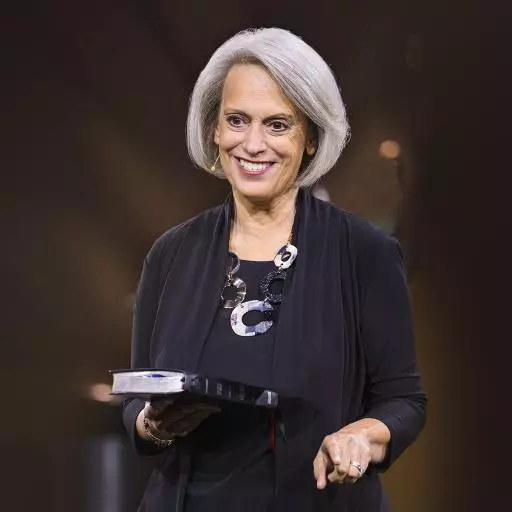
Exploring the True Woman Manifesto, Ep 2 of 10


We talk about loving God quite a bit as Christians, but what does this really look like? Genuine affection for the Lord is the foundation of true womanhood, and Nancy DeMoss Wolgemuth helps us learn to cultivate it on Revive Our Hearts.
Guest (Male): Nancy DeMoss Wolgemuth asks a simple question: Do you love God?
Nancy DeMoss Wolgemuth: Listen, you can read your Bible, memorize it, listen to Revive Our Hearts every day, which I hope you do. All of those things. You can go to church, you can tithe, you can double tithe, you can have all the externals of biblical womanhood.
But if those things don't flow out of a heart love for God, you've missed the point.
Dana Gresh: This is the Revive Our Hearts podcast with Nancy DeMoss Wolgemuth, author of Adorned, for July 2nd, 2026. I'm Dana Gresh.
It's True Womanhood Month. Oh, love this theme that we're diving into. And I'm excited to continue unpacking the True Woman Manifesto with Nancy today. Now, again, you'll hear her refer to past series on the biblical foundations of the document along with the affirmations section. You can find them in today's program transcript at ReviveOurHearts.com. Last episode, we began exploring the declaration section. Here's Nancy to take us deeper.
Nancy DeMoss Wolgemuth: Let me just reset with a statement we talked about in the last program. We said believing the above, which is a reference to all the affirmations in the manifesto that we've talked about over the past months, believing the above, we declare our desire and intent to be true women of God.
We consecrate ourselves to fulfill His calling and purposes for our lives. By His grace and in humble dependence on His power, we will... and then there follow 15 statements of intent and purpose. These are the ways that we will live out what we believe to be true.
And we're going to take one day over the next weeks on each of these 15 statements just to unpack them and see what it is we're committing ourselves to, looking at God's Word and asking Him to give us greater understanding in these commitment statements, these "we will" statements.
So we come to the first one today that says, "We will seek to love the Lord our God with all our heart, soul, mind, and strength." Now that's a pretty big statement, as are many of these. And let me just remind you what I know you know is true, and that is that no one has arrived.
No one in this room, starting with me on the platform here, no one is living this message the way we ought to, the way we want to, the way we will one day by God's grace. But we're saying this is what we aspire to. This is what we desire to be true. We will seek to love the Lord our God with all our heart. This is the bent, the inclination of our hearts.
Now this is an important statement because it reminds us that the essence of true womanhood is not fulfilling certain roles or acting or looking a certain way. Rather, it's being a woman whose life is directed and driven by genuine love for Christ.
That's the heart of true womanhood. It's not the way you dress, it's not the way you talk, it's not what job you have or don't have, it's not how many children you have or don't have, it's not your marital status. Being a true woman of God at its heart is being a woman who loves God with all your heart.
And this "we will" statement—we will seek to love the Lord our God—is foundational for all the other statements that follow. For after all, this is the greatest commandment of all. You remember that passage in Mark chapter 12 when one of the scribes, one of the religious leaders, said to Jesus, "Which commandment is the most important of all?"
Now we think commandments and we think, well, Ten Commandments, which one is He going to pick? But practicing Jews in those days knew that there were 613 commands in the Old Testament law.
And so he's saying, which of those 613 is the most important? How can you possibly keep up with all 613 of them? By the way, 365 of those commands were negative—one for each day of the year—and 248 were positive.
And some of those commands were considered heavy commands, that is, they were absolutely binding. Others were considered light commands—not so binding, maybe not so critical. And the rabbis would spend hours debating which ones were weighty and which ones were light. So they came in that spirit asking Jesus for His opinion. What do you think? What is the heaviest command of them all?
Jesus responded there in Mark 12 by quoting the Hebrew Shema. That comes from the first Hebrew word of this quote from Deuteronomy. The word means "hear." And every Jew who would have been listening to Jesus in that day was very familiar with this statement of faith.
Every Jew would have quoted this statement every morning and every evening. It's found in Deuteronomy chapter six, verses four and five, and that's what Jesus quoted in response to the question, "What is the most important commandment of all?"
Jesus answered, Mark 12, "The most important is," and now He quotes that Hebrew Shema, "Hear, O Israel: The Lord our God, the Lord is one. And you shall love the Lord your God with all your heart and with all your soul and with all your mind and with all your strength."
As you put the whole of Scripture together, you realize that this commandment embodies all the others. This is the sum and the substance of the entire law. Especially when you put it with the second one Jesus said, which is to love your neighbor as yourself.
Romans 13 tells us that love is the fulfilling of the law. If you love God, you will love others. And if you love God and others, you have fulfilled the entire law. Our first and foremost duty, Jesus was saying, is to love God.
To love Him with all our being, to love Him wholeheartedly. Jesus said you shall love the Lord your God with all your heart. He's talking here about having intense affection for God, being seized with the power of that affection that motivates and drives everything else we do.
And we shall love God with our heart and with all our soul, Jesus said. The soul is all of the life. It means to love Him more than we love our own life, to be willing to give up anything and everything including, if necessary, life itself for God. That's to love God with all our soul.
We are to love God with all our mind. There's a wonderful commentary written in the early 1800s by a man named Adam Clarke. He has a terrific passage in his commentary on this passage in Mark chapter 12.
He says that the one who loves God with all his mind is he who sees God in all things, thinks of Him at all times, having his mind continually fixed upon God, acknowledging Him in all his ways, who begins, continues, and ends all his thoughts, words, and works to the glory of His name. It's all-encompassing, loving God with all our mind.
And then Adam Clarke talks about what it means to love God with all our strength. And he says this is the one who exerts all the powers of his body and soul in the service of God, who for the glory of his Maker spares neither labor nor cost, who sacrifices his time, body, health, ease for the honor of God his divine Master.
Adam Clarke says that by this love, this love for God, the soul eagerly cleaves to, affectionately admires, and constantly rests in God, supremely pleased and satisfied with Him as its portion.
Did you catch that? That's a summary of what it means to love God with all our hearts. By this love, the soul eagerly cleaves to, affectionately admires, and constantly rests in God, supremely pleased and satisfied with Him as its portion.
The one who loves God says, if I have You, God, I have everything I need. I have enough. You are my portion. You are the one I will cleave to, admire, and rest in. I will be supremely pleased and satisfied with You.
Now of course we know from God's Word that we are to also love our families. We are to love others. We are to love those in the community of faith. We are to love those who are not believers as God does. But we're to love Him supremely, above all other loves.
And you know that to love anything or anyone more than we love God is what the Scripture calls idolatry. It's a breaking of the first commandment. Our love for Him is not to be half-hearted.
It's not to be hypocritical. We profess one thing but we actually live another. We're not just talking about respect and reverence for God, though certainly that is included. But we're talking about an intimate, personal, affectionate, loving relationship with the God of the universe.
Not just studying about Him, but actually knowing Him and loving the one that we have come to know. We're talking about something that is far more than just going through certain religious motions or rituals or duty.
Listen, you can read your Bible, memorize it, listen to Revive Our Hearts every day, which I hope you do. All of those things. You can go to church, you can tithe, you can double tithe, you can have all the externals of biblical womanhood.
But if those things don't flow out of a heart love for God, you've missed the point. You've missed the point and you're a moralist, but you don't have a relationship with God.
I love that song that Steve Green used to sing that has the line in it, to love the Lord our God is the heartbeat of our mission, the spring from which our service overflows. You see, without love for God, all the stuff we do for God—all the mothering, the being a good wife, the serving Him in your church, the going to Bible studies, teaching Bible studies—all of that stuff will become hard, cold, empty, and duty-bound.
You won't have the joy, you won't have the freedom, you won't have the fullness if it's not driven and motivated by love for God.
The apostle Paul says in 1 Timothy 1, the goal of our instruction is love. Love that comes springing out of a pure heart and a good conscience and a sincere faith. The goal is love. That's the goal of our teaching on Revive Our Hearts, is that you would know God and in knowing Him, you would love Him.
Paul says in Philippians chapter one, it is my prayer that your love may abound more and more with knowledge and all discernment. So however much love you have for God today, that's great. But Paul says I want you to have more. I want you to abound in love, to have more and more.
Well, you say, I really love God. That's great. But Paul says I want you to abound in love, more and more, an ever-increasing measure of love. In Ephesians chapter six at the end of his letter to the Ephesians, Paul says grace be with all who love our Lord Jesus with love incorruptible.
Not a human fleshly love, but an incorruptible, undying, unending love. Those who love Christ will experience a fresh measure of His grace.
Now, as we all know and as Jesus reminded the church in Ephesus, Paul had written about that love. When Jesus came to give His letter to the church in Ephesus in Revelation chapter two, He said you have abandoned the love that you had at first.
So at one point they had this great love for Christ, but then within a matter of time they had slipped away from that love. And don't you know it's true in your own life that at one point you can just love God so much, but then you find that other things creep in, other attractions, other affections, other loves, distractions, the cares of this world, riches, pleasures, other things, stuff. It all just creeps in and what happens?
Our love for Christ can wane. It can grow cold. Sometimes it happens so subtly. I find in my own life it's not usually a blowout. It's usually a slow leak. And then you stop and you take stock and you realize I'm not close to Christ like I was at one point.
I don't love Him like I did at one point. Maybe didn't even realize that it had happened. And that's when we cry out and we say, Lord, please rekindle the love. Restore that love in my heart.
Now, how can we measure our love for God? I've been asking myself that question as I've been working on this particular program. How do I know if I love God? We tend in our Western world to think of love as a feeling, an emotion.
But I think we all know that loving God, like loving others, involves a whole lot more than having good feelings about Him. Loving God is a lifestyle that involves our desires, our affections, our will, our choices, our priorities.
And it's evidenced in a lot of different ways. It's evidenced in the fact that we want to be with Him. We want to spend time with Him, and we're willing to give up things in order to spend time with Him.
It's evidenced by the fact that we want to know Him better. We obey Him, we trust Him, we enjoy talking to Him. I was talking with an engaged young man recently and he and his fiancee were separated geographically for a period of several months.
And they were both working, both very busy people. But he says, we talk an hour or so every night. And I'm thinking, how do you have time to do that? Well, you know how they had time? Because they were in love. And it's not a chore to them to talk to one another.
My other thought was, what do you talk about? Well, I didn't ask, but you know sometimes you watch these young kids in love and you think, it's not just an hour, it's two or three or four or five or six. What do you talk about? Because then you see these couples who've been married a while and you see them sometimes in restaurants and it seems sometimes they don't have anything to talk about.
Well, a sign of being in love, of loving someone, is that you enjoy talking to them. Another sign of loving God is that we enjoy what He enjoys. We love what He loves and we hate what He hates. Our affections are aligned with His.
Another sign of loving God is that we want to talk to others about Him. That engaged couple, when they were engaged—they're now married—but when they were engaged, you didn't have to probe or pry to get them to talk about the one they were engaged to. They were happy to do that.
You want to please the one that you love. If you love God, you want to please Him. An evidence that you love Him is you will put Him first in your day, in your priorities. Other priorities will take second or third or fourth or distant place if you love God supremely.
In 1 John 5, we read that a sign of loving God is that we love others. How can you say you love God if you don't love others? Another sign in 1 John chapter three is that we give to others who are in need. That's an evidence that we love God.
And that we're willing to sacrifice anything for Him. A few weeks ago I got an email from a woman who is in a dating relationship with a godly man, according to her description. And she and this man are praying about whether they should get married.
But she's not sure that she is biblically free to pursue marriage due to a past divorce. Now without going into the background or all the what are the biblical perspectives on this, what I loved about her statement was, she said, "I love this man very much, but I love Jesus more. And I want to be a true woman."
Here's a woman who says, "I really love this man, I really want to marry him, but what I've got to find out is, does Jesus want me to marry him? Am I biblically free to marry this man?" Because she loves Jesus even more than she loves this man. That's a sign of true love for Christ.
What evidence is there that you love God? Do you talk about Him? Do you desire Him? Do you want to be with Him? Do you want to know Him better? Do you want to please Him? What do you have a heart for? What do you gravitate toward? What are your affections set on?
What do you talk about? What do you prize? What do you care about deeply? Can we claim to love God if we are perpetually too busy to spend time with Him? If we basically ignore Him for hours or days at a time, don't think about Him, neglect Him?
If we enjoy other people and activities more than we enjoy Him? If we refuse to do what we know He wants us to do, can we claim to love God?
Well, most of us are saying, I don't really love God the way I need to. I want to love Him more. I need to love Him more. So how can I cultivate greater desire and love for God? And that's a question I've been asking myself in recent weeks as I've been working on this series.
One thing for sure, and that is that we can't manufacture love for God. You can't muster it up. Okay, I'm going to love God more. Just like you can't manufacture love for your husband or your kids. It's something that God puts in our hearts because love comes from God, for God is love.
So let me just say this, that intention is half the battle. Ask yourself the question first, do I really want to love God more? And I think most of us would say yes, I really do want to love Him more. So what can I do?
Well, first of all, be honest about your lack of love. Don't try and pretend you really love God if the evidence is to the contrary. Say, Lord, yeah, I do love You some and maybe I love You more than I did at one point, but I love You a lot less than I did at times, other times in the past, and a lot less than I know You deserve. I want to love You more.
And ask God to give you love for Him. Lord, I love You but I want to love You more. I love that old hymn written in 1856 by Elizabeth Prentiss: "More love to Thee, O Christ, more love to Thee. Hear Thou the prayer I make on bended knee. This is my earnest plea: more love, O Christ, to Thee, more love to Thee, more love to Thee."
Maybe over these next days just get on your knees once a day and bow before the Lord on bended knee and say, Lord, I love You but I want to love You more. Give me more love for You. And then just a practical suggestion: hang around people who do love God.
You know there's something infectious about affection. It wears off. It influences us when we see people who love deeply. And when I'm around people who really love God, it increases my own love for God.
By the way, if you spend most of your time hanging around people who don't love God and who love the things of this world more than God, chances are that will rub off on you too. Of course we want to be around people who need God, but make sure that you're also fellowshipping with people who really do love God deeply.
And then I think if you want to cultivate love for God, it's important to set apart some times to be alone with Him. There's nothing to kill intimacy like a crowd. Busyness, clutter. And periodically we need to just get away from the noise, the technology.
Turn off your cell phone, turn off your email, turn off your television. Get away and just seek the Lord. Make an appointment if you need to and keep it. Take a Sabbath for your soul. And sometimes you may be in a season of life where those Sabbaths are mostly just short minutes here and there.
Some of you have little children; you probably can't go away for three days to seek the Lord, but maybe you can go away for 30 minutes or three minutes. I really believe if you'll take the time you have, that God will multiply that and give you more.
And He'll make the time you do have—He'll multiply its value. Sometimes maybe you can take more extended times. We're not talking about living a cloistered life. We can love God as we're doing life, but we need times when we're just alone with Him.
When we meditate on His love for us. We love Him because He first loved us. Open His Word, let Him show you His love. Get to the cross. Let Him show you how much He loves you and then respond to Him. Review spiritual markers in that time alone with the Lord.
Where God has met you in the past, where you've encountered Him, rehearse special memories. I see Sue here and she and her husband have been married nearly 40 years, and last week they were in Wisconsin where they got married.
And they took time to go back to the restaurant where, if I remember correctly, they had their first meal as a married couple. They went back and saw the places where they did some first things. And when they came back, that's what they were talking about.
And God uses those remembering times to rekindle first love. If you want to love God more, you need to identify what are the things that are competing for His place in your life, things that are stealing your passion. Love of this world, love of money, love of pleasure, love of self. And ask God to help you wean yourself from those affections and to transfer that focus to Him.
Now let me just remind us that it's impossible to love God as we ought with all our being. We cannot do that. We have all broken the first and the greatest commandment. The fact is, we love ourselves more than we love God.
And because we have broken the greatest commandment, we all deserve God's judgment. And so this statement in the manifesto—we will seek to love the Lord our God with all our hearts—it reminds us of our need for a Savior, our need for His grace.
Only Jesus kept this law. And He is our substitute. He died in our place. Through our faith in Him, His love for God is reckoned or imputed to our account.
So we can love God with all our hearts because we are clothed in the righteousness of Christ, who loves God supremely. Sometime ago I came across a hymn written in 1779 by John Newton. Now you know John Newton for being the author of that very famous hymn, Amazing Grace, How Sweet the Sound.
This is a hymn that is not well-known, but it's a beautiful one, it's a powerful one, and it speaks to this whole issue of how we love the Lord. It's called Lovest Thou Me?
Lovest Thou me? 'Tis a point I long to know. Oft it causes anxious thought: Do I love the Lord or no? Am I His or not? If I love, why am I thus? Why this full and lifeless frame? Hardly sure can they be worse who have never heard His name. Could my heart so hard remain, prayer a task and burden prove, every trifle give me pain, if I knew a Savior's love?
If I pray or hear or read, sin is mixed with all I do. You that love the Lord indeed, tell me, is it thus with you? He's saying, am I the only one who feels this way, or do you relate to some of these questions?
Yet he goes on to say: I mourn my stubborn will, my sin a grief and thrall. Should I grieve for what I feel if I did not love at all? Could I joy His saints to meet, choose the ways I once abhorred, find at times the promise sweet, if I did not love the Lord?
Lord, decide the doubtful case, Thou who art Thy people's sun. Shine upon Thy work of grace, if it be indeed begun. Let me love Thee more and more, if I love at all, I pray. If I have not loved before, help me to begin today.
And so Lord, I pray that You would work in our hearts and help us to love You. Help us to love You more. Help us to grow in our love for You. Help us to love You above all other loves.
And clothe us with Christ, who loves You completely and fully and died to pay the price for our sin of not loving You. Thank You for grace, and increase in us that deep heartfelt affection and love for You every day of our lives. I pray in Jesus' name, Amen.
Dana Gresh: Love God. Hmm, so simple, yet so profound. As Nancy just prayed, I hope God will increase our heartfelt affection for Him. That's where true womanhood begins. We announced yesterday that Mary Kassian has written a new True Woman resource.
It's titled, "What Is a Woman? The Question Our World Is Afraid to Answer." Chapter by chapter, Mary shows you that God made a woman on purpose. Every curve, every hormone, every relational inclination means something.
Your womanhood isn't random. It isn't by accident. It's a glory to be discovered, not a problem to be solved. And here's what might surprise you most: your womanhood isn't ultimately about you. When God created male and female, He was telling a story, the most magnificent story ever, and He invites you to know your part in it. I hope you'll grab a copy for yourself and also join us as Mary shares more on the program all throughout July.
In fact, you can get a copy mailed straight to you when you donate any amount to Revive Our Hearts this month. Visit ReviveOurHearts.com or call us at 1-800-569-5959 to give, and be sure to request "What Is a Woman?" when you do.
Plenty of people claim to be Christians without giving God control of their lives. Nancy DeMoss Wolgemuth will challenge that kind of thinking tomorrow as we continue making our way through the True Woman Manifesto together. Please be back for Revive Our Hearts.
Guest (Male): This program is a listener-supported production of Revive Our Hearts in Niles, Michigan, calling women to freedom, fullness, and fruitfulness in Christ.
Featured Offer

New book from Mary Kassian. With your donation of any amount.
Past Episodes
- 3 Doctrines that Fuel Endurance
- 3 Ingredients of a Revived Heart
- 3 Life-Changing Lessons for Young Women
- 3 Marks of an Unshakable Woman
- 3 Reasons to Join the 2026 Bible Reading Challenge
- 3 Ways to Love Your Friend When It’s Hard
- 3 Women Who Were Grateful for God’s Word
- A Cry for Revival: Isaiah 63-64
- A Great Awakening, with Kim and Katie Miller
- A Harvest of Joy
- A Heart Grounded in the Word of God, with Chris Brooks
- A Mighty Fortress Is Our God (Psalm 46)
- A Song for Weary Pilgrims (Psalm 137)
- A Woman Adorned and Adorning
- Advent for Exiles, with Caroline Cobb and Erin Davis
- Always Grateful: Ciara's Story
- Always Thankful (Psalm 66)
- An Unhurried Holiday Season
- And the Bride Wore White, with Dannah Gresh
- Anticipating Advent
- Be the Warmth: Cultivating Hospitable Character
- Becoming a Fruitful Woman
- Begin at My Sanctuary
- Behold the Big Story of the Bible, with Kevin DeYoung
- Behold the Daily Mercy of the Word, with Dannah Gresh
- Behold the Living Word, with Jackie Hill Perry
- Behold the Power of the Word to Save, with Kelly Needham
- Behold the Wonder of the Word
- Behold the Word Recovered by God’s People, with Mary Kassian
- Behold, Hearts on Fire with the Word
- Beholding the Wonder: True Woman '25
- Beyond Cliches: Real Encouragement for Single Sisters
- Blessed by a Godly Mother
- Blessing for the Year End & the New Year (2 Cor. 13:11-13)
- Blessings and Curses: A Look at the Life of Balaam
- Brokenness: The Heart God Revives
- Celebrating God’s Abundance
- Celebrating the Gift of Grandparents
- Choosing Grace over Gossip
- Choosing Servanthood Over Celebrity
- Choosing to Stay in a Difficult Marriage
- Come Adore: The Gospel in Carols
- Corporate Revival
- Crossing the Finish Line: Remembering Robert Wolgemuth
- Ease Into the Bible, with Jean Wilund
- Enlarging Your Heart for Eternity, with Colleen Chao
- Exploring the True Woman Manifesto
- Faithful, Not Famous with Laura Gonzalez de Chávez
- Finding Freedom from Fear, with Judy Dunagan
- Finding My Father Father: How the Gospel Heals the Pain of Fatherlessness, with Blair Linne
- Finding Soul-Deep Satisfaction in Jesus
- Food Is Not the Enemy: Discover Freedom from Food Fixation, with Asheritah Ciuciu
- Free to Be Real
- Freedom in Christ
- From Death to Life: Hope After Abortion
- From Desperation to Deliverance: The Promise of Psalm 107
- Fruitful in Christ
- Fullness in Christ
- God’s Grace for Weary Moms
- God's Power to Revive a Heart, with Andrea Griffith
- Grace for the Depressed
- Hallelujah! A Praise Celebration (Psalm 113)
- Helping Kids Think Biblically, with Elizabeth Urbanowicz
- His Healing Touch
- Holy Week Heart Prep: The Wonderful Names of Jesus
- Hope in the Midst of the Hard
- How God’s Love for Women is Displayed in the Old Testament, with Dr. Katie McCoy
- How Less Scrolling Could Change Your Life, with Lara d’Entremont
- How Long, O Lord? Learning to Pray Through Pain
- How Remembering Eternity Transforms Today (Psalm 90)
- How to Have a Happy New Year (Psalm 1)
- How to Have a Marriage that Magnifies God
- How to Have a Quiet Heart
- How We Got Our English Bible
- Indispensable Ingredients for Life
- Instruments of Grace
- Intimacy with God
- It’s Possible! Learn to Control Your Mind and Emotions
- Leading Children to Love the Word
- Learning to Love the Old Testament, with Jennifer Smith
- Living Out the Beauty of the Gospel
- Living Well, Finishing Well, with Mark DeMoss
- Loving and Living God’s Word, with Kelly Needham
- Persecution, Perseverance, and the Key to Sustaining Faith, with Dr. Karen Ellis
- Persevering Love for the Local Church
- Pleading the Cause of the Unborn
- Practical Bible Study Tips
- Practicing Thankfulness, with Sam Crabtree
- Precepts, Parkinson’s, and the Truth That Sets Us Free, with Kay Arthur
- Psalm 23: Our Good Shepherd
- Putting God's Word First, with Gretchen Saffles and Janine Nelson
- Read Your Bible!
- Rediscovering Intimacy With God
- Relationship Refresh: Helping Your Community Thrive in Christ
- Remembering Voddie Baucham, Jr.
- Renewed and Restored (Psalm 23:2-3)
- Renewing Your Mind
- Revival Begins with You
- Revive Me According to Your Word
- Revive Us Again (Psalm 85)
- Ruth: The Transforming Power of Redeeming Love
- Safely Home: Honoring Robert Wolgemuth
- Science, Scripture, and a Life Transformed, with Dr. James Tour
- See for Yourself: Get to Know Your Bible, with Kelly Needham
- Showing Kindness, with Kathy Branzell
- Sin, Suffering, and the God Who Restores
- Sorrowful, Yet Always Rejoicing
- Spiritual Disciplines We Forget About
- Spiritual Habits for Little Hearts
- Spiritual Strength for an Evil Day (Ephesians 6)
- Steadfast Faith
- Storm Shelter
- Supporting Your Suffering Friend, with Jani Ortlund
- Surrendering Your Independence
- Tell Yourself What’s True
- Telling the Greatest Story
- Tender Counsel for the Fearful and Grieving, with Paul Tautges
- The Beautiful Process of Repentance
- The Beauty of Living Out the Gospel as a Woman
- The Four Emotions of Christmas
- The Glory of Face-to-Face Fellowship
- The Gospel Is Everything: 25 Years of Pointing Women to Christ
- The Humble Savior Who Came
- The Incomparable, Incarnate Christ
- The Joy of Bible Journaling
- The Joy of Embracing Biblical Womanhood, with Laura Perry Smalts
- The Legacies of Two Godly Fathers
- The Personal Devotional Life
- The Personal Devotional Life: Beyond Quiet Time, with Dr. Henry Blackaby
- The Power of Words
- The Well-Watered Woman, with Gretchen Saffles
- The Wonder App: Transforming Screen Time into Scripture
- Three Gifts Suffering Gives
- To The Woman Who Doesn’t Feel God’s Love
- Treasuring Christ in Our Traditions with Noel Piper
- True Woman '25 Panel Discussion: Behold the Word in Every Season
- Truly Strong: Becoming Women Who Depend on the Lord
- Truth Talk for Hurting Hearts, with Dawn Wilson
- Walking Through Life's Deserts
- What Do We Do with Unfulfilled Longings?
- What Freedom, Fullness, and Fruitfulness Really Mean, with Robert Wolgemuth
- What Sisterhood Is (and Isn’t)
- What’s the Point of Praise? 3 Reasons Your Worship Matters
- When Busyness Threatens Intimacy with God
- When Prayer Sparks Revival, with Bob Bakke
- Why Study the Bible?
- Wonder of the Word Made Flesh
- Word Before World, with Gretchen Saffles

Featured Offer
New book from Mary Kassian. With your donation of any amount.
About Revive Our Hearts
Married, single, young or older, you'll want to join us every day for practical, biblical insights on becoming a fruitful woman of God. Best selling author and national radio host, Nancy DeMoss Wolgemuth makes the Scriptures come alive. You'll be touched by Nancy's messages and by the passion of her heart.
About Nancy DeMoss Wolgemuth
Nancy DeMoss Wolgemuth has touched the lives of millions of women through Revive Our Hearts and the True Woman movement, calling them to heart revival and biblical womanhood. Her love for Christ and His Word is infectious and permeates her online outreaches, conference messages, books, and two daily nationally syndicated radio programs—Revive Our Hearts and Seeking Him. Her books have sold more than four million copies and are reaching the hearts of women around the world. Nancy and her husband, Robert, live in Michigan.
Contact Revive Our Hearts with Nancy DeMoss Wolgemuth
Mailing Address
Revive Our Hearts
P.O. Box 2000
Niles, MI 49120
Telephone Numbers
1-800-569-5959 (toll-free)