
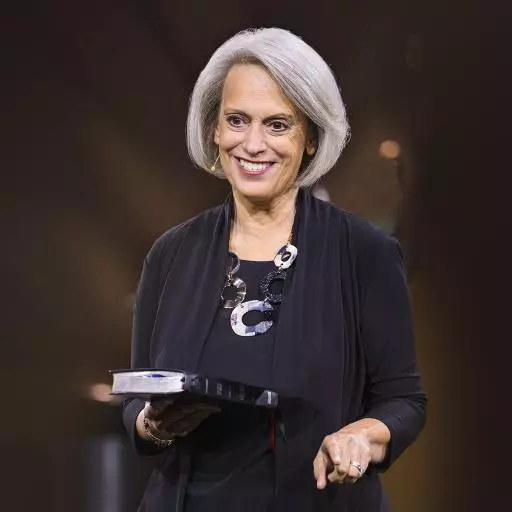
The Glory of Face-to-Face Fellowship


Relationships matter. We were designed to be with people and experience life together—face-to-face. Get some fresh perspective on the joy of community, church involvement, and meeting the needs of your neighbors on Revive Our Hearts Weekend, with Dannah Gresh and Nancy DeMoss Wolgemuth.
Dannah Gresh: Happy weekend. I'm so glad you're here. I wish I could see your face, and you mine. Speaking of being glad, think with me for a moment. I want you to recall a time when you knew someone was super glad to be with you. You know, someone whose face literally lights up when you show up.
Someone who does that for me is Theo Robert Gresh. That's my youngest grandchild, my first grandson. Wow, when his eyes have locked onto mine, his smile beams so bright and my whole being changes. I mean that literally because brain scientists say that our neural pathways light up when we experience that face-to-face gladness.
I think it's because we're literally born looking for someone who's glad to be with us. We're made for connection. We're created for connection, for relationship with God and others. You were made for connection, to experience face-shining gladness with others, even face-shining gladness with God. We're talking about the importance of community today on Revive Our Hearts Weekend. I'm Dannah Gresh. Thanks for joining me.
No matter how introverted or extroverted you are, you need solid community and fellowship with other believers. Maybe you're someone who is cheering in agreement with me because you're a people person. Or maybe, like me, you're more introverted and you'll need to learn why these relationships matter to step out of your quiet spaces.
I know it's possible you've been hurt by relationships, particularly those in the church. Nothing hurts more. I know; I've been there. People aren't perfect, which means no relationships are perfect. But the reality is, God designed us to be in community and experience life and joy with others.
So, let's do a deep dive today and see if we can get all of us excited about Christian community. I'd like to start off by sharing part of a message I gave at a Revive conference about being grounded in community. I talked about my discovery of how much Christian relationships change us and why it's important to be there and be available for the people around us, especially when it gets messy.
We're called to meet the needs of one another in a way that the rest of the world is not. The New Testament is full of "one anothers." Forgive one another, comfort one another, serve one another, pray for one another, bear one another's burdens. Let's be honest about that. It's highly inconvenient.
It's highly inconvenient to bear one another's burdens. It's messy and frustrating. Let me remind you that the Christian life is a cross-bearing life. As girls, we don't want to be burdens to each other. We don't want to be an inconvenience. Look right here: you are a burden. It is as it should be.
You are a burden so that I can receive the blessing of carrying it with you. When we have that false pride of not asking for help, that's one of the reasons why we're not having our tables open enough. What if we opened our table and said, "Hey, the toddlers have decorated the living room, so could you clean that up while I cook some popcorn?" That is bearing one another's burdens together. That's what we're meant to do.
The Christian life is a cross-bearing life. Jesus said, "If anyone would come after me, let him deny himself, take up his cross, and follow me." This could make us look so different. If we allowed the Spirit to fill us so fully and the presence of Christ to work in us so completely that we became the bearer of one another's burdens in a way that the rest of the world didn't understand.
In a world that discards inconvenient, burdensome relationships to the point of being known for cancel culture, I want to tell you that when you're in a difficult relationship with a sister in church, you do not cancel your sister. You cancel the debt because we forgive one another.
The early church experienced community with glad hearts. Glad hearts. What does that mean? They were pleased and delighted. Does that mean everything was peachy keen and wonderful? No. Do you know these were believers who weeks earlier were hiding for their lives, who were terrified for their lives under a terribly restrictive, oppressive, persecuting government?
This wasn't easy, what they were doing, but they were glad. Christian fellowship can make sad days glad. Sometimes just regular sad days, like when I really wish my job was always teaching, researching the Bible, writing teachings, and writing books. But it's not.
A lot of my job is proofing marketing copy, meeting deadlines, and answering all the emails that Aubrey and Noelie and Wade send me. I don't always have a lot of passion for those days. You have some of those things on your to-do list where you're like, "Lord, get me through."
I was having one of those particularly bad days where I was grumbling about the tasks at hand. Janet, who's a part of my church, walked in and invited Aubrey to go out for Mexican food. I intercepted the pass. I'll go! I just didn't want to work anymore. But I can't tell you enough how discouraged and distraught I was that day, really weighed down.
There with chips and salsa, Janet and I started talking about Jesus. I want to tell you, my heart was dead when I sat down in that booth. When I left, because we'd talked about Scripture and what God was doing in our lives and what God needed to do in our lives, it was like something just stirred in me.
I went back and I was like, "I get to edit marketing copy! Yay!" It changed me. Christian fellowship changes us. But as I was studying this whole glad thing, I just felt so drawn to the word "glad." Do you ever feel like the Holy Spirit just takes a holy highlighter and he's like, "This word"?
Gladness is not a condition of our circumstances. It's like joy, a miraculous work of God in spite of what is going on around us. Yesterday morning, I still hadn't figured out what the Lord wanted me to understand about this whole gladness thing, and I got a text from my friend Colette, who's a part of my church.
This is what she texted me yesterday morning: "Hope the Lord revives your glad." Does that even sound like a regular sentence? She attached a worship song for me to soak in, and it was a song based on Psalm 92:4. I followed the trail and I got into Psalm 92.
Psalm 92:4 starts, "For you, O Lord, have made me glad." You, O Lord. It was the presence of Jesus in Janet over that Mexican salsa and chips that made me glad, not Janet herself, although Janet's amazing. When we go through burdensome times, hard times, painful times, it is the presence of Jesus that helps us hold on to our glad.
Have you been hurt or disappointed by someone in the church? It's not us that makes each other glad. We are sick, we are sinners, we are needy. No matter who we are, we will disappoint. We will at times make one another sad. That's when the rest of us bear the burden and we pick that one up and we carry them. They are our cross for a time. When we do that, the Spirit stirs inside of us and He makes us glad.
I hope the Lord revives your glad. I hope He does it today. It's something I'm passionate about, and I love that I got to share about it at our Revive 21 conference. Isn't it funny how a simple conversation, like talking with Janet over chips and salsa, can impact a day and change your whole mindset?
I can imagine that it's possibly been a while since you've had a conversation like the one I just described. Maybe you don't even remember why it matters. Perhaps you're about to give up on Christian community. Michael Hendrick was a discipleship pastor who had become so discouraged by what was happening in his Christian community that he quit his job.
He couldn't figure out why so many mentees in his church didn't seem to be growing in their faith. So, he set out on a journey to figure out why discipleship in church was only working for some people. Michael began meeting with a few men on a regular basis to study this, which led him to an interesting discovery about our brains and discipleship. Aaron Davis talked about this with him on Grounded recently. Here is Michael explaining right-brain discipleship.
Michael Hendrick: Right brain is really what processes our emotional, social, and relational brain. It's very fast, faster than even our conscious thought. So our right brain is coming to all these decisions before we even know consciously why we're thinking these things. Our left brain is more our words, our conscious thought, and problem-solving. It's kind of what we think of as the brain.
We really have two brains, and they're really meant to work together in harmony. But over the last maybe 500 years, we've started putting more and more of our discipleship into our left brain and we've kind of been ignoring the right brain portion. We're actually arguing for a full-brain discipleship, but that mainly means adding the right brain skills to the good left brain skills we're already doing. We need to keep doing those.
An example of this came from a question I asked Jim after he explained the brain. I said, "What's an example of a right-brain based practice that's important that maybe we haven't heard of because we don't know that it's that important?" Jim said the human brain is looking for one thing before any other thing. It's the first thing it looks for as we're born and throughout our life. That thing is joy.
Joy is defined as what I feel in my body when I can tell from your face and your eyes that you are glad to be with me, and that I feel special. I can tell from your face that I am special to you. Joy is very fast. I know within basically a twelfth of a second if you're happy to be with me or not. Joy in the brain works almost like a gas tank where it's the thing that gives us energy to do all the other hard relational stuff that life throws at us.
One of the first things we need to do, which is a right-brain skill, is start slowly filling up our joy tank. That means we build joy with God. I think of Numbers 6 as a classic verse. This is a prayer that God actually gave to Moses and Aaron. That doesn't happen that often where God gives us the prayer to pray over the people. The prayer that God gave Aaron is: "The Lord bless you and the Lord keep you, and the Lord make His face shine upon you."
I read that Scripture and I thought, "That is the neurological definition of joy." It's when our faces are shining on each other. It's when we can feel God's face shining on us and we're shining our faces back on God. So we build joy with God, which is a very right-brain skill, and we build joy with each other.
It reminds me of the Apostle John. He wrote to one of the churches and said, "I have much to write to you, but I don't want to use paper and ink. Instead, I want to visit you and I want to talk with you face-to-face so that our joy may be complete." Joy is very much face-to-face. It shows why it's so important for us as Christians to get together in person.
Even online, we can't build joy the way we do in person because it's too fast. The bandwidth can't keep up with the non-relational aspect. There's actually a twelve-times-per-second signal between your eye and my eye when we're together that builds joy, and we lose that synchronization online. So being together face-to-face, just like the Apostle John just said, is so important for us to build our joy together.
Our churches are really meant to be high-joy environments where we are glad to be together. Now, it doesn't mean we're happy, because we could be joyfully happy and smiling, but we can also be joyful when we're sad. Like if something's going on with you and I'm saying, "Aaron, this is really hard, but I'm glad to be with you in this hard thing." That is sad and it's joy at the same time because you're sad but I'm happy to be with you.
We don't have to put like a plastic Christian fake smile on our face to be joyful. Instead, we're just glad to be together and bonded in the good times and the hard times.
Aaron Davis: Man, I'm learning so much. We started this episode talking about loneliness, and I'm hoping you can connect some dots here for us between just thinking about the brain and our discipleship. There are a lot of lonely people in our church. Can you explain what's going on there and what hope you would have for that person?
Michael Hendrick: The solution to loneliness is that we have a low joy tank that needs to be filled up. In other words, we don't see many faces that we can tell are happy to be with us. We can also be with people and still be lonely. We can even be at church and still be lonely, especially if we're surrounded by people whose faces are in their own thing or maybe looking at their phones. Even this thing is like a joy killer in our society.
It's also like if we're surrounded by people that are pretending to be good. Churches can almost encourage us to stay disconnected. But a lot of really what bonds us is that we give people our faces momentarily and just let them know we're glad you're here.
Often there's a fear to share those deeper struggles, and sometimes that fear is valid because some churches aren't safe places to share that kind of thing. But our churches really need to be places where we can share our weakness and it's treated and received with kindness and tenderness and joy, again meaning, "In this horrible thing you just shared, I am glad to be with you." We might even say, "I have no idea what to say, but I am so glad you told me." That is a very high-joy statement.
Dannah Gresh: I hope you know that "glad to be with you" joy that Michael Hendrick just explained. That's really only possible when we're with others face-to-face. It's so important to be in churches, in each other's homes, in the presence of people. I hope you'll listen to the rest of that conversation Michael and Aaron Davis had together. I'll add a link in the transcript of this program. It'll surely fire you up to get in community.
So, how do we do that? How do we get in community? Well, Nancy DeMoss Wolgemuth is here with some practical ways to find community and get involved in your church.
Nancy DeMoss Wolgemuth: Find the place where God wants you to be, get plugged in, and unless God leads you out of there for biblical reasons, stay there. Be there. Attend faithfully. Now, assuming you're going to church, how do you go to church? What could I say? Don't go to just sit and spectate. Go to meet with God in the company of His people. Go expecting to hear from God.
And realize that as you go, you're not only going to meet with God, because you can do that in your bedroom. But what you can't do in your bedroom is meet with God in the company of His people. Go to be a blessing. Go to church to serve, to give. And then I know somebody's thinking, "But I don't know the people in my church, and no one reaches out to me. Church is so unfriendly."
Well, it sounds kind of simple, but could I just say: walk up to somebody and say hello. Meet people, greet people, make the first move. People think I'm probably really outgoing, but I'm actually pretty introverted, and it's hard for me to walk up to new people and introduce myself. I have to let the Lord help me, but I know it's important and so I do it.
Introduce yourself. Learn people's names. Over and over again in Paul's letters to the New Testament churches, he says, "Greet one another." That could be considered a biblical command. At least seven times in his letters and in Romans chapter 16, at the end of the book of Romans, Paul names people he wants to greet there.
He says, "Greet Priscilla and Aquila, they've been co-workers in my ministry for Christ Jesus. Greet my dear friend Epenetus, he was the very first person to become a Christian in the province of Asia. Give my greetings to Mary, who has worked so hard for your benefit." And then there are Andronicus and Junia, my relatives who were in prison with me. "Say hello to Ampliatus, whom I love as one of the Lord's own children, and Urbanus, our co-worker in Christ, and beloved Stachys."
On and on and on. Then he ends with this word in verse 16: "Greet each other in Christian love." In that one passage alone, Paul greets 26 people by name. He knew about those people. And many of them, he didn't just say their name, but he said something about them that he knew and appreciated about their service for Christ.
That speaks to me of the importance of relationships in the body of Christ. It says that people are important. They matter to God. Their names are important. They need to matter to us. You can be sure all those people—Andronicus, Ampliatus, Urbanus, Epenetus—you can be sure that all of those people had needs spiritually. They all had rough edges just as we do.
There weren't any super saints in that church in Rome any more than there are in your church or mine. Even when writing to the Corinthian church, riddled as that church was by conflicts and carnality and doctrinal confusion, Paul says at the end of Second Corinthians 13, "Greet one another with a holy kiss."
Love each other. Greet each other. He doesn't say in this church that has all these humongous problems, "Quit the church or go find another church." He challenges these believers to deal with one another and to deal with these issues in genuine love and humility. So when you go to church, don't wait for people to approach you and be friendly.
Take the initiative. Reach out, be friendly to others. Show an interest in them. Show an interest in their children. Look for people who are there alone. If you're there by yourself and feeling alone, look for other singles, or women who are married to unbelievers who don't go to church with them, for widows. Proverbs 18 says, "A man who has friends must show himself to be friendly."
Ask people questions. "How are you doing? Really, how are you doing? How can I pray for you?" In my church, there's a woman who comes up to me almost every Sunday, or anytime I see her. Invariably, she says to me, almost the first thing out of her mouth, "How can I pray for you?" And Kathy prays for me.
She lives some distance away, so we don't see each other except on Sundays, but she prays for me. Pray for people and pray with people, and do it at church. Be the body. Greet one another, encourage one another, pray for each other, show genuine interest. Can you imagine if everyone would do that, or if just even a lot of people would do that in our churches?
Say, "Well, I wish they would." You do it. Even if you're the only one in your church who does, do it. Reach out, get beneath the surface. And even between weekend services, set a goal to connect with at least one person from your church once each week during the week.
I don't mean to be dogmatic about that, but that's just a simple little goal. Whether it's a phone call, a lunch together, or getting together with your kids, set a goal to connect with somebody from your church once during the week so that we're bridging between weekends. We're ministering to each other.
It's not enough for us to go and sit in a service one hour a week, important as that is. But we need more than that in order to cultivate community, to cultivate authentic relationships in the body of Christ and in our local churches. So I want to give just a few simple suggestions here about getting plugged in to the life of the church, not just being there for services on the weekends, not just greeting one another when you are there, but some suggestions beyond that.
First, I would say it's important to get involved in some sort of small group where you can develop closer relationships than you can with 300 or 3,000 people at your church service on the weekend. Now, your church may not be set up with small groups per se, but maybe there's a Sunday school class, a Bible study, a body-life group, or a ministry group.
It may be singing in the choir or on a praise team, or teaching in the third-grade Sunday school department where there are other teachers who would pray together, but some sort of smaller group where you can establish closer relationships. And it doesn't have to be that everyone in that group is in the same season of life. In fact, I think this is really valuable.
One of the things that I think is not wise, in my opinion, about the way some churches are structured today is that everything is oriented around the same age, the same season of life, and the same interest. We can learn and grow together. That's part of being a family. We have different ages, we have different seasons of life. You need to make sure that you have a smaller group, a network of relationships that you've established. You need that community. You need that connection. We need the obligation, the accountability, the relationship, the fellowship, the responsibility, the discipline, the structure for growth. We need that, and that can come from smaller group settings.
Dannah Gresh: Yes, so good. We've just heard some great ways to cultivate community from Nancy DeMoss Wolgemuth. So I wonder, what's the next step you might take to seek people out? A few years ago, God called me to push reset on how I was cultivating community, and a specific thing He put on my heart was a desire to spend more face-to-face time with my three daughters: Autumn, Lexi, and Aleah.
I didn't sense that we were going to do Bible study. Listen, this is coming from a Bible study junkie. I love studying the Word. But what God called me to a few years ago was face-to-face time with my girls with one prompting sentence, one question: "How can I pray for you?" And then I just listen. I do it every month with them.
I listen and I love on them. Why? Because God called me, that it was important for my face to shine on them the way my grandson's face shines on me. And God put it on my heart to pray a similar or same-ish kind of prayer every time we end that gathering. I'm going to pray it over you in a second, so stick around.
But first, let me challenge you to make a difference with your presence in the lives of others and watch what God will do as you say yes to experiencing community. Don't forget you can hear the full episodes of those pieces you heard today all on the Revive Our Hearts app or at reviveourhearts.com/weekend.
And hey, while you're there, I want to make you aware of all the free resources available to you on our website, from podcasts to videos to blog posts, articles, event kits, and more. We want to provide you with material on a wide variety of topics so you can thrive in Christ in every season. When you support the ministry this month, you're making it possible for us to continue to produce trustworthy, free biblical content in the year to come.
If you'd like to make a gift to the ministry, you can do that by visiting reviveourhearts.com. When you do, be sure to request your gift, a booklet by Nancy called "A Deeper Kind of Kindness." This resource will equip you to reflect the beauty of the gospel in all your relationships. Thanks for listening today. I'm Dannah Gresh. We'll see you next time for Revive Our Hearts Weekend.
Now, let me pray. This is Numbers 6:24-26. I want to pray this prayer over you. I think you'll see why I'm so excited about faces shining on each other. It's a bit like God. The Lord bless you and keep you; the Lord make His face shine on you and be gracious to you; the Lord turn His face toward you and give you peace.
This program is a listener-supported production of Revive Our Hearts in Niles, Michigan, calling women to freedom, fullness, and fruitfulness in Christ.
Featured Offer

Experience true renewal in the presence of the Lord. With your donarion.
Past Episodes
- 3 Doctrines that Fuel Endurance
- 3 Life-Changing Lessons for Young Women
- 3 Reasons to Join the 2026 Bible Reading Challenge
- 3 Ways to Love Your Friend When It’s Hard
- 3 Women Who Were Grateful for God’s Word
- A Great Awakening, with Kim and Katie Miller
- A Harvest of Joy
- A Heart Grounded in the Word of God, with Chris Brooks
- A Hurting Home Became an Open Home
- A King’s Preparations, Plans, and Provision
- A Wife’s Submission: What it Is and Isn’t
- A Woman Adorned and Adorning
- Advent for Exiles, with Caroline Cobb and Erin Davis
- Always Grateful: Ciara's Story
- Always Thankful (Psalm 66)
- An Unhurried Holiday Season
- Anticipating Advent
- Be the Warmth: Cultivating Hospitable Character
- Behold the Big Story of the Bible, with Kevin DeYoung
- Behold the Daily Mercy of the Word, with Dannah Gresh
- Behold the Living Word, with Jackie Hill Perry
- Behold the Power of the Word to Save, with Kelly Needham
- Behold the Wonder of the Word
- Behold the Word Recovered by God’s People, with Mary Kassian
- Behold, Hearts on Fire with the Word
- Beholding the Wonder: True Woman '25
- Beyond Cliches: Real Encouragement for Single Sisters
- Blessing for the Year End & the New Year (2 Cor. 13:11-13)
- Blessings and Curses: A Look at the Life of Balaam
- Broken Vessels in Romania, with Asheritah Ciuciu
- Brokenness: The Heart God Revives
- Celebrating God’s Abundance
- Celebrating the Gift of Grandparents
- Choosing Grace over Gossip
- Choosing Servanthood Over Celebrity
- Come Adore: The Gospel in Carols
- Consider Jesus: Surrendered Servant and Savior
- Control Girl, with Shannon Popkin
- Corporate Revival
- Crossing the Finish Line: Remembering Robert Wolgemuth
- Ease Into the Bible, with Jean Wilund
- El Shaddai: The All-Sufficient One
- Embracing God as Father
- Enlarging Your Heart for Eternity, with Colleen Chao
- Esther: God's Woman at God's Time
- Faithful, Not Famous with Laura Gonzalez de Chávez
- Finding Freedom from Fear, with Judy Dunagan
- Finding My Father Father: How the Gospel Heals the Pain of Fatherlessness, with Blair Linne
- From Death to Life: Hope After Abortion
- God’s River Flows in Spain and Brazil
- God’s Word and Our Emotions
- God’s Word and Your Life
- Gospel Mom, with Laura Wifler and Emily Jensen
- Grace for the Depressed
- Grateful, then Graceful, with Mari Glick
- He Gives Grace to Mothers, with Sarah Walton and Linda Green
- Helping Kids Think Biblically, with Elizabeth Urbanowicz
- His Healing Touch
- Holy Week Heart Prep: The Wonderful Names of Jesus
- How God’s Love for Women is Displayed in the Old Testament, with Dr. Katie McCoy
- How Less Scrolling Could Change Your Life, with Lara d’Entremont
- How to Have a Happy New Year (Psalm 1)
- How to Have a Marriage that Magnifies God
- How to Have a Quiet Heart
- How We Got Our English Bible
- Humility, Not Pride
- Learning to Love the Old Testament, with Jennifer Smith
- Lessons from Levites
- Living Out the Beauty of the Gospel
- Living Water
- Living Well, Finishing Well, with Mark DeMoss
- Loving and Living God’s Word, with Kelly Needham
- Persecution, Perseverance, and the Key to Sustaining Faith, with Dr. Karen Ellis
- Persevering Love for the Local Church
- Pleading the Cause of the Unborn
- Practical Bible Study Tips
- Practicing Thankfulness, with Sam Crabtree
- Precepts, Parkinson’s, and the Truth That Sets Us Free, with Kay Arthur
- Psalm 23: Our Good Shepherd
- Read Your Bible!
- Rediscovering Intimacy With God
- Relationship Refresh: Helping Your Community Thrive in Christ
- Remembering Voddie Baucham, Jr.
- Renewed and Restored (Psalm 23:2-3)
- Revive Me According to Your Word
- Revive My Heart, Lord!
- Ruth: The Transforming Power of Redeeming Love
- Safely Home: Honoring Robert Wolgemuth
- Saying, “Yes, Lord!”
- Saying, “Yes, Lord” When Life is Hard
- Science, Scripture, and a Life Transformed, with Dr. James Tour
- See for Yourself: Get to Know Your Bible, with Kelly Needham
- Showing Kindness, with Kathy Branzell
- Sin, Suffering, and the God Who Restores
- Sorrowful, Yet Always Rejoicing
- Spiritual Disciplines We Forget About
- Spiritual Habits for Little Hearts
- Spiritual Mothering
- Spiritual Strength for an Evil Day (Ephesians 6)
- Steadfast Faith
- Storm Shelter
- Supporting Your Suffering Friend, with Jani Ortlund
- Surrender: the Heart God Controls
- Tell Yourself What’s True
- Telling the Greatest Story
- Tender Counsel for the Fearful and Grieving, with Paul Tautges
- The Beautiful Process of Repentance
- The Beauty of Living Out the Gospel as a Woman
- The Book of Books
- The Cross and Clothes
- The Four Emotions of Christmas
- The Glory of Face-to-Face Fellowship
- The Grace of Remembrance
- The Humble Savior Who Came
- The Incomparable, Incarnate Christ
- The Joy of Bible Journaling
- The King Still Has Another Move
- The Personal Devotional Life
- The Personal Devotional Life: Beyond Quiet Time, with Dr. Henry Blackaby
- The Power of Words
- The Ultimate Meaning of True Womanhood
- The Well-Watered Woman, with Gretchen Saffles
- The Wonder App: Transforming Screen Time into Scripture
- Three Gifts Suffering Gives
- To The Woman Who Doesn’t Feel God’s Love
- Treasuring Christ in Our Traditions with Noel Piper
- True Woman '25 Panel Discussion: Behold the Word in Every Season
- Trusting God When Tragedy Strikes
- Truth Talk for Hurting Hearts, with Dawn Wilson
- Walking Through Life's Deserts
- What “Yes, Lord” Looks Like
- What Do We Do with Unfulfilled Longings?
- What Sisterhood Is (and Isn’t)
- What's in a Dad?
- When Busyness Threatens Intimacy with God
- Where the River Flows: The Life-Giving Work of the Spirit
- Why Study the Bible?
- Women of the Resurrection
- Wonder of the Word Made Flesh
- Word Before World, with Gretchen Saffles
- You Can Trust God to Write Your Story
- You Have a Living Hope
- Your Will Be Done: Rebecca Ellerman’s Story
- You've Come a Long Way, Baby! (Mary Kassian)

Featured Offer
Experience true renewal in the presence of the Lord. With your donarion.
About Revive Our Hearts
About Nancy DeMoss Wolgemuth
Nancy DeMoss Wolgemuth has touched the lives of millions of women through Revive Our Hearts and the True Woman movement, calling them to heart revival and biblical womanhood. Her love for Christ and His Word is infectious and permeates her online outreaches, conference messages, books, and two daily nationally syndicated radio programs—Revive Our Hearts and Seeking Him. Her books have sold more than four million copies and are reaching the hearts of women around the world. Nancy and her husband, Robert, live in Michigan.
Contact Revive Our Hearts with Nancy DeMoss Wolgemuth
Revive Our Hearts
P.O. Box 2000
Niles, MI 49120
1-800-569-5959 (toll-free)