
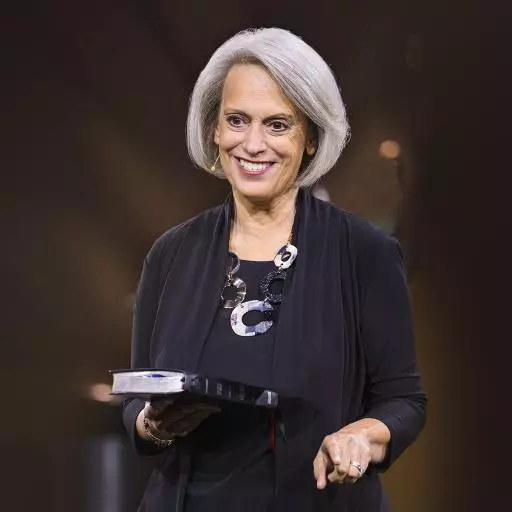
The Beauty of Living Out the Gospel as a Woman, Ep 1 of 2


You can do Titus 2! This call to train up the next generation of women might sound daunting at first, but at its core, it’s beautifully ordinary. Hear real life examples of women who’ve lived this passage well on Revive Our Hearts with Nancy DeMoss Wolgemuth.
Narrator (Female): Titus 2 invites you to train up the next generation. Does that feel a little daunting? Here's Nancy DeMoss Wolgemuth with a perspective shift.
Nancy DeMoss Wolgemuth: It's not some great big complicated formal thing, this discipleship, this life-to-life engagement. It's women coming together to adorn the beauty of the gospel as they do life together.
Dana Gresh: This is the Revive Our Hearts podcast with Nancy DeMoss Wolgemuth, author of *Adorned*, for March 2nd, 2026. I'm Dana Gresh.
If you're walking through the 2026 Bible reading plan with us, today we're reading Deuteronomy 31 and 32. When you hear the term "spiritual family," do any women come to mind? Today and tomorrow, Nancy DeMoss Wolgemuth is inviting you to find mothers, sisters, and daughters in Christ.
Nancy gave this message a few years back to the women at a marriage conference sponsored by FamilyLife. If you hear her mentioning tropical islands, that's because this conference took place on the Love Like You Mean It cruise. Here's part one of Nancy's message: "The Beauty of Living Out the Gospel as a Woman."
Nancy DeMoss Wolgemuth: Well, I want to just talk about our wedding for a few more minutes, and while I'm doing that, would you be finding the book of Titus in your Bible? I'm giving you a little advance notice because it's a tiny little book toward the end of the New Testament. Titus chapter two. We're going to talk about that. But let me just set it up by telling you about three types of women who participated in our wedding.
The first is an older woman. She was, I think, 88 at the time. Her name is Vonette Bright. She and her husband Bill were the co-founders of Cru. Vonette, I've never had a time in my life when she wasn't there. She's been a part of our family, part of my life for all my life. She was like a second mother to me.
When she heard that Robert was in my life and that I was dating and then engaged and then getting married, she was giddy. She would call me—she was not in good health the last couple years of her life—and she would just be giggling. She was so excited at what had come to pass. She's kind of homebound, has a lot of physical challenges, but she said, "Can I host a reception for you? I'll do it in my condo." She just wanted to be a part of this.
She lived in Orlando, Florida, and we were getting married in Wheaton, Illinois. She was determined, if it was the last thing she did, she was going to be at our wedding. She was at our wedding, and it was almost the last thing she did. She showed up there with her son and a caregiver in a wheelchair, her bright red outfit on for our wedding. The Lord knew that six or seven weeks later, she would be in heaven.
We actually got to spend a week together with her after our honeymoon as she was just in her final weeks of life. But in the bride's room, just before the wedding was getting ready to start, somebody sent a message to me and said, "Vonette would like to talk with you. She'd like to ask if she could just see you for a few moments." So she was wheeled into the room, and she said, "Could I just speak with you privately for a few moments?"
And then she said, "Honey, I'm a mama. And I want to just ask you: Is there anything you'd like to ask a mama before you get married?" It was precious. Here we were, she was in her wheelchair, I was sitting next to her, and after this picture was taken, we shoed the photographer out and had a sweet few-minute conversation. I don't suppose you're interested in what she said after that, but if you are, you can pick up a copy of my book *Adorned: Living Out the Beauty of the Gospel Together*, and I talk about that conversation, that precious conversation that Vonette and I had together.
She was for many years, all those years, an older woman in my life. She had encouraged me, she had prayed for me, she had had assignments for my life. When she kind of couldn't keep being active anymore, she thought I should just take the baton and do the things that she had been able to do when she was younger. She was a spiritual mother in my life.
Now, there was another group of women who participated in our wedding, and they were young women. We didn't have attendants because at our age, who are you going to ask to be your attendant? You've got too many friends, right? So these were children and grandchildren of some of my closest friends. Instead of having attendants, these ten little girls, all dressed up so beautifully, went down the aisle ahead of me ringing bells.
These are some of the younger women in my life. A few of these are three sibling sets in this group. A couple of them live just within walking distance around the corner from my house, and they'll show up on their bike and bring me something their mom has made for us or some flowers. Not right now because it's winter in Michigan right now, but these are precious young women.
And they don't understand all this gospel stuff fully yet. Who understands it fully? But I'm very conscious that I have a role as a spiritual mother in their lives. As Vonette passed a baton of faith and confidence in the Lord and joy in the Lord to me, as she modeled to me the beauty of a life lived coram Deo, in the face of God, in the presence of God, now I have the opportunity of doing that for some of the young women like these little girls.
So these are spiritual daughters. We need spiritual mothers in our lives, and we need spiritual daughters. And then there was one other group of women who participated in our wedding. I call them the sisterhood. We call each other the sisterhood. There are eight of us total, and we have known each other for years. We kind of came into each other's lives in different ways.
We live all over the country, one in Canada. One of the sisterhood is here with us today. I'm so thankful for my sweet friend, Mary Ann. These women were, in fact, in the Dominican Republic. We were there for a day after a conference we had done with a number of these women when I first told them about Robert. And thus followed the Inquisition. Who was this man, and what in the world were his intentions?
You have to hear Robert tell the story about how we were spending a week in a home in the DR and Robert was in Orlando. This was just the very beginning of our relationship, our friendship. These women wanted to talk to Robert, so we did a Skype call. Robert was on this huge screen in one of the meeting rooms, gathering living rooms in this home. For 90 minutes, these women asked him questions.
I was sitting in the back row, just holding my breath, not saying anything. But these women were such encouragers as they got to know Robert and to sense what God was doing in our lives. When it came to the wedding, oh my goodness, these women were all about making that weekend really, really special for us in so many ways. We had a ton of fun.
When we got to our room after the wedding, these women had left the reception early, had made their way over to the room, and had decorated it. There were a gazillion rose petals everywhere. There were enough candles to be like a monastery somewhere. I'm sure it was against the fire regulations, but they so invested in that special occasion for me. They celebrated it, some single, some married.
And we have done life together. At a distance, we all wish we lived closer to each other, but we call and we pray with each other. We have a text thread that we exchange. Every one of us in that group has had times over the years when we really needed the support of other women: the encouragement, the accountability, times when we were struggling with temptation or testing or trials or financial difficulties. One of the women in the sisterhood right now, her husband is having horrific physical challenges.
This sisterhood just gathers together and bands together, and we pray for each other and we lift each other up. I'll tell you, Robert loves the sisterhood because he knows how invested they are in making sure that we do well, that we are encouraged. I do it for them, they do it for me. So we need spiritual mothers in our lives. Think for a moment: Who is a spiritual mother in your life?
And we need spiritual daughters in our lives. Can you think of any young women, teenagers, younger women in their 20s, 30s, younger women than yourself, maybe some little girls, women that you're investing in spiritually? As you have received, you're giving to them. And then do you have some spiritual sisters in your life?
Now, I'll be the first to say, because when I share this, I think it's easy for people to think, "Oh, what I wouldn't give to be able to have that." But maybe you're in a location right now or a season of life where you don't feel like that's all in place. Well, let me just remind you that there are seasons of life.
God has different kinds of relationships. He knows what you need in each season of your life. Rather than moping or whining or becoming resentful because you don't have what you wish you had—maybe you wish you had some sisterhood women to hold you up in a difficult marriage season or with a prodigal child that you're burdened about—ask God to bring what He knows you need into your life when He knows you need it.
And it will look different at different seasons. I was single for 57 years. My needs spiritually and relationally were different than they are right now. But generally, as you look over the course of your life, ask God to bring spiritual mothers, spiritual daughters, and spiritual sisters into your life.
And even more important than that, ask the Lord to make you a spiritual mother in someone else's life. To make you a good spiritual daughter in someone else's life. And to make you a spiritual sister. Don't wait for everybody else to initiate this. This book, *Adorned: Living Out the Beauty of the Gospel Together*, is a 300-page book on three verses that we're going to look at in just a minute from Titus chapter two.
As I've taught on this subject and carried this subject on my heart over the last ten or more years, I've found younger women often saying, "But Nancy, the older women aren't available. They're too busy. They're not there. They're not interested in investing in us younger women."
And you know what the older women say to me? "Nancy, the younger women aren't interested in anybody investing in them. They're too busy. They know everything. They have their own friends. They don't care about an older woman investing in their life." And I want to say to both, you guys get in the same room. Put your heads together, put your hearts together, get on your knees together, and don't wait for that other older or younger woman to initiate friendship and encouragement with you.
You take the first step. How many of you would consider yourself—you'd be honest enough to say, "I would consider myself an older woman"? Okay, that should be pretty much everybody, because everybody is an older woman to somebody. How many of you say you could kind of still consider yourselves younger women? Okay, quite a few there, and we're all younger women to somebody.
In fact, when I started writing this book, I would have considered myself a younger woman, and I was single. By the time I finished writing this book, I was definitely in the older woman category, and I was married. So seasons change, and the book changed as a result. For example, the chapter on loving your husband—we're going to look at this passage in Titus 2.
Let me just say, I finished it in my first year of marriage, our first year of marriage. That chapter on loving your husband sounds a lot different than it would have had I written it when I was single. The opening line of that chapter is, "What in the world have I done?" a line that crossed my head not weeks into our marriage. It's been in your head too, at times, maybe weeks or months or years into your marriage.
And so, take the initiative, whatever season of life you're in. If you're a younger woman needing an older woman in your life, ask God to point you to one. She doesn't have to be a seminary graduate or a theologian or some great, wise woman. Maybe she's just a really ordinary woman, but she's been through some life seasons you haven't yet.
And just go and don't say to her, "Would you disciple me every week?" That's going to be daunting to her, and she's going to say, "I don't feel qualified to do that." But if you say, "I just need someone to pray with me. I'm walking through something right now, and could we get together over coffee? Can I just share with you what's happening in my life and ask if you'd pray for me?"
Older women, don't wait for those younger women to come to you. You ask the Lord to point out who He has put in your path who could just use some encouragement, who could use some prayer. Say, "I've been noticing you've got these three kids age six and under, and boy, I remember what that season was like. It was so busy I didn't think I was going to survive it. How are you doing?" And just let her know she's going to make it and that you're praying for her.
See, it's not some great big complicated formal thing, this discipleship, this life-to-life engagement. It's women coming together to adorn the beauty of the gospel as they do life together. So let's look together at a passage, Titus chapter two, that has become such a beautiful passage in the fabric of my life. I'm just going to touch on some high points of it and encourage you then to dive into it and to find more in it than we can possibly do in these moments.
I found in this passage just a new paradigm for doing life as a woman. We all need this, and it looks different in different seasons of our lives, but it will help your marriage, it will help your parenting, it will help you in the workplace, it will help you in your church involvement, it will help you in your personal issues and struggles, your growth in Christ, your discipleship, to have other women—spiritual mothers, spiritual daughters, and spiritual sisters—in your life.
Now, just to give you a little bit of context here, the book of Titus was not written by Titus. It was written by the Apostle Paul to a pastor named Titus. Titus was the pastor of this fledgling little church on the island of Cyprus. In fact, as we were yesterday looking at that beautiful ocean, the island scenery, I'm thinking, "Maybe Cyprus looks a little bit like this."
This young church was really under attack. This was in the age of Nero, the Roman Empire, and Nero and the Romans were determined to stamp out Christianity. So there was all kinds of attack externally on these young believers. But there was also attack from within. There were false teachers already who were messing with people's minds and lives. It says they were upsetting whole families by their teaching.
And so these little churches, these young believers, were wondering, "How in the world are we going to survive as a church, much less thrive in our faith, much less reach the whole world with the gospel of Jesus Christ?" And so in chapter one, Paul says the first important thing is that these little churches should have biblically qualified leaders, and he goes into that whole explanation.
Then in chapter two, he says the gospel needs to be lived out in each demographic: younger, older, men, women, different socioeconomic status. He unpacks a bit of what it looks like for each of these demographics to live out the gospel of Christ.
So let me read the first paragraph of Titus chapter two. He says, "But as for you, Titus, in this very confused, messed-up culture where these just these few little new churches are struggling to keep their heads above water, what are you supposed to do?" He says, "As for you, teach what accords with sound doctrine."
Now, I don't know about you, when I hear that, if you stop and think about it, you think that is not any kind of dazzling strategy. This is how our churches are going to grow? This is how we're going to do ministry? We're going to do doctrine? I mean, how boring could that be? But Paul says doctrine, what you believe, is really, really important.
Because what you believe about God and about this world impacts how you do all of life. So he says, "Teach sound doctrine," and then teach people what it means to live out sound doctrine. So he speaks to the older men in verse two: "Older men are to be sober-minded, dignified, self-controlled, sound"—that word "sound" again. It just is the word in Greek from which we get our word "hygiene" or "hygienic."
It's clean doctrine. It's healthy doctrine. Some of you in this room are germaphobes, and you're more concerned about what's on the counter that germs that might touch you than maybe you are about the kind of teaching that you pay attention to, the kind of books you read, the kind of doctrine you take in. He says you want sound doctrine.
And then these older men are to be sound in faith, in love, and in steadfastness. Then verse three, he speaks to the older women. He's going to say two things essentially to these older women: first of all, what they are to be, and then secondly, what they are to do.
The first is they are to be a model to the other believers, particularly the younger women. "Older women likewise are to be reverent in behavior." That word "reverent" means just living a life that is a holy life, a life that takes into consideration the presence of God 24/7.
We think reverent and we think, "Oh, you never talk above this tone," just kind of like walking through a cathedral and you never raise your voice, like being in the library in the old days. No, reverent is living a life that is always remembering that God is here.
So how we talk, how we act, what we watch, what we do—we're always remembering that we're doing it in God's presence. And what are the expressions of that? To be reverent in behavior, he gives two examples: one is about their tongues. "They are not to be slanderers." They are not to use their tongues to tear down others but to build others up, starting within their own homes.
Some of you have watched the movie *Like Arrows*. Wasn't that a precious story, a powerful story? But before that husband and wife began to live as in the presence of God, there were all kinds of things being said and done in their homes that were destructive rather than building up.
So he says, "Older women, don't be slanderers. Don't tear down with your tongues." And then, "don't be slaves to much wine." He's saying you don't want to be under the control of any influence other than the Holy Spirit, the lordship of Jesus Christ.
He's speaking here of addictions, of things that would control us that are not healthy, not wholesome. He said, "Not slaves to much wine." Now, we can be slaves to lots of things, and I think wine is just one. You say, "He needed to write that to older women? What were these older women doing in the church? Were they all getting soused or what?"
Well, I don't know, but he apparently knew this was an issue in the church. I can't speak for back then, but I know it's an issue in the church today. Older women in bondage to all kinds of substances and controlling things in their lives, idols, rather than being just slaves to Jesus Christ.
So this is what older women are to be: a model, reverent in behavior, not slanderers, not slaves to much wine. But then there's something they're supposed to do. This is their calling. A lot of my peers right now are in the empty nest stage, and I've talked with a lot of these women who are trying to decide what am I supposed to be doing.
Well, let me tell you, here's one thing you're supposed to be doing as you get into that season of life. He says they are to teach what is good, and so train the young women. God has a calling for you. And younger women, by the way, don't think you don't need to be paying attention to this, because you need to be paying attention to the older woman instructions because that's what you're supposed to be aspiring to: to be an older woman who will be an example, a model of godliness, and who will be able to pass on to the next generation what God has taught you. Not just out of your successes but out of your failures as well.
You say, "I'm not a teacher." Like, when you see you're supposed to teach young women and train them, you think of somebody getting up and doing what I'm doing. You say, "I could never do that." This passage is not saying that's what you need to do. I'm up here teaching, that's one way to teach.
But most teaching in the body of Christ takes place life-to-life, heart-to-heart, person-to-person. It's not you sitting down with a group of 20 or 200 or 2,000 women and getting notes and your Bible out and a stand and a microphone. No, it's just in conversation. It's informal, it's everyday, it's way of life, and we're going to see that in this passage.
Dana Gresh: That's Nancy DeMoss Wolgemuth inviting women to live out Titus 2 in their everyday lives. It turns out, training up the next generation of godly women isn't as daunting as it sounds. It's beautifully ordinary, which is why God commands all of us to live it out. That's right, you can do Titus 2.
To help you along the way, we'd love for you to read Nancy's booklet, *A Deeper Kind of Kindness*. It's an excerpt from her larger book *Adorned*, which is actually what today's message was based off of. In this resource, you'll find biblical teaching on 100 practical expressions of kindness, equipping you to reflect the beauty of the gospel in all your Titus 2 relationships.
This resource is yours for a gift of any amount to Revive Our Hearts. To donate, visit ReviveOurHearts.com or call us at 1-800-569-5959 and be sure to request *A Deeper Kind of Kindness* when you do. For more wisdom on relationships of all kinds, visit ReviveOurHearts.com/relationships. We've got a collection of free resources for you there. Find podcast episodes, videos, articles, and challenges designed to help you love well in various contexts, whether it's friendship, motherhood, marriage—really any relationship, we are here to help you thrive in Christ.
Tomorrow we'll listen to part two of today's message. Nancy's going to unpack Titus 2 even more and she'll help you develop a vision for what this passage could mean in your own life. Please be back for Revive Our Hearts.
This program is a listener-supported production of Revive Our Hearts in Niles, Michigan, calling women to freedom, fullness, and fruitfulness in Christ.
Featured Offer

Experience true renewal in the presence of the Lord. With your donarion.
Past Episodes
- 3 Doctrines that Fuel Endurance
- 3 Life-Changing Lessons for Young Women
- 3 Reasons to Join the 2026 Bible Reading Challenge
- 3 Ways to Love Your Friend When It’s Hard
- 3 Women Who Were Grateful for God’s Word
- A Great Awakening, with Kim and Katie Miller
- A Harvest of Joy
- A Heart Grounded in the Word of God, with Chris Brooks
- A Hurting Home Became an Open Home
- A King’s Preparations, Plans, and Provision
- A Wife’s Submission: What it Is and Isn’t
- A Woman Adorned and Adorning
- Advent for Exiles, with Caroline Cobb and Erin Davis
- Always Grateful: Ciara's Story
- Always Thankful (Psalm 66)
- An Unhurried Holiday Season
- Anticipating Advent
- Be the Warmth: Cultivating Hospitable Character
- Behold the Big Story of the Bible, with Kevin DeYoung
- Behold the Daily Mercy of the Word, with Dannah Gresh
- Behold the Living Word, with Jackie Hill Perry
- Behold the Power of the Word to Save, with Kelly Needham
- Behold the Wonder of the Word
- Behold the Word Recovered by God’s People, with Mary Kassian
- Behold, Hearts on Fire with the Word
- Beholding the Wonder: True Woman '25
- Beyond Cliches: Real Encouragement for Single Sisters
- Blessing for the Year End & the New Year (2 Cor. 13:11-13)
- Blessings and Curses: A Look at the Life of Balaam
- Broken Vessels in Romania, with Asheritah Ciuciu
- Brokenness: The Heart God Revives
- Celebrating God’s Abundance
- Celebrating the Gift of Grandparents
- Choosing Grace over Gossip
- Choosing Servanthood Over Celebrity
- Come Adore: The Gospel in Carols
- Consider Jesus: Surrendered Servant and Savior
- Control Girl, with Shannon Popkin
- Corporate Revival
- Crossing the Finish Line: Remembering Robert Wolgemuth
- Ease Into the Bible, with Jean Wilund
- El Shaddai: The All-Sufficient One
- Embracing God as Father
- Enlarging Your Heart for Eternity, with Colleen Chao
- Esther: God's Woman at God's Time
- Faithful, Not Famous with Laura Gonzalez de Chávez
- Finding Freedom from Fear, with Judy Dunagan
- Finding My Father Father: How the Gospel Heals the Pain of Fatherlessness, with Blair Linne
- From Death to Life: Hope After Abortion
- God’s River Flows in Spain and Brazil
- God’s Word and Our Emotions
- God’s Word and Your Life
- Gospel Mom, with Laura Wifler and Emily Jensen
- Grace for the Depressed
- Grateful, then Graceful, with Mari Glick
- He Gives Grace to Mothers, with Sarah Walton and Linda Green
- Helping Kids Think Biblically, with Elizabeth Urbanowicz
- His Healing Touch
- Holy Week Heart Prep: The Wonderful Names of Jesus
- How God’s Love for Women is Displayed in the Old Testament, with Dr. Katie McCoy
- How Less Scrolling Could Change Your Life, with Lara d’Entremont
- How to Have a Happy New Year (Psalm 1)
- How to Have a Marriage that Magnifies God
- How to Have a Quiet Heart
- How We Got Our English Bible
- Humility, Not Pride
- Learning to Love the Old Testament, with Jennifer Smith
- Lessons from Levites
- Living Out the Beauty of the Gospel
- Living Water
- Living Well, Finishing Well, with Mark DeMoss
- Loving and Living God’s Word, with Kelly Needham
- Persecution, Perseverance, and the Key to Sustaining Faith, with Dr. Karen Ellis
- Persevering Love for the Local Church
- Pleading the Cause of the Unborn
- Practical Bible Study Tips
- Practicing Thankfulness, with Sam Crabtree
- Precepts, Parkinson’s, and the Truth That Sets Us Free, with Kay Arthur
- Psalm 23: Our Good Shepherd
- Read Your Bible!
- Rediscovering Intimacy With God
- Relationship Refresh: Helping Your Community Thrive in Christ
- Remembering Voddie Baucham, Jr.
- Renewed and Restored (Psalm 23:2-3)
- Revive Me According to Your Word
- Revive My Heart, Lord!
- Ruth: The Transforming Power of Redeeming Love
- Safely Home: Honoring Robert Wolgemuth
- Saying, “Yes, Lord!”
- Saying, “Yes, Lord” When Life is Hard
- Science, Scripture, and a Life Transformed, with Dr. James Tour
- See for Yourself: Get to Know Your Bible, with Kelly Needham
- Showing Kindness, with Kathy Branzell
- Sin, Suffering, and the God Who Restores
- Sorrowful, Yet Always Rejoicing
- Spiritual Disciplines We Forget About
- Spiritual Habits for Little Hearts
- Spiritual Mothering
- Spiritual Strength for an Evil Day (Ephesians 6)
- Steadfast Faith
- Storm Shelter
- Supporting Your Suffering Friend, with Jani Ortlund
- Surrender: the Heart God Controls
- Tell Yourself What’s True
- Telling the Greatest Story
- Tender Counsel for the Fearful and Grieving, with Paul Tautges
- The Beautiful Process of Repentance
- The Beauty of Living Out the Gospel as a Woman
- The Book of Books
- The Cross and Clothes
- The Four Emotions of Christmas
- The Glory of Face-to-Face Fellowship
- The Grace of Remembrance
- The Humble Savior Who Came
- The Incomparable, Incarnate Christ
- The Joy of Bible Journaling
- The King Still Has Another Move
- The Personal Devotional Life
- The Personal Devotional Life: Beyond Quiet Time, with Dr. Henry Blackaby
- The Power of Words
- The Ultimate Meaning of True Womanhood
- The Well-Watered Woman, with Gretchen Saffles
- The Wonder App: Transforming Screen Time into Scripture
- Three Gifts Suffering Gives
- To The Woman Who Doesn’t Feel God’s Love
- Treasuring Christ in Our Traditions with Noel Piper
- True Woman '25 Panel Discussion: Behold the Word in Every Season
- Trusting God When Tragedy Strikes
- Truth Talk for Hurting Hearts, with Dawn Wilson
- Walking Through Life's Deserts
- What “Yes, Lord” Looks Like
- What Do We Do with Unfulfilled Longings?
- What Sisterhood Is (and Isn’t)
- What's in a Dad?
- When Busyness Threatens Intimacy with God
- Where the River Flows: The Life-Giving Work of the Spirit
- Why Study the Bible?
- Women of the Resurrection
- Wonder of the Word Made Flesh
- Word Before World, with Gretchen Saffles
- You Can Trust God to Write Your Story
- You Have a Living Hope
- Your Will Be Done: Rebecca Ellerman’s Story
- You've Come a Long Way, Baby! (Mary Kassian)

Featured Offer
Experience true renewal in the presence of the Lord. With your donarion.
About Revive Our Hearts
About Nancy DeMoss Wolgemuth
Nancy DeMoss Wolgemuth has touched the lives of millions of women through Revive Our Hearts and the True Woman movement, calling them to heart revival and biblical womanhood. Her love for Christ and His Word is infectious and permeates her online outreaches, conference messages, books, and two daily nationally syndicated radio programs—Revive Our Hearts and Seeking Him. Her books have sold more than four million copies and are reaching the hearts of women around the world. Nancy and her husband, Robert, live in Michigan.
Contact Revive Our Hearts with Nancy DeMoss Wolgemuth
Revive Our Hearts
P.O. Box 2000
Niles, MI 49120
1-800-569-5959 (toll-free)