
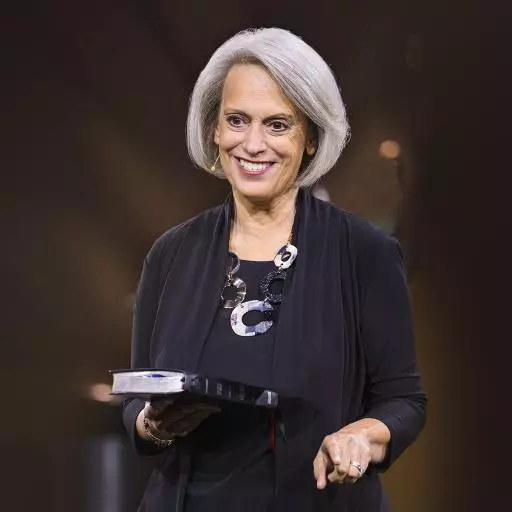
Science, Scripture, and a Life Transformed, Ep 2 of 2


Today, we’re covering a buffet of fascinating topics—reading Scripture through a Jewish lens, contemplating the origins of life, embracing a biblical view on human dignity, and more. Join Dr. James Tour and Dannah Gresh on Revive Our Hearts with Nancy DeMoss Wolgemuth.
Debra: Hi, my name is Debra from Minnesota, and I'm a Revive Our Hearts monthly partner. One reason I decided to support this ministry is I recently went to the True Woman's conference in Indiana, and Nancy's teaching had such an impact on my life. I'm sure it had on the other women there, but there are so many more that couldn't be there. So I felt it was important to support this ministry so that more people can be exposed to her teaching. I hope you enjoy today's episode of Revive Our Hearts, brought to you in part by the Monthly Partner Team.
Dannah Gresh: Curious how to make the gospel attractive to an Orthodox Jew? It’s pretty simple. Dr. James Tour says all you have to do is open your Bible and love it.
James Tour: This is exactly what Paul said. Paul said they will get jealous for the Lord by seeing your love for him. When we love the Word of God, it makes the Jews really wish, "I wish I had that." This makes them jealous when we get into the Word of God, and I love it.
Dannah Gresh: This is the Revive Our Hearts podcast with Nancy DeMoss Wolgemuth, author of Lies Women Believe and the Truth that Sets Them Free. For March 19, 2026, I’m Dannah Gresh.
Before we dive into another fascinating conversation with Dr. Jim Tour, I’ve got an announcement for you. We’ve been reading through the Bible with women around the world this year, and today we begin a new book—one of my favorites—the book of Samuel. This would just be a wonderful time for you to join us, not because we’re beginning a fresh book, but because 1 Samuel chapter 1 tells the story of Hannah. It’s such a beautiful passage, a comforting passage for the woman with unfulfilled longings or emotions she needs to bring to the Lord.
If that’s you—and let’s be honest, it’s probably all of us—you’re going to want to grab your Bible and visit reviveourhearts.com/bible2026. Can't wait to have you along for the journey. Now, let’s get to today’s conversation. I am excited to have yesterday’s guest with us again. Welcome back, Jim, to Revive Our Hearts. We consider you a friend now.
Yesterday, you gave such a riveting testimony of how you came to know Christ as an 18-year-old young man. Friend, if you didn't listen to that testimony yesterday, you need to hear that. Go back and listen to it. But you told us, Jim, that you had been raised as a secular Jew. As we were sitting there talking, I thought, wow, I'd really love to ask him—and here I’m going to do it now—how does your history as a Jewish young man and maybe any studies you've done in Jewish texts change the way you look at Scripture? How does it help you wonder at the Word of God?
James Tour: I was quite secular, which means I was only in a synagogue a couple of times a year. I'm not proficient in Hebrew, but since coming to the Lord, I've read a lot of Messianic literature. Messianic means that these are like the original believers. They're all Jewish, and they come from a Jewish background, but they received Jesus as the Messiah. That's what I mean when I say a Messianic Jew.
All the apostles would have been Messianic Jews, people who were Jewish but received Jesus as the Messiah. There are about 250,000 Messianic Jews in the world right now—people who are ethnically Jewish but believe Jesus is the Messiah—and many, many more are coming.
We look at Scriptures a little bit differently. We read the writings of the rabbis and see what their thoughts were on different topics, and we read through a Jewish lens. When people ask me, "How do you read the New Testament? You're a Jew, how can you read this?" I’m like, how could you read the New Testament as a Gentile? It's so Jewish. Everything that Jesus did revolved around these Jewish things that were happening in His life, and He was doing things that were so Jewish. You understand it so much better when you look at it through a Jewish lens. You go, okay, I understand. It makes sense now.
Dannah Gresh: Can you give us an example of that?
James Tour: Sure. The rabbis taught—and this is all in the rabbinic literature even from the first century—that when Messiah comes, only Messiah would be able to heal a leper. From the time that the law was finished and Moses finished writing the law, no Jewish leper had ever been healed. Naaman was a Syrian; he was healed of leprosy. Moses' sister was healed of leprosy, but that was before the law was complete.
They said only Messiah would be able to do that. So what does Jesus do? He comes on the scene and He heals a Jewish leper. And He sends them specifically back to the priests. He says, "Let the priest look at this." This was for a testimony to the priests because they themselves taught only Messiah would be able to do this. There's a whole thing from Leviticus, I think chapter 13, that they have to go through when a Jewish leper is healed—a whole protocol.
Then what does He do? He heals ten more and He sends all ten back to them. They were just overwhelmed with this thing. He says, "I'm giving you exactly what you said." The other thing is that they taught that only the Messiah would be able to cast the demon out of a man who is unable to speak. Only the Messiah would be able to do this. When He does this, the crowds are amazed and they're like, "Is this the Messiah?"
Why would they say that at this instance? Because they were taught that only Messiah would be able to do this. In their mind, they said you had to identify the name of the demon and then cast him out. If the man can't speak, how do you identify the name of the demon? Sometimes Jesus would say, "What is your name?" and he'd say, "My name is Legion, for we are many," and He'd cast him out by name. But there were other times when the man could not speak, and Jesus casts him out.
Then the other thing they taught is only Messiah would be able to heal a man who was born blind. So what did Jesus do? He heals the man who was born blind. They check with his parents and they say, "Yes, this is our son; he was born blind." Why the inquiry? Because when He does something that only Messiah would be able to do, then you see the Jewish panel doing the inquiry. Why did they go after this man who was born blind and start questioning him? Because they had to do the inquiry: is this the Messiah?
You see this type of thing. Also, why did Jesus make clay out of spittle, spitting on the ground, making clay, and applying it to the man's eyes to heal him? Jesus didn't need to do that. Jesus healed people's eyes just by speaking the word. Why do you have to make this mud out of spittle and apply it to the guy's eyes? Why do you have to spit in the man's ears in order to heal him? Why couldn't you just speak it?
In the Jewish literature, you understand exactly why. Because the laws of men, which Jesus disdained, the laws of men said that when you are performing a healing, never put your spittle with it. Jesus did something to go directly against what they said because He said the laws of men have made the Word of God of no effect. So He would go exactly against what the human-made laws would suggest to show His actual contempt for their laws. You don't need to have this.
What happened is when they came back after the Babylonian diaspora, they said, "We really blew it by disobeying God's laws." So around each one of the 613 commandments that were given to Moses, they would surround it with many other commandments so you didn't get near violating that thing. But what that did is it burdened people with so much that it made their lives miserable. Around something like the Sabbath, there were over 1,000 human-made commandments. And that's what you see today; they can't turn on a light switch, they can't do these things. It's utter legalism. You see this through the Jewish lens.
I see this even in my discussions with Orthodox Jews. I start talking about the Word and they start weeping. This one woman said to me—she's an Orthodox Jewish professor—"You just get to read the Word of God because you love it. I have to light this candle, say this prayer, do this, do this, do this, do this, do this just to be able to get into this." She said, "I wish I could do it just like you."
Dannah Gresh: Well, let's stop there. That’s a really important thing you just said. You read the Word of God because you love it. I know so many women who are doing it out of a sense of duty, and their hearts mean well, but they are not experiencing what we read about in the Scriptures—the delight in the law of the Word. How do you love it?
James Tour: You may start this out of a duty, but then you see what it does in your life, and you just love it. I've been exercising since I was 13 years old, and if I don't get to exercise at least every other day, I feel terrible. It's the same thing with the Word of God. If I'm not in the Word every day, it's like if for some reason I had to leave my house at 3:00 in the morning to catch a flight, the first thing I do is I open up my Bible when I sit on that airplane.
I'm going to get in the Word of God, and so it becomes a part of you. You learn to love this. I hunger for this. I've got to get the Word of God in me. I've just got to get it inside. Sometimes if I feel like I need more, I'll just go to the chapel on campus and just get on my knees and pray. I just want to spend time in the Word of God and just start reading this, just start meditating on this for a while.
I do this because I love it, and this is what Orthodox Jews see in us. This is exactly what Paul said. Paul said they will get jealous for the Lord by seeing your love for Him. When we love the Word of God, it makes the Jews really wish, "I wish I had that." I've had Orthodox Jewish men say to me, "When I heard you speak, I told my synagogue I'm not reading the Mishna anymore." That's their peripheral writings. He said, "I'm going to go back and read the Tanakh, the Old Testament. I'm going to read until I've read that whole thing through. I'm not going to read any other because I want to get what this guy has." This makes them jealous when we get into the Word of God, and I love it.
Dannah Gresh: I think what you said is true. If you test it, you'll see that the Word of the Lord is so good, so tasty, such a rich feast. When I started my time in the Word in my twenties, I remember setting an alarm clock and thinking, "This is going to take forever. What do I do? What do I do with these minutes?" It is hard at the beginning. And then you get to where you're like, "This isn't enough time. It's so good, it's so wonderful, and I can't possibly have to go to work now, I can't possibly have to get the kids up for school now," because you want more and more of it.
I just want to affirm how true and how good that is. You seem to know so much about how to look at the New Testament through a Jewish lens, so I want to ask you this. So many of the important things that Jesus said were said during important Jewish festivals. What have you learned about that?
James Tour: You can see the Jewish festivals in the New Testament. You clearly see that. And you see the meaning behind some of these festivals, but Jesus was always looking at the heart. He was looking at the heart. There's the richness of the festival, but what He was calling people back to was the heart. They would get going with these festivals, and He was always calling people back to recognize what's happening in your heart.
These things, it's like with Christians and Christmas. They can get so enamored with the Christmas season that they lose sight of Jesus, and they get so busy that they forget about Jesus and all of this. What I see is He’s always bringing us back. He was always saying things that get at my heart. Whatever He would say, He would want to get at my heart.
I remember the verse I shared yesterday. He says, "If you look at this woman with lust for her, you've committed adultery with her already in your heart." And I thought, how can I commit adultery in my heart? Adultery's a physical thing. I knew that was one of the Ten Commandments that I should never do, but how can you do it in your heart? This is what Jesus does: He gets at your heart.
In the festivals, He wants our heart. It's a time of remembrance. That's why you find in the Scriptures it never says "study the history." It says "remember." That's what the Jewish Scriptures would always say: remember. It is a part of your life. It is not just knowing the history; it is remembering, it is making yourself a part of it.
Dannah Gresh: Do you have a favorite passage of Scripture, Jim?
James Tour: I've probably spent more time meditating on Psalm 119, verses 97 through about 100, more than anything else. It says: "Oh, how I love thy law! It is my meditation all the day." Think about that. If I love the Word of God and make it my meditation, then it just lists all the blessings that come. "Thy commandments make me wiser than my enemies, for they are ever mine. I have more insight than all my teachers, for your testimonies are my meditation."
I've had the great blessing of studying under many great men. My professor got the Nobel Prize. His professor got the Nobel Prize. I've studied under many great men. And it says that you will have more insight than all of them if you make this Word of God your meditation. That's what it says. It doesn't say "than just your Bible teachers." It says "than all your teachers." You'll have more insight than all of them if you make this Word of God your meditation. When God's Word says it, I believe it. So yeah, I probably spent more time meditating on that verse than anything else if I really thought about it.
Dannah Gresh: You are a scientist, and I know that you have spoken up for a biblical view of the origins of this world. Since I see such a beautiful love of God's Word in your heart, one of the things Scripture tells us in Romans 1:20 is that we're without excuse even if we haven't been exposed to the written Word of God because creation speaks about God's power and His character. Talk to us about that Scripture through the lens of being a scientist.
James Tour: No scientist knows where life came from. This silly primordial soup model where there was a pond, some lightning strikes, some small molecules come together, form into a cell, those cells form multicellular organisms, and they come slithering out of the pond—that is a nonsensical view. There is absolutely no basis for that view. None. That actually started not even with Darwin; that started with the Babylonians. Their gods came out of that stinky little pond as well.
We have no idea where life came from from a scientific perspective. We don't even have any hypothesis that has any validation with any experiment behind it on how life could have formed. Something as fundamental as "where do we come from?"—from a scientific perspective, we have no idea. The whole materialistic models break down.
The models of how one organism changes dramatically into another again, those models just break down—body plan changes. This whole idea that we're 98.5% the same as a chimpanzee at the DNA level, that is all breaking down now. There's more and more papers coming out. First of all, that's only of the protein-coding DNA, and now we're finding that we have 15%, not 1% different, but 15% difference on the protein-coding DNA.
But then there is much more DNA in what we used to be called "junk DNA," which is now called "intergenic DNA"—much more than the protein-coding side. That is the regulatory functions. Those are the little traffic cops that turn things on and off in our body. Here we are grossly different than chimpanzees. All of these things that they threw at us just are beginning to fall apart. We're seeing that this is not true at all. And then what He does with human beings is so unique and how He has filled us with His Spirit, that we've been made in the image of God. These things are absolute treasures.
There's a reason why when we look at robots that are being built, we don't build them out of molecules. Normally what we do when we design something, we look at something and we try to copy it. You have no idea how to build out of molecules, and that's why we build robots out of plastic and silicon and wires. We don't build them out of molecules because we have no idea how to construct these lifelike systems out of molecules from the bottom up. Anyway, there's so much more that I can tell you here, but I see God's hand all over this.
Dannah Gresh: Take us back to being in the image of God. I think that's probably one of the things that culture, as well as science, is trying to dismantle—that in the image of God He created us, male and female He created them. Talk to us about that through the lens of a scientist.
James Tour: He took Adam and He breathed life into him. You see this—this is sort of like CPR. This is where you take one life and you use it to infuse another life. Life comes from God, and we don't even know how to define life scientifically. We have no idea. We can define the characteristics of life, but we don't know how to even define life.
The Bible says God made us in His image. This is an absolute treasure. People are treasures, and this is why we value them so much. You see this in God—the value of human life and the treasure of it. And then that's why He says that there is life eternal. He promises this. Jesus even said, "I go to prepare a place for you." If this weren't so, I wouldn't be telling you this. He says, "I'm preparing a place for you. Where I am, there you shall also be."
Our lives are a treasure to Him, and the Bible makes it very clear: as soon as we die, our spirit is immediately with our Lord. He's not going to let it perish. Our spirit is immediately with Him, and then one day He will reconstruct our bodies as well. There will be a resurrection. You say, "Well, all the molecules have gone away, the molecules aren't..." All the atoms are still here. He constructed it once; He can construct it again.
You say, "Well, it's not exactly the same atoms." We're not the same atoms ever! Our molecules are always turning over in our bodies. They're changing all the time. Every hydrogen bond in our body is changing thousands of times a second. Every molecule in our body is changing thousands of times a second. It's not made up of the same atoms; the atoms are constantly exchanging. We are physically different than the people we were when we started this conversation twenty minutes ago. So God shows us it's dynamic.
Dannah Gresh: Wow. I'm so grateful that the Lord has planted in you such a hunger for His Word and truth. Yesterday, we ended by having you pray for us. I'd like to pray for you today and all the other Christian scientists in the field. Tell us how we can pray because I believe this is a call for everyone listening. I am challenging you that before you lay your head on the pillow tonight, you would lift up a prayer for Christian scientists. It is a mission field. Give us some tips on how we can pray, Jim.
James Tour: My philosophy is that if you speak up a little bit about Jesus in the academy, in the university, they'll give you a hard time. But if you speak up a lot, they leave you alone. They don't want to get you started! So pray that we would be bold in our faith, that we would speak up, that we wouldn't keep this thing hidden, because students need to see that there are believers in their midst. There are believers among their professors. Pray that we would be bold, that we would speak up, that we would not shy away. That's what I'd love prayer for.
Dannah Gresh: What a good word for all of us: don't speak up a little, speak up a lot.
Father God, I thank You so much for Dr. James Tour, for the way that You met him in such a personal, powerful way when he was 18 years old, how You redeemed his mind and his life so that he would be a servant to Christ, a man who devours the Word and delights in the Word. Father, he sounds pretty bold to me, but however it is that You want him to be bolder still, I pray that You would plant courage in his heart for that moment, that day, that time.
And Father, for every other scientist out there—whether it's a homeschool science teacher in her classroom with three children, or whether it's a college professor who's being silenced every day by rules at the university or other types of scientists—Lord, make them bold. May they hear his words today: not to speak up a little but to speak up a lot. And help us all to be like that. In the mighty, precious, matchless name of Jesus, who is the living Word, amen.
Thank you, Jim, for being with us again today. What a great conversation that was. If you missed any part of our time with Dr. Tour, you can find yesterday's and today's episodes at reviveourhearts.com. And that's also where you'll find a link to Dr. Tour's website in the transcript of today's program. Again, that's at reviveourhearts.com or on the Revive Our Hearts app.
Before I go, I want to remind you about The Little Red Book of Wisdom, written by Nancy's brother, Mark DeMoss. It's an easy-to-read collection of insights designed to bring clarity and perspective to daily life. As our thank you for your gift of any amount to Revive Our Hearts this month, we'd love to send you a copy with our gratitude for your support of this ministry. To give, visit reviveourhearts.com or call us at 1-800-569-5959.
If you've looked at your life recently and thought, "Lord, what are You doing? I want to trust You, but things are just looking so crazy right now," well, if that sounds familiar, I think tomorrow's episode will encourage your weary heart. Please be back for Revive Our Hearts.
This program is a listener-supported production of Revive Our Hearts in Niles, Michigan, calling women to freedom, fullness, and fruitfulness in Christ.
Featured Offer

Choose a resource to help you grow.
Past Episodes
- 3 Doctrines that Fuel Endurance
- 3 Life-Changing Lessons for Young Women
- 3 Reasons to Join the 2026 Bible Reading Challenge
- 3 Ways to Love Your Friend When It’s Hard
- 3 Women Who Were Grateful for God’s Word
- A Harvest of Joy
- A Heart Grounded in the Word of God, with Chris Brooks
- A Hurting Home Became an Open Home
- A King’s Preparations, Plans, and Provision
- A Wife’s Submission: What it Is and Isn’t
- A Woman Adorned and Adorning
- Advent for Exiles, with Caroline Cobb and Erin Davis
- Always Grateful: Ciara's Story
- Always Thankful (Psalm 66)
- An Unhurried Holiday Season
- Anticipating Advent
- Be Still, Heaven Rules
- Be the Warmth: Cultivating Hospitable Character
- Behold the Big Story of the Bible, with Kevin DeYoung
- Behold the Daily Mercy of the Word, with Dannah Gresh
- Behold the Living Word, with Jackie Hill Perry
- Behold the Power of the Word to Save, with Kelly Needham
- Behold the Wonder of the Word
- Behold the Word Recovered by God’s People, with Mary Kassian
- Behold, Hearts on Fire with the Word
- Beholding the Wonder: True Woman '25
- Beyond Cliches: Real Encouragement for Single Sisters
- Blessing for the Year End & the New Year (2 Cor. 13:11-13)
- Blessings and Curses: A Look at the Life of Balaam
- Broken Vessels in Romania, with Asheritah Ciuciu
- Brokenness: The Heart God Revives
- Celebrating God’s Abundance
- Celebrating the Gift of Grandparents
- Choosing Grace over Gossip
- Choosing Servanthood Over Celebrity
- Come Adore: The Gospel in Carols
- Consider Jesus: Surrendered Servant and Savior
- Control Girl, with Shannon Popkin
- Corporate Revival
- Crossing the Finish Line: Remembering Robert Wolgemuth
- Ease Into the Bible, with Jean Wilund
- El Shaddai: The All-Sufficient One
- Embracing God as Father
- Enlarging Your Heart for Eternity, with Colleen Chao
- Esther: God's Woman at God's Time
- Faithful, Not Famous with Laura Gonzalez de Chávez
- Finding Freedom from Fear, with Judy Dunagan
- Finding My Father Father: How the Gospel Heals the Pain of Fatherlessness, with Blair Linne
- From Death to Life: Hope After Abortion
- God’s River Flows in Spain and Brazil
- God’s Word and Our Emotions
- God’s Word and Your Life
- Gospel Mom, with Laura Wifler and Emily Jensen
- Grace for the Depressed
- Grateful, then Graceful, with Mari Glick
- He Gives Grace to Mothers, with Sarah Walton and Linda Green
- Helping Kids Think Biblically, with Elizabeth Urbanowicz
- His Healing Touch
- How God’s Love for Women is Displayed in the Old Testament, with Dr. Katie McCoy
- How Less Scrolling Could Change Your Life, with Lara d’Entremont
- How to Have a Happy New Year (Psalm 1)
- How to Have a Marriage that Magnifies God
- How to Have a Quiet Heart
- How We Got Our English Bible
- Humility, Not Pride
- Learning to Love the Old Testament, with Jennifer Smith
- Lessons from Levites
- Living Out the Beauty of the Gospel
- Living Water
- Living Well, Finishing Well, with Mark DeMoss
- Loving and Living God’s Word, with Kelly Needham
- Persecution, Perseverance, and the Key to Sustaining Faith, with Dr. Karen Ellis
- Persevering Love for the Local Church
- Pleading the Cause of the Unborn
- Practical Bible Study Tips
- Practicing Thankfulness, with Sam Crabtree
- Precepts, Parkinson’s, and the Truth That Sets Us Free, with Kay Arthur
- Psalm 23: Our Good Shepherd
- Read Your Bible!
- Rediscovering Intimacy With God
- Relationship Refresh: Helping Your Community Thrive in Christ
- Remembering Voddie Baucham, Jr.
- Renewed and Restored (Psalm 23:2-3)
- Resting in God's Providence
- Revive Me According to Your Word
- Revive My Heart, Lord!
- Ruth: The Transforming Power of Redeeming Love
- Safely Home: Honoring Robert Wolgemuth
- Saying, “Yes, Lord!”
- Saying, “Yes, Lord” When Life is Hard
- Science, Scripture, and a Life Transformed, with Dr. James Tour
- See for Yourself: Get to Know Your Bible, with Kelly Needham
- Showing Kindness, with Kathy Branzell
- Sin, Suffering, and the God Who Restores
- Sorrowful, Yet Always Rejoicing
- Spiritual Disciplines We Forget About
- Spiritual Habits for Little Hearts
- Spiritual Mothering
- Spiritual Strength for an Evil Day (Ephesians 6)
- Steadfast Faith
- Storm Shelter
- Supporting Your Suffering Friend, with Jani Ortlund
- Surrender: the Heart God Controls
- Tell Yourself What’s True
- Telling the Greatest Story
- Tender Counsel for the Fearful and Grieving, with Paul Tautges
- The Beautiful Process of Repentance
- The Beauty of Living Out the Gospel as a Woman
- The Book of Books
- The Cross and Clothes
- The Four Emotions of Christmas
- The Glory of Face-to-Face Fellowship
- The Grace of Remembrance
- The Incomparable, Incarnate Christ
- The Joy of Bible Journaling
- The King Still Has Another Move
- The Personal Devotional Life
- The Personal Devotional Life: Beyond Quiet Time, with Dr. Henry Blackaby
- The Power of Words
- The Ultimate Meaning of True Womanhood
- The Well-Watered Woman, with Gretchen Saffles
- The Wonder App: Transforming Screen Time into Scripture
- Three Gifts Suffering Gives
- To The Woman Who Doesn’t Feel God’s Love
- Treasuring Christ in Our Traditions with Noel Piper
- True Woman '25 Panel Discussion: Behold the Word in Every Season
- Trusting God When Tragedy Strikes
- Truth Talk for Hurting Hearts, with Dawn Wilson
- Walking Through Life's Deserts
- What “Yes, Lord” Looks Like
- What Do We Do with Unfulfilled Longings?
- What Sisterhood Is (and Isn’t)
- What's in a Dad?
- When Busyness Threatens Intimacy with God
- Where the River Flows: The Life-Giving Work of the Spirit
- Why Study the Bible?
- Women of the Resurrection
- Wonder of the Word Made Flesh
- Word Before World, with Gretchen Saffles

Featured Offer
Choose a resource to help you grow.
About Revive Our Hearts
About Nancy DeMoss Wolgemuth
Nancy DeMoss Wolgemuth has touched the lives of millions of women through Revive Our Hearts and the True Woman movement, calling them to heart revival and biblical womanhood. Her love for Christ and His Word is infectious and permeates her online outreaches, conference messages, books, and two daily nationally syndicated radio programs—Revive Our Hearts and Seeking Him. Her books have sold more than four million copies and are reaching the hearts of women around the world. Nancy and her husband, Robert, live in Michigan.
Contact Revive Our Hearts with Nancy DeMoss Wolgemuth
Revive Our Hearts
P.O. Box 2000
Niles, MI 49120
1-800-569-5959 (toll-free)