
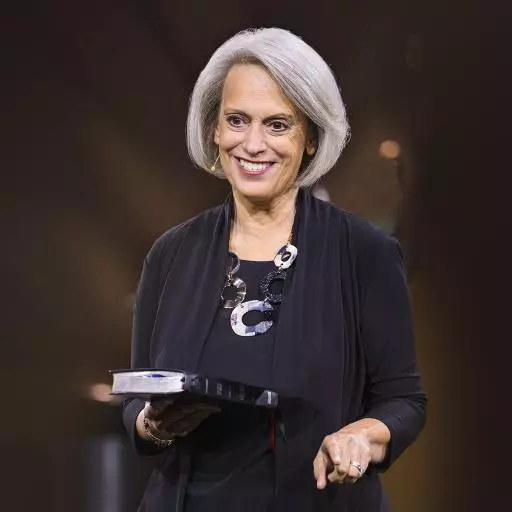
Ruth, Ep 17 of 17


Ruth’s story began with brokenness, but it ends beautifully. Boaz redeemed her, provided for her, and safeguarded her family line. From her lineage would come Jesus, the best Redeemer of all. Enjoy the sweet resolution of Ruth’s story on Revive Our Hearts with Nancy DeMoss Wolgemuth.
Guest (Male): Today Nancy DeMoss Wolgemuth has a word for wedding guests.
Nancy DeMoss Wolgemuth: How many of you like to go to weddings? I do. I love weddings. Have you ever stopped to think about when you go to a wedding, just as an attender of the wedding, what your job is at the wedding?
You know what the bride's job is. You know what the groom's job is. They're supposed to walk down the aisle. She walks down the aisle, he comes from the front, they meet, they get married. That's clear. You know what the best man's job is and the maid of honor and the mother of the bride and the father of the bride and the minister. Their job is clear. But what about if you're sitting in the pew at the wedding? What's your job?
Well, as we come to Ruth chapter four today, we get some insight into what our job is when we're witnesses of a wedding ceremony.
Dannah Gresh: This is the Revive Our Hearts podcast with Nancy DeMoss Wolgemuth, co-author of *You Can Trust God to Write Your Story*. For February 24, 2026, I'm Dannah Gresh.
Today is the final day of our journey through Ruth with Nancy. And hasn't it been a great series? If you missed any, find all the episodes at ReviveOurHearts.com or on the Revive Our Hearts app. Let's pick up in chapter four, verse nine.
Nancy DeMoss Wolgemuth: Boaz announced to the elders and to all the people, "Today you are witnesses that I have bought from Naomi all the property of Elimelech, Chilion, and Mahlon. I've also acquired Ruth the Moabitess, Mahlon's widow, as my wife, in order to maintain the name of the dead with his property, so that his name will not disappear from among his family or from the town records. Today you are witnesses."
And then verse 11, the elders and all those at the gate said, "We are witnesses." Third time that word is used. "May the Lord make the woman who is coming into your home like Rachel and Leah, who together built up the house of Israel. May you have standing in Ephrathah, an Old Testament name for Bethlehem. May you be famous in Bethlehem. Through the offspring the Lord gives you by this young woman, may your family be like that of Perez, whom Tamar bore to Judah."
Now, I want us to see in this paragraph that those who attended this wedding, so to speak—it was a little different than the weddings we would have today—had two functions. First of all, they served as witnesses. They affirmed the betrothal it was at this point of Boaz to Ruth. They were giving legal affirmation.
And let me just say by way of a little parenthesis here how important it is biblically and in our culture as well to have a public, legal aspect of making a marriage covenant. Part of the scriptural understanding of marriage is that it involves a legal, public declaration. Witnesses are important.
One writer says that the covenant that is made publicly with witnesses at a wedding is a constant reminder that promises were made, obligations entered into, and prayer for grace and resources asked. The vows were not simply a private matter, he says, but publicly made and publicly witnessed. A sense of accountability to the wider Christian fellowship helps us to maintain our promises and acts to support us in the harder times when our commitment to loving faithfulness is put to the test.
So the wedding ceremony is a very important part of getting a marriage started off on a right foot. Now, not only did these witnesses serve to give legal affirmation, witness to the ceremony itself, but they pronounced in verses 11 and 12 a blessing.
It's a threefold blessing. And as you and I go to a wedding, as we see couples being united in marriage, part of our role is to bless that marriage if it's a union that has God's blessing on it, as did this one with Ruth and Boaz. They pronounce a blessing on the wife, on the husband, and on the offspring that would come as a result of this union.
Let's look at those verses beginning in verse 11. First, the blessing pronounced on Ruth. These are the witnesses, and they say, "May the Lord make the woman who is coming into your home like Rachel and Leah, who together built up the house of Israel." They're praying that the offspring of Boaz and Ruth would be as numerous as those of Rachel and Leah.
You remember those were the two wives of Jacob, who together with their maidservants brought forth twelve sons to Jacob, from whom the entire nation of Israel was born. These were the foundation mothers from whom the twelve tribes of Israel sprang forth. And they're praying that Ruth will be a fruitful woman, that she will be blessed with the kind of heritage that was given to Rachel and Leah.
And in fact, that blessing was answered by God. Ruth became a part of the lineage of Israel's kings and ultimately of Israel's Messiah, the Lord Jesus.
And then they pray a blessing on Boaz, on the husband. They say, "May you have standing in Ephrathah and be famous in Bethlehem." That word "to have standing" means to prosper. May you prosper. And may you be famous. May you make a name for yourself. May you be well known.
The goal, by the way, in our marriage relationship with Christ is always that He would be well known, that He would be famous, that people would look up to Him because of how His grace to us brings Him glory. And so this blessing is a prayer that Boaz will prosper and that he will be blessed through Ruth's many children, through the children and the descendants who will come as a result of this union.
What makes Jesus famous, our heavenly Boaz, is the sinners He has saved. He gets fame out of meeting us in our distress and our dire need. So they pray a blessing on the husband, on Boaz.
And then they pray a blessing on their offspring. Verse 12, they say, "Through the offspring the Lord gives you by this young woman, may your family be like that of Perez, whom Tamar bore to Judah." Now, you'll remember as we said weeks ago at the beginning of this study that Perez was the son who was born through the incestuous relationship between Judah and his daughter-in-law, Tamar. Not a great way to start a family line, is it?
And this union between Tamar and Judah, though it was not God's best, though it was not His first choice of the way that Judah should have had the son leading to Christ, isn't it incredible, amazing grace on God's part? That He takes the failure of men and He makes something beautiful out of it.
By His grace, by His forgiveness, He cleanses, He renews, He redeems. And I think of women sitting in this room who, as you look back on how your marriage got started or you look back on something in your family line that you're ashamed of, and you think, how could there ever be any hope for something good to come out of this? There is blessing available through repentance, through the cleansing and the forgiveness of Christ. He really can turn ashes into beauty and bring something beautiful out of the most messed-up family line.
And so the community here, the witnesses, are praying that Boaz and Ruth will establish an important family in Judah and that this family will result in blessing for others through the children and the descendants that God will give to them.
And again, we know that this prayer was answered. We would not be sitting here today if it weren't for the fact that God heard and answered this prayer, that through the line of Ruth the Moabitess, now Ruth the Israelite, and Boaz, a poor widow and a wealthy landowner, as God brought them together, made him a redeemer, made her the redeemed, and through them brought a redeemer, Jesus Christ, for the whole world.
As we look at this blessing, I'm reminded of how important it is for us today to speak and pray blessings on families. Not just at wedding ceremonies, but on young couples, on couples who are struggling in their marriage, and on their children.
I read recently a prayer by Charles Spurgeon that I thought fit so beautifully with this passage. He prayed, he said, "Lord, make our children Thy children. Let Thy blessing flow on to future generations, and as long as any of our seed remains on earth, may they remain true to Thee. O Lord God, let the house of Thy servant be blessed."
He prayed a blessing on children. I had lunch yesterday with two families. One of them have three little children and another on the way, and the other family is expecting momentarily their first child. And it was such a joy to be with those two families and to speak words of blessing and encouragement to that one mom who's got three little children and to say to her, "I am so encouraged by the way that you are bringing up your children to have a heart for God," and to say to that mom who's expecting her first child sometime this week and to pat her little tummy there and say, "Lord, bless this child. Bless this mother. Bless this couple."
You know, as a part of the body of Christ, you and I, whether married or single, whether we have children of our own or not, we have an obligation, a responsibility to the families that make up the rest of the body of Christ. To speak words of blessing and encouragement.
I heard a senior statesman, a man of God who's been a pastor for many years, speak a few weeks ago. And he talked about how in 30 years of pastoring three different churches, he said—and this is almost difficult to believe today—but he said that only one couple in all those churches that he pastored ever got divorced during his pastorate.
And he said of course he gives credit to the grace of God, but he said as a man of God and a shepherd of that flock, he took so seriously this burden to see God bless marriages and bless families and bless the next generation that every time he saw a marriage threatened or shaky or in trouble in some way, it was like he went into a full-court press to go and rescue that marriage, do whatever he could by demonstrating what it meant to have a godly, faithful marriage, but also by going after that couple in prayer and in counseling and in all the efforts that could be mustered to see that marriage salvaged.
Dannah Gresh: I hope you'll pray that way for the marriages around you. Nancy DeMoss Wolgemuth isn't finished. She'll be back to wrap up our series on Ruth in just a moment. Before then, I want to let you know that there are only a few days left to request your copy of the Ruth Bible study. It's called *Ruth: Experiencing a Life Restored*, and it's designed to help you reflect even more deeply on Ruth's story.
To give and request this resource, visit ReviveOurHearts.com or call us at 1-800-569-5959. And don't forget we've got another series about Ruth over on our Women of the Bible podcast and videocast. My friend Erin Davis and some other sisters in ministry sit down together to talk all things Ruth, and they get really practical while they're at it.
Listening to their conversations would be a great way to keep the momentum going and to continue studying this book. We'll link to that series in the transcript of today's episode at ReviveOurHearts.com. Okay, let's get back to our study of Ruth. Here's Nancy.
Nancy DeMoss Wolgemuth: We come to the last paragraph beginning in verse 13 of Ruth chapter four, and I've titled this paragraph "Restoration." The restoration is now complete. We saw over the last few days how Boaz completed the transaction to take Ruth as his wife, and then we read in verse 13, "So Boaz took Ruth, and she became his wife. Then he went to her, and the Lord enabled her to conceive, and she gave birth to a son."
Now let me have us not skip over something here. It's a minor point in this context but a major point for so many people in today's culture. Notice the sequence of events here. Boaz took Ruth, she became his wife first. Then he went into her. Then he was sexually intimate with her, and the Lord enabled her to conceive and she gave birth to a son.
Now you may think that that's just assumed, but it's not assumed in our culture today and even within the Christian world that that's the order in which events should take place in marriage and in family. And we see here just a reference to what is a bigger biblical principle, and that is that the physical sexual union belongs within the context of marriage. That's where God blesses it, that's where He has ordained it to take place, and anything apart from that sets us up for devastation and for consequences that were probably never intended but do in fact come to take place.
Marriage is that committed, loving, publicly known covenant relationship. And within those parameters, within those bounds, the physical relationship, the sexual relationship becomes a precious thing, a gift from God and something that God can bless.
Now we see here that the Lord enabled her to conceive. Remember that for ten years she had been married to Mahlon in Moab, and she had never conceived during that time. We don't know why, but we do know that the Lord enabled her to conceive once she was married to Boaz.
And that says to me simply, it's a reminder that God is the one who gives life. He is the giver of life, He's the source of life, and that life is a gift from His hand. And we see Ruth receiving that gift of God, the willingness to bear children. It may be that at that stage of her life she may not have been excited about taking on a child, but there is none of that indicated. We see rather just a willingness to receive the children that God would give to her.
And this is so important because a huge part of God's redemptive plan to take the gospel from one generation to the next is dependent upon God's people having children. And not only having children, but teaching their children the ways and the heart of God and leading their children to faith in Christ so that those children will grow up to be spiritually mature disciples of Christ who will have their own children someday and who will not only bear physical life but will bear spiritual life and take the life of Christ to the world.
Just as a son born to Ruth was a gift of God in Ruth's redemption, so Christ was the gift of God for the redemption of the world. And we see here again a picture of what was to come when Christ was to come to earth. Now verse 14, the women said to Naomi after this son was born to Ruth, the witnesses, the women, the townswomen said to Naomi the grandmother of this little baby, "Praise be to the Lord who this day has not left you without a kinsman redeemer."
Remember when Boaz redeemed Ruth and her situation, he was redeeming the whole family situation. So he became not Naomi's husband, but he did become Naomi's kinsman redeemer. And so the women say, "This day the Lord has not left you without a kinsman redeemer."
This woman who'd had such a hard life, had experienced so much grief and heartache and sorrow and loss, God is restoring her losses by means of a kinsman redeemer. And so the women say to Naomi, "May he be famous throughout Israel. He will renew your life and sustain you in your old age. For your daughter-in-law who loves you and who is better to you than seven sons has given him birth."
Not only was Boaz the redeemer, but in a sense this little child who was born of their union became a redeemer. He was the child who would grow up and would take care of Naomi and Ruth in their old age. He would be their provider, their rescuer, their kinsman, the one who would care for them.
And so Naomi receives a goel as does Ruth, a redeemer, and she has the confidence that whatever losses she might experience down the road or in the future, there would always be as this child grew up a near kinsman to redeem, to care for her needs. "He will sustain you in your old age," they said. He'll provide you with food, He'll meet your needs.
And I see this as a key to our spiritual restoration and to continuous revival. Not just meeting Christ at one point in redemption and then never having any concept of how He redeems us for the rest of our lives. Rather, we see that He is an ever-present redeemer. We sing that little chorus, "There is a redeemer, Jesus God's own Son." He is in the process of continuing to redeem us, to restore what we have lost, to overrule the losses that have been caused by sin. His blood never loses its power. He is not only past tense our restorer and redeemer, but He is the constant restorer of our lives.
And so as you and I look forward to aging, say, look forward to aging? You know, I do. And the reason I do is because I know I have a redeemer. And I know that as I get older in this earth and then as I move to heaven, that I will always have a restorer, even in my old age. One who will sustain, one who has promised to meet my needs, that I do not have to worry about how I will be cared for because I know that there's a redeemer who's looking out for me, who's taking me as His own possession, who has promised to meet all of my needs—spiritual, physical, emotional, relational. Every need that I have, I know will be met through Christ my redeemer.
Well, verse 16, Naomi took the child, laid him in her lap and cared for him. The women living there said, "Naomi has a son," and they named him Obed. He was the father of Jesse, the father of David. This then, verse 18, is the family life of Perez.
Now, remember who Perez was. He was the son who was born as a result of the incestuous relationship of Tamar and her father-in-law, Judah. So that's where this line started, and you'll see that it's a line that moves from disgrace to grace. And isn't that the way of God? Isn't that the way of Christ our redeemer?
He takes our start in life, enemies from God, separated from God, sinners under the curse of the law, and He says, "I can turn your disgrace to grace." This then is the family line of Perez. Perez was the father of Hezron, Hezron the father of Ram, Ram the father of Amminadab, Amminadab the father of Nahshon, Nahshon the father of Salmon, Salmon the father of Boaz, Boaz the father of Obed, Obed the father of Jesse, and Jesse the father of David.
Now that's where the book of Ruth ends, but that's not where the story ends. Because you know that as this genealogy continues on, in fact it's where we started weeks ago by looking at Matthew chapter one, we see another genealogy. It takes us this far and then it takes us further to say from David ultimately came David's greater son, the Lord Jesus.
Christ the Messiah was born as a result of this family line. The ultimate purpose of this family line was to draw attention to David and ultimately to David's descendant, the Lord Jesus. And could I say that the ultimate purpose of your family line and mine should be the same?
Now Christ will not be born literally out of our family line. He already came to earth once. And when He comes back, it will be not as a baby but as a conqueror to take over this world and to rule forever and ever. But there's a sense in which my family line should have as its goal to lead people to Christ. To point people to Jesus.
My physical family line should have that as its goal, but also my spiritual line should have that as its goal. To win to Christ and disciple and nurture in His ways those who will win others, who will disciple them, will nurture them, so that we can keep passing on from one generation to the next a line that's always bringing people to Christ. Always bringing Christ to that next generation.
So what's happening in your family line and is it pointing people to Jesus? And are you living with the confidence that no matter what comes into your life, you are secure, you are safe because you know that you have a redeemer who will through your old age be your nurturer, your restorer? You will never be without a redeemer if you are in Christ.
Does that give you confidence? Does it make you want to say to Him, "Thank You, Lord Jesus, for taking my emptiness and making it full. For taking my loss and making it gain. For taking the ashes of my life and turning it into something beautiful." And then would you pray that God will give to you a godly family line physically and spiritually? That you would be a bearer and nurturer of life, bringing forth a new generation who will love God with all their heart and would know Jesus and would take Him to the next generation.
Dannah Gresh: That's Nancy DeMoss Wolgemuth casting a vision for how we might share the gospel with the generations coming behind us. She'll be right back to pray. One way Revive Our Hearts wants to help you pass on truth to the next generation of women is through the True Girl podcast.
Now, this just happens to be my podcast for girls and their moms. We explore God's truth one 15-minute drive at a time, coming alongside you as you disciple the tween girls in your life. Have you ever read the Old Testament and realized God had a lot to say specifically to women? Tomorrow, Dr. Katie McCoy will be here to show us how God's tender love for us as women can be seen in some of those passages that might initially be difficult for us to understand. I hope you'll be back for Revive Our Hearts tomorrow. Now, let's pray with Nancy.
Nancy DeMoss Wolgemuth: Thank You, Lord, for the greatness and grandeur of Your purposes and for how personally You restore the losses that have been caused and occasioned by our sin. Thank You that You not only cared for Naomi, but You care for me and You care for each woman in this room.
You are always at work making provision through Jesus Christ to meet all of our needs. May that line be continued, carried intact from generation to generation until the day that Jesus Christ comes back to claim us for Himself. I pray in Jesus' name, Amen.
Guest (Male): This program is a listener-supported production of Revive Our Hearts in Niles, Michigan, calling women to freedom, fullness, and fruitfulness in Christ.
Featured Offer

Experience true renewal in the presence of the Lord. With your donarion.
Past Episodes
- 3 Doctrines that Fuel Endurance
- 3 Life-Changing Lessons for Young Women
- 3 Reasons to Join the 2026 Bible Reading Challenge
- 3 Ways to Love Your Friend When It’s Hard
- 3 Women Who Were Grateful for God’s Word
- A Great Awakening, with Kim and Katie Miller
- A Harvest of Joy
- A Heart Grounded in the Word of God, with Chris Brooks
- A Hurting Home Became an Open Home
- A King’s Preparations, Plans, and Provision
- A Wife’s Submission: What it Is and Isn’t
- A Woman Adorned and Adorning
- Advent for Exiles, with Caroline Cobb and Erin Davis
- Always Grateful: Ciara's Story
- Always Thankful (Psalm 66)
- An Unhurried Holiday Season
- Anticipating Advent
- Be the Warmth: Cultivating Hospitable Character
- Behold the Big Story of the Bible, with Kevin DeYoung
- Behold the Daily Mercy of the Word, with Dannah Gresh
- Behold the Living Word, with Jackie Hill Perry
- Behold the Power of the Word to Save, with Kelly Needham
- Behold the Wonder of the Word
- Behold the Word Recovered by God’s People, with Mary Kassian
- Behold, Hearts on Fire with the Word
- Beholding the Wonder: True Woman '25
- Beyond Cliches: Real Encouragement for Single Sisters
- Blessing for the Year End & the New Year (2 Cor. 13:11-13)
- Blessings and Curses: A Look at the Life of Balaam
- Broken Vessels in Romania, with Asheritah Ciuciu
- Brokenness: The Heart God Revives
- Celebrating God’s Abundance
- Celebrating the Gift of Grandparents
- Choosing Grace over Gossip
- Choosing Servanthood Over Celebrity
- Come Adore: The Gospel in Carols
- Consider Jesus: Surrendered Servant and Savior
- Control Girl, with Shannon Popkin
- Corporate Revival
- Crossing the Finish Line: Remembering Robert Wolgemuth
- Ease Into the Bible, with Jean Wilund
- El Shaddai: The All-Sufficient One
- Embracing God as Father
- Enlarging Your Heart for Eternity, with Colleen Chao
- Esther: God's Woman at God's Time
- Faithful, Not Famous with Laura Gonzalez de Chávez
- Finding Freedom from Fear, with Judy Dunagan
- Finding My Father Father: How the Gospel Heals the Pain of Fatherlessness, with Blair Linne
- From Death to Life: Hope After Abortion
- God’s River Flows in Spain and Brazil
- God’s Word and Our Emotions
- God’s Word and Your Life
- Gospel Mom, with Laura Wifler and Emily Jensen
- Grace for the Depressed
- Grateful, then Graceful, with Mari Glick
- He Gives Grace to Mothers, with Sarah Walton and Linda Green
- Helping Kids Think Biblically, with Elizabeth Urbanowicz
- His Healing Touch
- Holy Week Heart Prep: The Wonderful Names of Jesus
- How God’s Love for Women is Displayed in the Old Testament, with Dr. Katie McCoy
- How Less Scrolling Could Change Your Life, with Lara d’Entremont
- How to Have a Happy New Year (Psalm 1)
- How to Have a Marriage that Magnifies God
- How to Have a Quiet Heart
- How We Got Our English Bible
- Humility, Not Pride
- Learning to Love the Old Testament, with Jennifer Smith
- Lessons from Levites
- Living Out the Beauty of the Gospel
- Living Water
- Living Well, Finishing Well, with Mark DeMoss
- Loving and Living God’s Word, with Kelly Needham
- Persecution, Perseverance, and the Key to Sustaining Faith, with Dr. Karen Ellis
- Persevering Love for the Local Church
- Pleading the Cause of the Unborn
- Practical Bible Study Tips
- Practicing Thankfulness, with Sam Crabtree
- Precepts, Parkinson’s, and the Truth That Sets Us Free, with Kay Arthur
- Psalm 23: Our Good Shepherd
- Read Your Bible!
- Rediscovering Intimacy With God
- Relationship Refresh: Helping Your Community Thrive in Christ
- Remembering Voddie Baucham, Jr.
- Renewed and Restored (Psalm 23:2-3)
- Revive Me According to Your Word
- Revive My Heart, Lord!
- Ruth: The Transforming Power of Redeeming Love
- Safely Home: Honoring Robert Wolgemuth
- Saying, “Yes, Lord!”
- Saying, “Yes, Lord” When Life is Hard
- Science, Scripture, and a Life Transformed, with Dr. James Tour
- See for Yourself: Get to Know Your Bible, with Kelly Needham
- Showing Kindness, with Kathy Branzell
- Sin, Suffering, and the God Who Restores
- Sorrowful, Yet Always Rejoicing
- Spiritual Disciplines We Forget About
- Spiritual Habits for Little Hearts
- Spiritual Mothering
- Spiritual Strength for an Evil Day (Ephesians 6)
- Steadfast Faith
- Storm Shelter
- Supporting Your Suffering Friend, with Jani Ortlund
- Surrender: the Heart God Controls
- Tell Yourself What’s True
- Telling the Greatest Story
- Tender Counsel for the Fearful and Grieving, with Paul Tautges
- The Beautiful Process of Repentance
- The Beauty of Living Out the Gospel as a Woman
- The Book of Books
- The Cross and Clothes
- The Four Emotions of Christmas
- The Glory of Face-to-Face Fellowship
- The Grace of Remembrance
- The Humble Savior Who Came
- The Incomparable, Incarnate Christ
- The Joy of Bible Journaling
- The King Still Has Another Move
- The Personal Devotional Life
- The Personal Devotional Life: Beyond Quiet Time, with Dr. Henry Blackaby
- The Power of Words
- The Ultimate Meaning of True Womanhood
- The Well-Watered Woman, with Gretchen Saffles
- The Wonder App: Transforming Screen Time into Scripture
- Three Gifts Suffering Gives
- To The Woman Who Doesn’t Feel God’s Love
- Treasuring Christ in Our Traditions with Noel Piper
- True Woman '25 Panel Discussion: Behold the Word in Every Season
- Trusting God When Tragedy Strikes
- Truth Talk for Hurting Hearts, with Dawn Wilson
- Walking Through Life's Deserts
- What “Yes, Lord” Looks Like
- What Do We Do with Unfulfilled Longings?
- What Sisterhood Is (and Isn’t)
- What's in a Dad?
- When Busyness Threatens Intimacy with God
- Where the River Flows: The Life-Giving Work of the Spirit
- Why Study the Bible?
- Women of the Resurrection
- Wonder of the Word Made Flesh
- Word Before World, with Gretchen Saffles
- You Can Trust God to Write Your Story
- You Have a Living Hope
- Your Will Be Done: Rebecca Ellerman’s Story
- You've Come a Long Way, Baby! (Mary Kassian)

Featured Offer
Experience true renewal in the presence of the Lord. With your donarion.
About Revive Our Hearts
About Nancy DeMoss Wolgemuth
Nancy DeMoss Wolgemuth has touched the lives of millions of women through Revive Our Hearts and the True Woman movement, calling them to heart revival and biblical womanhood. Her love for Christ and His Word is infectious and permeates her online outreaches, conference messages, books, and two daily nationally syndicated radio programs—Revive Our Hearts and Seeking Him. Her books have sold more than four million copies and are reaching the hearts of women around the world. Nancy and her husband, Robert, live in Michigan.
Contact Revive Our Hearts with Nancy DeMoss Wolgemuth
Revive Our Hearts
P.O. Box 2000
Niles, MI 49120
1-800-569-5959 (toll-free)